
Reviewed · SELF-GUIDED TOURS
Birmingham Private Self-Guided Walking Tour
Birmingham’s canals set the tone. This self-guided walk from 197 Wharfside St to Gay Village mixes industry-era landmarks with city-center culture, using Helen’s real audio (not computer voice) plus GPS directions for a 2 to 3 hour loop.
What I love most is the way it turns a simple stroll into a story you can follow at your own pace, with free entry built into many of the stops.
I also like how the route handles both big and smaller sights. You get the famous canal basin areas, plus the kind of lesser-known architecture that you might miss if you only follow busier streets, including Roundhouse Birmingham.
The main drawback to weigh is the day-of access process. Like any app-based tour, you can waste time if you do not test access first, so take a few minutes before you go to confirm your link works in the app.
In This Review
- Key things I’d plan for on this Birmingham walking audio tour
- Starting at 197 Wharfside St and finding Birmingham Mailbox fast
- Gas Street Basin and Brindley Place, Birmingham’s canal story in walking distance
- Roundhouse Birmingham, Arena Birmingham, and the ICC for a modern Birmingham beat
- Centenary Square, Birmingham Library, and the squares that name the city’s priorities
- St Philip’s Cathedral Garden, Bullring, Grand Central, and St Martin’s long timeline
- Chinatown to Gay Village, ending with food and community space
- How Helen’s audio guide and GPS make this self-guided tour feel simple
- Price, pacing, and who this Birmingham walk is best for
- Should you book this Birmingham self-guided walking tour?
- FAQ
- Where does the Birmingham Private Self-Guided Walking Tour start and end?
- How long should I plan for the tour?
- Is the tour offered in English?
- Do I need an in-person guide?
- Is the National Sea Life Centre entry included?
- How long do I have access to the tour in the app?
Key things I’d plan for on this Birmingham walking audio tour
- Helen’s human audio guidance keeps the walk clear and listenable, especially for first-timers with audio tours
- Canal focus with numbers like 35 miles of waterways, plus the James Brindley connection
- A mix of eras and vibes, from Gas Street Basin and civic squares to churches and modern venues
- Mostly free stops, with one major exception (National Sea Life Centre) not included
- GPS map and turn-by-turn help, which makes the route easier to stick to than plain walking directions
Starting at 197 Wharfside St and finding Birmingham Mailbox fast

Your tour begins at 197 Wharfside St, Birmingham B1 1QH, and it ends in Gay Village, so you are not retracing steps like on some point-to-point walks. You can treat it like a half-day wander, with a planned duration of about 2 to 3 hours, depending on how long you stop for photos and readings.
Before you walk, I suggest you use the app map as your base layer. The route is set up with GPS, so you can keep moving even if you pause at a café or get pulled into a shop window. This matters because Birmingham’s city center can be a maze of lanes, underpasses, and big buildings, especially around transport hubs.
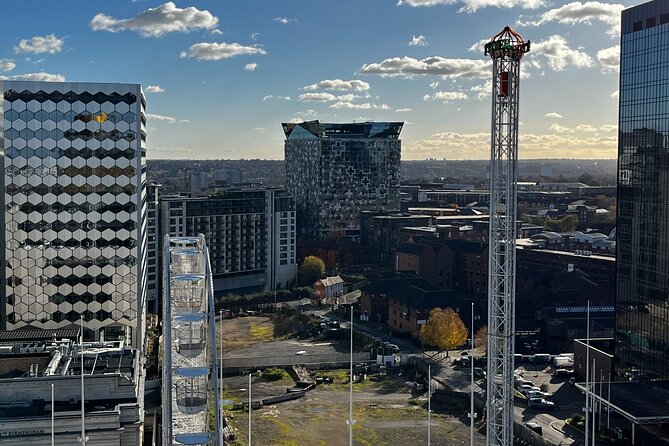
At the start area, you are in the orbit of Birmingham Mailbox, a modern landmark that echoes the city’s industrial past. Even if you only glance at it, it helps frame the contrast of this tour: you begin in a contemporary commercial spot, then head toward waterways and heritage architecture.
More England on foot, brolly optional:

Gas Street Basin and Brindley Place, Birmingham’s canal story in walking distance
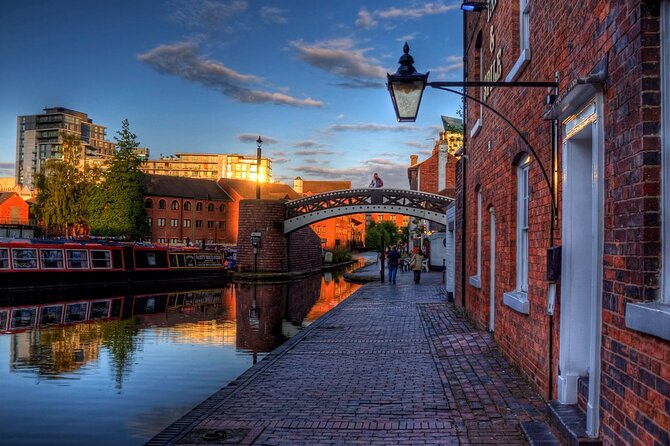
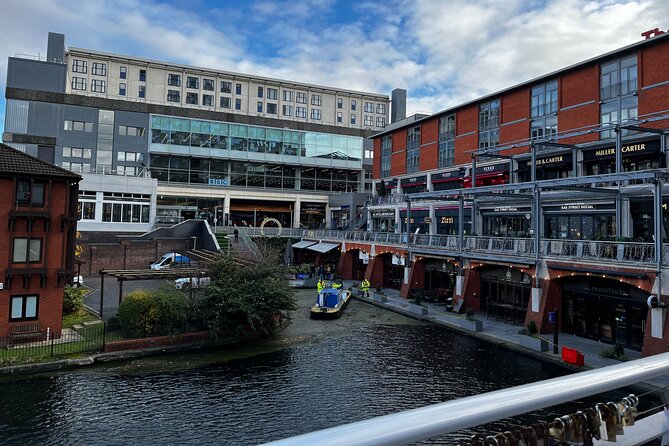
The tour’s early highlight is the Gas Street Basin area. This is where Birmingham’s canal era stops being a trivia fact and becomes a place you can actually stand in. The guide leans on the claim that Birmingham has more canals than Venice, and while that is not meant as a strict worldwide comparison, it does land a key point: Birmingham has about 35 miles of waterways and more canal mileage than Venice.
What I like here is the practical context. The canals were cut for moving goods like coal and iron, so the story explains why this part of the city looks the way it does. It also helps you connect the canal basin to the rest of Birmingham, because so many buildings and districts make sense once you know where the cargo moved.
Next comes Brindley Place, named for engineer James Brindley. The audio background gives you specifics, including that he was born in 1716 in Buxton, Derbyshire, and that his work shaped Britain’s canal system in the 18th century. That turns this stop from scenery into a mini biography you can actually remember.
There is also an architectural headliner nearby: the National Sea Life Centre. The tour does not include admission, but the audio points you to what to notice. So if you want to skip the ticket cost, you can still use the building as a photo and perspective stop, then keep going without detouring.
Roundhouse Birmingham, Arena Birmingham, and the ICC for a modern Birmingham beat
After the canal-side story, the walk shifts into a more off-the-main-path feel with Roundhouse Birmingham. The audio makes a strong case for it as a lesser-known stop, and you can see why once you spot the building. Designed by W.H. Ward and constructed in 1874, it is one of Birmingham’s distinctive structures, even if it does not get the same attention as the biggest city-center landmarks.
I like that this stop adds variety without making the tour feel random. It gives you a chance to slow down, look at details, and then continue with a clearer sense of how the city evolved from waterways and industry into entertainment and events.
From there, the route moves toward major venues, including Arena Birmingham and the International Convention Centre (ICC). Both are part of Birmingham’s modern identity. The guide keeps it simple here: expect exterior views and short pauses, not long museum-style explanations. This is useful if you like tours that keep you walking, rather than tours that turn into a sit-down lecture.
If you are traveling with limited time, this “modern landmarks” stretch is a good payoff. You get instant city context, then you move back toward the classic civic core.
Centenary Square, Birmingham Library, and the squares that name the city’s priorities
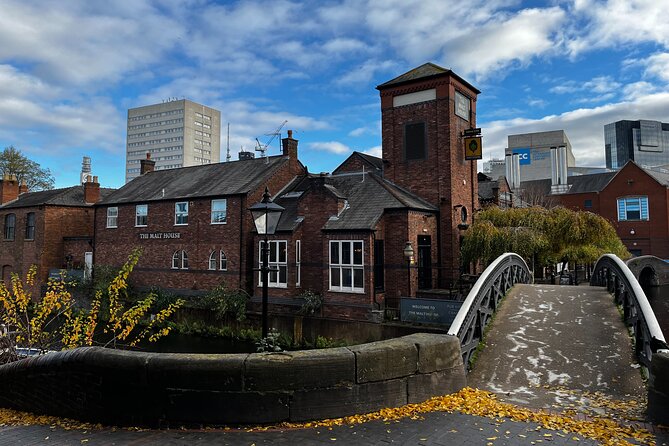
Once you reach Centenary Square, the tour leans into Birmingham’s civic planning. The square traces back to the late 19th century and originally went by another name: Congreve Square, honoring Sir William Congreve. The guide notes he was a military officer, politician, and inventor, which is a great detail because it explains why a public space would be linked to innovation and governance, not just royal pageantry.
Next is the Library of Birmingham, with roots that reach back to the predecessor library established in 1861. Even if you do not go inside, the audio context helps you understand why this building belongs in a “Birmingham matters” route. It is not just a place to pick up books, it is part of the city’s long habit of building institutions for public life.
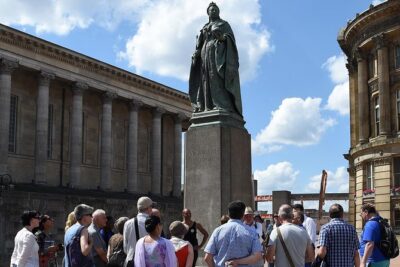
Then you head to two more named squares, each with a different kind of meaning. Chamberlain Square takes its name from Joseph Chamberlain and began as Corporation Street Square in the late 19th century. Victoria Square began as Council House Square, and in 1901 it was renamed to mark Queen Victoria’s Diamond Jubilee.
I like how this section is built for memory. You are not just passing through streets, you are collecting names and dates that explain how Birmingham labeled its identity over time.
St Philip’s Cathedral Garden, Bullring, Grand Central, and St Martin’s long timeline
The walk’s emotional tone shifts again at St Philip’s Cathedral Garden. The guide calls St. Philip’s Cathedral the Birmingham Cathedral and notes it is the third smallest cathedral in the UK. It is an Anglican church traced back to the early 18th century, which gives you a sense of depth even when you are just stopping for a few minutes.
From there, the tour lands at Bullring & Grand Central Birmingham. This is one of the most practical stops for many visitors because it is near major transport and it is easy to break for a snack or a restroom. The audio connects Grand Central to Birmingham New Street Station, a railway hub with Victorian-era roots. It also mentions that the Grand Central atrium has over 60 shops and restaurants, with options ranging from high-end fashion to local produce.
The route also includes a quick focus on the Bull Statue, presented as a symbol of strength, resilience, and the industrious spirit that defines Birmingham. Even in a brief stop, that kind of explanation helps you interpret public art as meaning, not just decoration.
Then you wrap up this section at Saint Martins Church Centre, specifically St Martin in the Bull Ring. The audio gives a big anchor: it is Birmingham’s oldest parish church, with roots over 800 years old. If you are the type who enjoys one “time capsule” building per walk, this one does that job.
Also on in Birmingham, no fuss
- On the Origins of Charles Darwin: A Self-Guided Audio Tour of Shrewsbury★ 4.5 · 16 reviews
- Birmingham Bricks and Canals Self Guided Tour with App★ 4.5 · 4 reviews
- Birmingham Tour App, Hidden Gems Game and Big Britain Quiz (1 Day Pass) UK★ 3.5 · 3 reviews
- Western Approaches Self Guided Tour★ 5.0 · 505 reviews
Chinatown to Gay Village, ending with food and community space
The final stretch moves into neighborhood character. First is Birmingham Chinatown, described as the city’s Chinese Quarter with a mix of traditions, flavors, and history. The stop is short, so treat it as a navigation waypoint plus an invitation to eat or browse on your own after the tour ends.
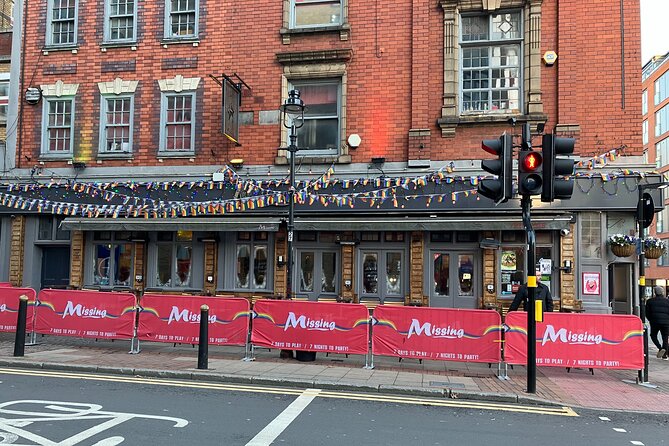
Then you finish in Gay Village, with the audio framed around inclusion and pride in the city center. The guide emphasizes diversity and the LGBTQ+ community’s resilience and triumphs. Practically, this ending location is handy because you are not stuck back at a far-out edge of town. You are in a zone where it is easy to keep walking, find a meal, and decide how late you want to go.
When the tour officially ends, you are free to wander Birmingham City Centre at your leisure. That loose finish works well because the route already handed you the “anchor points” of the walk.
How Helen’s audio guide and GPS make this self-guided tour feel simple
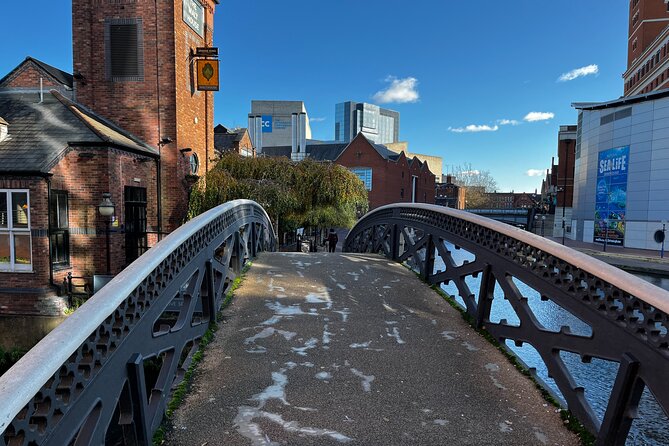
This is not a headset-only adventure. It is set up with map, directions, GPS route, and stops, plus audio guide, videos, and pictures. The audio itself is narrated by Helen, and the tour specifies it uses her voice rather than a computer-generated narration. In my book, that is a big deal because human pacing helps you know when to slow down, read, or move on.
You also get 3 weeks unlimited access to the tour on the app. That means you can plan one day, but if the weather turns or your schedule slips, you can still come back without repurchasing.
The small tip I would give you comes from real-world friction: if you lose the route early, do not panic. One helpful workaround is to re-check the written directions inside the app, since the directions may appear later in the text. Once you spot where the instructions are, it is usually quick to get back on track.
And please do not skip the “Before you go” section in your email confirmation. App-based tours can fail in edge cases, so a brief test helps you avoid the worst-case scenario where the activity link does not open the way you expect.
Price, pacing, and who this Birmingham walk is best for
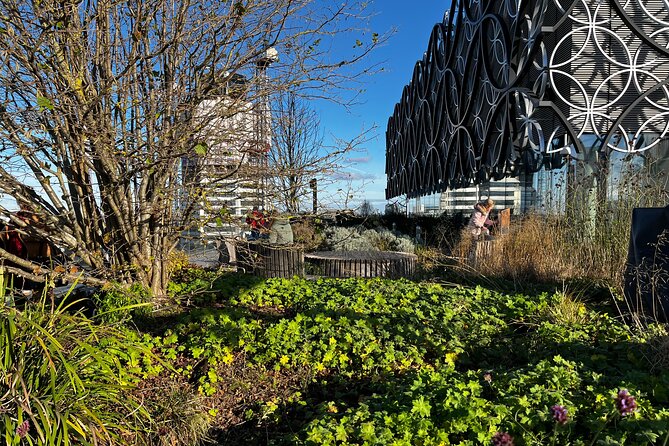
At $12.26 per person, this is priced like an inexpensive “tour supplement,” not like a premium guided day. For that cost, you are buying time-saving navigation, plus a planned route that hits canal history, civic landmarks, churches, and neighborhood stops. The value gets stronger because most stops are free, and only the National Sea Life Centre is called out as not included.
The pacing works best if you like structure but want freedom. Each stop is short, so you are not committing to long museum hours. With moderate physical fitness, you should be fine, and the tour is close to public transportation for easy starts and quick adjustments.
Who I think should book it:
- You want a self-guided walk that still teaches you the “why,” not just the “what”
- You like mixing eras, especially canals plus city-center landmarks
- You are comfortable using your phone for directions and audio
Who might hesitate:
- You dislike app-dependent experiences and would rather have a person guiding you in real time
- You need absolute certainty on day-one tech access, because the app is part of how you experience the tour
Should you book this Birmingham self-guided walking tour?
Yes, if you want a straightforward way to see Birmingham’s main stories without spending extra on attractions. The big wins are the canal-era context, the thoughtful stop timing, and Helen’s human audio that keeps the walk coherent.
Before you go, do a quick app test and read the email confirmation’s Before you go section. If that all works smoothly for you, this tour is an efficient, low-stress way to connect Birmingham’s industrial roots to its modern city life.
FAQ
Where does the Birmingham Private Self-Guided Walking Tour start and end?
It starts at 197 Wharfside St, Birmingham B1 1QH, UK. It ends in Gay Village, Birmingham, where you are free to wander around the city center afterward.
How long should I plan for the tour?
Plan for about 2 to 3 hours for the full route.
Is the tour offered in English?
Yes, the tour is offered in English.
Do I need an in-person guide?
No. It is self-guided, and Helen provides the audio guidance through the app, not an in-person guide.
Is the National Sea Life Centre entry included?
No, entrance to the National Sea Life Centre is not included. The tour will still tell you what you need to know about it.
How long do I have access to the tour in the app?
You get 3 weeks unlimited access to the self-guided tour in the app after purchase.
Latest to join the queue for Birmingham



Self-Guided Tours, compared.

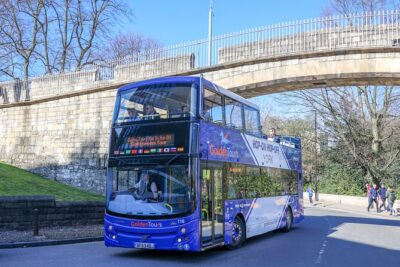
Golden Tours York Hop-on Hop-off Open Top Bus Tour with Audio Guide
Read our review →
Windsor Castle Tour from London with Transportation & Audio Guide
Read our review →
London Panoramic Open Top Bus Tour with Audio Guide
Read our review →
Romans, Vikings and Medieval York: An Audio Tour
Read our review →
Emirates Stadium and Arsenal Museum Entrance Ticket Including Audio Guide
Read our review →
Private Self-Guided Dinky Door Hunt in Cambridge
Read our review →
Natural History Museum Express Guided Tour & Audio Guide
Read our review →Browse the lists this tour appears in