
Reviewed · WALKING TOURS
Birmingham Walking Tour: Canals, Victorians & Today (1:30pm)
Birmingham is the kind of city you understand fast, if you start smart. This walking tour links canals, Victorian-era pivots, and modern redevelopment into one smooth loop you can do in about two hours. I like that it uses a live audio setup, so you can keep moving while still catching the details.
My second favorite thing is the mix of places, from the Library of Birmingham and the ICC to atmospheric canal-side scenes like Gas Street Basin. One consideration: it really does work best when the weather is good, since you are out on foot for the full route.
In This Review
- Key highlights worth planning for
- Starting at the Library of Birmingham, a great meet-up point
- How live audio keeps the pace brisk (and your ears happy)
- International Convention Centre and Symphony Hall: Birmingham’s modern stage
- Brindleyplace: canal-side history meets modern city life
- Gas Street Basin: where the canals steal the show
- Victoria Square and Chamberlain Square: Victorian roots and what’s next
- Birmingham Museum & Art Gallery, The Mailbox, and The Cube: a focused taste of inside stops
- The Ikon Gallery and Town Hall: architecture with a backstory
- Hall of Memory: art deco remembrance, then and now
- ICC Mall and the path back toward Centenary Square
- Who should book this Birmingham walking tour, and who might not love it
- Price and value: why it feels fair at about $20.80
- Should you book the 1:30pm Canals, Victorians and Today walk?
- FAQ
- How long is the Birmingham walking tour?
- Where does the tour start and end?
- What is the meeting start time for this version of the tour?
- What language is the tour in?
- Is there a mobile ticket?
- Does the tour include live audio?
- Are any admissions included?
- Do I need good weather?
- Can I cancel for a full refund?
Key highlights worth planning for
- Live audio with receivers means you hear the guide clearly without constantly clustering
- Library of Birmingham is the hub for starting and ending, right in the action at Centenary Square
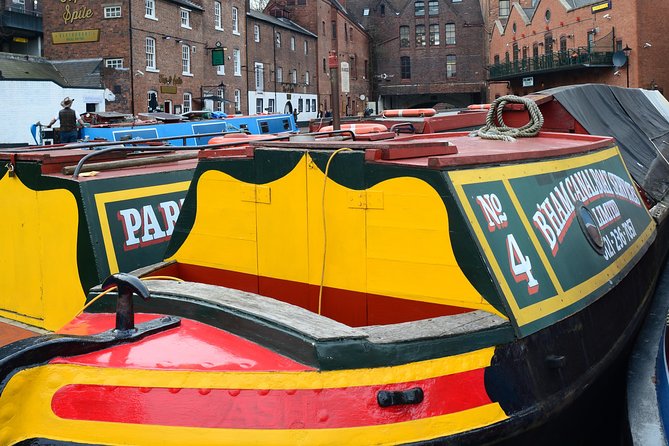
- Gas Street Basin + canal context give you a sense of why Birmingham looks the way it does
- Victorian-to-today storyline runs through Victoria Square, Chamberlain Square, and the Town Hall area
- Included entry moments at key stops like Birmingham Museum & Art Gallery, The Mailbox, and The Cube
- War memory at Hall of Memory adds a moving, art-deco layer to the city walk
Starting at the Library of Birmingham, a great meet-up point
The tour begins at the Library of Birmingham on Centenary Square (B1 2ND). It is a strong choice for a meeting point because it feels like an actual landmark, not just a random sidewalk spot. You can orient yourself quickly, and you are already standing in the part of the center where Birmingham’s newer identity shows up.
The walk is timed to feel like a compact afternoon, not a full-day hike. Expect about two hours on foot with short stops. That matters because Birmingham’s sights are spread out enough that your time can vanish if you try to DIY everything with no plan.
There is also a very practical vibe to how this tour runs. You stay on the move, you pause just long enough to take in the scene, and you get the context so the buildings and squares make sense instead of feeling like scattered photos.
More England on foot, brolly optional:

How live audio keeps the pace brisk (and your ears happy)
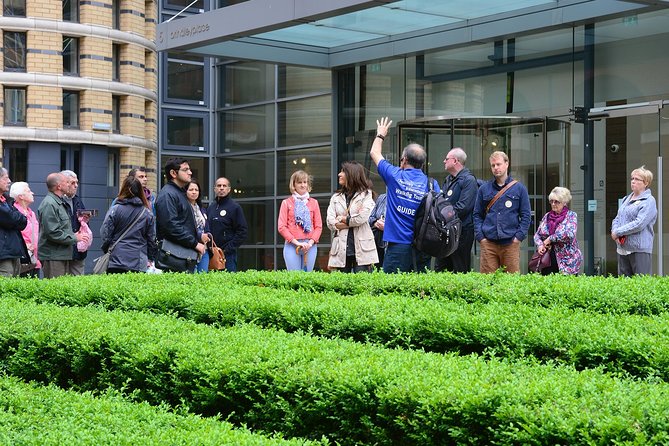
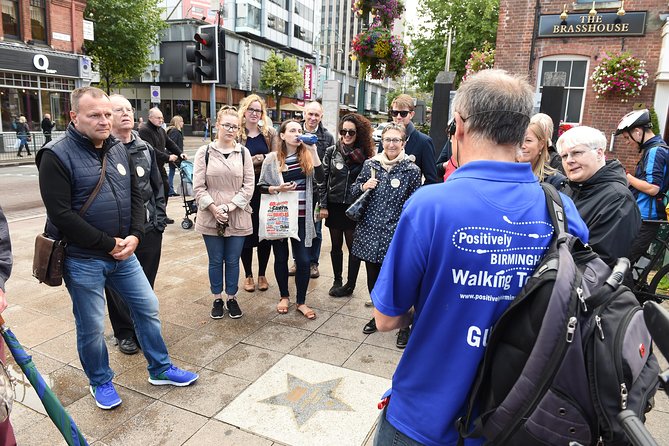
A big reason this tour feels easy is the live audio system. Each person gets a receiver, and the guide wears a radio transmitter. You listen through your own earphones with a 3.5 mm socket, or you can use a pair provided by the tour.
That design does two smart things. First, it helps you hear the guide even when the group is walking. Second, it means you are not stuck staring over someone’s shoulder at every stop. You can keep your attention on what matters, the street, the façades, and the little details the guide points out.
One small caution: the tour may use the audio system but it is not guaranteed every time. If you are the kind of person who hates guessing, bring your own earphones anyway. They tend to make the experience smoother.
International Convention Centre and Symphony Hall: Birmingham’s modern stage
Early in the route, you head toward the International Convention Centre Birmingham and nearby Symphony Hall. This is one of those stops where the guide helps you connect the dots between civic ambition and what the city became known for. You see how the ICC fits into the city’s center and how it helps shape activity, especially around big events.
This part of the walk is also useful if you want a fast sense of Birmingham’s scale. The buildings here feel purposeful and built for crowds. Even if you are not attending an event, it’s the kind of architecture that tells you the city is still planning for the future, not only remembering the past.
Because this is early in the tour, it also sets the rhythm. You spend the first half learning how Birmingham organizes itself, then you get into the older layers where that planning came from.
Brindleyplace: canal-side history meets modern city life
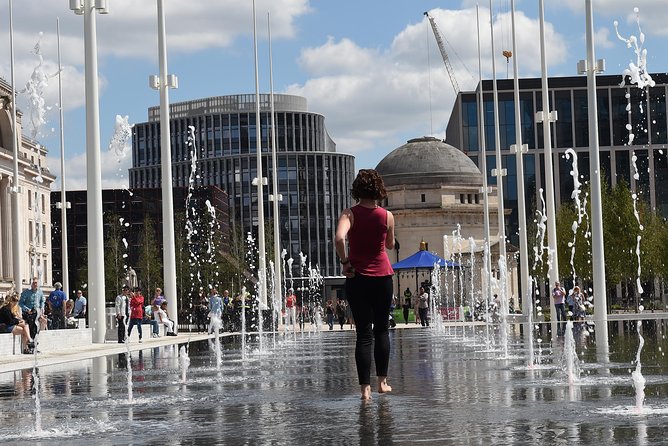
Next up is Brindleyplace. This stop works because the guide frames it as a transformation story: what it used to represent, and what it became later. You get to see how an area tied to industry and trade can be reshaped into a mixed-use zone while keeping a sense of atmosphere.
What I like about this section is that it is not just a pretty walk. You are learning why places like this exist at all. Birmingham’s rise was not only about factories. It was also about movement, shipping, and the systems that allowed goods and people to connect.
If you are thinking of grabbing coffee or a snack, this is a sensible area to do it later on your own. During the tour, though, focus on the big picture: the guide is showing you how old infrastructure can become a modern meeting point.
Gas Street Basin: where the canals steal the show
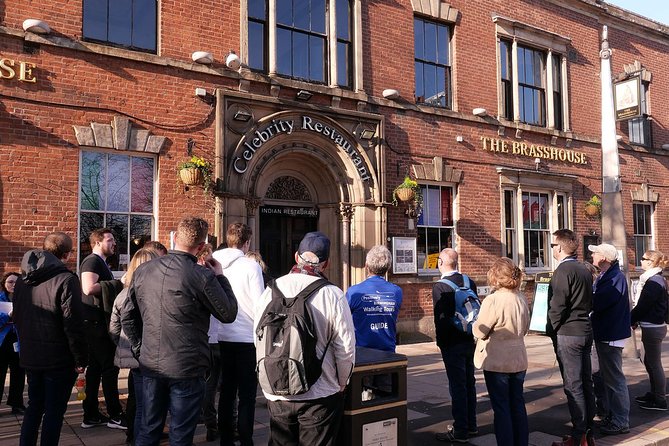
Then comes Gas Street Basin, one of the most atmospheric stops on the route. The guide helps you understand the coming of the canals and why this location became a core part of the country’s canal network. Standing here, the canal story stops being abstract. You can actually see how the basin fits into the city’s shape.
This is the highlight that best matches the tour name. If your goal is specifically to understand Birmingham through its waterways, this is where the tour delivers. It feels like a scene shift, from broad civic streets to water-level perspective.
Practical tip: bring a phone camera mode you trust. The light can look different by minute here, and the guide tends to time explanations in ways that line up with what you are looking at.
Also on in Birmingham, no fuss
- Shrewsbury Prison Guided Tour★ 5.0 · 2,628 reviews
- Entry ticket to Hoo Zoo and Dinosaur World in Telford★ 5.0 · 591 reviews
- Cadbury World Entry Ticket★ 3.0 · 524 reviews
- Shrewsbury Prison Entry Ticket★ 4.5 · 426 reviews
Victoria Square and Chamberlain Square: Victorian roots and what’s next
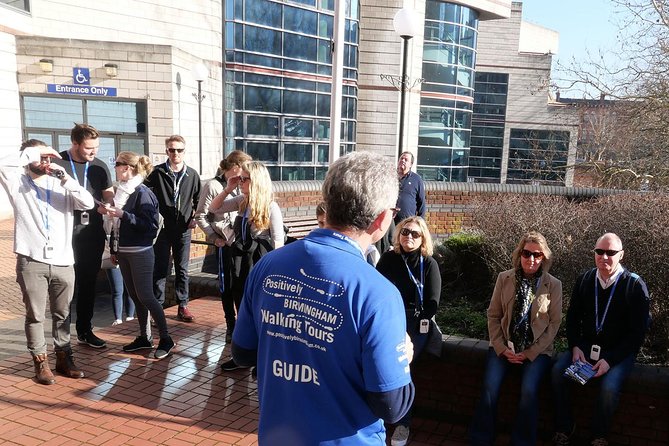
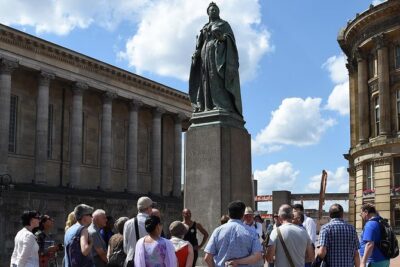
From the canal-side mood, you head back toward the center through Victoria Square. This is where the tour leans into the Victorian period and public art, and then pushes on to show developments up to today. You see how Birmingham keeps reworking its identity in the same urban footprint, rather than moving it all to a brand-new part of town.
A short distance later, Chamberlain Square brings in the idea of Birmingham moving into the future. Even in quick stops, the guide’s job is to connect time periods, so you do not experience each square like a separate postcard. You experience it like a chapter in one story.
Why this matters for you as a visitor: if you only see the city through its newest buildings, you miss the logic underneath. These stops give you that logic.
Also, pay attention to the way public art and architectural style affect how these spaces feel. Even when you are not reading plaques, the guide’s context helps you notice what you would otherwise skip.
Birmingham Museum & Art Gallery, The Mailbox, and The Cube: a focused taste of inside stops
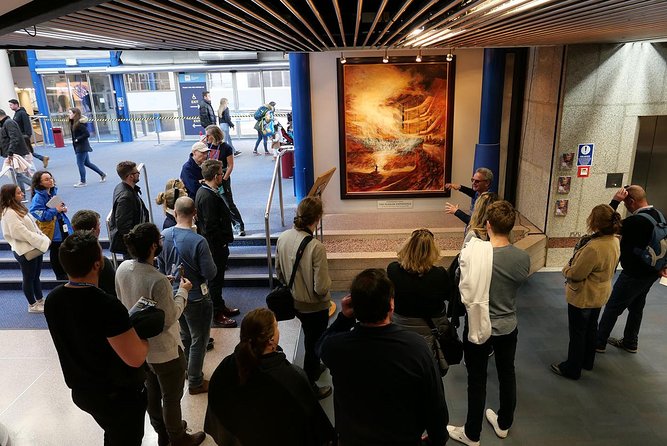
The route includes a quick, high-value set of “in-and-around” moments at Birmingham Museum & Art Gallery, The Mailbox, and The Cube.
At Birmingham Museum & Art Gallery, you pass the entrance and look at the striking 1880s double portico design. The key here is that you are not just seeing a building. You get the reason it’s worth attention, which turns a quick glance into something memorable.
Next is The Mailbox, built from the conversion of a former post office sorting office into a mixed-use development. It also includes the Birmingham headquarters of the BBC. This is a very modern example of reuse, and the guide helps you notice what survived and what changed.
Finally, The Cube is where you get some payoff for the walking. You get time here and the views from the upper floors are described as among the best in the city. Even if you are not a “views person,” it’s worth doing because the route makes more sense once you see how your feet moved through the center.
If you care about value: these included moments are the places where the tour does more than point. You get access or time that would cost you effort if you tried to build the same route alone.
The Ikon Gallery and Town Hall: architecture with a backstory
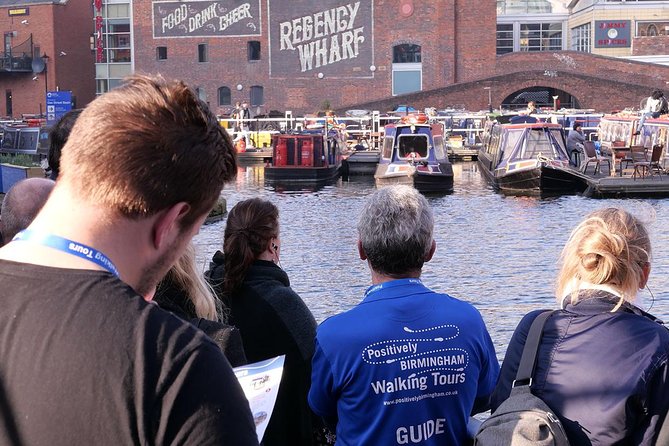
Two other stops help round out the city’s character.
First, you reach the Ikon Gallery. The guide points out that it was originally built as a school, and that it is one of over forty built by the architects Martin & Chamberlain. That kind of fact changes how you look at a façade. You start to see how education, civic life, and culture can share the same buildings over time.
Then you move through the area near Birmingham Town Hall, described as the oldest building in Victoria Square, dating from 1834. Short as it is, it adds depth to the Victorian thread. Town halls tend to be where communities formalize themselves, and Birmingham’s version helps you feel the city’s long civic continuity.
These stops are ideal if you like architecture, but even if you do not, they make the walk feel “complete.” You get the sense that Birmingham is not only about canals and redevelopment, it’s also about institutions that anchored daily life.
Hall of Memory: art deco remembrance, then and now
One of the most meaningful pauses is Hall of Memory. It is an art deco memorial originally built in 1925 to remember those fallen in the First World War. The space now includes the Second World War and more recent conflicts.
This stop is short, but it leaves an emotional imprint because you are not only seeing design. You are seeing how a city chooses to remember. The guide also highlights specific art deco features, including William Bloye tablets.
If you have limited time in Birmingham, this is a good reminder that the city’s identity is not only industrial or architectural. It’s also human.
ICC Mall and the path back toward Centenary Square
As you near the end, you walk through ICC Mall, described as the main route from Centenary Square to the canalside. This part helps stitch the route together. Once you have learned the canal story and the Victorian-to-now storyline, walking this corridor feels less like passing through and more like a guided connection.
Then you return to the Library of Birmingham, finishing back at the same meeting point. That loop is part of why the tour is easy to recommend. You do not need to figure out transportation at the end, and you end where you started.
Who should book this Birmingham walking tour, and who might not love it
I think this tour is a strong fit for you if you want:
- A quick way to learn Birmingham without cramming
- A walk with a clear theme: canals, Victorian heritage, and today
- A guide-led route that hits the main sights in a short afternoon
- A setup where you can hear explanations clearly while walking, thanks to the live audio receivers
You might think twice if you:
- Hate walking for around two hours, even at a moderate pace
- Only want one narrow topic, like canals only, since the route intentionally spreads across canals, Victorian landmarks, and modern city spaces
It also suits plenty of visitors who want an on-arrival orientation. The route covers the center in a way that helps you plan your next day, whether you head to museums, markets, or more canal-side wandering.
Price and value: why it feels fair at about $20.80
At $20.80 per person, the ticket price is not just about someone telling stories from the curb. You are paying for:
- A structured route in a city center that can otherwise feel tricky to map out quickly
- The live audio system with receivers and the chance to use your own 3.5 mm earphones
- Several meaningful stops, including included entry time at places like Birmingham Museum & Art Gallery, The Mailbox, and The Cube
- A time-efficient loop that takes about two hours and ends right back at the start
In plain terms, you are getting a lot of sight time plus context. That’s where the value lands.
If you are deciding between this and a self-guided walk, the difference is time. This tour saves you from figuring out what matters, where to stand, and what the buildings mean.
Should you book the 1:30pm Canals, Victorians and Today walk?
Yes, if you want to get oriented fast and you like seeing how one city layer connects to the next. This route gives you canals with atmosphere, Victorian-era identity markers, and modern anchors like the ICC and the BBC-linked Mailbox complex, all in one continuous afternoon.
If your schedule allows a 1:30pm start, it’s a solid way to use a limited window in Birmingham. And if you want the best experience, plan for decent weather. The tour calls for good conditions, and on a grey day you can still learn a lot, but you lose some of the canal-side charm.
FAQ
How long is the Birmingham walking tour?
The tour lasts about 2 hours.
Where does the tour start and end?
It starts at the Library of Birmingham on Centenary Square (B1 2ND, UK) and ends back at the same meeting point.
What is the meeting start time for this version of the tour?
The start time is 1:30 pm.
What language is the tour in?
The tour is offered in English.
Is there a mobile ticket?
Yes, the tour provides a mobile ticket.
Does the tour include live audio?
The tour uses a live audio system that includes receivers, with the guide using a radio transmitter. You can use your own 3.5 mm earphones or you may be provided a new pair. The audio system may not always be used.
Are any admissions included?
Some stops are free to enter or view, and others include admission ticket access, including Birmingham Museum & Art Gallery, The Mailbox, and The Cube.
Do I need good weather?
Yes. The tour requires good weather. If it is canceled due to poor weather, you will be offered a different date or a full refund.
Can I cancel for a full refund?
Free cancellation is available up to 24 hours in advance for a full refund. If you cancel less than 24 hours before the start time, the amount paid is not refunded.
Latest to join the queue for Birmingham







Walking Tours, compared.
Oxford University Walking Tour With University Alumni Guide
Read our review →
Tour for Muggles The Ultimate Harry Potter Walking Tour in London
Read our review →
Cambridge University Walking Tour by Alumni™ Kings College Option
Read our review →
Blackbeard to Banksy – The Ultimate Walking Tour of Bristol
Read our review →
Air Raid Shelter + St. Nicholas Market Walking Tour
Read our review →
Walking Tour of Bath with Blue Badge Tourist Guide
Read our review →
Changing of the Guard Guided Walking Tour in London
Read our review →
Shadows of York: Ghost Walk and Horrible History.
Read our review →Browse the lists this tour appears in