
Reviewed · WALKING TOURS IN BATH
Walking Tour of Bath with Blue Badge Tourist Guide
Two hours that make Bath click. A Blue Badge guide brings the city into focus, from Bath Abbey’s layered story to Roman Bath legends and the Georgian showpieces in between. I like the tight pace, you get major sights without feeling rushed. I also love the guide-led Q and A, it turns photo stops into real understanding. One catch, entrance tickets to big sites are not included, so you may want to plan ahead if you want to go inside.
You’ll start right by Bath Abbey, then walk a circular route through classic Bath streets and landmarks. Stops are short, around 10 minutes each, which is ideal if this is your first time in town and you want a smart overview before you explore on your own. The tour caps at 20 people, so it stays personal. Expect moderate walking, including some uphill and steps, so wear good shoes.
At about $30.51 per person for roughly two hours, this is priced like a real guided experience, not a casual stroll. Given the guide credentials and the number of key sights covered, I think it is good value if you want context, not just scenery. If you are mainly focused on entering buildings, you should budget for attraction entrances separately.
In This Review
- Key things that make this Bath walking tour worth it
- Two Hours to Get Your Bearings in Bath
- Meet at Bath Abbey, Start With the Big Picture
- Bath Abbey Stories You Can Actually Use
- Queen Square to The Circus: Georgian Bath in Bite-Sized Stops
- Pulteney Bridge and Sally Lunn’s: River Views and Everyday Character
- Roman Baths Context From the Street Level
- The Blue Badge Guide Effect: More Than Facts
- Pace, Weather, and What to Wear
- Price and Value: Where Your Money Actually Goes
- Who This Bath Walking Tour Is Best For
- Should You Book This Bath Tour?
Key things that make this Bath walking tour worth it
- Blue Badge guide leadership keeps the history focused and accurate, with time for your questions
- Bath Abbey orientation early on helps you understand what you are looking at before you move on
- Georgian icons in compact form, including Queen Square, the Royal Crescent, and The Circus
- Pulteney Bridge storytelling, linking the river setting to Bath’s wider cultural moments
- Roman Bath context without ticket stress, with Aqua Sulis explained from the street level
- Small group size, maximum 20 people, which helps you actually hear the guide
Two Hours to Get Your Bearings in Bath
Bath can feel like two different cities at once. You have Roman-era grandeur under your feet, then Georgian elegance towering above you. This walking tour does a useful job of connecting the dots fast, so your later wandering makes more sense.
What I like is that you are not left with a pile of facts. You get a path through the places that matter most, with stories that explain why Bath looks the way it does. The guide points out architectural details you would normally miss, like how Bath Abbey evolved over time and how the city’s later building styles built on earlier foundations.
There is also something practical here. If you only have a morning or afternoon in Bath, this gives you a map made of meaning. After the walk, you are better prepared to choose what deserves your time next, whether that is the Roman Baths inside, another museum, or simply returning to a favorite street corner.
More Walking Tours in Bath
Meet at Bath Abbey, Start With the Big Picture
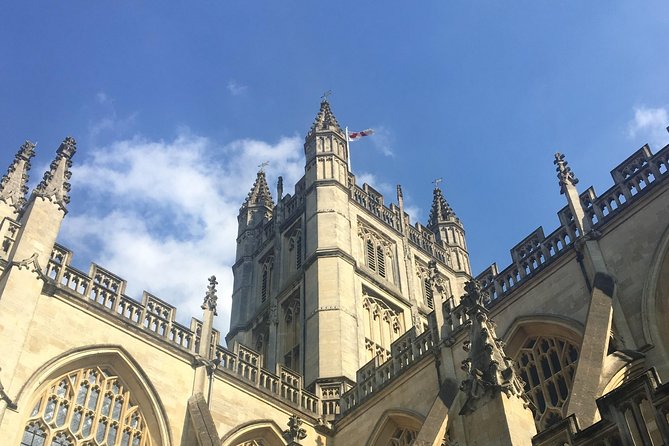
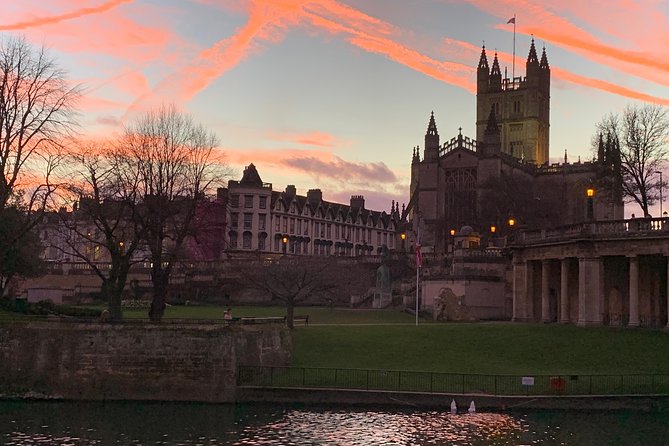
You meet at Abbey Churchyard on Abbey Street, right by Bath Abbey. The starting point matters because Bath Abbey is not just a pretty building. It sets the tone for the whole town, and the guide uses it as a reference point for the walking route.
Early on, you’ll hear about what came before the current abbey on that site. That matters because Bath is layered, and the guide keeps reminding you that you are seeing one era built on another. You also get a quick history framing that helps the rest of the stops land more clearly.
At the end of the walk, you finish back near Bath Abbey and the Roman Baths. That return loop is helpful. It keeps you oriented, and it means you are not ending miles away from where you started.
Bath Abbey Stories You Can Actually Use
Bath Abbey gets two key moments on this tour. The first is an orientation stop outside, and the second includes an overview plus time for Q and A.
The first stop gives you the visual basics and the story scaffolding. You’ll learn what makes Bath Abbey special, and the guide will help you distinguish the abbey’s church identity compared with a cathedral. That might sound like trivia, but it changes how you interpret the building once you look closely.
By the time you circle back for the final stop, the Q and A time becomes a chance to connect everything. If you are wondering how the city’s Roman past fits into its later development, this is the moment to ask. If you are curious about why Bath became famous for its architecture, ask then too.
I also like that the tour uses Bath Abbey as a rhythm point. After a few streets of architecture, you get to reset your focus with one of the most recognizable landmarks in town.
Queen Square to The Circus: Georgian Bath in Bite-Sized Stops
Once you leave Abbey area, the tour moves into classic Bath architecture. Each stop is brief, but the guide keeps it specific so you do not walk past the highlights without understanding them.
Queen Square is one example. You get a quick look at the architecture and a reminder of later history, including WWII damage from 1942. That kind of detail helps you see the city as lived-in, not just preserved postcards.
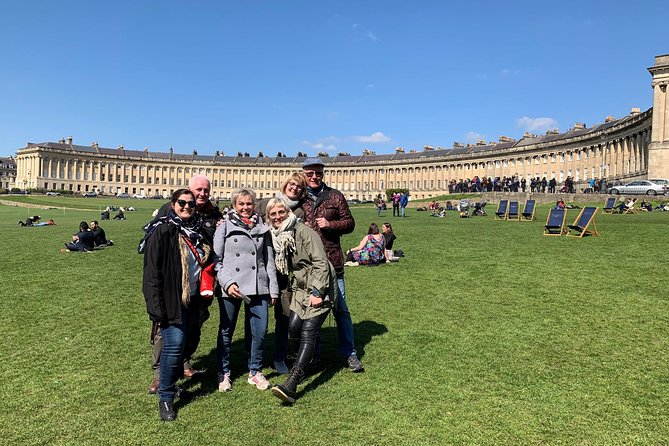
Then comes the Royal Crescent, one of the most famous curved terraces in Bath. The guide focuses on its design and stories tied to Bath’s culture. Standing there after hearing the reasoning behind the style, it is easier to appreciate the building as a statement, not just a backdrop.
Next is The Circus, another architectural showpiece. The guide’s job here is not to recite dates. It is to point out what makes the space feel the way it does, and how the design choices connect to Bath’s reputation as a place of taste and planning.
These three stops work especially well together. You start seeing patterns. The streets, the terraces, the way sightlines behave, even the relationship between city buildings and the surrounding geography. If you are the type who later likes to photograph details, you will probably end up doing extra looking on your own.
Pulteney Bridge and Sally Lunn’s: River Views and Everyday Character
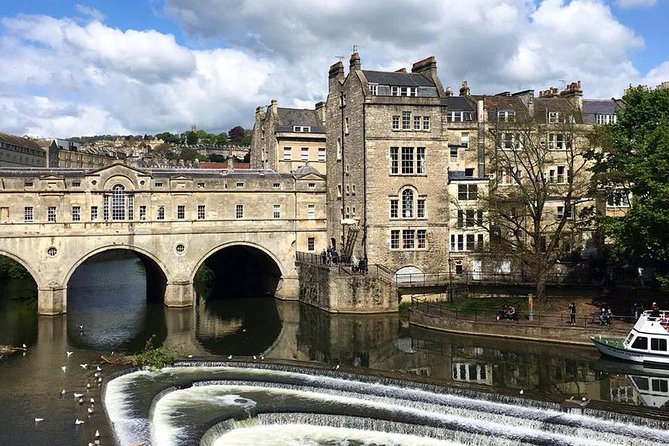
Pulteney Bridge is where Bath starts to look cinematic. The guide talks about the river setting and also connects the bridge to Bath’s filmscapes. Even if you cannot picture the specific scenes, you will understand why this spot shows up in popular culture. The view down the river becomes part of the city’s identity.
This stop is also useful because it breaks the architectural rhythm. After crescents and squares, you get water, reflections, and a different scale of scenery. It is a good moment to slow down and take photos, even if the official stop is short.
Then you move to Sally Lunn’s Museum. You’ll get architecture, stories, and local history tied to the building and its name. The museum itself is not part of an included entrance visit, so think of this as a guided pass-by. Still, it gives you a starting point if you want to come back later for a closer look or a snack. One recurring theme from the tour experiences people described is that Bath is better when you mix your sightseeing with baked treats, and this stop naturally cues that idea.
More England on foot, brolly optional:
- Bridgerton Walking Tour of Filming Locations & Storylines – Bath★ 4.5 · 178 reviews
- BATH: 2-Hour Bath Walking Tour of Bridgerton Filming Locations★ 5.0 · 99 reviews
- BATH: Private Walking Tour | Blue Badge Guide, 2h, £225 per group★ 5.0 · 66 reviews
- Roman Baths Entry and Walking Tour with Blue Badge Tour Guide★ 5.0 · 58 reviews
Roman Baths Context From the Street Level
The Roman Baths are the headline in most first-time Bath plans, but this tour handles them with a clever compromise. You get the big picture without being forced to spend the whole time inside.
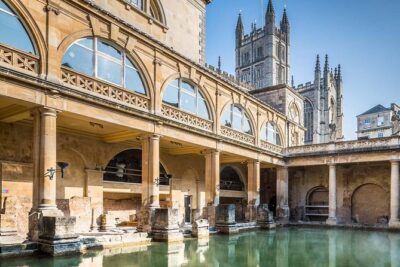
Near the end, you view the entrance and hear about Roman occupation of Bath, often described as Aqua Sulis. The guide gives the context you need so that if you do go in on your own after the walk, you understand what you are looking at and why it mattered.
This approach is valuable if you want flexibility. Maybe you only have enough time for an outside look that day. Maybe you decide right then that you want the full Roman Baths experience and will purchase the entrance separately. Either way, the guide sets you up so you can make a better decision.
The Blue Badge Guide Effect: More Than Facts
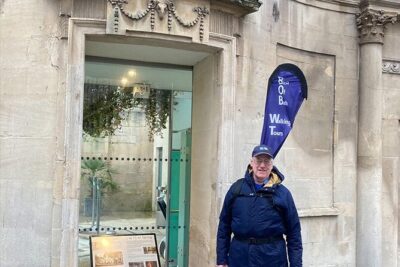
A walking tour lives or dies by the guide. On this one, the key ingredient is that you get a certified Blue Badge tourist guide. That credential shows up in the way the tour is structured, clear storytelling, and the freedom to answer your specific questions.
Names that come up often include Jess, Andrew, Victoria, and Owen. I see a pattern in how people describe these guides: high energy, strong command of details, and a sense of humor that keeps the group listening. More importantly, they adjust the pace. People mention the guide watching the group and making sure everyone can hear, which matters in a real street setting.
The strongest part is how the tour uses stories to explain architecture. You are not just told what you are looking at. You learn why Bath’s buildings and streets feel the way they do. That turns the walk into something you can build on later, which is the best kind of souvenir.
Pace, Weather, and What to Wear
This is a moderate physical effort walk. Expect a fair amount of time on your feet in a compact route, plus some uphill or up-stairs depending on the day and your exact starting and stopping angles.
I recommend sturdy walking shoes with grip. Bath stone can look pretty and still be slippery when the weather turns. Bring a light layer, even in mild months, because you will be outside for the full experience.
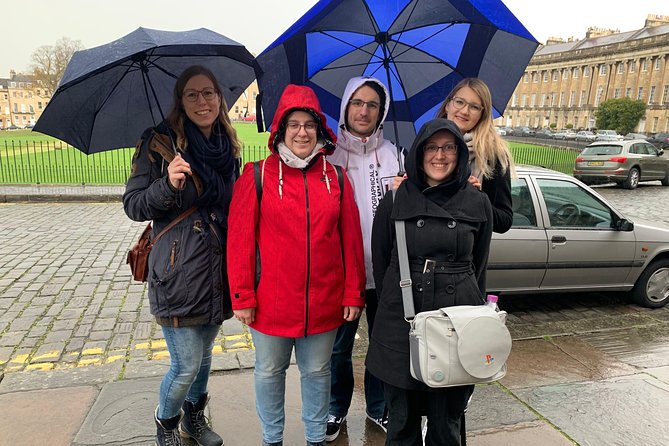
Weather also plays a role. The tour requires good weather. If poor conditions cancel it, you should get offered a different date or a full refund. If you are visiting in a season with frequent drizzle, plan your day so you can absorb a weather shift without ruining everything else.
Price and Value: Where Your Money Actually Goes
At $30.51 per person, you are paying for a professional guide and a guided route that hits major Bath highlights in about two hours. Entrance fees to attractions are not included, so the price is focused on interpretation rather than admissions.
So how do you decide if it is worth it for you? If you want to spend your time inside attractions, then this is the primer. Buy the tour experience first, then choose what you want to pay to enter after.
If you are the type who hates doing research and just wants to understand what you are seeing as you go, this is likely a good match. The guide covers a lot of ground, but it is not aimless. It is structured to create a coherent picture of Bath, from Roman references to Georgian elegance and the later city layers.
Who This Bath Walking Tour Is Best For
I would book this when you fit one or more of these situations:
- It is your first time in Bath and you want a smart overview
- You care about architecture and how stories connect across eras
- You have a short time window, like a half day or a tight schedule
- You want a guide who can handle questions, not just deliver a script
It might not be the best fit if you want a long, slow wander with lots of museum time. The stops are brief and entrance tickets are not included, so you will have to add your own time for interior visits.
If you have mobility limits, the tour still may work for you only if your walking tolerance matches a moderate level. Reviews point out that there can be steps or uphill moments, so assess your comfort honestly before you go.
Should You Book This Bath Tour?
Yes, I think you should book this walking tour if you want to understand Bath quickly and well. It is one of the easiest ways to turn a list of famous sights into a real sense of place.
Book it if you like guided interpretation, want to ask questions, and plan to use the Roman Baths and Bath Abbey as anchors for your day. If you are skipping entrances and just want atmosphere, you can still enjoy it, but you should know that the big indoor sites will be up to you to arrange separately.
If you are on the fence, choose this tour on the day you will arrive in Bath. Use it to get oriented first, then decide what deserves your money and time next.
Latest to join the queue for Bath







Walking Tours in Bath, compared.


Bridgerton Walking Tour of Filming Locations & Storylines – Bath
Read our review →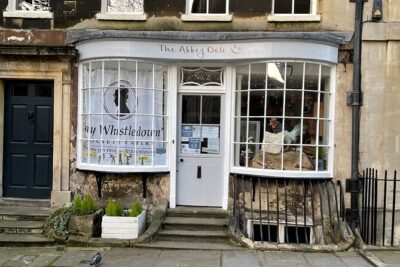
2-Hour Bath Walking Tour of Bridgerton Filming Locations
Read our review →
Private Walking Tour | Blue Badge Guide, 2h, £225 per group
Read our review →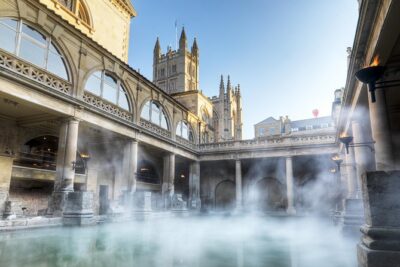
Roman Baths Entry and Walking Tour with Blue Badge Tour Guide
Read our review →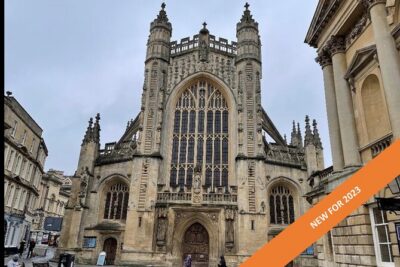
Bath Public Walking Tour including Bath Abbey
Read our review →Browse the lists this tour appears in