
Reviewed · WALKING TOURS IN BATH
A Self-Guided Walking Tour of Wells’ Cloisters and Cathedrals
Medieval stone, explained on your own schedule. This self-guided VoiceMap walk takes you through Wells’ cloisters and cathedral precincts, with stories tied to the places you see. I like that it turns a short town-center stroll into a guided-feeling experience, without rushing you.
Two things I especially like: the way the West Front at Wells Cathedral is brought to life, and the calm, lived-in atmosphere of Vicars’ Close. You’ll also get standout moments like the medieval clock spectacle, which you can time your visit around.
One possible drawback: because it is self-guided, you need your smartphone charged and ready with headphones, so plan a quick battery check before you start.
In This Review
- Key highlights worth your time
- A self-guided route through Wells Cathedral precincts
- Starting at Wells Market Square: Assembly Rooms and The Crown
- Market Cross and Fountain to Penniless Porch: names with a reason
- Approaching Wells Cathedral: West Front statues you can actually count
- The medieval clock chime and the jousting knights
- Vicars’ Close: Europe’s oldest continuously occupied residential street
- Bishop’s Palace and Gardens: Great Hall ruins and 14 acres of calm
- Bishop’s Eye gatehouse and the Dragon Mosaic finale
- How the VoiceMap audio tour works on your phone
- Price and timing: is $9.99 worth 50 to 70 minutes?
- Who this tour fits best in your Wells day
- Should you book this self-guided tour?
- FAQ
- How long is the self-guided walking tour?
- What does the tour cost?
- Where do I start and end the tour?
- Do I need my own smartphone and headphones?
- Is the tour offered in English?
- Is this tour private for my group?
- Is there free cancellation?
Key highlights worth your time
- 127 medieval statues on the Wells Cathedral West Front, plus the bigger story behind what you’re looking at
- A clock chime with armored knights jousting every quarter-hour, so timing matters
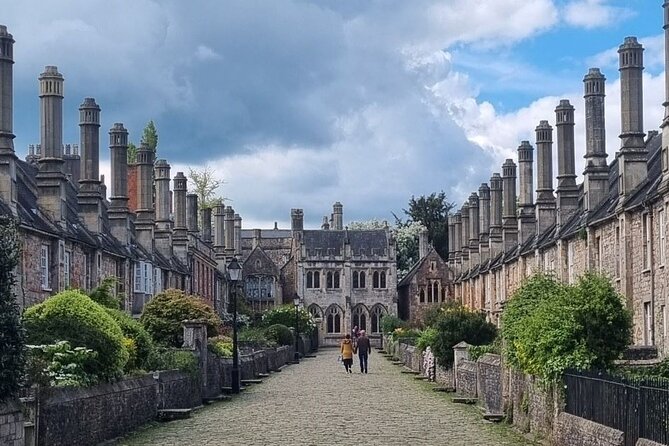
- Vicars’ Close, Europe’s oldest continuously occupied residential street
- Bishop’s Palace & Gardens, including the ruins of the Great Hall and 14 acres of gardens
- Penniless Porch, where you learn why that name exists
- Dragon Mosaic tied to the dragon-slaying bishop Jocelin
A self-guided route through Wells Cathedral precincts
This tour works because Wells Cathedral is not just a building. It is a whole neighborhood of stone, gates, closes, and courts, where the meaning is spread across details. The audio format helps you notice those details without feeling lost in a big, famous site.
You get a walk that feels linear, but not rushed. You can pause as long as you want for views, photos, or that moment when a facade detail suddenly makes sense.
And even if you have been to Wells before, this kind of “place-by-place” storytelling has a way of revealing what you previously walked past too fast. The reviews backing this up are blunt and positive: people found it very informative and loved how it added new understanding to familiar streets.
More Walking Tours in Bath
Starting at Wells Market Square: Assembly Rooms and The Crown
Your walk begins in the Wells Market Square area, the kind of location where you can orient fast. From there, you move past civic and social landmarks before you ever reach cathedral stone. That matters, because Wells does not feel like a cathedral-only town, it feels like a lived-in community.
First, you’ll spot the grand Georgian Assembly Rooms. These weren’t casual party rooms. They were places where high society gathered to dance and dine, and the building still acts as the heart of civic life today. It’s a helpful warm-up, because it frames Wells as a city with culture beyond church walls.
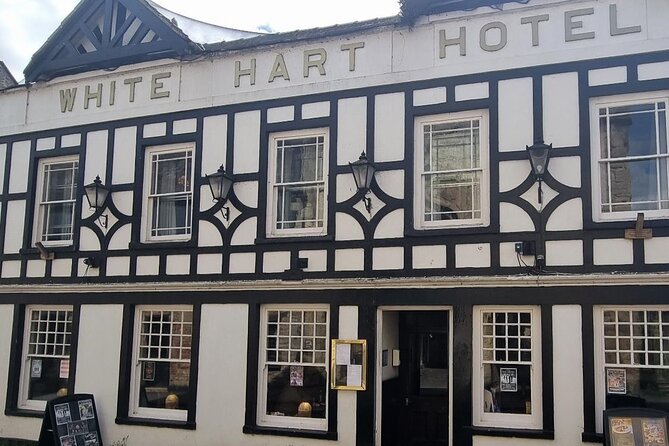
Next, you pass The Crown at Wells, an historic inn where William Penn once addressed a crowd. That is a surprising connection, and it sets up the larger theme of the whole route: Wells has been important for centuries, not just religiously, but socially and politically too.
If you want a practical tip, think about timing your meal break. The tour passes a good-looking restaurant option attached to the inn, so you might plan to grab food either before you start, or during your pauses while you still have energy for the cathedral stretch.
Market Cross and Fountain to Penniless Porch: names with a reason
Walking a few steps can feel too short to matter, but here the tour uses these in-between moments on purpose. You pass the Wells Market Cross and Fountain, a focal point for markets and public events for centuries. This is the kind of space where a town’s daily life becomes visible, and the audio helps you understand that history as something practical, not just decorative.
Then you come to the Penniless Porch, and the name is not mysterious once you hear the story. It relates to its role as shelter for the destitute. That single detail changes how you look at a gatehouse-like entrance, because you stop seeing it as only an architectural boundary and start seeing it as social infrastructure.
Architecturally, it also functions like a transition point. You’re moving toward the cathedral precincts, so the “why” behind the entrance makes the shift feel earned. You’re not just walking deeper into a tourist highlight, you’re walking through the way people once accessed safety and worship.
Approaching Wells Cathedral: West Front statues you can actually count
Now the cathedral arrives with a clear, visible payoff. As you approach, the West Front dominates, and it is loaded with medieval statues. The standout number you’ll hear is 127 medieval statues, which is the sort of fact that makes you want to slow down and start scanning.
This is also where the audio approach pays off. If you try to “wing it,” you can miss the pattern and focus only on the biggest faces and figures. With the guided audio, you know what to look for and why those figures matter.
Wells Cathedral has been a worship site for over 800 years, and the building’s age is visible in how it holds up over time. That long timeline can feel abstract until you stand in front of the front facade and realize it is basically a stone encyclopedia from centuries of worship and craft.
The medieval clock chime and the jousting knights
Right near the cathedral experience, you can pause for the medieval clock chime. This clock has an engaging gimmick that is also a real piece of design, armored knights that joust every quarter-hour.
That means you should decide your pace based on timing. If you arrive while you can catch a chime soon, you will get a memorable moment without any extra planning. If you miss it, you’re still surrounded by the West Front’s detail, but catching it is an easy win.
It’s one of the rare “interactive” features where the spectacle is built into the architecture rather than added for tourists. Even if you are not usually into clocks, this one gives you a reason to look up and wait.
More England on foot, brolly optional:
- Bad of Bath fun Walking Tour of Bath★ 5.0 · 402 reviews
- Bridgerton Walking Tour of Filming Locations & Storylines – Bath★ 4.5 · 178 reviews
- BATH: 2-Hour Bath Walking Tour of Bridgerton Filming Locations★ 5.0 · 99 reviews
- BATH: Private Walking Tour | Blue Badge Guide, 2h, £225 per group★ 5.0 · 66 reviews
Vicars’ Close: Europe’s oldest continuously occupied residential street
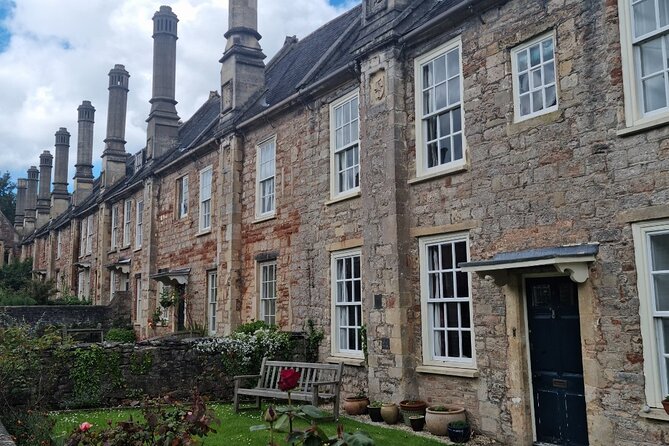
After the cathedral focus, you move into a quieter, more human scale. Vicars’ Close is described as Europe’s oldest continuously occupied residential street, and you can feel why the claim works.
Walking along it, you’re no longer staring at a single monumental facade. Instead, you’re seeing the street as a long-running home for cathedral clergy. The architecture stays medieval, but the street feels used, which is exactly what you want from a cathedral precinct route.
This part is valuable because it bridges two things: worship and daily life. Many cathedral visits stop at “big church, big views.” Here, the audio nudges you to notice how the clergy lived right alongside the sacred spaces. That makes the cathedral experience feel less like a museum and more like a community that evolved over centuries.
A practical suggestion: go slowly here. It’s the sort of place where you may stop without meaning to, because the buildings encourage looking down the street, then back at details. If you speed through, you will miss the tone shift that makes this section memorable.
Bishop’s Palace and Gardens: Great Hall ruins and 14 acres of calm
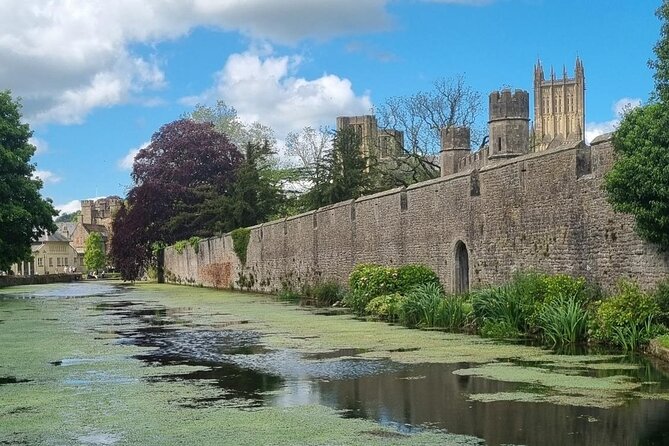
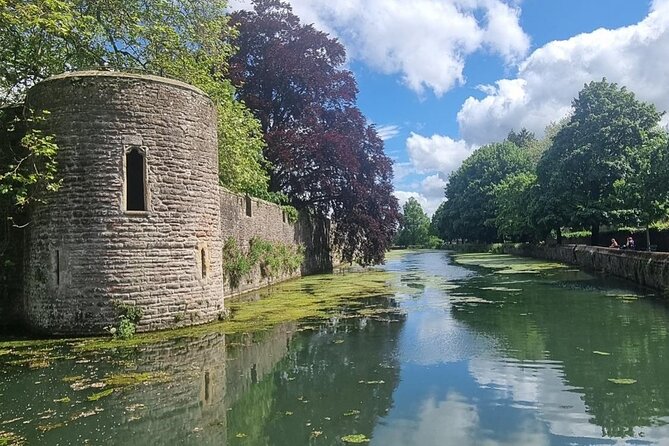
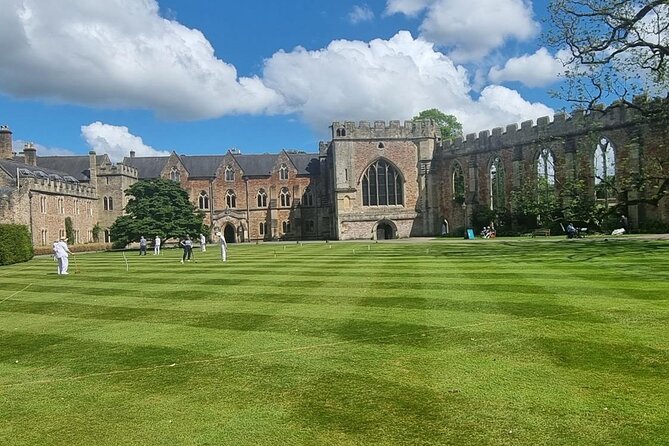
Next comes the Bishop’s Palace & Gardens, and this is where the route expands beyond stone gates and into open space. You’ll see the ruins of the Great Hall and then move toward a serene garden setting described as 14 acres.
That garden size matters. A lot of cathedral gardens are small decorative spaces. Fourteen acres is enough to give you a real change of pace, a break for your feet, and a place where the site’s scale sinks in. Even if you only get a portion of that atmosphere during your walk, you’ll leave feeling less “cathedral-saturated.”
The palace connection is also clear: it has been the residence of the Bishops of Bath and Wells for over 800 years. That long residency turns the ruins into something more than background. You start imagining the day-to-day movement of people and power through rooms that are now only partially standing.
When you pair that with the previous stops, the route tells a complete story. It shows you worship space, residential space for clergy, and then the administrative and residential seat of the bishops. That layered approach is what makes this self-guided format feel smarter than a basic highlights walk.
Bishop’s Eye gatehouse and the Dragon Mosaic finale
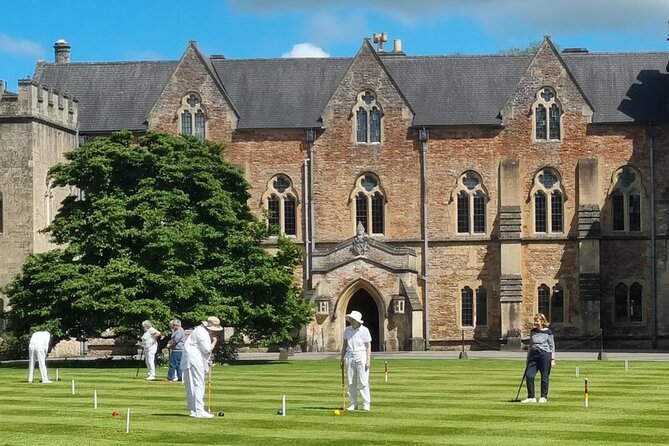
You then pass through the Bishop’s Eye, a fortified medieval gatehouse. The important idea here is control: the imposing structure once protected the bishop’s residence and managed access to the city. It’s not just an entrance, it is a security concept made out of architecture.
Gatehouses are often photographed, but they are rarely understood beyond their look. With the audio framing, you can read it as a statement of protection and authority. That makes the whole precinct feel more coherent, like each stone layer has a job.
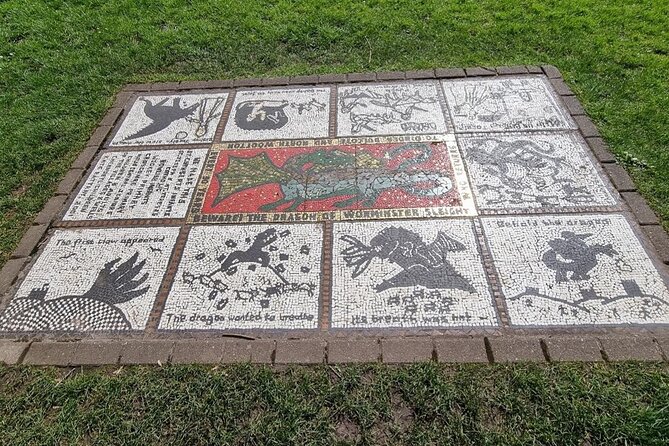
Finally, you end near the Dragon Mosaic, a colorful tribute to the legendary dragon-slaying bishop Jocelin. The tone shifts here on purpose. After serious medieval power and church governance, you get a playful folklore nod that makes the whole walking experience feel warmer.
Even the mosaic works as a finishing idea. You’ve spent the walk with names that carry meaning, from Penniless Porch to bishop residences and fortified gates. Jocelin’s dragon story gives a last emotional beat, something memorable that you can point to when you tell others what you saw.
And as a practical ending, your route comes back to the Wells Market Cross and Fountain. That is a nice cap, because it ties your “cathedral precinct” walk back to the civic hub where Wells life happens.
How the VoiceMap audio tour works on your phone
This is an audio-based experience you run yourself. You’ll bring your own smartphone and headphones, and you’ll receive audio guidance in English. The best way to use it is to treat it like a walking companion, not a podcast you can ignore while strolling.
Keep headphones ready before you reach the first landmark. That avoids the common mistake of starting your walk without audio, which makes the early storytelling less effective.
Also, plan to move at “listening speed.” The walk is roughly 50 minutes to 1 hour 10 minutes, so you want to leave enough time for short pauses, not just for transit between stops.
Because it is self-guided and private for your group, it is also a good option if you want quieter sightseeing. You are not competing with a large crowd for the best angles, and you can stop when a detail catches your eye.
Price and timing: is $9.99 worth 50 to 70 minutes?
At $9.99 per person for a 50-minute to 1 hour 10-minute self-guided walk, this is strong value for two reasons. First, you are paying for interpretation, not just access. Second, you can repeat the benefits instantly by keeping your audio experience focused on what you see.
The pricing makes sense for a couple of “Wells-walk” realities. Wells Cathedral is free to approach for the outdoor areas, but the real challenge is knowing what matters and what you can safely ignore. The audio fixes that problem quickly.
You also get a format that works in a busy day. If you are already in the area and want one smart activity that does not eat your whole afternoon, this fits. You can slot it between meals or pair it with other sightseeing around the market square.
One timing note from an enjoyment standpoint: if you care about the clock jousting every quarter-hour, you should arrive with enough flexibility to wait a few minutes. That small adjustment can turn a nice walk into a standout memory.
Who this tour fits best in your Wells day
This tour is a great fit if you like learning while you walk. You get enough stops to make it feel complete, but not so many that it turns into a grind.
It is also a smart choice if you want to revisit Wells with fresh eyes. The strongest praise for this experience is that it is genuinely informative and surprised people even when they already knew Wells. That suggests the audio focuses on details you likely would not notice on your own.
If you are traveling with friends or family who have mixed interests, this route works because it offers both architecture and human stories. Assembly Rooms and William Penn bring the social side, while the cathedral front and gatehouses anchor the medieval side.
Finally, it suits most travelers. It is a walking route with a limited time commitment, so you can handle it as long as you are comfortable on city sidewalks.
Should you book this self-guided tour?
Yes, if you want an efficient, high-value way to understand Wells Cathedral precincts without hiring a live guide. For $9.99, you get a focused storyline across the cathedral, clergy residential street, bishop’s palace grounds, and two memorable folklore moments.
Book it especially if you care about the details that make historic places feel real: the meaning behind names like Penniless Porch, the count of statues on the West Front, and the quarter-hour jousting clock. And if you have visited Wells before, this style of audio-guided attention is exactly the kind of thing that turns a familiar walk into a smarter one.
FAQ
How long is the self-guided walking tour?
It takes about 50 minutes to 1 hour 10 minutes.
What does the tour cost?
The price is $9.99 per person.
Where do I start and end the tour?
You start at Wells Market Market Pl, Wells BA5 2SG, UK, and the tour ends at Wells Market Cross and Fountain, 10 Market Pl, Wells BA5 2RP, UK.
Do I need my own smartphone and headphones?
Yes, you should bring your own smartphone and headphones.
Is the tour offered in English?
Yes, it is offered in English.
Is this tour private for my group?
Yes. Only your group will participate.
Is there free cancellation?
Yes. You can cancel up to 24 hours in advance for a full refund. If you cancel less than 24 hours before the start time, the amount paid will not be refunded.
More Self-Guided Tours in Bath
- Bath Self-Guided Private Tour
★ 3.5 · 20 reviews - Private Smartphone photography Walking Tour Around Bath
★ 5.0 · 20 reviews - Small Group smartphone Bath Walking Tour around Bath
★ 5.0 · 8 reviews - Bridgerton’s Filming Locations in Bath Audio Guide
★ 5.0 · 7 reviews
Latest to join the queue for Bath






Walking Tours in Bath, compared.
Walking Tour of Bath with Blue Badge Tourist Guide
Read our review →


Bridgerton Walking Tour of Filming Locations & Storylines – Bath
Read our review →
2-Hour Bath Walking Tour of Bridgerton Filming Locations
Read our review →
Private Walking Tour | Blue Badge Guide, 2h, £225 per group
Read our review →
Roman Baths Entry and Walking Tour with Blue Badge Tour Guide
Read our review →Browse the lists this tour appears in