
Reviewed · WALKING TOURS IN BATH
Best of Bath Walking Tours – Georgian Tour
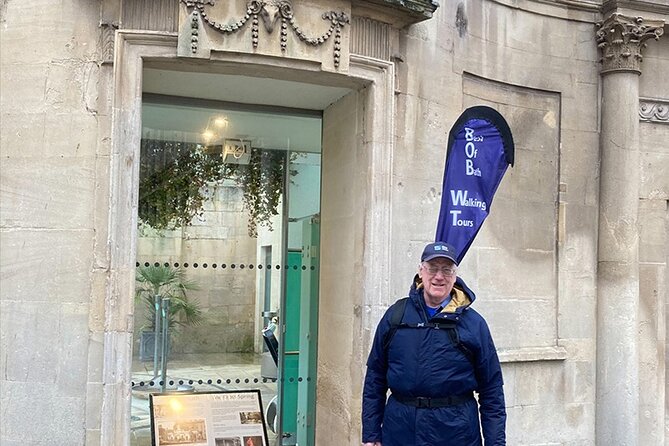
Georgian Bath turns walkable and personal fast. This Best of Bath Walking Tours Georgian Tour strings together the city’s top 18th century sights with a real guide, so you do not just see pretty facades, you understand why they were built and how Bath worked. You also get a smooth route through major landmarks, then time at the end to ask questions and spot anything you might have missed.
I especially like the small group size (up to 15), which keeps the pace relaxed and the Q and A real. I also like that the focus is architecture plus the people behind it, so places like Queen Square, the Circus, and the Royal Crescent feel connected instead of random stops.
One consideration: two major stops have admission tickets not included (the Roman Baths and the Royal Mineral Water Hospital), so you may want to budget for entry if you plan to go inside.
In This Review
- Key highlights worth planning around
- Why this Georgian Bath walk fits 2 to 3 hours
- Meeting at Bath Abbey Churchyard and getting your bearings
- Bath’s Georgian heart: the “big names” route that stays understandable
- Abbey Churchyard stop: Bath Abbey as your story anchor
- Roman Baths: where the paid entry changes your plan
- Royal Mineral Water Hospital: faith and science in 1737
- Queen Square, the Circus, and the Royal Crescent: the Georgian design lesson
- Queen Square
- The Circus
- Royal Crescent
- Pulteney Bridge and the Guildhall Market for street-level texture
- Pulteney Bridge
- Bath Guildhall Market
- Assembly Rooms: where Bath’s fashionable society gathered
- How the tour feels on your feet, with Bob’s pace
- Price and value: what you pay for and what is extra
- Who should book this Georgian Bath walking tour
- Should you book Best of Bath’s Georgian Tour with Bob?
- FAQ
- How long is the Georgian Bath Walking Tour?
- Where does the tour start and end?
- What group size should I expect?
- Is the tour in English?
- Are tickets included for the Roman Baths and the Royal Mineral Water Hospital?
- What fitness level do I need?
- Do I get a mobile ticket, and are service animals allowed?
- What if the tour is cancelled due to weather or you need to cancel?
Key highlights worth planning around
- Guide Bob’s style, friendly, funny, and willing to answer lots of questions
- Small group pacing, up to 15 people, which helps you actually hear the stories
- Georgian Bath focus with stops that form a clear architectural sequence (Queen Square to the Royal Crescent)
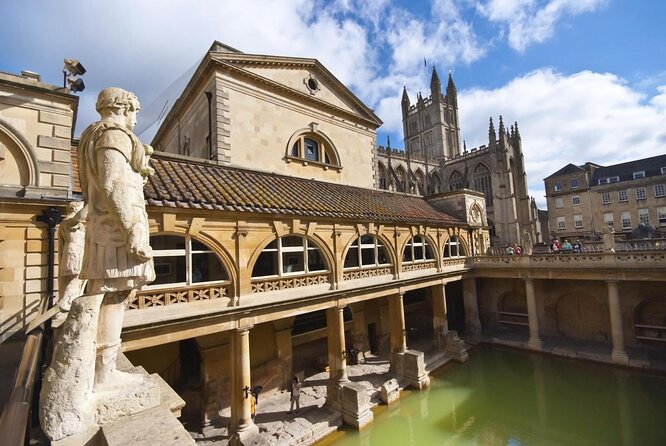
- Real layers of Bath, from Bath Abbey down to the Roman Baths and the River Avon
- Time to linger, with a wrap-up return to Abbey Churchyard where you can keep chatting with the guide
Why this Georgian Bath walk fits 2 to 3 hours
A good walking tour in Bath does two jobs at once. It helps you cover the key sights without wasting time, and it gives you a mental map so Bath feels logical instead of overwhelming.
This one is timed for an afternoon pace, roughly 2 to 3 hours. That matters because Bath’s center is compact but not flat. You will be moving between landmark areas, so a tight schedule keeps you from burning half your day just getting oriented.
The group limit of 15 travelers is also a big deal. In a larger crowd, you end up listening from the back, then trying to catch up with questions later. Here, the tone you get from Bob, including his humor and patience, makes it easier to keep up and speak with your guide when something catches your eye.
More Walking Tours in Bath
Meeting at Bath Abbey Churchyard and getting your bearings
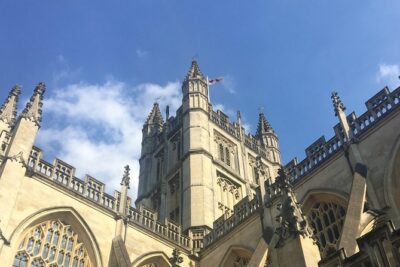
The tour meets at Abbey Churchyard in front of Bath Abbey (St Peter and St Paul). This is the perfect starting point because Bath Abbey is one of the city’s most recognizably historic anchors, and it sits right where you can begin linking different eras of the town.
Bath Abbey itself has a layered story. Founded in the 7th century, it was reorganized in the 10th century, then rebuilt across the 12th and 16th centuries. Even if you do not go deep on every building phase, that timeline helps you understand a core theme you will keep seeing around Bath: older sites get reused, reworked, and repurposed as the city changes.
If you are someone who likes to ask, you will probably appreciate the way the tour sets that expectation early. The end of the walk returns to the same meeting point, where you can keep the conversation going.
Bath’s Georgian heart: the “big names” route that stays understandable
From the start area, you roll into the city’s Georgian highlight zone. The route connects a lot of iconic Bath spaces that many people see as separate photo spots, but here they are explained as a design system.
You will spend time moving through:
- Hot Springs and the Old City Wall area, which gives context for why Bath became a destination in the first place
- Mineral Hospital history, tied to the belief in healing waters
- Queens Square, then onward toward the Circus and the Royal Crescent style cluster
- Assembly Rooms, a key social venue during Bath’s height
- Royal Crescent, Circus, and the elegant “show your best facade” Georgian vibe
- Pulteney Bridge over the River Avon, famous for shops across the span
- Guildhall Market, housed in a historic indoor market building that dates back to 1284
That combination is what makes the tour feel efficient. You do not just collect sights, you see how Georgian Bath was arranged for display, leisure, and status, with the natural springs providing the original reason to build all this in the first place.
Abbey Churchyard stop: Bath Abbey as your story anchor
At the start, and again at the end, Abbey Churchyard is more than a meeting point. It becomes a reference point for the whole walk.
At the Abbey, you get the basics you need to place what you see next. You are not asked to memorize dates, but you do come away with the idea that Bath’s identity did not switch overnight. Roman Britain, medieval redevelopment, and Georgian reshaping all connect in the city’s visible details.
If the weather is shifting or you are a slower walker, having the group return to the Abbey at the end is also practical. You can stretch, get your bearings, and keep chatting in the same familiar spot rather than ending somewhere unfamiliar.
Roman Baths: where the paid entry changes your plan
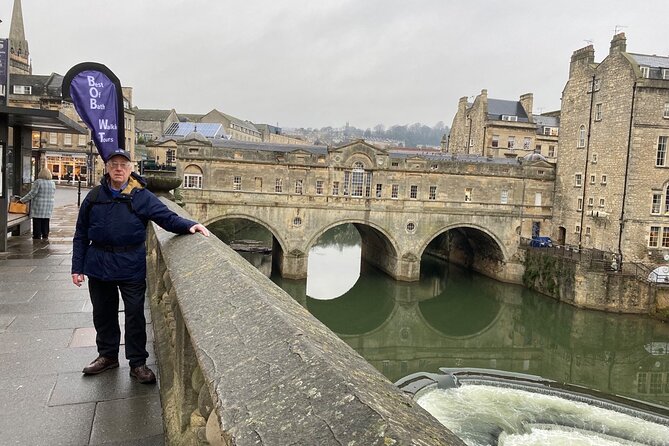
One of the most important stops is The Roman Baths. It is described as well-preserved thermae, with a temple on site constructed between 60 and 70 AD during the early decades of Roman Britain. A century later, the baths were in ruins according to the Anglo-Saxon Chronicle, and later periods redeveloped the surrounding spring area.
That is the kind of timeline that instantly makes Bath feel bigger than the Georgian era. The Roman Baths are not just a single monument, they show how the city’s relationship with mineral waters kept returning over time.
Practical note: Roman Baths admission is not included in the tour price. If you want to go inside, plan for the entry cost separately. If you just want the outside views and context from the guide, you can still get a lot from the stop.
More England on foot, brolly optional:
- Bridgerton Walking Tour of Filming Locations & Storylines – Bath★ 4.5 · 178 reviews
- BATH: 2-Hour Bath Walking Tour of Bridgerton Filming Locations★ 5.0 · 99 reviews
- BATH: Private Walking Tour | Blue Badge Guide, 2h, £225 per group★ 5.0 · 66 reviews
- Roman Baths Entry and Walking Tour with Blue Badge Tour Guide★ 5.0 · 58 reviews
Royal Mineral Water Hospital: faith and science in 1737
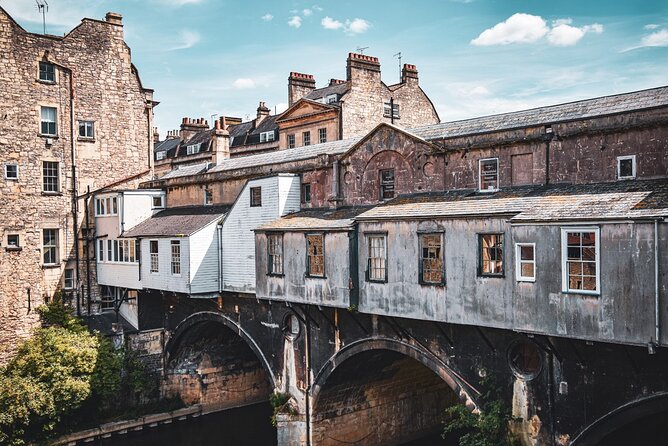
Another stop with admission not included is the Royal Mineral Water Hospital, where construction began in 1737. The key idea here is the shift toward healing waters as both faith and science. In Georgian Bath, that mix helped turn natural resources into an institution, and that institutional role is part of why the city became fashionable.
Because this admission is not included, I suggest thinking ahead: if you are the type who likes to see interiors and interpretation displays, budget for it. If not, you can treat it as a strong story stop and keep moving.
Either way, the value is the explanation of why this building mattered, not just that it exists.
Queen Square, the Circus, and the Royal Crescent: the Georgian design lesson
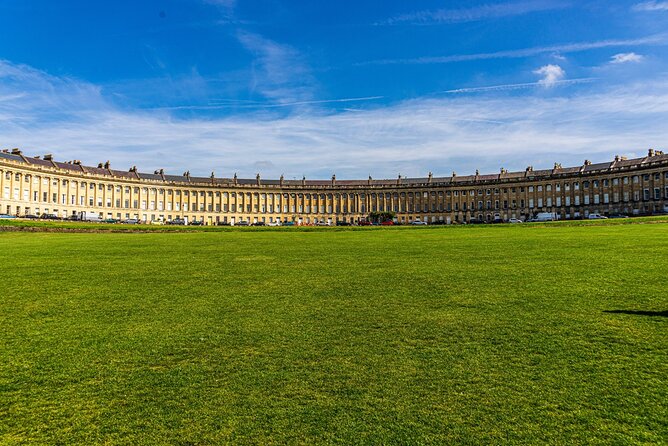
This is the heart of the Georgian Bath experience. You are not just passing pretty architecture. You are walking along the city’s planned sequence.
Queen Square
Queen Square is a square of Georgian houses and is part of the architectural setup that includes the Circus and the Royal Crescent. The buildings are Grade I listed, which is the UK’s top level of protected status. Even if you do not know the rules, seeing those facades up close is a sign that Bath treated design as something to be preserved.
The Circus
Then comes The Circus, the historic ring of large townhouses designed by John Wood, the Elder, built between 1754 and 1768. The “three entrances” concept is a big part of why it looks so symmetrical and theatre-like. Each segment faces an entrance so the classical facade stays aligned when you stand in the right spots.
Royal Crescent
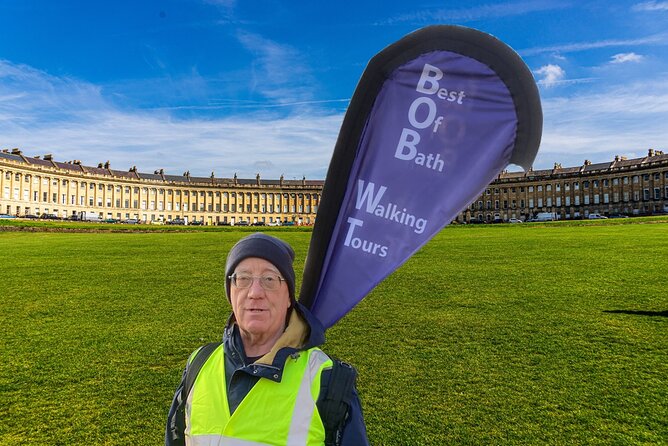
Finally, you reach the sweeping curve of the Royal Crescent, designed by John Wood, the Younger and built between 1767 and 1774. With 30 terraced houses and Grade I listed status, it is the kind of place where you naturally start noticing the details. Corners, the rise and fall of the terraces, and the overall rhythm of the frontage.
Why this cluster works on foot is simple: these buildings are linked by design logic. When you see them in sequence with a guide explaining what to look for, you stop thinking of Bath as random “old buildings” and start seeing it as a coordinated statement.
And yes, if you enjoy British pop culture, Bob has been known to point out film or TV related spots along the way, including references like Bridgerton filming locations, depending on timing and what is possible to view from the street.
Pulteney Bridge and the Guildhall Market for street-level texture
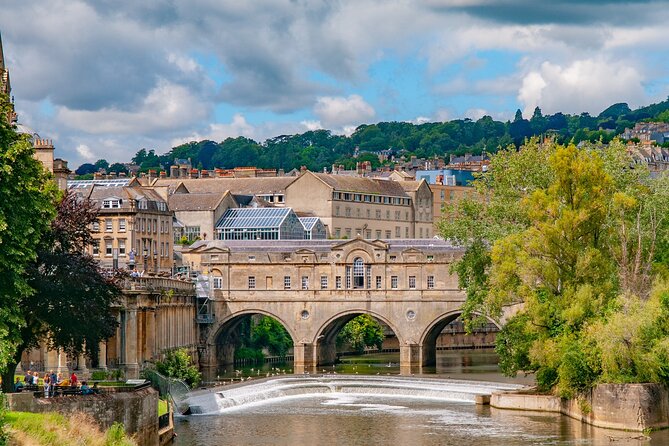
Not every stop is about grand architecture. Two of the best “real life” moments come after it.
Pulteney Bridge
Pulteney Bridge crosses the River Avon and was completed by 1774. It is unusual because it has shops built across its full span on both sides. Designed in a Palladian style by Robert Adam, it is one of those places where you can see commerce and design fused together.
If you like taking a breather and absorbing a view without committing to a ticket, this stop is a good one. You can walk it in sections and still keep pace with the group.
Bath Guildhall Market
Then you get Guildhall Market, an indoor market housed in a historic building. The market has been established since 1284, which is a useful reminder that Bath has been a trading place long before it became a Georgian glamour destination.
Admission here is not mentioned as required, so it is mostly a wander-and-snack vibe. It is also a nice contrast after the formal sightline architecture.
Assembly Rooms: where Bath’s fashionable society gathered
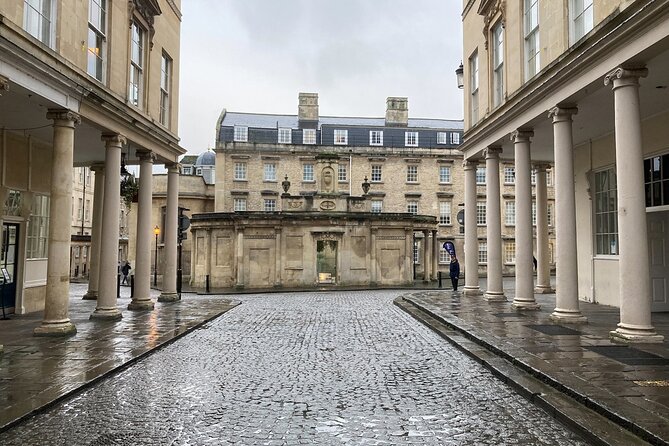
The tour includes the Assembly Rooms, tied to Bath’s Georgian rise in popularity. The Assembly Rooms were built early in the 18th century, and the idea for a new upper venue for balls, concerts, and gambling was laid out between Queen Square, the Circus, and the Royal Crescent.
The new or upper assembly rooms opened with a grand ball in 1771 and became a hub of fashionable society. The stop also connects to famous names like Jane Austen and Charles Dickens, plus the nobility who visited and lived at Bath during its height.
This stop works well even if you are not a big museum person. The context makes it feel like you are walking through a social calendar, not just a building.
Practical note: Assembly Rooms admission is not included, so you may only view it from outside or within whatever access the guide uses during the walk. If interiors are your priority, you might need to add entry separately.
How the tour feels on your feet, with Bob’s pace
The tour is listed as requiring moderate physical fitness, which makes sense for a walking route that links multiple central landmarks. You should expect to spend time on sidewalks and streets and to keep moving between stops.
What I like about the reported experience is the pace control. People repeatedly highlight that Bob does not rush. He checks in, keeps the talk at a reasonable speed, and answers questions. That matters because Bath’s architecture prompts questions of its own. One minute you are looking at a facade, the next you want to know who designed it and why it looks the way it does.
Another small but meaningful touch: Bob has been described as sending a message ahead and answering questions before the tour. If you are arriving from outside the city or timing a day around trains, that kind of pre-tour communication can make the whole afternoon feel less stressful.
Price and value: what you pay for and what is extra
The tour price is about $27.73 per person, for roughly 2 to 3 hours in a small group. That is not just a “walk and point” price.
You are paying for:
- a route that strings together the big Georgian pieces without you getting lost
- a guide who focuses on architectural meaning, not only dates
- time for questions, plus the end return to Abbey Churchyard for discussion
- a guided structure that helps you recognize patterns as you move from Queen Square to the Circus to the Royal Crescent
Where the value can change is admission costs. Two major stops list admission as not included: the Roman Baths and the Royal Mineral Water Hospital. Depending on your interests, those may be the only extra charges you need to plan for.
If you are the type who likes to do interiors when you can, this tour can still be a great value because the guide sets up what you will see, so your paid entry is more meaningful. If you prefer street-level sightseeing only, you can keep it to the included stops and treat the paid sites as optional.
Either way, the price is competitive for a guided, structured walk in central Bath.
Who should book this Georgian Bath walking tour
This is a strong choice if you:
- want a Georgian Bath route that feels organized, not scattered
- like architecture explanations tied to real life, such as social spaces and healing institutions
- want a tour where you can ask questions and not get brushed off
- prefer a small group and a comfortable walking pace
It is also a good fit if you have limited time. Starting at 1:00 pm makes it an easy add-on for your day. You can see a lot of Bath’s core highlights without committing to a full-day schedule.
If you dislike walking routes or only want indoor museum time, you might feel the value shifts. The tour is built around outside viewing and guided context, with some ticketed stops optional depending on what you want to pay for.
Should you book Best of Bath’s Georgian Tour with Bob?
Yes, if your goal is to understand Georgian Bath as a connected story, not a checklist of landmarks. This tour’s strongest asset is the way Bob brings places to life with humor, patience, and a style that makes questions feel welcome. The small group size also supports that “you are part of the conversation” feeling.
I would especially book it if you are seeing Bath for the first time, or if you have been through the city center before but never took the time to learn how the Georgian buildings fit together. The only reason to hesitate is the potential extra cost for the Roman Baths and Royal Mineral Water Hospital admissions, so just plan ahead if you want to go inside.
FAQ
How long is the Georgian Bath Walking Tour?
It runs about 2 to 3 hours. Some tours may run around 2 hours and 10 minutes, depending on pace and questions.
Where does the tour start and end?
The tour starts at Abbey Churchyard, Bath BA1, UK and ends back at the same meeting point.
What group size should I expect?
The group is limited to a maximum of 15 travelers.
Is the tour in English?
Yes. The tour is offered in English.
Are tickets included for the Roman Baths and the Royal Mineral Water Hospital?
No. Admission tickets are not included for the Roman Baths and the Royal Mineral Water Hospital.
What fitness level do I need?
The tour is described as requiring moderate physical fitness since it is a walking experience.
Do I get a mobile ticket, and are service animals allowed?
You receive a mobile ticket, and service animals are allowed.
What if the tour is cancelled due to weather or you need to cancel?
The tour requires good weather. If it is cancelled due to poor weather, you are offered a different date or a full refund. Cancellation is free up to 24 hours in advance for a full refund.
Latest to join the queue for Bath







Walking Tours in Bath, compared.
Walking Tour of Bath with Blue Badge Tourist Guide
Read our review →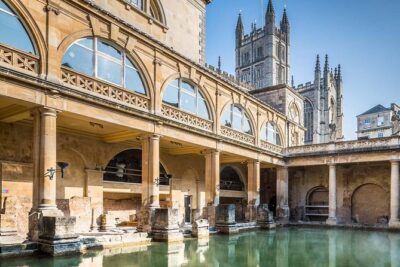


Bridgerton Walking Tour of Filming Locations & Storylines – Bath
Read our review →
2-Hour Bath Walking Tour of Bridgerton Filming Locations
Read our review →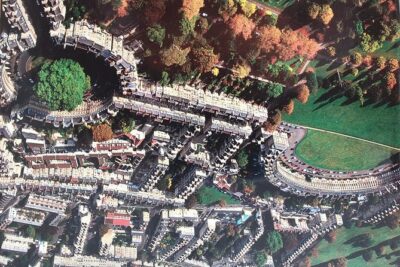
Private Walking Tour | Blue Badge Guide, 2h, £225 per group
Read our review →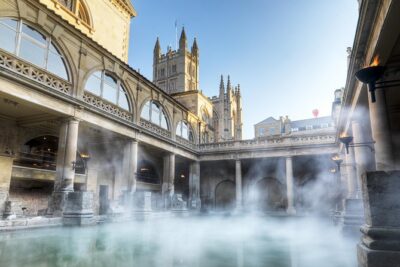
Roman Baths Entry and Walking Tour with Blue Badge Tour Guide
Read our review →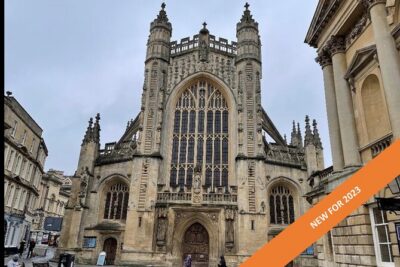
Bath Public Walking Tour including Bath Abbey
Read our review →Browse the lists this tour appears in