
Reviewed · HISTORICAL TOURS
Jane Austen’s Bath And History Trail
Bath turns Regency life into a walk. This Jane Austen themed trail connects the city’s street grid and buildings to how Austen watched Bath shape her stories, with Regency-era stops along the way.
I especially love the way it blends Jane Austen sites with Bath’s biggest landmarks, so you get both the literary angle and the city picture. I also like that the guide, Ulrich, stays upbeat even in bad weather, offering options like shelter breaks and a virtual style tour when needed.
The tradeoff is that it is a walking tour with uphill bits and stairs, so you will want good shoes and you may need to stand close at times to hear everything clearly.
In This Review
- Key takeaways before you go
- A Jane Austen walk through Bath that makes the city click
- Pulteney Bridge start, Ponte Vecchio vibes, and the right meeting point
- Jane Austen Centre, free entry, and what to do with your time inside
- Royal Crescent No. 1 and Bath Abbey, where the guide helps you read the stone
- Natural thermal pools and 10,000 year springs, plus Austen at No. 13
- The Circus and Assembly Rooms, Regency social life in walking distance
- Roman Baths and Pump Room, and how to plan an audio visit
- Walking reality check, shoes, and staying comfortable in Bath weather
- Price, inclusions, and what you may pay extra for
- Who should book this Austen and Bath history trail?
- Should you book it, or choose something else?
- FAQ
- How long is the Jane Austen Bath And History Trail?
- Where do I meet for the tour?
- Is the Jane Austen Centre included in the tour?
- What entrance fees are not included?
- Is the tour available in languages other than English?
- How many people are on the tour?
- Will I be walking a lot?
- What do I need to know about the Roman Baths?
- What if the weather is poor?
Key takeaways before you go
- Pulteney Bridge orientation: start right where the route makes sense, and get your bearings fast with street level context.
- Free Jane Austen Centre entry: you get in, plus time for the book shop, without shelling out extra.
- Georgian icons up close: Royal Crescent and The Circus are explained in plain English, not just admired from afar.
- Bath Abbey details you will notice: the restoration story and key memorials help you read the building.
- Thermal springs and Austen’s Bath moments: you hear about Hetling, Cross, and King’s Spring, then connect it to her brief stays.
- Small group feel: capped at 10 people, so questions actually fit in.
A Jane Austen walk through Bath that makes the city click
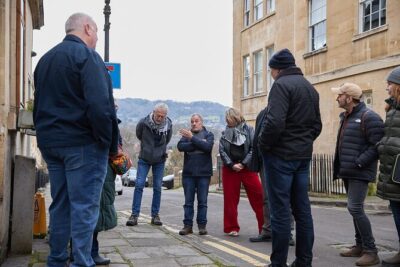
Bath is one of those places where the buildings can feel like a postcard. This tour is smart because it turns that postcard into something you can follow with your feet. You do a practical loop through the parts of Bath that most shaped Austen’s world, then layer in city history so the streets stop feeling random.
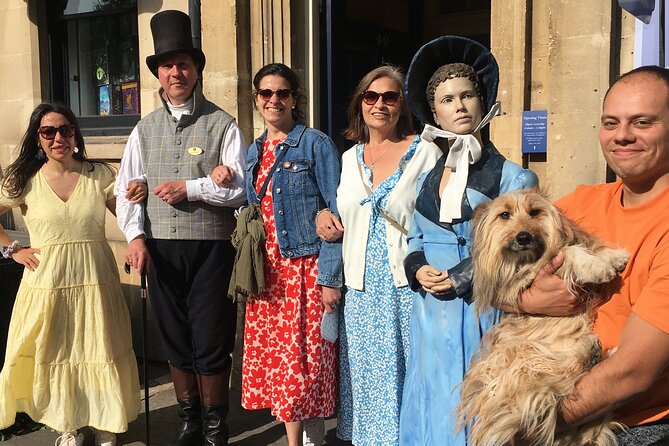
You also get a guide style that works. Ulrich is friendly, interactive, and ready to answer questions. If the weather goes sideways, he can adjust on the spot, and that matters in Bath where fog, rain, and wind can change the whole mood.
And yes, the goal is Jane Austen. But the real win is how Bath’s architecture, public spaces, and rituals help explain why her stories sound the way they do when you set them in this city.
More kings, plagues and great fires:
Pulteney Bridge start, Ponte Vecchio vibes, and the right meeting point
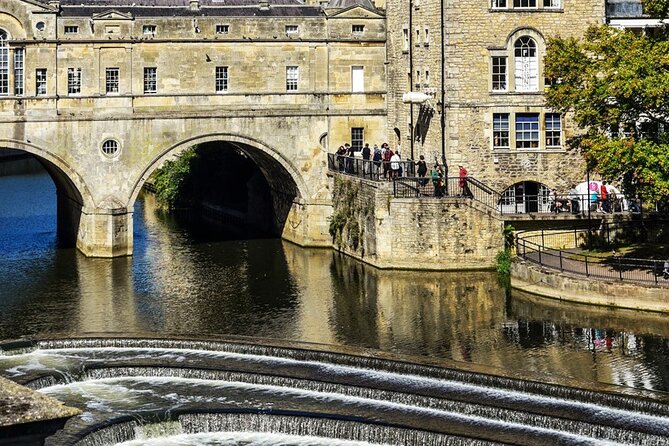
You begin at the Pulteney Bridge Coffee Shop at 17 Pulteney Bridge. That location is not a random detail. It is the anchor for the whole walk, and it keeps the route logical as you move onto the surrounding streets.
Pulteney Bridge itself is a great opener. It is designed to echo Florence’s Ponte Vecchio feel, with shops lining both sides. The design dates to 1769, and the tour uses that starting view to set the timeline for what you will see later.
From here, the route moves along Argyle Street and you pass notable areas like Laura Place and Great Pulteney Street. Expect the guide to point out architectural cues, not just names. The famous Great Pulteney Street town house front is explained, including notable residents across the 18th and 19th centuries.
There is also an easy optional add-on nearby. You can walk along toward the Holburne Museum of Art and look at the front of No. 4 Sydney Place, where a name plaque commemorates Jane Austen’s first dwelling in Bath. No ticket is required for that stop, but it adds an extra Austen hit without slowing the group.
Jane Austen Centre, free entry, and what to do with your time inside
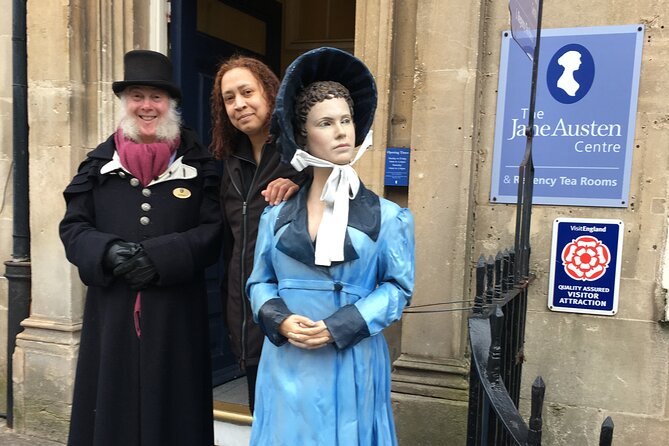
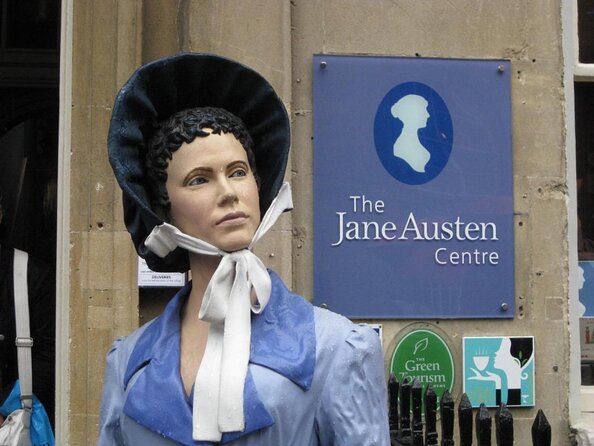
The Jane Austen Centre stop is built for quick payoff. You step into the place that frames Bath’s Regency life and shows how the city influenced Austen’s writing. The tour includes admission here for free.
What this means for you is you are not trapped in a museum maze for hours. You get a snapshot of the era, then you can tailor your focus. The tour also includes time for the book shop, which is handy because you can match what you saw outside with a book you can take back to your hotel.
One practical note: this stop is not the tour start. If you are tempted to assume the day begins at the Austen Centre doors, you can end up in the wrong place and waste time. The start is at Pulteney Bridge, so check the address and plan the walk in advance.
Royal Crescent No. 1 and Bath Abbey, where the guide helps you read the stone
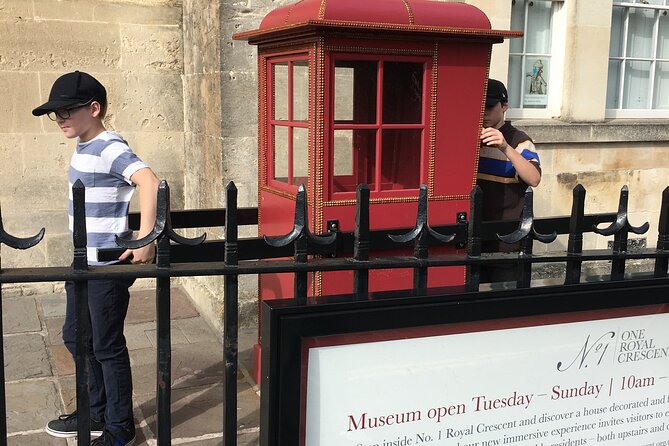
After the Austen Centre, the tour heads to two of Bath’s biggest headline buildings: No. 1 Royal Crescent and Bath Abbey.
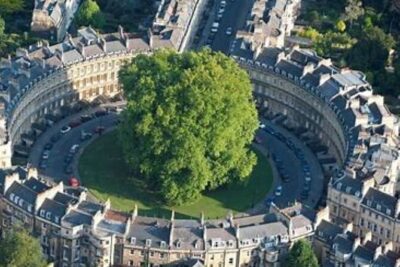
At No. 1 Royal Crescent, you see why it is the most photographed building in Bath and why it remains such a symbol of Georgian confidence. This crescent is huge, made up of 30 terraced houses connected by giant Ionic columns. The tour stops at the building so you can understand the design, what makes it so dramatic, and what you would see if you went inside.
Important value point: the No. 1 Royal Crescent museum entry is not included. You can still appreciate the exterior context during the walk, but if you want the interior rooms, you will need to buy that ticket yourself.
Then you move to Bath Abbey, which is a totally different vibe. This is a medieval cathedral that started in the early 12th century. Restoration began in 1499 under Bishop Oliver King, and completion came later, in 1611 during Elizabeth I’s reign. The tour highlights that timeline because it explains why the Abbey feels layered, not stuck in one era.
You also get pointed attention for the memorials and wall plaques. And the Abbey’s connection to the crowning of Edgar I in 977 is part of the story here. That kind of detail makes it easier to read the space instead of just looking up and hoping something sticks.
Natural thermal pools and 10,000 year springs, plus Austen at No. 13
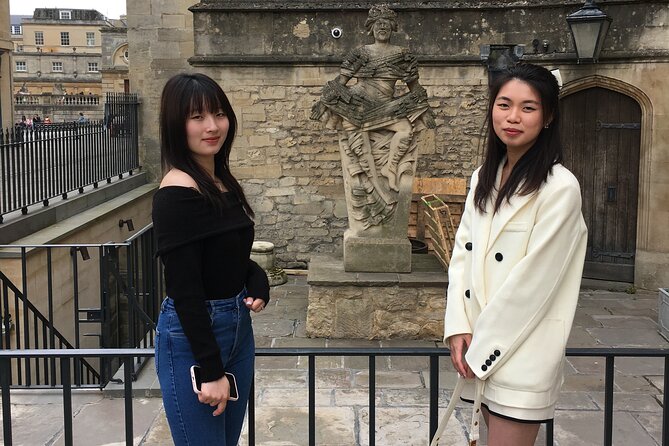
Bath is famous for its thermal waters, and this tour uses that fame in a useful way. You are guided to the only place in Britain where you may swim in natural thermal water, with a rooftop pool at 35 degrees Celsius. The tour explains that this pool is open summer and winter.
Then comes the spring story, which is the kind of detail that makes Bath feel real. You hear about the Hetling Spring, Cross Spring, and King’s Spring, including their origins dating back 10,000 years. Even if you never plan to swim, this is the kind of context that turns a tourist feature into a believable long-term part of Bath life.
Right after that, you get another Austen connection: details about her short residence at No. 13 in 1799. This is the point where the walk starts to feel personal. You begin seeing Bath less like a scenery set and more like a lived-in city with specific doors and addresses tied to her timeline.
If you like Austen because you love the social details in her books, you will probably enjoy this pairing. Thermal culture, city routines, and Austen’s short stays make sense of why people in her novels move through Bath with that same mix of curiosity and etiquette.
Also on in Bath, no fuss
- Walking Tour of Bath with Blue Badge Tourist Guide★ 5.0 · 1,877 reviews
- Stonehenge, Avebury & the Cotswolds from Bath (Small group)★ 5.0 · 798 reviews
- Roman Baths and Bath City Walking Tour★ 4.5 · 762 reviews
- Fully Guided Bath Ghost Tours★ 5.0 · 539 reviews
The Circus and Assembly Rooms, Regency social life in walking distance
The Circus is one of Bath’s signature designs, and it is a smart inclusion on this route. Construction began in 1754, and John Wood’s architecture is inspired by their interest in prehistoric stone circles, while also aiming to echo the Coliseum in Rome. That contrast can sound fancy on paper, but on the street it helps you understand what Bath designers wanted: grandeur plus classical cues.
One fun extra you may hear during the walk is how the space sounds. The middle of The Circus has echoing trees, and it is the kind of quirky moment that makes the history feel playful rather than stiff.
Then the tour moves to the Assembly Rooms. This is where Regency society met, with ball rooms and public spaces that still host events today. You do not just see the buildings. The tour explains what went on there: the ball rooms, the octagon, the card room, and the tea room.
This stop is especially valuable if your Austen interest is character driven. Austen’s Bath is often about reputation, timing, and social strategy. Assembly Rooms lets you put a location to those patterns, instead of treating them like abstract story ingredients.
Roman Baths and Pump Room, and how to plan an audio visit
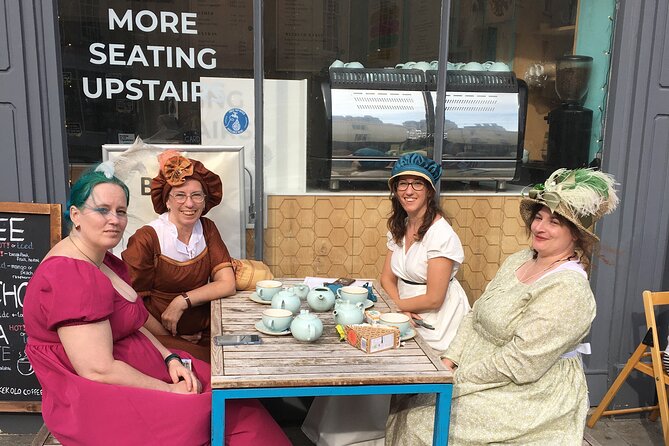
The final major draw in the route is the Roman Baths and the Pump Room area. The tour stops to explain the Roman temple of Sulis Minerva and the pools tied to it, with the Bath history dating back to the 1st century AD.
The practical advice here is about timing. The guide recommends that you book audio tours for the Roman Baths separately before or after your walking tour. That recommendation matters because guided walking tours move on schedule. If you try to turn everything into one long stop, you will feel rushed.
Also, you get a literary link through the Pump Room. The tour connects it to Bath’s Georgian golden age, where the fashion conscious elite gathered for balls, tea, and to take the waters. It even notes how Catherine and Isabelle often met in Austen’s novel Northanger Abbey. That line gives you a reason to care about what looks like just another pretty interior room. It is a story location.
If you are the type who likes to pair stories with real places, consider adding an audio tour at a pace that matches your energy level. Do it either before you need to be “all-in” or after, when your feet have cooled down but your brain is still in Bath mode.
Walking reality check, shoes, and staying comfortable in Bath weather
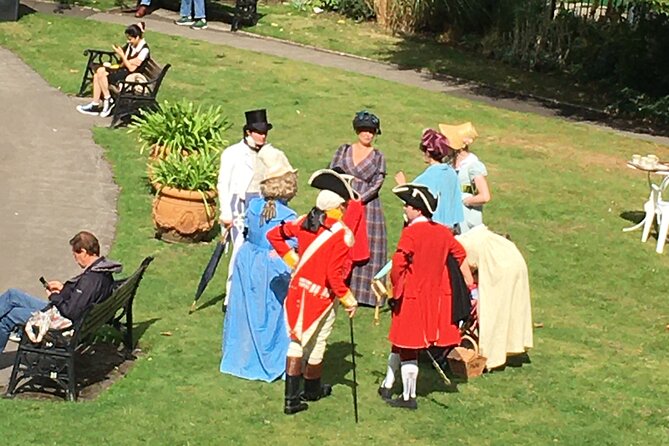
This is a walking tour, about 2 hours 30 minutes, and it is paced like a history stroll rather than a museum hop. Still, the reviews and the itinerary signals point to real effort. Expect a fair amount of walking and some uphill movement.
There are also steep steps mentioned in feedback. That does not mean it is a bad tour, but it does mean your comfort choices matter. Bring comfortable shoes. If you can, plan to move slow at the steeper sections and let the guide set the rhythm.
Sound can also be an issue in the open air. At some points, it can be hard to hear, especially if the group spreads out or you are near traffic. The fix is simple, stand close when you can, and ask questions when the guide pauses.
Weather is another big factor. This tour needs good weather. When conditions turn poor, Ulrich is reported to stay flexible, including options like shelter breaks and a virtual style tour. That adaptability is a big deal because it helps you keep your day moving instead of losing the experience entirely.
Price, inclusions, and what you may pay extra for
At $40.24 per person for around 2 hours 30 minutes, this tour is priced like a guided walk, not like a full ticket package. The real value sits in what you get for that money:
Included basics that make it worthwhile:
- Ulrich as the guide, with an interactive style and plenty of Q and A moments
- A multilingual offering that can be English or German
- A mobile ticket
- Free entry to the Jane Austen Centre, plus time for the book shop
What is not included:
- Museum admission fees, including No. 1 Royal Crescent
- The Jane Austen Centre internal tour guides
- Other attraction entries, depending on what you decide to do on your own
So the value logic is this: you pay for the guided connections, and you decide later which interiors to upgrade. If you love exterior architecture and story context, you might be happy with only the free Austen Centre entry plus outside sightseeing. If you want interiors at Royal Crescent or deeper time at Roman Baths, budget for extra tickets or audio.
Also, group size is capped at 10. That matters for quality. Smaller groups usually mean more chances to ask questions and more chances to hear the guide’s explanations without shouting over a crowd.
Who should book this Austen and Bath history trail?
This tour is a strong fit if you want:
- A Jane Austen walking tour in Bath that actually connects literature to real buildings
- A first-time orientation to Bath’s key sites without needing a car
- A guide who is friendly and willing to answer questions, with flexibility when weather is bad
- A route that covers both Austen landmarks and Bath’s broader social and architectural story
It is less ideal if:
- You hate walking, especially uphill sections and stairs
- You need a long time inside multiple museums, because several major interiors are not included
- You expect the whole experience to begin at the Jane Austen Centre. The start is at Pulteney Bridge.
Should you book it, or choose something else?
If you are serious about Austen but you also want to understand Bath as a city, book this. The walk is short enough to fit into a busy itinerary, but it hits the key places that make Austen in Bath feel specific, not generic.
My simple decision rule:
- Book it if you want guided street level context plus a free Austen Centre stop.
- Skip it or pair it with extra independent tickets if you are mostly hunting for museum interiors and long indoor time.
One last practical tip: wear shoes you trust. Then bring curiosity. This tour works best when you treat Bath like a set of clues, where each corner helps explain how Austen’s Bath functioned in real life.
FAQ
How long is the Jane Austen Bath And History Trail?
The tour lasts about 2 hours 30 minutes.
Where do I meet for the tour?
You meet at Pulteney Bridge Coffee Shop, 17 Pulteney Bridge, Bath BA2 4AY, UK.
Is the Jane Austen Centre included in the tour?
Yes. The tour includes free entry to the Jane Austen Centre and includes visiting the book shop.
What entrance fees are not included?
Entrance fees for museums are not included, including No. 1 Royal Crescent. Jane Austen Centre internal tour guides are also not included.
Is the tour available in languages other than English?
Yes. The guide offers English or German.
How many people are on the tour?
The experience has a maximum of 10 travelers.
Will I be walking a lot?
Yes. It is a walking tour and includes some uphill sections and steep steps, so comfortable shoes are important.
What do I need to know about the Roman Baths?
The Roman Baths are part of the route, and it is recommended to book audio tours separately before or after your walking tour.
What if the weather is poor?
The tour requires good weather. If it is canceled due to poor weather, you will be offered a different date or a full refund.
Latest to join the queue for Bath







Historical Tours, compared.

London Small Group Tour of Historical Pubs
Read our review →

Shadows of York: Ghost Walk and Horrible History.
Read our review →

A Walk Through Time: History of Liverpool Walking Tour
Read our review →
Royal Historic Pubs Walking Guided Tour in London
Read our review →
Private Group: Historical Pub Walking Tour of London
Read our review →
Best Of Liverpool Heritage, History & Culture Guided Walking Tour
Read our review →Browse the lists this tour appears in