
Reviewed · WALKING TOURS IN LIVERPOOL
Best Of Liverpool Heritage, History & Culture Guided Walking Tour
Liverpool changes when you walk it. This guided route gives you a tight, fun overview of maritime Liverpool plus the city center you’ll keep seeing in photos. You also get Beatles stories along the way, including passing key spots like The Cavern Club, without wasting time in traffic.
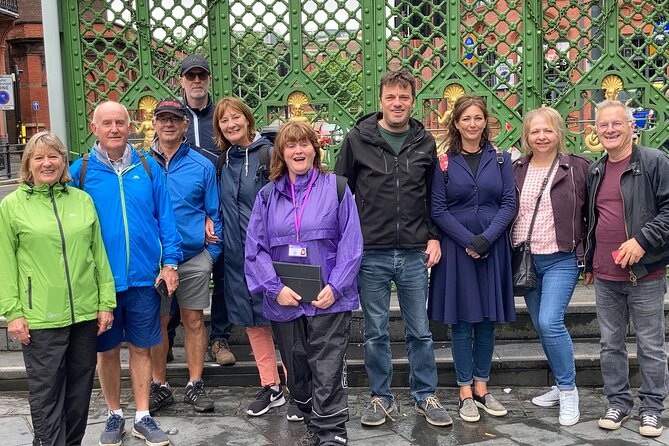
I especially love the way the guides bring the city to life. When I hear Mike Dowling and Carl doing their thing, it is the mix of humor, local detail, and clear pacing that makes the facts stick. I also like the smart stop plan, from the Bluecoat area to the Royal Albert Dock, so you get a real sense of how Liverpool grew.
One thing to consider: the walk goes over uneven cobbles and can feel a bit long if you are not used to city walking. Also, a few locations can be switched at the last minute due to operations, and access to the Beatles statue can be restricted.
In This Review
- Key highlights worth planning around
- A smart first-day overview walk for Liverpool
- Starting at the Bluecoat: the city’s old center with a pulse
- The Sailors Home gateway and the golden Liver bird photo
- Ropewalks and Campbell Square: industry turned street stories
- Thomas Steers Way and the dry dock legacy
- Royal Albert Dock: architecture, Titanic links, and fan culture
- Beatles Statue and Three Graces: pop history meets iconic buildings
- Castle Street, Liverpool Town Hall, and Exchange Flags
- Derby Square and the walk back toward Mathew Street
- What you should watch for during the walk
- Who this tour fits best, and who might skip it
- Should you book this Best Of Liverpool heritage walk?
- FAQ
- How long is the walking tour?
- Where does the tour start and end?
- What is included in the price?
- Is food or drink included?
- What should I wear or bring?
- Are there age and pet rules?
- What if the weather is bad or I need to cancel?
Key highlights worth planning around
- Small group size (max 20) means you actually get to ask questions, not just listen.
- Beatles moments without the heavy focus includes a Beatles statue selfie stop and stories as you move around town.
- Docks and Titanic links are explained as part of Liverpool’s broader maritime story, not as a one-off trivia stop.
- Photo friendly highlights like the golden Liver bird at the Sailors Home gateway and the Bill Fury statue near the waterfront.
- Practical route for first timers: a city overview that avoids long transit holds and gets you back in the center.
- Comfort matters: no hills or stairs, but wear no-slip shoes for cobbles and uneven ground.
A smart first-day overview walk for Liverpool
If it is your first time in Liverpool, you can waste a full day guessing what matters. This tour gives you a guided pass through the key neighborhoods and landmark types, then drops you back in the most convenient zone for more exploring on your own. It is about getting your bearings fast, then using that map in your head for the rest of your trip.
The pacing is built for an easy win. You are walking for roughly 2 hours 15 minutes, and the tour info notes there are no hills or stairs, but you still need comfortable shoes for cobbles and uneven surfaces. That combo is great if you want an active day without turning it into a fitness test.
At about $31.90 per person, the value comes from what you are actually buying: a local guide’s route selection and storytelling. You are not paying for museum entry tickets here, you are paying for context. Even on rainy days, guides like Mike Dowling have impressed people with energy and engagement, which is exactly what you want when you are trying to make sense of a new city.
More Walking Tours in Liverpool
Starting at the Bluecoat: the city’s old center with a pulse
You meet at the Bluecoat on School Lane, Liverpool L1 3BX. This is a strong opening choice because it places you in the older heart of the city before you start bouncing between themes like maritime industry, architecture, and music.
From there, the tour keeps things visual and grounded. The stop structure is short, so you get a quick orientation, then you move on. That matters because Liverpool’s center has a lot going on, and you will do better if you get a sequence in your head instead of random sightseeing.
One practical tip: arrive a few minutes early and take a moment to look around before you join the group. The better you orient at the start, the more you will enjoy the later “how did we get here” explanations.
The Sailors Home gateway and the golden Liver bird photo
Next up is a stop at the Liverpool Sailors Home gateway, a monument tied to the maritime community. This is the kind of moment that feels small when you just glance at it, but the guide’s framing makes it click.
The gateway also gives you a natural photo moment with the golden Liver bird. If you like travel photos that look like they belong in a postcard, you will appreciate stops like this. And if you do not care about photos, it still works because it anchors the maritime theme early, so later dock stories make more sense.
The quick stop length is a plus for first timers. You learn the why in a short window, then you keep moving instead of getting stuck in one spot while the group waits.
Ropewalks and Campbell Square: industry turned street stories
Then you head into Henry Street in the Ropewalks area. Ropewalks is tied to the old practice of making ropes for sailing ships, and the tour uses that idea to explain how industry shaped the city’s streets. This is where Liverpool becomes more than “pretty buildings and music,” because you can feel the work that built the place.
After that comes Campbell Square and the Bridewell. This is where the tour tends to win people over, because it mixes a dramatic landmark with a surprisingly practical explanation. Bridewell is an impressive converted Victorian gaol, and you may even get a chance to see inside an original cell.
A Converted prison can sound like a downer, but in a guided context it becomes a story about how the city managed order, labor, and change. It is also exactly the sort of “you would not stumble on this yourself” stop that several people praised.
Thomas Steers Way and the dry dock legacy
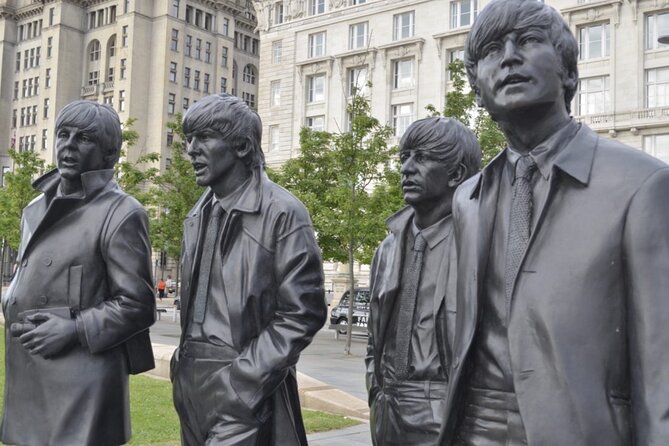
Thomas Steers Way is tied to Liverpool’s first dry dock site. The tour points you to the big water fountain and includes a chance to look down through a porthole, which is a fun way to turn an industrial concept into something you can actually see and photograph.
It is also home to the oversized LIVERPOOL selfie sign, with colors that change by season or events. That might sound a bit gimmicky, but it gives you a low-effort break point between heavier stories. Use that moment to check the weather and your phone battery, then roll into the waterfront.
The value here is the connection. You are not just seeing random landmarks. You are building a timeline of how Liverpool’s shipping technology and dock systems evolved.
More England on foot, brolly optional:
- Downtown Liverpool Walking Tour – In Spanish★ 5.0 · 591 reviews
- Tales from the Necropolis – A Ghost Walk Through St. James Cemetery★ 5.0 · 263 reviews
- Liverpool Hidden History and Dead House Evening Walking Tour★ 5.0 · 200 reviews
- Reel Tours: Liverpool Film Location Walking Tour★ 5.0 · 188 reviews
Royal Albert Dock: architecture, Titanic links, and fan culture
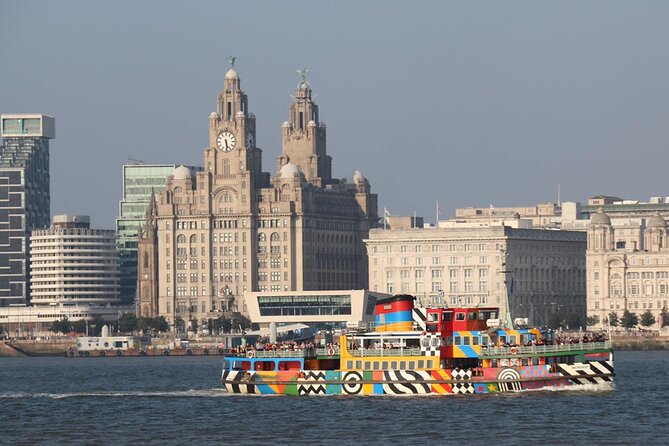
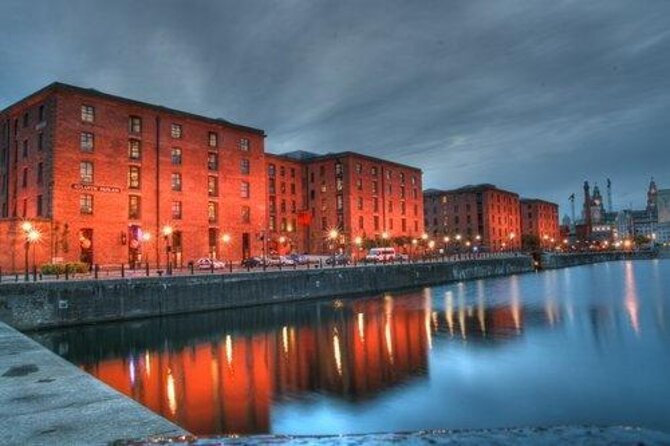
The waterfront section is one of the most rewarding parts of the walk. At Royal Albert Dock Liverpool, you hear how the Titanic story became an internal part of Liverpool’s maritime identity, and how the docks helped shape the city.
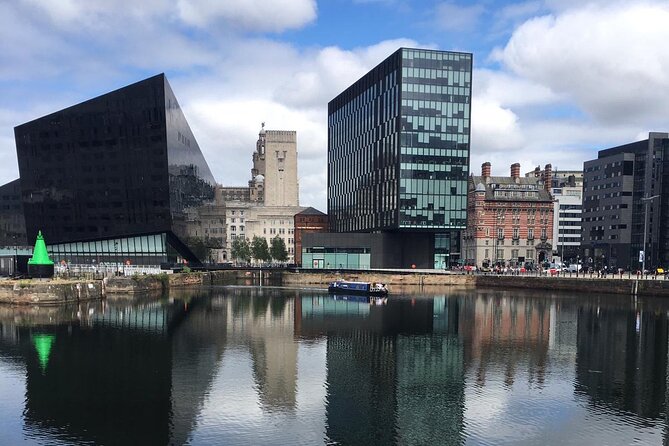
You also get a mix of old and new architecture along the walk, which is helpful because Liverpool docks are not frozen in time. The guide keeps it grounded in why people built and rebuilt these spaces.
There is also a Bill Fury bronze statue stop, described as a fan shrine. That is a good example of the city’s layering at work: maritime industry on one level, music and pop culture on another. Liverpool does not treat these as separate stories, and the tour reflects that.
If you have only limited time after the tour, this is one of the areas I would prioritize to revisit on your own, even if you just do a slow loop for photos and atmosphere.
Beatles Statue and Three Graces: pop history meets iconic buildings
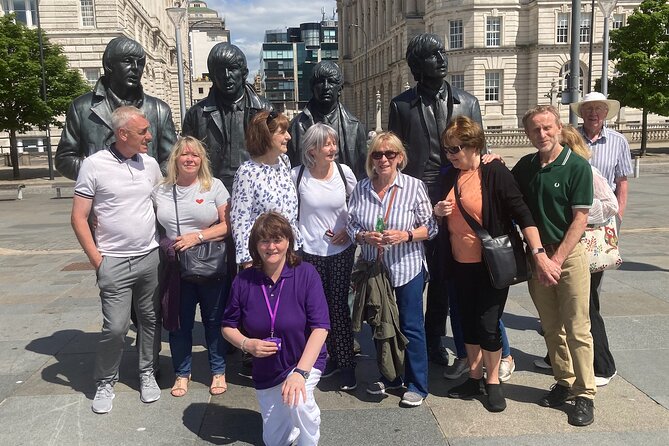
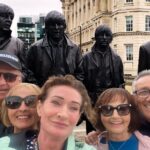
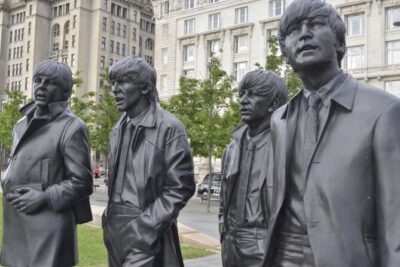
For Beatles fans, the tour includes a chance to grab a selfie with the Fab Four as you pass by the Beatles Statue sculpted by Andrew Edwards. The tour info also notes that access to the statue can sometimes be restricted, in which case they visit alternative statues. So if you care most about that specific photo, keep that in mind.
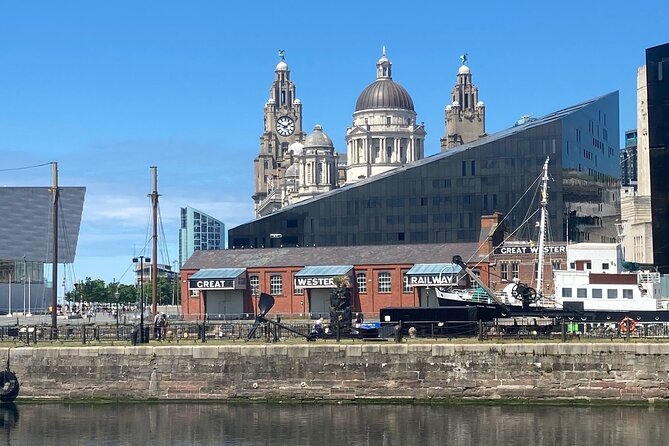
Then you move into the Three Graces, a trio of major buildings: the Cunard Building, the Port of Liverpool Building, and the Liver Building. The guide explains their heritage and why these buildings matter to how Liverpool is remembered.
This is one of the stops where a great guide really shines. Several reviews praised guides like Allan and Pam for mixing humor and clear explanations, and this is exactly the kind of segment where that style helps. It is easy to look at three famous structures and miss the logic behind their fame. A good guide gives you the thread.
Castle Street, Liverpool Town Hall, and Exchange Flags
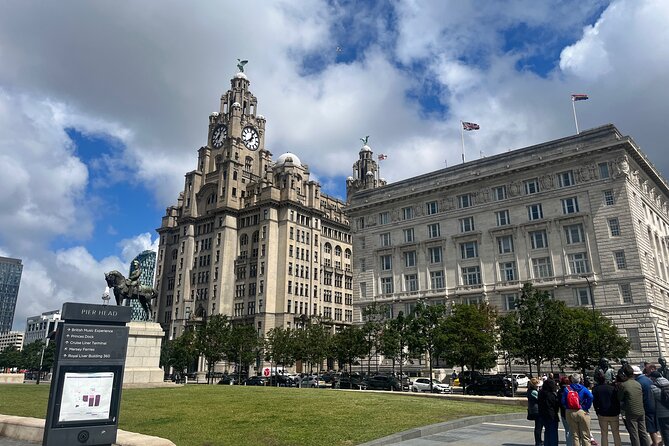
As you walk along Castle Street, you get a connection to medieval times through the street setting and architecture. It is not just a “look at this building” moment. The tour uses the location to make the city’s age feel real, especially if you have mostly seen modern Liverpool so far.
Next is Liverpool Town Hall, described as Grade I listed and one of the finest surviving 18th-century town halls. The tour also references that the story of its predecessors reaches back to the 1500s. Even if you do not memorize dates, the guide’s job is to help you understand the long arc of civic power.
After that comes Exchange Flags, with Grade II listed buildings that frame a courtyard facing the Town Hall. This area also ties into the Second World War and includes the Nelson Monument plus a bronze monument to Nelson from the early 1800s. It is a lot of themes in a small space, and it works because the tour keeps moving and links it back to Liverpool’s identity as a port city.
Derby Square and the walk back toward Mathew Street
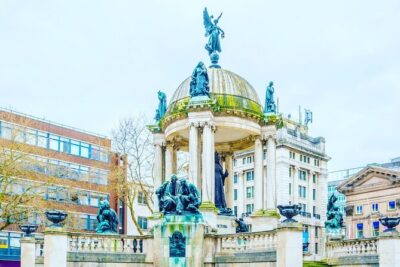
You finish with Derby Square, where you hear about Liverpool Castle that once stood there, and now you see a monument to Queen Victoria. It gives you a clear ending beat: the city shifts from earlier power centers to the areas you will recognize from everyday visits.
The tour ends at Mathew Street, at the entrance to the street that makes people think of music right away. From there, you can explore Mathew Street and the Cavern quarter on your own. If you want even more Beatles time, the tour provider also suggests booking a Beatles walking tour.
This is a smart ending because you are placed right where you want to go next, instead of being deposited somewhere inconvenient. You can take a short break, then decide whether your evening is for music nostalgia, waterfront photos, or a longer stroll through nearby streets.
What you should watch for during the walk
Because this is a guided walk with a full agenda, a few details help you get the most out of it.
First, group size helps, and this one caps at 20. Several people described it as small enough to feel almost private. That usually means better question time and fewer people competing for the guide’s attention.
Second, expect some route adjustments. The tour info notes that operational reasons can lead to route changes or inability to access a location. Also, Beatles statue access can be restricted sometimes. In other words, you are not betting your whole day on one single photo spot.
Third, sound matters in groups. One review asked for earphones so they could better hear questions asked by others. The tour does not mention headsets, so if you are hard of hearing, you might want to sit closer to the guide.
Finally, wear practical shoes. The tour says there are no hills or stairs, but you still pass through uneven cobbles. No-slip footwear is the safest bet.
Who this tour fits best, and who might skip it
I think this tour is ideal if you fit one of these boxes:
- You are visiting for the first time and want a quick orientation to neighborhoods, not just random sights.
- You want a blend of Beatles culture and maritime history, not a single-topic tour.
- You like a local voice with jokes and stories, the kind guides like Roy and Mike Dowling are praised for.
You might consider another option if you need lots of seated time or you dislike walking over cobblestones. Also, if your trip is focused on one single passion, like only Beatles or only ships, the mixture might feel too broad.
But if you want a first pass that sets up the rest of your Liverpool day, this is a very workable choice.
Should you book this Best Of Liverpool heritage walk?
Yes, you should book it if you want a tight, local-guided overview and you will spend the rest of your trip using what the guide teaches you. The price feels fair for what you get: multiple major landmarks, city-center context, and a guide team that people describe as funny, energetic, and genuinely invested.
I would book it especially if you like learning through streets and buildings, not through a long museum day. And I would pair it with your own follow-up time in Mathew Street and the Cavern quarter, so the Beatles pieces land when you can slow down.
If you are the type who hates uncertainty, just remember there can be occasional access limits and route tweaks. For most people, that is a small trade for a useful, story-packed morning or afternoon walk.
FAQ
How long is the walking tour?
The tour is about 2 hours 15 minutes. The walk is described as over two hours, with no hills or stairs, but you should expect time on your feet.
Where does the tour start and end?
You meet at the Bluecoat on School Lane, Liverpool L1 3BX, UK. The tour ends at Mathew Street, at the entrance to Mathew Street in the city center.
What is included in the price?
The price includes a guided walking tour and local Liverpool experienced guides. Admission tickets to the listed stops are described as free.
Is food or drink included?
No. The tour does not include food or drink, so you will want to plan for that on your own.
What should I wear or bring?
Wear comfortable no-slip shoes because the route includes uneven surfaces like cobbles. The tour also recommends you carry a bottle of water.
Are there age and pet rules?
Children under 16 must be accompanied by a responsible adult. Service animals are allowed, and well behaved dogs are welcome, with the reminder that it can be busy and you will be in a group.
What if the weather is bad or I need to cancel?
The tour requires good weather. If it is canceled due to poor weather, you will be offered a different date or a full refund. For cancellations, you can cancel for a full refund up to 24 hours in advance.
Kings, Plagues, Great Fires
- History Guided Tour of Liverpool and the Beatles
★ 5.0 · 408 reviews - Lennon and McCartney Songwriting History Tour
★ 5.0 · 39 reviews - Liverpool Heritage, History, Culture Walking Tour-Shore Excursion
★ 4.5 · 21 reviews - Evening Walking Historical Pub Crawl in Liverpool
★ 5.0 · 19 reviews
Latest to join the queue for Liverpool





Walking Tours in Liverpool, compared.
A Walk Through Time: History of Liverpool Walking Tour
Read our review →
Beatles Famous Walking Tour Of Liverpool- Fully Guided
Read our review →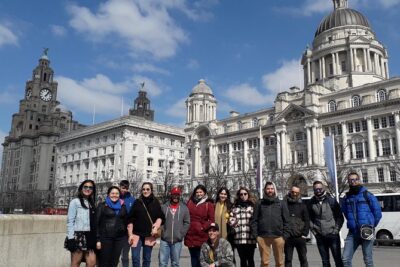
Downtown Liverpool Walking Tour – In Spanish
Read our review →
Tales from the Necropolis – A Ghost Walk Through St. James Cemetery
Read our review →
Liverpool Hidden History and Dead House Evening Walking Tour
Read our review →
Reel Tours: Liverpool Film Location Walking Tour
Read our review →
Browse the lists this tour appears in