
Reviewed · WALKING TOURS IN LIVERPOOL
Steps in Time: Liverpool Walking Tour
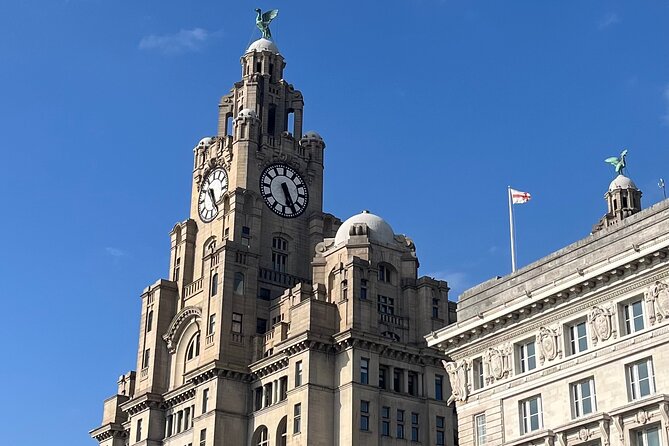
This route moves fast from waterfront drama to grand architecture. You’ll get guided storytelling that ties Liverpool’s maritime days to major landmarks, plus free-to-view stops that make your time feel like a real city course.
I especially like how the walk is organized like a narrative, not a random checklist of sights, and how the guide keeps you moving at a pace that still leaves room for questions. One thing to plan for: the course can be hilly at times, so comfy shoes matter.
In This Review
- Key Highlights You’ll Actually Feel During the Walk
- Price and What You Get From Paying $16.67
- Where the Tour Starts, Where It Ends, and How the Timing Works
- Royal Albert Dock, Pier Head to Titanic-Era Maritime Memory
- Queen Victoria Monument and the Blitz That Changed the City
- A Small Pub Stop With a Dark Nazi-Era Question
- St George’s Hall: Civic Pride in Stone
- Christ the King Cathedral: From Workhouse Site to Worship
- The University of Liverpool’s Victoria Building and Red-Brick Charm
- Abercromby Square Park: Empire, Slavery, and the U.S. Civil War Link
- Georgian Quarter: Falkner Street and Hope Street for Architecture Lovers
- Liverpool Cathedral: The UK’s Largest and Why Scale Matters
- Chinatown Liverpool: East Meets Liverpool Over 150 Years
- Tips to Make This Walk Easier in Real Life
- Who This Tour Is Best For (And Who Might Skip It)
- Should You Book Steps in Time: Liverpool Walking Tour?
- FAQ
- Where does the tour start and end?
- What time does the tour begin?
- How long is the Liverpool walking tour?
- How much does the tour cost?
- Is the tour offered in English?
- Do I need tickets or pay to enter the stops?
- Is there a limit on group size?
- Is the walk hilly?
- What kind of ticket do I use?
- What is the cancellation policy?
Key Highlights You’ll Actually Feel During the Walk
- Royal Albert Dock connections to Liverpool’s maritime legacy, including the Titanic era
- Blitz-era clues at the Queen Victoria Monument, with context that makes the damage easier to understand
- A surprising pub-story stop, where the guide links a small place to a darker Nazi-era question
- Big, iconic buildings without big ticket costs, including St George’s Hall, Liverpool Cathedral, and Christ the King
- Liverpool’s uncomfortable truths at Abercromby Square Park, including links to the transatlantic slave trade and the American Civil War
- A finish in Chinatown with the Chinese arch and a long East-meets-Liverpool story
Price and What You Get From Paying $16.67
At $16.67 per person for about 2 hours 30 minutes, the main value is that you are paying for direction and context. Liverpool is full of impressive buildings, but without a story you can miss the “why it matters” layer. This tour keeps that layer front and center.
You also get smart constraints that help the experience. The group size is capped at 15 travelers, which makes it easier to ask questions and actually hear the answers. Add in the fact that admission is listed as free for the stops, and your money goes to the guide and pacing, not ticket lines.
It’s offered in English, uses a mobile ticket, and typically sells about 8 days in advance, so if you’re traveling in busy season, it’s worth booking sooner rather than later.
More Walking Tours in Liverpool
Where the Tour Starts, Where It Ends, and How the Timing Works
The walk begins at Pier Head, Liverpool L3 1BY at 10:00 am, and it finishes in Chinatown on Nelson Street, Liverpool L1 5DW. That end point is helpful because it drops you in a fun area to wander afterward, grab food, or connect to other parts of the city.
The whole thing runs about 2 hours 30 minutes, so it’s long enough to feel like you learned something, but not so long that you end the day wrecked. The pacing is described as easy, but they do flag that you should have moderate physical fitness. In other words, you can do it if you walk regularly, but don’t treat it like a flat stroll.
You’ll also want to be ready for steep hills in places. Bring shoes with grip, and if rain hits, plan on wet cobbles and slick steps.
Royal Albert Dock, Pier Head to Titanic-Era Maritime Memory
The tour kicks off at Royal Albert Dock Liverpool, where you’ll look at the city’s maritime legacy and the engineering story behind it. This is the kind of stop where Liverpool’s identity makes sense fast. You see why the docks mattered and how technology, shipbuilding, and global trade helped shape the city.
The Titanic connection is one of the more famous threads, but the point is bigger than a single ship. The guide uses this area to show how Liverpool became a hub, and how the dock world still echoes through the architecture and the layout.
What I like about starting here is that it gives you a baseline for everything else. After the waterfront, the monuments and civic buildings land with more meaning, because you know what kind of wealth and power the city once had.
Practical note: dock-area walks can feel open and windy. If weather is gloomy, you’ll still get the context, but you may want layers.
Queen Victoria Monument and the Blitz That Changed the City
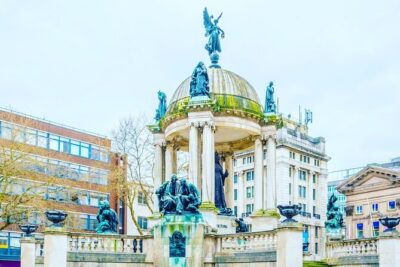
Next up is Queen Victoria Monument, with a focus on how Liverpool shifted from a thriving Victorian metropolis to a city in ruins. The Blitz context is the key: the guide helps you connect the damage you see to a wider story about the city’s targets, and what that meant for ordinary people.
This stop works because it isn’t just a “here’s where it happened” moment. You’ll walk away with a clearer sense of why Liverpool was hit and what the aftermath meant for the streets around you.
You might find this part emotionally heavy, especially if you’re not used to wartime tours. If you prefer lighter sightseeing early in the day, you may want to pace your attention here and take a breath before moving on.
A Small Pub Stop With a Dark Nazi-Era Question
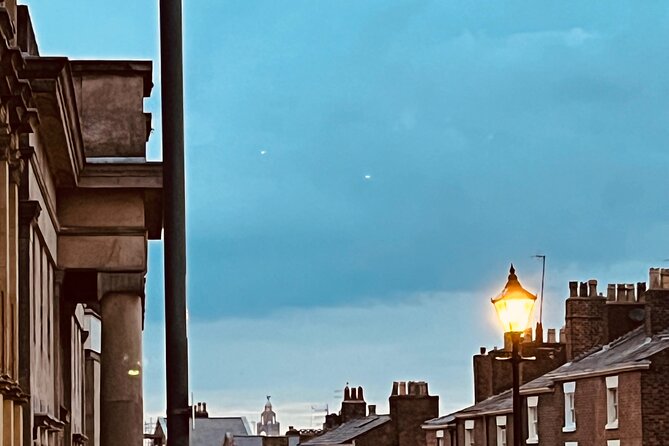
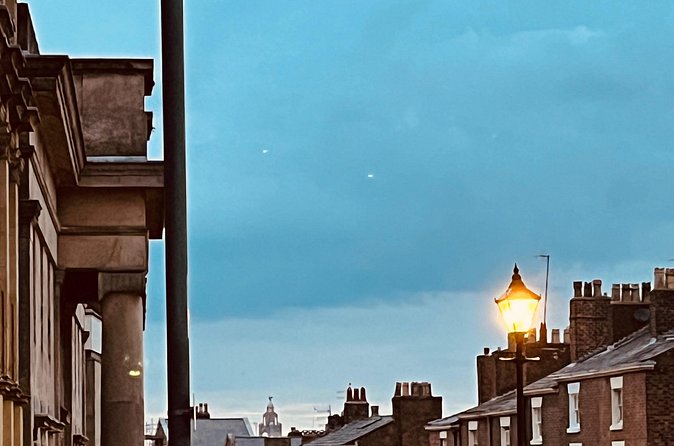
The route includes a stop at a small, cosy pub that many people pass without noticing. The twist is the guide’s story about whether this was connected to a Nazi tyrant.
Even with that question hanging in the air, the value is how the guide uses a normal street-level place to talk about something extraordinary and disturbing. It’s a reminder that major events don’t only live in museums or official memorial sites. They can surface in everyday buildings too.
If you’re hoping for a neat, clearly confirmed fact in every detail, this is the kind of stop where you listen for the explanation and the context. Don’t treat it like a crime documentary. Treat it like a city-history puzzle the guide helps you read.
More England on foot, brolly optional:
- Downtown Liverpool Walking Tour – In Spanish★ 5.0 · 591 reviews
- Best Of Liverpool Heritage, History & Culture Guided Walking Tour★ 5.0 · 539 reviews
- Tales from the Necropolis – A Ghost Walk Through St. James Cemetery★ 5.0 · 263 reviews
- Liverpool Hidden History and Dead House Evening Walking Tour★ 5.0 · 200 reviews
St George’s Hall: Civic Pride in Stone
Then you shift from wartime context to civic power at St George’s Hall. This building is a showpiece of architecture, placed in the heart of Liverpool. The guide uses it to talk about the city’s former wealth and influence, and you can feel that message the moment you see the scale.
What makes this stop worthwhile is the way it contrasts with the earlier monument. You go from loss and destruction to grandeur built by money and ambition. Even if you know Liverpool has a strong architectural look, the tour helps you understand why it looks the way it does.
Drawback to be aware of: because the walk is timed and the stop time is about 10 minutes, you won’t have long to explore every corner. If you love architecture, keep your eyes active and take in the key exterior features while you have the chance.
Christ the King Cathedral: From Workhouse Site to Worship
At Metropolitan Cathedral of Christ the King Liverpool, the tour highlights a transformation: the site was once a workhouse, and it’s now home to one of the world’s most striking cathedrals.
That workhouse-to-cathedral story matters because it changes how you look at religious buildings in general. You’re not only seeing beauty. You’re seeing a shift in purpose, and a reminder that powerful buildings often sit above painful pasts.
Stop time here is about 15 minutes, which is enough to notice the big architectural impact and to follow the guide’s explanation without feeling rushed.
If your travel style is purely photo-based, this stop can still work well. The cathedral shape and presence create strong pictures, even if you only catch it from key angles along the route.
The University of Liverpool’s Victoria Building and Red-Brick Charm
Another architecture-heavy moment comes at The Victoria Building, the original red-brick building of the University of Liverpool. This stop is steeped in character, and the guide connects it to the university’s legacy.
You’ll likely find this one refreshingly practical. Universities are often treated as backdrops, but here you’re invited to see them as part of the city’s identity, shaping jobs, ideas, and the local future.
At around 10 minutes, this is a shorter stop, so the guide’s story is what you’re buying with your ticket. If you’re a “read everything slowly” person, you may want to add extra time on your own afterward, especially around the streets right there.
Abercromby Square Park: Empire, Slavery, and the U.S. Civil War Link
This is one of the most thought-provoking stops on the walk: Abercromby Square Park. The tour frames it with a blunt, memorable message: built by empire, built by slavery. You’ll learn about Liverpool’s connection to the transatlantic slave trade, and the link to the confederate states of the USA during the American Civil War.
This part turns a pleasant green space into a place with heavy context. It’s still worth it, even if you would rather keep your day light. These stories matter because they explain why certain wealth appears where it does, and why cities carry legacies they did not create alone.
Practical tip: if you’re sensitive to heavy topics, it can help to take a slower moment here. Short stop time does not erase the weight of what you’re hearing.
Georgian Quarter: Falkner Street and Hope Street for Architecture Lovers
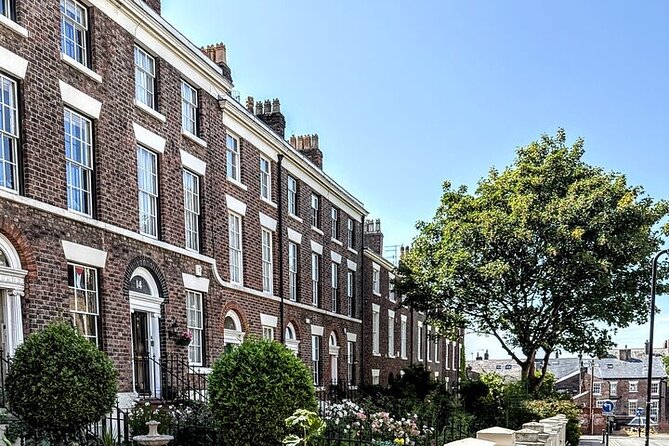
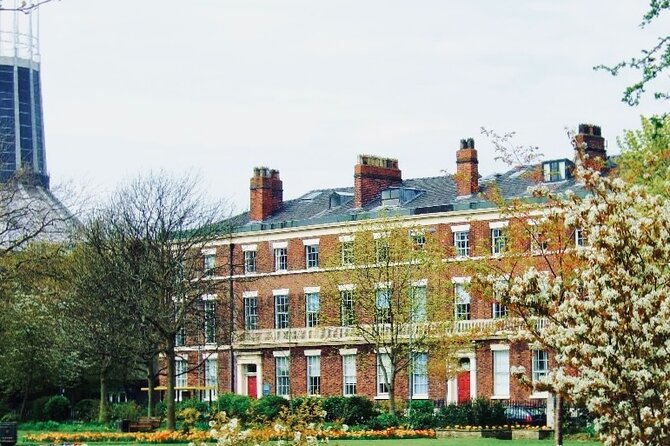
Now you shift to the Georgian Quarter, built by Liverpool’s rising merchant class tied to the docks. This area is known for preserved neoclassical architecture over about 200 years.
The tour specifically includes time around Falkner Street and Hope Street. If you like street scenes, this is where you’ll enjoy the clean, orderly building lines and the “you could almost time-travel here” feeling.
This stop is about more than photos. It’s where the city’s dock-era wealth shows up in a calmer, residential form. Earlier stops covered docks, monuments, and big institutions. Here, wealth becomes streetscapes.
You should know that the walk still remains an active walk, not a full neighborhood exploration. If you want to browse shops or linger on porches, you may need to return on your own later.
Liverpool Cathedral: The UK’s Largest and Why Scale Matters
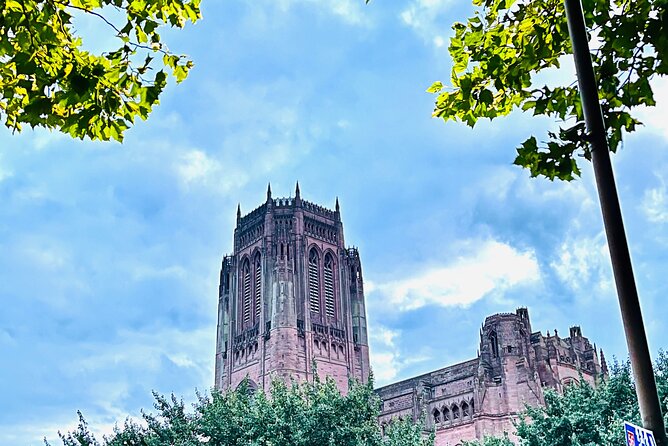
Next: Liverpool Cathedral, described as the UK’s largest cathedral and one of the largest in the world. You’ll get about 15 minutes here, and the guide will help you see why this place is so dramatic.
For me, the lesson is scale. Big cathedrals can feel overwhelming. The guide’s framing makes it easier to understand what you’re looking at and how the size connects to the city’s historic confidence.
This is also a good stop to settle your feet. Even if you keep walking, you get a moment where your attention can rest on stone and symmetry instead of moving constantly.
If you’re more into history than architecture, this still works. The scale draws you in, then the guide connects it back to the city story you’ve been building all morning.
Chinatown Liverpool: East Meets Liverpool Over 150 Years
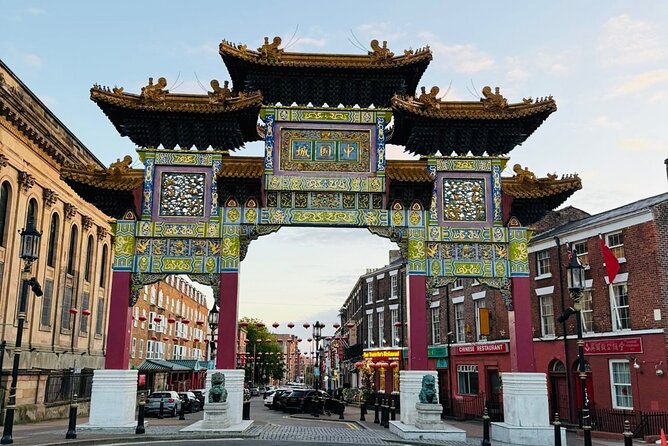
The final stop is China Town Liverpool, with a focus on Liverpool’s relationship with the East dating back over 150 years. You’ll also have a chance to see the Chinese arch, a recognizable landmark that anchors the area.
This is a strong finish because it changes the tone. After monuments and civic buildings and heavy topics, you end in a place that feels lived-in and culturally specific. It’s also practical: the tour ends on Nelson Street, so you can keep exploring without needing extra transit.
If you want a satisfying ending, this part is it. You walk away seeing Liverpool as a global city, not only a local story.
Tips to Make This Walk Easier in Real Life
A walking tour is only as good as your comfort level. Here’s how to set yourself up for success on this one.
- Wear comfortable shoes with grip, especially because the route can include steep hills.
- Bring a light layer. Even in decent weather, open dock areas and cathedral surroundings can feel cooler.
- If you care about photos, don’t wait until the end. Some stops are around 10 minutes, so take key shots early.
- If you have questions, ask them. The small group size makes it easier for the guide to answer clearly, as shown by past experiences with friendly, welcoming hosting.
Who This Tour Is Best For (And Who Might Skip It)
This tour fits you if you want a guided walk that connects landmarks into a coherent storyline, and you enjoy architecture and city history without spending all day in museums.
It’s also a good first-day choice. Starting at Pier Head and ending in Chinatown gives you a useful map of Liverpool’s layers, maritime roots, civic buildings, and modern-day cultural neighborhoods.
You might want to skip it if you prefer totally flat walking, or if you want long time inside buildings. The tour focuses on time outdoors and short stops designed for context, not deep independent exploration at each location.
Should You Book Steps in Time: Liverpool Walking Tour?
I think this is a solid booking if you like guided context and you want to cover a lot of meaningful Liverpool in one stretch of time. The price is low for a tour that includes a skilled guide, a small group, and multiple major landmarks. And because many entrance fees are listed as free at the stops, you can keep the day simple.
Book it if you’re traveling on a first visit, or if you want a careful balance of beauty and harder truths, from Blitz damage to slavery-linked connections. Just plan for hills, wear good shoes, and be ready to listen closely, because the real value is in how the story connects each site.
FAQ
Where does the tour start and end?
It starts at Pier Head, Liverpool L3 1BY, UK and ends at China Town on Nelson Street, Liverpool L1 5DW, UK. The end point is about a 10-minute walk from L1.
What time does the tour begin?
The tour starts at 10:00 am.
How long is the Liverpool walking tour?
It runs for about 2 hours 30 minutes.
How much does the tour cost?
The price is $16.67 per person.
Is the tour offered in English?
Yes, it is offered in English.
Do I need tickets or pay to enter the stops?
Admission tickets are listed as free for the stops, so you are not paying entrance fees during the tour.
Is there a limit on group size?
Yes, the maximum group size is 15 travelers.
Is the walk hilly?
They note there may be steep hills to walk up, and you should have a moderate physical fitness level.
What kind of ticket do I use?
You’ll use a mobile ticket.
What is the cancellation policy?
You can cancel for a full refund with free cancellation up to 24 hours in advance of the experience start time. If you cancel less than 24 hours before, you do not get a refund.
Latest to join the queue for Liverpool





Walking Tours in Liverpool, compared.
A Walk Through Time: History of Liverpool Walking Tour
Read our review →
Beatles Famous Walking Tour Of Liverpool- Fully Guided
Read our review →
Downtown Liverpool Walking Tour – In Spanish
Read our review →
Best Of Liverpool Heritage, History & Culture Guided Walking Tour
Read our review →
Tales from the Necropolis – A Ghost Walk Through St. James Cemetery
Read our review →
Liverpool Hidden History and Dead House Evening Walking Tour
Read our review →
Reel Tours: Liverpool Film Location Walking Tour
Read our review →Browse the lists this tour appears in