
Reviewed · WILDLIFE
Wildlife Photography Workshop in Richmond Park in London
A great wildlife photo plan starts with good light. This Richmond Park workshop is a smart half-day escape from central London, built around real wildlife backdrops and hands-on coaching. You focus on getting better fast and learning how to see shots, not just take them.
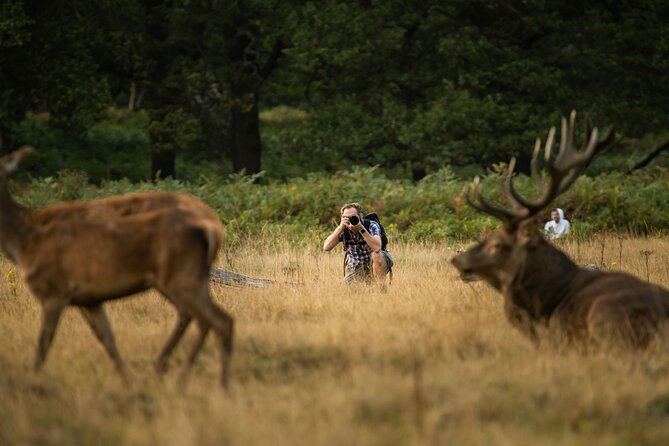
I like that you get in-the-field lessons right in front of Red and Fallow deer, so your camera work has instant context. I also like the mix of technique and mindset, with guidance on composition and how to build a proactive plan for future shoots.
One thing to consider: Richmond Park has gates, and evening timing matters. If you arrive late or are unsure about how long gates stay open, you could have trouble getting out, so give yourself a buffer and ask about gate timing up front.
In This Review
- Key things I’d mark on your camera bag
- Half-day wildlife photography in Richmond Park, close to London
- Meeting at Queen’s Road, and why arrival timing matters
- Stop 1 in Richmond Park: what happens during the session
- Deer, birds, and park backgrounds: your coaching targets real scenes
- Composition that you can use right away
- Camera settings: the useful stuff, not theory
- Why the evening lighting is part of the teaching plan
- Group size and instructor style: you get real attention
- Price and value: is $161.56 for 3 hours fair?
- Who this workshop suits best, and who should think twice
- Should you book Richmond Park wildlife photography with Matt?
- FAQ
- Where does the workshop take place?
- How long is the workshop?
- How much does it cost?
- What is the group size?
- What language is the workshop offered in?
- Do I need to buy tickets in advance?
- When should I expect confirmation after booking?
- Is the workshop dependent on weather?
- Is there any accessibility or fitness guidance?
- What should I do at the end of the session if I’m worried about gates?
Key things I’d mark on your camera bag
- Small group size (up to 8) for real help, not a generic lecture
- Evening workshop focus for the best natural lighting
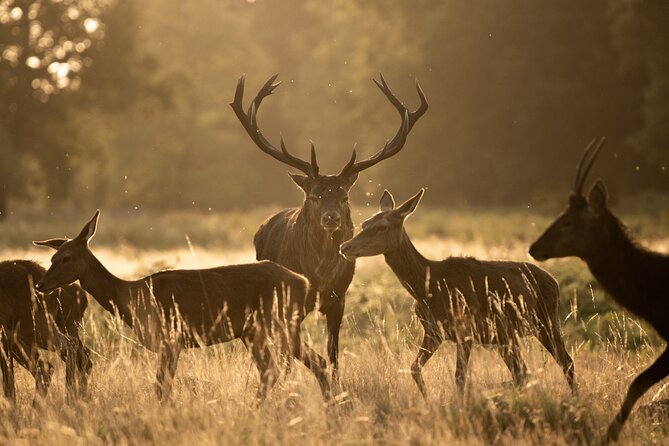
- Red and Fallow deer setting for close-up wildlife practice
- Practical composition and settings for different situations
- A guide who knows where wildlife tends to show in this park
- Mixed skill levels handled well, from first-time wildlife shooters to experienced users
Half-day wildlife photography in Richmond Park, close to London
Richmond Park is one of London’s easiest nature breaks. You are not crossing the country or waiting all day for a scheduled coach. Instead, you are dropped into a real wildlife environment in about half a day, which is perfect when you want nature without spending your whole trip in transit.
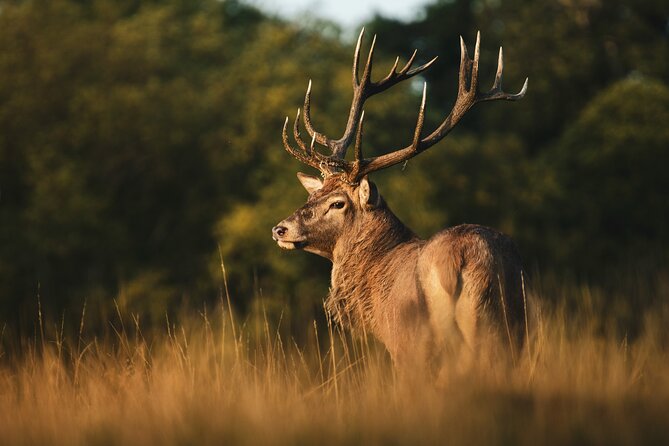
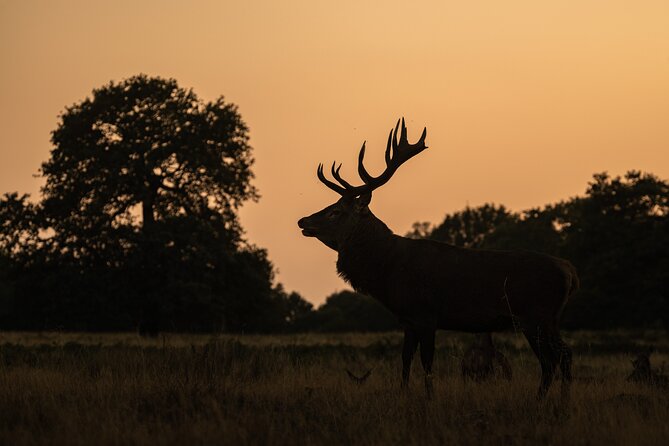
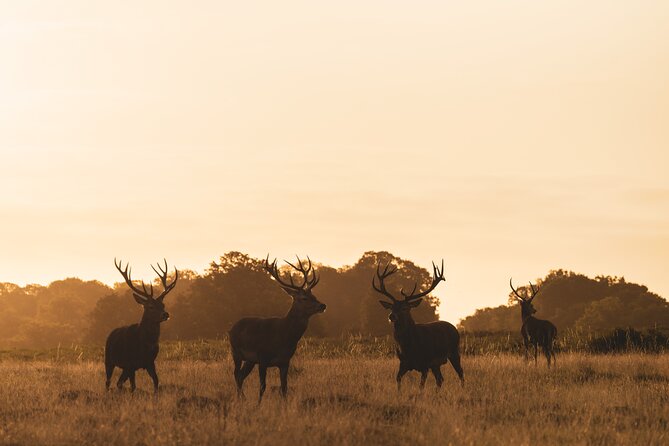
This workshop uses the park as your classroom. You work with the specific visual material Richmond Park gives you, like Red and Fallow deer, silver birch tree copses, lone oak trees, ferns, and lakes. That matters because wildlife photography is not only about the animal. It is also about how the animal sits in the scene, how the background cleans up, and how you guide attention with light and framing.
If you love getting out outdoors but still want structure, this format hits a sweet spot. You are learning in the field, and you are learning with feedback, which is the fastest path to better shots.
Also on in London, no fuss
Meeting at Queen’s Road, and why arrival timing matters
You meet at Queen’s Rd, Richmond TW10 6JJ, UK, and the experience ends back at the same meeting point. That simple loop is great for stress-free planning because you are not juggling trains mid-session.
Still, plan like it is an evening workshop. Reviews mention a sunny evening, and the stated highlight is that the evening ensures the best lighting. That usually means you should arrive with enough time to settle in, get your camera ready, and get your bearings before the light changes.
Here’s the practical takeaway from the one sour note: some gates in the park can be locked, and the poster had trouble exiting. Even if your session ends on time, you do not want the last minutes to turn into a scramble. If you are unfamiliar with the park, ask your guide about gate closure time and which route you should use to get back comfortably.
Stop 1 in Richmond Park: what happens during the session
The whole workshop centers on one main stop: Richmond Park. That keeps things focused. You are not hopping between multiple locations and losing time. You are staying in the same wildlife area so you can practice, adjust, and learn from results.
In the field, the instruction is built around what you can see and photograph right then. You get tutorial-style guidance in front of the deer, and you also learn to look for the rest of the wildlife and the backgrounds the park offers. The goal is creative wildlife images, not bland “point and shoot” records.
You can expect the teaching to cover two things in parallel:
- Technical skills you can apply to your camera immediately
- Thought process skills, meaning how you decide what to photograph, how you frame it, and how you react when wildlife changes position
That second part is where many workshops fall short. This one explicitly talks about the mental side of making photos, like guiding your photographic eye and developing a proactive mindset. Translation: you learn how to keep working when nothing happens for a moment, and how to capitalize fast when something shows up.
Deer, birds, and park backgrounds: your coaching targets real scenes
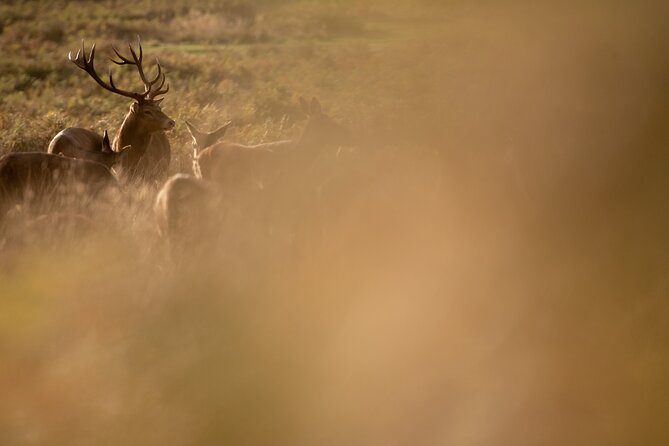
The deer at Richmond Park give you a built-in subject. That is good for learning because deer behavior is relatively predictable compared to the unpredictability of some birds. You can practice your approach to autofocus, exposure, and composition without waiting forever for the “perfect” moment.
Also, the park backgrounds listed in the workshop description are genuinely useful. Silver birch tree copses can help you create soft texture behind wildlife. Lone oak trees can give you a clear compositional anchor. Ferns and lakes can add layers and reflections, which can make even a simple animal pose look more intentional.
From the positive reviews, you can also expect that wildlife variety may show up depending on conditions. One review specifically mentions kestrels, woodpeckers, and a little owl. While you should not count on every sighting every time, it tells you the guide is actively looking for birds and not only relying on deer.
For your own shooting, this kind of environment encourages better habits:
- Watch behavior first, then frame
- Think about where the subject will move next
- Use backgrounds to control what the viewer notices
This is the kind of learning you can bring back to other wildlife parks later.
Composition that you can use right away
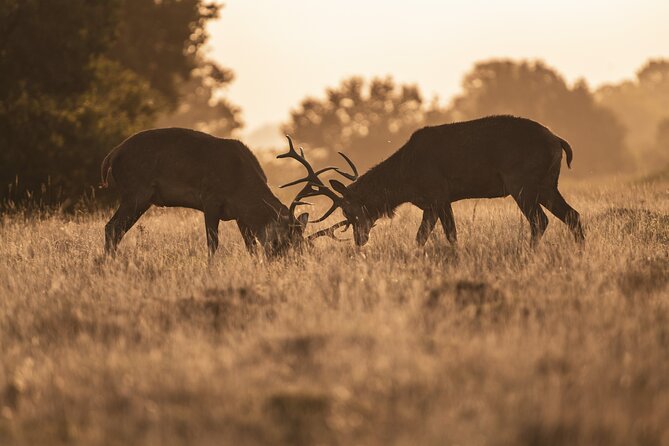
This workshop is not only about camera settings. It is also about composition, and the guide is focused on training you to see better.
The instruction points you toward:
- Composition choices that match the wildlife and the environment
- Framing that supports the story of the image
- Tips that help you develop a photographic eye rather than copying one shot repeatedly
One of the standout themes in the reviews is that the guide, Matt (Matthew Williams-Ellis), handles a range of experience levels. That usually means you get options: a simple starting method for beginners, and more technical or situational refinement for photographers who already know their way around the camera.
There is also a review that mentions help programming manual settings for birds in flight. That is exactly the kind of high-value coaching you want, because birds in motion punish guesswork. Even if you are not shooting birds in flight yourself, the same exposure and focus thinking often transfers to other action wildlife.
While the kettle’s on in London:
- Stonehenge, Windsor Castle, and Bath from London★ 4.5 · 18,662 reviews
- London Big Bus Hop-On Hop-Off Tour with Optional River Cruise★ 3.5 · 10,803 reviews
- London Small Group Tour of Historical Pubs★ 5.0 · 10,422 reviews
- Stonehenge, Windsor Castle and Bath with Pub Lunch in Lacock★ 4.5 · 7,402 reviews
Camera settings: the useful stuff, not theory
When a workshop teaches wildlife settings well, you should walk away knowing what to do when lighting changes or when your subject changes speed and distance.
In this session, the instruction is described as both technical and practical, with a focus on lighting, framing, and composition. That combination matters because wildlife photography problems are usually linked. For example, you might need a shutter speed adjustment, which changes exposure, which then affects how your framing looks with darker or brighter backgrounds.
If you are coming with an advanced camera setup, you will likely appreciate the way the guide explains settings for different situations. If you are newer, you will still benefit because the teaching is about applying new-found skills in real time, guided by what is happening in front of you.
A key detail is that the coaching is designed for any given situation in future wildlife shoots. That is more useful than memorizing a single recipe like one exact shutter speed. You want principles you can reuse.
Why the evening lighting is part of the teaching plan
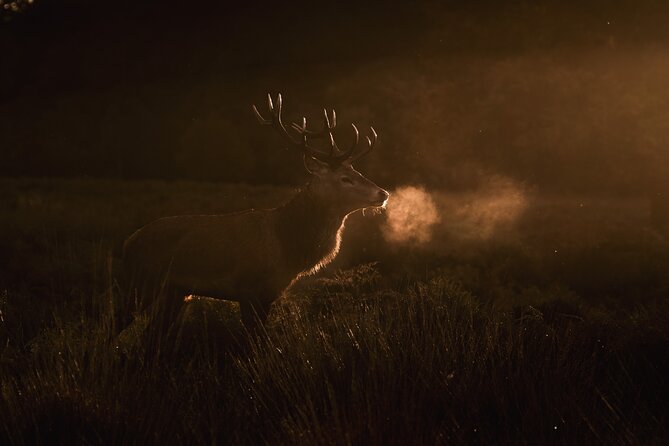
The workshop highlight says the evening workshop ensures the best lighting, and one review describes a sunny evening. That lines up with the real-world truth of wildlife photography: light quality affects everything.
When the light is softer and angles are more flattering, you tend to get:
- Better subject contrast without harsh glare
- More pleasing tones in fur and feathers
- More forgiving background brightness, which helps your composition
Even if you already understand that concept, the value here is that your learning is timed around the light you will actually use. You are practicing with the conditions you want to photograph in, not learning in perfect classroom lighting and then hoping your photos will follow the lesson later.
Group size and instructor style: you get real attention
This workshop caps at 8 travelers, which is the difference between getting a few seconds of help and actually having your questions answered while you shoot.
The reviews mention that the guide handled a wide range of abilities really well. That is important because wildlife workshops can go one of two ways: either everyone gets the same generic instructions, or the instructor expects you to already know the camera. In this case, it sounds like you can be a beginner and still leave feeling you learned techniques you can use right away.
Matt is also described as generous with knowledge and tips. If you want the type of workshop where someone watches what you are doing and helps you adjust, this is likely the right fit.
Price and value: is $161.56 for 3 hours fair?
At about $161.56 per person for roughly 3 hours, you are paying for a small-group, guided, in-the-field coaching session with a specialist.
Here is how I judge the value:
- You are paying for access to a guide who knows where to find wildlife and the best spots to shoot
- You are paying for real-time instruction and feedback, which is usually where workshops earn their keep
- You are paying for the “timing advantage,” since the session is geared toward evening light
If you were to do this on your own, you could absolutely visit Richmond Park and shoot deer. But the biggest question is whether you would know what to change when your photos are not working. This workshop is built to solve that problem quickly, and the reviews back up that it improves technique and confidence.
So yes, the price is not cheap, but it is in line with what you would expect for a guided photography workshop that is actively teaching. For me, the best value comes if you want structured learning rather than just taking pictures in the park.
Who this workshop suits best, and who should think twice
This workshop is a strong match if:
- You want to learn photography basics or improve existing skills
- You like nature and wildlife but want direction on how to photograph them
- You enjoy small group instruction and want hands-on coaching
- You can walk around with moderate physical fitness in mind
You might think twice if:
- You have zero interest in wildlife photography technique and only want a casual walk. The session is built around learning and discussion, not only sightseeing.
- You are very worried about park exits at the end of an evening. One negative experience cited gate closure problems, so plan your timing and route with care.
If you bring a camera, great. If you bring a smart camera or other setup, the guide can likely help you make progress based on what you have. The key is that you want to learn and apply what you hear.
Should you book Richmond Park wildlife photography with Matt?
If your goal is to leave with better wildlife photos and a clear plan for how to shoot next time, I would book it. The strongest case is the combination of evening light, in-the-field deer practice, and coaching that covers both technique and the way you think about images.
The only real red flag from the information is the potential hassle around getting out if gates are locked. That is fixable. Give yourself extra time, ask about gate timing, and do not treat the exit as an afterthought.
Bottom line: this is a practical, focused workshop for anyone who wants to improve wildlife photography without leaving London behind for long travel.
FAQ
Where does the workshop take place?
It takes place in Richmond Park, London, starting at Queen’s Rd, Richmond TW10 6JJ, UK. The activity ends back at the meeting point.
How long is the workshop?
It runs for about 3 hours.
How much does it cost?
The price listed is $161.56 per person.
What is the group size?
The workshop has a maximum of 8 travelers.
What language is the workshop offered in?
The workshop is offered in English.
Do I need to buy tickets in advance?
You receive a mobile ticket.
When should I expect confirmation after booking?
Confirmation is received within 48 hours of booking, subject to availability.
Is the workshop dependent on weather?
Yes. If it’s canceled due to poor weather, you’ll be offered a different date or a full refund.
Is there any accessibility or fitness guidance?
The guidance says travelers should have a moderate physical fitness level, and service animals are allowed.
What should I do at the end of the session if I’m worried about gates?
Make sure you plan your exit and route with timing in mind, since there can be issues with getting out of the park if gates are locked. It’s smart to confirm gate timing with your guide.
More Workshops in London
- Street Art Tour and Spray Painting Workshop in London
★ 5.0 · 98 reviews - Street Art Walking Tour and Workshop in London
★ 5.0 · 58 reviews - 3 Hour Chinese Dumpling Cooking Class for 2-6 people in London
★ 5.0 · 44 reviews - Private DJ Class
★ 5.0 · 11 reviews
Latest to join the queue for London


Wildlife, compared.
Guided Wildlife and Sea Cave Kayak Safari in English Riviera
Read our review →
Isle of Man Wildlife & Scenic Adventure with Wildlife enthusiast
Read our review →
Lincolnshire: ARK Wildlife and Dinosaur Park Entry Ticket
Read our review →
Isle of Man Wildlife and Scenic Adventure -Half Day
Read our review →Browse the lists this tour appears in