
Reviewed · WORKSHOPS
Private DJ Class
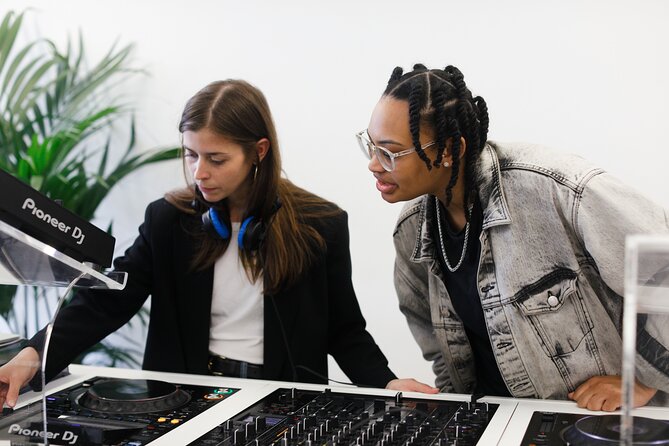
Mixing in a London studio feels oddly personal. This private DJ class on Bayham St lets you work one-on-one in English, right on Pioneer DJ decks.
I especially like the fact you get trainer attention without sharing the room or competing for time. That private setup matters for learning, not just comfort.
I also like how the lesson targets real DJ skills you can use immediately: beatmatching, blending, EQing and filters, plus phrasing and harmonic mixing basics. One possible drawback is time. Two hours goes fast, so you may need to focus on the few techniques you care about most rather than trying everything at once.
In This Review
- Key things I’d bank on before you go
- Bayham St: the simple start that keeps things focused
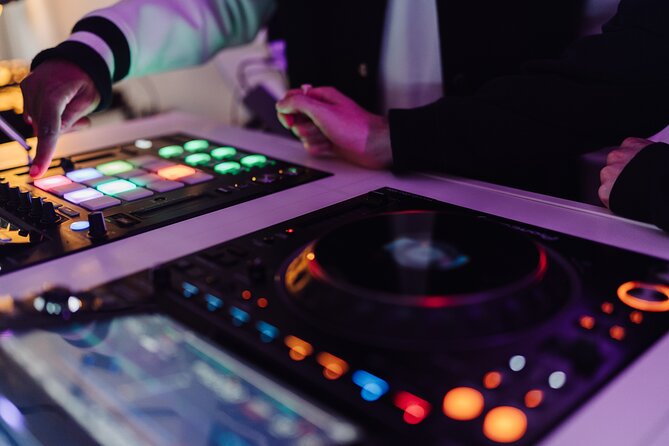
- Meet the Pioneer DJ decks, not just the theory
- Beatmatching and blending: your first real DJ superpower
- Phrasing: make transitions feel like music, not math
- EQing and filters: control the sound before it controls you
- Harmonic mixing basics, without the headache
- What makes this class genuinely private, and why you should care
- How much it costs, and whether it is a good value
- A realistic timeline for your two hours
- Who this is best for (and who might want a different format)
- Should you book this private DJ class?
- FAQ
- Where do I meet for the private DJ class?
- How long is the DJ class?
- What DJ equipment do you use?
- Is the class private?
- What skills will I learn during the session?
- Is the class offered in English?
- How much does it cost?
- What is the booking and cancellation rule?
- Is the experience suitable for most people?
Key things I’d bank on before you go
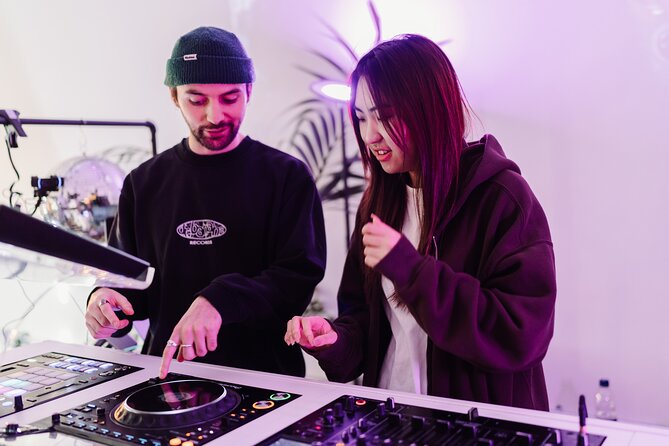
- Private, 1 group only teaching, so you can ask questions freely
- Pioneer DJ decks hands-on, with club-style gear you can recognize
- Beatmatching and blending as the core starting point
- EQing and filters for smoother transitions and better control
- Phrasing and harmonic mixing to help tracks lock together
- Bayham St meeting point that’s easy to find in central London
Bayham St: the simple start that keeps things focused
London has plenty of music-themed experiences, but this one is designed for practice, not sightseeing. You start at 93a Bayham St, London NW1 0AG, and the activity ends back at the meeting point. That matters because you avoid wasting your class time on transit puzzles. You get in, you set up, and you start mixing.
The “private” part is the real headline. This is not a demo where you watch and hope the trainer notices your biggest question. It’s a private tour, meaning only your group is in the session. For a skill like DJing, that changes everything. If you are stuck on beatmatching, you can stop and reset. If you want more time on EQ transitions, you can ask. You are learning in a way that fits your pace.
Also, it’s offered in English. If that helps you understand the concepts and get feedback fast, you’ll feel it from the first minutes. And since it is near public transportation, getting there should be straightforward compared with more out-of-the-way locations.
Also on in London, no fuss
Meet the Pioneer DJ decks, not just the theory
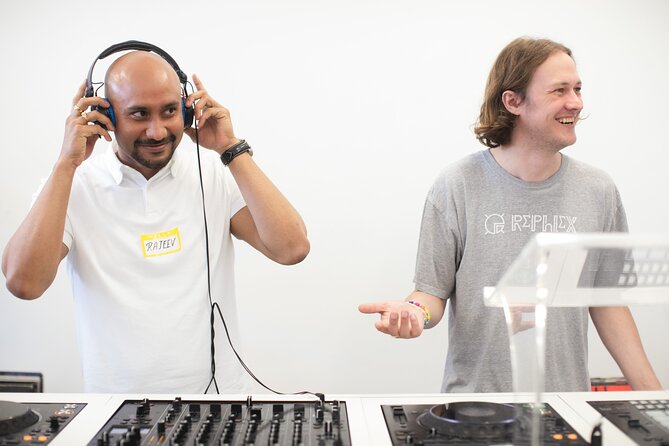
The lesson is built around industry-standard Pioneer DJ decks. That detail sounds technical, but it’s practical. Pioneer gear is common enough that you will likely see similar layouts and controls if you ever attend DJ events or try learning again later. Using the same style of equipment during your first serious practice is a smart way to avoid bad habits.
Here’s what I’d expect you to get out of that hands-on approach. Your fingers learn the workflow. Your ears learn what to listen for. Your brain connects the knobs and sliders to the sound you want. That connection is what makes DJing feel less like random button pressing and more like controlled mixing.
And the private format keeps that gear time from feeling rushed. When you are the only group in the room, you’re more likely to get the trainer’s attention during the parts that trip you up, like getting the tempo stable for beatmatching or making your transitions less muddy when two tracks overlap.
In one review, Josh specifically highlighted feeling comfortable with the high-end software and technology you are exposed to during this 1:1 course. That lines up with what usually makes or breaks a first DJ lesson. If the equipment feels intimidating, you second-guess yourself. In a private class, you can get clarity quickly.
Beatmatching and blending: your first real DJ superpower
The class covers beatmatching and blending as the foundation. These are the skills that turn two separate songs into one continuous flow.
Beatmatching is the part where you align the tempo and timing so the drums feel like they belong together. If you’ve never done it, it can feel weird at first. Even small timing differences can sound like chaos, even if the tracks are great songs.
Blending is what you do after that alignment, typically when you bring elements together so the transition is smoother. It’s not just about matching beats. It’s about making the change feel intentional.
In a two-hour format, you will want the trainer to guide you through listening and decision-making, not just pressing controls. The best lessons teach you what to check in your headphones first, then what to adjust.
Because this class is private, you can get targeted feedback. If your beats are drifting, the trainer can point to what is causing it. If your blend sounds abrupt, you can work on the timing of when you introduce the second track and how you manage overlapping sounds.
Phrasing: make transitions feel like music, not math
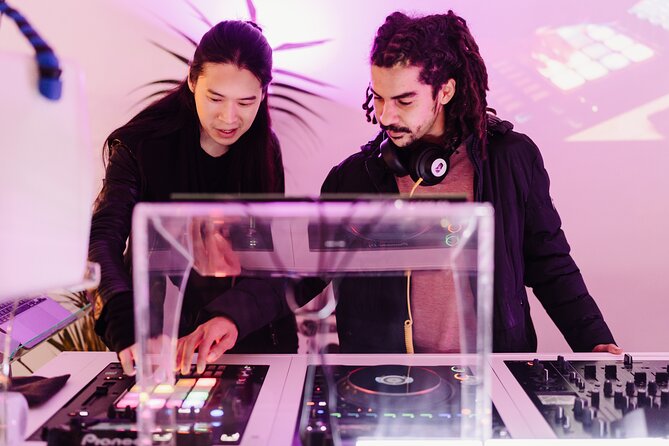
The lesson also covers phrasing. If beatmatching is the timing engine, phrasing is the “musical sentence” idea. Tracks have structure, with sections that rise, settle, and change energy. When you mix using phrasing, you stop forcing songs to collide at random points.
So instead of trying to make every transition work, you learn to look for where the track naturally changes. That gives you smoother, more “earned” transitions.
For first-timers, phrasing helps a lot because it gives you something you can recognize by ear. You don’t have to be perfect at exact beats forever. You can start mixing by paying attention to how the track evolves, then blend at moments that make sense.
In practice, this usually means your mixing becomes less about panic corrections and more about planning. And in a private class, you can ask for help identifying those sections in the specific tracks you are using.
EQing and filters: control the sound before it controls you
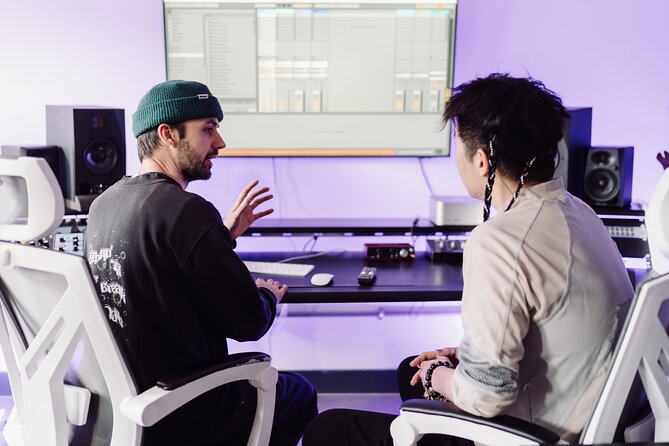
EQing and filters are where a lot of people get surprised. Everyone hears that DJing is about mixing songs. But real control comes from shaping what frequencies you let through during transitions.
EQing helps you reduce clashes. If the incoming track has strong bass at the same moment the outgoing track also hits hard, the mix can sound thick or distorted. EQ changes that by carving space. Even small adjustments can make the difference between a clean blend and a muddied overlap.
Filters do something slightly different. They change which parts of the sound are emphasized. Used well, filters can create buildup and release. Used carelessly, they can make transitions feel abrupt or hollow.
This class specifically includes EQing and filters. That matters because it signals you are not only learning tempo tools. You are learning how to manage sound layers, which is how mixing turns into a performance skill.
If you want a practical takeaway, focus on this idea: before you worry about matching everything perfectly, get the incoming track out of the way with EQ and filters, then bring it back when it fits. That approach makes beatmatching problems less painful in the moment.
And because the lesson is private, the trainer can correct your hand placement and timing. That is usually where people accidentally over-adjust and lose the beat.
While the kettle’s on in London:
- Stonehenge, Windsor Castle, and Bath from London★ 4.5 · 18,662 reviews
- London Big Bus Hop-On Hop-Off Tour with Optional River Cruise★ 3.5 · 10,803 reviews
- London Small Group Tour of Historical Pubs★ 5.0 · 10,422 reviews
- Stonehenge, Windsor Castle and Bath with Pub Lunch in Lacock★ 4.5 · 7,402 reviews
Harmonic mixing basics, without the headache
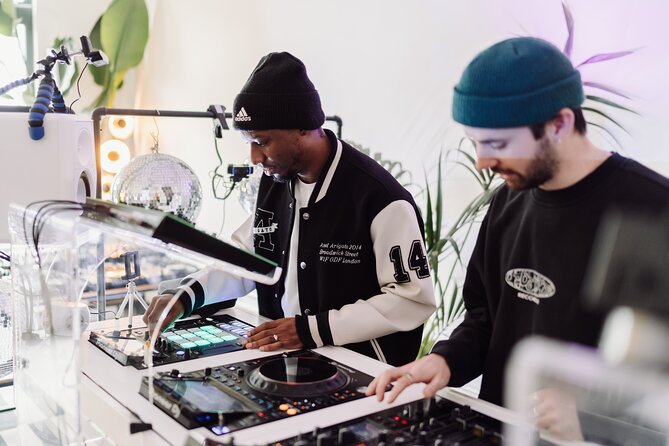
The class also covers harmonic mixing. Harmonic mixing is the concept of matching tracks that work well together musically, based on key and harmony. This is one of those topics that can sound complicated on paper.
In a beginner-friendly lesson, the value of harmonic mixing is not making you memorize theory. It is learning the basic mindset: some combinations just sound better, and you can steer toward them.
What I’d look for in this type of session is guidance that connects the concept to what you hear. If your transitions sound good, you want to understand why. If they sound rough, you want to learn what to change.
Even if harmonic mixing is only taught at a basic level in the two hours, it can still boost your confidence. Why? Because you stop treating every mix attempt as a coin flip. You start expecting that good results are possible through skill.
For many people, harmonic mixing is also motivating. It turns DJing into more than timing drills. It becomes a creative method for choosing moments and combinations.
What makes this class genuinely private, and why you should care
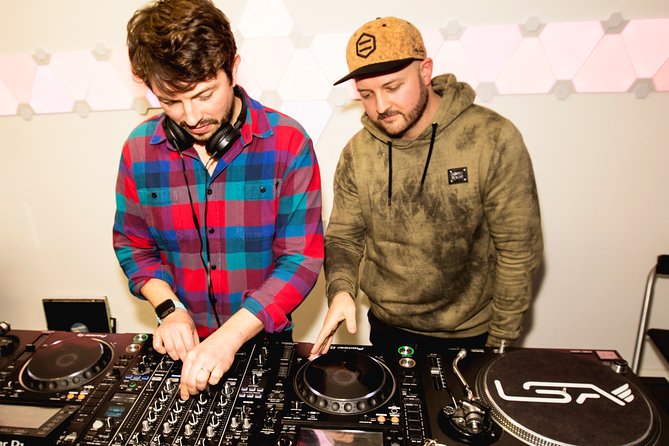
This is where the “private DJ class” label earns its keep.
With a private lesson, you avoid the common issue of group classes where one trainer has to split attention across several people. Here, your questions can land immediately. When something sounds wrong, you do not have to wait for the next person to finish. You can correct the issue while it is still fresh.
That means you can learn at your own pace. If you are naturally good with rhythm, you might move faster through beatmatching and then focus on transitions and EQ. If you struggle at first, you can slow down and repeat the same steps until it clicks.
It also helps you hear your mixing. The highlight says you don’t have to worry about anyone else hearing your mixing because it’s a private lesson. That might sound minor, but headphones and sound feedback are part of the learning loop. A private space makes it easier to concentrate on what you’re hearing, not what someone else thinks.
And the reviews back up the comfort factor. Josh said the 1:1 course made him feel comfortable with the high-end software and technology, and that he got nitty/gritty with the equipment. That combination, comfort plus hands-on, is exactly what you want on day one.
How much it costs, and whether it is a good value
The price is listed at $137.13 per person for about 2 hours. That is not “cheap,” but DJ lessons often aren’t. The good news is you are paying for three valuable things at once:
First, you are paying for private time with a trainer. You are not just renting equipment. You are getting guidance while you practice.
Second, you are paying for access to Pioneer DJ decks. That kind of gear is expensive, and many beginner learning setups do not match what DJs use in clubs.
Third, you are paying for a structured skill set. The lesson doesn’t just say mix music. It lists beatmatching, blending, phrasing, harmonic mixing, EQing, and filters. That helps you know what you are getting, even if you are starting from zero.
So when I think about value, I see it as a focused skill investment. If you want a fun music experience with real learning, it fits. If you only want to press buttons for an hour and leave with nothing but a vague sense of what DJing is, you might feel it is pricier than you expected.
Also, on average this gets booked 15 days in advance. That suggests demand. If you want a specific time, booking early is a smart move so you’re not scrambling.
A realistic timeline for your two hours
You will meet at 93a Bayham St. Then your session runs for about 2 hours, and it ends back at the meeting point. Within that tight window, expect the trainer to move you through core mixing skills in a logical order.
A common flow for lessons like this is:
- Start by setting up on the decks and learning how to control playback.
- Then work on beatmatching and blending so your transitions stop sounding off.
- Add phrasing so you mix with track structure, not only timing.
- Use EQing and filters to clean up overlaps and shape transitions.
- Cover harmonic mixing basics so you understand why some combinations feel better.
You’ll likely do more hands-on than watching. The whole point is to practice while you have guidance right there. And since the class is private, you can ask for repetition on the parts you want most.
Who this is best for (and who might want a different format)
This is a strong fit if you:
- Want a hands-on DJ lesson, not just a sightseeing-style music stop
- Like the idea of learning on Pioneer DJ decks
- Prefer a quiet, private space where you can focus and ask questions
- Are curious about DJ techniques like beatmatching, phrasing, EQing, filters, and harmonic mixing basics
It might be less ideal if you:
- Want a long multi-session course where you can build week after week
- Expect every DJ topic to be covered deeply in just 2 hours
- Want a group class social vibe with multiple learners at once
But if your goal is to walk away with actual mixing skills and not just inspiration, this private format is a solid match.
Should you book this private DJ class?
If you like music and you want to learn by doing, I think this is an easy yes. You get private, 1 group only coaching, plus practical instruction on beatmatching, blending, phrasing, harmonic mixing basics, EQing, and filters. The Pioneer decks make it feel like training for real DJ setups, not a toy version of DJing.
I’d especially recommend it if you value comfort and direct feedback. The reviews highlight that exact feeling for Josh, and that alone is a strong clue that the lesson environment is supportive.
Only hesitation I’d keep in mind is the time limit. Two hours is enough to start, but it is not enough to master everything. If you’re ready to treat it as a first step and focus on the techniques you care about most, book it.
FAQ
Where do I meet for the private DJ class?
You meet at 93a Bayham St, London NW1 0AG, UK. The activity ends back at the meeting point.
How long is the DJ class?
The class is about 2 hours.
What DJ equipment do you use?
The lesson teaches you to mix on industry-standard Pioneer DJ decks.
Is the class private?
Yes. It’s a private tour/activity, so only your group participates.
What skills will I learn during the session?
You’ll learn beatmatching and blending, plus basic skills including phrasing, harmonic mixing, EQing, and filters.
Is the class offered in English?
Yes, it is offered in English.
How much does it cost?
The price is listed as $137.13 per person.
What is the booking and cancellation rule?
You receive confirmation at the time of booking. Cancellation is free, and you can cancel up to 24 hours in advance for a full refund.
Is the experience suitable for most people?
Most travelers can participate. Service animals are allowed, and it is near public transportation.
Latest to join the queue for London



Workshops, compared.




Chocolate Bar Making Workshop – York Cocoa Works
Read our review →

Street Art Tour and Spray Painting Workshop in London
Read our review →Browse the lists this tour appears in