
Reviewed · HISTORICAL TOURS
The Almost Complete History of the Old Town of Cambridge
Cambridge history starts at the market. This walking tour covers the old town and the colleges through centuries of upheaval, from Anglo-Saxons to modern-day Cambridge, with a 500-year-old map to help you follow along. I like how it feels like you’re hearing Cambridge as locals did, full of historical humour instead of dry facts.
Two things really land here: the stories are sharp and specific at every stop, and the guide style is memorable, like John, who stays timely, professional, and funny without losing the thread. The one drawback to consider is simple: it is all outside, so you will not go into colleges or churches, even though you will see famous spots up close.
In This Review
- Quick reasons this tour works so well
- A Cambridge old town walk that tells the story like townspeople lived it
- Price and value: why $29.16 feels fair here
- Logistics that keep the day easy: start location, mobile ticket, and pacing
- Stop-by-stop: from Cambridge Market Square to St Bene’t’s Church
- Stop 1: Cambridge Market Square, where towns are made
- Stop 2: Great St Mary’s Church, the church that once served the market
- Stop 3: Sidney Sussex College, monasteries, reformation, and political shockwaves
- Stop 4: St Clement’s Church, earliest roots and a sailor’s patron
- Stop 5: Jesus Green, common land, borders, and why they matter
- Stop 6: Magdalene Bridge, a name origin story and Viking energy
- Stop 7: St John’s College area, Norman changes and a Round Church mention
- Stop 8: Cambridge University Press Bookshop, printing, power, and odd requests
- Stop 9: St Bene’t’s Church, Angles again, and ending the old town
- What the guide approach really feels like on the ground
- How to get the most out of this tour
- Should you book this Almost Complete History of the Old Town of Cambridge walk?
Quick reasons this tour works so well
- A 500-year-old map you can actually use to orient yourself through the old town maze
- Outside-only route that keeps the pace moving and avoids ticket lines inside
- Humour plus serious context, so the violence, politics, and religion make sense
- Local, lived-experience guiding through a Cambridge social enterprise
- Small group size (up to 15) for a more personal feel
A Cambridge old town walk that tells the story like townspeople lived it
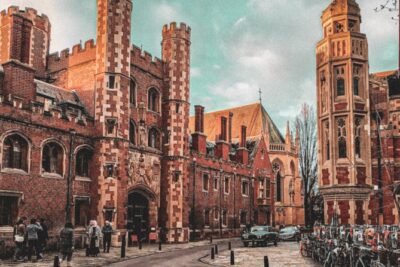
Most Cambridge tours fixate on the university brand or give you a highlights reel of big buildings. This one changes the lens. You walk through the town and the college edges while learning how Cambridge grew, how the market shaped daily life, and how power struggles played out on streets you can still stand on today. You are not just seeing landmarks, you are tracing cause and effect.
What I appreciate is the range of time covered in just about two hours. The tour sets up Cambridge as a place that kept absorbing new groups and new rules, from early settlements to medieval town life, to the political shocks that reached the colleges, to modern identity. Even if you already think you know Cambridge, this framing nudges you to look again at the same streets with new explanations.
Another big plus is the human angle. The tour is run as a local social enterprise, and the Experience Leaders are local people with lived experience of exclusion, particularly homelessness, in Cambridge. That matters because the stories feel less like performance and more like lived memory and community stewardship.
More kings, plagues and great fires:
Price and value: why $29.16 feels fair here
At $29.16 per person for an approximately 2-hour guided walk, you are paying mainly for interpretation, not building access. That is not a compromise here, because the tour is designed around outside viewpoints, storytelling, and quick context at each stop.
You also avoid extra museum or church entry costs. Every listed stop includes admission as free because you are staying outside. The price, in other words, buys you a coherent route, a guide who can connect the dots, and tools to help you follow the timeline.
The small group size (maximum 15 travelers) helps too. In a city that can feel crowded, this keeps the experience from turning into one of those hurried line-ups where the guide can’t see who is listening. If you enjoy walking tours where you understand the “why,” this one is a strong value.
Logistics that keep the day easy: start location, mobile ticket, and pacing
The tour starts at Guildhall, Market Hill, Cambridge CB2 3QJ and ends back there. That loop is handy. You do not have to plan a second way to get back, and you can keep your plans simple afterward.
You’ll also have a mobile ticket, and the tour includes a copy of a 500-year-old map. In practice, this helps you do two things at once: you hear the story, and you get oriented to how the town looked centuries ago. That is especially useful because parts of old Cambridge are not obvious unless you know what you’re looking for.
This experience is near public transportation, and service animals are allowed. Most people can participate since you are walking around the city centre at a steady pace. The one practical consideration is weather. The tour requires good weather, and if it is cancelled for poor conditions, you get another date or a full refund.
Stop-by-stop: from Cambridge Market Square to St Bene’t’s Church
The route is built like a timeline that keeps moving forward, even when the details get surprising. Expect short stops, a lot of story-sharing, and plenty of outdoor looking rather than inside visiting.
Stop 1: Cambridge Market Square, where towns are made
Your walk kicks off at the Market Square, the place where the question How did Cambridge become a town? stops being abstract. This is where trade, agreements, and daily routines would have mattered most.
You’ll hear why the market became so important, including how it worked in medieval times and how the market layout supported the life of the town. When you understand the market’s role, later sights make more sense. Colleges and churches do not grow in a vacuum, and neither does a city identity.
Practical note: this is a quick starting point, so it is a good place to orient yourself before the route starts unfolding.
Also on in Cambridge, no fuss
- Cambridge University Walking Tour by Alumni™ Kings College Option★ 5.0 · 2,336 reviews
- Cambridge University With Alumni: Optional Kings College Entrance★ 5.0 · 1,987 reviews
- Punting Tour in Cambridge★ 4.5 · 1,690 reviews
- Shared Guided Punting Tour of Cambridge★ 5.0 · 787 reviews
Stop 2: Great St Mary’s Church, the church that once served the market
Next comes Great St Mary’s Church of England. The story here hinges on its older identity as St-Mary’s-by-the-market. In other words, this is not just a university church to you and me, it was tied to a working, crowded marketplace.
You’ll learn the building’s background and what changed when scholars arrived in Cambridge. That scholar arrival angle is useful, because it helps explain why Cambridge developed such a distinctive relationship between town and gown. The church becomes a kind of social hinge, between local daily life and the growing academic world.
No entry here either, so the focus is on context and what the building represents in the town’s evolution.
Stop 3: Sidney Sussex College, monasteries, reformation, and political shockwaves
At Sidney Sussex College, you get one of those Cambridge conversations that can sound complicated until it’s put into a clear narrative. You will hear about monks and monasteries, the reformation, and then later the darker political events tied to regicide and beheadings.
Even though you do not enter (and the tour keeps it outside only), the stop works because the guide ties what you see around the college edges back to bigger national changes. Cambridge’s colleges did not become universities by accident. They were shaped by religious shifts and power struggles that affected real people.
The “no entry” style here is worth noticing. It keeps the tour from becoming a checklist of doorways and instead makes each site part of a street-level story.
Stop 4: St Clement’s Church, earliest roots and a sailor’s patron
St Clement’s Church is next, shown outside only, and the emphasis is on earliest church origins in Cambridge. The tour also points to a patron saint of sailors, which is a detail that may surprise you.
This is the kind of stop where the guide’s approach matters. If you just see a church façade, it can feel like another church. But when you connect it to the earliest phases of the town, it becomes a clue to how Cambridge’s identity formed long before the university became the headline.
Drawback to consider: if you are hoping for deep architectural walkthroughs, you will not get that here since the tour stays external.
Stop 5: Jesus Green, common land, borders, and why they matter
Then you hit Jesus Green, and the tone shifts from buildings to the town’s land rules. This is about common land, enclosure, and what happened when borders got defined. You also get the arrival of the kingdom of the East Angles and the role of fairs.
This stop is one of the best examples of why a walking tour like this beats a simple photo stop. Land use changes shape everything: where people lived, how the town expanded, and what could happen around the edge of town.
You’ll also get a toilet and rest break here, which is genuinely helpful on a two-hour route. It makes the pacing easier, especially if you are visiting Cambridge from out of town.
Stop 6: Magdalene Bridge, a name origin story and Viking energy
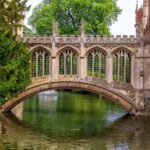
Next is Magdalene Bridge, and the guide uses it to answer Why are we called Cambridge? while also bringing in Vikings. Yes, Vikings are part of the Cambridge story here, and the tour treats them as more than a trivia note.
The strength of this stop is that it sits at a natural crossing and connects ideas of place names and early influences. You feel the story as something anchored to location rather than just an abstract history lecture.
No entry again, just looking and learning, which fits the overall structure.
Stop 7: St John’s College area, Norman changes and a Round Church mention
At St John’s College, the narrative hits English kingdom shifts. You’ll hear how Cambridge joins the new Kingdom of England, and then the Norman turn up.
This stop also includes a mention of the Round Church being built, plus talk of a medieval public hospital and a monk annoying other monks. That mix sounds playful, but it reflects real tensions and real institutions that existed alongside each other.
You are not entering the college or any church. The value here comes from seeing how much the town-level story is embedded in the university landscape.
If you love social history, you will probably enjoy this stop more than you expect, because it frames colleges not as separate from life, but as part of it.
Stop 8: Cambridge University Press Bookshop, printing, power, and odd requests
Now you get an angle on how ideas moved. The Cambridge University Press Bookshop stop is tied to the right to print and the fight for space, and it includes fun facts connected to King’s College Chapel.
You’ll also hear about Dr Caius and his strange requests, plus references that help you see why Cambridge became influential beyond its buildings. This stop is a reminder that history includes paperwork, permissions, printing, and the people who argued about it.
A small drawback: since you are staying outside as part of the wider outside-only format, you will get story context rather than a deep retail or archive experience.
Stop 9: St Bene’t’s Church, Angles again, and ending the old town
Your final stop is St Bene’t’s Church (Church of England), again outside only. The theme returns to early roots with Angles, and then pushes toward the ending of the old town and your return into the city.
This is also where the guide weaves together a few notable items around the area. You’ll hear about Corpus Christi College and the tour’s framing for the secret of life, plus the Eagle pub, and then you close the circle.
The effect is satisfying. You finish with a clearer mental map of how the old town transitions into the modern city.
What the guide approach really feels like on the ground
The tour’s strongest praise points are about the guide: friendly, professional, timely, and excellent at storytelling that stays accurate while still being funny. John’s style described by past participants fits what makes this kind of tour enjoyable. He can keep the history readable, and he has enough humour to keep you listening when the material gets heavy.
The pacing also matters. With nine stops in about two hours, you need a guide who can explain quickly without feeling rushed. This tour’s format keeps the stops short and focused, then builds a timeline from there. If you like walking tours where you learn a clear sequence of events, the structure helps.
One more note: because the guides are local and connected to the city, the tour feels like it belongs to Cambridge, not just to tourists passing through. That makes the humour land in a more grounded way.
How to get the most out of this tour
If you want maximum value from the route, do this before you start: look at the market area on a map and note where you’re standing. The included old map helps, but you will get more from it if you already know what modern streets look like.
During the walk, keep your questions simple. Ask what changed and why it changed. The tour’s stories are built on cause and effect, so your curiosity will line up with the guide’s explanations.
Wear comfortable shoes. It is a city centre walk with multiple short segments, and you will spend most of your time outside.
And if you are tempted to think, I’ll skip this because I want only famous interiors, consider what you are actually trading away. This tour is about seeing the city as a timeline, so it is less about stepping inside. If your top goal is interior access, you may want a different type of Cambridge tour.
Should you book this Almost Complete History of the Old Town of Cambridge walk?
Book it if you want a 2-hour Cambridge walking tour that explains why the town looks the way it does, with humour and a guide who can make complex change feel understandable. It is also a great fit for first-time visitors who want orientation fast, and for repeat visitors who think they already know Cambridge.
Skip it only if you specifically want to enter colleges and churches. This tour stays outside by design, so it will not replace an inside visit.
If you show up with curious energy and comfortable shoes, you’ll leave with a much clearer sense of Cambridge as a place shaped by markets, power, religion, land boundaries, and the constant clash of town life with university life.
Latest to join the queue for Cambridge
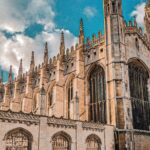
Historical Tours, compared.
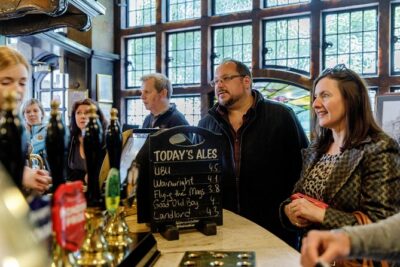
London Small Group Tour of Historical Pubs
Read our review →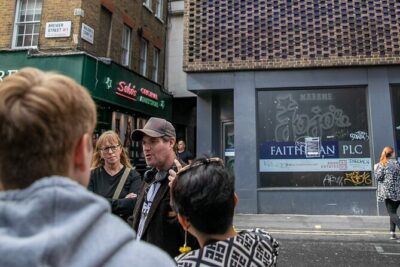
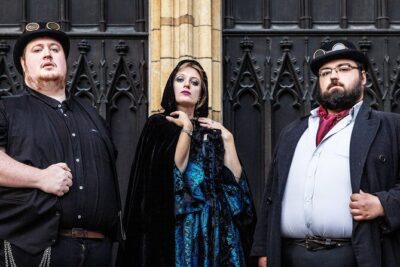
Shadows of York: Ghost Walk and Horrible History.
Read our review →
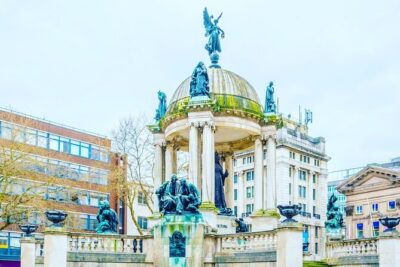
A Walk Through Time: History of Liverpool Walking Tour
Read our review →
Royal Historic Pubs Walking Guided Tour in London
Read our review →
Private Group: Historical Pub Walking Tour of London
Read our review →
Best Of Liverpool Heritage, History & Culture Guided Walking Tour
Read our review →Browse the lists this tour appears in