
Reviewed · HISTORICAL TOURS
Curious Cambridge – The History Tour that’s FUN!!!
Cambridge gets playful on this 90-minute history walk. This route mixes fast facts with entertaining stories as you pass the colleges that define the city’s university world. You also track how Cambridge developed over more than 1,000 years.
I especially like the storytelling style. Guides such as Peter and Ben get praised for making the details stick, with humor and helpful visual tie-ins for what you are seeing. I also like that the tour stays family-friendly, with guides like Simon and Chris keeping even teenagers interested.
One possible drawback: you view the colleges from the outside and do not enter them. If you want inside access, you will need to plan separate tickets or add-ons.
In This Review
- Key highlights to know before you go
- Enter Cambridge’s story, not a lecture
- Price and what you really get for $27.74
- Meeting Jesus Green, finishing at the Corpus Clock
- A 90-minute plan that keeps you moving
- Stop-by-stop: from Magdalene’s old port road to St John’s Round Church
- Stop 2: Magdalene College, Magdalene Street and Bridge
- Stop 3: St John’s College, the Round Church and university seeds
- Trinity’s Newton links, long pranks, and Trinity Lane’s cheeky past
- Stop 4: Trinity College, Newton and the prank lore
- Stop 5: Trinity Hall, Trinity Lane and the old nickname
- Gonville and Caius, Nightclimbers, and founder oddities
- Stop 6: Gonville and Caius College
- Market Square: bell chimes, old markets, and Town v Gown punch ups
- Stop 7: Cambridge Market Square
- St Bene’t’s Church, the oldest building, and the Corpus Clock link
- Stop 8: St Bene’t’s Church
- Castle Hill: Romans, Vikings, and Normans at the edge of the sea
- Stop 9: Castle Hill
- Who this tour suits best
- My quick booking advice
- Should you book Curious Cambridge, the History Tour that’s FUN?
Key highlights to know before you go
- College sights without the time sink: you walk past major colleges, then move on fast.
- A guided route that ends at the Corpus Clock: perfect for snapping into place with your next stop near King’s College.
- Stops built around Cambridge lore: pranks, founders, and legend-style details you can remember.
- Market Square and Town v Gown energy: the city’s rivalry stories show up at street level.
- Castle Hill time-travel: Romans, Vikings, and Normans all get woven into the same hilltop story.
Enter Cambridge’s story, not a lecture
This tour works because it treats history like street theatre. You are not stuck listening to dates you will forget. Instead, you walk a clear loop that keeps momentum, with each stop tied to a theme like university beginnings, city power, or the people who made Cambridge feel like Cambridge.
The “fun” part is not just silliness. It is the way the guide turns architecture and place names into living context. You start to see why a bridge matters, why a church location is important, and why Market Square feels like the center of everyday Cambridge life, even when the colleges steal the spotlight.
And yes, it helps if you like stories. If you prefer facts only, you might still enjoy this, but you will want to bring curiosity for the personalities behind the buildings.
More kings, plagues and great fires:
Price and what you really get for $27.74
At $27.74 per person for about 1 hour 30 minutes, this tour is priced like a “high value orientation walk.” You are paying mainly for interpretation and pacing, not for museum entrances.
The itinerary includes multiple college-adjacent stops where the tour is planned to cover key sights without entering. That keeps costs down and time predictable. The “admission ticket free” note at each stop lines up with the idea that you are there for viewpoints, streets, and exteriors, not paid interiors.
If you are budgeting a first day in Cambridge, I think the math works well. You get a guided framework for the sights, then you can choose what to pay for later. It is a smart way to decide what truly interests you before buying separate tickets.
Meeting Jesus Green, finishing at the Corpus Clock
The tour starts at Jesus Green Lock House, Cambridge CB4 3AX. The end point is The Corpus Clock, 58 Trumpington St, Cambridge CB2 1RH, right opposite King’s College.
That finish matters. King’s College is a major visual anchor in Cambridge, so ending nearby helps you connect what you learned to what you see next. It also means you are not stranded far from the main pedestrian zone at the end of your walk.
You should expect a straightforward walking experience. The tour is near public transportation, and service animals are allowed. Most people can participate, and the group size is capped at 25 travelers, which usually helps the guide keep the story flow moving without getting drowned out.
A small practical tip: dress for foot travel. Even when you move briskly, Cambridge weather changes fast.
A 90-minute plan that keeps you moving
The route is built as a sequence of “place plus meaning” stops. Instead of one long scene, you get a series of short moments, each one about 10 minutes at the key sights. That format is great for photos because you are not waiting for the next announcement while your camera battery dies.
Here is how the pacing feels in practice:
- You get an intro grounding moment early on.
- Then you transition into college-focused street scenes.
- Midway, you hit Market Square and a big church landmark.
- You finish with Castle Hill, where Cambridge’s story connects to older layers of conquest.
Because the time is tight, the guide will likely point things out quickly and move on. If you love slowing down and lingering, save that for your solo time after the tour.
Stop-by-stop: from Magdalene’s old port road to St John’s Round Church
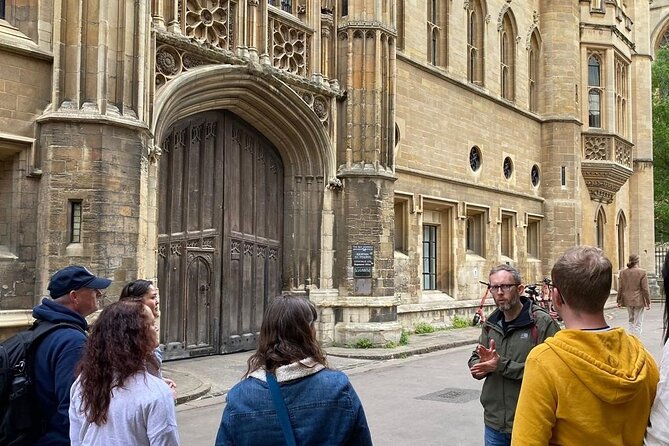
Your tour begins with a stop centered on Cambridge itself, which sets the stage for why these locations matter. Then you head to the older, road-level Cambridge story at Magdalene.
Also on in Cambridge, no fuss
- Cambridge University Walking Tour by Alumni™ Kings College Option★ 5.0 · 2,336 reviews
- Cambridge University With Alumni: Optional Kings College Entrance★ 5.0 · 1,987 reviews
- Punting Tour in Cambridge★ 4.5 · 1,690 reviews
- Shared Guided Punting Tour of Cambridge★ 5.0 · 787 reviews
Stop 2: Magdalene College, Magdalene Street and Bridge
This is where the tour turns a simple street into a city-history clue. You learn about Magdalene Street and Bridge as an ancient roadway and the heart of what was once the port of Cambridge.
That is a useful mindset shift. Many first-time visitors focus on colleges as if they appeared overnight. This stop reminds you the city also revolved around trade and movement long before the university brand took over.
What to watch for: look at the bridge and surrounding street alignment. The guide’s story helps you see how transport shaped the city’s growth.
Stop 3: St John’s College, the Round Church and university seeds
Next comes St John’s, with special attention to the Round Church and the seeds of the University.
Even if you know Cambridge for academic prestige, this stop gives you the “how it began” feeling. The architecture and the founding-era symbolism work together, and you should come away with a clearer picture of how the university concept took root in place.
Potential drawback: if you are hoping for a deep architectural walkthrough, this is not an extended interior study. You get guided orientation, not detailed building access.
Trinity’s Newton links, long pranks, and Trinity Lane’s cheeky past
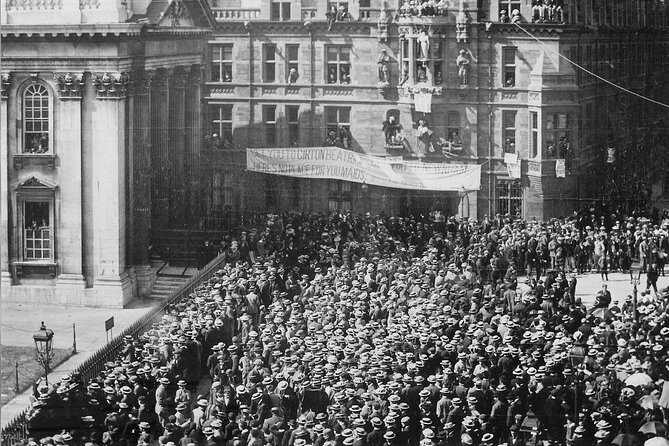
Now the tour leans hard into some of Cambridge’s most recognizable names.
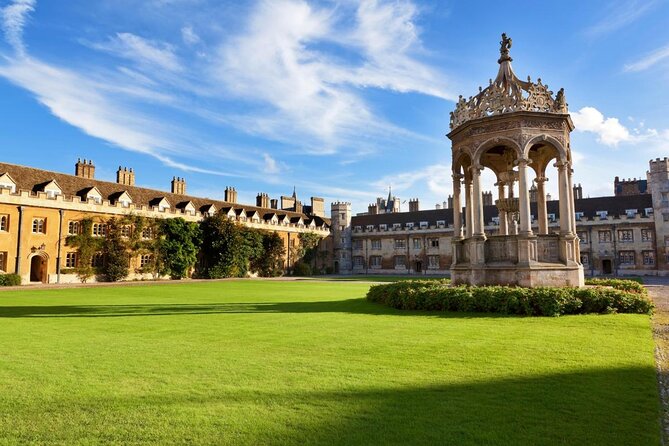
Stop 4: Trinity College, Newton and the prank lore
Trinity gets described as one of the richest colleges in either Oxford or Cambridge, and you also connect it to Newton. The stop also includes one of Cambridge’s longest pranks, which is exactly the kind of story that makes a college feel like a character, not a postcard.
This stop tends to be memorable because it mixes power, science, and human mischief. You start to understand that Cambridge’s identity is not only about buildings. It is about people making rules, breaking rules, and telling stories for generations.
Stop 5: Trinity Hall, Trinity Lane and the old nickname
Then you move to Trinity Hall and Trinity Lane, which the tour ties to the past nickname of pisspot lane.
The important part is not the exact wording. It is the way the guide uses the nickname to show how language changes and how places get renamed over time. The tour also follows up with a reminder that you do not need to worry about umbrellas, signaling that the guide keeps the tone light, even when talking about rougher earlier street culture.
What to do: watch street names and lane directions. Cambridge often feels confusing at first. A guided pattern helps you not get lost later.
Gonville and Caius, Nightclimbers, and founder oddities
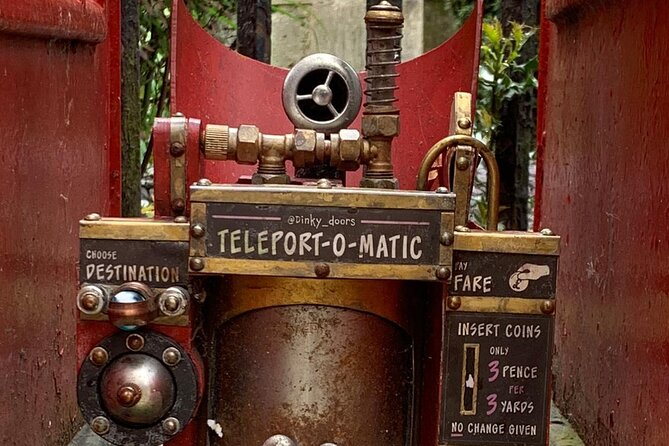
Stop 6: Gonville and Caius College
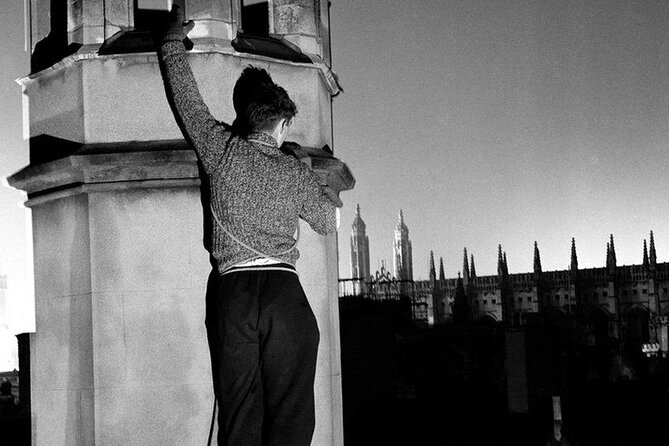
This stop focuses on Caius, with mention of the famous Nightclimbers and a strange instruction from the founder.
If you like Cambridge for its student legends, this is a highlight. It also helps you see how rules, reputations, and student life created traditions. Nightclimbers sounds like a headline you would see in a history book, but the guide’s job is to make it feel grounded in the actual street setting you are standing in.
Why this works: legends stick better than lists of dates. This stop is built to make the vibe of Cambridge student culture understandable through a specific story.
Market Square: bell chimes, old markets, and Town v Gown punch ups

Stop 7: Cambridge Market Square
Market Square is where the tour steps away from college gates and back into everyday civic life.
Here you get multiple story threads:
- the most famous bell chimes in the world
- one of England’s oldest markets
- and epic Town v Gown Cambridge punch ups
Those last two lines are the key. Cambridge did not develop as a university bubble. It developed as a city where townspeople and scholars interacted, sometimes in harmony, sometimes not. The guide’s story approach makes the rivalry concrete rather than abstract.
Photo tip: if you are taking pictures, this is one of the best places on the route because it feels open and central. You can also get your bearings before heading to the church stop.
St Bene’t’s Church, the oldest building, and the Corpus Clock link
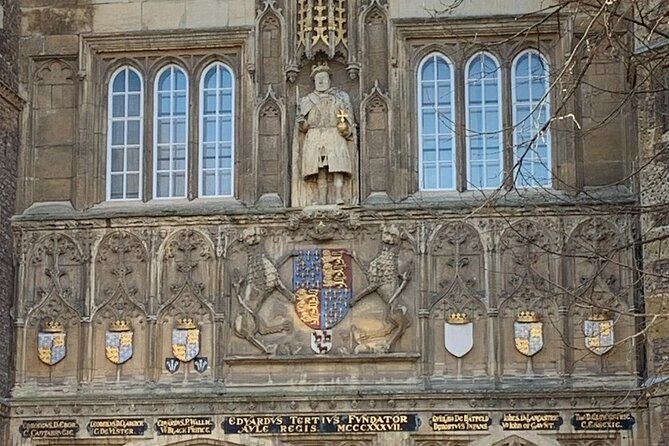
Stop 8: St Bene’t’s Church
This stop is a big one because it covers the oldest building in Cambridge. It also connects to a story about the laboratory where someone really did discover the secret of life, the pub where it was announced over a pint, and then the Corpus Clock.
Even if you do not know the details going in, this stop creates a memorable through-line: Cambridge’s reputation comes from both scholarship and the real-world places where ideas were shared. A church and a clock might not sound connected at first, but the guide pulls them together into one consistent theme of discovery and time.
What you should look for: the guide will likely point you toward the building features and then connect them to the “older Cambridge” idea. Pay attention to what they emphasize. Those cues are the difference between sightseeing and learning.
Castle Hill: Romans, Vikings, and Normans at the edge of the sea
Stop 9: Castle Hill
The final major stop takes you to Castle Hill, described as the place Cambridge started. You also get the story that Romans, Vikings, and Normans all conquered the last bridge before the sea.
This is your big sweep of layered history. It is where the tour becomes more than university branding. You see Cambridge as a settlement shaped by geography, crossings, and repeated changes in power.
Why it matters for you: if you only visit colleges, Cambridge can feel like it is all “inside worlds.” Castle Hill reminds you that Cambridge was also a frontier and a route, where people fought and built and remade the city’s role.
Who this tour suits best
This is best for people who want a fun first pass through Cambridge. It is especially good if you:
- want a guided overview that helps you choose what to do next
- have limited time and want to hit a lot of meaningful stops in 1 hour 30 minutes
- are traveling with teens or kids, since guides such as Simon and Chris have managed to keep different ages engaged
- enjoy humor and story logic, not just names and dates
It may be less ideal if you:
- want interior access to college chapels, libraries, or museums
- want slow walking with lots of free time to wander off-script
- are looking for a deep specialist lecture, because the format is designed to move
My quick booking advice
If you are coming to Cambridge for the first time, I would book this early in your trip. You will get a mental map of the city and a story framework for what you see later, especially with the ending near King’s College and the Corpus Clock area.
If you already know you want to tour college interiors, use this tour as your planning tool. The outside views will help you decide which places deserve your ticket money and time.
Also, plan ahead. On average, this tour is booked about 15 days in advance, so it is wise to lock in a slot before your schedule gets tight.
Should you book Curious Cambridge, the History Tour that’s FUN?
I think you should book it if you want an easy win in Cambridge: a story-driven walking route, major sights, and a finish that drops you right where you can keep exploring. It is good value for the price because you are paying for guidance, pacing, and meaning, not paid entries.
Skip it only if you are specifically chasing college interior access or you prefer history delivered as pure facts without narrative color.
Latest to join the queue for Cambridge



Historical Tours, compared.
London Small Group Tour of Historical Pubs
Read our review →
Shadows of York: Ghost Walk and Horrible History.
Read our review →
A Walk Through Time: History of Liverpool Walking Tour
Read our review →
Royal Historic Pubs Walking Guided Tour in London
Read our review →
Private Group: Historical Pub Walking Tour of London
Read our review →
Best Of Liverpool Heritage, History & Culture Guided Walking Tour
Read our review →Browse the lists this tour appears in