
Reviewed · CITY TOURS
Small-Group City Running Tour in Canterbury
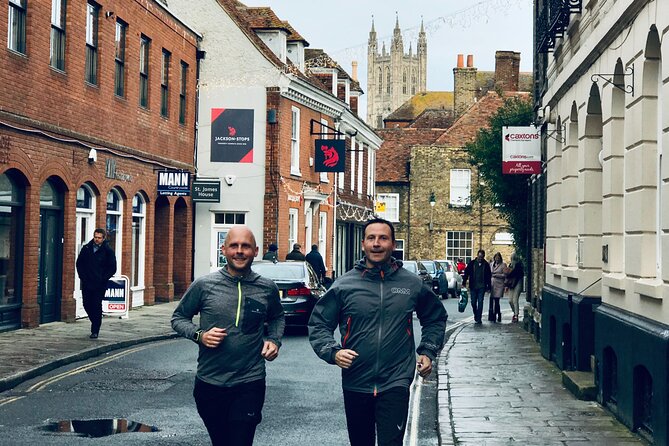
Canterbury gets better when you run it. This small-group running tour mixes active sightseeing with very specific local storytelling, from the cathedral’s dramatic past to views from Dane John Mound, and the pace can flex for beginners or regular runners. The main drawback is simple: you are moving on uneven ground, so if you have knee or balance issues, comfortable shoes and a slower pace matter.
I like how this tour keeps things practical. You start and end near the cathedral area, you get regular check-ins on pace, and you make quick stops for photos without feeling hurried. If your guide is Andy, you’ll likely get extra touches like photo and video sharing after the run, which turns a quick city loop into something you can actually remember.
In This Review
- Why This Canterbury Running Tour Feels Different Than a Walk
- Meeting Point, Timing, and Pace Control That Actually Matters
- Start Outside Canterbury Cathedral: Stories You Can See in the Streets
- City Walls Running Segment: Two Millennia You Can Feel
- Dane John Gardens and Dane John Mound: The View That Makes It Click
- Franciscan Gardens: 1267 Monastery Buildings in a Small Pause
- Westgate Gardens and the River Stour Crossing
- Westgate Towers Museum and Viewpoint: 18 Metres of Medieval Arrival
- Marlowe Theatre and the Sculptures: The City Through Its Famous Son
- What to Wear and Bring for a Smooth Run
- Small-Group Size: Why Five People Makes the Tour Better
- Value for $28.78: What You Pay For, and What You Get Back
- Who Should Book This Running Tour (and Who Might Skip It)
- Should You Book This Canterbury Running Tour?
- FAQ
- Where do I meet for the Canterbury running tour?
- How long is the tour?
- How many people are in the group?
- Is the tour offered in English?
- Do I need a paper ticket?
- Are service animals allowed?
Why This Canterbury Running Tour Feels Different Than a Walk
Running sounds like the opposite of a calm museum visit. In Canterbury, though, it works because the route is built around short hops between major landmarks. You cover more ground than a traditional walk, but you still stop often enough to look, listen, and take photos.
The best part for me is how the activity shapes the experience. Your body is moving, your mind is awake, and the guide’s stories land because you are seeing what they describe from real street level. Instead of hearing history through a speaker at a bus stop, you hear it while you stand where the story happened.
You also get the intimacy factor. With a maximum group size of five people, it is not a “everyone just follow” vibe. The guide can slow down if your pace needs it, and you can ask questions without shouting over a crowd.
Meeting Point, Timing, and Pace Control That Actually Matters
This tour starts outside the cathedral area, with the meeting point at the Canterbury War Memorial, 12-13 Sun St, Canterbury CT1 2HX. It ends back at the meeting point, so you are not dealing with transfers, taxis, or figuring out where the route ends.
Time-wise, plan on about 1 hour to 1 hour 30 minutes. That range is useful because you will likely spend time pausing for views and photos, especially when the group wants to linger.
Pace is the real selling point. The tour is designed so you can run at a pace that fits you, whether you are newer to running or you do it regularly. In practice, that means your guide checks that everyone is comfortable and keeps the group together. That matters in Canterbury because small streets and cobbled sections can feel faster than you expect.
If you are coming from out of town and your legs are not used to running, go slower at the start. The route has enough variety that you can settle in after the first couple of minutes.
Also on in Canterbury, no fuss


Start Outside Canterbury Cathedral: Stories You Can See in the Streets
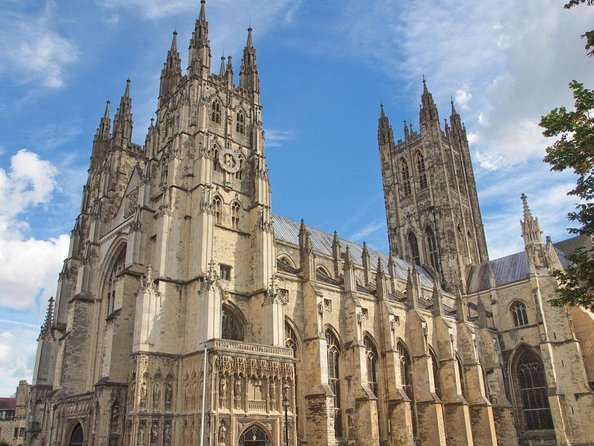
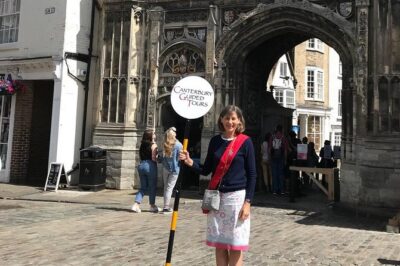
The tour begins and ends outside the cathedral, and that framing changes everything. Canterbury Cathedral is not just a pretty landmark, it is the anchor point for how the city developed and how it has kept serving people through time.
Early in the run, your guide explains why the cathedral mattered, what role it played in the city’s history, and how it continues to function today. This is also when you get oriented. If you have never been to Canterbury, you will quickly understand where the city’s “center of gravity” sits.
One practical bonus: starting at a well-known landmark makes it easier to arrive without stress. Even if you are slightly early, you can take a quick look around and start in the right mood.
City Walls Running Segment: Two Millennia You Can Feel
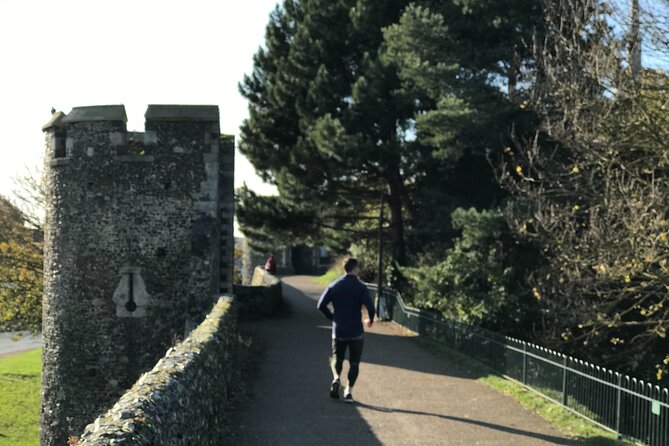
After you get going, you head up toward the city walls. This part is special because you are literally running along defenses and seeing the layers of Canterbury stacked in stone.
Your guide talks about how the walls moved from early Roman defenses to the fortified stone work you recognize today. Even if you only remember a few dates, you will notice the shift in how the walls feel and where they change. Running along them helps because your speed keeps you engaged, but your position keeps you looking.
Also, you get that rare combo in one go: fresh air exercise plus a physical sense of scale. When you run along a wall, you naturally look outward and think about what could be seen, where traffic flowed, and how people moved through the city back then.
Dane John Gardens and Dane John Mound: The View That Makes It Click
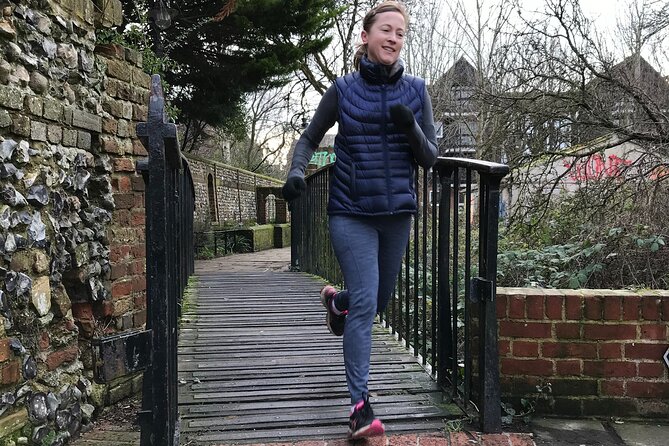
The highest point on the tour is at Dane John Gardens, specifically Dane John Mound in the city’s central park. From there, you can see a wide chunk of Canterbury, which helps you understand the city’s layout fast.
This stop is about more than photos. Views from elevated ground tell you where landmarks sit in relation to each other, and that makes the rest of the walk feel less like random wandering. You start to connect the dots between the cathedral area, the walls, and the river crossings ahead.
It also gives you a mental breather. Even if you are running the whole time, a short pause at the mound lets you catch your breath without losing momentum.
Franciscan Gardens: 1267 Monastery Buildings in a Small Pause
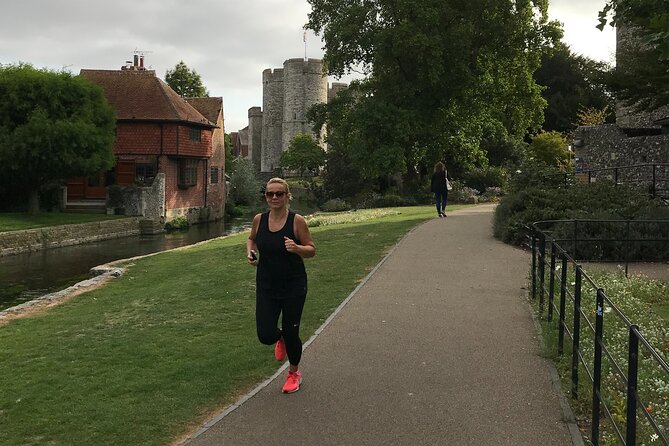
Next comes Franciscan Gardens, a quieter stretch that still carries serious history. You will see monastery buildings established in 1267, and you get a feel for how religious life shaped parts of the city.
This stop works well in a running tour because it is short and focused. You do not have to commit to a long museum-style visit to learn what the site was and why it matters. You get a quick orientation, then you move on while the story is still fresh.
One small consideration: gardens are usually calmer, but the ground can vary. Bring shoes you trust on uneven paths, and take your time at the edges where paths meet grass or roots.
While the kettle’s on in Canterbury:
- The Canterbury Classic Tour★ 5.0 · 100 reviews
- Howletts Day Ticket★ 4.5 · 42 reviews
- Private Guided Walking Tour of Canterbury★ 5.0 · 23 reviews
- The Best of Kent: a private 3 hour minibus tour with an expert★ 5.0 · 21 reviews
Westgate Gardens and the River Stour Crossing
Westgate Gardens sit just outside the city walls, and you get a key geographic moment here. You cross the River Stour and pause by a huge plane tree, described as a giant Baobab plane tree that is about 200 years old.
This stop includes a nice “wait, what?” factor, because the guide shares a remarkable secret the tree is hiding. The exact secret is not something you should expect to guess on your own. That is the point. You are there for the story, not just the view.
This is also one of those moments where running helps. You arrive warm from earlier sections, then you get cool-down minutes by the river. If you tend to overheat, this can feel like a perfect reset without turning the tour into a long stop.
Westgate Towers Museum and Viewpoint: 18 Metres of Medieval Arrival
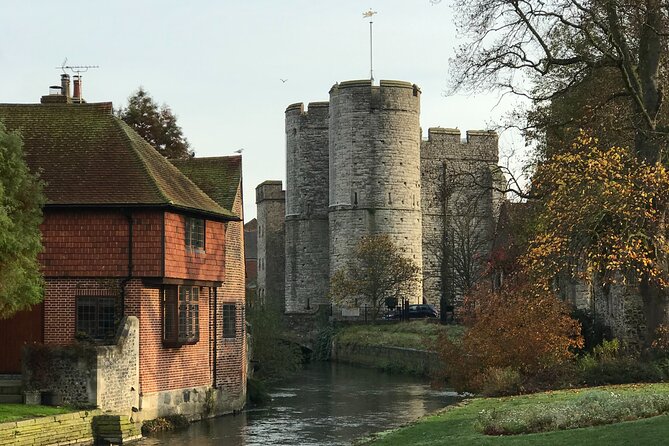
At Westgate Towers Museum and Viewpoint, you see the main entrance into the city in a way that few visitors do. The medieval tower and gatehouse stands about 18 metres tall and is described as the oldest surviving tower in Britain, built in 1378.
Your guide explains secrets of the structure and how it would have been the first sight many visitors saw when arriving. That’s a big change from how we experience cities today. Modern visitors arrive from highways and parking lots. Back then, you approached through visible defenses, and the gate set the tone immediately.
The viewpoint aspect is also practical. You are moving through Canterbury, so being able to look outward from a defensive entry point helps you build a map in your head. The story makes the architecture click.
Marlowe Theatre and the Sculptures: The City Through Its Famous Son
The tour ends with a stop near the Marlowe Theatre, where you learn how statues and sculptures relate to Christopher Marlowe. If you only associate Canterbury with its cathedral, this stop adds a different angle, showing how the city connects to art, literature, and fame.
This segment is short, but it helps you notice what you would otherwise walk past. When you are running, you can easily miss details. The guide points them out, and suddenly the outside of the theatre becomes part of the story instead of just a building you blur by.
What to Wear and Bring for a Smooth Run
Canterbury is walkable, but this tour asks for running comfort. For most people, that means:
- Wear comfortable running shoes with grip for cobbles and uneven sidewalks.
- Dress for cool or changeable weather. Even in fair conditions, mornings near the cathedral can feel brisk.
- Bring a phone if you like photos, but you do not need anything fancy.
If you are coming back from a long running break, take the first minutes easy. One of the most consistent benefits of this tour is that the guide adjusts pace, so you do not have to pretend you are training for a race.
Small-Group Size: Why Five People Makes the Tour Better
A maximum group size of five is not just a number. It changes how the guide can work. You get more check-ins on pace, more chances to ask questions, and more time at key viewpoints because the group is not constantly waiting on stragglers.
It also keeps the tour feeling personal. You are not stuck hearing the same story repeated for a dozen people. The guide can shape explanations based on what the group cares about, and that tends to make the history stick.
If you want an active way to see Canterbury that still feels human-scale, this group size hits the sweet spot.
Value for $28.78: What You Pay For, and What You Get Back
At $28.78 per person, this is positioned as a short, focused experience. You are not paying for hours in a vehicle or for a long entrance-ticket day. You are paying for a guide who can turn quick outdoor stops into a coherent route of stories, views, and real places.
Here is what adds value in your favor:
- You see multiple major Canterbury landmarks in about 1 to 1.5 hours.
- The pace flexibility helps you enjoy the run instead of suffering through it.
- The group limit improves attention and reduces the common stress of crowded sightseeing.
Is it worth it? If you like moving and you enjoy learning while you walk or run, yes. If you want a slow, sit-down, step-by-step museum style tour, you might find this too active. But if your goal is to get a strong introduction to Canterbury without wasting time, the cost is reasonable for what you pack in.
Also, if plans change, there is free cancellation up to 24 hours in advance for a full refund. That safety net makes it easier to book when you are juggling travel schedules.
Who Should Book This Running Tour (and Who Might Skip It)
This tour fits best if you:
- Want an active start to a day in Canterbury.
- Like history but do not want it delivered as a long lecture.
- Prefer small groups where the guide can actually keep an eye on pace and comfort.
It is also a great choice if you are in Canterbury for a short stay. In a limited time window, being able to cover cathedral area landmarks, walls, gardens, and the Westgate entry structure gives you a fast, memorable orientation.
You might skip it if:
- Running is difficult for you right now and you cannot comfortably manage cobbles or uneven ground.
- You strongly prefer a fully seated experience, because this is a moving tour with walking and running segments.
- You are traveling with very limited mobility needs, since the tour is clearly built around getting up to viewpoints and walls.
Should You Book This Canterbury Running Tour?
I think you should book this if you want Canterbury in a form that feels alive. The combination of exercise and pointed storytelling makes the city easier to understand, faster to remember, and more fun than another slow loop with headphones.
Book it especially if you care about the details people often miss, like the gatehouse role at arrival, the layered story along the walls, and how a 200-year-old plane tree and a famous playwright connect to the city’s character. And if you are nervous about pace, that flexibility is the whole point. Go out at your comfort speed, enjoy the stops, and let the guide keep the group together.
If you want a practical, energetic way to see Canterbury without turning your whole day into a classroom, this is one of the smarter bets in town.
FAQ
Where do I meet for the Canterbury running tour?
You meet at the Canterbury War Memorial, 12-13 Sun St, Canterbury CT1 2HX, UK. The tour ends back at the same meeting point.
How long is the tour?
The experience lasts about 1 hour to 1 hour 30 minutes, depending on pacing and stops.
How many people are in the group?
The group is limited to a maximum of five travelers.
Is the tour offered in English?
Yes, it is offered in English.
Do I need a paper ticket?
No. The tour uses a mobile ticket.
Are service animals allowed?
Yes, service animals are allowed on this tour.
Latest to join the queue for Canterbury






City Tours, compared.


Liverpool City Sights Hop On Hop Off City Tour – 24hr Ticket
Read our review →
1.5-hour Oxford City and University Walking Tour
Read our review →
City Sightseeing London Hop-On Hop-Off Bus Tour & Bookable Extras
Read our review →

City Sightseeing Oxford Hop-On Hop-Off Bus Tour
Read our review →

Browse the lists this tour appears in