
Reviewed · PRIVATE DRIVERS
The Best of Kent: a private 3 hour minibus tour with an expert
Kent history travels fast.
This private Canterbury to Dover minibus tour is a smart way to see how religion, war, and everyday village life shaped the county. You start with a local historian, then zoom through Kent countryside for White Cliffs of Dover views (including France on clear days), before closing with a guided walking tour through Canterbury’s Roman streets and cathedral era.
I especially love two things. First, the guide is Dr Anthony Medhurst, a Cambridge-trained historian who can answer whatever pops into your head, from AD597 missions to WWII stories. Second, the private format in an air-conditioned minibus means you move efficiently and still get time for stops, photos, and questions.
One consideration: it is packed into about 3 hours, so a few moments are short and photo-focused. If you want long, slow museum time, you’ll need to plan extra time in Canterbury later.
In This Review
- Key highlights you will actually use
- The best way to see Kent in about 3 hours
- Meeting point and departure times that help you plan
- Dr Anthony Medhurst, your historian on board
- Stop 1 and 2: Canterbury and the AD597 turning point
- Canterbury first look
- St Augustine’s Abbey, from mission to manuscripts
- Statues that explain who welcomed Augustine
- St Martin’s Church, the older bones of the story
- The Kent village drive, where the county starts to feel real
- Wickhambreaux: village green, WWII connection, and a Fleetwood Mac link
- Ickham: white weatherboard cottages and a medieval church
- Wingham: picture-perfect history and the Dog Inn
- White Cliffs of Dover, plus the WWII story behind the view
- Back through the Kent Downs: vineyards, Mozarts, and Norman stone
- Barham: vineyards and a green-spired church
- Bishopsbourne and Bourne Park: a Mozart stop
- Patrixbourne: a Norman church built with Caen stone
- Canterbury walking tour: Roman theatre to Chaucer in one guided loop
- Iron Age and Roman beginnings
- Staging the Becket story at street level
- Cathedral views from the cobbled-photo moment
- Cathedral gate, Tudor links, and the Reformation impact
- The River Stour and the Dominicans
- Westgate Tower and Westgate Gardens, plus the River Stour sculpture
- Weavers, witches, and Chaucer at the end
- Price and value: why $185.52 can make sense
- Who should book this and who might skip it
- Should you book it?
- FAQ
- How long is the tour?
- Where do we meet the guide?
- What time options are available for departure?
- Is this a private tour?
- What language is the tour offered in?
- Is transportation included?
- Are there admission fees included for the stops?
- What is included in the Canterbury walking portion?
- Can I cancel for a full refund?
- Who is the guide?
Key highlights you will actually use
- A Cambridge-trained guide, Dr Anthony Medhurst, who ties Roman, medieval, and WWII Kent into one clear story
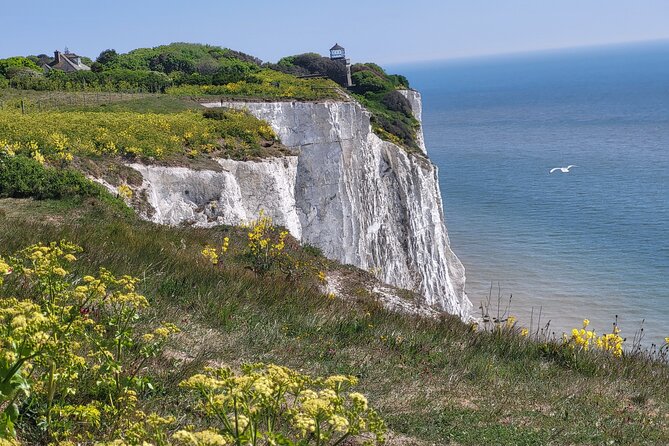
- A White Cliffs viewpoint with a less common angle, plus Dover Castle, the harbor, the English Channel, and France when weather cooperates
- Village drive time you can’t replicate easily on your own, including places like Wickhambreaux, Ickham, Wingham, and Patrixbourne
- Canterbury walking tour that links the city map to the timeline, from Roman theatre and Watling Street to Becket and pilgrimage
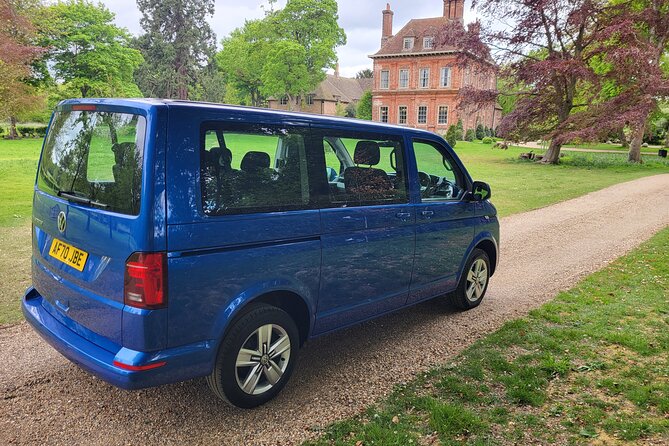
- Air-conditioned private minibus and flexible departure times (8:30am, 12 noon, 4pm) to fit your day
The best way to see Kent in about 3 hours
Kent is big in variety, but most visitors blow it by doing only Canterbury, or only Dover. This tour stitches them together in a way that makes the county feel connected.
You get the logic first, then the views. The driving route east from Canterbury introduces you to how people lived in small settlements, how coastal defense shaped Dover, and why Canterbury became the religious hub it did. By the time you reach the cliffs, you are not just looking at postcard scenery. You understand why the Romans, the medieval kings, and the WWII planners all cared about this same coastline and the route inland.
Because it is private, you avoid the “watch everyone else’s program” problem. You can ask questions as you go, and the guide can adjust the pace to your interests. That matters with a tight schedule.
Also on in Canterbury, no fuss
Meeting point and departure times that help you plan
You meet at the Hampton by Hilton Canterbury, St Margaret’s Street (CT1 2TP). Departures run at 8:30am, 12 noon, or 4pm, so you can choose based on what else you have booked that day.
If you are pairing this with London, the early start can be a good move, especially if you want Canterbury time afterward. The later departure can work too, if you prefer a slower morning and you want the drive and coastal views later in the day. Either way, it keeps your itinerary from feeling rushed on paper.
Dr Anthony Medhurst, your historian on board
Dr Anthony Medhurst is a local historian with a “put it on a map” teaching style. What I like about that is how he avoids turning Kent into a list. He connects places and names so you can remember them.
A few examples from the story threads he follows during the tour:
- Christianity arriving around AD597, with St Augustine and what that set in motion across England
- Roman origins under Canterbury’s feet, including the theatre built around AD80 and the road link of Watling Street
- Thomas Becket’s death in 1170 and why miracles attributed to his blood led to major pilgrimage
- Dover in WWII, including the coastal defense context that sits behind the cliff views
The result is you walk away with an organized timeline, not just facts.
Stop 1 and 2: Canterbury and the AD597 turning point
You begin in Canterbury with a short, focused look at the religious foundations that made the city famous.
Canterbury first look
You start from the Hampton by Hilton, then head into the area around St Augustine’s Abbey outside the city center. This part is short, but it gives you the anchor story.
While the kettle’s on in Canterbury:
- Official Canterbury Guided Walking Tour – 11.00 Tour★ 5.0 · 422 reviews
- Official Canterbury Guided Walking Tour – 14.00 Tour★ 5.0 · 214 reviews
- Silver Ring Workshop in Kent, England★ 5.0 · 102 reviews
- The Canterbury Classic Tour★ 5.0 · 100 reviews
St Augustine’s Abbey, from mission to manuscripts
St Augustine’s Abbey traces back to the period shortly after St Augustine arrived in Kent in AD597 to convert Anglo-Saxons to Christianity. The abbey functioned as a residence for Augustine and monks, and it also operated as a kind of learning hub where classical knowledge and English learning mixed.
One detail that sticks is how the tour connects cultural survival to political upheaval. Among the library of illuminated manuscripts, only 150 survived the English Reformation and the dissolution of the monasteries in 1538. Of those, the Canterbury Gospels survived from AD597 and were used in the recent coronation of King Charles III. That kind of connection makes an old site feel current.
Statues that explain who welcomed Augustine
As you leave the abbey, you pass the statues of King Ethelbert and Queen Bertha at Lady Wootton’s Green. It’s a quick stop, but it matters. These two rulers were key players in welcoming Augustine and enabling the spread of Christianity.
St Martin’s Church, the older bones of the story
Moving outward, you can observe St Martin’s, described as the country’s oldest surviving church and dated to about cAD597. The church began as a chapel associated with Queen Bertha and became used by Augustine. Roman origins with later Anglo-Saxon and medieval additions means you see Kent’s layering in one glance.
Tip for you: if you are the type who likes to “look twice,” this is where it pays off. The stops are short, so take a moment to orient yourself visually before you rush to the next photo.
The Kent village drive, where the county starts to feel real
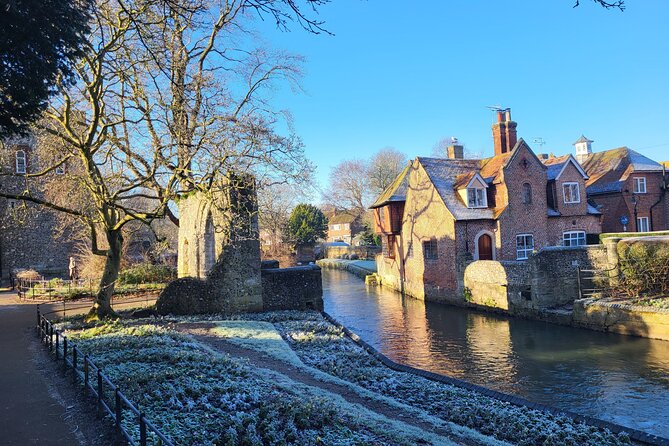
Once you leave the main Canterbury area, the tour turns into a village and countryside sampler. This is one of the tour’s strongest values because countryside roads are hard to plan without a car and a lot of local knowledge.
You head east through pretty villages with churches, manor estates, and village centers that look like they should come with old postcards. The guide helps you read them.
Wickhambreaux: village green, WWII connection, and a Fleetwood Mac link
In Wickhambreaux, you have a medieval village green and the cluster of buildings around it, including the church, manor house, rectory, inn, and mill. You also get photo access at St Andrews, a 13th century church tied to WWII history.
Here, Squadron Leader David Maltby (a Dambusters pilot) was married and later buried after his death in 1943. It is the kind of detail you do not spot on your own. The tour also points out that Christine McVie of Fleetwood Mac was a famous resident of Wickhambreaux, which adds a pop-culture jolt to the day.
Ickham: white weatherboard cottages and a medieval church
Next is Ickham, known for attractive white weatherboard cottages and listed buildings, plus a 13th century church. This part of the drive helps you understand Kent’s look, not just its famous landmarks.
Wingham: picture-perfect history and the Dog Inn
Then you pass through Wingham, with many buildings dating back to the 1200s, including the Grade II listed The Dog Inn. It is one of those “this could be a film set” village scenes, but the guide frames it with real historical context.
How this helps your trip: the countryside views are not random. They build the sense of Kent as a living patchwork of small communities, not only cathedral towns and fortress coasts.
White Cliffs of Dover, plus the WWII story behind the view
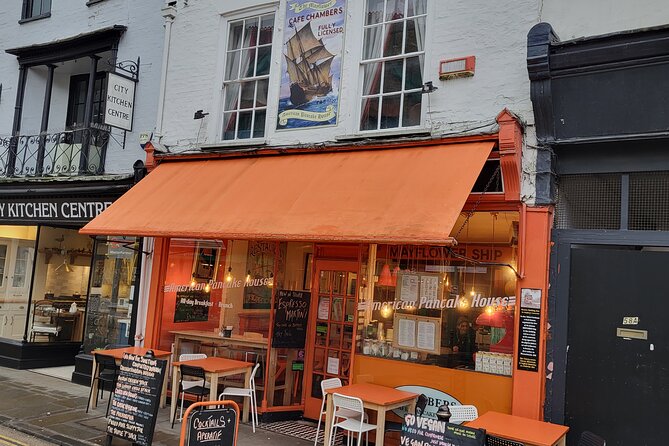
Reaching the coast is the visual payoff. The tour drives you to a special vantage point on the White Cliffs of Dover that is described as largely unknown to most visitors.
From this spot, you get views of:
- Dover Castle
- the harbor
- the English Channel
- and, if visibility is good, the French coastline
Then there is a brief history stop that covers Dover from Roman times to the Second World War. This is where the tour earns its keep. The cliffs are iconic, but without context they can feel like scenery. With the WWII framing, it clicks into place.
You also get to see how Dover’s defenses and its place on the route between Britain and the continent shaped what people built, guarded, and feared.
Photography tip: bring your camera strap and a quick lens-friendly setup. The vantage point is meant for photos, and timing can be tight, especially if clouds roll in.
Back through the Kent Downs: vineyards, Mozarts, and Norman stone
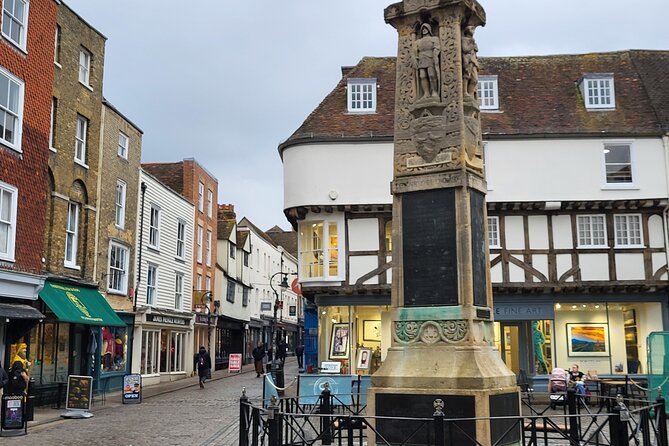
On the return drive toward Canterbury, you continue through rolling hills and country lanes, with multiple village and church passes.
Barham: vineyards and a green-spired church
You pass through Barham, featuring rolling hills, newly planted vineyards, and a quaint narrow street. You also pass St John the Baptist, a 13th century church with a distinctive green copper spire. The valley views here help you feel how Kent’s topography shapes travel routes and village placement.
Bishopsbourne and Bourne Park: a Mozart stop
You then head toward Bishopsbourne, within the Kent Downs Area of Outstanding Natural Beauty. You pass the stately home of Bourne Park, where Wolfgang Amadeus Mozart visited in 1865.
That is a pleasant reminder that Kent is not only medieval and wartime. It also plays host to more modern cultural stories.
Patrixbourne: a Norman church built with Caen stone
Finally, you pass through Patrixbourne, which has a particularly fine Norman church. The description emphasizes flint and stone sourced from Caen in France, with French decorative influence. The tour points out:
- a glorious Norman-style south doorway
- and a wheel window dating from the late 12th century
This is a great moment to notice how the “French connection” shows up in more places than you might expect.
Canterbury walking tour: Roman theatre to Chaucer in one guided loop
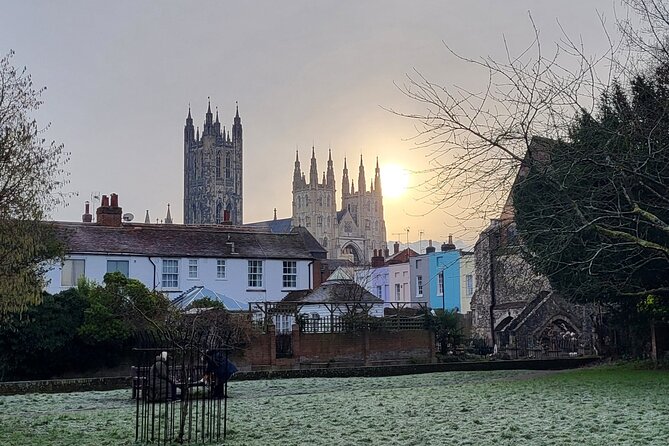
After the countryside drive, you return to Canterbury for a guided one hour walking tour of the city’s best highlights. This is the part where you get to connect everything you saw outside the city with what is preserved inside.
You have choices afterward about what to do next, like visiting the Cathedral or exploring medieval streets at your own pace.
Iron Age and Roman beginnings
You start near St Margaret’s Street at the Hampton by Hilton and hear about Canterbury’s Iron Age origins, Julius Caesar’s preliminary raids in 55BC and 54BC, and the Roman invasion and settlement from AD43 to AD410.
You also get to view the remains of the Roman theatre built around AD80, which sits right under your feet. You see the adjacent Watling Street, the road that runs between London and Dover, plus nearby locations connected to a temple complex and public bath houses.
Staging the Becket story at street level
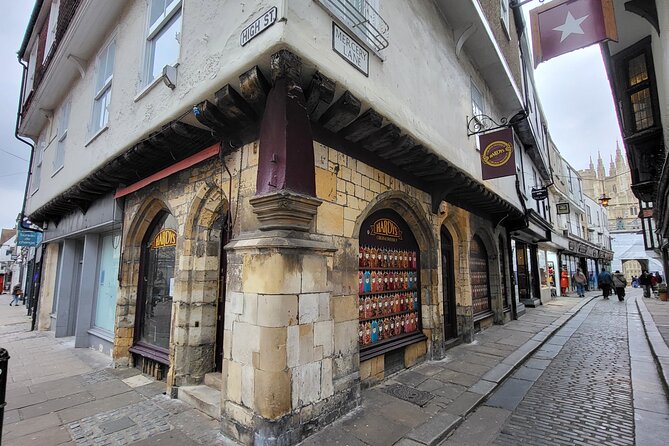
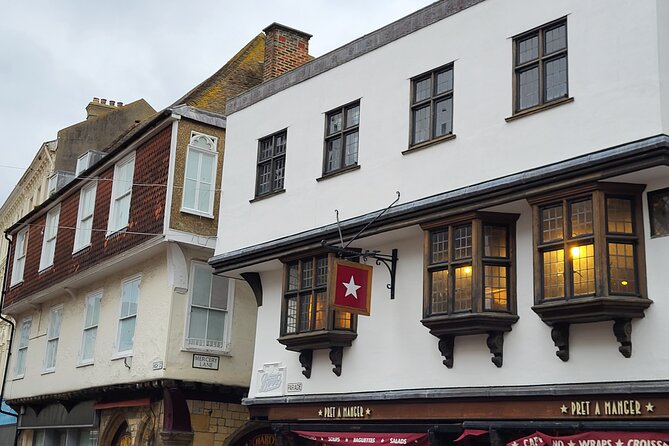
Then you walk to the corner of St Margaret’s St and High Street, where the Roman city grid meets the medieval narrative. Here you learn about the murder of Archbishop Thomas Becket by four knights acting for King Henry II.
The tour also explains how stories of miracles tied to contact with Becket’s spilt blood helped lead to his sainthood. Canterbury then became the focus of pilgrimage for many years, roughly 1170 to 1538. You get to see the remains of shops, inns, and accommodation used by pilgrims.
If you have ever wondered why pilgrims flocked to a city, this gives you that “what did it look like for them” feeling.
Cathedral views from the cobbled-photo moment
Next is a photo stop at Butchery Lane with a great view of the Cathedral and the cobbled medieval streets. You also learn why UNESCO World Heritage status fits here: Augustine’s arrival around AD597 links directly to the period structures, including St Augustine’s Abbey and St Martin’s church.
Cathedral gate, Tudor links, and the Reformation impact
You then walk to Cathedral Gate, the main entrance to the Anglican church. The guide brings in connections to Henry VIII and the Tudor family, plus the broader effect of the Reformation on Canterbury and the Cathedral.
You also hear about the Buttermarket, a cobbled square used by pilgrims, with links to pilgrim hotels and taverns.
The River Stour and the Dominicans
Your next stop is the River Stour, near where Dominican friars, known as the Blackfriars, were based. The tour points out two buildings that survive from that period:
- a refectory used as a dining hall
- and guest accommodation quarters
This is a strong photo spot. The guide also connects the area to Christopher Marlowe, described as a contemporary of Shakespeare, with his death tied to a Deptford tavern.
Westgate Tower and Westgate Gardens, plus the River Stour sculpture
You move to the Westgate Tower, described as the largest surviving medieval fortified tower. The guide explains that Romans defended Canterbury with defensive walls between 270 and 290, with seven gateways. During the Hundred Years War with France, the walls were strengthened and two massive fortified gateways were constructed.
Then you stroll into Westgate Gardens for more photo opportunities, with medieval houses, an old archway, and a riverside setting.
You also get a chance to see Alluvia, a submerged female figure in the river based on Ophelia from Hamlet. The tour adds a practical twist: it measures river temperature and cleanliness, so it is art with a scientific purpose.
Weavers, witches, and Chaucer at the end
You continue down High Street toward the Old Weavers’ House at King’s Bridge. Here you see a timbered Tudor building linked to textile workers. The guide also talks about Protestant weavers who fled the Low Countries and later France in the 1500s and 1600s, contributing to Canterbury’s re-emerging wealth after the dissolution of the monasteries in 1538.
There is also a grim reminder of the past: the witches dunking stool. Women accused of witchcraft faced tests including being held underwater in the chair for minutes, with drowning meaning guilt and survival meaning innocence and cleansing by water.
Finally, you end near a statue commemorating Geoffrey Chaucer and the Canterbury Tales, written in the late 1300s. The tour also points out that the statue references Orlando Bloom as part of its modern pop-culture framing. Then you return to St Margaret’s Street.
Practical note for your feet: plan for uneven medieval streets and some walking. The good news is it is guided and timed, so you are not guessing where to go next.
Price and value: why $185.52 can make sense
At $185.52 per person for about three hours, this is not a budget add-on. So the question is value.
Here is what you are paying for, in real-world terms:
- A private minibus so you get countryside access without renting a car or hunting buses
- A historian guide with deep context, not just basic narration
- Efficient routing across Canterbury, the abbey sites, village lanes, the Dover cliffs, and a full guided walk back in the city
- Special photo and viewpoint choices, like the less common White Cliffs vantage point and street-level Roman and medieval spots
If your day in Kent is limited, the tour can be a time-saver that still feels authentic. If you already have a car and you love driving and mapping on your own, the value drops. But if you want the story and the route done for you, this is strong.
Who should book this and who might skip it
This tour fits best if you:
- want a first-time Kent overview that still includes real details
- like history that connects across eras, Roman, medieval, Reformation, and WWII
- prefer asking questions and getting direct answers rather than reading plaques alone
- want Canterbury plus Dover without spending a whole day on logistics
You might skip it if you:
- want long time inside major sites with museum-level pacing
- dislike walking on cobbles or uneven historic streets
- prefer to wander independently without a structured route
Should you book it?
I think you should book this if you want Kent to feel like one connected place instead of two separate day trips. The best part is the guide’s ability to stitch together AD597 Christian beginnings, Canterbury’s pilgrimage era, the Roman foundations under your feet, and Dover’s WWII cliff story, all within a tight schedule.
If your priority is scenic views only, you might prefer a simpler option. But if you care about understanding what you are seeing, this private format and Dr Anthony Medhurst’s storytelling make it easy to recommend.
FAQ
How long is the tour?
The tour is about 3 hours.
Where do we meet the guide?
You meet at Hampton by Hilton Canterbury, 7 St Margaret’s Street, Canterbury CT1 2TP, UK.
What time options are available for departure?
Departures are available at 8:30am, 12 noon, or 4pm.
Is this a private tour?
Yes. It is private, and only your group participates.
What language is the tour offered in?
The tour is offered in English.
Is transportation included?
Yes. You travel by a private, air-conditioned minibus.
Are there admission fees included for the stops?
The tour information lists free admission tickets for the stops. If you choose to visit major sites on your own after the walking tour, that is separate.
What is included in the Canterbury walking portion?
You get about one hour of walking tour covering key city areas and themes, plus several short stops for photos and street-level context.
Can I cancel for a full refund?
Yes, you can cancel up to 24 hours in advance for a full refund.
Who is the guide?
The guide is Dr Anthony Medhurst.
Latest to join the queue for Canterbury




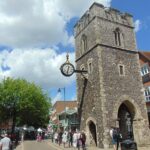


Private Drivers, compared.
Shared Shuttle London Arrival Transfer – Airport to Hotel / Accommodation
Read our review →
Private London Arrival Transfer – Airport to Hotel / Accommodation
Read our review →
Stonehenge Shuttle Bus from London with Optional Fish & Chips
Read our review →
Private London Departure Transfer – Hotel / Accommodation to Airport
Read our review →
Private transfer from Heathrow to your London Hotel
Read our review →
Shared Arrival Transfer London Airport to Hotel Accommodation
Read our review →
Heathrow Airport to Central London Private Transfers
Read our review →
Private Arrival Transfer from Heathrow Airport to London
Read our review →Browse the lists this tour appears in