

Reviewed · HISTORICAL TOURS
Oxford: 90 minute Architectural & Historical Highlights Tour
Oxford can feel like one big maze of stone and tradition. This 90-minute architectural highlights walk helps it click fast, with stops tied to the people and moments that shaped the city. I especially liked the tight, walkable route and the extra map and guidebook you get to keep exploring after.
What really sold me is the way the tour turns colleges into stories, not just pretty buildings. I also love that you get included college entry at a medieval-style stop, so you are not limited to street views the whole time. One drawback to know up front: it is short, so each stop gets only a few minutes, and you will do plenty of walking, especially if the weather is wet.
In This Review
- Key Things to Know Before You Go
- A 90-minute Oxford Walk That Actually Helps You See
- Meeting Point and Route Rhythm on Broad Street
- Martyrs’ Memorial to St Michael at the North Gate: Oxford’s Story in Two Steps
- Exeter and Lincoln Colleges: Architecture with Literary Famous Names
- St Mary the Virgin Spire and the Stained Glass to CS Lewis
- Oriel and Corpus Christi: Courtyards, Animals, and the Oxford Quirk Factor
- Merton College’s Gate Frieze: One of the Best “Look Up” Moments
- Examination Schools: When Oxford Built for Written Exams
- Queen’s College and High Street: Marmalade and Coffee House Stories
- New College Gates to the Bridge of Sighs
- Sheldonian Theatre and Oxford’s Ceremonial Engine
- Oxford Central Library and the Duke Humphrey Story
- Bodleian Library: The Big Book Energy
- Radcliffe Camera: Oxford’s First Science Library
- Balliol College and Your Best Self-guided Add On
- What You Get Beyond Buildings: Food, Coffee, and a Map You Will Use
- Who This Tour Fits Best in Your Oxford Plans
- Should You Book This 90-minute Oxford Architecture and Highlights Tour?
- FAQ
- How long is the Oxford Architectural and Historical Highlights Tour?
- How much does the tour cost?
- Is pickup included, and do I get a mobile ticket?
- Is the tour offered in English?
- What is the maximum group size?
- Is entry to any medieval college included, and is anything not included?
- Can you climb the spire at the University Church of St Mary the Virgin?
- Where do I meet the tour, and where does it end?
- What happens if the weather is poor?
Key Things to Know Before You Go
- A focused 90-minute route that fits a busy itinerary without sacrificing the main architectural beats
- College access included once (a medieval college entry), so you get more than exterior photos
- Stained glass, spires, and university ceremonies are explained in plain English
- Small groups up to 15 keep the pace friendly and questions welcome
- Food and drink recommendations are built into the experience, plus you leave with a map and guidebook
A 90-minute Oxford Walk That Actually Helps You See
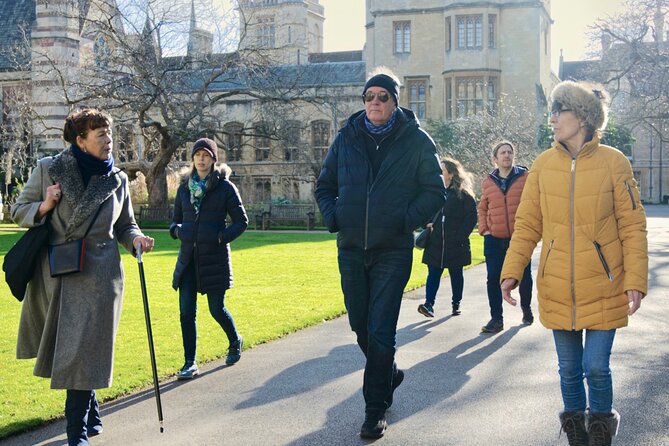
Oxford looks old, yes. But this tour helps you understand what that age is made of. In 1 hour 30 minutes, you get a sequence of sights that feel like a timeline you can walk through, from early medieval walls to Victorian markers and into the university’s major ceremonial spaces.
This is a strong choice if you want the big names and icons without spending a full day planning. You are not stuck trying to interpret a college gate with no context. Instead, the guide connects each stop to the themes Oxford is famous for: religion and learning, architecture as power, and the way the university grew into the city.
And because it is a compact walk, you will also be less worn out than on longer “see everything” tours. That matters in Oxford, where weather and walking shoes can decide whether you enjoy the day or just survive it.
More kings, plagues and great fires:
Meeting Point and Route Rhythm on Broad Street
You start at Weston Library, Broad Street, Oxford (OX1 3BG). The walk ends at Golden Cross, Oxford (OX1 3EU). That matters because you are not doing a frustrating out-and-back hike. You also get to finish near central areas where it is easier to grab food or continue on your own.
Timing is built around quick, high-impact stops, usually a few minutes each. That means you should show up ready to walk and look. If you like taking your time in every courtyard, you may want to add separate visits later using the included map and guidebook.
The tour includes mobile tickets, and it offers pickup. If you want the easiest start possible, use that. If you are already in town, the meeting point is near public transport, so you can keep your day simple.
Martyrs’ Memorial to St Michael at the North Gate: Oxford’s Story in Two Steps
Stop 1 is the Martyrs’ Memorial, a Victorian monument tied to Protestant martyrs from the 16th century. It is short, but it sets a theme: Oxford history is not only academic. It is also religious, political, and deeply human. If you have ever wondered why Oxford colleges feel so tied to belief, this is the kind of starting clue that makes later stops make sense.
Then you move to St Michael at the North Gate. This Anglo Saxon tower was part of the medieval city gate, and it is described as the oldest surviving building in Oxford. That is the kind of detail that sticks. You look at stone and suddenly understand why the city feels layered, not uniform. One minute you are seeing the university, the next you are seeing the earlier Oxford that preceded it.
Practical note: both of these are quick photo opportunities. Bring a camera that works fast. You will not have long to reframe shots.
Exeter and Lincoln Colleges: Architecture with Literary Famous Names
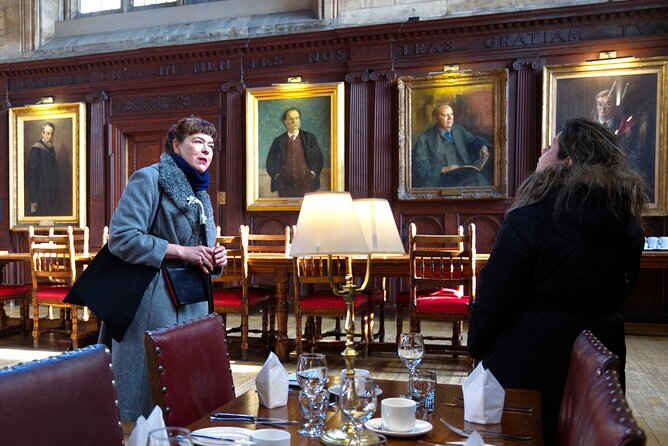
Exeter College is stop 3. The chapel here is described as inspired by the Oxford Movement and modeled on Paris’ St Chapelle. This is a great example of how Oxford borrowed styles and meanings from elsewhere, then adapted them into its own identity.
Exeter also has famous alumni, including Philip Pullman, J R R Tolkien, and Alan Bennett. Even if you are not a “college names” person, these references help your brain connect Oxford architecture to the stories people actually read.
Stop 4 is Lincoln College. The tour points out how the original face onto Turn Street reflects Oxford’s early university origins and its relationship with the city. There is also a very recent real-world fact woven into the moment: Lincoln College is noted for hosting Prime Minister Rishi Sunak. That kind of tie-in helps keep the tour from feeling like a museum with no present-day pulse.
What to watch for here: gates, windows, and street-facing walls. Those are the details that the guide is likely pointing out, and they are easy to miss if you walk fast without looking up.
St Mary the Virgin Spire and the Stained Glass to CS Lewis
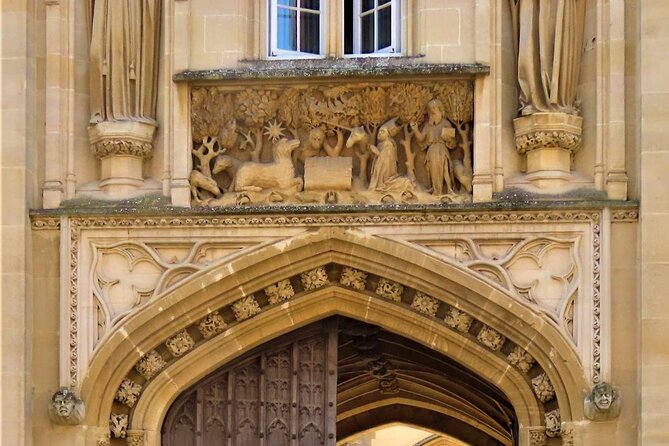
Stop 5 is the University Church of St Mary the Virgin, described as the university’s first building and listed in the Doomsday Book. You also get a strong “Oxford beyond textbooks” connection: the tour notes it is possible to climb the magnificent spire.
Even if you do not climb (spires are not for everyone), you are still in the right place for famous stained glass. The guide links it to how it inspired C S Lewis, which is exactly the kind of detail that makes Oxford feel personal instead of just ceremonial.
This is one stop where you should slow down mentally. The exterior is meaningful, but the inside references are where the “why it matters” part lives. If you like your history with a human story, you will enjoy this moment.
Also on in Oxford, no fuss
- Oxford University Walking Tour With University Alumni Guide★ 5.0 · 6,905 reviews
- Oxford Castle and Prison Guided Tour★ 5.0 · 1,402 reviews
- 1.5-hour Oxford City and University Walking Tour★ 4.5 · 1,383 reviews
- Oxford Official University & City Tour★ 5.0 · 1,134 reviews
Oriel and Corpus Christi: Courtyards, Animals, and the Oxford Quirk Factor
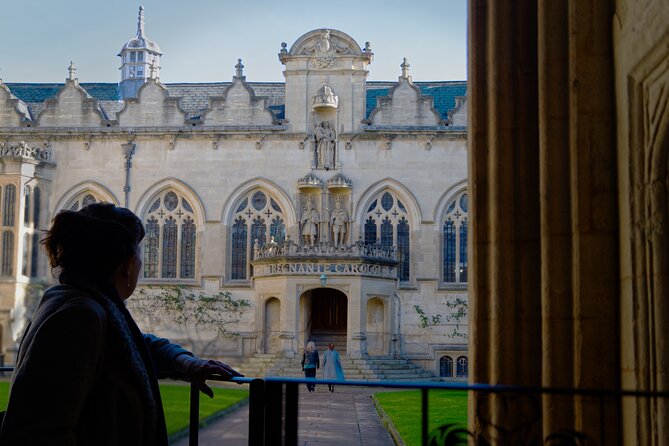
Stop 6 is Oriel College. The tour describes it as one of the university’s oldest colleges and notes its rowing fame. The front quad with Oriel windows is called stunning, and it gives you a sense of how collegiate design tries to impress without needing skyscrapers.
Oriel also sits near Corpus Christi, and the tour adds a fun local tradition: Corpus Christi hosts an annual tortoise race. That sort of detail is not just cute. It reminds you Oxford is still alive with habits and small rituals, not only rules and reverence.
Stop 7 is Corpus Christi College. Its early 16th-century architecture is highlighted for moving and beautiful figures of animals, including a pious pelican. The college is set on a cobbled street described as a national treasure. This is an excellent stop for people who like sculpture and symbolism.
If you do not care about animal carvings, look anyway. They are often the quickest way to notice “story” in architecture.
Merton College’s Gate Frieze: One of the Best “Look Up” Moments
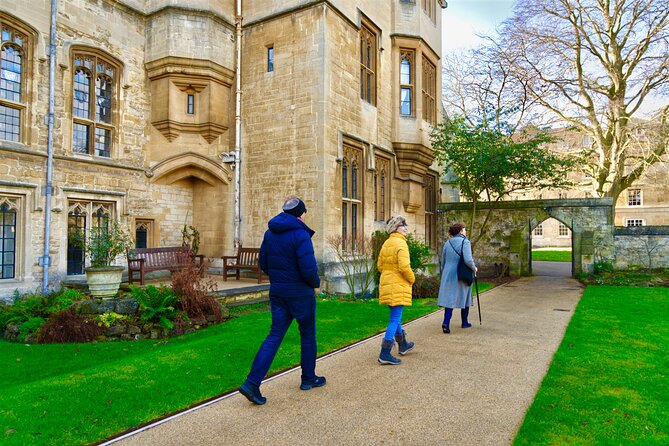
Stop 8 is Merton College. The tour calls the 15th-century frieze over the gatehouse one of the favorite creations, and it explains that it tells the tale of the founding of colleges in the university’s earlier days. This is the kind of detail that makes a walking tour worth paying attention.
Merton also includes mentions of richly decorated chapel flying buttresses. The tour adds that Thomas Bodley, founder of the Bodleian Library, was a graduate here. Then it points out that Merton’s library is the oldest continuously surviving library in Oxford.
This is where you might catch yourself doing the tourist thing, meaning stopping short and staring. Do it. You will remember gate friezes longer than random city views.
Examination Schools: When Oxford Built for Written Exams
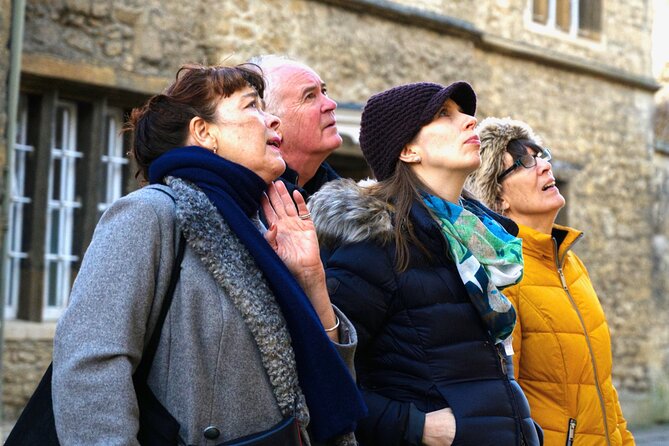
Stop 9 is the Examination Schools. The tour says Oxford University had its first written exam in the early 19th century. The building is described as Victorian extravaganza mixing Jacobean and Tudor styles, and it is dated to the 1870s, which the guide frames as the height of modernity and a push toward education being more widely available.
This stop is about a shift from tradition as ceremony to tradition as systems. It is also a reminder that universities do not just teach. They build rooms that test knowledge and shape ambition.
You will likely look at the architecture and appreciate it more after the guide frames what happened inside, even if you are only outside.
Queen’s College and High Street: Marmalade and Coffee House Stories
Stop 10 includes Queen’s College, noted as the alma mater to Rowan Atkinson. The tour also explains Queen’s College was founded for poor scholars from the north of England, and that one scholar became wealthy and funded an 18th-century rebuilding. There are architectural names linked to that rebuilding, with designs contributed by Christopher Wren and Nicholas Hawksmoor.
Then you hit the High Street story. The tour describes it as the road to London and highlights Frank Cooper’s Marmalade first made here. It also notes the start of a coffee house connected to the moment when Jewish people were welcomed back into England after being banned during the 13th century period under Cromwell’s Republic. The exact historical framing is given as part of the story the guide shares, and it is an example of how Oxford is tied to trade, food culture, and legal changes, not only books.
This is a good “reset” moment in the walk. It breaks the strict rhythm of college-to-college and reminds you Oxford is also about commerce.
New College Gates to the Bridge of Sighs
Stop 11 is New College. The tour points to its wonderful gates and explains how the foundation story traces back to the aftermath of the plagues in the 14th century. It also notes the college setting has been used in film sets.
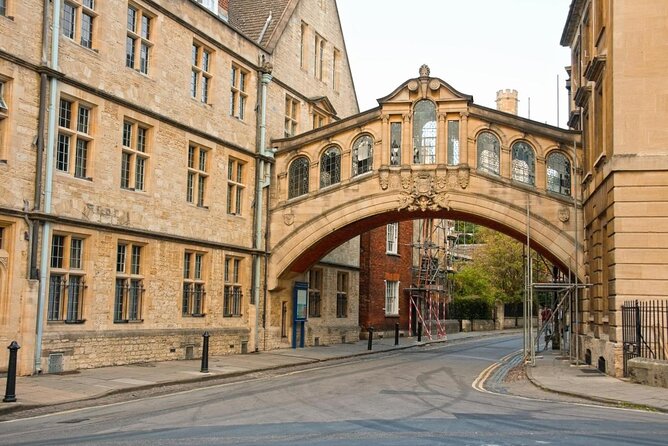
Stop 12 is the Bridge of Sighs, connected to Hertford College. It looks Venetian, but the tour says it was built in the 20th century. It also adds a science detail by pointing out the nearby house of Edmund Halley, whose comet naming is part of his legend.
I like this pairing because it gives you both emotional history (plagues and rebuilding) and “science celebrity” history (Halley). Oxford keeps mixing disciplines, and this is a place where you see it in one walk.
Sheldonian Theatre and Oxford’s Ceremonial Engine
Stop 13 is the Sheldonian Theatre. The tour describes it as a 17th-century home for Oxford University ceremonies and says it is believed to be an early work by Christopher Wren. The architect of St Paul’s Cathedral is linked here, and the guide notes he was also an astronomer connected with Oxford University.
If you have ever watched a formal ceremony on TV and wondered what kind of buildings host that kind of pomp, this is the stop. It helps you understand why Oxford feels theatrical. The architecture gives the rituals a stage.
Oxford Central Library and the Duke Humphrey Story
Stop 14 is Oxford Central Library, built on top of the medieval perpendicular Divinity School. The tour references the Duke Humphrey Library and notes it houses books from a gift of over 200 books from the king’s brother. It also says these rooms were selected as settings for Harry Potter scenes.
This is a great stop for people who enjoy recognizing familiar visuals in real places. Even if you are not a Harry Potter fan, it still makes a point: Oxford libraries were built to protect knowledge, and the building design reflects that seriousness.
Bodleian Library: The Big Book Energy
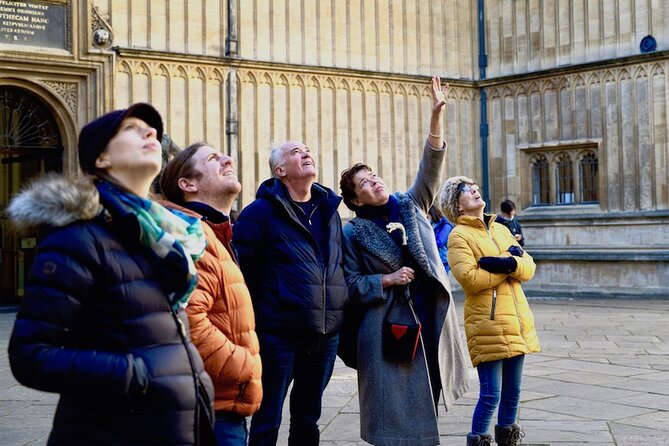
Stop 15 is the Bodleian Library. The tour shares a scale detail: today it has over 13 million books. You also admire the 17th-century buildings and learn about how the library began and how it still operates.
This is not a quick “look and go” moment. It is the tour’s clearest signal that Oxford’s identity is tied to collecting, sorting, and preserving knowledge.
If libraries are your thing, you will probably want extra time after the tour. The point of this stop is to give you direction, so you know where to focus next.
Radcliffe Camera: Oxford’s First Science Library
Stop 16 is the Radcliffe Camera, described as Oxford’s first science library. The guide explains one of the most eccentric and generous benefactors, the Royal Physician Sir John Radcliffe. That detail matters because it explains why a city that is mostly built around universities also has a distinctly civic, public-minded vibe in its learning spaces.
This is another “look up and take it in” stop. The architecture is memorable, and the story gives it extra meaning.
Balliol College and Your Best Self-guided Add On
Stop 17 is Balliol College. The tour notes that undergraduates started to gain access to the university and its colleges. That is a subtle but important reminder: Oxford is not just ancient. It changed its rules over time, slowly widening who could participate.
One caution: the tour data says admission for this stop is not included. So if you want more inside time, plan to do that separately.
Also, you pass east of Christchurch, with a suggestion that you might want to go back and enjoy the Christchurch Picture gallery tucked behind the imposing eastern entry. That is smart advice, because it turns the walk into an itinerary for after.
What You Get Beyond Buildings: Food, Coffee, and a Map You Will Use
One of the most practical benefits is that the guide offers personal recommendations on where to eat and drink. That helps a lot, especially if you are short on time and do not want to guess based on tourist menus.
The included complimentary map and guidebook are not just handouts. They are a plan. After the walk, you can circle back to the stops that caught your attention most, and you can do it without feeling lost.
From recent experiences, the tour pacing also tends to leave room for a coffee stop if you want one. Even if you do not, the rhythm is set up so you are not sprinting from landmark to landmark.
Who This Tour Fits Best in Your Oxford Plans
This tour is a great match if you want:
- A fast, high-impact introduction to Oxford’s architecture and major university sights
- Context for why colleges look the way they do, and how that ties to real people
- A manageable walk that ends in central Oxford instead of trapping you back at the start
It is also a good option for families, since the route is structured around short, clear stops. It tends to be friendly for mixed ages, as long as everyone is comfortable walking.
If you are the type who loves long inside visits and quiet time in chapels, you may feel a bit rushed. In that case, treat this as your orientation, then schedule deeper visits with tickets later.
Should You Book This 90-minute Oxford Architecture and Highlights Tour?
If you want the quickest way to get oriented in Oxford, I would book it. The value is hard to ignore, especially since the price is listed as $0.00 per person while still including things that normally cost extra, like entry to a medieval college stop, plus a map and guidebook.
The strongest reason to choose it is clarity. You do not just see Oxford. You learn what you are seeing, including details like Martyrs’ Memorial, St Michael at the North Gate, the university church with stained glass and a possible spire climb, and the big hitters like Sheldonian Theatre and the Bodleian Library.
Just know the tradeoff: it is short. You will leave with many great things in mind, but not everything will be fully explored. If you plan your next steps right, that is not a problem. It is the point.
FAQ
How long is the Oxford Architectural and Historical Highlights Tour?
It lasts about 1 hour 30 minutes.
How much does the tour cost?
The price is listed as $0.00 per person.
Is pickup included, and do I get a mobile ticket?
Yes, pickup is offered, and you use a mobile ticket.
Is the tour offered in English?
Yes, it is offered in English.
What is the maximum group size?
The tour has a maximum of 15 travelers.
Is entry to any medieval college included, and is anything not included?
The tour includes entry to a medieval college, and admission for Balliol College is noted as not included.
Can you climb the spire at the University Church of St Mary the Virgin?
The tour says it is possible to climb the spire.
Where do I meet the tour, and where does it end?
You meet at Weston Library, Broad Street, Oxford OX1 3BG, and the tour ends at Golden Cross, Oxford OX1 3EU.
What happens if the weather is poor?
The experience requires good weather. If it is canceled due to poor weather, you will be offered a different date or a full refund.
Latest to join the queue for Oxford






Historical Tours, compared.

London Small Group Tour of Historical Pubs
Read our review →

Shadows of York: Ghost Walk and Horrible History.
Read our review →

A Walk Through Time: History of Liverpool Walking Tour
Read our review →
Royal Historic Pubs Walking Guided Tour in London
Read our review →
Private Group: Historical Pub Walking Tour of London
Read our review →
Best Of Liverpool Heritage, History & Culture Guided Walking Tour
Read our review →Browse the lists this tour appears in