
Reviewed · HISTORICAL TOURS
History of Medicine Tour – by Uncomfortable Oxford™
Oxford has medicine written into everyday streets. This History of Medicine Tour is interesting because it turns famous Oxford sites into a guided story about disease, prevention, and how medical ideas changed over time. I especially like how the tour pairs real locations with big themes like plague and public health, and I also like that the certified guide (for example, Davica) uses sources and prompts you to think and talk, not just listen.
My main caution is timing. With about 10 to 15 minutes per stop, the tour moves at a friendly pace, but you will not get long, slow time inside any one place or museum display.
In This Review
- Key highlights worth showing up for
- What $95.98 Buys You in 1h45 of Oxford Medical Storytelling
- Meeting at Bridge of Sighs: Where Medieval Layout Meets Disease
- New College Outside Stop: Plague, Epidemics, and How Oxford Stayed Connected
- Inside the Bodleian Library: Anatomy, Dissection, and Early Medical Study
- Clarendon Building: Prostitution, Public Health, and the Everyday Risk Map
- King’s Arms, Oxford: Why Pubs Fit Into the Inoculation Story
- Oxford University Museum of Natural History: Medicine Meets Science, Imperialism, and Change
- War Memorial Garden at St Giles: How World Wars Shifted Medical Practice
- St Luke’s Chapel Finish: Penicillin Trials, a Former City Hospital, and the NHS
- Who This Tour Fits Best (and Who Might Want Something Else)
- Should You Book This Oxford History of Medicine Tour?
- FAQ
- How long is the History of Medicine Tour in Oxford?
- What does the tour cost?
- Where does the tour start and end?
- Is the tour offered in English?
- How big is the group?
- What’s included in the price?
- Is a mobile ticket provided?
- Do I need to buy admission tickets for the stops?
- Are tips included?
- What is the cancellation window for a full refund?
Key highlights worth showing up for
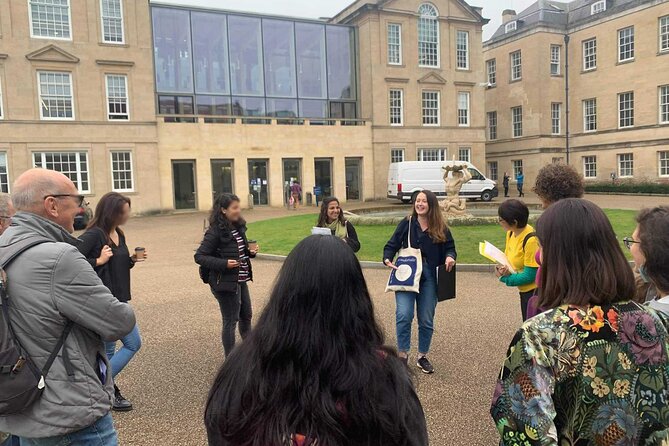
- Small group, big conversation energy with a maximum of 15 travelers.
- A route that starts with medieval disease geography at the Bridge of Sighs.
- Hands-on-feeling learning inside the old setting of the Bodleian Library.
- Public health made practical, including the link between everyday life and prevention at King’s Arms.
- Medicine through politics and world events, from imperialism to World War developments.
- A strong finish tied to penicillin and the NHS near the former city hospital site.
What $95.98 Buys You in 1h45 of Oxford Medical Storytelling
At $95.98 per person for about 1 hour 45 minutes, this tour is priced like a focused guided walk, not an all-day museum marathon. You are paying for two things: a tight route through major landmarks and a guide who can connect those places to the evolving story of medicine and public health.
A few value signals stand out. It is a small group experience (up to 15 people), you get a mobile ticket, and you receive a souvenir postcard. Also, each stop is marked as admission ticket free, which matters because it reduces surprise costs and keeps your time efficient.
I also like that it is offered in English and it stays near public transportation. If you are trying to fit Oxford sightseeing around other plans, a 1h45 structure is easy to plug in. Average booking is about 12 days in advance, so if your dates are firm, booking earlier is a smart move.
More kings, plagues and great fires:


Meeting at Bridge of Sighs: Where Medieval Layout Meets Disease
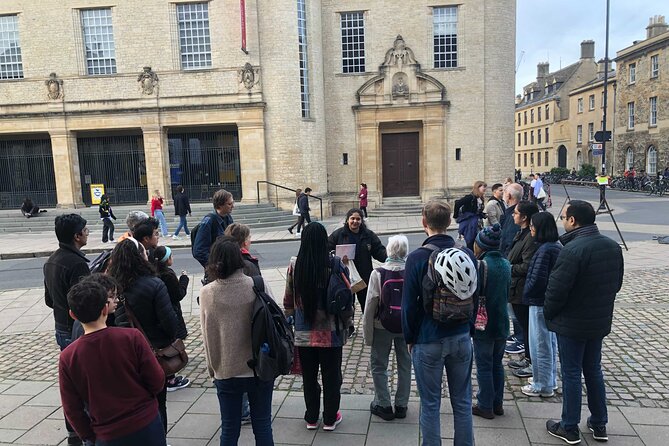
The tour kicks off under the Bridge of Sighs area, and it is a smart start. Instead of beginning with medical facts in the abstract, you start with geography: where people moved, where they gathered, and how the city’s layout shaped exposure to illness.
This opening sets the tone. You are not just hearing about epidemics as distant events. You are learning to think about how disease spreads when the physical city, daily routines, and social rules all line up.
This is also a great moment to orient yourself. Even if Oxford is new to you, this area is a strong anchor point, so you start the tour with bearings and momentum.
New College Outside Stop: Plague, Epidemics, and How Oxford Stayed Connected
Next you are outside medieval New College for a discussion of plague and historical epidemics. The key here is the word historical: you are looking at how repeated outbreaks shaped the way people understood illness and reacted to it.
This stop works well if you like your history to have cause and effect. Plague and epidemics are not just stories of sickness. They are also stories of fear, behavior changes, and the pressure that pushes societies to adopt new approaches to prevention and care.
Even if you already know some general plague basics, you will likely appreciate how the guide ties these themes to the Oxford setting around you. The point is to make the past feel connected to the city’s real spaces, not sealed off behind a museum wall.
Inside the Bodleian Library: Anatomy, Dissection, and Early Medical Study
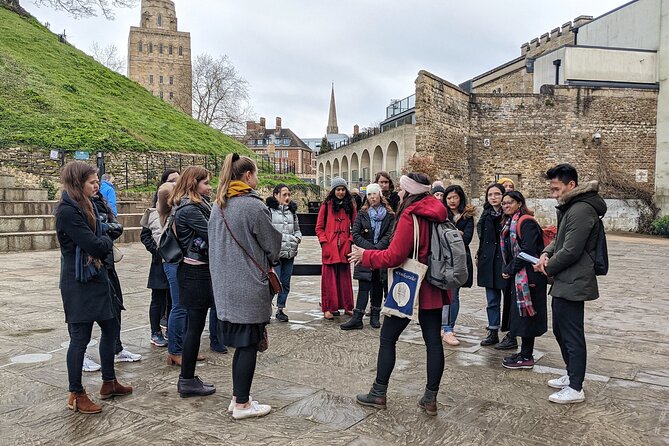
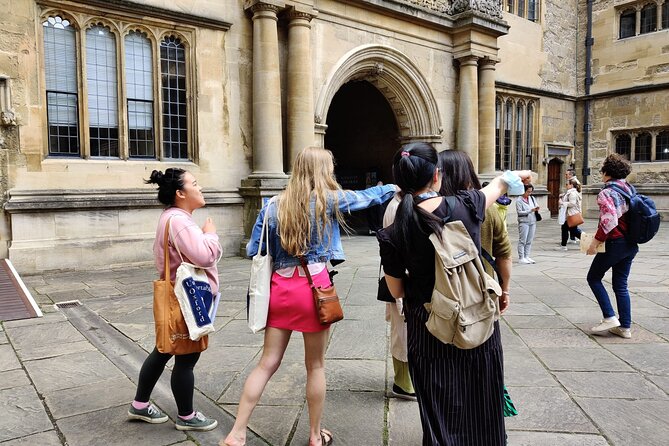
Then comes one of the best “picture in your mind” moments: entering the Bodleian Library. The focus shifts to anatomical dissections and the early study of medicine through the University.
This stop is valuable for two reasons. First, it places medical learning in a place you can literally feel: old library rooms carry the weight of study and documentation. Second, it connects medicine to methods. You are not only hearing what people believed, you are seeing that studying the body required tools, observation, and institutions willing to support those efforts.
One practical note. Since this is part of a 1h45 route, the time here is limited, so keep your questions ready and listen for the themes the guide highlights. If you love architecture and scholarship, this is the stop where the building itself does some of the storytelling.
Clarendon Building: Prostitution, Public Health, and the Everyday Risk Map
At the Clarendon Building, the tour moves into a theme that can feel surprising until you understand the logic: the guide uses this setting to cover the history of prostitution and public health.
This is not a scandal-only detour. It is about how public health responds when social realities create health risk. The guide frames the topic in a way that shows how illness prevention often gets tangled with law, moral attitudes, and the practical challenge of reducing harm.
I like that this stop makes the history feel grounded. Public health is not only hospitals and laboratories. It is also about managing risk in communities where behavior, work, and vulnerability overlap.
Also on in Oxford, no fuss
- Oxford University Walking Tour With University Alumni Guide★ 5.0 · 6,905 reviews
- Oxford Castle and Prison Guided Tour★ 5.0 · 1,402 reviews
- 1.5-hour Oxford City and University Walking Tour★ 4.5 · 1,383 reviews
- Oxford Official University & City Tour★ 5.0 · 1,134 reviews
King’s Arms, Oxford: Why Pubs Fit Into the Inoculation Story
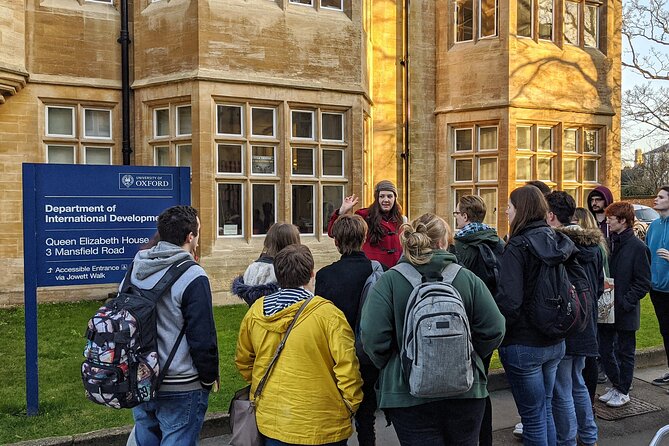
The tour then heads to King’s Arms, Oxford, where the theme becomes surprisingly direct: pubs served as the original place for inoculation in the city.
This is the kind of detail that makes the tour memorable. Inoculation sounds formal, like something reserved for doctors and clinics. But here, the story ties prevention to everyday social spaces. That connection helps you understand how public health actually scales. If you want people to participate, you meet them where they already are.
This stop also offers a nice shift in pace. You get more of a social history feel, and the guide’s discussion can help you see why prevention programs succeed or fail based on trust, location, and access, not just medical theory.
Oxford University Museum of Natural History: Medicine Meets Science, Imperialism, and Change

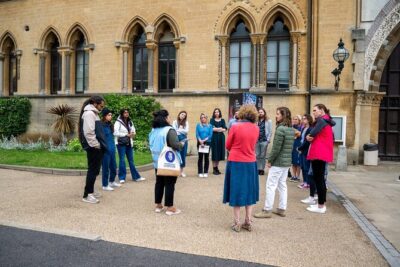
Next up is Oxford University Museum of Natural History. Even though you start outside, the discussion takes you to a bigger storyline: how science and medicine transformed in the 18th century through imperialism.
This is where the tour broadens from illness and prevention into how ideas traveled. Imperialism is a heavy word, and the guide uses it as a lens for how European science, collecting, and experimentation influenced what medicine tried to do next.
I appreciate this because it avoids a narrow story. Medicine does not evolve in a vacuum. It develops inside systems of power, trade, travel, and institutions that decide what gets studied and what gets ignored.
If you like history that connects global forces to local impact, this stop is a strong match.
War Memorial Garden at St Giles: How World Wars Shifted Medical Practice
At the St Giles’ Memorial Garden (War Memorial Garden), the tour slows into reflection on major developments in medical practice tied to the First and Second World Wars.
This part is useful because it reframes war from a political event into a driver of medical change. Even when you do not agree with the politics, you can still study the practical consequences: new pressures, new injuries, new urgency, and the push to improve care.
I also like that the setting encourages a more thoughtful tone. You are not racing through facts here. The guide links the war period to medical practice developments, and it is a moment that helps the whole tour feel human, not only academic.
St Luke’s Chapel Finish: Penicillin Trials, a Former City Hospital, and the NHS
The tour ends outside St Luke’s Chapel, a former city hospital site. The finish focuses on early trials of penicillin in the city and the founding of the NHS.
This is a powerful way to close the loop. The tour starts with medieval disease geography, moves through plague, study, public health, inoculation, scientific change, and war-driven medical advances, and then lands on a major medical turning point. Ending with penicillin and the NHS ties the story to outcomes you still see today, even if the modern world has moved on.
Because you are finishing in an Oxford neighborhood with a strong “day’s end” feel, it is easy to keep exploring after the tour, grab food, or connect to other sights nearby.
Who This Tour Fits Best (and Who Might Want Something Else)
This History of Medicine Tour is a great fit if you want:
- medical history that connects to places you can stand in
- a guide who brings sources and encourages discussion (Davica is a great example from past experiences)
- themes that include public health, social context, and prevention, not only doctors and discoveries
It may be less ideal if you want:
- a long, quiet museum experience, since the format gives limited time per stop
- deep specialty time in one single building, since it is a route, not a single-site visit
If you are balancing several Oxford attractions in one trip, this is a smart way to add meaning without taking over your whole day.
Should You Book This Oxford History of Medicine Tour?
If you like history that explains how people actually lived with health risks, yes, I think you should book it. The best part is how the tour stitches medical themes to Oxford landmarks, so the story feels grounded in the city rather than floating in a textbook. The discussion style is also a plus, especially if you enjoy asking questions and hearing how other people connect the dots.
Book sooner than later if your travel dates are tight, since the tour is commonly booked around 12 days in advance and it is capped at 15 travelers. And if you are choosing between this and a more general Oxford walking tour, pick this one when you want a specific lens that stays practical, social, and surprisingly human.
FAQ
How long is the History of Medicine Tour in Oxford?
It lasts about 1 hour 45 minutes.
What does the tour cost?
The price is $95.98 per person.
Where does the tour start and end?
It starts at Bridge of Sighs, New College Ln, Oxford OX1 3BL, UK. It ends at Radcliffe Humanities, Radcliffe Observatory Quarter, Woodstock Rd, Oxford OX2 6GG, UK.
Is the tour offered in English?
Yes, it is offered in English.
How big is the group?
The tour has a maximum of 15 travelers.
What’s included in the price?
A certified Uncomfortable Oxford guide is included, along with an Uncomfortable Oxford souvenir postcard.
Is a mobile ticket provided?
Yes, the tour uses a mobile ticket.
Do I need to buy admission tickets for the stops?
The tour lists admission ticket free for the stops on the itinerary, so you should not need separate paid entry tickets for these locations.
Are tips included?
No, tips are not included.
What is the cancellation window for a full refund?
You can cancel up to 24 hours in advance for a full refund. If you cancel less than 24 hours before the start time, the amount paid is not refunded.
Latest to join the queue for Oxford







Historical Tours, compared.

London Small Group Tour of Historical Pubs
Read our review →

Shadows of York: Ghost Walk and Horrible History.
Read our review →

A Walk Through Time: History of Liverpool Walking Tour
Read our review →
Royal Historic Pubs Walking Guided Tour in London
Read our review →
Private Group: Historical Pub Walking Tour of London
Read our review →
Best Of Liverpool Heritage, History & Culture Guided Walking Tour
Read our review →Browse the lists this tour appears in