
Reviewed · WALKING TOURS IN LIVERPOOL
Liverpool Slavery Walking Tour – Commercial Side
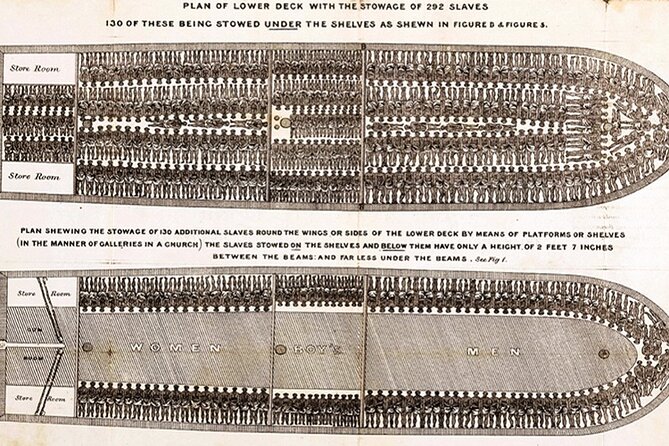
Liverpool’s waterfront hides money and movement. This 2-hour walking tour connects you to Liverpool’s role in slavery through banks, brokers, docks, and streets still standing. I like how it keeps the focus on the commercial side, not just the ships, and I also like that it moves at a pace where you can actually look up at what you are seeing.
A possible drawback: many stops are brief, so if you want lots of lingering time inside buildings or deep rabbit holes at every corner, you may wish you had more time on your own afterward.
In This Review
- Key highlights you should care about
- Why the commercial side of slavery is the point
- Getting oriented: start by Pier Head, end near the old dock
- Stop 1: Our Lady and Saint Nicholas Churchyard and the people behind the trade
- Stops 2 and 3: Hargreaves Building and Tithebarn Street’s tangled links
- Stops 4 and 5: Cotton Exchange, Liverpool Rules, and the Exchange Flags
- Stop 6: The memorial to Sir Alfred Lewis Jones and the power of shipping monopolies
- Stop 7: Water Street banking power and the buildings money left behind
- Stop 8 and 9: Dale Street’s narrow survival lanes and the Bank of England’s first branch
- Stop 10 and 11: Queen Victoria Monument site and Liverpool Town Hall’s frieze
- Stop 12: Graving Dock and what refitting meant after a slave ship returned
- The walk keeps going: Salthouse Dock, Thomas Steers Way, and cobblestones you can picture
- Stop 15: James Street back streets and a sculpture that points to Goree Island
- Price and value: what $38.19 gets you in real stops
- Who should book this tour, and who might want another option
- Should you book the Liverpool Slavery Walking Tour: Commercial Side?
- FAQ
- How long is the Liverpool Slavery Walking Tour – Commercial Side?
- What is the price per person?
- Where does the tour start and end?
- What language is the tour offered in?
- Are admission tickets included during the tour?
- Is the tour suitable if I bring a service animal, and does weather matter?
Key highlights you should care about
- Churchyard connections at Our Lady and Saint Nicholas Church, where many slave traders worshipped and were buried
- Name-brand finance history at Hargreaves Building, tied to banker William Brown and Liverpool’s banking world
- Liverpool’s cotton power explained at the Cotton Exchange, including the Liverpool Rules that still matter
- Where trading happened at the Exchange Flags, linked to slave sales and the Nelson Monument
- Real dockyard ground at graving docks and Salthouse Dock, including cobbles slave traders would have trod
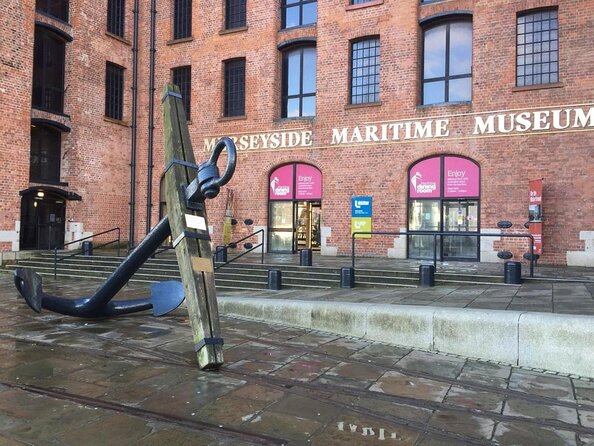
- A free add-on nearby at the Merseyside Maritime Museum’s International Slavery Museum after the walk
Why the commercial side of slavery is the point
This tour tackles a hard truth in a very practical way. Instead of centering the story only on enslaved people or individual ships, it shows how finance, shipping, and trading systems helped make the whole machine work.
Liverpool is famous for trade and banking, and that reputation can feel clean and distant unless you place it next to the profits built from American slavery. I like that the tour does not let you stay abstract, because you’re walking through streets and into architectural statements of commerce.
At the same time, you do get more than grim logistics. The walk often pairs these heavy themes with everyday city landmarks, so you are not only staring at tragedy. In the same two hours, guides have a knack for weaving in local context, like music and wartime damage, so you finish with a sharper sense of how Liverpool functions as a city, not just a concept.
More Walking Tours in Liverpool
Getting oriented: start by Pier Head, end near the old dock
The walk starts at the Liver Building on Pier Head and ends at 2 Custom House Pl by the area of Liverpool’s Old Dock, near Thomas Steers Way in the L1 shopping area. That matters because you end where the maritime story becomes physical again, with docks and dock-adjacent spaces underfoot.
It runs about 2 hours and keeps the group small, with a maximum of 12 travelers. A smaller group usually means you can ask questions without feeling like you are shouting at a crowd.
You’ll use a mobile ticket, and the tour is offered in English. It also has a practical “good-weather” requirement, so if rain is heavy that day, plan to confirm your date before you head out.
Stop 1: Our Lady and Saint Nicholas Churchyard and the people behind the trade
The first stop is Our Lady and Saint Nicholas Church and Garden, where the tour points out that many slave traders worshipped there and were buried in the churchyard. The shock here is not just what happened, it is where it was socially accepted.
This stop is short, about 10 minutes, with an admission ticket included. That short window is actually useful, because it helps you get your footing quickly, emotionally and geographically, before the tour becomes more about buildings and institutions.
If you are the type who likes to read a place before moving on, slow yourself down for a minute. Look for names and markers in the yard and let the idea land that commerce can coexist with religion, and with burial plots that remain visible today.
Stops 2 and 3: Hargreaves Building and Tithebarn Street’s tangled links
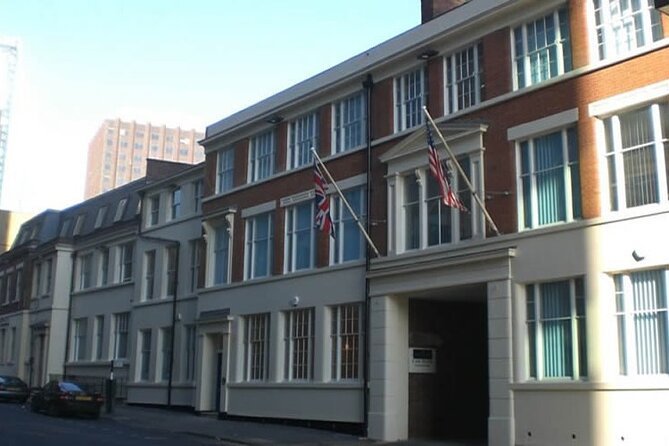
Next you move to the Hargreaves Building, a spot tied to the cotton broker and banker William Brown. The tour connects him to the founding of the Bank of Liverpool and Brown and Shipley Merchant Bankers, which helps explain how money institutions grew out of trading worlds.
This is another brief 10-minute stop, and the admission is free. The building itself becomes part of the story, because when you can stand near the places where money leaders built their credibility, the history feels less like a distant lesson.
Then you head to Tithebarn Street, including Rumford Place and the Confederate Embassy area linked to the American Civil War. Here the tour covers Bulloch’s network of spies in Liverpool, plus how the Confederate armies were supplied with weapons and ships.
This is one of the most historically loaded stops, also around 10 minutes, with an admission ticket included. If you want the commercial thread to make sense, this is where it tightens, because it shows Liverpool as a node in war supply and information networks, not just a background trading port.
Stops 4 and 5: Cotton Exchange, Liverpool Rules, and the Exchange Flags
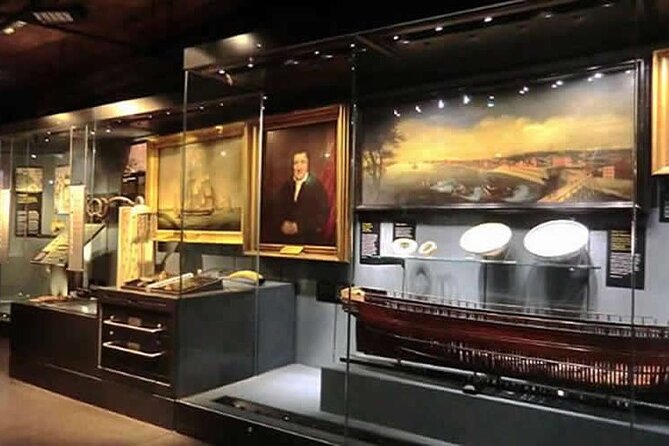
The Cotton Exchange Building is where the tour does something smart: it explains why Liverpool became a world leader in cotton trading and how that wealth shaped the city’s merchants. You also hear about the Liverpool Rules, which the tour notes still exist today.
This stop is 10 minutes and free to enter. That combination is a good value move, because you get the meaning of “cotton power” without paying extra for entry.
After that, you reach the Exchange Flags, described as the original exchange where traders carried out their business and where slaves were sold. Standing in that kind of street-level trading space is different than learning about slavery in a museum room, because you can sense the daily grind of business life.
You also see the Nelson Monument and hear about its history and meaning. This pairing can feel jarring, but it is also exactly why the tour works, because it shows how public monuments and public commerce shared the same city space.
More England on foot, brolly optional:
- Downtown Liverpool Walking Tour – In Spanish★ 5.0 · 591 reviews
- Best Of Liverpool Heritage, History & Culture Guided Walking Tour★ 5.0 · 539 reviews
- Tales from the Necropolis – A Ghost Walk Through St. James Cemetery★ 5.0 · 263 reviews
- Liverpool Hidden History and Dead House Evening Walking Tour★ 5.0 · 200 reviews
Stop 6: The memorial to Sir Alfred Lewis Jones and the power of shipping monopolies
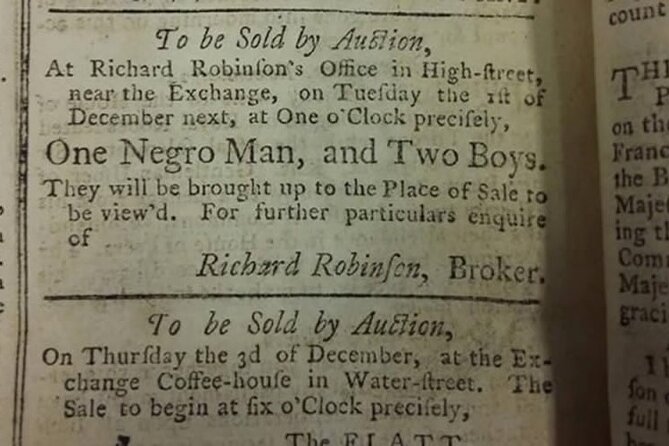
At the Memorial to Sir Alfred Lewis Jones, the tour connects vast wealth to obtaining a monopoly in the Elder Dempster Shipping Line. It then pivots to his philanthropy, including funding the setting up of the School of Tropical Medicine.
This stop is about 10 minutes with an admission ticket included. I like the way this turns the focus from one-time transactions to systems of control, because monopolies are not a footnote. They shape routes, pricing, and who profits from the movement of goods and people.
You are not asked to excuse the past here. Instead, you are shown how fortunes built from that world could still fund institutions with a lasting public face. That tension is uncomfortable, but it is also one of the most important lessons the walk offers.
Stop 7: Water Street banking power and the buildings money left behind
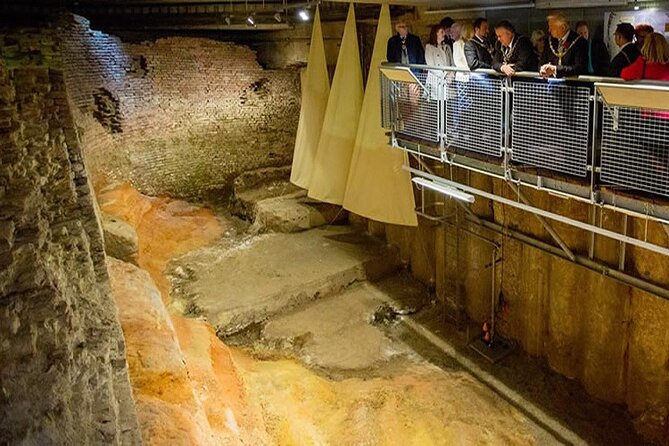
Then you head to Liverpool Water Street, focused on the business and banking sector of the 18th and 19th centuries. The tour explains how bankers became wealthy on the back of American trade, and how that wealth funded richly designed banking houses.
This is about 10 minutes, and admission is not included. Even without a ticket stop, the value here is the way it gives you a map of power, so you can look at buildings and understand what they were built to do.
Two named sights show up here: the Martins Bank Building and the old Bank of Liverpool Building. If you have any interest in architecture, this stop is where the walk pays off visually, not just intellectually.
Stop 8 and 9: Dale Street’s narrow survival lanes and the Bank of England’s first branch

Next comes Dale Street, where you see some 18th century streets that survived Victorian widening. This stop also includes a look at a public house that existed (and may have been visited) by early slave traders in 1726, and you might even enjoy a drink there if you want.
It is about 10 minutes, with admission ticket included. The pub detail makes the past feel lived-in, because it turns slavery-linked wealth into something that showed up in ordinary social spaces.
Then you move to Castle Street, learning how the buildings there connected merchants and slavery. You also see the building that housed the first branch of the Bank of England outside of London.
This stop is about 10 minutes with free admission. I like how it highlights that the story is not locked inside Liverpool’s docks. It reaches into national financial institutions and the authority structures that helped normalize trade.
Stop 10 and 11: Queen Victoria Monument site and Liverpool Town Hall’s frieze
At the Queen Victoria Monument, the tour notes that Liverpool Castle once stood nearby before being demolished in 1726. The tour points out St George’s Church built on the site, and explains it served as worship for Liverpool mayors and town councillors.
This is a shorter stop, about 5 minutes, and free. Even in a few minutes, you get a sense of civic power, since churches and local leadership spaces connect neatly to who shaped law and order for trade.
After that, you visit Liverpool Town Hall, described as the Mansion House of the Lord Mayor. You get a look at the architecture and decoration, including depictions of African people on the frieze.
This is about 10 minutes, with no admission ticket included. The frieze detail is a big reason to pay attention here, because it shows how representation, governance, and city identity all got mixed into public art.
Stop 12: Graving Dock and what refitting meant after a slave ship returned
The story shifts from above-ground civic buildings to the ground where ships needed care. At Graving Dock, the tour explains that after a slave ship completed its terrible journey from Liverpool to Africa and to America and back, ships needed refitting.
This was done in graving docks, and the tour notes that the original graving docks from the mid-1700s remain in Liverpool. This stop is about 5 minutes and has an admission ticket included.
You feel the contrast immediately. In a few minutes, the tour takes you from symbolism to infrastructure, and it helps you understand how the logistics of shipping were not optional. They required repair cycles and specialized facilities, meaning slavery-linked trade created steady work for dockyards too.
The walk keeps going: Salthouse Dock, Thomas Steers Way, and cobblestones you can picture
After Graving Dock, the tour passes by the Merseyside Maritime Museum, which houses the International Slavery Museum. The tour notes it can be visited free of charge at the end, which is a smart plan if you want more time on the museum side without paying extra.
Next is Salthouse Dock, where the tour shows the Salthouse and Canning Docks built quickly to accommodate rapidly increasing trade with America. The tour also mentions that some stones used in construction came from Liverpool Castle.
This stop is about 5 minutes with admission ticket included. The key takeaway is sensory, the tour makes a point that you are treading on cobbles and stones where slave traders and merchants would have walked when attending ships and cargo.
Then you reach Thomas Steers Way, tied to the Old Dock built by Thomas Steers in 1715. The tour says that building enabled Liverpool to exploit its position on the map and develop African and Transatlantic trade, and you may be able to see part of the old dock through an observation window set into the ground.
The stop is about 5 minutes and free. It is also worth noting the tour says that seeing the actual dock for a guided tour may be possible by prior arrangement, so if you want deeper access, you can plan around that before you arrive.
Stop 15: James Street back streets and a sculpture that points to Goree Island
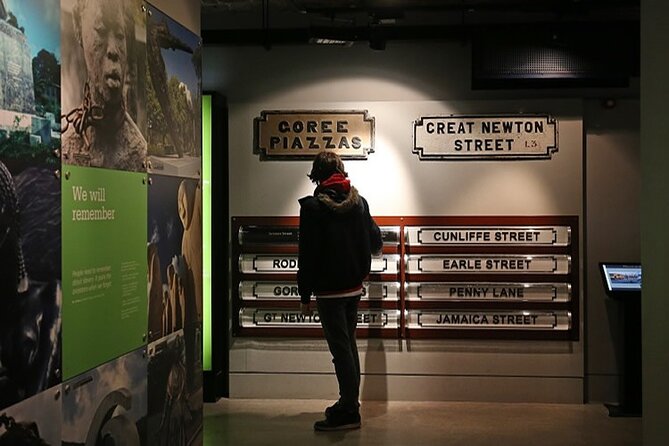
The final stretch includes James Street, where you walk through back streets of Victorian Liverpool. You get classic architecture of old banking houses and also a modern sculpture described as evoking the slave house on Goree Island.
This is about 10 minutes, and admission is free. The sculpture is not a substitute for historical documents, but it gives you one more way to process the story after you have seen the commercial machinery up close.
If you feel like the tour ends too quickly, that is not your imagination. The best approach is to treat this walk as the opening act, then use the free International Slavery Museum stop nearby to slow down and absorb what you just learned.
Price and value: what $38.19 gets you in real stops
At $38.19 per person, this is not an all-day excursion price. You are paying for focus, guided interpretation, and entry where needed, all in about two hours.
What makes the value feel fair is the mix of ticketed and free stops. Several key locations include admission ticket coverage, including the churchyard stop and the dock stops like Graving Dock, while other stops are free entry, like the Cotton Exchange Building and the Exchange Flags area.
You also get a small group cap of 12 travelers, and that usually improves the quality of Q and A. In the reviews, guides like Edward and Tommy Allen come through as being highly engaging and willing to answer questions, plus using photographs from earlier times to make the city change visible.
That “photos plus buildings” combo matters. It helps you connect past Liverpool to present-day streets so you can actually picture what commerce looked like when these places were operating.
One practical note for your budget thinking: you will likely want to add time at the International Slavery Museum after the walk since it is free, and that extra time can turn the experience from quick and intense into a more complete day.
Who should book this tour, and who might want another option
Book this if you want a route-based learning experience. You like walking, you like looking at buildings close up, and you want the story of slavery in Liverpool framed through finance, cotton trading, shipping, and trading networks.
You should also book if you appreciate guides who can handle hard topics with clarity and who can connect Liverpool’s commercial growth to its darker links. Reviews specifically point to guides offering very rich explanations and answering questions, and that is exactly what you want with a subject like this.
You might pause if you hate standing around for short stops. The tour keeps things moving, with many segments around 5 to 10 minutes, so it is best for people comfortable with a brisk pace and quick interpretation rather than long stays at each site.
Should you book the Liverpool Slavery Walking Tour: Commercial Side?
Yes, if you want a serious, walkable way to understand how Liverpool’s trading machine connected to slavery. The fact that the route includes churchyard ties, banking institutions, cotton trading power, and dockyard infrastructure makes it feel coherent, not scattered.
I would book it especially if you are coming to Liverpool for the first time and want to avoid staying in the comfortable parts of the city. This tour takes you to places tied to profit and logistics, then shows you what survives in the streets and stones today.
If you do book, do one more smart thing: plan to add time for the International Slavery Museum at Merseyside Maritime Museum right after. A two-hour walk gives you the map, and the museum gives you the time to sit with the full story.
FAQ
How long is the Liverpool Slavery Walking Tour – Commercial Side?
The tour lasts about 2 hours.
What is the price per person?
The price is $38.19 per person.
Where does the tour start and end?
It starts at the Liver Building, Pier Head, Liverpool L3 1HU, and ends at 2 Custom House Pl, Liverpool L1 8LZ, at the site of Liverpool’s Old Dock, Thomas Steers Way in the L1 shopping centre.
What language is the tour offered in?
The tour is offered in English.
Are admission tickets included during the tour?
Some stops include admission tickets, and others are free entry. For example, admission tickets are listed as included at places like Our Lady and Saint Nicholas Church and Garden and Graving Dock, while other locations like the Cotton Exchange Building and Hargreaves Building are listed as free entry.
Is the tour suitable if I bring a service animal, and does weather matter?
Service animals are allowed, and the tour is near public transportation. The experience requires good weather, and it is stated that most travelers can participate.
Latest to join the queue for Liverpool



Walking Tours in Liverpool, compared.
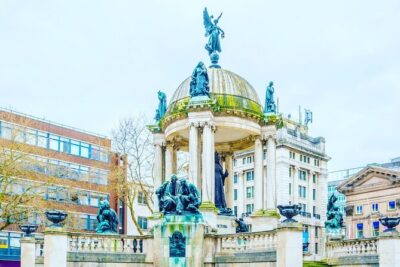
A Walk Through Time: History of Liverpool Walking Tour
Read our review →
Beatles Famous Walking Tour Of Liverpool- Fully Guided
Read our review →
Downtown Liverpool Walking Tour – In Spanish
Read our review →
Best Of Liverpool Heritage, History & Culture Guided Walking Tour
Read our review →
Tales from the Necropolis – A Ghost Walk Through St. James Cemetery
Read our review →
Liverpool Hidden History and Dead House Evening Walking Tour
Read our review →
Reel Tours: Liverpool Film Location Walking Tour
Read our review →Browse the lists this tour appears in