
Reviewed · BEATLES & MUSIC HISTORY TOURS
Liverpool: City & Cavern Quarter Walking Tour
Liverpool clicks into place fast on foot. This Vox City Walks tour strings together Derby Square landmarks and the Cavern Quarter, with in-app multilingual audio so you do not feel lost. I also love how the route explains the Cavern Club and Merseybeat story instead of just pointing at a famous door.
You get a tight loop of big-name buildings and port-era sites, then a guide finishes with what to do next so you can keep your day moving. The main drawback is simple: attractions are not included, so you may just look from the outside unless you plan extra paid time.
At $15.80 per person for about 1 to 2 hours, this is good value if you want orientation, architecture, and Beatles context without committing to a full day.
In This Review
- Key highlights at a glance
- Getting Oriented Fast in Derby Square and the Cavern Quarter
- Meeting Point and the Vox City Audio Setup (Bring Your Phone)
- Cavern Club and Merseybeat: The Beatles Story Beyond the Poster
- Liverpool Central Library: A Big Building With Small-Day Use
- Bluecoat: The 300-Year-Old Arts Program Stop
- A Plaque Linked to the Slave Trade: History With a Hard Edge
- World Museum: Archaeology, Ethnology, and Natural Sciences
- Old Dock and Thomas Steer: Liverpool’s Port Genius
- St George’s Hall and the Cenotaph: Celebration and Memory Side by Side
- Stanley Street Sculpture and Cook Street’s Victorian Meets Modern
- John Lennon at the Sailor’s Home: Art, Trade, and a Specific Hair Detail
- Radio City: A Skyline View, With Numbers That Matter
- Price and Value: When $15.80 Makes Sense
- My Quick Booking Advice: Who Should Go, Who Should Skip
- FAQ
- How long is the Liverpool City and Cavern Quarter Walking Tour?
- How much does the tour cost?
- Where do I meet the tour?
- Is entry to attractions included?
- What do I get with the tour, and what should I bring?
- How many people are in a group?
- Can I cancel and get a full refund?
- Should you book this tour?
Key highlights at a glance
- In-app audio in English, German, Spanish, French, and Italian makes it easy for mixed language groups
- Derby Square to the Cavern Quarter route covers a lot of Liverpool in a short walk
- Beatles and Merseybeat focus at the Cavern Club, including the claim of 292 Beatles plays
- Dock and museum stops like the Old Dock and the World Museum add more than pop-culture
- Small group size up to 25 people keeps the pacing manageable
- You get top tips from your guide to turn the walk into a full plan
Getting Oriented Fast in Derby Square and the Cavern Quarter
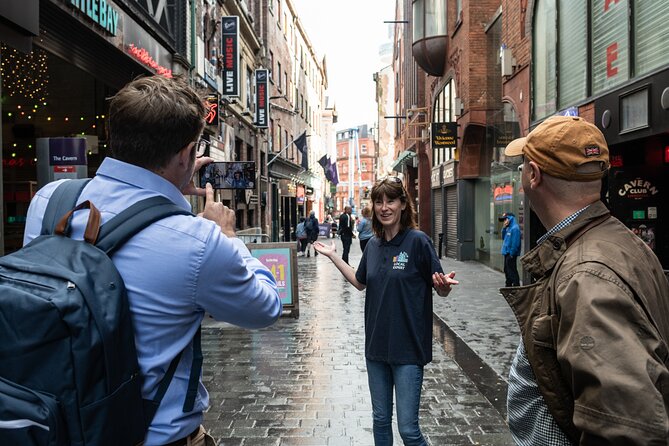
The best part of this tour is that it helps you stop guessing. You start around Derby Square, where the Queen Victoria statue gives you a clear mental map for the rest of central Liverpool. From there, the walk moves into the Cavern Quarter, the area most people associate with the Beatles, live music, and that classic Merseyside buzz.
If you are visiting for the first time, this kind of “city bearings” loop is worth it. You end up with a mental grid of landmarks, plus enough context to understand why Liverpool looks the way it does today, not just that it looks cool in photos.
The pacing fits the tour length. Expect a walking experience that is designed to stay light on logistics and keep you moving from stop to stop within roughly 1 to 2 hours.
More Walking Tours in Liverpool

Meeting Point and the Vox City Audio Setup (Bring Your Phone)
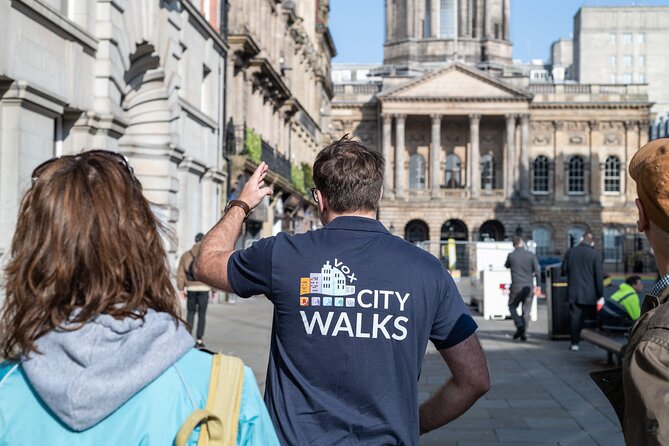
Meet at One Derby Square, Liverpool L2, UK. The tour description also notes departures by the Queen Victoria Statue on James Street, with the guide wearing a dark blue Vox City Walks uniform. In practice, that means you should find the statue area at your timeslot and keep your eyes out for the uniform.
Plan to arrive about 5 minutes early if possible. Tours run at the booked time, so if you drift in late, you risk missing the start and the early context.
For the audio, you scan a QR code on your voucher to download the Vox City app and then use the in-app commentary. This is where you should be practical: a mobile device and headset are not included, so bring your own phone and headphones if you want audio at street level.
Tip that saves frustration, charge your phone before you head out. Also, download anything you can through the app flow before you start walking.
Cavern Club and Merseybeat: The Beatles Story Beyond the Poster
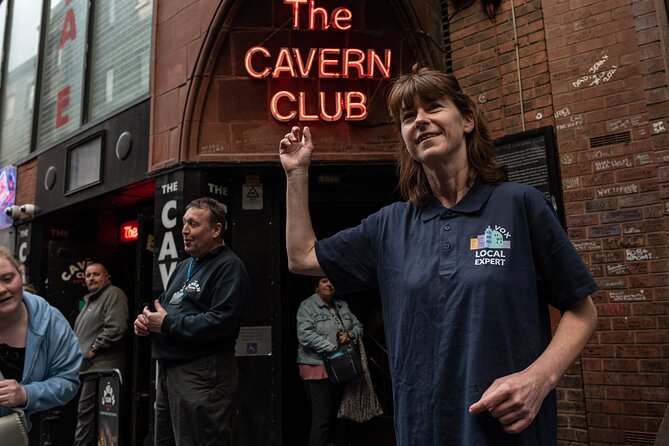
The Cavern Quarter stop is the headline for a reason. The tour takes you to the Cavern Club, described as a thriving live music venue and the home of the Merseybeat movement where the Beatles played 292 times.
What I like about this stop is the framing. The Cavern Club is not presented as just a landmark, it is treated like a living music venue that shaped a sound and a scene. That matters because it helps you understand why this area still feels musical, not frozen in time.
You can use this moment in two ways. If you are a Beatles fan, you get the “how it happened” story. If you are not, you still get a sense of why Liverpool’s music culture matters and how it connects to the city’s identity.
One consideration: live music venues can have their own schedules and vibe. Since attraction entry is not included on this tour, you may mostly take in the area and rely on the audio and guide explanations for the story.
Liverpool Central Library: A Big Building With Small-Day Use
Next you hit Liverpool Central Library, described as the largest of Liverpool’s 22 libraries and located right in the city center. This is a smart stop because it gives you a sense of how the city serves everyday life, not only grand monuments.
If you like architecture, libraries are often underrated. They tell you what a city values. Here, the guide’s framing helps you connect the library to modern civic life in a city famous for other kinds of fame.
Even if you do not go inside, the library still works as a visual anchor. It is one of those landmarks that helps you orient while walking between the more dramatic spots.
Bluecoat: The 300-Year-Old Arts Program Stop
Then comes Bluecoat, described as a 300-year-old building offering a year-round program of visual art, literature, and music. This is one of those stops that feels “useful,” even when you are just passing by.
Why it works on a walking tour: it bridges Liverpool’s past and its current creative life. You are not only learning names from the 1800s and early 1900s. You are seeing evidence that the city still supports arts and culture today, in an ongoing way.
If your schedule is short, this is also a good cue for what to check later. The guide’s “what to do next” tips may point you toward a show, an exhibit, or a literature event that you might miss on your own.
More zebra crossings and cavern doors:
- Beatles Magical Mystery Tour★ 5.0 · 9,266 reviews
- Liverpool: “Blue Route” – City & Beatles Tour★ 5.0 · 8,562 reviews
- The Beatles Story Experience Ticket★ 4.5 · 1,393 reviews
- Private 3-Hour Guided Beatles Classic Tour of Liverpool★ 5.0 · 1,074 reviews
A Plaque Linked to the Slave Trade: History With a Hard Edge
One stop is a historic street described as the first in Liverpool to have a plaque installed that explains its links with the slave trade in Britain. This is the kind of information that can feel heavy, but it is also exactly the kind of city context that makes a visit more real.
On tours like this, plaques matter because they turn the street into an archive. You start to notice that Liverpool’s story includes wealth and empire, not only music and art. The audio and guide explanation can help you read the city with clearer eyes.
If you prefer light and breezy sightseeing only, this is the part where the tone may shift. I think it is still valuable, because it gives you a fuller understanding of why the city built what it built, and what the costs were.
World Museum: Archaeology, Ethnology, and Natural Sciences
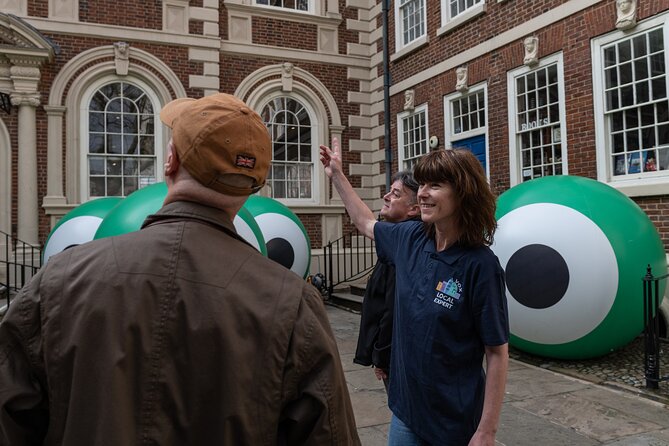
The World Museum stop is built for curiosity. It is described as having major collections spanning archaeological objects, ethnology, and natural sciences.
Even if you do not enter the museum, this stop can help you decide whether you should add it to your day. If those topics interest you, you now know where to find them without wasting time searching later.
If they do not, you can still use the stop to understand the broader arc of Liverpool’s identity as a port city that collected knowledge as well as goods. That mix is part of why cities like this developed big institutions.
Again, entry is not included. So you might pause, take a quick look, and then make a separate plan if you want time inside.
Old Dock and Thomas Steer: Liverpool’s Port Genius
Next is the Old Dock, also called Thomas Steer’s dock, recognized as the first wet dock used for commercial purpose worldwide. That fact alone makes this stop more than a scenic break.
What makes it interesting on foot is how it connects big concepts to physical space. Docks are where decisions, engineering, and global trade meet the ground. By learning about the dock’s role early on, you start to see why Liverpool became so important.
If you love industrial history, you will likely enjoy this stop. If you are more into culture and music, it still helps. The Beatles era did not appear out of nowhere. Liverpool’s port wealth and migration patterns influenced the city’s neighborhoods, people, and opportunities.
St George’s Hall and the Cenotaph: Celebration and Memory Side by Side
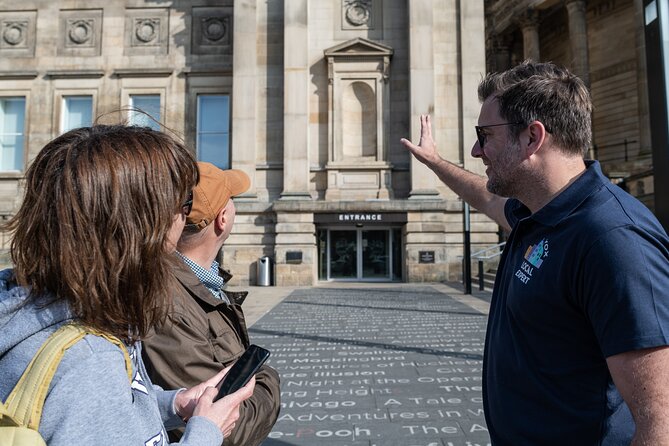
The tour includes St George’s Hall, described as sitting at the heart of Liverpool in more ways than one, a place of congregation and celebration with a central location and an impressive setting. Nearby, you also get the Cenotaph, described as a memorial to those who lost their lives in war and designated as a Grade I listed building because of its sculptural quality and architecturally significant setting.
This pair of stops gives you emotional range. St George’s Hall helps you see Liverpool’s public life, the kind of civic spaces designed for events and gatherings. The Cenotaph grounds the story in loss and remembrance.
If you are photographing, this is a good area to slow down. The buildings are formal and the streets around them feel more structured than in some other parts of the walk. You can frame the skyline and the monumental stonework without too much chaos.
Stanley Street Sculpture and Cook Street’s Victorian Meets Modern
Then the tour moves into street-level icons that feel made for photos.
There is a bronze sculpture on Liverpool’s Stanley Street, described as based on a famous Beatles number one song of the same name. Next you pass 16 Cook Street, dating from 1866, described as one of the most strikingly modern pieces of architecture to emerge from the Victorian era.
I like these stops because they change the pace. After big buildings and formal squares, you get art and architecture that feel more playful and surprising. The Cook Street mention in particular is a clue that Liverpool’s architecture is not one-style only. Victorian design can look unexpectedly modern, depending on the details.
You can also use this section to check your camera battery. This is where you tend to want more than one photo angle.
John Lennon at the Sailor’s Home: Art, Trade, and a Specific Hair Detail
The walk includes the Liverpool Sailor’s Home, described as originally a safe haven for sailors coming in and out of the port, in service from 1850 until 1969. It is another port-linked story, but with a human and social side.
In the same area, you encounter a statue described as sculpted by David Webster and unveiled in January 1997. The description adds a useful detail: the statue was moved a few metres from its original home, and the hairstyle was different at first. Originally, John had a quiff, and that would have matched the clothes and stance from the Rock n Roll album cover photo.
That level of specificity is exactly why I like app plus guide narration. You start noticing small differences, and you learn to look at a statue like it has a timeline, not just a pose.
Radio City: A Skyline View, With Numbers That Matter
The tour ends (right around the city center loop) with Radio City, described as one of the most successful radio stations and giving you a unique opportunity to view Merseyside’s skyline over 400 feet above the heart of city centre.
This is a practical idea for what to do next. Even if your day is packed, a high view can help you understand distances and the city layout. You can look out and decide where you want to walk after the tour.
Since entries are not included, you will likely treat this as a cue. If you want that skyline time, you can plan it separately.
Price and Value: When $15.80 Makes Sense
At $15.80 per person for about 1 to 2 hours, this is a solid budget-friendly way to get a structured overview. The big value piece is the audio. You are not only paying for a person to talk, you are also getting a downloadable experience through the Vox City app.
Also, the group limit of up to 25 people is a real quality factor. Small enough to feel guided, large enough that it typically runs without feeling like a private appointment.
Where you need to match expectations is entry. Because attractions are not included, you are buying context and orientation more than a checklist of museum tickets. If you want to do inside-the-building time, bring extra time and budget for separate tickets.
My Quick Booking Advice: Who Should Go, Who Should Skip
Book this tour if you want an efficient walk to major Liverpool landmarks, especially if you like Beatles lore but also want docks, museums, and city institutions in the mix. It is also a good pick for couples and solo walkers who want structure without rigid museum schedules.
Consider skipping if your main goal is entering attractions. Since entry is not included, you might end up wishing you had planned more time for ticketed stops.
One last note based on a real booking hiccup: there has been at least one reported instance of a no-show and no response. That does not define the experience, but it does justify being smart. Arrive early, double-check your voucher directions, and keep the contact details from your confirmation handy.
If you do want flexibility, free cancellation is listed, with full refunds allowed if you cancel at least 24 hours in advance.
If you have a service animal, it is allowed.
FAQ
How long is the Liverpool City and Cavern Quarter Walking Tour?
It runs for about 1 to 2 hours.
How much does the tour cost?
The price is $15.80 per person.
Where do I meet the tour?
The meeting point is One Derby Square, Liverpool L2, UK, and the tour departs from the Queen Victoria Statue on James Street.
Is entry to attractions included?
No. Entry to attractions is not included, so you would need separate tickets if you want to go inside.
What do I get with the tour, and what should I bring?
You get the city center and Cavern Quarter walking tour plus in-app multilingual audio commentary (English, German, Spanish, French, and Italian) through the Vox City app. A headset and your mobile device are not included, so plan to use your own phone.
How many people are in a group?
The maximum group size is 25 travelers.
Can I cancel and get a full refund?
Yes. Free cancellation is available, and you can cancel up to 24 hours in advance for a full refund.
Should you book this tour?
Yes, if you want a well-paced introduction to central Liverpool and the Cavern Quarter with app-based audio and a guide’s tips for what to do next. If you are hoping for ticketed museum or building entry as part of the package, plan extra time and purchases outside the tour.
On Foot, Brolly Optional
- Downtown Liverpool Walking Tour – In Spanish
★ 5.0 · 591 reviews - Best Of Liverpool Heritage, History & Culture Guided Walking Tour
★ 5.0 · 539 reviews - Tales from the Necropolis – A Ghost Walk Through St. James Cemetery
★ 5.0 · 263 reviews - Liverpool Hidden History and Dead House Evening Walking Tour
★ 5.0 · 200 reviews
Latest to join the queue for Liverpool







Beatles & Music History Tours, compared.

Private 3-Hour Guided Beatles Classic Tour of Liverpool
Read our review →
Mad Day Out Beatles Taxi Tours in Liverpool, England
Read our review →
Beatles Famous Walking Tour Of Liverpool- Fully Guided
Read our review →
London Rock Legends Tour including Abbey Road
Read our review →
History Guided Tour of Liverpool and the Beatles
Read our review →Browse the lists this tour appears in