
Reviewed · HISTORICAL TOURS
Inspirational Women Liverpool Past-Present History Tour – monthly
A walk about women in Liverpool hits differently. You trace ideas and lives across landmarks, with a guide who keeps the focus on people who were often left out. You’ll see stained glass in Liverpool Cathedral and end in the shadow of St George’s Hall, while stopping long enough to take photos and make sense of each story.
I love how this tour stays gentle and walkable, not a rushed checklist. I also love the mix of places that are familiar, plus stops that feel tucked away, so you get a fuller picture of the city beyond the usual postcard points.
One possible drawback: the route includes uneven cobbles, so if your feet are sensitive or you hate slipping around, plan for slow, steady steps and comfortable non-slip shoes.
In This Review
- Key highlights at a glance
- Why this Inspirational Women Liverpool walk feels worth your time
- Price, duration, and what makes $31.58 good value
- Stop 1: Liverpool Cathedral, Lady Chapel stained glass and women in view
- Stop 2 and 3: Blackburne House, then Rodney Street’s medical vibe
- Stop 4 and 5: Everyman Theatre, then Mount Pleasant and the hard road to influence
- Stop 6: Pembroke Place and the story behind red brick universities
- Stop 7: Metropolitan Cathedral of Christ the King and the Nightingale nurses link
- Stop 8 and 9: Lime Street and the Walker Art Gallery, women in songs and public art
- Stop 10: St George’s Hall, suffrage connections and a cooking-related twist
- Pacing, comfort, and how to enjoy the walk without rushing
- Guides matter, and Pam and Jean set the tone
- Who should book this Liverpool women’s history tour
- Should you book the Inspirational Women Liverpool Past-Present History Tour?
- FAQ
- How long is the Inspirational Women Liverpool Past-Present History Tour?
- Where does the tour start and end?
- What language is the tour offered in?
- Is the Cathedral ticket included in the price?
- Are the other stops free?
- What should I wear for the walk?
- Is there a limit on group size?
- Are service animals and dogs allowed?
- Do I need good weather?
- Can children join the tour?
Key highlights at a glance
- Lady Chapel stained glass that sets the tone for women’s stories across Liverpool
- Free and donation-included stops, so you’re not hit with surprise museum tickets
- A calm 2-hour pace that gives time for photos and short explanations at each point
- Women tied to suffrage, education, medicine, and public life, from the 1800s onward
- Small group size (max 26) that makes it easier to ask questions and stay together
Why this Inspirational Women Liverpool walk feels worth your time
Liverpool can be loud, maritime, and very male-coded in the way people often talk about its past. This tour pushes back in a practical way. Instead of only pointing at famous names, it links women to the places where power shows up: schools, theatres, churches, hospitals-adjacent streets, and public art.
What makes it work is the structure. You move in short legs and stop often. That means you get story beats you can hold onto, instead of one long lecture while you’re trying to stay upright on cobbles.
And the mood stays friendly and inclusive. Guides on this route, including Pam and Jean, are praised for being engaging, warm, and able to bring the topic to life without talking down to anyone. If you’re coming alone, you’ll still feel part of the group, not like you’re on the outside looking in.
More kings, plagues and great fires:
Price, duration, and what makes $31.58 good value
At about $31.58 per person for roughly 2 hours, this is priced like a city walking tour, not a full-day excursion. The value comes from the way ticket costs are handled at key moments. Liverpool Cathedral admission to the Lady Chapel area is included by donation, and other stops are free as part of the planned visit.
You also get a mobile ticket, which is convenient if you’re touring with a phone already in hand. The tour runs in English and is offered monthly, which helps if you’re planning a trip around specific dates, like International Women’s Day.
Logically, the route is built for first-time Liverpool visitors and for locals who want a fresh angle. At this price, you’re not paying to queue up in multiple big attractions. You’re paying for context and a guided route through places that often get passed without explanation.
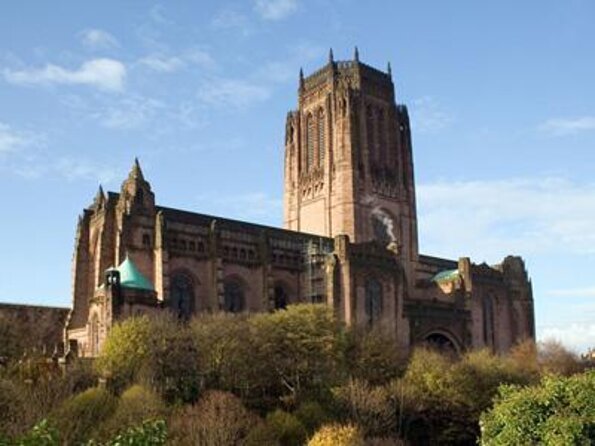
Stop 1: Liverpool Cathedral, Lady Chapel stained glass and women in view
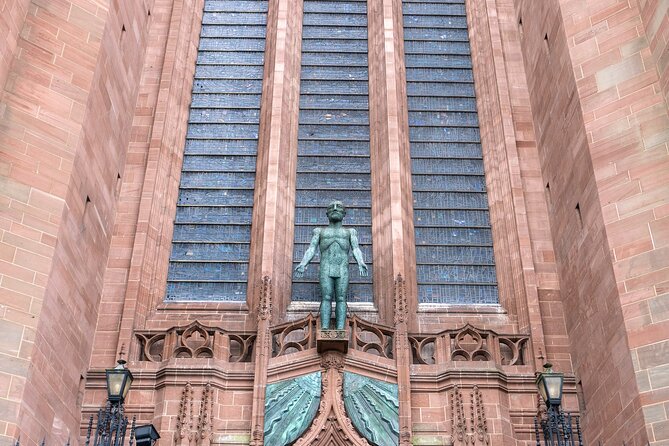
Your tour starts at Liverpool Cathedral at St James’ Mount (St James’ Mount, Liverpool L1 7AZ), with the Lady Chapel as the scene-setter. This is one of those stops where the setting does some of the storytelling for you. You’ll tour the Lady Chapel and look closely at stained glass windows linked to inspirational women, with themes that connect to Liverpool’s development over time.
This matters because it gives you a visual “anchor.” Even before the walk gets into streets and institutions, you understand the tour’s central idea: women’s contributions are not side notes, they’re part of how the city grew.
Practical tip: build a few minutes for looking slowly. If you just rush through, you’ll miss the moment when the glass turns history from names into something you can actually see and remember.
Stop 2 and 3: Blackburne House, then Rodney Street’s medical vibe
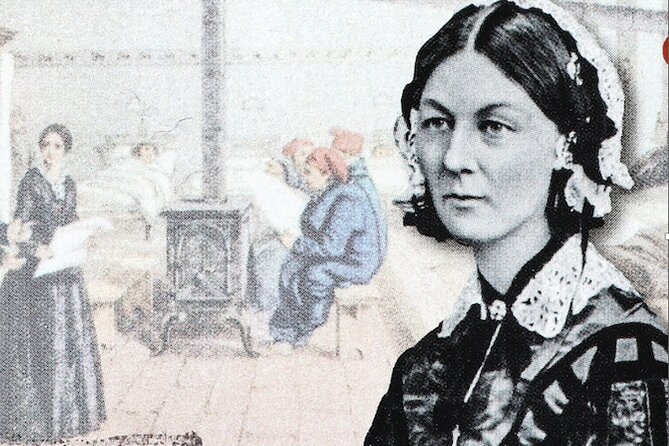
From the Cathedral, you head toward Blackburne House, a grade II listed building connected to the education of girls and women. This stop is short, but it’s focused. It reframes learning as a women’s issue, not something that happens in the background.
Then you move to Rodney Street, often described as the Harley Street of the North. That comparison signals what’s coming: medicine, professional life, and women connected to everyday power in a city known for its public role in health and care.
Even though the stops are brief, the payoff is how the tour changes your mental map. You start seeing education and healthcare not as separate topics, but as linked routes where women fought for access and influence.
Photo tip: Rodney Street is good for street-level snapshots. Try a mix of wider shots to catch the character of the street, then zoom in on details where signage or building texture tells a story.
Stop 4 and 5: Everyman Theatre, then Mount Pleasant and the hard road to influence
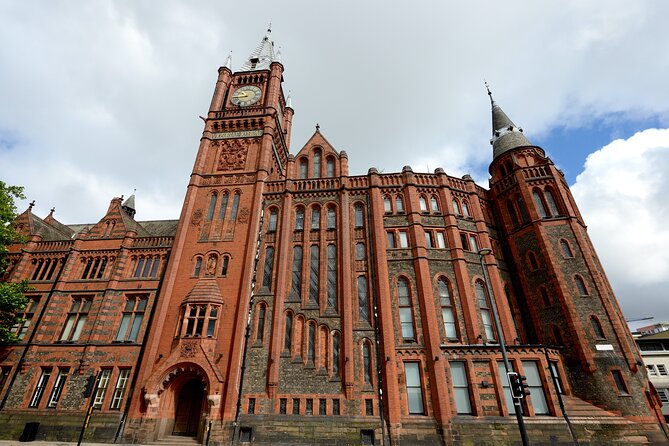
Next is Everyman Theatre. You’ll hear about its earlier identity as Hope Hall, and how the site carried a bohemian edge and political energy. This is where the tour connects performance spaces to movements, including links with the suffragettes.
Then comes Mount Pleasant, with a long association with medicine. Here the tone shifts toward struggle and persistence. You’ll hear about women from Liverpool and the challenges they overcame to help shape medicine, education, and health services around the turn of the last century.
This pairing is smart. Theatre helps you picture public debate, then Mount Pleasant grounds it in real-life systems and care. It’s a reminder that winning rights was not only about speeches and marches. It was also about getting into rooms where decisions were made.
What to expect: the walk stays light on the body but firm on the ideas. You’ll be given quick context at each stop, not a wall of text.
Also on in Liverpool, no fuss
- Beatles Magical Mystery Tour★ 5.0 · 9,266 reviews
- Liverpool: “Blue Route” – City & Beatles Tour★ 5.0 · 8,562 reviews
- Liverpool City Sights Hop On Hop Off City Tour – 24hr Ticket★ 4.5 · 2,555 reviews
- The LFC Stadium Tour★ 5.0 · 1,548 reviews
Stop 6: Pembroke Place and the story behind red brick universities
At Pembroke Place, the tour touches on how the term red brick universities took shape, then moves into women’s roles and achievements through the lens of education.
You’ll hear about pioneering women, including a philanthropist who campaigned for women’s rights and family social issues in the early 1900s. Even without heavy museum-style information, this stop works because it connects education to advocacy. Schools are not just buildings. They are platforms where social change gets organized.
If you’re the kind of traveler who likes to understand how a city’s institutions became important, this is a solid stop. It bridges the gap between the public past and the structures you still see today.
Stop 7: Metropolitan Cathedral of Christ the King and the Nightingale nurses link
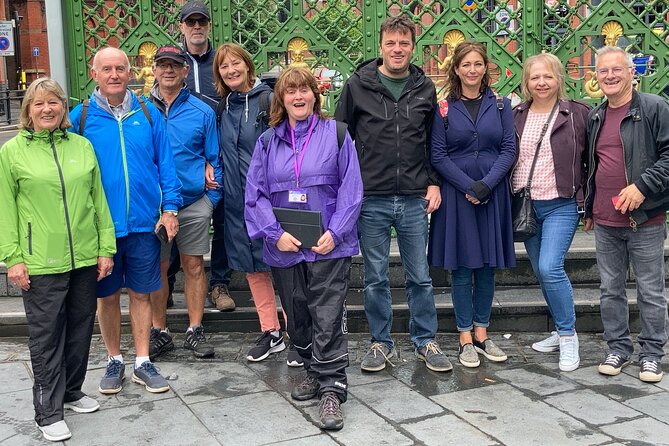
The walk then moves to the Metropolitan Cathedral of Christ the King Liverpool. Here you’ll learn about the cathedral’s history and connections to the Nightingale nurses.
The tour doesn’t just dwell on tragedy. It also points toward reform, including a leading figure tied to legislation supporting women and families in the 1800s. That is a key theme across the whole tour, women shaping systems, not only living through events.
Practical note: church interiors often shift lighting and echo. If you want clear photos, keep your camera ready but avoid flash where it might disturb worshippers or other visitors.
Stop 8 and 9: Lime Street and the Walker Art Gallery, women in songs and public art
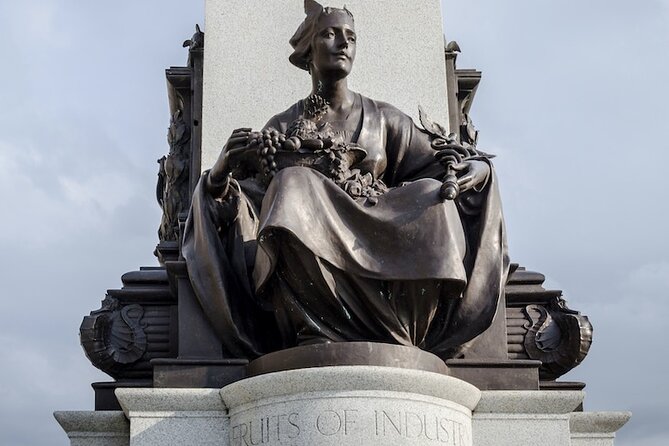
Lime Street is up next. You’ll hear about its infamous 19th-century reputation and a woman connected to songs that reference her in multiple Liverpool tracks. Even if you don’t know the lyrics by heart, it’s fun because Liverpool’s culture shows up on walls, streets, and in the words people keep repeating.
Then you arrive near Walker Art Gallery, with the tour explaining how women influenced the public art scene, and how the gallery developed as something bigger than a private collection. You also pass by places linked to early 1900s women’s social and political union meetings, so the “art” part of the stop feels grounded in activism, not just aesthetics.
What you’ll take away: Liverpool isn’t only a port city. It’s also a place where public culture, art, and organizing overlapped.
If you like taking photos inside galleries, consider that this stop’s time is short. Focus on what you can capture quickly and clearly, then let the guide’s story point you toward what to notice.
Stop 10: St George’s Hall, suffrage connections and a cooking-related twist
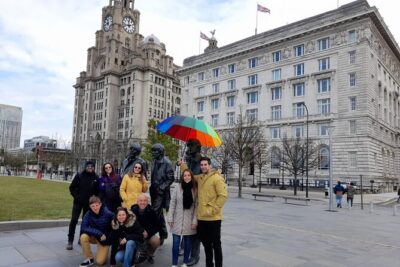
The tour ends at St George’s Hall. This is one of Liverpool’s grand civic buildings, grade I listed, and it makes a dramatic backdrop for the final theme: suffrage.
You’ll also hear about a surprisingly modern link connected to cookery. The tour doesn’t position this as a gimmick. It’s more like a reminder that old buildings often keep serving new purposes, and the city keeps reinterpreting its own spaces.
If you want a clean ending point for photos, St George’s Hall is ideal. It also makes it easy to continue your day afterward, whether you’re heading to another attraction or just trying to grab coffee near the city center.
Pacing, comfort, and how to enjoy the walk without rushing
This is an easy walking tour in the sense that it’s designed for most people, but you still need to be realistic about the ground. You’ll move through areas with uneven surfaces like cobbles, so wear comfortable non-slip shoes.
The tour is around 10 minutes at most stops, which keeps energy up and prevents you from losing the group. It also means you can ask questions without feeling like you’re dragging the tour pace.
Bring a bottle of water. The tour recommends you have a drink for the walk, and you can plan to use a reusable bottle if you like that habit. On sunny days, even in winter months, don’t forget sunscreen. (Liverpool weather can trick you. One minute cold, next minute bright.)
Group size matters too. With a maximum of 26 travelers, it’s not so large that you’re stuck staring at the back of someone’s head. You should be able to follow along and see the key points at each stop.
Guides matter, and Pam and Jean set the tone
A big part of why this tour scores so well is that the guide doesn’t just read facts. Pam and Jean, two of the named guides, are repeatedly described as friendly and passionate, with strong ability to keep the group included.
In particular, the way guides handle variety in the group stands out. One review highlights that the guide adjusted the route so older members did not feel left behind, and that nobody missed key content. Another notes the guide’s engaging style and interactive approach, with a calm confidence that helps you feel at ease even if you’re not a history superfan.
If you’re worried about learning new things without getting overwhelmed, this tour is built to be manageable. Short segments, clear story arcs, and people who explain in a way that sticks.
Who should book this Liverpool women’s history tour
I’d book this if you want:
- A 2-hour walk that’s not exhausting, but still meaningful
- A route that mixes big landmarks and lesser-seen streets
- A women-focused lens on Liverpool’s education, medicine, suffrage, and public culture
- A guide experience that stays friendly, not stuffy
This also works if you’re visiting with someone who likes museums but wants a more active way to get context. And if you’re local, it’s a good refresher. You’ll still learn how women are woven into the city’s institutions, not just its headline names.
I’d consider skipping if:
- You want a heavily museum-based tour with lots of indoor time
- You have trouble with cobbled uneven surfaces and don’t want to plan for it
- You’re looking for a deep academic lecture. This is story and place, not a textbook marathon.
Should you book the Inspirational Women Liverpool Past-Present History Tour?
Yes, I think you should book it if you care about how cities shape people, and you like learning through real streets and real buildings. For the price, you get a high density of stops with thoughtful themes, plus the bonus of a relaxed pace that makes the history feel practical.
If you want a Liverpool walk that goes beyond the obvious landmarks, this is a strong choice. Come with comfy shoes, a curious mindset, and a willingness to notice women’s influence everywhere, from stained glass to city halls.
FAQ
How long is the Inspirational Women Liverpool Past-Present History Tour?
It runs for about 2 hours, with short stops along the way.
Where does the tour start and end?
It starts at Liverpool Cathedral, St James’ Mount, Liverpool L1 7AZ. It ends at St George’s Hall, St George’s Pl, Liverpool L1 1JJ.
What language is the tour offered in?
The tour is offered in English.
Is the Cathedral ticket included in the price?
Yes. Admission to the Cathedral is by donation, and it is included in the ticket price.
Are the other stops free?
The tour lists multiple stops as free, including Blackburne House, Rodney Street, Everyman Theatre, Mount Pleasant, Pembroke Place, the Metropolitan Cathedral of Christ the King, Lime Street, Walker Art Gallery, and St George’s Hall.
What should I wear for the walk?
Wear comfortable non-slip shoes. The route can include uneven surfaces such as cobbles.
Is there a limit on group size?
Yes. The tour has a maximum of 26 travelers.
Are service animals and dogs allowed?
Service animals are allowed. Well behaved dogs are also welcome, but you will be walking in a group and in busy areas at times.
Do I need good weather?
Yes. The tour requires good weather. If it is canceled due to poor weather, you will be offered a different date or a full refund.
Can children join the tour?
Children under 16 must be accompanied by an adult.
Latest to join the queue for Liverpool





Historical Tours, compared.
London Small Group Tour of Historical Pubs
Read our review →
Shadows of York: Ghost Walk and Horrible History.
Read our review →
A Walk Through Time: History of Liverpool Walking Tour
Read our review →
Royal Historic Pubs Walking Guided Tour in London
Read our review →
Private Group: Historical Pub Walking Tour of London
Read our review →
Best Of Liverpool Heritage, History & Culture Guided Walking Tour
Read our review →Browse the lists this tour appears in