
Reviewed · BIRMINGHAM TOURS & ACTIVITIES
Best of Birmingham 12km Running Tour
Birmingham is fun at running pace. This 12km running tour is a smart way to see Birmingham’s big-name sights and the in-between corners, all while your guide threads history through the canals and neighborhoods. I like how the route stays moving, so you rack up landmarks without the usual “stand still and hope you read the plaque” feeling.
I also like the human touch, with a Licensed England Athletics run leader handling warmups and a group ice-breaker, plus snacks to keep energy steady. The main drawback to consider is that it needs good weather and you’ll run real distances, including some uphill stretches, so it is best if you can handle a moderate cardio effort.
In This Review
- Key highlights
- Getting your bearings fast at Roundhouse Birmingham
- Canal miles to Centenary Square and the overly designed puddle
- Jewellery Quarter: craft, Banksy, and FA Cup lore
- Digbeth: secret canal paths and industrial history with attitude
- Gay Village, China Town, Theatreland vibes, and a run back toward the center
- Bullring landmarks: bronze bull luck, Selfridges discs, and Victoria Square
- Victoria Square and The Mailbox, ending back at Roundhouse
- Price and value for a 12km private run
- What to expect from the pace, fitness level, and weather
- Should you book this 12km run through Birmingham?
Key highlights
- Roundhouse Birmingham start, with a warmup and group ice-breaker before you run the canals
- Centenary Square quick-hit landmarks, plus playful local stories like the overly designed puddle
- Jewellery Quarter details, where you learn why 40% of the UK’s jewellery is made there and how Banksy fits in
- Digbeth to Gay Village street-level energy, with industrial history and the color of Birmingham’s LGBTQ scene
- Bull and Bullring area photo moments, including the bronze bull nose-rub and Big Red Mailbox stop
Getting your bearings fast at Roundhouse Birmingham
Most big-city sightseeing feels heavy. This tour works the opposite way, it gets you moving early, so Birmingham starts to make sense fast.
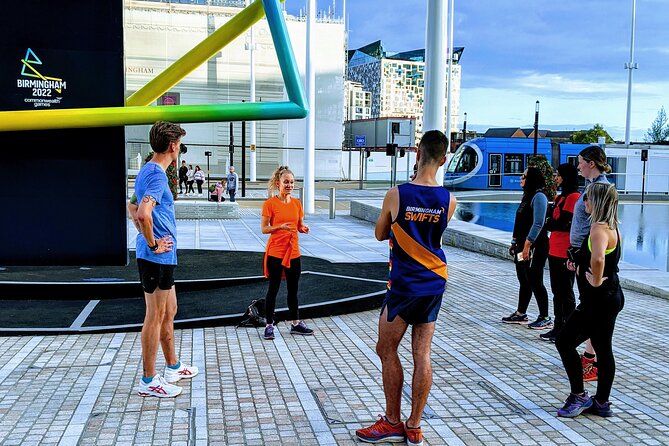
You meet at Roundhouse Birmingham at 1 Sheepcote St, Birmingham B16 8AE. Your England Athletics run leader introduces the plan, leads a warmup, then does a quick group ice-breaker so nobody feels awkward when the running starts.
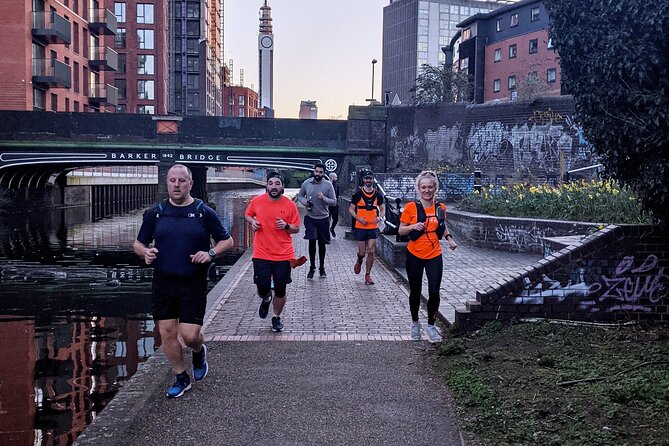
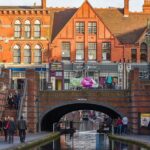
The best part here is the setting. You begin along Birmingham’s canals, with the kind of industrial-era architecture that makes you understand why the city grew the way it did. Expect a short intro and some only-the-good-parts history about the building before you take off.
Stop times are short on purpose. You are not getting dragged into long talks or waiting around. You get enough context to make later sights click, then you keep running.
Also on in Birmingham, no fuss
Canal miles to Centenary Square and the overly designed puddle
After you start, you run about 0.5 miles along the canal before the first breather. This is a good rhythm check, light enough to settle in, long enough to feel like you are actually sightseeing on foot, just faster.
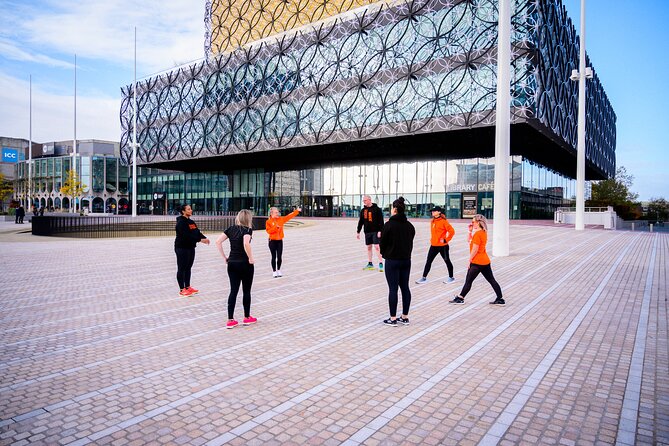
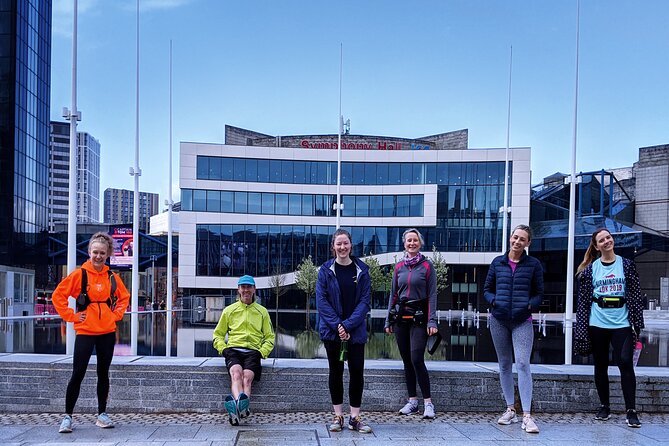
At Centenary Square, you get a clean set of big landmarks in a compact area: the Birmingham Library, The Hall of Memory, Baskerville House, and that famously described water feature, the overly designed puddle. It sounds like a joke, but the guide uses it as a way to point out how local design and local humor show up in public spaces.
This stop also gives you city-wide context. Your guide shares how Birmingham began as a city 1620 years ago, which helps you connect the present skyline to the older layers beneath it.
A small practical note: you will be outdoors and moving between stops. If you hate cold wind on canal paths, dress like you mean it and consider layers you can shed.
Also, each stop is set up with admission-free sightseeing. That matters because it keeps your time on the run itself instead of waiting for ticket checks.
Jewellery Quarter: craft, Banksy, and FA Cup lore
Once you feel warmed up, you move into the Jewellery Quarter after about 1 mile of straight running. This is where the tour shifts from “landmarks you recognize” to “neighborhoods you remember.”
You learn why this area is so important. The Jewellery Quarter produces 40% of the UK’s jewellery, which explains why this place is treated like a national treasure by English Heritage, and why it has such a strong identity.
You also get street-level culture woven in. The Banksy reference is specifically tied to a mural in the area, so you get more than a vague art story. There are also Victorian cemeteries and quirky residential apartments you will pass, plus boutique hotels, industry museums, and creative workshops you might want to revisit after your run.
Two clever storytelling angles make this stop work. First, the guide ties craft to industry, so jewellery does not feel like a boutique detour. Second, the stories are local and specific, including a funny, heart-warming element about the FA Cup made here, plus the Banksy Street Art mural connection.
If you are the type who likes to understand why a place has the vibe it has, this stop will land well. If you only care about photos and big icons, you might still enjoy it, but the payoff is higher when you like details.
Digbeth: secret canal paths and industrial history with attitude
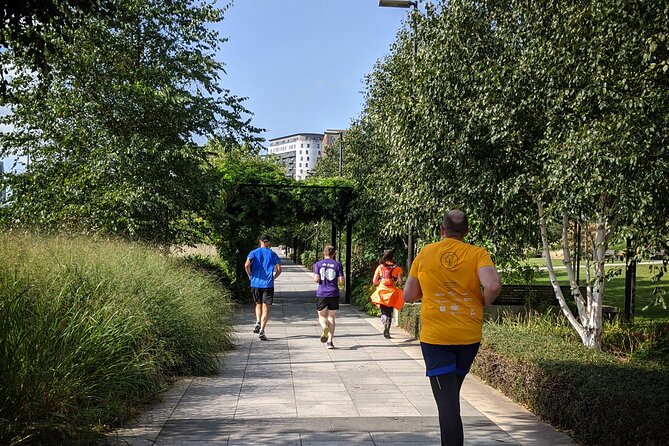
From the Jewellery Quarter, the tour pushes into Digbeth. You run along a secret canal path first, then you learn how canals and waterways helped Birmingham become a “power house” of the Industrial Revolution.
This is not just “fact dumping.” The guide frames the era with both the builders and the villains, the great and evil industrial inventors, so the history has momentum. You get a sense for how industry shapes streets, buildings, and even the pacing of daily life.
Digbeth is also described as having a strong modern identity. It is called the Coolest in Britain, and the vibe is an adults playground with independents and street-art gallery energy.
Practically, the stop here is short. At around 10 minutes, it gives you just enough time to look up, take in what makes Digbeth different, and get your bearings for the next sprint.
One consideration: if you do not enjoy urban art, you might feel a little less pulled in. But even then, the industrial story is useful because it ties Birmingham’s past to what you can see today.
Gay Village, China Town, Theatreland vibes, and a run back toward the center
Next you hit Gay Village, with a mix of influences described as China Town and Theatreland rolled into one. The tour treats this like a color-forward neighborhood, not a checklist stop.
Your guide explains the development of the scene here and how the streets became what they are. The tone is upbeat and playful, and the pacing stays friendly as you run back toward the city centre.
This stop is also a good reminder that Birmingham’s culture is not only museums and monuments. It is food, street life, and public space.
One small planning point: the tour says there is an included snack, but it also notes you should bring your own water. By this stage, it is smart to have sipped ahead of the “smells, smiles and sights” moment, especially if you are sensitive to heat or strong scents in busy areas.
While the kettle’s on in Birmingham:
- Shrewsbury Prison Entry Ticket★ 4.5 · 426 reviews
- LEGOLAND Discovery Centre Birmingham★ 3.5 · 380 reviews
- Birmingham Walking Tour: Canals, Victorians & Today (1:30pm)★ 5.0 · 346 reviews
- Discovering Birmingham 2 hour Walking Tour to the Jewellery Quarter★ 5.0 · 333 reviews
Bullring landmarks: bronze bull luck, Selfridges discs, and Victoria Square
After Digbeth, you tackle some uphill running. It is not meant to crush you, but it does raise your heart rate, which makes the next landmarks feel earned.
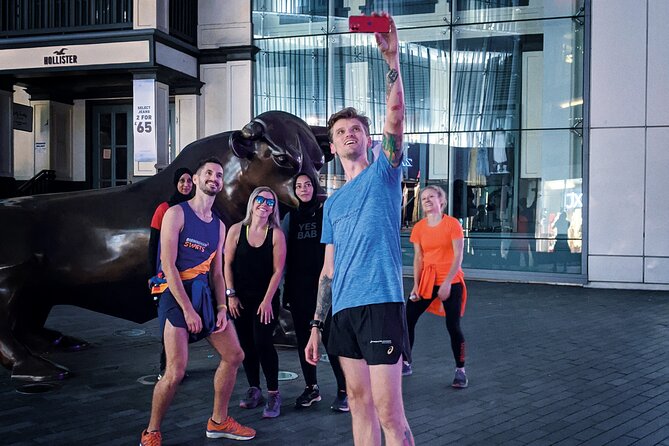
You see the bronze bull, one of Birmingham’s most renowned statues. The guide explains why bulls became iconic here, then you get a photo moment next to it. There is also a local tradition you can join if you want, rub his nose for luck.
Then you run past major Bullring and shopping landmarks. You pass Selfridges at Bullring, known for its curved exterior made of 15,000 aluminium discs, and it is described as the centre piece of the Brummie skyline. The tour also nudges you to return inside, because the shopping experience is a big part of why people remember this building.
Right after that, you run past a 12th-century market that is still going strong. You learn about it near The Bull, which works well because it ties the modern shopping district to the older market function of the area.
If you are worried about shopping overtaking your sightseeing, here it stays balanced. You get the story first, then you get the architectural wow, and you still have plenty of classic Birmingham civic space ahead.
Victoria Square and The Mailbox, ending back at Roundhouse
The next big anchor is Victoria Square. You stop to see Our Town Hall, Council House, Birmingham Museum and Art Gallery, and the Chamberlain Fountain. You also get the River waterfeature, nicknamed the Floozie in the Jacuzzi, which is a very Birmingham kind of humor.
This is another stop where the guide blends visual attention with story. You will hear fun facts tied to Queen Victoria and why she is described as hating Birmingham so much, plus it is framed like the city briefly feels like Rome.
The tempo stays quick at about 10 minutes. Then you move to the final stretch at The Mailbox.
There is a short 0.2-mile downhill run before the stop at the Big Red Mailbox. It is another iconic building tied to luxury shopping, but the tour also points out “underground secrets,” so you are not just looking at a facade.
After The Mailbox, you head back uphill onto the canals to return to your start and end point at Roundhouse Birmingham. That canal return gives your body a chance to settle while your brain still has all the history fresh.
Price and value for a 12km private run
The price is $548.51 per person, and yes, that is serious money. The value is not in skipping tickets or getting freebies, it is in combining three things that are hard to stitch together on your own: guided context, running structure, and time-efficient routing.
First, you get a private tour, meaning it is tailored to your group rather than mixed into a big public crowd. Second, the tour includes snacks, plus you are given recommendations for your stay in Birmingham. That last part is underrated, because it can steer your next day choices after you leave the route behind.
Third, the stop descriptions explicitly say admission tickets are free at each location. That keeps the experience from being a mix of walking plus paying fees. You spend more time on the streets and viewpoints that matter to the story.
You do pay for the quality of facilitation too. A run leader adds safety and flow: warmup, pacing, and brief stops that keep you from losing the whole afternoon.
Who should feel good about the cost? If you like running, you want a guided logic to sightseeing, and you prefer to cover ground without planning every turn. If you prefer slow, deep wandering, you might feel boxed in by the time and running demands.
What to expect from the pace, fitness level, and weather
This tour is rated for travelers with moderate physical fitness. That is a helpful way to think about it: you do not need to be an elite runner, but you do need to be comfortable with sustained movement and hills.
The route includes uphill efforts, plus some running distances between stops that add up. Stop durations are short, so you do not get long recovery breaks.
Weather matters. The experience requires good weather. If it is canceled due to poor conditions, you are offered a different date or a full refund. That is important because a canal route in rain can turn unpleasant fast.
If you want to make it easier on yourself:
- Wear running shoes with real grip.
- Dress in layers, especially near canal water.
- Bring your own water, since bottled water is not included.
- Plan to arrive ready, not still tying gear at the start.
The good news is that the tour has been described as friendly and enjoyable for runners of any ability. The structure suggests you will not be left behind, but the effort is still real.
Should you book this 12km run through Birmingham?
Book it if you want a fast, guided way to connect Birmingham’s neighborhoods. This is ideal if you like canals, urban architecture, and local stories that make places feel specific, from Jewellery Quarter craft to Digbeth industrial energy, then to Bullring and civic landmarks.
Skip it if you hate running or you are shopping for a relaxed walking tour. The tour is built around movement, and some uphill sections are part of the deal.
If you do book it, I suggest you treat it like a guided warm-up to your trip. You will finish back where you started, but your next self-guided day will feel easier because Birmingham will already make sense in your head, not just in photos.
Latest to join the queue for Birmingham


Birmingham Tours & Activities, compared.

Entry ticket to Hoo Zoo and Dinosaur World in Telford
Read our review →

Birmingham Walking Tour: Canals, Victorians & Today (1:30pm)
Read our review →
Discovering Birmingham 2 hour Walking Tour to the Jewellery Quarter
Read our review →
Birmingham Slogging Gangs Walking Tour with Edward Shelby
Read our review →Browse the lists this tour appears in