Reviewed · WALKING TOURS
Walking tour of Lancaster – Execution Slavery Industry
Lancaster has a dark side, and it’s right in plain sight. This 3-hour walking tour strings together key sights in the city, from the prison halls to the riverfront, and connects them to executions and the international slave trade. I like how easy it is to orient yourself in the first minutes, since you start near the castle.
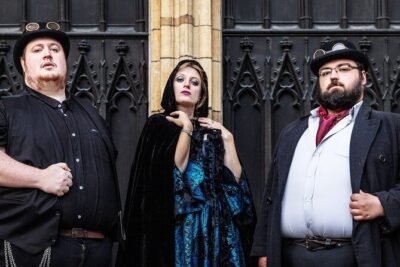
Two things I really enjoyed: the small group size (up to 20 people) and the way the guide, Barrie, keeps the stories moving with humor and energy. One thing to consider, though, is the subject matter. You will hear about murder, executions, and slavery-linked industry, so it’s not a light, fluffy stroll.
If you only have a few hours in Lancaster, this is a smart way to get bearings and context fast. You’ll finish back where you started, with enough leads to decide what to revisit after.
In This Review
- Key points before you go
- Why this 3-hour Lancaster walk feels worth your time
- Meeting at Castle Approach, and what the pace is really like
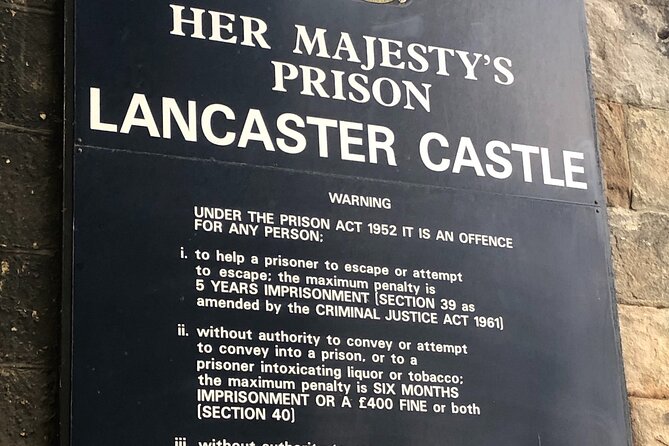
- Stop 1: Lancaster Castle, prisoners, trials, and executions
- Stop 2: Saint George’s Quay, the River Lune and the slave trade connection
- Stop 3: Judges’ Lodgings, the oldest house and a witchcraft link
- Stops 4 and 5: Church Street and Market Street, princes and royal myths
- Stop 6: Dalton Square, first forensic murder and a government bonus tied to slavery
- Stop 7: Lancaster Canal, White Cross Mill and the Storey Brothers
- Stop 8: Penny’s Almshouses, still functioning care and how it was financed
- Stop 9: The Storey, donations-led education and Lancaster’s university thread
- Price and value: what $20.81 buys you in real terms
- Who should book, and who might want a different option
- Should you book this Execution and Slavery Industry walk?
- FAQ
- How long is the Lancaster walking tour?
- What does the tour cost?
- Where does the tour start?
- Where does the tour end?
- What language is the tour offered in?
- Do I need a mobile ticket?
- Is the tour near public transportation?
- How big is the group?
- Are service animals allowed?
- Do I need to buy admission tickets for stops?
- Can I cancel for a full refund?
- What if the weather is bad?
Key points before you go
- Up to 20 people means you’re not lost in a crowd.
- Starts at Castle Approach near Lancaster Castle, simple for first-timers.
- 3 hours with a steady pace plus frequent short stops to keep you engaged.
- Slave trade and executions are part of the story, handled through local places you can see.
- Admission-ticket-free stops are built into the walk, so you can focus on the walk and the talk.
Why this 3-hour Lancaster walk feels worth your time
The biggest value here is time control. Instead of picking one site and hoping it tells the full story, you get a focused run through landmarks tied to punishment, trade, and power. The pace is built around multiple short segments, so you can absorb a lot without spending your whole day queueing or commuting between far-flung neighborhoods.
Another reason I’d recommend it as an early move in your Lancaster plan: the tour points out places you might miss on your own. If you come with curiosity, you’ll leave with a mental map and a shortlist of what you want to see again in daylight.
And since the tour is offered in English with a mobile ticket, it’s low stress on the logistics side. You arrive, you walk, you learn, you go. No fuss.
More England on foot, brolly optional:
Meeting at Castle Approach, and what the pace is really like
You meet at Castle Approach, Lancaster LA1 1YN, and you end back at the same spot. That loop matters. It means you don’t have to solve an end-of-tour transport puzzle, and you can step out into the rest of your day right where you began.
The walking is described as gentle enough for most people, but there’s still plenty of time standing around at stops. One review nailed it: you’ll still feel it by the end, mostly from cold, standing, and repeated street-level viewing. If you’re the type who hates waiting in place, bring a bit of patience, and plan a warm drink after.
As for the group dynamic, with a maximum of 20 people you’re close enough to hear clearly and keep the energy up. This is also where Barrie’s style shows. Several people call out his stamina and his mix of facts with amusing storytelling. That makes the tour easier to stick with when the topic turns heavy.
Stop 1: Lancaster Castle, prisoners, trials, and executions
You start at Lancaster Castle, and the tour is very direct about what that place was used for. An ancient castle is the obvious draw, but the real focus is on its role in history. You’ll hear about famous and less-famous prisoners, and how trials and executions were part of the castle’s function.
This stop works for two reasons. First, you get a concrete setting. It’s not just abstract history, because the building itself anchors the story. Second, it gives you a framework for the rest of the walk. Once you understand the castle as a center of justice and punishment, you can connect later stops about law, governance, and social order.
Time on site is short, about 20 minutes. That’s enough for context without turning into a full museum day. The downside is the obvious one: you won’t get every detail you might want if you’re a deep researcher. If that’s your style, use this tour as the primer, then return on your own.
Stop 2: Saint George’s Quay, the River Lune and the slave trade connection
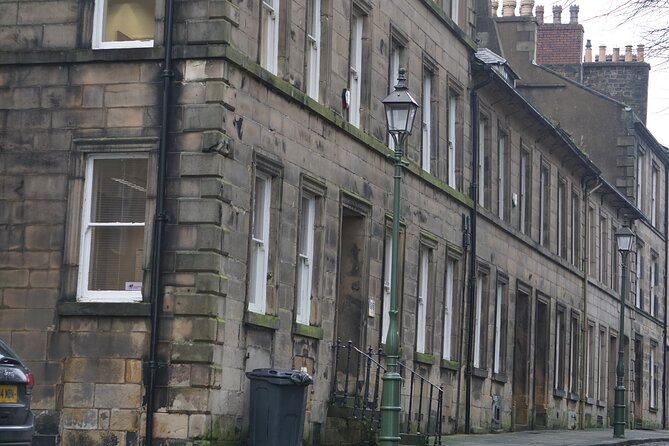
From stone walls to waterfront history. At Saint George’s Quay, you’ll look at an 18th-century harbour on the River Lune and hear how this area connects to the international slave trade.
This is one of the most important stops because it relocates the story from courts and cells into the economic engine of the region. Slavery is often talked about at a high level. Here, you trace how local harbour connections fed global systems. It also helps that the setting is visible. You’re standing in the geography that makes the trade story feel real.
You’ll spend about 15 minutes here. That’s a good length for staying focused on the key points. The tricky part is tone. It’s a heavy topic, so if you’re sensitive to distressing history, be ready to take breaks in your mind, not with long stops.
Admission is listed as free for this segment. That’s helpful: you’re not pressured to pay for extra entry just to hear the story tied to the quay.
Stop 3: Judges’ Lodgings, the oldest house and a witchcraft link
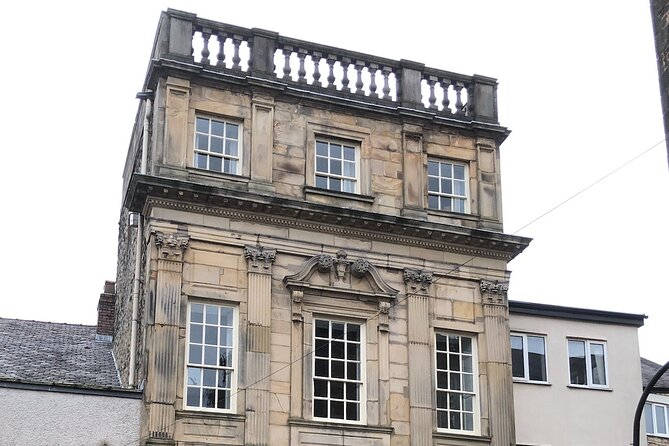
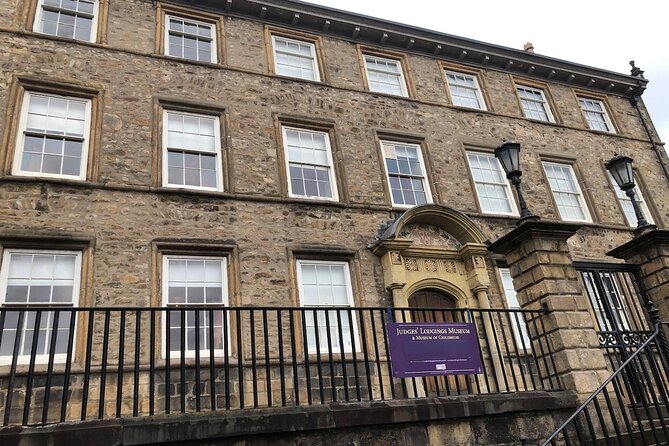
Next up is Judges’ Lodgings, noted as the oldest house in Lancaster. On paper, that sounds like the start of a nice architecture lesson. In practice, the tour connects the age of the building to what it was used for, and includes a link to witchcraft.
This stop is a great contrast to the castle. If Lancaster Castle feels like the formal, institutional center, Judges’ Lodgings feels closer to the people who sat in authority. Adding witchcraft into the mix also shows how fear, rumor, and justice intersected in earlier centuries.
You’re there about 10 minutes. So think of it as a fast, story-focused glance rather than a slow stroll through every room. If you love local odd stories and how they spread, you’ll likely enjoy this part.
One practical note: since it’s short, take it in, then look around afterward on your own if the exterior intrigues you.
While the kettle’s on in England:
- British Motor Museum Entry Ticket in Gaydon★ 5.0 · 288 reviews
- Outdoor Rock Climbing Taster Day in Peak District★ 5.0 · 74 reviews
- Stand-up Paddleboard SUP Safari on The River Avon For Beginners★ 5.0 · 54 reviews
- White Water Tubing★ 5.0 · 50 reviews
Stops 4 and 5: Church Street and Market Street, princes and royal myths
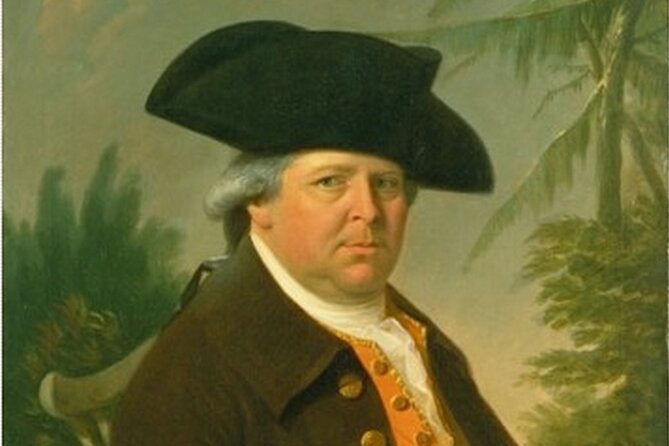
Church Street gets you a story about a prince goes missing, plus tales around a possible king of England. Market Street then turns into more royal weirdness: a prince raises the banner and another loses a shoe, with the stories spanning about 300 years.
These two stops are where the tour gets playful without becoming silly. It’s a reminder that history isn’t only executions and courts. People made sense of politics through stories, symbols, and local legend.
The time is tight for each stop, about 10 minutes each. That can feel like a lot of story per minute, but Barrie’s pacing helps. You get the gist, then you can decide if you want to chase the thread later.
Potential drawback: if you strongly prefer strict political history, you might wish these were longer or more footnoted. But if you enjoy how places collect stories over generations, this pair is genuinely fun.
Stop 6: Dalton Square, first forensic murder and a government bonus tied to slavery
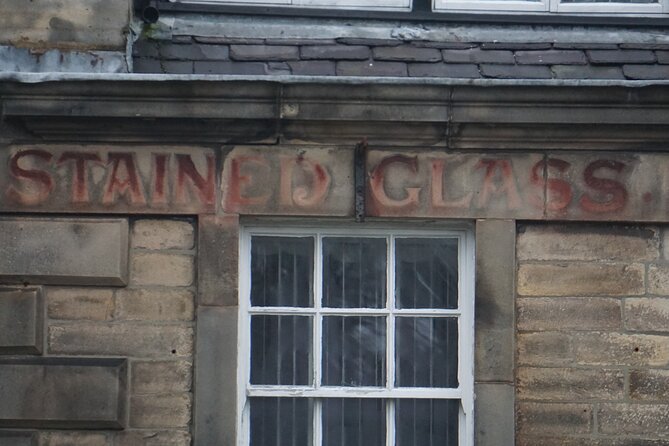
Dalton Square is the kind of stop that makes you stop walking and think, wait, what? The tour covers a murder and then connects it to a government bonus, including the first murder solved by forensic science and a bonus paid to slave owners.
This is intense material, and it’s also a useful one. It shows that systems of power worked through both public justice and private gain. The forensic angle highlights how evidence and investigation entered the story, while the bonus detail drags the conversation back to money and exploitation.
You spend about 10 minutes here. It’s short, but it’s structured so the shock does not completely derail your understanding. You’ll probably leave with that stop stuck in your head for days.
If you’re visiting with kids or anyone who struggles with dark subjects, I’d treat this tour as an adult-history outing. The places are real, and the stories are not watered down.
Stop 7: Lancaster Canal, White Cross Mill and the Storey Brothers
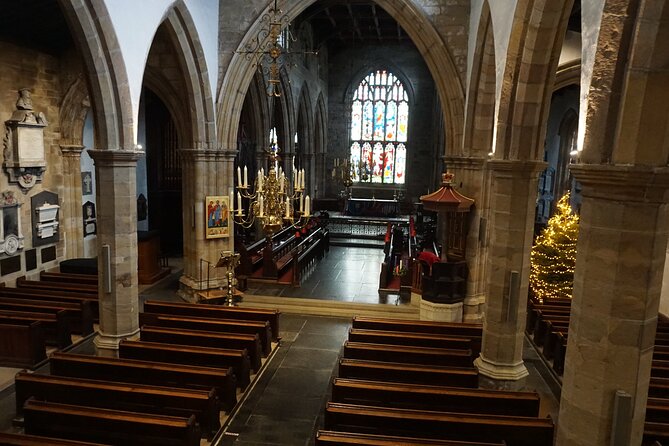
After the murders and money, you get a change of pace at Lancaster Canal. The focus is on the White Cross Mill and the Lancaster Canal, including the heyday of the Storey Brothers.
This stop matters because it reconnects you to Lancaster as an industrial and working city. It gives your brain a different kind of story to hold onto, one driven by trade routes and production rather than punishment and scandal.
Time here is about 10 minutes. That’s enough to understand the role of the canal and see how mills and industry sat alongside the older harbour and castle stories you learned earlier.
If you like industrial Britain, this is the segment that makes you appreciate why canals mattered. If you want scenic walks, you might wish there were more time at the water. Use this stop as a springboard, then plan extra canal time later on your own.
Stop 8: Penny’s Almshouses, still functioning care and how it was financed
Penny’s Almshouses is the tour’s “what people built to help” moment, without pretending the world was simple. You’ll see an almshouse that still functions today and learn who founded it and how it was financed.
This stop is valuable for balance. After learning how punishment and exploitation shaped history, you get a look at local charity and social support. It also helps you understand that Lancaster’s past included care systems, not just harsh ones.
You spend about 10 minutes. It’s more about the story behind the building than a long inspection. Still, you’ll likely appreciate it because it’s living history. You can point to it and say, this exists still.
If you like human-scale history, this segment is a strong one.
Stop 9: The Storey, donations-led education and Lancaster’s university thread
The final stop is The Storey, an educational institute founded by donations. The tour links it to the forerunner of the university tradition in the city.
This is a nice closing because it takes you forward. Earlier stops focus on justice, fear, trade, and industry. Here, you end with learning and institutions that grew from public support.
Time is about 10 minutes. That’s quick, but it ties together the idea that cities change through what people fund and prioritize. After the tour, you’re left with an image of Lancaster as a place that built culture and learning, not just infrastructure and punishment.
Since it ends back at the starting point, you can easily continue into dinner or a museum visit without a transit headache.
Price and value: what $20.81 buys you in real terms
At about $20.81 per person for roughly 3 hours, this is strong value for a walk that covers nine different stops and multiple major themes. You’re not paying to sit in a bus. You’re paying for a guide and a plan that connects places you would not naturally connect on your own.
The price also makes sense because the tour is formatted for efficiency: short stop times, free admission noted for the segments, and a tight loop through central Lancaster. If you’re in town for a day and want context fast, you’ll often get more value per hour than with a single-site museum ticket.
One practical note: the tour is booked about 19 days in advance on average. That doesn’t mean it sells out daily, but it does mean planning ahead is smart, especially if you’re traveling at peak times or on weekends.
Who should book, and who might want a different option
I think this tour suits you if you want:
- A quick orientation to Lancaster’s key historic sites.
- A guide with energy, since Barrie is repeatedly mentioned for humor and engaging delivery.
- A story-driven walk that connects law, industry, and trade.
You might want a different type of tour if:
- You dislike heavy topics, because the walk includes slavery-linked industry, executions, and murder.
- You prefer long museum-style time at one site. This tour is meant to cover ground, not to linger.
It’s also a good add-on for people already planning a wider Lancashire itinerary. Lancaster can be the anchor town, and this walk gives you enough context to make the rest of your trip smarter.
Should you book this Execution and Slavery Industry walk?
Yes, I’d book it if you’re visiting Lancaster with limited time and you want the city’s story told through the actual places. The combination of a tight 3-hour route, small group size, and Barrie’s engaging style makes it an easy win.
Just go in with eyes open. This is not only about castles and canals. It’s about punishment and exploitation, linked to local geography you can stand in front of. If you can handle that, you’ll leave with a real sense of how Lancaster worked, and why those streets still matter.
FAQ
How long is the Lancaster walking tour?
It lasts about 3 hours.
What does the tour cost?
The price is $20.81 per person.
Where does the tour start?
The start point is Castle Approach, Lancaster LA1 1YN, UK.
Where does the tour end?
The activity ends back at the meeting point.
What language is the tour offered in?
The tour is offered in English.
Do I need a mobile ticket?
Yes, the tour uses a mobile ticket.
Is the tour near public transportation?
Yes, it is near public transportation.
How big is the group?
The maximum group size is 20 travelers.
Are service animals allowed?
Yes, service animals are allowed.
Do I need to buy admission tickets for stops?
Admission is listed as free for the stops included in the tour plan.
Can I cancel for a full refund?
Yes, you can cancel for a full refund if you cancel at least 24 hours before the experience starts.
What if the weather is bad?
The tour requires good weather. If it is canceled due to poor weather, you will be offered a different date or a full refund.
Latest to join the queue for England






Walking Tours, compared.
Oxford University Walking Tour With University Alumni Guide
Read our review →
Tour for Muggles The Ultimate Harry Potter Walking Tour in London
Read our review →
Cambridge University Walking Tour by Alumni™ Kings College Option
Read our review →
Blackbeard to Banksy – The Ultimate Walking Tour of Bristol
Read our review →
Air Raid Shelter + St. Nicholas Market Walking Tour
Read our review →
Walking Tour of Bath with Blue Badge Tourist Guide
Read our review →
Changing of the Guard Guided Walking Tour in London
Read our review →