Reviewed · ENGLAND
Outdoor Rock Climbing Taster Day in Peak District
Outdoor climbing taster days in the Peak District are the quickest way to turn nerves into skills, fast. I like that Pure Outdoor Ltd starts with something simple and human, tea or coffee when you arrive, then gets straight into learning you can actually use on the rock. The day also has the practical extras that make it feel modern, like free Wi-Fi so you can share your progress without draining your phone battery.
You’ll get a real lesson, not a demo. The most valuable part is the coaching on belaying and abseiling basics, plus the must-do skill of tying into the rope before you leave the ground.
One consideration: it runs in all weather, so you need to dress for damp and wind, and there’s a moderate fitness level expectation for moving around and climbing.
In This Review
- Key things to know before you climb
- Arriving in Bamford, then heading for real rock
- The first lesson: belaying, abseiling, and what to do before you climb
- Mastering the rope: confidence through repetition
- Stanage Edge and other Peak District classics, via a flexible plan
- What the 7 hours actually feel like
- Why small-group coaching (up to 6) matters for beginners
- Weather-proof planning: what all-weather operation means for you
- Value for money: what $137.37 buys in the real world
- Who should book this Peak District taster day
- Should you book Pure Outdoor’s 7-hour taster?
- FAQ
- What time does the Peak District outdoor rock climbing taster start?
- How long is the outdoor rock climbing taster day?
- Where do we meet for the session?
- Is this taster suitable for complete beginners?
- Do they teach belaying and abseiling?
- Does the activity run in bad weather?
- Can I cancel for a full refund?
Key things to know before you climb
- Tea or coffee on arrival sets a relaxed tone before you get harnessed up
- Belaying and abseiling fundamentals are taught early, so you understand what’s happening on every climb
- Rope-tying practice means you learn the safety routine, not just the climbing moves
- Small groups up to 6 help instructors give attention and repeat checks
- Free Wi-Fi makes it easier to update friends while you wait between routes
- All-weather operation means you should pack layers and accept the day may feel chilly or wet
Arriving in Bamford, then heading for real rock
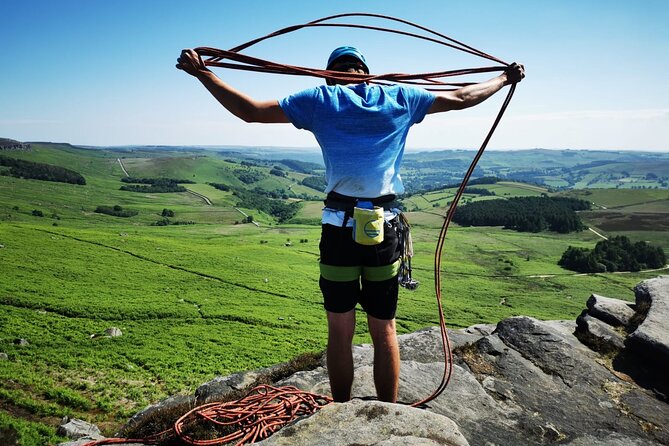
The day starts at 9:30am in Bamford, Hope Valley (S33), UK. You’re told it ends back at the same meeting point, so you’re not dealing with a complicated logistics puzzle after you’re tired. The whole experience lasts about 7 hours, which is long enough to learn the basics properly and still get plenty of time on the rock.
Pure Outdoor Ltd runs this with groups capped at six people, which is one reason the coaching quality tends to stay high. In a small group, you’re more likely to get direct guidance, gear checks, and a chance to repeat skills until they feel natural. You’ll also appreciate the “real world” timing rhythm: there’s a short learning block, then more hands-on climbing, with pauses for questions and resetting.
If you’re driving, here’s a practical detail to keep in mind. Some days require travel away from the base to the climbing area, and at least one report notes limited parking spaces once you’re closer to the crag. If you want a low-stress start, it’s worth planning a little buffer time.
Forming a queue behind this one in England:



The first lesson: belaying, abseiling, and what to do before you climb
This is built for little or no prior experience, and that matters because outdoor climbing is not just indoor climbing with a new backdrop. The instructors focus on the safety fundamentals first. That means you don’t skip over the hard-to-feel concepts, like how belaying works in practice, what abseiling involves, and how the system keeps you protected.
You’ll learn key basics in a structured way, then you’ll practice enough that you understand the routine. One of the best signs the day is set up well is that tying in comes before you head onto the rock. This is exactly the kind of detail that prevents you from feeling like you’re “watching other people” all day.
Coaching style also seems to be a strong point. Names like Owen, Emma, Sandra, Neal, and Rachel show up in different-led sessions, and the consistent theme is instruction that’s patient and tailored. Even when groups include mixed abilities, the teaching approach aims to adjust routes and tasks so people aren’t stuck feeling overwhelmed or bored.
If you already climb indoors and you’re expecting a serious outdoor upgrade, the day can still be valuable, but you might want to consider an option with more challenge later. One account suggests that if you have a decent indoor level, you could prefer something beyond the starter taster. That’s not a knock on the taster, just a heads-up on pacing and difficulty.
Mastering the rope: confidence through repetition
The taster day spends a lot of time on the skills that build confidence. Rope work can be intimidating at first because it’s not just physical, it’s mental. You have to remember steps, trust the system, and stay calm while you’re clipped in. This day’s structure helps with that by making the safety sequence feel like muscle memory.
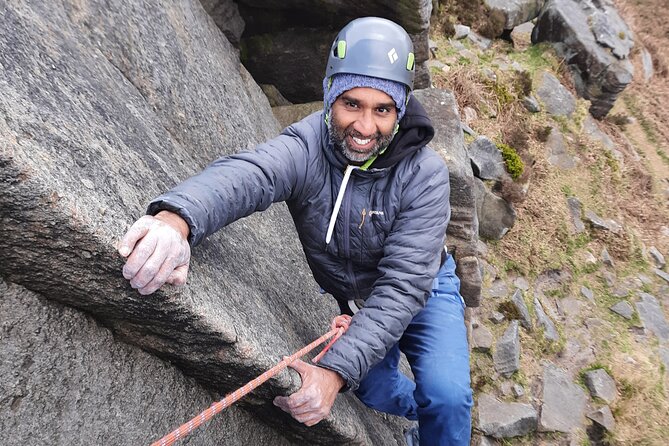
The best part is that you’re not left to figure it out alone. Before you take to the rocks, you’ll practice tying in correctly and go through the basics of belaying. Then, before each climb, instructors do a gear double-check. That repeated safety check is more than a formality. It’s the kind of reassurance that reduces the “what if I missed something?” worry, so you can focus on the actual climbing.
You’ll also learn what efficient climbing looks like. The day’s emphasis shifts after the initial safety session toward practical advice: how to move effectively, how to use your body and balance better, and how to build control instead of just powering your way up. If you’re the type who learns well through doing, this format tends to click.
Stanage Edge and other Peak District classics, via a flexible plan
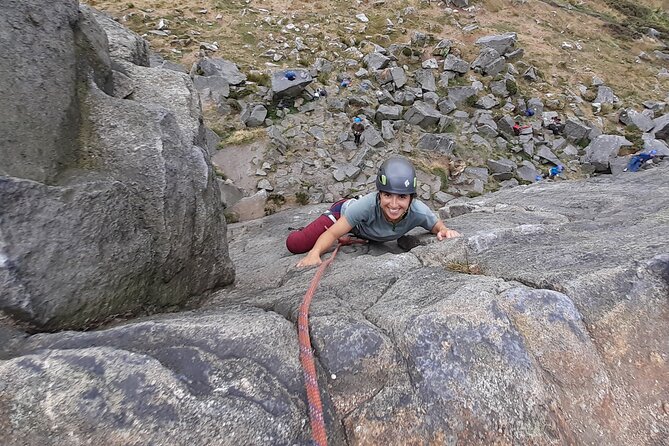
The Peak District is full of accessible climbing options, and that flexibility is a major reason this taster works so well for beginners. The idea is that the instructors can find a suitable location and choose a right level of challenge for the group.
You might end up climbing at a famous area such as Stanage Edge, since at least one session involved driving there before the climbing began. In other words, this is not a single, rigid location where everyone does the same thing. It’s more like: meet in Bamford, learn the basics, then get moved to a crag that fits the day and the group.
What you’ll care about, practically, is how the routes vary. More than one guide-led account highlights routes chosen based on ability, with different difficulty, length, and the skills required for each route. That means a complete beginner and someone with indoor experience can both have a productive day, instead of one person waiting around while the other does the real work.
What the 7 hours actually feel like
While the day is about 7 hours, it’s not one long stretch of lesson time. You’re looking at a pattern: start with introduction and safety skills, then spend the remainder on climbing and coached practice.
Here’s the flow you should expect:
- Arrive, settle in, and get ready with tea or coffee
- Short but focused safety instruction so you understand belaying and abseiling basics
- Rope-tying practice and preparation before you head onto the rock
- Hands-on climbing time with multiple routes and repeat chances
- Coaching between climbs to improve technique and confidence
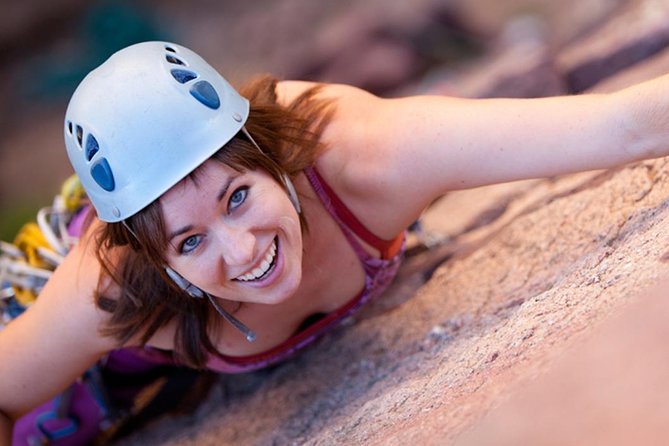
This structure is why the taster works even if you start nervous. One account explicitly notes support for people who were unsure about heights, and another mentions positive reinforcement paired with progressively harder climbs. That’s the sweet spot: you move from “I can do this” to “I can do it again, better.”
Also, the timing is long enough to let you try different styles of climbing routes. You should expect time to repeat routes so you can actually improve during the day, not just do one nervous climb and call it done.
While the kettle’s on in England:
- White Water Tubing★ 5.0 · 50 reviews
- 6hr Small Group Peak District eBike Tour★ 5.0 · 39 reviews
- Potter’s Wheel Taster Experience in the North Cotswolds★ 5.0 · 31 reviews
- Alpaca & Donkey Trekking Experience at Wetley Moor Common★ 5.0 · 28 reviews
Why small-group coaching (up to 6) matters for beginners
In outdoor climbing, a lot can go wrong if a group is too large for the number of instructors. That’s why I like the max of 6 travelers setup. With smaller groups, instructors can:
- check your understanding of the basics as you go
- correct rope handling and stance before it becomes a habit
- re-check gear before each climb
- tailor routes so you can keep learning without constantly falling into the wrong difficulty level
In different-led sessions, people describe feeling looked after in a group setting, including one experience where a person felt close to one-to-one attention even though it was a group of five. That tells you the instruction style is not just “stand and watch.” It’s closer to guided coaching, with the route plan adjusted to the group.
If you’re coming with teenagers or a mixed-skill family, this small-group format helps. One set of accounts mentions two teenagers doing rope climbing and bouldering on separate days with instructors Ruth and Gus, with the key takeaway being that the instructors were experienced and helped them learn a lot in a fun way.
Weather-proof planning: what all-weather operation means for you
The big reality check: this experience operates in all weather conditions. That doesn’t mean it’s unsafe. It means you need to be realistic. Damp rock, wind, and cool temperatures can change how the day feels even if the routes stay similar.
So dress for the outdoors, not for a comfortable indoor training session. Bring layers you can add or remove, plus footwear that works on uneven ground and climbing approaches. If you show up in light clothes, the day can shift from exciting to uncomfortable quickly.
One nice practical detail is that you’ll have a base and a warm-up moment when you arrive. Still, don’t count on warm weather doing you favors. Plan as if conditions might be chilly.
Value for money: what $137.37 buys in the real world
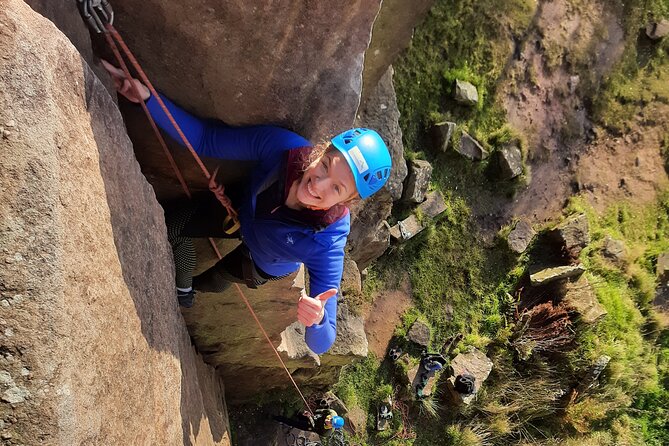
At $137.37 per person for a roughly 7-hour day, you’re paying for three things that add up quickly: professional instruction, outdoor setup, and repeated hands-on time.
A taster day has a hidden value: it teaches you the parts of climbing you cannot safely learn from YouTube clips. Belaying basics, abseiling fundamentals, and rope-tying technique are the core skills. Once you understand those, you can enjoy climbing at a higher level later.
The small-group size also supports value. You’re not paying for time where you watch other people climb while your turn comes later. The structure focuses on confidence building and practical technique advice, and that turns the day into more than a single thrill.
One more “value” factor: the day is booked about 12 days in advance on average, which suggests it’s in demand but not always booked out months ahead. If you want Peak District outdoor time without spending a fortune on a multi-day course, this is a reasonable starting point.
Who should book this Peak District taster day
This is especially suited to:
- complete beginners who want to learn outdoor basics the safe way
- indoor climbers who want a first outdoor taste and a safety refresher
- people who benefit from structured instruction and repeated practice
It’s also a good family option for older teens. The minimum age of 13+ makes it realistic for older kids who can follow safety instruction and handle the physical aspect.
If you’re the type who freezes at heights, don’t assume this day will be miserable. Coaching is part of the design, and at least one guided session notes support for people nervous about heights. You should still expect nerves at first, but the day is structured to build confidence.
Should you book Pure Outdoor’s 7-hour taster?
If you want your first outdoor climbing day to come with real safety skills, calm coaching, and lots of time on the rock, I think this is a strong bet. The standout elements are the early safety instruction, the rope-tying focus, and the small group size that lets instructors manage everyone properly.
Book it if you:
- want a straightforward introduction to outdoor climbing
- are ready for a full day that includes training and climbing
- can dress for changing weather and handle moderate physical effort
Consider a different level or course if:
- you already climb outdoors regularly
- you expect a highly technical or advanced route plan right away
- you want something shorter than a full-day format
FAQ
What time does the Peak District outdoor rock climbing taster start?
The experience starts at 9:30am.
How long is the outdoor rock climbing taster day?
It’s listed as 7 hours (approx.).
Where do we meet for the session?
You meet in Bamford, Hope Valley S33, UK. The experience ends back at the meeting point.
Is this taster suitable for complete beginners?
Yes. It’s designed for people with little or no prior experience, and it also works for indoor climbers who want to refresh skills and get their first taste of real rock.
Do they teach belaying and abseiling?
Yes. The day includes learning the basics of belaying and abseiling, along with instruction on tying into the rope correctly before you climb.
Does the activity run in bad weather?
Yes. It operates in all weather conditions, so you should dress appropriately.
Can I cancel for a full refund?
You can cancel for a full refund if you cancel at least 24 hours before the experience’s start time. If you cancel less than 24 hours before, the amount you paid is not refunded.