
Reviewed · HISTORICAL TOURS
The Jigsaw of History Tour
Coventry looks different after this walk. This 2 hours 45 minutes route turns landmarks into a single history puzzle, from Lady Godiva and the post-war rebuild to jet engines and the motor age, with a mobile ticket ready for you and a 12 people max group.
I love how your guide connects each stop to the real forces that shaped Coventry, like the City of Tomorrow plan and the rise and fall of car making. I also love the value, because you get free ticket entry at most stops for just $17.05 per person. The one drawback to plan around is that a few sights list admission as not included, so if you want to go inside, you may pay extra, and the meetup can be easier if you go straight to the Broadgate area by the Godiva statue rather than relying on a pin.
In This Review
- Key Highlights You Will Actually Feel on the Ground
- Entering Coventry Through a “History Jigsaw” Mindset
- Price and Pace: What You Get for $17.05 and 2 Hours 45 Minutes
- Broadgate and Lady Godiva: Where the City of Tomorrow Starts
- Ribbon Weaving to Cathedral Walls: St Mary’s as an Anchor Point
- Sir Frank Whittle and the Jet Engine Story You Can Point To
- Lady Herbert’s Garden, Bicycles, and the Coventry City Wall
- A4053 and the Engineering of Coventry’s Ring Road
- Millennium Place and the Motor City Rise, Peak, and Vanishing
- Palmer Lane and the “Local Secrets” Feeling
- Old Grammar School Art, Belgrade Theatre, and Ira Aldridge
- Bonds Hospital and St John the Baptist: Two Stops That Sound Like Legends
- Spon Street Trades, Coventry Market Timing, and Bull Yard Artworks
- Cheylesmore Manor House, Greyfriars Spire, and Ford’s Hospital
- Weather, Comfort, and How to Make the Most of Short Stops
- Who This Tour Suits Best, and Who Might Want to Skip It
- Should You Book The Jigsaw of History Tour?
- FAQ
- Where does the tour start and end?
- How long is the walk, and how far do I need to be able to walk?
- Is the tour in English, and will I get a ticket on my phone?
- Are there any admissions included at stops?
- Is the Coventry Market Shopping Centre stop included every day?
- Can I cancel if my plans change?
Key Highlights You Will Actually Feel on the Ground
- City of Tomorrow planning in plain sight, starting around Broadgate and echoed around Shelton Square and Bull Yard
- Sir Frank Whittle’s jet engine story, placed right at his statue so it feels concrete, not textbook
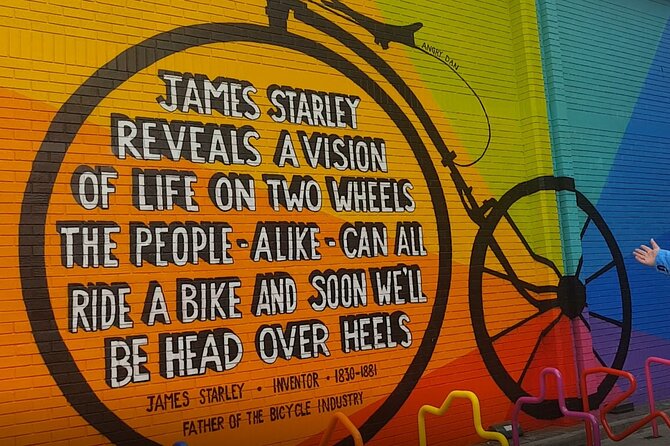
- Bicycle origins and the Coventry City Wall, including how Alfred Herbert helped save a key section
- Visible engineering moments, like the Coventry Ring Road on the A4053 and the motor industry story near Millennium Place
- Theatre and community stories, including Belgrade Theatre and the phrase Sent to Coventry at St John the Baptist
- A manageable walking loop, mostly flat, just over two miles, with only a small cobbled area
Entering Coventry Through a “History Jigsaw” Mindset
What makes this tour work is that it does not treat Coventry like a museum you walk through. It treats the city like a set of connected clues, where one statue points to a rebuild plan, one street corner points to an inventor, and one wall segment points to industry and even political conflict.
You get a practical way to look around. Instead of just naming places, you start noticing why they exist where they do, and why a specific detail matters. That is the real payoff, especially if Coventry is new to you.
Also, the format is short stops that add up. You are not stuck listening in one place for ages. You walk, pause, learn, and move on, which keeps attention from fading.
More kings, plagues and great fires:

Price and Pace: What You Get for $17.05 and 2 Hours 45 Minutes
At about $17.05 per person for a 2 hours 45 minutes guided walk, you are paying for interpretation more than admission. The route is built mostly around outdoor viewing and quick storytelling stops, so the money goes to the guide and the way the pieces connect.
The pace is friendly for most visitors. It is mostly flat with some inclines and ramps, plus one small area of cobbles. You are walking just over two miles, and the whole thing stays in the city center zone where you can easily regroup and catch your breath.
Group size is small, with a maximum of 12 travelers. That usually means you can hear your guide, and it is easier to ask a question when something clicks for you.
One more practical note: you will want to bring your phone. The tour uses a mobile ticket, so have it ready before you meet your guide.
Broadgate and Lady Godiva: Where the City of Tomorrow Starts
The tour kicks off at Sky Blue City Walks, Broadgate, Coventry (CV1 1NE), right by the Lady Godiva statue. This is not just a starting landmark. It is the launch point into Donald Gibson’s masterplan for Coventry’s post-war reconstruction and the idea of a City of Tomorrow.
This is where I would tell you to slow down mentally. Even if you already know Lady Godiva as a legend, this portion reframes the statue as a marker in a bigger story about planning, rebuilding, and deciding what a city should become.
Time here is short, about 15 minutes. That means you get the basics, then your guide moves you on before it turns into lecture mode. For first-timers, this is smart. You build context early without getting stuck.
Ribbon Weaving to Cathedral Walls: St Mary’s as an Anchor Point

Next you head to the last surviving former ribbon weaving factory in the city centre. This is a quick stop, about 5 minutes, but it gives you the industry angle that Coventry often gets missed for.
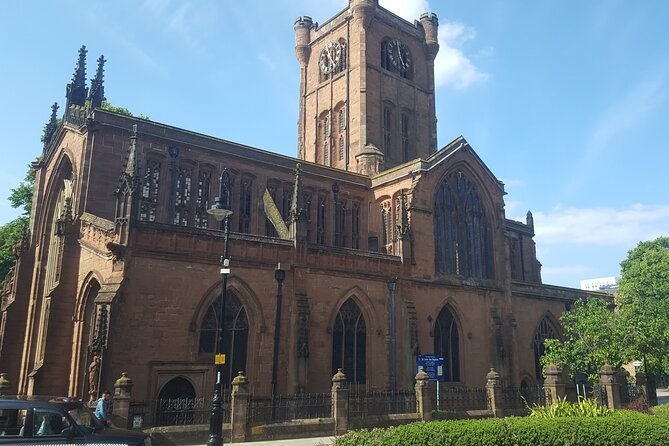
Right nearby is the surviving wall of the original Coventry Cathedral, St Mary’s. Seeing the wall alongside the industrial reminder helps you understand how layered the city is. You are not choosing between “old Coventry” and “working Coventry.” You are seeing both at the same time.
The key value here is scale. Ribbon weaving is small compared to global car manufacturing, yet it helped shape local life and the way people lived and worked. You walk away with a better sense of how Coventry earned its reputation, not just how it became famous later.
Sir Frank Whittle and the Jet Engine Story You Can Point To
At about 5 minutes, the Sir Frank Whittle statue is a short stop, but it carries a big idea. Whittle was an Earlsdon-born engineer and RAF officer, linked in Coventry’s story to the invention of the jet engine.
This matters because it takes modern world tech and ties it to a specific place. You are not hearing about aviation in a vacuum. You are connecting innovation to a person rooted in Coventry.
It is the kind of stop that works even if you are not a history fanatic. You remember a name, you remember the location, and later you notice how many other cities claim invention stories but only a few anchor them like this.
While the kettle’s on in Coventry:
- Godiva’s Cathedral Quarter Walk★ 5.0 · 16 reviews
Lady Herbert’s Garden, Bicycles, and the Coventry City Wall
Then comes one of the tour’s most interesting stretches: Lady Herbert’s Garden and the surrounding area. In about 15 minutes, you connect the birth of the bicycle industry to the way the modern bike came into being.
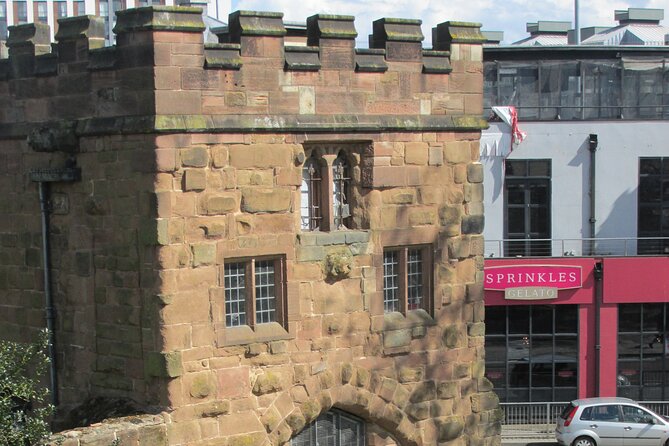
You also turn back to see the start of the best preserved section of the Coventry City Wall. Your guide explains how the wall was built and why industrialist Alfred Herbert helped save it from destruction. That is a local power story with real consequences.
If you like unusual historical linkages, this stop delivers. You even hear the tale of how the wall was needed in relation to the true beginning of the English Civil War. Even when it is only a few minutes per point, the guide keeps it connected so it feels like one theme, not separate trivia.
Practical tip: this is another place where you should wear grippy shoes. Even though the route is mostly flat, garden-adjacent paths and nearby surfaces can be uneven.
A4053 and the Engineering of Coventry’s Ring Road
Short and focused, around 3 minutes, the tour pauses at A4053. This is your chance to learn about the Coventry Ring Road as an engineering marvel.
I like this stop because it reminds you that planning and infrastructure are part of history too. A ring road changes how people move, how businesses survive, and how neighborhoods evolve. In Coventry, the story fits the larger theme of rebuilding and remaking the city.
If you tend to skip over modern infrastructure when you travel, this is the moment to pay attention. You see why it gets built, then you remember it when you notice car routes and commuting patterns later.
Millennium Place and the Motor City Rise, Peak, and Vanishing
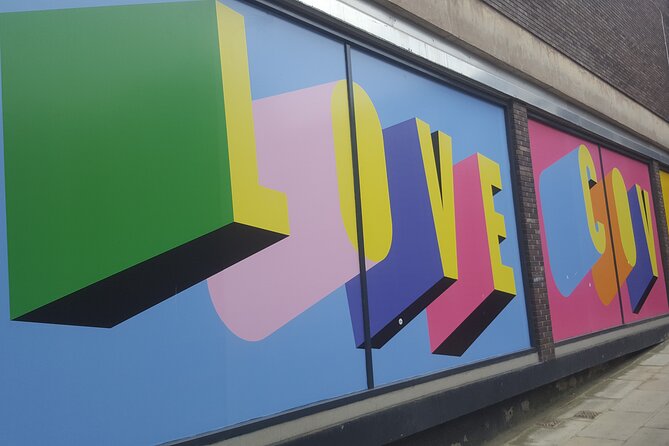
At about 10 minutes, Millennium Place is positioned near the Coventry Transport Museum. Here your guide tells the story of Coventry’s motor industry and how the city became a motor city of England and a global centre for car manufacture, then how much of it disappeared.
This stop is valuable because it gives you a full arc. Many city tours only cover the success phase. You get the hard turn too, which is often what visitors want to understand once they see the warehouses, road layouts, and surviving industrial hints.
Also, placing it near the Transport Museum is smart. If you want more, you know exactly where to go next without having to guess.
Palmer Lane and the “Local Secrets” Feeling
One of the tour’s pleasures is that it does not treat the main sights as the only story. At Palmer Lane, you go a bit off the beaten path for about 5 minutes, with a few things in the city that many locals do not point out right away.
These small detours are why this walk can feel like it adds new Coventry to your mental map. Even if you have been through the city centre before, you get different corners and different angles.
Think of this part as your reminder to travel slowly even within a short route. The clues show up fast, but your brain needs time to connect them.
Old Grammar School Art, Belgrade Theatre, and Ira Aldridge
Next, you pass Old Grammar School for about 5 minutes. There is an artwork here that celebrates Coventry’s motor industry, plus building names connected to the most famous poet from the city. The admission is marked as not included, so you are mainly looking from the outside based on how the stop is described.
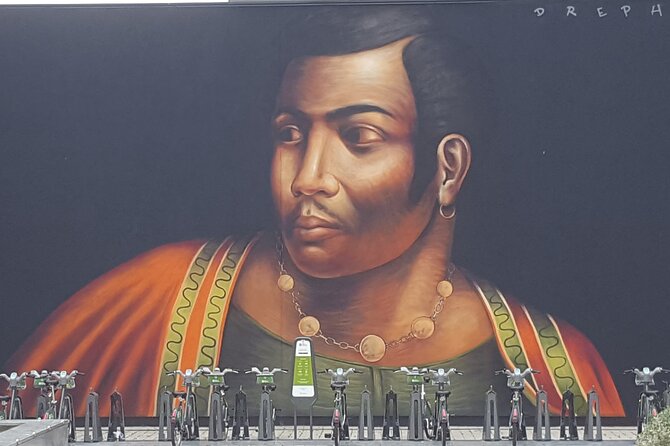
Then comes Belgrade Theatre for about 10 minutes. Around the outside of the building, artworks help tell stories of the theatre itself, Coventry’s long connection to plays, and key figures like Ira Aldridge. The guide explains that about 200 years after Othello was written, Aldridge became the first Black man to play the leading character.
This is also where you learn about three prominent women of the arts in Coventry’s history, tied into the theatre story. Even if you do not retain every name, you come away with a clearer picture of Coventry as a creative centre, not only an industrial one.
Bonds Hospital and St John the Baptist: Two Stops That Sound Like Legends
At Bond’s Hospital, you spend about 5 minutes. The building dates to 1505 and was built by Thomas Bond, and it is still used for the same purpose today. The admission is listed as not included, so it is a look and listen stop rather than a guarantee of access.
Then you reach the Parish Church of St John the Baptist for about 5 minutes. The guide shares why it is claimed to be the original of the phrase Sent to Coventry. Even if you have heard the expression before, this gives you a place you can attach it to.
These two stops matter because they show how Coventry holds onto its identity through long-standing institutions. Buildings outlast industries, and sayings outlast people. That gives the city a grounded feel.
Spon Street Trades, Coventry Market Timing, and Bull Yard Artworks
Historic Spon Street is one of the longer pauses at about 20 minutes. Your guide talks through industries like dying, tanning, watchmaking, and bicycles, and explains why Spon Street was one of the major roads in the country for centuries. You also get a reminder that things are not always what they seem in the area.
Then you do a quick pop into the Coventry Market Shopping Centre for about 5 minutes. It is not on Sundays. So if you are visiting on a Sunday, plan on skipping that moment and just expect the rest of the walk to continue.
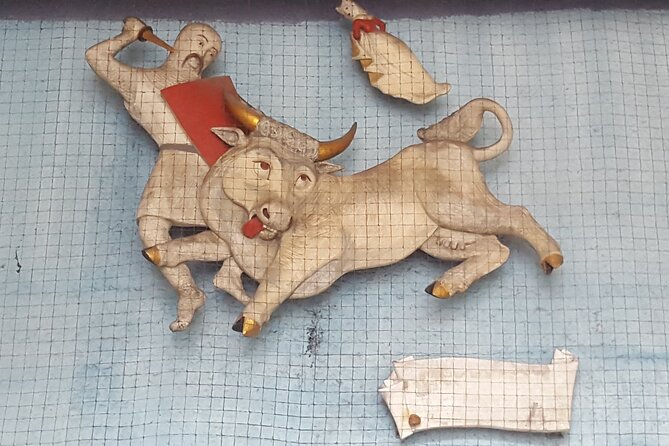
After that, Bull Yard and Shelton Square come together around 10 minutes. You hear more about the City of Tomorrow theme again, plus stories behind eclectic public artworks and what the area was like in the past.
This section is where the city feels like a living layer cake. You are seeing industrial trades, then commerce, then public art, all within walking distance.
Cheylesmore Manor House, Greyfriars Spire, and Ford’s Hospital
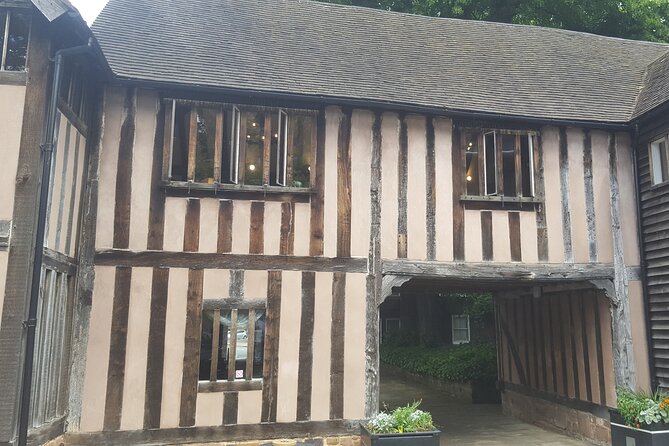
The tour continues with Cheylesmore Manor House for about 12 minutes. This is described as a 700 year old Royal Palace in the heart of the city, but admission is marked as not included. So it functions as an on-foot highlight rather than a full interior visit on this walk.
Then you reach New Union Street for about 5 minutes and hear the story of Coventry’s great survivor, Greyfriars Spire. This short stop is made to be memorable. You learn what survived, what it replaced, and why that matters in a city shaped by rebuilding.
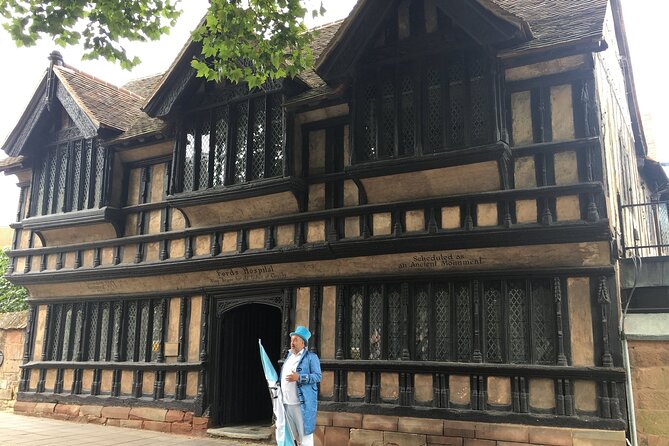
Finally, you get Fords Hospital for about 5 minutes. A travel writer in 1902 described it as one of the most exquisite things in the kingdom. It is another stop that blends local pride with an international visitor perspective, which helps you understand how the city looked to outsiders long ago.
You close with Hertford Street for a couple of minutes, meandering back to the start near Broadgate.
Weather, Comfort, and How to Make the Most of Short Stops
Because the tour is outside most of the time, weather matters. If rain or wind shows up, you might find route adjustments or a more flexible walk format, and that is exactly the kind of thing your guide can handle.
For comfort, plan for a real walking day. Bring shoes that handle a small cobbled area, and expect some inclines and ramps even though the route is mostly flat.
Language is English, so if English is a challenge, you might want to plan for a backup day plan. The good news is that the stops are short, and the guide points things out as you go, so you still get a lot even when you are not catching every sentence.
Who This Tour Suits Best, and Who Might Want to Skip It
This tour is ideal if you want Coventry as a story, not a list. It fits history lovers who like industry, invention, and city planning, and it also fits curious travelers who want to understand why a city looks the way it does.
It is also a good choice if you prefer a smaller group format. With a max of 12, the tour stays personal and easy to follow.
Skip it if you need long museum-style sessions or hands-on inside access at every stop. Several sites show admission as not included, so this is built primarily for exterior viewing and guide-led context.
Should You Book The Jigsaw of History Tour?
Yes, if you want a highly walkable Coventry orientation that connects major names, major industries, and the physical city design. The price is fair for a 2 hours 45 minutes guided experience, especially because most stops involve free viewing tickets and the story stays connected.
Also book it if you value guide energy. The strongest parts of the experience are the way your guide tells stories and keeps you entertained, with local pride that makes Coventry feel personal.
Book it smart: arrive at Broadgate near the Lady Godiva statue for an easy meetup, wear comfortable shoes for the small cobbles, and if you care about entering specific buildings, check which admission is not included ahead of time.
FAQ
Where does the tour start and end?
The tour starts at Sky Blue City Walks on Broadgate, Coventry CV1 1NE, UK. It ends back at the same meeting point.
How long is the walk, and how far do I need to be able to walk?
It is approximately 2 hours 45 minutes and just over two miles. The route is mostly flat, with some inclines and ramps, plus one small area of cobbles.
Is the tour in English, and will I get a ticket on my phone?
Yes, the tour is offered in English. You get a mobile ticket, and you will receive confirmation at booking time.
Are there any admissions included at stops?
Many stops are marked as admission ticket free. A few stops list admission ticket not included, so if you plan to go inside those sites, you may need extra payment.
Is the Coventry Market Shopping Centre stop included every day?
The market shopping centre stop is not on Sundays. The rest of the walking tour still runs as scheduled.
Can I cancel if my plans change?
Yes, you can cancel for free up to 24 hours in advance for a full refund. If you cancel less than 24 hours before the start time, the amount paid will not be refunded.
Latest to join the queue for Coventry




Historical Tours, compared.
London Small Group Tour of Historical Pubs
Read our review →
Shadows of York: Ghost Walk and Horrible History.
Read our review →
A Walk Through Time: History of Liverpool Walking Tour
Read our review →
Royal Historic Pubs Walking Guided Tour in London
Read our review →
Private Group: Historical Pub Walking Tour of London
Read our review →
Best Of Liverpool Heritage, History & Culture Guided Walking Tour
Read our review →Browse the lists this tour appears in