
Reviewed · SELF-GUIDED TOURS
Private Manchester Self-Guided Tour
Manchester is easy to love. This self-guided walk turns it into a smooth, on-the-ground route, with GPS maps to keep you moving and audio stories by Jake. You get a focused tour of the city centre sights without waiting for a group, and you can replay it for weeks after you start.
I especially liked the practical way it handles navigation and timing. The route-style structure, plus Jake’s audio guide (not a robot voice), makes it feel like you’re getting oriented while you walk. The main thing to weigh is that it is app-based, not a live guided tour, so you need your phone charged and ready.
If you’re the kind of traveler who enjoys choosing your own pace, this can be a great value at $12.35 per person for a 2 to 3 hour loop through major sights. Just be honest with yourself about whether you want to troubleshoot an app first, because a few people found setup annoying or draining on battery.
In This Review
- Key highlights worth planning around
- What you get from this Manchester self-guided tour
- Price and value: when $12.35 makes sense
- Getting the app running: GPS permission and battery sanity checks
- The route flow: from Vimto Park to Deansgate and Roman Manchester
- Stop-by-stop: Vimto, Alan Turing, Canal Street, and Chinatown
- Stop 1: A Monument To Vimto at Vimto Park
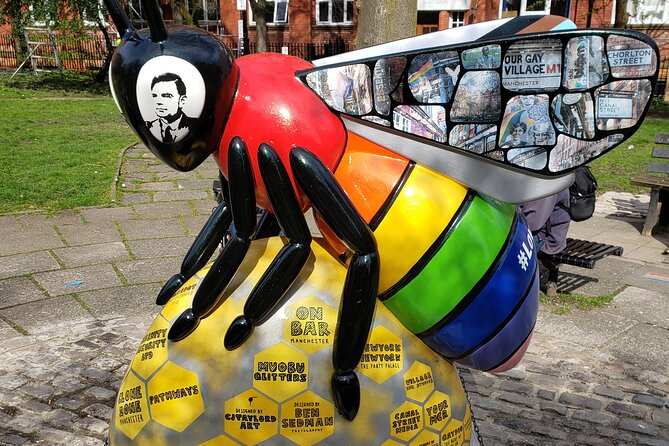
- Stop 2: Alan Turing Memorial, tied to Sackville Gardens
- Stop 3: The Gay Village and Canal Street
- Stop 4: Chinatown archway
- St Peter’s Square to Bridgewater Hall: civic buildings and station-era stories
- Stop 5: St Peter’s Square and the buildings around it
- Stop 6: The Bridgewater Hall and nearby station history
- Royal Exchange Theatre, The Shambles, and Manchester’s industry fingerprints
- Stop 7: Royal Exchange Theatre and the cotton industry
- Stop 8: The Shambles
- Manchester Cathedral and John Rylands Library: decide what to pay for
- Stop 9: Manchester Cathedral (entry not included)
- Stop 10: John Rylands Library, the one people call Harry Potter-ish
- Castlefield Urban Heritage Park and the canal walk near Deansgate
- Stop 11: Castlefield Urban Heritage Park
- The Guardian Telephone Exchange: a best kept secret stop
- Midland Hotel: architecture with old-city stamina
- Manchester Central, Corn Exchange, and the pub history finale
- Manchester Central (former station history)
- Corn Exchange: from 1837 trade to today’s listed building
- Old Wellington and Sinclair’s Oyster Bar
- Who this tour is for, and who should skip it
- Should you book this Private Manchester Self-Guided Tour?
- FAQ
- Is there a live guide on this tour?
- How long does the tour take?
- Where does the tour start and end?
- What language is the tour available in?
- Do I need to download anything to take the tour?
- Does the tour include GPS navigation?
- Are entrance tickets included?
- Is it private?
- How long do I have access to the tour after booking?
- Is it refundable if I cancel?
Key highlights worth planning around
- Jake’s spoken audio keeps the tour human, with stories you can hear while you walk.
- GPS route and stop-by-stop navigation means you are not hunting streets for long.
- 18 stops across the city centre pack in tech, architecture, industry, and pubs.
- Most stops are free to view, with only a couple places where entry fees can apply.
- 3 weeks of app access lets you revisit or redo sections if you move slowly.
What you get from this Manchester self-guided tour
This is a private Manchester walking tour done through an app, not a person with a microphone. You start at Vimto Park in Manchester (M1), then work your way through key neighbourhoods and landmarks, and the experience finishes around Castlefield Bowl, near Deansgate and the Roman Fort area (M3).
The big selling point is that you are not “wandering blind.” The app provides maps, directions, and a GPS route that ties each audio segment to a physical location. That matters in Manchester, where big streets and busy junctions can make a self-walk feel like work. Here, the design aims to keep the walk smooth, stop after stop, for about 2 to 3 hours.
The audio itself is another strong element. Jake guides you through the audio tour with videos, pictures, and recommendations built into the app. And because it is self-paced, you can pause for photos, step inside a shop, or linger when a building catches your eye.
If you go in expecting a live tour, you’ll likely feel annoyed. If you go in prepared for an audio walk, it can be a very efficient way to see a lot without overplanning.
Also on in Manchester, no fuss
Price and value: when $12.35 makes sense
At $12.35 per person, this sits in the “budget-friendly” category for city sightseeing. You are essentially paying for three things:
1) a curated walking route through famous sights
2) audio stories that give you context as you pass them
3) 3 weeks unlimited access so you can reuse the same route later
A traditional guided tour often costs far more, and you still have to match someone else’s schedule. Here, you get a private experience, with only your group participating, while still seeing the landmarks that usually require a lot of backtracking if you DIY everything.
The value gets even better if you:
- want an orientation walk on day one
- like independent pacing
- enjoy history that is tied to street-level places, like pubs, libraries, and former stations
The one scenario where value drops is if the app setup takes longer than you planned, especially if your phone battery is already low.
Getting the app running: GPS permission and battery sanity checks
Because the tour is GPS-led, you want to treat your phone like part of your gear.
Do a quick checklist before you head out:
- Charge your phone fully, or bring a power bank.
- Make sure the app can access your location so the GPS tracking works properly.
- Read the activation instructions in your email. The provided guidance says your booking reference is not the code, so rely on what the email tells you to do.
Some visitors ran into technical friction, including code problems and battery drain. I’d call that out as your main planning consideration. Even if the tour is easy once running, you do not want your walk to turn into a help-chat marathon in the middle of St Peter’s Square.
Tip: start early in the day if possible. If you hit a snag, you still have time to regroup, grab lunch, and come back with a calmer head.
The route flow: from Vimto Park to Deansgate and Roman Manchester
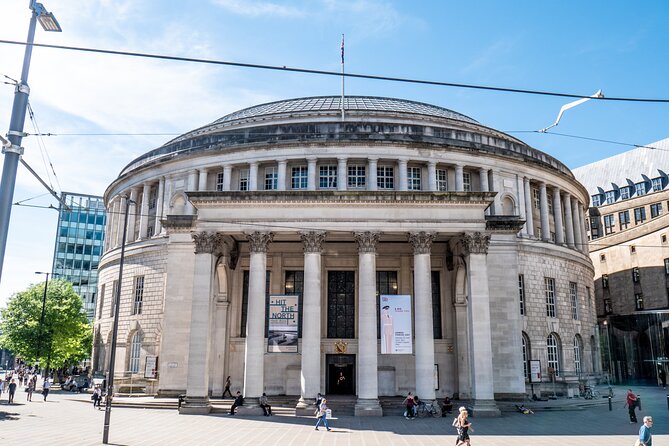
The structure is designed like a city-centre loop. You start with the story behind a famous local soft drink at Vimto Park, then you move into areas tied to tech, identity, and the city’s changing industries.
As you keep walking, the landmarks naturally cluster into a few themes:
- Culture and identity: Alan Turing, the Gay Village, Chinatown
- Civic and architectural power: St Peter’s Square, Manchester Town Hall, libraries, theatres
- Industry and its consequences: cotton trade, Manchester’s former rail history
- Old streets and pubs: places like The Shambles and the Old Wellington
- Early Manchester roots: Castlefield’s Roman heritage and the canal-side area near Deansgate
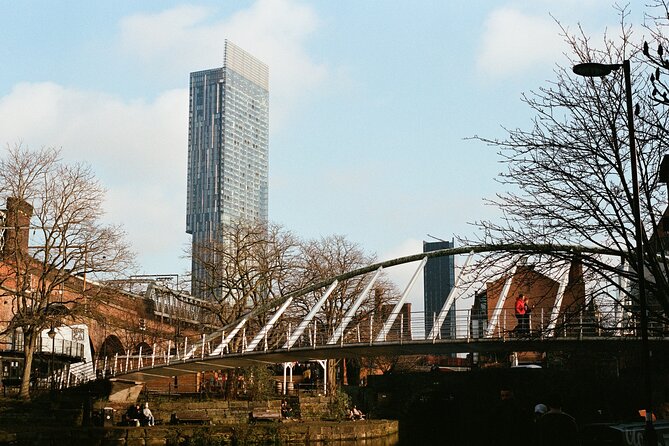
You finish near Deansgate, where the story shifts from “what happened” to “how the city grew.” There is also a stop that helps you spot something many people miss: the Guardian Telephone Exchange, described as a best kept secret.
In plain terms, it is a well-chosen walk if you want a first-time Manchester overview that still feels specific.
Stop-by-stop: Vimto, Alan Turing, Canal Street, and Chinatown
While the kettle’s on in Manchester:
- Alcotraz Prison Cocktail Experience in Manchester★ 5.0 · 1,216 reviews
- LEGOLAND Discovery Centre Manchester★ 4.0 · 1,049 reviews
- Manchester Afternoon Walking Tour★ 5.0 · 1,033 reviews
- SEA LIFE Manchester Admission Ticket★ 4.0 · 1,007 reviews
Stop 1: A Monument To Vimto at Vimto Park
This is where you start, at the place tied to the history of the famous North-made soft drink Vimto. You’ll get a quick overview of the full tour first, then at this stop the audio focuses on the soft drink’s origins in this location.
Why it works: it gives you a local hook right away. Manchester is not only about football and buildings. It is also about everyday inventions and the businesses that shaped the North.
Stop 2: Alan Turing Memorial, tied to Sackville Gardens
Next you’ll hear who Alan Turing was and why he matters to Manchester. The audio also gives practical context for Sackville Gardens and its monuments, so you know what you’re looking at instead of just walking past it.
Stop 3: The Gay Village and Canal Street
From there the tour guides you around the Gay Village, including a stroll along Canal Street. You’ll learn about a darker past, then how people helped turn the area into the street scene you see today.
This is one of those stops where an audio walk adds value fast. Without context, you’d see an active street. With context, you understand the layers.
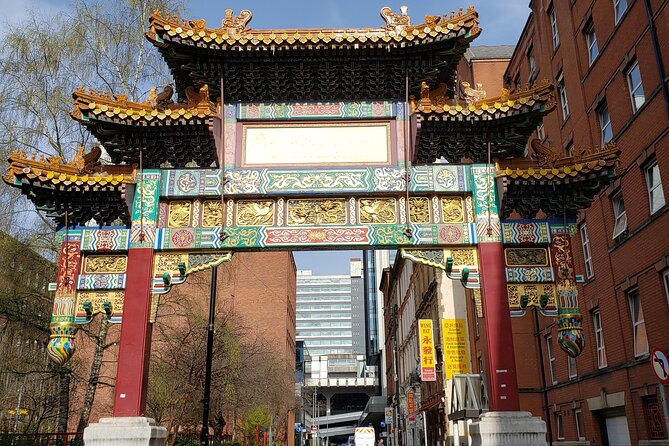
Stop 4: Chinatown archway
The tour then heads to Chinatown, starting at the archway. You’ll get stories about Manchester’s relationship with a city in China and why the archway is here.
This is a good spot for photos because it is a clear landmark you can frame while you listen.
St Peter’s Square to Bridgewater Hall: civic buildings and station-era stories
Stop 5: St Peter’s Square and the buildings around it
St Peter’s Square is where the tour leans into architecture and civic identity. You’ll hear about:
- Manchester Central Library, described as the oldest free library in the country
- The Midland Hotel, one of the early luxury hotels in the North
- Manchester Town Hall, noted as one of the country’s most beautiful town halls
The audio also explains why the place is called St Peter Square, and it includes stories tied to what happened here.
If you like buildings but hate reading long plaques, this stop is for you. You get the why and the story behind the stone.
Stop 6: The Bridgewater Hall and nearby station history
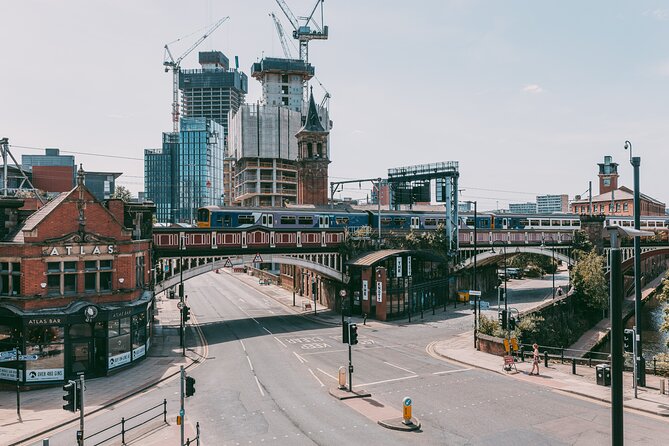
At the Bridgewater Hall area, the tour connects the present-day venue feel with darker tales linked to Manchester Central Station. You’re told about two major incidents tied to 1819 and 1963.
This is a reminder to slow down for the pause. If you are listening at speed, you can miss details like dates and why the stories linger.
Royal Exchange Theatre, The Shambles, and Manchester’s industry fingerprints
Stop 7: Royal Exchange Theatre and the cotton industry
Here you focus on Manchester’s cotton story and what came from it. You’ll learn about how the cotton industry grew and how that shaped the city, plus how the Royal Exchange Theatre fits into that narrative.
You also get the story of the IRA Bomb and how it affected Manchester.
Stop 8: The Shambles
This stop is built around a cluster of street life and older corners of the centre. You’ll learn about The Shambles as a particularly beautiful square, then hear the history behind the oldest pub in town, plus why it is often full and relatively cheap.
You’ll also get a connection between the cotton boom and trade opportunities through the Royal Corn Exchange nearby.
If you want a walking tour that ends in food or a drink without feeling touristy, this is where that energy starts.
Manchester Cathedral and John Rylands Library: decide what to pay for
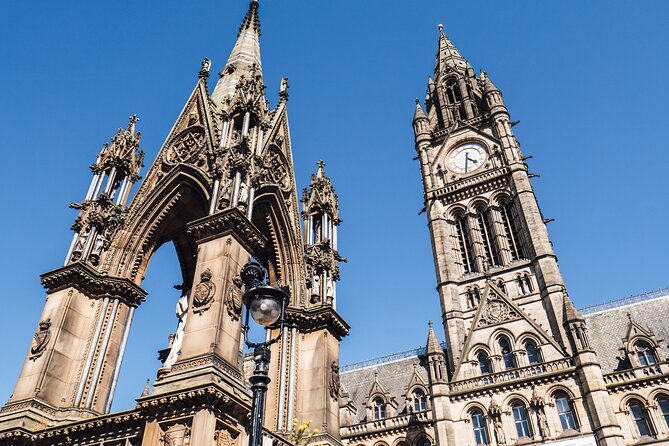
Stop 9: Manchester Cathedral (entry not included)
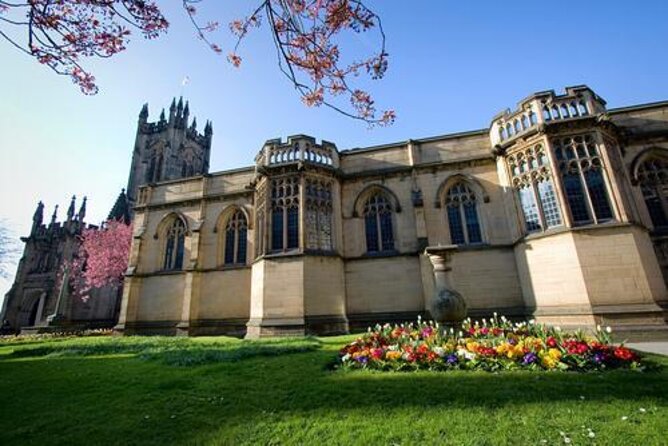
The tour takes you to Manchester Cathedral, described as the mother church of the Anglican Diocese and the seat of the Bishop of Manchester. It’s presented as a must-see as you pass.
Since admission is not included here, you can likely decide on the spot whether to go inside. If you like quiet interiors, you might budget extra time and money.
Stop 10: John Rylands Library, the one people call Harry Potter-ish
Next is John Rylands Library, described as one of Manchester’s best-kept secrets and a striking interior space. The audio encourages you to consider going inside because the grace is on the inside.
Again, admission is not included. This is one of the few times you may want to check your schedule and money before committing, because it can turn a quick stop into a longer one.
Castlefield Urban Heritage Park and the canal walk near Deansgate
Stop 11: Castlefield Urban Heritage Park
This stop shifts to Manchester’s beginnings, with a focus on Roman heritage. You’ll hear about reconstructed Roman buildings and why the city is called Manchester.
The tour then lets you stroll around the canals of Deansgate, with a list of recommendations for things to do and places to eat around the area.
For me, this is the payoff for the whole route. The centre stops tell you what Manchester built. Castlefield helps you see what it grew from.
The Guardian Telephone Exchange: a best kept secret stop
The walk also includes the Guardian Telephone Exchange, described as the Best kept secret in Manchester. This is a great example of the tour’s style: you get told what to notice in places that can look ordinary from street level.
Midland Hotel: architecture with old-city stamina
You’ll get an audio stop at the Midland Hotel, described as a centre-of-life landmark for over 118 years. The theme is the architecture and stories that happened there over time.
If you are into grand buildings, this is where you’ll slow down for photos.
Manchester Central, Corn Exchange, and the pub history finale
Manchester Central (former station history)
The tour continues to Manchester Central, which is now a convention centre. The audio explains it used to be Manchester Central Train Station by the Midland Railway.
You’ll also hear two mystery-style stories: one tied to a massacre described as among the worst the North has ever seen, and another about a mysterious suitcase left in 1965.
Even if you are not a “train history” person, stations in old cities hold major plot points. This stop frames why.
Corn Exchange: from 1837 trade to today’s listed building
Next is the Corn Exchange, described as the first built on this site in 1837. You’ll learn how it became a listed building and how it houses a food court, a hotel, and more.
This is practical context, not just trivia. It helps you understand why the building looks the way it does now.
Old Wellington and Sinclair’s Oyster Bar
The final pub-focused stop is The Old Wellington and Sinclair’s Oyster Bar, presented as one of the oldest in the city centre. The audio references John Shaw’s Punch House and connects that history to why many people visit today.
If you time it right, this is a satisfying end point for a drink or a meal near where the tour wraps.
Who this tour is for, and who should skip it
This is a strong choice for:
- first-time visitors who want an overview of major Manchester landmarks in one go
- independent travelers who like choosing pace and not waiting for a group
- people who enjoy audio narration tied to places, especially with a real voice from Jake
It may be the wrong fit if:
- you want a live, in-person guide answering questions in real time
- you hate troubleshooting apps on vacation
- you rely on low-battery phones and do not travel with a charger
Should you book this Private Manchester Self-Guided Tour?
I’d book it if you want a structured walk with GPS guidance and audio stories, and you are comfortable using your phone as part of the trip. At $12.35 per person, it is a low-risk way to get your bearings through tech, civic buildings, industrial-era sites, and classic pub areas.
I would pause before booking if you dislike app-heavy experiences or you know your phone struggles with GPS. In that case, you may end up spending more time fixing access than sightseeing.
If you decide to go, do one thing that makes a huge difference: charge your phone and test the app before you step into your first landmark stop. Then enjoy the walk.
FAQ
Is there a live guide on this tour?
No. This is an app-based self-guided experience with audio guidance from Jake.
How long does the tour take?
The tour is designed for about 2 to 3 hours.
Where does the tour start and end?
It starts at Vimto Park, Manchester M1, UK. It ends at Castlefield Bowl on Rice St, Manchester M3 4JR, near Deansgate and the Roman Fort area.
What language is the tour available in?
The tour is offered in English.
Do I need to download anything to take the tour?
Yes, you access it through the app. You also receive an email with instructions to activate your tour.
Does the tour include GPS navigation?
Yes. You get a map, directions, and a GPS route with stops.
Are entrance tickets included?
Most stops are listed as free to view. Manchester Cathedral and John Rylands Library are noted as not included, so you would need to pay if you choose to enter.
Is it private?
Yes, it is private. Only your group will participate.
How long do I have access to the tour after booking?
You have 3 weeks of unlimited access to the self-guided tour on the app.
Is it refundable if I cancel?
No. The experience is non-refundable and cannot be changed.
Latest to join the queue for Manchester






Self-Guided Tours, compared.

Golden Tours York Hop-on Hop-off Open Top Bus Tour with Audio Guide
Read our review →
Windsor Castle Tour from London with Transportation & Audio Guide
Read our review →
London Panoramic Open Top Bus Tour with Audio Guide
Read our review →
Romans, Vikings and Medieval York: An Audio Tour
Read our review →
Emirates Stadium and Arsenal Museum Entrance Ticket Including Audio Guide
Read our review →
Private Self-Guided Dinky Door Hunt in Cambridge
Read our review →
Natural History Museum Express Guided Tour & Audio Guide
Read our review →Browse the lists this tour appears in