
Reviewed · HISTORICAL TOURS
London Past & Present Backstreet Historical Tour
London in one smart walk? Yes.
This Past & Present Backstreet Historical Tour strings together 2000 years of London in a practical route, with a guide who narrates, answers questions, and helps you connect the dots between places you usually treat as separate stops. Starting at 1 Cheapside and finishing by Tower Hill, it mixes classic landmarks with quieter lanes and markets so you get a fuller sense of how the city grew and rebuilt itself.
I especially like the mix of big-name sights and street-level stories. You’ll see the Shakespeare’s Globe area (including the original Globe site) while walking past the modern Globe, then shift to market London at Borough Market and Leadenhall Market. I also like how the route frames key events, like the history around London Bridge and the Great Fire of London, and you even get references to older layers like Roman remains along the way.
One thing to consider: it’s a short 1 to 2 hour walking tour, so you get great context, not long stays inside major attractions. If you want extended time for photos, museum interiors, or sitting down for a full meal stop, you may feel slightly rushed.
In This Review
- Key highlights to know before you go
- Starting at Cheapside, then tracing 2000 years on foot
- Shakespeare’s Globe site: original history, modern theatre, zero ticket hassle
- Borough Market: where you can taste the city’s long memory
- Leadenhall Market: classic covered London with a movie connection
- London Bridge and the Great Fire story you can walk through
- Tower Bridge and Tower Hill: the finish that sets you up for more exploring
- Price and value: what $94.61 really buys you
- Who this tour fits best (and who might want something else)
- Practical tips for enjoying the full route
- Should you book London Past & Present Backstreet Historical Tour?
- FAQ
- How long is the London Past & Present Backstreet Historical Tour?
- How much does the tour cost?
- Where does the tour start?
- Where does the tour end?
- Is the tour in English?
- What’s included in the price?
- Are gratuities included?
- How big is the group?
- Is it close to public transportation?
- What is the cancellation policy?
Key highlights to know before you go
- Small group size up to 12 for more time with your guide and better question time
- Shakespeare’s Globe area plus a walk past the modern theatre, without the usual tourist swirl
- Borough Market and Leadenhall Market to experience how London eats, not just how it looks
- London Bridge and Great Fire stories tied directly to what you can see on the street
- Tower Bridge and Tower Hill finish so you can end with big views and easy onward plans
Starting at Cheapside, then tracing 2000 years on foot
The tour starts at 1 Cheapside (EC2V 6AA), which is a convenient jumping-off point because you’re already in the city’s core business area. From there, you walk with narration that’s built around one idea: London keeps changing, and the past is still layered underneath what you see today.
A big plus is that the first stretch gives you a mental map fast. Your guide sets up what you’re about to see, describing how each area relates to the next. That matters because London can feel random if you only hit isolated landmarks. With a route like this, you start linking eras together, from medieval and early modern London up through more recent rebuilding and famous sites.
Pace-wise, think steady city walking. It’s not a long hike, but it is a real walking tour. Wear shoes that can handle uneven sidewalks and quick changes in street surface around markets and older neighborhoods. This tour style works best if you’re the type who enjoys hearing the story right where the story happened.
More kings, plagues and great fires:
Shakespeare’s Globe site: original history, modern theatre, zero ticket hassle
One of the first stops centers on Shakespeare’s Globe Theatre. You’ll visit the site of the original Globe and also walk past the newer Globe theatre. The practical win here is that you can appreciate the connection to Shakespeare without needing extra paid entry for the stop itself, since this portion is listed as ticket free.
What makes this worthwhile is the contrast. You’re not just looking at a modern building and guessing what came before. You get both sides of the story: where the original company would have staged plays, and how the modern Globe relates to that legacy today. Even if you only know a couple Shakespeare works, your guide’s narration helps you place the theatre in the real geography of London.
If you like theatre history, you’ll probably enjoy the chance to stand in the right area and hear how the Globe fits into the city’s culture. If you don’t consider yourself a Shakespeare person, it still works because the tour uses the theatre as a gateway to understanding London’s entertainment and social life, not just its royal or military chapters.
Borough Market: where you can taste the city’s long memory
Next comes Borough Market, described as the oldest market in London. This is about more than shopping. It’s about seeing how London feeds itself and how food culture survives citywide upheaval.
You get a short, focused stop here, about 20 minutes. That’s enough time to walk through, read the atmosphere, and maybe grab a small snack if you want one, without turning the tour into an hour-long detour. If you do buy food, keep it light and portable so you don’t slow the group.
The most useful way to enjoy this stop is to look at it like a living museum. Your guide’s narration can connect the market to how people moved through the city, traded goods, and gathered socially. Even if you’re not planning a big meal, Borough Market gives you a sensory break, and it helps break up the heavier historical talking points so the tour doesn’t feel like a lecture.
Potential drawback: since this is a food market, it can get busy. If you’re sensitive to crowds, plan to keep moving and treat the stop like a quick immersion, not a linger-and-stare experience.
Leadenhall Market: classic covered London with a movie connection
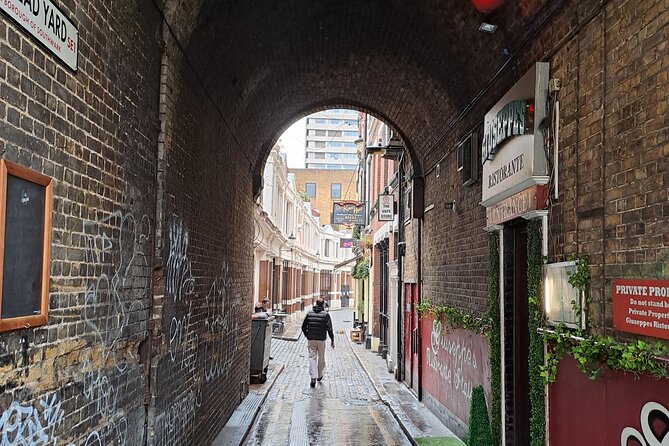
After Borough, the route includes Leadenhall Market. It’s known for its old styled looks, and the tour notes its connection to Harry Potter filming. This kind of stop is valuable because it shows you London as a set of working spaces, not only monuments.
Leadenhall Market is the sort of place where architecture and daily life overlap. You can look up and notice the structure, then immediately feel how the space is used by pedestrians in real time. If you’re a Harry Potter fan, the movie link gives you another layer of recognition, but even if you never watched the films, the market setting is still a nice change from the open streets around it.
Since the itinerary information doesn’t give a fixed duration for this stop, expect it to be flexible based on the group and the flow of walking. This is another reason good shoes matter, especially if you encounter tighter areas or slower pedestrian movement.
London Bridge and the Great Fire story you can walk through
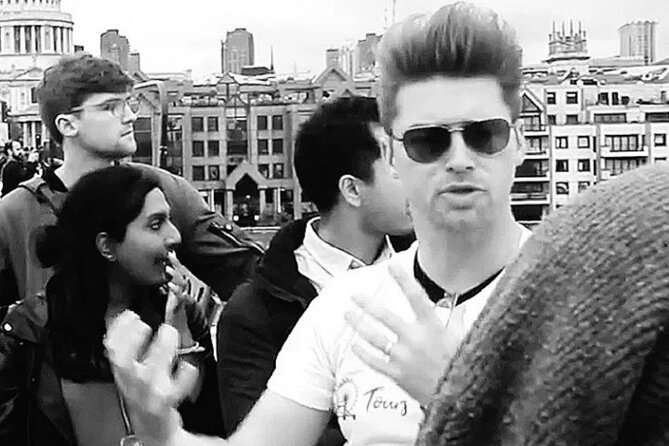
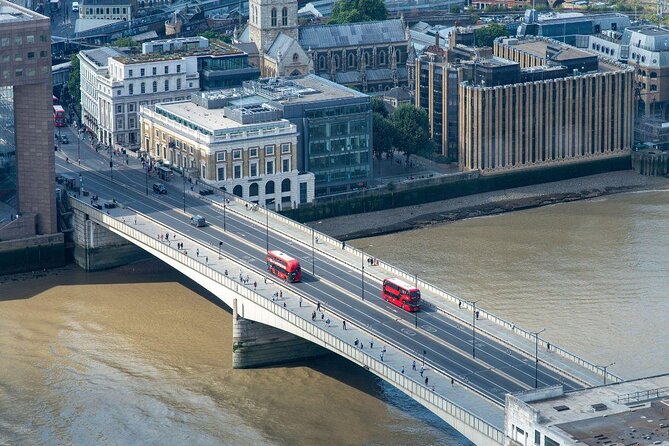
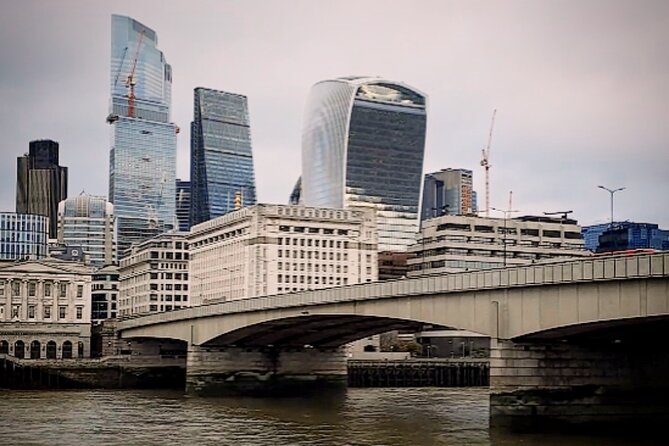
Then you move to London Bridge, with a short stop (about 10 minutes) designed to put you in the right place for the story. The tour frames the bridge’s past as a series of dramatic moments in London’s evolution, including the city’s rebuilding after major disasters.
The most compelling part is how the Great Fire of London is handled: not as a textbook fact, but as a local turning point tied to what you’re seeing. Even if you already know the basic outline, hearing it anchored to the bridge and nearby streets helps it become real. You start understanding why certain areas changed and why materials, planning, and building habits mattered.
If you like history that explains why cities look the way they do, this section is a strong fit. You’ll come away with a clearer sense of cause and effect, why London’s layout feels the way it does, and how catastrophe shaped the city’s next steps.
Quick practical note: bridges and river-adjacent areas can feel windy, especially when clouds roll in. Bring a layer you can tolerate for 10 to 20 minutes outdoors.
Also on in London, no fuss
- Stonehenge, Windsor Castle, and Bath from London★ 4.5 · 18,662 reviews
- London Big Bus Hop-On Hop-Off Tour with Optional River Cruise★ 3.5 · 10,803 reviews
- Stonehenge, Windsor Castle and Bath with Pub Lunch in Lacock★ 4.5 · 7,402 reviews
- Tower of London and Crown Jewels Exhibition Ticket★ 4.5 · 6,677 reviews
Tower Bridge and Tower Hill: the finish that sets you up for more exploring
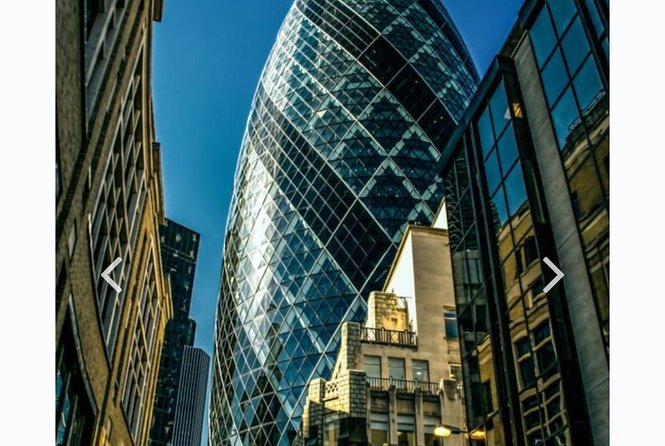
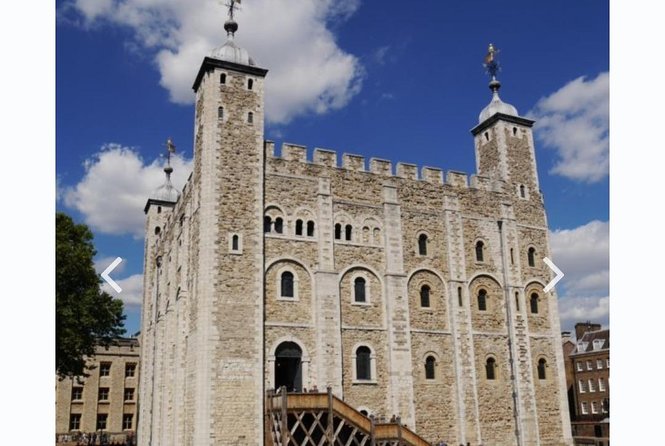
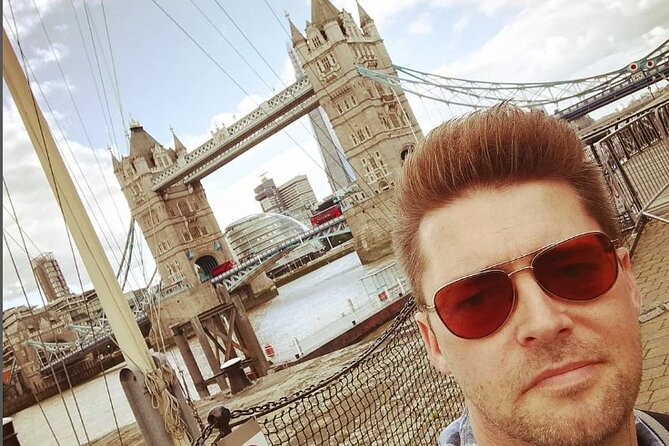
The tour finishes with Tower Bridge and views toward the Tower of London from the Tower Hill area. The itinerary also mentions a short walk that can connect you toward London Bridge, Brick Lane, and Whitechapel afterward, which is handy if you want to continue on your own without thinking too hard about transit.
Finishing near Tower Hill is smart. It gives you big visual payoff at the end of a compact walking route. Even if you’ve already visited the Tower of London before, you’re likely to enjoy the way the tour brings you into the area with context, instead of arriving cold and only seeing one era at a time.
From a planning standpoint, this ending spot is also practical. Tower Hill Station is nearby, so if your next stop is elsewhere, you can keep your day moving. And if you do want to linger for photos, you’re in a strong position to do it right after the tour finishes.
Price and value: what $94.61 really buys you
At $94.61 per person, this isn’t a bargain tour, but it doesn’t feel overpriced if you treat it as a history-guided walk with multiple high-value stops. Here’s why: you’re paying for a professional guide, a small group (maximum 12), and structured storytelling that connects sites instead of just pointing at them.
Also, several stops are listed as ticket free, including the Shakespeare’s Globe site area, Borough Market, and the London Bridge portion. That means you’re not hit with extra admission costs at each turn. You’re mainly paying for interpretation, pacing, and a route that saves you from building your own itinerary in the moment.
Duration matters too. In 1 to 2 hours, you can get a lot of directional clarity for the rest of your London trip. It’s a good “first connect the dots” activity if you’re trying to reduce decision fatigue later.
If you’re traveling with limited time, this makes sense. If you have the whole day and prefer slow, self-guided exploring, you might question whether the cost fits your style. But if you want the city’s layers explained while you walk, this format is a solid value.
Who this tour fits best (and who might want something else)
This experience is especially suited to people who want less touristy street corners while still seeing key London landmarks. With a small group cap and guided Q&A, it’s easier to ask follow-up questions than on the huge bus-style tours.
It also fits history fans who enjoy stories about how everyday places, like markets and bridges, connect to major events. The mix of Shakespeare’s cultural impact, market life, bridge history, and the Great Fire storyline gives you variety without losing a clear through-line.
You might want a different type of tour if you’re looking for long indoor time at major attractions, or if you dislike walking in short bursts between multiple locations. This one is built for movement, not extended museum-style stays.
Practical tips for enjoying the full route
A few small choices can make the tour smoother:
- Bring comfortable shoes. You’re moving through older streets and market areas.
- Keep your phone charged. You’ll want photos near the bridges and at the finish by Tower Hill.
- Think of this as a storytelling route. If you’re only hunting for photo angles, you can miss the value of the guide’s context.
- If the guide offers food or activity suggestions, take them. The guide Chris is praised for restaurant and activity ideas, which is the kind of practical help you can use right away.
Finally, plan your day so you’re not rushing right after the tour ends. The Tower Hill finish is a good place to transition into another neighborhood walk, or to get transit and continue exploring with better context than when you started.
Should you book London Past & Present Backstreet Historical Tour?
I’d book it if you want a guided route that links London’s famous sites to the streets and markets around them, in a short, manageable walking format. The small group size, the guide-led narration and Q&A, and the stops that are ticket free make it feel efficient, not money-draining.
Skip it only if you need long time inside big attractions or you prefer totally self-directed wandering. If your goal is to get your bearings fast and understand why different parts of London developed the way they did, this is a strong pick.
FAQ
How long is the London Past & Present Backstreet Historical Tour?
The tour lasts about 1 to 2 hours.
How much does the tour cost?
The price is $94.61 per person.
Where does the tour start?
The meeting point is 1 Cheapside, London EC2V 6AA, UK.
Where does the tour end?
The tour ends near Tower Hill, London EC3N, by the Tower of London next to Tower Hill Station.
Is the tour in English?
Yes, it is offered in English.
What’s included in the price?
The tour guide is included.
Are gratuities included?
No, gratuity is not included.
How big is the group?
The maximum group size is 12 travelers.
Is it close to public transportation?
Yes, it is near public transportation.
What is the cancellation policy?
You can cancel for free up to 24 hours in advance of the experience start time for a full refund. If you cancel less than 24 hours before, the amount paid will not be refunded.
Latest to join the queue for London


Historical Tours, compared.
London Small Group Tour of Historical Pubs
Read our review →
Shadows of York: Ghost Walk and Horrible History.
Read our review →
A Walk Through Time: History of Liverpool Walking Tour
Read our review →
Royal Historic Pubs Walking Guided Tour in London
Read our review →
Private Group: Historical Pub Walking Tour of London
Read our review →
Best Of Liverpool Heritage, History & Culture Guided Walking Tour
Read our review →Browse the lists this tour appears in