
Reviewed · CHURCHILL & WWII LONDON TOURS
London Blitz Walking Tour: Explore City of London Wartime History
The City of London has scars you can still read. This London Blitz walking tour turns famous landmarks, like St. Paul’s, into a clear route through everyday wartime fear, courage, and survival. I especially love how the guide makes the stories personal and easy to follow, and I also like the small group feel, so you can ask questions and go at a sensible pace. One possible drawback is that a couple of the most famous spots along the way, like St. Paul’s and the Tower, are not included for entry, so you may need to plan if you want to go inside.
You start and finish in the City, with a tight walk that fits neatly into a half-morning or early afternoon. And because the stops are spaced out, the “what happened here” details have time to land, rather than feeling like a rushed history lecture. If you want only big museum exhibits or only free indoor attractions, you might find this leans more toward streets, ruins, and narration than formal galleries.
In This Review
- Key things to look forward to
- Why this London Blitz walk hits harder than a big museum day
- Starting at the National Firefighters Memorial, and what the pacing feels like
- St. Paul’s Cathedral, a skyline survivor after the Blitz
- Christchurch Greyfriars, church ruins turned into a memorial garden
- Bank Station on Jan 10, 1941, when shelters failed civilians
- St. Dunstan-in-the-East, ruins that became a place to heal
- All Hallows by the Tower, a refuge in a violent air-raid world
- Tower of London and Josef Jakobs, the spy story at the end
- Guide quality and why the narration makes the walk work
- Price, value, and what you get for the money
- Who this tour suits best, and who might want to pick something else
- Practical tips to make your Blitz walk easier
- Should you book this London Blitz Walking Tour?
- FAQ
- How long is the London Blitz Walking Tour?
- Where does the tour start and end?
- What is the meeting time?
- Is the tour wheelchair accessible or designed for any special mobility needs?
- Is admission to St. Paul’s Cathedral and the Tower included?
- Are any stops free?
- Can I cancel for a full refund?
Key things to look forward to
- St. Paul’s Cathedral as a wartime symbol, including how it survived direct hits and why firefighters mattered
- Ruins that still feel calm, at Christ Church Greyfriars, where a memorial garden protects the memory
- A painful, specific tragedy at Bank, linked to a station bombing while civilians sheltered underground
- Two churches reduced to peaceful reminders, St. Dunstan-in-the-East and All Hallows by the Tower
- Tower of London spy drama, focused on Josef Jakobs and the role of intelligence in WWII
- A small group max of 20, plus English narration and a pace that works for real humans, not tour robots
Why this London Blitz walk hits harder than a big museum day
There are lots of WWII stories about London. This tour makes you walk the geography of those stories. You are not just hearing the Blitz in the abstract, you are moving through the City of London where raids, shelters, and survival unfolded in real space.
What I like most is the mix. You get heavyweight symbolism, like St. Paul’s Cathedral, alongside quieter memorials and church ruins that don’t ask for your attention, but earn it once you understand what you are looking at. It feels like history you can actually locate with your own eyes.
More Guided Walks in London


Starting at the National Firefighters Memorial, and what the pacing feels like
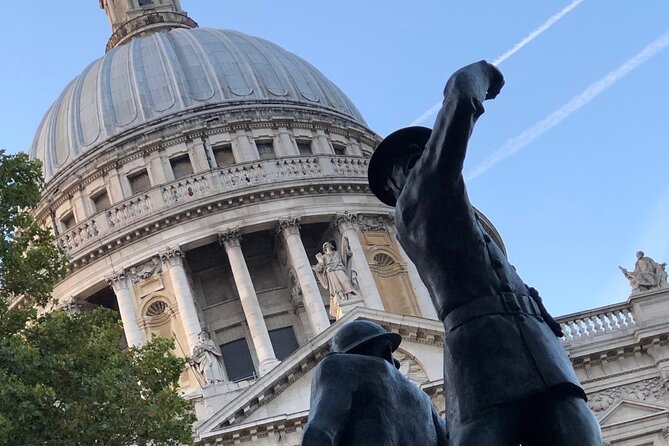
The walk begins at the National Firefighters Memorial in the City, a solid central starting point that keeps logistics painless. The tour runs about 1 hour 30 minutes, and you’ll be moving steadily, but not at a sprint. Each stop is roughly 15 minutes, which gives you time to listen, look around, and reset before the next story.
You also stay close to transit options, so if you are pairing this with other City sights, it fits well. The group size is capped at 20 travelers, which usually means you can hear the guide without leaning, and you can keep the walk from turning into a line of silent shoulder-to-shoulder marching.
Comfort note: the tour calls for moderate physical fitness. If you can handle an urban walk with some standing and uneven sidewalks, you should be fine.
St. Paul’s Cathedral, a skyline survivor after the Blitz
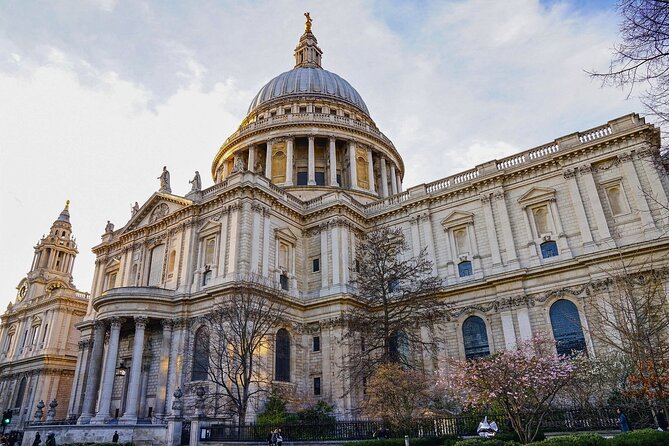
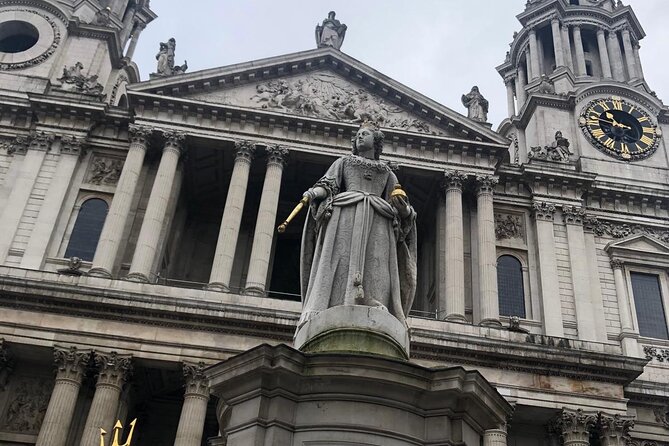
Stop one is St. Paul’s Cathedral, and it’s hard to overstate how effective it is as a starting point. St. Paul’s wasn’t just an impressive building. During the Blitz, it became a kind of visual promise, a landmark that helped Londoners feel like the city could take a hit and still hold.
The guide focuses on the cathedral’s survival, including the fact that it faced direct hits and still stood tall. You’ll also hear the human side of that survival, especially the bravery and hard work of the firefighters who tried to protect it while the city burned and the raids kept coming.
What you’ll want to decide ahead of time: do you want only the outside story, or do you want to go inside? Admission is not included for the cathedral, so plan that if entry matters to you.
Christchurch Greyfriars, church ruins turned into a memorial garden
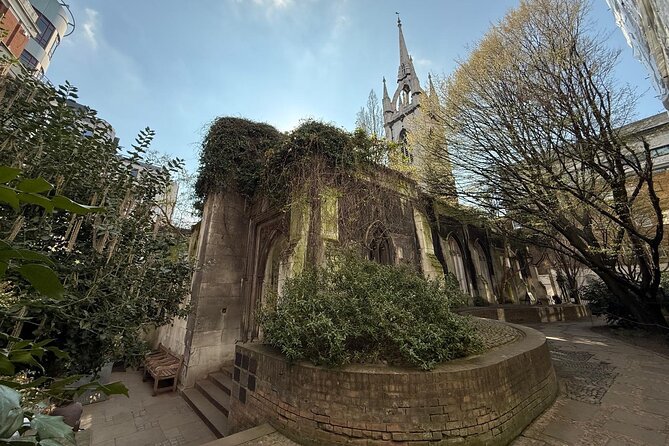
Next up is Christ Church Greyfriars Church Garden. This is one of the best places to slow down. You are looking at remnants of a church destroyed in the Blitz, and the area today has a calmer mood than you might expect for such a heavy site.
The point here is not just that the building was lost. It’s that the ruins were preserved deliberately, so the memory of suffering stays present rather than disappearing under redevelopment. The garden setting helps you absorb that idea without feeling like you are staring at damage for damage’s sake.
This stop is free, and it’s also a nice mental palate cleanser after the emotional intensity of St. Paul’s. You’ll likely find yourself standing quietly a bit longer than you planned, because it’s easier to let the story settle.
Bank Station on Jan 10, 1941, when shelters failed civilians
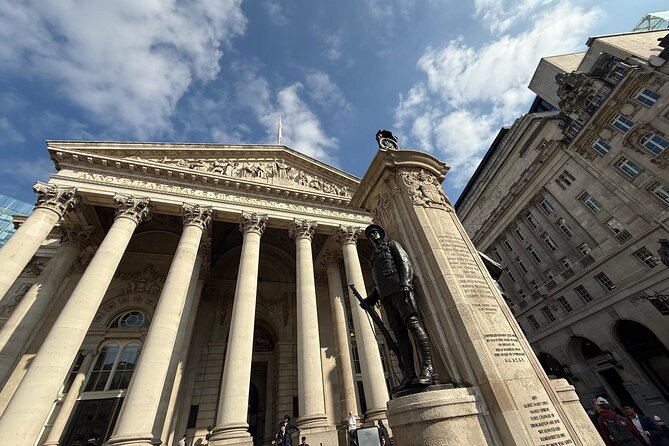
Then the tour turns to Bank Tube Station, and this is the most tragic stop on the route. The narration centers on January 10, 1941, when a bombing raid struck the area and the station had been used as an air-raid shelter.
This story is blunt by design. The explosion killed dozens of civilians seeking refuge underground, and many victims were workers who went down to escape the nightly bombings. It’s the kind of moment where you realize the war didn’t just threaten people in the streets. It threatened them in what they thought were safe spaces.
One advantage of having this story on a guided walk, not in a book, is that you can connect it to the surrounding modern city. The contrast makes the vulnerability feel sharper.
This stop is free as part of the tour experience.
Further Churchill and wartime London tours:
- Westminster 3 Hour Walking Tour and Visit of Churchill War Rooms★ 5.0 · 967 reviews
- WW2 London Walking Tour & Churchill War Rooms Entrance Ticket★ 4.5 · 933 reviews
- London in WW2 Walking Tour with Churchill War Rooms Visit★ 5.0 · 721 reviews
- Winston Churchill & London in World War II Walking Tour★ 5.0 · 194 reviews
St. Dunstan-in-the-East, ruins that became a place to heal
After Bank, you move to St. Dunstan-in-the-East, a church that was severely damaged in bombing in 1941, leaving ruins rather than a restored full structure. Today it works as a tranquil garden, and the guide uses that quiet setting to underline a bigger theme: London rebuilt, not by erasing the past, but by carrying it forward.
You’ll hear how the remains became a symbol of strength after destruction. The key here is tone. Instead of only talking about loss, the narration also points to recovery and continuity, which is often what the Blitz story is missing when it gets reduced to dates and headlines.
This stop is also free. If you want a moment to breathe, this is usually it.
All Hallows by the Tower, a refuge in a violent air-raid world
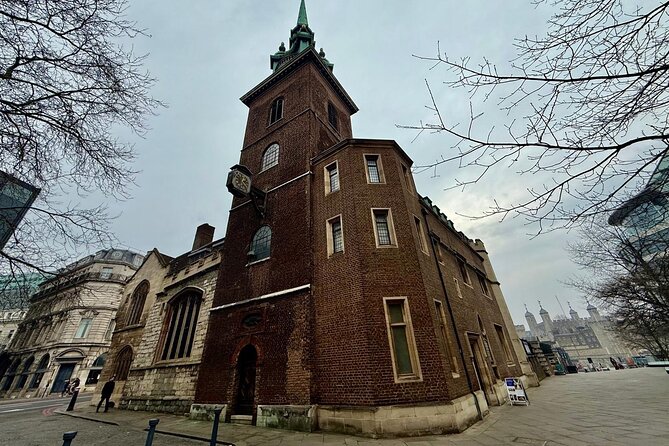
Stop five is All Hallows by the Tower, another church with a direct connection to wartime shelter. The narration explains that it offered refuge for people during air raids, acting as a sanctuary when the city was under attack.
What I like about this stop is how it broadens your sense of where safety could be found. You are not just thinking about shelters underground. You are seeing that religious and community spaces often became practical emergency points too.
The church’s survival is part of the story, even though the surrounding wartime conditions were brutal. This stop is free, and it’s a good one if you want your Blitz experience to include the human need for hope, not only fear.
Tower of London and Josef Jakobs, the spy story at the end
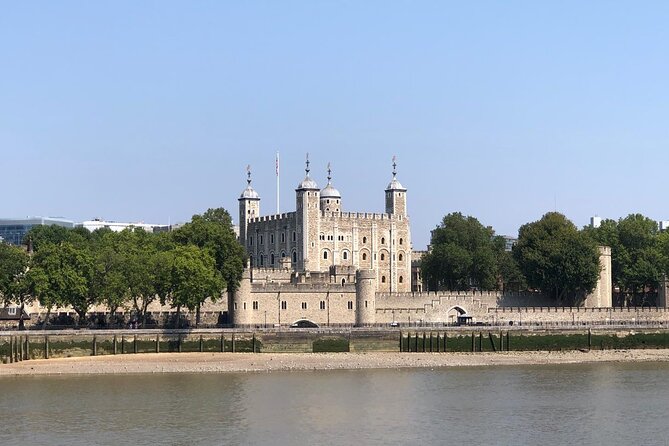
The walk finishes on a sharper edge of WWII: Tower of London and the case of Josef Jakobs. The guide tells the story of Jakobs, a German spy who parachuted into Britain in 1941, was arrested, and later executed by firing squad. You’ll also hear that he was the last person executed at the Tower, which adds an extra layer of finality to the story.
This isn’t about frontline battles. It’s about how intelligence work shaped the war, and why the Tower mattered as a wartime prison for spies and enemy agents. Even if you don’t usually care about espionage, the narration helps you understand why it was so tightly linked to daily life during the Blitz.
A practical note: the tour includes the story, but admission to the Tower is not included. So if you want to go inside beyond the narrated stop, you’ll need to plan separately.
Guide quality and why the narration makes the walk work
The real difference with this tour is the guide. I love when a WWII story is explained in plain language, with the right amount of detail, and not just a list of dates. This tour nails that balance.
You can also tell when a guide is good at reading the room. The pace is described as adaptable, so it doesn’t feel like you’re being dragged from one location to the next. And the narration can get visual. One guide, Nathan, is described as using a book of photographs to connect what you are hearing to the streets you are standing on today.
Other guides mentioned include Francis and Babs, both credited with passion and clear storytelling. When the guide is genuinely engaged, the Blitz stops stop being textbook topics and start feeling like lived moments.
Price, value, and what you get for the money
At $38.83 per person, this is not a bargain in the sense of being “cheap.” But for what you get, it’s fair value.
Here’s the value math that matters: you pay for a small-group guided walk (max 20) for about 90 minutes, with an English-speaking local expert. You also get a route that combines major and lesser-known sites, with free stops built into the experience. Several stops are explicitly free, while the paid entry is limited to the big-ticket landmarks where you can choose how much you want to do.
If you already plan to visit St. Paul’s or the Tower, that can offset the “admission not included” part. If you don’t, you can still get a lot from the outside view and the stories tied to what you see.
Food and drink are not included, so budget for a snack if you’re doing this as a standalone outing. And there is no hotel pick-up or drop-off, so you’ll want to use public transport or walk in from nearby.
Who this tour suits best, and who might want to pick something else
This is a great fit if you like history that’s grounded in real places, and if you enjoy narrative tours where the guide ties details together for you. It’s also a strong choice if you want a City-of-London experience that isn’t only about famous facades, but about what happened to ordinary people in that same urban space.
It may be less ideal if you want mainly indoor attractions, long museum time, or ticketed “sightseeing” without walking. You are outside for the route, and the emotional content is heavy. If you prefer light, fun-only themes, you’ll feel the weight of the Blitz stories.
Practical tips to make your Blitz walk easier
- Bring comfortable shoes for standing and walking around historic streets.
- Wear layers. Even in mild London weather, the wind off open areas can surprise you.
- Decide about entry tickets for St. Paul’s and the Tower ahead of time, since admission isn’t included.
- Use the mobile ticket on your phone, since that’s how the tour is delivered.
- Plan for a history-forward mindset. This route is focused on WWII wartime life, including tragic events, so go in prepared to listen.
Also, since the tour ends back at the meeting point, it is easier to pair with nearby City landmarks after, or to take transit without backtracking across town.
Should you book this London Blitz Walking Tour?
If you want to understand WWII London without getting lost in a pile of facts, I think this is a smart book. The small group, the 90 minute length, and the way each site connects to a specific wartime story make it feel efficient and meaningful. You get both symbolism and quiet memorial spaces, plus the sharp intelligence angle with Josef Jakobs at the end.
I’d book it if you like guided walking tours, can handle moderate walking, and don’t mind that a few key stops are outside the ticketed scope unless you purchase entry yourself. If you want mostly indoor time or only famous-ticket attractions, you might feel more satisfied with a museum-based option instead.
FAQ
How long is the London Blitz Walking Tour?
It runs for about 1 hour 30 minutes.
Where does the tour start and end?
It starts at the National Firefighters Memorial on Carter Lane, Peter’s Hill, London EC4V 5EY, and ends back at the same meeting point.
What is the meeting time?
The start time listed is 9:45 am.
Is the tour wheelchair accessible or designed for any special mobility needs?
The tour notes moderate physical fitness is required. No other specific accessibility details are provided.
Is admission to St. Paul’s Cathedral and the Tower included?
No. St. Paul’s Cathedral and the Tower of London are marked as not included for admission tickets.
Are any stops free?
Yes. Several stops are marked free, including the Christchurch Greyfriars Church Garden, Bank Tube Station, St. Dunstan-in-the-East, and All Hallows by the Tower.
Can I cancel for a full refund?
Yes. You can cancel up to 24 hours in advance for a full refund. If you cancel less than 24 hours before the start time, the amount paid will not be refunded.
Kings, Plagues, Great Fires
- London Small Group Tour of Historical Pubs
★ 5.0 · 10,422 reviews - Soho Music & Historic Pubs Tour
★ 5.0 · 1,993 reviews - Royal Historic Pubs Walking Guided Tour in London
★ 5.0 · 803 reviews - Private Group: Historical Pub Walking Tour of London
★ 5.0 · 660 reviews
On Foot, Brolly Optional
- Westminster Guided Walking Tour with Abbey Entry
★ 5.0 · 1,282 reviews - Walking Tour of London Westminster Abbey, Big Ben, Buckingham
★ 4.5 · 1,213 reviews - London West End Musical Silent Disco Walking Tour Top 1% Rated
★ 5.0 · 1,057 reviews - Changing of the Guard Walking Tour in London at Buckingham Palace
★ 5.0 · 919 reviews
Latest to join the queue for London




Churchill & WWII London Tours, compared.
Westminster 3 Hour Walking Tour and Visit of Churchill War Rooms
Read our review →
WW2 London Walking Tour & Churchill War Rooms Entrance Ticket
Read our review →
London in WW2 Walking Tour with Churchill War Rooms Visit
Read our review →
Winston Churchill & London in World War II Walking Tour
Read our review →
Roman Ruins to Blitz Bombings: A Walking Tour of London’s Fiery History
Read our review →
Sir Winston Churchill Private Walking Tour & War Rooms
Read our review →
Winston Churchill’s London and The Churchill War Rooms – A Private Tour.
Read our review →
Churchill War Rooms & Wartime London Walk – Semi Private 8ppl Max
Read our review →Browse the lists this tour appears in