
Reviewed · CHURCHILL & WWII LONDON TOURS
Roman Ruins to Blitz Bombings: A Walking Tour of London’s Fiery History
London has a way of burning into your memory. This walking tour ties Roman London to Blitz-era damage through big landmarks and story-driven stops, with Tom guiding you through it all. I especially liked the pacing and clarity, and the small-group feel that makes questions easy. One thing to consider: it is a long, foot-heavy walk, and several major stops list admission as not included.
I also like how the route makes you look twice at places you might otherwise skim. You get context for what you are seeing, plus pointers to nearby spots where Roman ruins and artifacts show up in free areas. The tour is built for walking, so plan your shoes and energy accordingly.
If you want a tidy, two-hour hit of London’s “how did we get here?” story, this fits. The itinerary runs through famous names like the Tower of London and St Paul’s Cathedral, then connects them to the Great Fire and wartime destruction. Just know it is mostly a quick look at each stop, with some entries you may need to handle on your own if you want to go inside.
In This Review
- Key things you will notice on this tour
- Why This Fiery Walk Works: Roman Foundations to WWII Scars
- Meeting at Trinity Square, Ending by Fleet Street
- Tower of London: Royal Power and the Story Starts on Firm Ground
- St Dunstan in the East: Where WWII Changed a Medieval Place
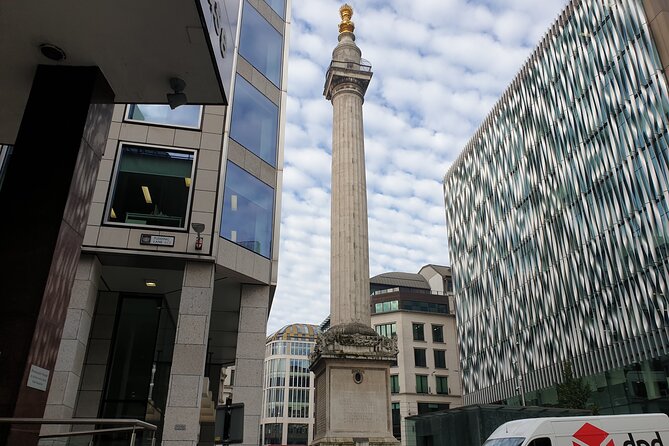
- The Monument to the Great Fire of London: A Mark You Can Still Feel
- London Stone: Legends, Identity, and a Weirdly Human Landmark
- Bank of England Museum and Guildhall: Where Power Looks Official
- St Paul’s Cathedral: Wren’s 17th-Century Answer to Disasters and Time
- Price, Group Size, and Time Management That Actually Make Sense
- Who This Tour Fits Best (and who should pick something else)
- Should You Book This Walking Tour?
- FAQ
- How long is the walking tour?
- What is the price per person?
- How many people are in the group?
- Where do we meet for the tour?
- Where does the tour end?
- Is the tour offered in English?
- Is a mobile ticket provided?
- Are admissions included at the stops?
- Is public transportation nearby?
- Is free cancellation available?
- Can service animals join?
Key things you will notice on this tour
- Small group up to 15 people, so you are not shouting over crowds.
- Tom’s storytelling style, with clear answers and lots of chance to ask questions.
- A fast pace across major sites, about 5 minutes per stop, so you get orientation, not a long museum day.
- War and fire themes on foot, including St Dunstan in the East gardens tied to WWII destruction.
- Stops with free admission (like St Dunstan in the East gardens and London Stone), balancing the ticketed ones.
- City-administration stops, like Bank of England Museum and Guildhall, that explain how London runs.
Why This Fiery Walk Works: Roman Foundations to WWII Scars
London can look like one long photo, but this tour teaches you to read it like a timeline. You start with the Tower of London area, then keep moving through City landmarks that connect to major turning points, including the Great Fire of 1666 and damage from the Second World War. The result is not random sightseeing. It is cause and effect, built from stone, street layout, and what survived.
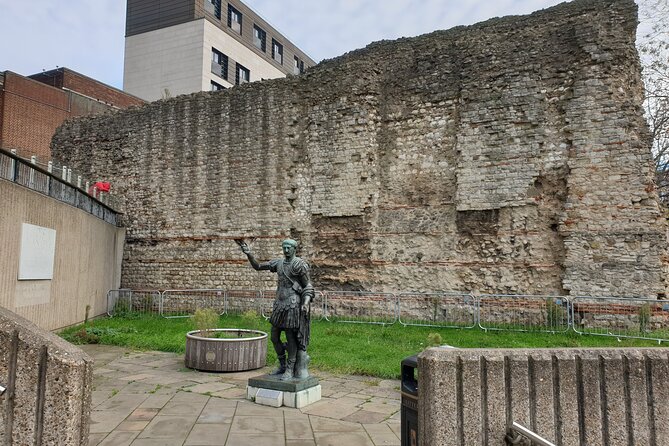
I like that the tour keeps its promise from the title. Roman London shows up as context, not as a detour into a single exhibit. Wartime history comes through at St Dunstan in the East, where the gardens sit where a medieval church was destroyed in WWII. And the Great Fire lands hard at the Monument, a structure designed to mark what happened.
The pace matters. With about 5 minutes per stop over roughly two hours, you get enough detail to make the next thing you see make sense. It is not the kind of tour where you disappear into one building for an hour. It is more like getting your bearings fast, then walking away with a smarter map in your head.
More Guided Walks in London


Meeting at Trinity Square, Ending by Fleet Street
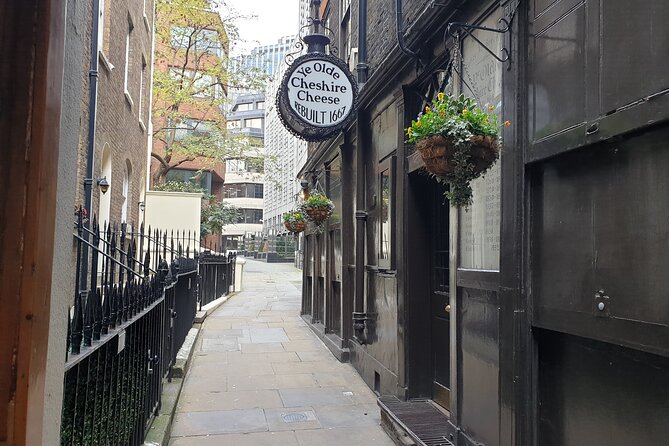
The tour starts at 38 Trinity Square in London EC3N 4DJ. That is close to Tower Bridge side streets, so you are already in the thick of London’s older riverside history. It ends at Ye Olde Cheshire Cheese, 145 Fleet Street, London EC4A 2BP, outside that pub. It is not far from Blackfriars Station, which is handy if you want to hop on transit after.
You also get a mobile ticket. That saves fuss on the day, and you can keep everything in your phone and go. The meeting and ending points are both very central, which reduces that awkward pre-walk shuffle time.
One more practical point: the tour caps at 15 travelers. That is small enough for your guide to steer the conversation, and big enough that it still feels like a proper group experience. If you like asking questions, this format is a good match.
Tower of London: Royal Power and the Story Starts on Firm Ground
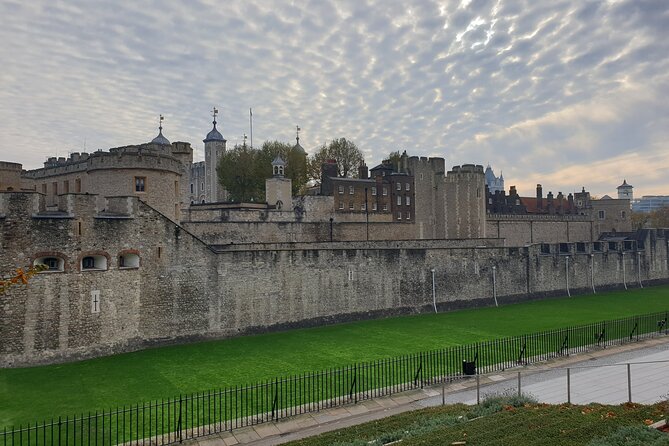
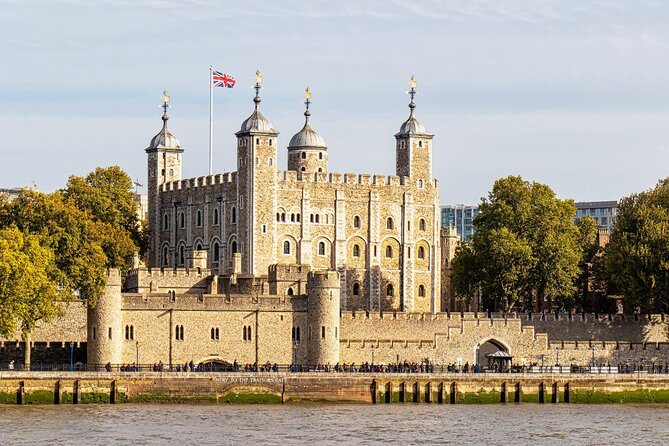
Tower of London is the first stop, and it sets the tone. Even if you do not go in, the Tower area anchors the tour. It is tied to centuries of power, rules, and people in charge, and that makes later history easier to follow. When you know where authority sat, you better understand why uprisings, disasters, and reforms mattered.
At this stop, admission is not included. That means if you want to enter and explore inside, you will need to plan separately. The upside is that your time on the tour is still productive even without an entry ticket, because the guide uses the exterior and the location itself as part of the lesson.
If you are the type who loves architecture and political history, this opening works well. If you want pure “look-only” sightseeing, you may still enjoy it, because the Tower is hard to ignore. Just remember the tour is short, so you will likely not get a full Tower visit squeezed into two hours.
St Dunstan in the East: Where WWII Changed a Medieval Place
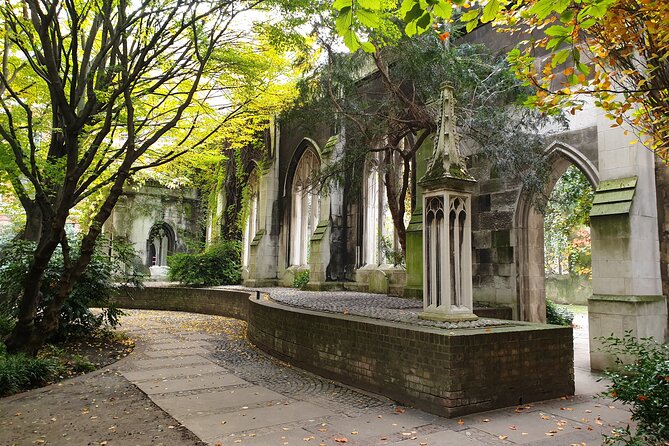
St Dunstan in the East is the stop that brings the war theme into focus. The gardens belong to a medieval church site that was destroyed in the Second World War. That is a powerful setting, because you get to stand in a place shaped by loss, not only by age.
Admission is free at this stop. That matters because it keeps the walk balanced. You get at least one stop where you are not worrying about ticket planning, and you can spend your time just looking and listening.
This is also one of the best places for reflection during the route. The surroundings make it easier to understand how London’s history is not only ancient. It is also very recent. Fire and war are not chapters in a book. They are physical scars in the city fabric.
Wear shoes that work on uneven ground. Gardens and churchyard paths can be a bit tricky, and since the overall walk is long, you will want stability.
The Monument to the Great Fire of London: A Mark You Can Still Feel
The Monument to the Great Fire of London connects you to 1666 in a direct way. It is not abstract history. It is a structure meant to mark an event that reshaped how London thought about building, risk, and recovery.
Admission is not included at this stop, so you are mainly going to absorb the location and what it represents rather than treating it as a long museum-style detour. Even if you do not go inside, the guide’s explanations help you read the area differently.
The Monument stop is also where the tour title starts to make more sense. Fire is not just a dramatic phrase here. It is a reason the city looks the way it does and a reason people built precautions and changed materials. Once you understand that, later sights start connecting to the same theme.
If you are sensitive to crowds, this is the kind of central London stop that can be busy at peak times. The good news is your time here is short, so you can keep moving and not get stuck.
Further Churchill and wartime London tours:
- Westminster 3 Hour Walking Tour and Visit of Churchill War Rooms★ 5.0 · 967 reviews
- WW2 London Walking Tour & Churchill War Rooms Entrance Ticket★ 4.5 · 933 reviews
- London in WW2 Walking Tour with Churchill War Rooms Visit★ 5.0 · 721 reviews
- Winston Churchill & London in World War II Walking Tour★ 5.0 · 194 reviews
London Stone: Legends, Identity, and a Weirdly Human Landmark
London Stone is easy to miss if you are not told what to look for, which is exactly why it is a great stop on a guided walk. The tour frames it as a stone with legends attached to it. Whether you treat those stories as myth, folklore, or historical rumor, they show how people make meaning out of objects when the past feels far away.
Admission is free at this stop. That makes it a low-cost, high-reward moment. You can linger without checking tickets, and you can spend more time letting the story click.
This is also a nice change of pace from the big, heavy monuments. London Stone is small. It feels human in scale. And a good guide turns that into a lesson about how London’s identity sticks, even when centuries pass.
Bank of England Museum and Guildhall: Where Power Looks Official
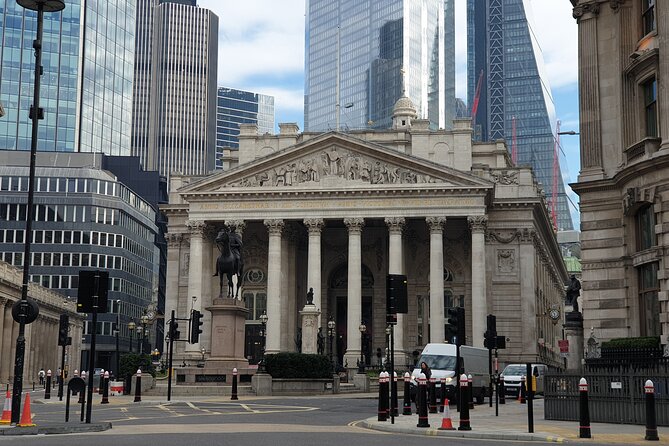
Next you move into the City, where London’s systems show up in plain sight. The Bank of England Museum stop and the Guildhall stop both point toward how authority operates day to day, not just in dramatic eras.
At both of these stops, admission is not included. So again, you are likely getting the orientation and storyline from the outside or from the general stop area, rather than a full inside visit. Still, this is valuable because many first-time visitors focus on landmarks but skip the machinery around them.
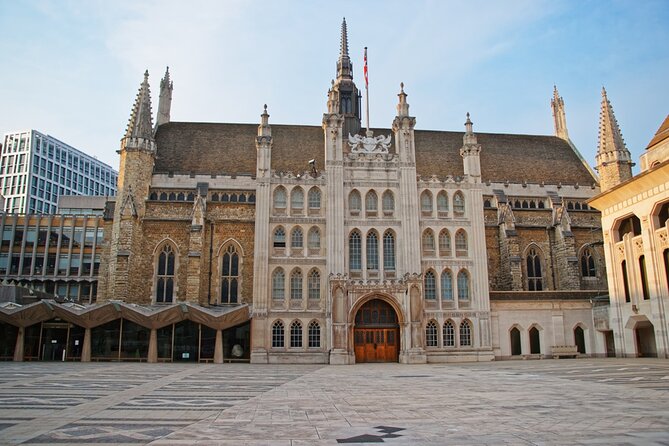
Guildhall, in particular, has the feel of an older civic seat. It is a 15th-century hall associated with the Corporation of London. When you stand near places like that, you start understanding that London’s history is not only battles and disasters. It is also governance, commerce, and decision-making.
If you like to connect the dots between economics and politics, these stops help. If you only want famous “wow” sights, you might find this section less flashy. I think it is the kind of less-glamorous context that makes the rest of your trip click, especially if you plan to visit any museums later.
St Paul’s Cathedral: Wren’s 17th-Century Answer to Disasters and Time
St Paul’s Cathedral closes the loop in a satisfying way. You end at the kind of landmark that feels like London looking forward, yet still carrying the weight of what came before.
Admission is not included at this stop, so you will likely get a guided look and explanations rather than a full cathedral visit. Still, St Paul’s is so prominent that even a short stop feels worthwhile. You get to hear why it matters as a 17th-century cathedral designed by Christopher Wren, and how that relates to the Great Fire era and rebuilding.
This stop also helps you connect earlier themes. Fire, destruction, and rebuilding show up throughout the walk, and St Paul’s functions as a visual conclusion. It is the kind of sight where your brain starts making connections on its own, because the silhouette is unforgettable.
If you want to go inside after the tour, you will be set up to appreciate what you see. The guide gives you a storyline you can carry in with you.
Price, Group Size, and Time Management That Actually Make Sense
At $27.78 per person for about two hours, this tour is fairly good value, especially in central London where guided time can get pricey. The biggest thing you are buying is not admission. You are buying interpretation, route logic, and a guide who can answer questions without rushing you.
The group size cap of 15 matters more than it sounds. With a smaller group, the guide can slow down when someone asks something, and you are less likely to feel lost. Several standout reviews mentioned Tom’s deep knowledge and engaging storytelling, plus his friendly approach and clear answers. That kind of guide interaction is hard to replicate if you are just walking on your own.
Also, the tour is paced for variety. You get to see multiple big-name sites without having to choose one “main attraction” and commit a whole day. That is a real benefit if you only have limited time and want a story-driven sampler.
One caution on value: several stops list admission tickets as not included, including the Tower of London, the Monument, the Bank of England Museum, Guildhall, and St Paul’s Cathedral. That does not make the tour a bad deal. It just means you should decide ahead of time what you want to pay for separately. If you plan to enter one or two, the tour cost feels even more reasonable.
If you have limited mobility, take the walking distance seriously. One review flagged that it might not work well for anyone with mobility issues. This tour says most travelers can participate, but the reality is you should judge the walk itself, not just the time on paper.
Who This Tour Fits Best (and who should pick something else)
This is a great choice for history buffs who want a compact route with clear themes. If you like learning how events change a city, you will probably enjoy it. If you also enjoy asking questions, the small group format helps.
It is also a good fit if you are not trying to see everything in London in one trip. The tour gives you a structure. Then you can choose your own add-ons. In fact, one review highlighted that Tom offered suggestions for what to do after the tour, which is exactly the right kind of bonus.
You might want to skip or modify if:
- You have mobility limitations and cannot handle a long walk.
- You expect a slow, stop-by-stop museum experience with lots of inside time.
- You want tickets and entry included at every major site, since several stops list admission as not included.
Should You Book This Walking Tour?
I would book this if you want a short, story-led London walk that connects Roman roots to the Great Fire and wartime scars, with a guide who keeps things clear and fun. The small-group size, plus Tom’s reputation for answering questions and keeping people engaged, is a strong signal that you will come away with more than photos.
Book it with a practical mindset: wear good walking shoes, expect a longer foot journey than you might guess, and plan on handling paid entry for the bigger sites if you want to go inside. If that fits your style, this tour is a smart way to spend a couple hours and sharpen how you see London for the rest of your trip.
FAQ
How long is the walking tour?
The tour duration is approximately 2 hours.
What is the price per person?
The price is $27.78 per person.
How many people are in the group?
This tour has a maximum of 15 travelers.
Where do we meet for the tour?
You meet at 38 Trinity Square, London EC3N 4DJ, UK.
Where does the tour end?
The tour ends outside Ye Olde Cheshire Cheese at 145 Fleet Street, London EC4A 2BP, UK.
Is the tour offered in English?
Yes, it is offered in English.
Is a mobile ticket provided?
Yes, the tour includes a mobile ticket.
Are admissions included at the stops?
Not at every stop. Tower of London, The Monument to the Great Fire of London, Bank of England Museum, Guildhall, and St Paul’s Cathedral list admission ticket not included. St Dunstan in the East and London Stone list admission ticket free.
Is public transportation nearby?
Yes, it is near public transportation.
Is free cancellation available?
Yes. You can cancel up to 24 hours in advance for a full refund.
Can service animals join?
Service animals are allowed.
Kings, Plagues, Great Fires
- London Small Group Tour of Historical Pubs
★ 5.0 · 10,422 reviews - Soho Music & Historic Pubs Tour
★ 5.0 · 1,993 reviews - Royal Historic Pubs Walking Guided Tour in London
★ 5.0 · 803 reviews - Private Group: Historical Pub Walking Tour of London
★ 5.0 · 660 reviews
On Foot, Brolly Optional
- Westminster Guided Walking Tour with Abbey Entry
★ 5.0 · 1,282 reviews - Walking Tour of London Westminster Abbey, Big Ben, Buckingham
★ 4.5 · 1,213 reviews - London West End Musical Silent Disco Walking Tour Top 1% Rated
★ 5.0 · 1,057 reviews - Changing of the Guard Walking Tour in London at Buckingham Palace
★ 5.0 · 919 reviews
Latest to join the queue for London







Churchill & WWII London Tours, compared.
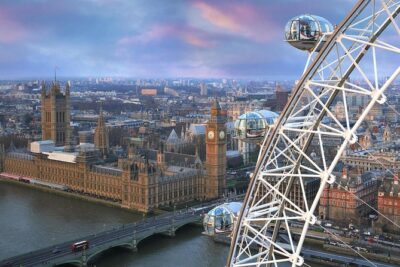
Westminster 3 Hour Walking Tour and Visit of Churchill War Rooms
Read our review →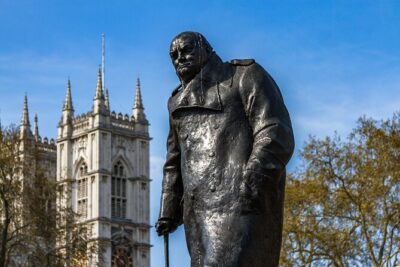
WW2 London Walking Tour & Churchill War Rooms Entrance Ticket
Read our review →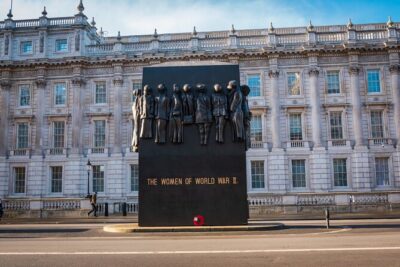
London in WW2 Walking Tour with Churchill War Rooms Visit
Read our review →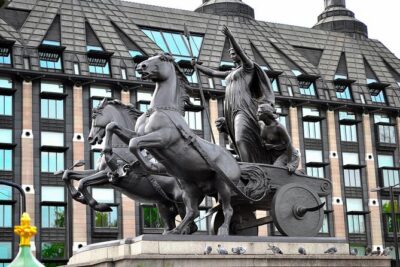
Winston Churchill & London in World War II Walking Tour
Read our review →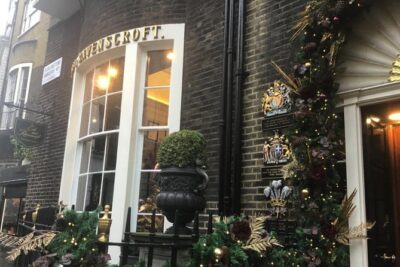
Sir Winston Churchill Private Walking Tour & War Rooms
Read our review →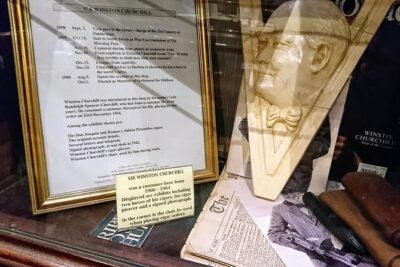
Winston Churchill’s London and The Churchill War Rooms – A Private Tour.
Read our review →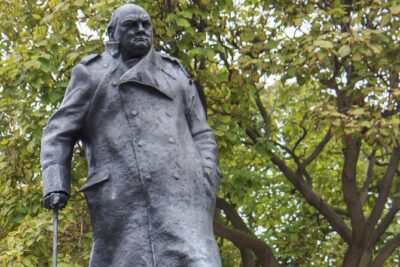
Churchill War Rooms & Wartime London Walk – Semi Private 8ppl Max
Read our review →
Churchill War Rooms Ticket & Political London Audio Tour
Read our review →Browse the lists this tour appears in