
Reviewed · CHURCHILL & WWII LONDON TOURS
Churchill War Rooms & Wartime London Walk – Semi Private 8ppl Max
Churchill’s bunker feels different when you walk to it. This semi-private 8-person Wartime London tour ties together the politics, landmarks, and decisions behind the Churchill War Rooms. You start above ground at Parliament Square, then head into the bunker for a timed visit that feels like stepping into wartime working conditions.
I especially like two things: first, the small group size, which makes it easy to ask questions and actually hear the details your guide points out. Second, you get included admission to the War Rooms with timed access, so the visit is built around the key experience, not just ticking boxes.
One consideration, because it’s a walking tour with lots of standing, is that it is not for wheelchair users or people with walking disabilities. If you have limited mobility, this may be a tough afternoon even if you take breaks when you can.
In This Review
- Key highlights worth your time
- Starting at Churchill’s Statue: Getting the big picture fast
- Parliament Square and St Margaret’s Church: the politics you can see
- Whitehall monuments and Earl Haig: how WWI echoes into WWII
- Horse Guards Parade: a quick photo moment with wartime context
- Churchill War Rooms: the timed bunker visit that feels real
- Semi-private max 8: why this pacing works better than big groups
- The itinerary flow: what each 2.5 hours really feels like
- Price and value: is $151.90 a good deal for this format?
- Who should book this tour, and who should think twice
- Should you book the Churchill War Rooms & Wartime London walk?
- FAQ
- What group size should I expect?
- How long is the tour?
- Is admission to the Churchill War Rooms included?
- Where do I meet the guide?
- Is this tour wheelchair accessible?
- Is hotel pickup included?
- What if I need to cancel last minute?
Key highlights worth your time
- Semi-private max 8 guests means more guide attention and more chances for questions.
- Parliament Square to Whitehall gives you the real setting for Churchill-era Britain, not just museum talk.
- Timed access to Churchill War Rooms helps you spend less time waiting and more time inside.
- Narrow corridors inside the bunker make small groups especially important.
- Guides add extra color, including human stories and lesser-known angles, not just dates.
- Photo stops at Horse Guards add a quick, memorable London moment between deeper history stops.
Starting at Churchill’s Statue: Getting the big picture fast
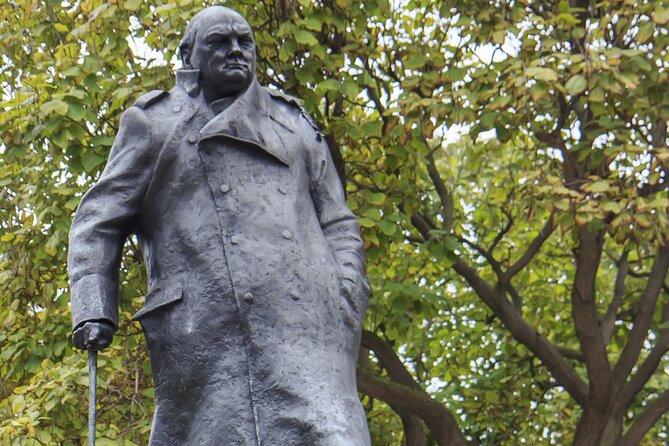
Your tour begins at the Sir Winston Churchill statue in Parliament Square. Even before you start walking, the guide sets up why Churchill matters here and now, not just as a name on a plaque. It is a smart opener because you get the human anchor first, then the landmarks start meaning more as you move through the city.
This first leg is short, about 10 minutes, so it is not a slow warm-up. It’s more like turning on the lights in your brain. Once the guide frames Churchill’s role, the rest of the stops feel linked, instead of each one being a separate roadside fact.
And you will notice the flow stays tight. Multiple stops are around 5 to 10 minutes, which keeps momentum. That matters because you are going to be standing and moving for the full length of the tour.
More Guided Walks in London
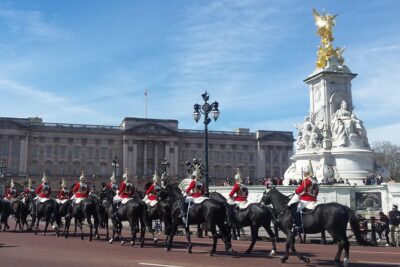

Parliament Square and St Margaret’s Church: the politics you can see
Next up is Parliament Square, where you get broad views of the Houses of Parliament and the setting that shaped wartime decisions. The tour also includes a look outside St Margaret’s Church, where Churchill’s wedding took place. The emphasis here is on context, not inside access.
Outside views are limited by design. You are not going in for a long look, so don’t book this hoping for a church interior tour. But that limitation can work in your favor. From the outside, the guide can connect the building’s role and the place’s political gravity to Churchill’s life and career arc.
This is also where you get the classic London mix: you’re watching tourists take photos while your guide helps you see the heavier story under the surface. It’s the kind of stop that makes you notice details you’d otherwise ignore, like scale, sightlines, and why this area sits at the center of power.
Whitehall monuments and Earl Haig: how WWI echoes into WWII
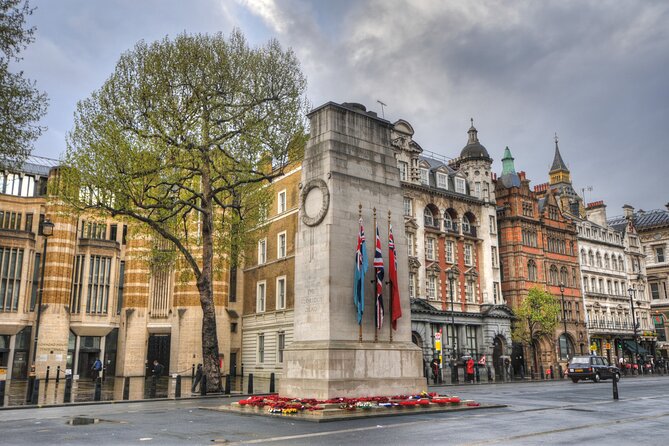
As you stand at Whitehall, the tour shifts tone. You’re facing solemn monuments to the fallen, and the guide uses that quiet mood to explain Churchill’s connection to the First World War era. The point is not to turn this into a full WWI course. It’s to show how earlier experiences shaped attitudes and policies that later influenced WWII.
Whitehall is one of those streets where the government feel hits you fast. Big institutions, formal memorials, and a layout designed for official business. With a guide, that urban design becomes a teaching tool. You’re not just walking past history, you’re learning what that history meant in real time.
Then you move to the Earl Haig Memorial, which is surrounded by statues of Churchill’s advisors and generals. This stop narrows the focus to the interwar period and the rising tensions leading to the second World War. It’s short, but it helps you connect the dots between who had influence and what the world was building toward.
A practical note: because each outdoor stop is brief, listen closely at the beginning. The guide is packing a lot of meaning into a small window, and the best parts tend to be the quick details.
Horse Guards Parade: a quick photo moment with wartime context
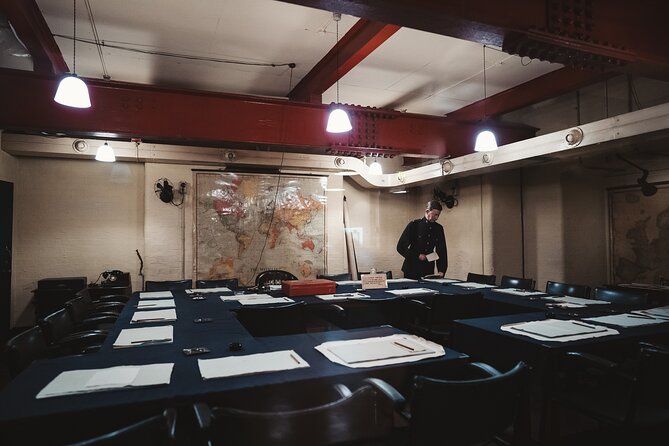
No visit to Whitehall is complete without the Horse Guards Parade stop. You’re there for a quick photo and a reminder of Churchill’s cavalry background. It’s a small detour in time, but it works as a reset. After solemn memorials and interwar tension, Horse Guards feels lighter, even though it’s still very much London and power.
Don’t treat this as a casual add-on. Guides use this moment to shift you from politics into personal story. You get a sense of Churchill as a man with a past, not only as a wartime icon. And that matters because the War Rooms visit later will hit harder once you have that personal framing.
It’s also a good spot to check your footing and adjust your pace. The tour continues soon after, and inside the War Rooms you’ll be dealing with tight spaces and standing time.
Churchill War Rooms: the timed bunker visit that feels real
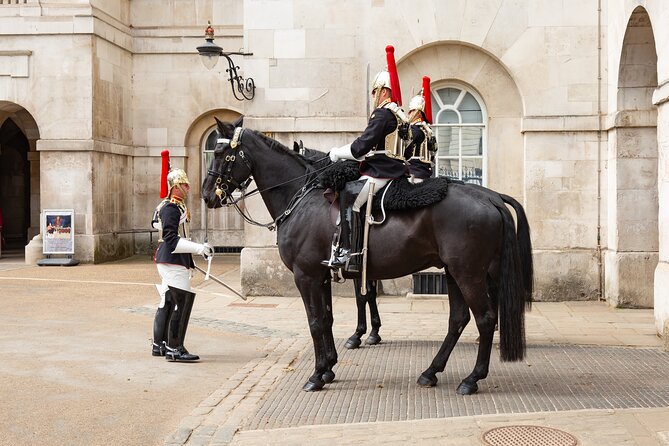
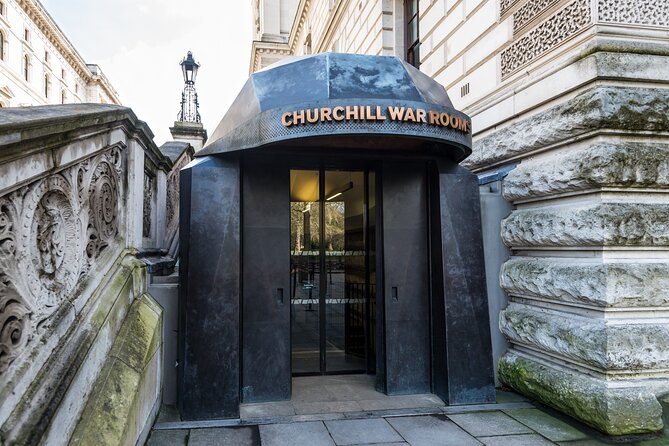
The highlight is the Churchill War Rooms, with about 1 hour 30 minutes inside. This is where you see how “hard work and barebones living setup” become more than a phrase. The War Rooms are built to show you function: offices, communications, and the kind of daily reality that supported major decisions.
Because your entry is timed and included, the visit is structured around the key place. You are not stuck guessing when you’ll get in, and you avoid a big chunk of wasted waiting. In places like this, timed access is often the difference between a smooth visit and a frantic one.
Inside, the space can feel close. One reason small group size gets praised is practical: the corridors are narrow. With a group up to 8, you avoid bottlenecks and you can actually hear what your guide is pointing out.
A smart tip here is to think less about rushing from room to room. Instead, let the guide slow you down at the rooms that matter most. The best guides point out notable artifacts and explain how the setup supported communication and decision-making. You’ll likely hear details about the Map Room and the secret telephone system that was set up for calls involving Churchill and Roosevelt, which is the kind of specific story you almost never pick up by reading alone.
Also, be ready for rules about quiet and restricted speech in certain rooms. The format can include spaces where your guide will tell you ahead of time what behavior is required. That helps the experience stay respectful and focused, but it can feel different if you’re used to talking freely in museums.
If you want one more reason to love this part: your guide turns the building into a working timeline. On previous tours with guides like Sheldon, Alex, Andy, Jamie T, and Guy, the common thread was making Churchill’s life connect to the rooms you’re standing in. That turns the War Rooms from a collection of objects into a sense of how the system worked.
Further Churchill and wartime London tours:
- Westminster 3 Hour Walking Tour and Visit of Churchill War Rooms★ 5.0 · 967 reviews
- WW2 London Walking Tour & Churchill War Rooms Entrance Ticket★ 4.5 · 933 reviews
- London in WW2 Walking Tour with Churchill War Rooms Visit★ 5.0 · 721 reviews
- Winston Churchill & London in World War II Walking Tour★ 5.0 · 194 reviews
Semi-private max 8: why this pacing works better than big groups
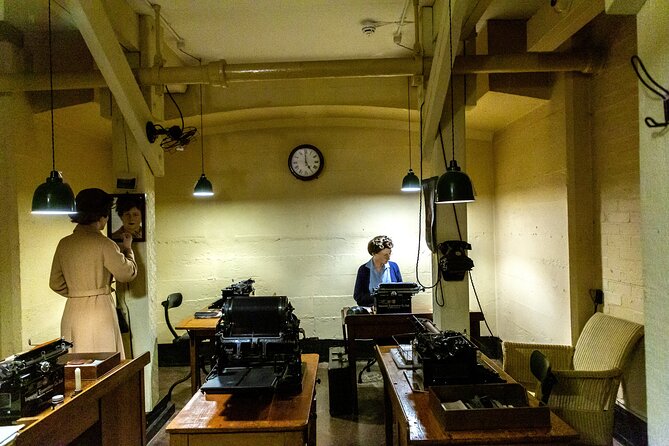
This tour is advertised as semi-private, with a maximum of 8 guests. In practice, that changes the feel of the walking portion too. Instead of being one face in a crowd, you get better listening conditions and easier interaction.
Small groups matter even more here because the schedule is dense. You get multiple short outdoor stops plus a long indoor bunker visit. The guide has to keep you moving while also answering questions. With fewer people, your guide can adjust on the spot when someone wants clarification.
You may even get the kind of guidance that feels personal. Several guides named in the experience feedback stood out for being on time, interactive, and quick to handle questions. Names that came up include Laurence, Sheldon, Andy, Alex, Jamie T, and Guy, and each was praised for different strengths, like humor, answering every question, and weaving in a broader timeline from Churchill’s earlier life through later years.
If you like history with human voice, this format often delivers. It’s not only dates and political shifts. It can include practical daily realities, and it can include reminders that people in the War Rooms were doing jobs with pressure and uncertainty, day after day.
The itinerary flow: what each 2.5 hours really feels like
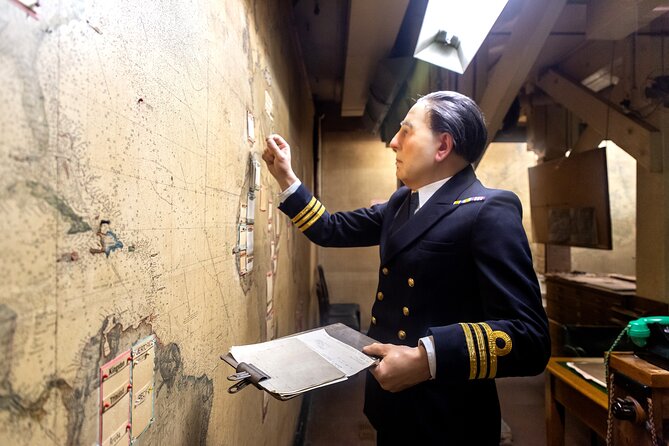
The full tour runs about 2 hours 30 minutes. It doesn’t feel like a long museum day, but it is not a casual stroll either.
Here is the rhythm you should expect:
- Short intro at the Churchill statue
- Quick landmark look at Parliament Square and St Margaret’s Church from outside
- Whitehall memorial stop with WWI context
- Earl Haig Memorial stop with interwar and rising tension framing
- Horse Guards photo moment
- War Rooms visit that takes up most of the time
That structure is intentional. The first part gives you story context. The second part gives you a setting where the story becomes visible. If you try to treat each stop as its own attraction, you’ll miss the point. The tour works best when you let the guide build the chain from above-ground London to the underground decision center.
Because you’ll likely be standing for much of the tour, wear comfortable shoes. This is one of those experiences where “I’ll be fine” can turn into “I wish I wore better shoes” after 90 minutes.
Price and value: is $151.90 a good deal for this format?
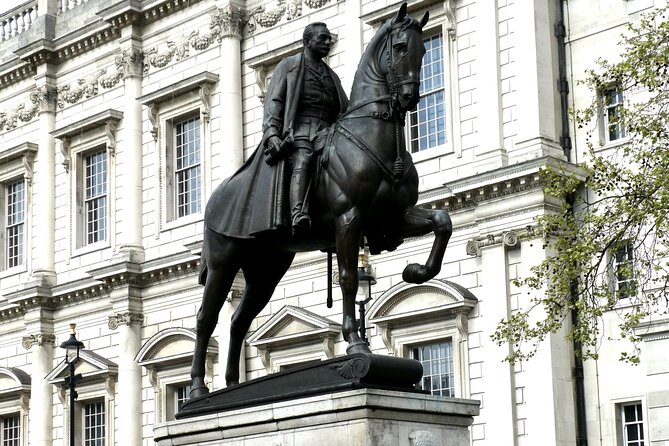
At about $151.90 per person for a 2.5-hour small-group experience with included War Rooms admission, the value comes from three places.
First, you’re paying for guided context. WWII London is famous, but the War Rooms story is more specific than most generic tours. When the guide adds details like the Map Room workings or how telephone systems supported calls between major leaders, you start to see why a guided visit can outperform solo exploration.
Second, timed access helps you use your time wisely. If you’ve ever tried to visit a major attraction with uncertain entry, you know how much time can vanish. Here, your War Rooms ticket is included and access is timed, so you don’t have to micromanage the day.
Third, the group size keeps costs per person in check while preserving quality. A max 8 format is often where you feel the difference: better listening conditions, less crowding, and more room for questions. That’s a value multiplier, even if the base price feels high compared to walking-only tours.
If your travel style is self-guided, you might feel this cost is unnecessary. But if you want a guided story that makes the War Rooms click, this price is easier to justify.
Who should book this tour, and who should think twice
This tour fits best if you:
- Want to connect Churchill’s personal and political story to the physical spaces where decisions were made
- Prefer smaller groups, not packed lines and loud crowds
- Like guided interpretation, especially when it includes specific examples and artifacts
- Can handle standing and moderate walking for about 2.5 hours
You should think twice if:
- You use a wheelchair or have walking disabilities, since the tour is not available for those needs
- You dislike standing for extended periods
- You expect a fully inside-access museum day. A big chunk is outdoors, with short stops and then a focused interior visit
It can also be a great option for both first-time London visitors and locals. The War Rooms are famous, but the added landmark framing around Parliament Square and Whitehall helps you see your city with a WWII lens.
Should you book the Churchill War Rooms & Wartime London walk?
I’d book it if you want more than a standalone museum visit. The real win is the sequence: the outdoor stops give you story and stakes, then the War Rooms deliver the tangible “how it worked” feeling. The semi-private max 8 size makes it easier to ask questions, and guides named like Laurence, Sheldon, Andy, Alex, Jamie T, and Guy were praised for going beyond basics.
If you’re on the fence, ask yourself one question: do you want a guided explanation that turns WWII London into a connected narrative? If yes, this is a strong pick. If you’d rather wander on your own, you might still enjoy the War Rooms independently, but you’ll likely miss the “why this place matters” framing that your guide builds along the way.
FAQ
What group size should I expect?
The tour is semi-private with a maximum of 8 travelers.
How long is the tour?
It runs about 2 hours 30 minutes.
Is admission to the Churchill War Rooms included?
Yes. Full access ticket to Churchill’s War Rooms with timed entry is included.
Where do I meet the guide?
You meet at the Sir Winston Churchill statue, Parliament Sq, London SW1P 3JX, UK.
Is this tour wheelchair accessible?
No. The tour is not available for those with walking disabilities or using a wheelchair.
Is hotel pickup included?
No. Hotel pickup and drop-off are not included. Taxis or Uber are recommended.
What if I need to cancel last minute?
Free cancellation is available up to 24 hours in advance for a full refund. If you cancel less than 24 hours before the experience starts, the amount paid is not refunded.
On Foot, Brolly Optional
- Westminster Guided Walking Tour with Abbey Entry
★ 5.0 · 1,282 reviews - Walking Tour of London Westminster Abbey, Big Ben, Buckingham
★ 4.5 · 1,213 reviews - London West End Musical Silent Disco Walking Tour Top 1% Rated
★ 5.0 · 1,057 reviews - Changing of the Guard Walking Tour in London at Buckingham Palace
★ 5.0 · 919 reviews
Latest to join the queue for London






Churchill & WWII London Tours, compared.
Westminster 3 Hour Walking Tour and Visit of Churchill War Rooms
Read our review →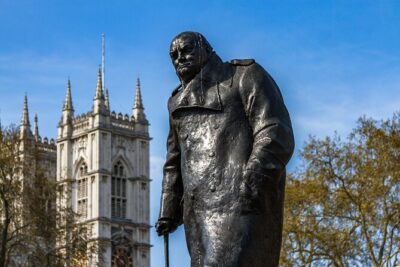
WW2 London Walking Tour & Churchill War Rooms Entrance Ticket
Read our review →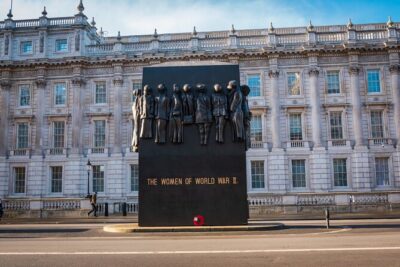
London in WW2 Walking Tour with Churchill War Rooms Visit
Read our review →
Winston Churchill & London in World War II Walking Tour
Read our review →
Roman Ruins to Blitz Bombings: A Walking Tour of London’s Fiery History
Read our review →
Sir Winston Churchill Private Walking Tour & War Rooms
Read our review →
Winston Churchill’s London and The Churchill War Rooms – A Private Tour.
Read our review →
Churchill War Rooms Ticket & Political London Audio Tour
Read our review →Browse the lists this tour appears in