
Reviewed · WALKING TOURS
Lincoln Private Walking Tour
Lincoln tells its story on your feet. I love how this Magna Carta focused walk turns big ideas into real street corners, and how it keeps Roman Lindum visible as you go.
Two things I especially like: the chance to step into the ticketed highlights at Lincoln Castle and Lincoln Cathedral, and the way the guide stitches together Norman, medieval, and Victorian Lincoln without making you feel rushed. One thing to consider: there is a moderate walk, including the uphill stretch of Steep Hill, so wear proper shoes and plan for some climbing.
If you’re lucky enough to meet the guide Stephen, you’ll see why this tour gets repeat love, with stories that stay clear, lively, and practical. On one past date, the tour even lined up with the Steampunk festival, which made the atmosphere outside the walls feel extra fun.
In This Review
- Key highlights at a glance
- Walking tour in Lincoln, not Nottingham
- Meeting at St Mary’s St, and a pickup that keeps it easy
- How the 5-hour route really feels (and why timing matters)
- George Boole statue to Brayford Pool, the city’s origin story in two blocks
- High Bridge, Lincoln Guildhall, and the medieval power zone
- Steep Hill shops and views, the climb that earns the photos
- Jew’s House, the tricky part of Lincoln’s past, and how to look at it
- The Well at St Paul in the Bail, where Roman walls survive under glass
- Roman Mint Wall and Newport Arch, the Roman city edges you can still touch
- East Bight and Lincoln Castle, when the walking route becomes a timeline
- David P J Ross Magna Carta Vault, the original document moment
- Victorian Prison included, separate system explained in the building itself
- Exchequer Gate and Lincoln Cathedral, a big inside stop you should plan for
- Lincoln Medieval Bishops’ Palace, and a seasonal closure to watch
- Priory Arch, Danesgate, and the Roman gates finish the loop
- Price and value: what $183.29 buys you in real time
- Who should book this Lincoln private walking tour
- Should you book it?
- FAQ
- Where does the tour start?
- Is pickup available?
- What time does the tour begin?
- How long is the walking tour?
- Is this a private tour or shared with others?
- What language is the tour offered in?
- Are there admission tickets included?
- Which stops do not include admission tickets?
- Is the tour suitable for people with moderate fitness?
- What if I need to cancel?
Key highlights at a glance
- Magna Carta comes to life with an included visit to the Magna Carta Vault at Lincoln Castle
- Victorian Prison is included, with a guided look at the separate system setup
- Roman Lincoln is not just name-dropped, you’ll spot surviving walls, arches, and building traces
- Medieval Lincoln is built into the route, from High Bridge to Steep Hill shops and views
- Lincoln Cathedral is part of the paid stops, with time inside rather than a quick look
Walking tour in Lincoln, not Nottingham
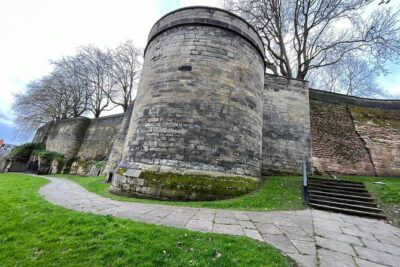
First, a quick heads-up. The tour is named Lincoln, and the meeting point is at 19 St Mary’s St, Lincoln LN5 7EW. So even if you see Nottingham anywhere else in the booking details, the actual route is centered on Lincoln’s old city streets.
That matters because Lincoln is a compact place where Roman remains, medieval power, and later museums sit close enough to connect by foot. This is a true walking tour, not a bus-and-photo tour, so you get the sense of how the city grew and where key power centers sat.
More England on foot, brolly optional:
Meeting at St Mary’s St, and a pickup that keeps it easy
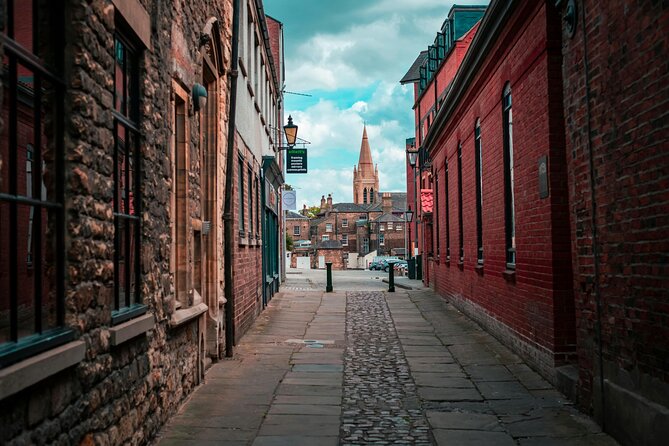
You start at 19 St Mary’s St, right in the heart of Lincoln. The start time is 10:00 am, and the activity ends back at the same meeting point, so you’re not guessing how to get back on your own.
Pickup is part of the deal. If you prefer, you can be met at a central Lincoln hotel, or at Lincoln Railway Station. That’s a big help if you’re arriving by train, or if you want to avoid the stress of navigating older streets right at the start of the day.
You’ll also have a mobile ticket. That’s one less thing to manage before you meet your guide.
How the 5-hour route really feels (and why timing matters)
This is listed as about 5 hours, and the stops are mostly short. Many points are outside, so you’re moving at a steady walking pace between key sights. Then, a handful of major sites include admission, and those add the weight to the day.
The practical rhythm looks like this:
- quick orientation stops for Roman, medieval, and river landmarks
- a set of “pass by and learn” architecture moments
- longer seated or entry time at the big ticket museums and buildings
The moderate fitness level is real. The route includes Steep Hill, which is charming but uphill. Plan on taking your time on the climb and keep water handy on warmer days.
George Boole statue to Brayford Pool, the city’s origin story in two blocks
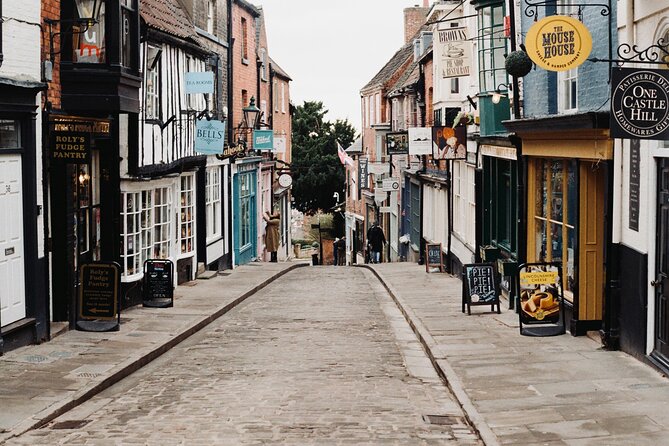
The day begins with George Boole’s statue, tied directly to Lincoln’s claim to fame in computing. Boole was born in Lincoln in 1815 and helped invent Boolean logic, the AND, OR, NOT kind of thinking that underpins so much modern computing.
From the meeting point, you’ll likely see the statue very early. That’s a clever start because it gives you a modern lens for a city that otherwise can feel like a long list of old stones.
Then you pivot to Brayford Pool, Lincoln’s first inland harbour in the UK built by the Romans, and still in use today. This is where you start seeing Lincoln as a working city across time, not just a museum.
High Bridge, Lincoln Guildhall, and the medieval power zone
High Bridge is one of those sights that sounds almost too good to be true: it’s described as the oldest bridge in the UK still with occupied buildings on it. Think of medieval London Bridge, but in Lincoln.
A few minutes later, you’re at Lincoln Guildhall, the official home of the mayor of Lincoln City. The Stonebow nearby is part of the wow factor that has pulled attention for centuries. Even if you don’t go inside, the story gives the buildings meaning, and you start to understand why this area feels like the city’s civic center.
Also on in Nottingham, no fuss
- A Story of Discovery, Education and Remembrance★ 5.0 · 347 reviews
- Nottingham Treasure Hunt Adventure – Robin Hood’s Secret Stash★ 5.0 · 99 reviews
- Airport Taxi Service | Nottinghamshire to London Heathrow Airport★ 5.0 · 36 reviews
- Little John’s Big Tour of Nottingham★ 5.0 · 31 reviews
Steep Hill shops and views, the climb that earns the photos
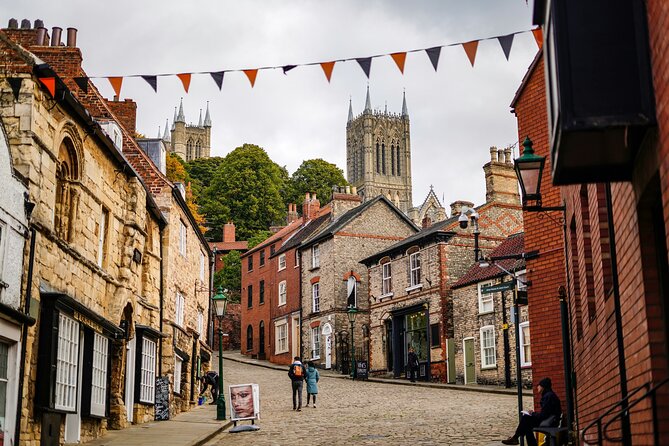
Steep Hill is the medieval heart of Lincoln. Yes, it’s a climb. But it’s also lined with older shops, and the views from here are a big payoff.
This stop works best if you slow down slightly. Don’t just walk through it. Pause, look back down the street, and take in how the city rooflines and river areas sit together. In Lincoln, views help you connect the dots between where Roman defenses once mattered and where medieval and later power built upward.
Jew’s House, the tricky part of Lincoln’s past, and how to look at it
Jew’s House is tied to a painful history of persecution of Jews in medieval Lincoln. The tour includes what prompted it, which is important because you shouldn’t glide past difficult parts of a city and only remember the pretty facades.
You’ll also see some of Lincoln’s finest old residential houses, including one that also serves as a small synagogue. The key is how you look at the buildings. Treat them like evidence of everyday life that was later disrupted, not just a photo stop.
Admission at Jew’s House is not included. You’ll likely get the core exterior and explanation, and if you want to go deeper inside, you should plan on paying separately.
The Well at St Paul in the Bail, where Roman walls survive under glass
One of the most interesting “how did this survive?” moments is The Well at St Paul in the Bail. You look through glass covers at an old Roman wall that was used for something like 6-800 years.
That kind of reuse is a theme in Lincoln. Materials were repurposed, buildings changed hands, and old structures kept getting new jobs. Even the idea of a church footprint nearby adds another layer, because it hints at what stood there before.
Roman Mint Wall and Newport Arch, the Roman city edges you can still touch
Next comes the Roman Mint Wall, a rare example in Britain of a non-defensive Roman wall. You’re told it was the north outer wall of the basilica, essentially the Roman town hall. The scale is striking: originally about 9 meters high and around 1 meter thick.
Then you hit Newport Arch. This is the only remaining Roman arch on a regular road network in Britain that you can drive through. There’s also a pedestrian tunnel for walking. It’s an excellent spot to stop and actually look at Roman engineering in a setting that’s still modern enough for traffic.
East Bight and Lincoln Castle, when the walking route becomes a timeline
East Bight is a quieter lane, but it connects you to the Roman city wall and the site of the Roman Castellum Aquae and Ditch. You’re not seeing a perfectly reconstructed Roman scene. You’re seeing what remains and where something used to be. That is still valuable because it teaches you how to read the city.
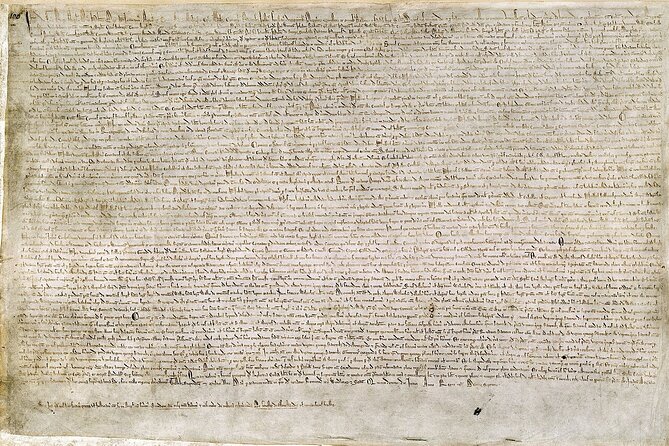
Then you arrive at Lincoln Castle, one of the major “included” moments. This Norman castle sits on an older Roman fortress, and it’s rare for having two mottes. The castle’s long history includes one of only four original copies of Magna Carta from 1215.
You’ll walk along the castle walls for legendary views over Lincoln and the surrounding countryside. This is a high-impact stop, and it’s why the tour is worth paying for: the day shifts from street-level learning into major landmark access.
David P J Ross Magna Carta Vault, the original document moment
Time at the David P J Ross Magna Carta Vault is included. This is where you can see an original Magna Carta document from 1215, tied to the barons forcing King John to sign it.
Even if you know the headline version of Magna Carta, seeing the real document changes the feeling. It becomes less like a school term and more like a physical artifact that started a chain of influence toward modern democracy and human rights.
Victorian Prison included, separate system explained in the building itself
Lincoln Castle also holds the Victorian Prison, and your visit here is included too. It was designed for the separate system, which isolated prisoners from one another. The idea was that the isolation would encourage reflection, repentance, and reform.
The history given is blunt: men, women, and children as young as eight were held here from 1848 to 1878. Crimes ranged from stealing something as small as a waistcoat and a Bible to highway robbery and murder.
When you enter, the tour emphasizes the sensory reality of the prison regime, with sights and sounds that help you understand how space was used as control. This stop is not for everyone in terms of mood, but it is one of the most meaningful parts of the entire day.
Exchequer Gate and Lincoln Cathedral, a big inside stop you should plan for
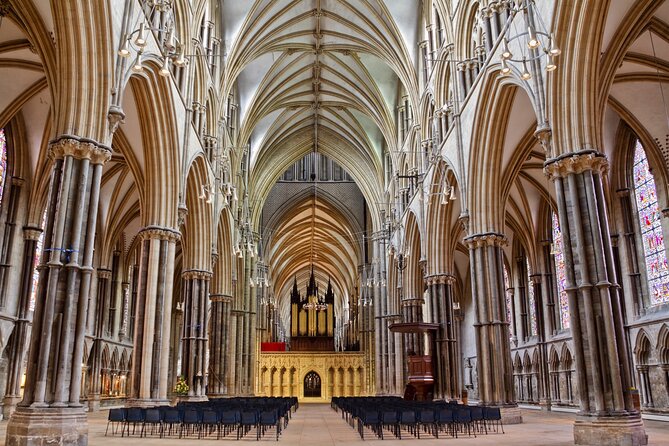
Exchequer Gate is described as a beautiful building that functions as the entrance to the cathedral precinct. Even if it’s “just the entrance,” it’s the gateway to one of the UK’s standout Gothic interiors.
Then you get Lincoln Cathedral, with admission included. Construction started around 1088 AD on an older Saxon church. For a few centuries, it was the tallest building in the world until the central spire collapsed.
Your time here includes entering the cathedral, not just walking past it. If you care about architecture, take your time with proportions, arches, and how the space changes as you move. Cathedral interiors reward slow looking.
Lincoln Medieval Bishops’ Palace, and a seasonal closure to watch
The Lincoln Medieval Bishops’ Palace sits near the cathedral and was once among the most important buildings in the country. This was the administrative center of the largest diocese in medieval England, stretching from the Humber to the Thames, and the architecture reflects power and wealth.
You’ll see highlights such as the undercrofted East Hall and the chapel range and entrance tower built or associated with Bishop William Alnwick, who modernised the palace in the 1430s. The tour also points out restored heritage gardens and vineyards.
Important practical note: the Old Bishops Palace closes from early November to spring. If you’re visiting during that window, you should expect the day to be different around that area, and you may get less access than on other dates.
Priory Arch, Danesgate, and the Roman gates finish the loop
After the major “inside” sites, the route shifts back to exterior landmarks that close the story loop.
Priory Arch is a Victorian replacement for medieval gates on this site, assembled from original medieval building materials. It’s a neat example of how Lincoln reuses stone and keeps the feel of older eras alive.
Danesgate is medieval as a gatehouse but tied to Viking history, described as the favoured entry into the city by the Viking friends. Then you see the Tennyson Memorial Statue in the gardens behind the Cathedral, honoring the second most quoted writer in the English language.
Finally, you reach the north tower of the East Gate of the Wall of Roman Lindum Colonia. This gateway once marked a main route into Lincoln. Combined with earlier stops like the Newport Arch and Roman Mint Wall, it’s a satisfying ending for anyone who likes to see Rome’s influence still operating beneath later layers.
Price and value: what $183.29 buys you in real time
At $183.29 per person for an approx 5-hour private walking tour, you’re paying for more than just a route. You’re paying for a guide who connects the dots, plus included admissions to several major attractions.
Included admissions cover the heavy hitters: Lincoln Castle, the Magna Carta Vault, the Victorian Prison, Lincoln Cathedral, and Lincoln Medieval Bishops’ Palace (when open). Those are not quick “stand in front of the door” stops. They are structured time inside major sites, where having a guide who can explain what you’re seeing saves you from feeling lost.
Also worth noting: pickup options and a mobile ticket add convenience without extra steps. And group discounts are available, which can help if you’re traveling with friends or booking as a small group.
Who should book this Lincoln private walking tour
This tour fits best if you want a single guided day that covers:
- Roman, Norman, medieval, and Victorian Lincoln in one coherent loop
- key included admissions rather than optional add-ons
- a private format where your pace and interests can matter
It also makes sense for solo travelers, because a private walking tour is still a guided experience, not a lonely scavenger hunt. If you’re the type who likes facts tied to places, the George Boole statue, Roman walls, and the Magna Carta document will feel especially rewarding.
Bring shoes you trust for old stone. Bring a camera. And bring patience for the uphill moments.
Should you book it?
Yes, if your goal is a guided Lincoln day that actually includes the major ticketed landmarks. The mix is strong: Roman remains for grounding, medieval streets for atmosphere, and the included Magna Carta and prison experiences for real emotional and intellectual payoff.
I’d be more selective if you don’t like museum-style time or you’re sensitive to heavy history, since the Victorian Prison portion is direct and intense. And if you’re traveling in the late autumn to winter period, check whether the Old Bishops Palace closure affects your date, since access can change from early November to spring.
If those points work for you, booking is a smart move. This is the kind of tour where the guide matters, and where a city like Lincoln shows you why it has mattered for so long.
FAQ
Where does the tour start?
The tour starts at 19 St Mary’s St, Lincoln LN5 7EW, UK.
Is pickup available?
Yes. The guide can meet you at any central Lincoln hotel, or at Lincoln Railway Station.
What time does the tour begin?
The start time is 10:00 am.
How long is the walking tour?
It’s listed as about 5 hours.
Is this a private tour or shared with others?
It’s a private tour, only your group will participate.
What language is the tour offered in?
The tour is offered in English.
Are there admission tickets included?
Some stops are free, and some have admission included. Admission is included for Lincoln Castle, the David P J Ross Magna Carta Vault, the Victorian Prison, Lincoln Cathedral, and Lincoln Medieval Bishops’ Palace.
Which stops do not include admission tickets?
Lincoln Guildhall and Jew’s House are listed with Admission Ticket Not Included. All other listed stops are Admission Ticket Free.
Is the tour suitable for people with moderate fitness?
Yes, travelers should have a moderate physical fitness level. The route includes an uphill stretch at Steep Hill.
What if I need to cancel?
You can cancel for free up to 24 hours in advance for a full refund. If you cancel less than 24 hours before the start time, the amount paid is not refunded.
Latest to join the queue for Nottingham




Walking Tours, compared.
Oxford University Walking Tour With University Alumni Guide
Read our review →
Tour for Muggles The Ultimate Harry Potter Walking Tour in London
Read our review →
Cambridge University Walking Tour by Alumni™ Kings College Option
Read our review →
Blackbeard to Banksy – The Ultimate Walking Tour of Bristol
Read our review →
Air Raid Shelter + St. Nicholas Market Walking Tour
Read our review →
Walking Tour of Bath with Blue Badge Tourist Guide
Read our review →
Changing of the Guard Guided Walking Tour in London
Read our review →
Shadows of York: Ghost Walk and Horrible History.
Read our review →Browse the lists this tour appears in