
Reviewed · NOTTINGHAM TOURS & ACTIVITIES
A Story of Discovery, Education and Remembrance
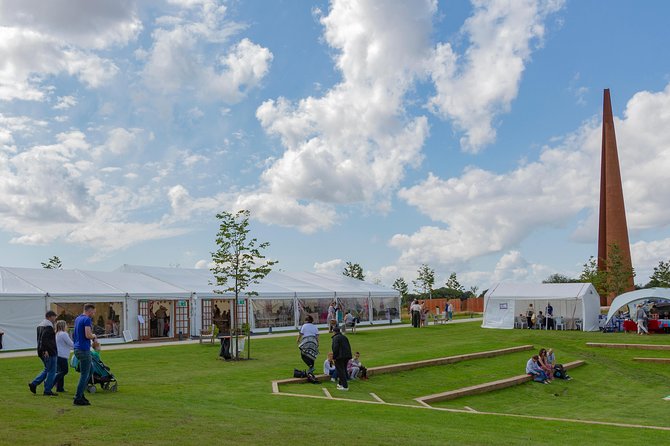
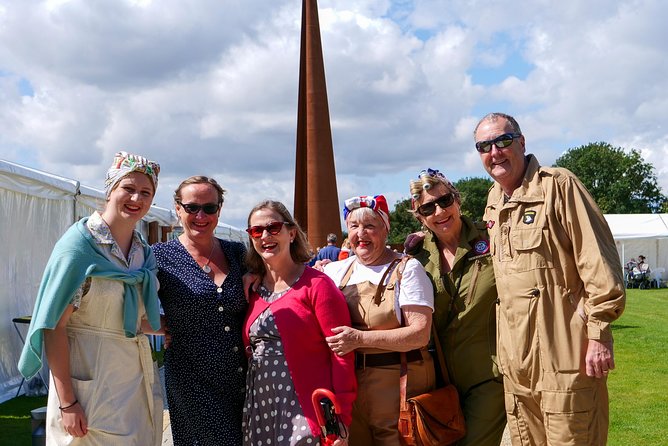
A tower of remembrance makes you look twice. At the International Bomber Command Centre in Lincoln, you’ll face the hard history of WWII Bomber Command with an approach that’s part memorial, part museum, and part story engine. I especially love the 31.09m metal memorial for its dramatic views and photo opportunities, and the Losses Database for turning names into real people.
This is a visit with emotional weight. The subject is tough, so it helps to plan extra time for your own pacing, and not try to rush the galleries and gardens into one frantic sprint.
In This Review
- Key things you’ll notice right away
- A moving memorial museum, built for both learning and reflection
- Getting oriented: the 31.09m memorial and what to photograph
- Finding names: almost 58,000 individuals and the Losses Database
- Orchestra of Voices: how the exhibitions present a hard history
- Peace gardens reset: taking photos without losing the mood
- The free guided tours, and how to make them count
- Hub Café break: refuel nearby without cutting corners
- How long should you plan? (2 to 5 hours, and what changes that)
- Price and value: what $15.94 buys you here
- Who this is best for (and who may want a different plan)
- Should you book? My practical take
- FAQ
- How much is the ticket?
- How long does the visit take?
- What language is the experience offered in?
- What is included with the admission ticket?
- Are guided tours included?
- Where do I redeem my ticket?
- What are the opening hours?
- Is parking included in the price?
- Is the site accessible for people with additional support needs?
- What if I want to visit during the scheduled season?
Key things you’ll notice right away

- UK’s tallest metal war memorial (31.09m) with city views that help you get your bearings fast
- Nearly 58,000 names of those who lost their lives serving Bomber Command
- Losses Database that helps you search and make connections
- Three interactive exhibition galleries plus the Orchestra of Voices for multiple perspectives
- Two landscaped peace gardens for quiet, reset time
- Free guided tours of the memorial and gardens with experienced guides
A moving memorial museum, built for both learning and reflection
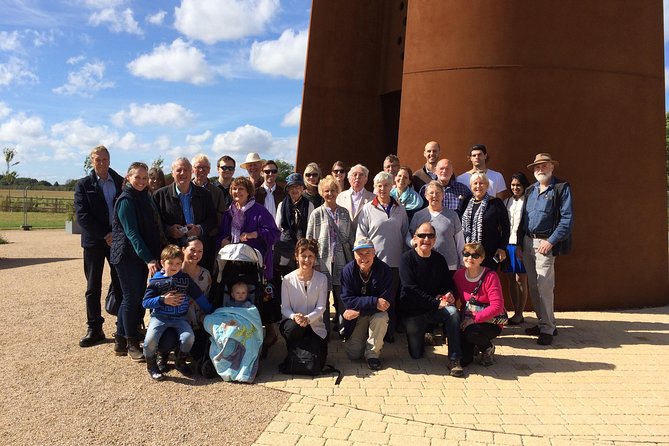
If you care about history, you probably also care about how it’s told. This centre handles a controversial chapter of WWII Bomber Command in a way that’s direct without being simple. The design keeps pulling you from big-picture context to individual lives.
You can treat it like a normal museum, walking from gallery to gallery. Or you can treat it like a place of remembrance, lingering at the memorial and gardens until your thoughts catch up with what you’re seeing. Either way, you leave with more than facts, you leave with names and questions.
Also on in Nottingham, no fuss
Getting oriented: the 31.09m memorial and what to photograph
The experience really anchors itself at the International Bomber Command Centre, at Canwick Ave in Lincoln. Once you’re there, start by taking in the main memorial structure, because it’s the visual headline of the whole site. The memorial rises to 31.09m, and the top offers fantastic views over the city of Lincoln.
For photos, I’d prioritize the angles that show the memorial’s metal form against the sky, then come back for shots that frame the wider view. The structure is described as architecturally striking yet simple in symbolism, and you’ll feel that when you look at it from multiple distances. If the light is good when you arrive, you’ll likely find yourself taking a few extra minutes with just the outside views.
One practical tip: give yourself time before the exhibitions. Getting your bearings outside makes the indoor displays easier to understand, because you can connect what you see in the galleries with the physical layout of the memorial.
Finding names: almost 58,000 individuals and the Losses Database

One of the most powerful parts is the focus on individual loss. On the memorial you can see the names of almost 58,000 people who lost their lives serving Bomber Command in WWII. That number could feel abstract in a classroom setting, but here it’s presented so you can actually find what matters to you.
The Losses Database is where this becomes personal. It’s built so you can explore the individuals whose names you encounter, and the centre is set up to help you trace stories instead of just staring at a wall of text. In particular, if you’re hoping to look for a relative, plan for extra minutes here, because it can take time to search, confirm, and read carefully.
I also like the way the centre balances the database with the physical memorial. The names you see outside connect to the deeper context you can access inside. That mix makes the experience feel less like information dumping and more like guided remembrance.
Orchestra of Voices: how the exhibitions present a hard history
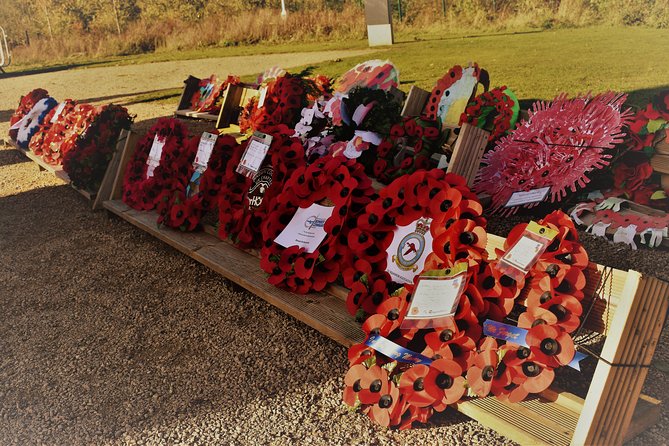
The exhibitions are designed around interactive galleries and a multi-voice presentation called the Orchestra of Voices. The big idea is that you’re not only getting one storyline. You’ll hear perspectives from more than one side of the conflict as you walk through the galleries.
That matters because Bomber Command history can pull people into rigid talking points. Here, the centre tries to give you more than one angle so you can understand why the history remains contentious. It’s not a casual museum topic, so this approach is practical: it helps you process complexity while you’re actually in the space.
In the three interactive galleries, you’ll find information framed around people who were there, on all sides. The result is that you’re learning through experiences rather than just reading dates. You also get static displays mixed in with hands-on elements, which is great if you’re visiting with children or anyone who learns better by doing rather than just listening.
If you want to get the most out of it, slow down on the points where you feel yourself reacting. This is the kind of museum that rewards careful attention, not just speed-reading.
Peace gardens reset: taking photos without losing the mood

Outside, the centre offers something many war memorial sites do not: space to breathe. You can visit two landscaped peace gardens, built for tranquility after the intensity of the exhibitions and the memorial names.
This part works well because it gives your brain a chance to absorb what you just learned. You’re not leaving the topic behind, you’re just stepping into a quieter setting that supports reflection.
For photography, gardens are your chance to switch from the dramatic metal structure to softer compositions. Think lines of paths, close-up greenery, and memorial elements in the distance. It’s a nice balance, and it also helps if you’re planning a longer visit, because you’ll naturally feel your energy drop and then come back.
If you want an easy rhythm, do the gardens after you’ve spent time reading and searching names. That way the search is still fresh, and the calm feels like a meaningful pause instead of an afterthought.
While the kettle’s on in Nottingham:
- Little John’s Big Tour of Nottingham★ 5.0 · 31 reviews
- Robin Hood’s Nottingham: Interactive Game & Walking Tour★ 4.5 · 25 reviews
- Airport Taxi Service | Lincolnshire to London Heathrow Airport★ 5.0 · 24 reviews
The free guided tours, and how to make them count
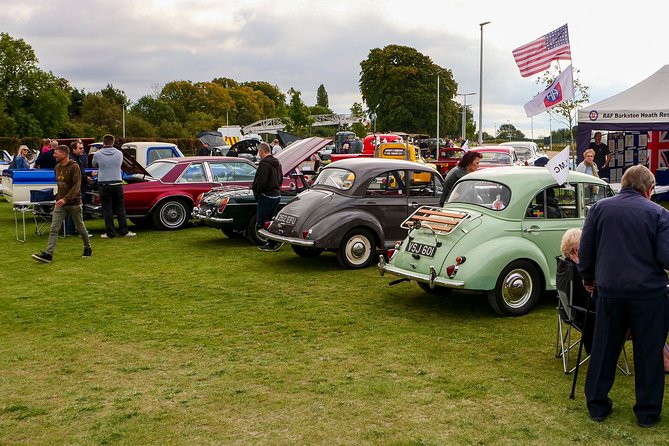
A standout value is that the centre offers free tours of the memorial and gardens. You’ll see that these aren’t just optional extras for people who love guided history. They’re a smart way to connect the dots between the structure outside, the exhibitions inside, and the quieter spaces you’ll walk through.
Your best move is to arrive ready to ask questions. Guides can point out what to pay attention to when you’re looking for names, and they can explain how the exhibition pieces link to the bigger context. One review specifically praised a guide’s knowledge and how that made the visit really successful, and that matches what you’ll feel when the tour brings structure to the experience.
Timing can affect how personal the tour feels. If you visit early and the group is small, you might get more attention and more chances to ask follow-up questions, which can be helpful when the subject is complicated.
Even if you’re the type who usually skips tours, I’d still consider taking at least part of one. In a place like this, the guide is often the difference between reading information and understanding what the centre is trying to communicate.
Hub Café break: refuel nearby without cutting corners
After you’ve been indoors and outside, you’ll likely want a proper pause. On site, the Hub Café offers locally sourced food and drink, so it’s convenient to keep your day flowing without trekking into town.
This is one of those small practical advantages that becomes a big deal when you’re planning a 2 to 5 hour visit. If you have lunch sorted on site, you’re less tempted to rush the gardens or skip the longer reading time.
I also found it reassuring that the café is mentioned as a highlight, including praise tied to the food experience. So you can plan a calmer schedule: exhibitions, memorial and gardens, then a sit-down break before you start searching again or making your final pass through the space.
How long should you plan? (2 to 5 hours, and what changes that)

The visit is listed as 2 to 5 hours, and that range feels real. If you’re only doing a quick circuit, you might finish closer to the lower end. If you’re reading carefully, using the Losses Database, and spending time in both peace gardens, you’ll want closer to the middle or upper range.
Here’s a simple way to decide your timing:
- If you’re mainly there for context and the memorial views, plan around 2 to 3 hours.
- If you’re there to search names or relatives, plus take a guided element, plan 3.5 to 5 hours.
I’d rather you overestimate than underplan in a place like this. The emotional subject means you might pause more than you expect, and that’s okay.
Price and value: what $15.94 buys you here
At $15.94 per person, this isn’t a bargain museum ticket, but it’s also not an overpriced “one room and done” experience. You’re paying for admission and access to the memorial grounds, plus the exhibition galleries that carry a lot of educational content.
The value improves further because free guided tours are part of the visit, and the centre is built for time spent. The memorial structure, the nearly 58,000 names, the Losses Database, and the peace gardens are not quick add-ons. They’re the core of the experience.
Also, the ticket includes all fees and taxes, and that reduces the chance of unpleasant surprises at checkout. The only real extra you might run into is parking fees, which aren’t included, so if you’re driving, keep that in mind.
If you’re traveling with kids, it can be good value too, since the galleries include interactive, hands-on elements that are designed to engage younger visitors.
Who this is best for (and who may want a different plan)
This centre is best for you if:
- You want a serious educational stop with multiple perspectives on WWII Bomber Command
- You want a place that emphasizes remembrance through names, not just abstract history
- You’re okay spending time reading and reflecting
- You’re visiting with children who respond well to interactive displays
It may be less ideal if you’re looking for something purely uplifting or lighthearted. This is a remembrance site for a conflict with real human harm on multiple sides. Still, the peace gardens, the guided structure, and the thoughtful presentation help make it manageable for many people.
For families, it can work well because it’s not only wall text. The interactive galleries and hands-on elements mean kids are doing more than just following adults around.
For solo visitors, it can also feel meaningful, because searching the names and using the Losses Database is something you can do at your own pace.
Should you book? My practical take
Yes, I think it’s worth booking if you care about WWII history, especially the part that remains controversial and emotionally complicated. The combination of the memorial’s scale, the nearly 58,000 names, and the interactive presentation gives you more than one kind of learning.
I’d book it in advance if you want a smooth visit window, since the experience is commonly booked about 8 days ahead on average. Also, if your goal is to find names, give yourself time for that part, and don’t stack another major activity right after.
If you’re the type who gets overwhelmed by heavy topics, go slower and use the peace gardens for reset time. This place supports that rhythm. Plan for a thoughtful half-day, not a quick detour, and you’ll come away with a visit that feels real, not just informational.
FAQ
How much is the ticket?
The ticket is $15.94 per person.
How long does the visit take?
Plan for 2 to 5 hours (approx.), depending on how long you spend with the exhibitions, memorial, and peace gardens.
What language is the experience offered in?
The experience is offered in English.
What is included with the admission ticket?
Admission is included, along with access to the memorial and gardens. The ticket price also includes all fees and taxes.
Are guided tours included?
Yes. The centre offers free tours of the memorial and gardens with experienced guides.
Where do I redeem my ticket?
You redeem at the International Bomber Command Centre, Canwick Ave, Lincoln LN4 2HQ, UK.
What are the opening hours?
It is open Tuesday to Sunday from 9:30 AM to 4:00 PM.
Is parking included in the price?
No. Parking fees are not included.
Is the site accessible for people with additional support needs?
Service animals are allowed, the site has a Changing Places Facility, it is near public transportation, and most travelers can participate.
What if I want to visit during the scheduled season?
The experience listing shows it operates across the date range 03/17/2020 to 02/03/2027, with the daily hours stated above.
Latest to join the queue for Nottingham






Nottingham Tours & Activities, compared.

Nottingham Treasure Hunt Adventure – Robin Hood’s Secret Stash
Read our review →
Daily Nottingham City Centre Walking Tour (10:30am)
Read our review →
Airport Taxi Service | Nottinghamshire to London Heathrow Airport
Read our review →
Robin Hood’s Nottingham: Interactive Game & Walking Tour
Read our review →
Airport Taxi Service | Lincolnshire to London Heathrow Airport
Read our review →Browse the lists this tour appears in