
Reviewed · SELF-GUIDED TOURS
Discovering Cheltenham: A Self-Guided Audio Tour
Cheltenham has a knack for surprises if you slow down. This self-guided audio walk is a simple way to explore the town center at your pace, with audio that kicks in as you reach each landmark.
What I like most is the offline VoiceMap setup (audio, maps, and geodata), and the fact that you get lifetime access to the tour track for one low price. One thing to watch: you’ll need a smartphone and headphones, and you may want to test your location settings before you start.
This route threads together Cheltenham’s big-name architecture and characters without feeling like a museum crawl. You’ll hear about places like Cheltenham Minster, Royal Crescent, Neptune Fountain, and Imperial Gardens, plus music through the Gustav Holst connection. If you get stuck with app navigation at the start, it can slow you down, so plan a quick setup moment.
In This Review
- Key highlights I’d plan around
- Enter The Wilson, then let the audio steer you
- Value check: $11.99 plus lifetime access is the real win
- Your route, stop by stop, and what to actually listen for
- Cheltenham Minster and St Mary’s, plus the graveyard stroll
- Royal Crescent: early Georgian terrace energy
- Sophie Ryder’s Hare and the Minotaur
- Edward Wilson, Cheltenham’s famous son
- Neptune Fountain: design, water source, and who made it
- Cheltenham Town Hall: once a performance space
- Imperial Gardens and the Sherborne, later the Imperial Spa
- Gustav Holst Statue and the music thread
- Queens Hotel: early purpose-built hospitality design
- Montpellier Walk, designed by William Hill Knight
- Cheltenham College Chapel and Henry Prothero
- End at Montpellier Gardens: a Regency-era closing note
- How to keep the app from becoming the main character
- Timing and walking comfort: make it fit your day
- Who this tour suits best, and who should skip it
- Should you book Discovering Cheltenham with VoiceMap?
- FAQ
- How long is the self-guided audio tour of Cheltenham?
- Where does the tour start and where does it end?
- Is the tour available offline?
- What language is the tour offered in?
- What do I need to bring?
- Is it only for my group?
- What is the cancellation policy?
Key highlights I’d plan around
- Offline audio and maps: you can keep walking even if WiFi is flaky
- Audio that times itself to your position: helps you follow the order without guessing
- A smart town-center loop: major sights from The Wilson to Montpellier Gardens
- Design details you’d miss: Neptune Fountain, historic terraces, and notable buildings
- Regency-era wrap-up: the ending in Montpellier Gardens ties the story together
- Private group format: only your group uses the tour track, not a shared headset
Enter The Wilson, then let the audio steer you
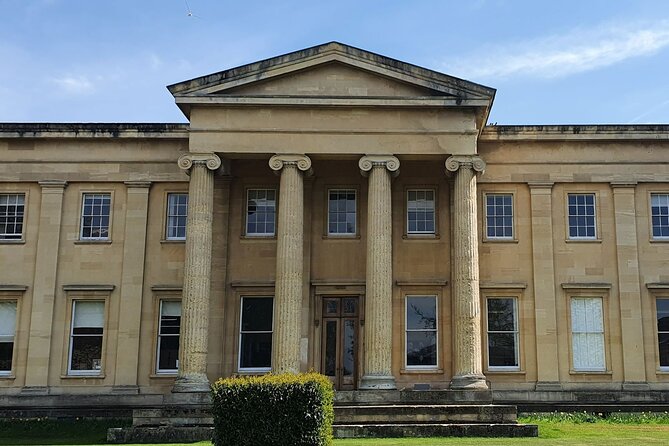
Your tour starts in front of The Wilson Art Gallery and Museum on Clarence Street. Before the main walking section kicks in, you get a quick primer on the gallery and museum, plus a short intro to how the VoiceMap app works. The goal here is to help you avoid the classic problem with audio tours, where you press play once and spend the next 10 minutes lost.
After that, the walk begins with Cheltenham’s center as your stage. The whole route is built so you pass important landmarks one after another, so your brain stays oriented. And because it’s self-guided, you can stop for photos, read plaques longer, or pause when you hit a spot you just want to stare at.
Also on in Oxford, no fuss
Value check: $11.99 plus lifetime access is the real win
At $11.99 per person for roughly 1 hour 30 minutes to 2 hours, the price feels fair because you’re paying for the content, not a single-day ticket. The standout value is lifetime access. That means if you come back to Cheltenham later, you can reuse the same tour without paying again.
The other value piece is offline access. The tour includes offline audio, maps, and geodata through the VoiceMap app. That matters in real life, because city centers can have spotty coverage. It also helps you keep moving instead of constantly checking your phone screen.
What’s not included is also important for budgeting. You’re not getting museum tickets or entrance fees, and you’ll still need your own smartphone and headphones. If you already travel with earbuds and a power bank, you’re set. If you rely on public devices or borrowed chargers, you may want a backup plan.
Your route, stop by stop, and what to actually listen for
Cheltenham Minster and St Mary’s, plus the graveyard stroll
Next up, you pass Cheltenham Minster, St Mary’s. You don’t just hear the basics and move on. The audio is designed to guide you while you walk around the church and through the graveyard area, so you get context without forcing you to stand in one spot.
Look for details you might otherwise skip, like how churches anchor local history and how the layout shapes what you see as you move. If you like architecture, this is where you slow down. If you’re more into stories, this is where the narration helps you connect the building to people and time.
Royal Crescent: early Georgian terrace energy
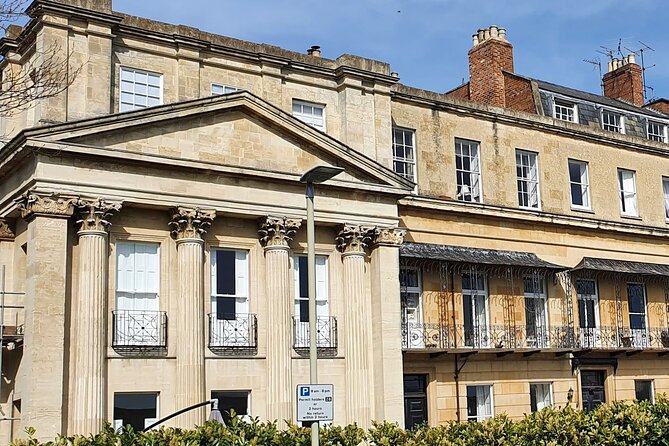
The walk then goes past Royal Crescent, described in the tour as the earliest important Georgian terrace built in Cheltenham. Audio tours can sometimes treat terraces like pretty scenery. Here, the narration angle is about why that terrace mattered, so the row of buildings becomes a clue to how Cheltenham grew.
As you pass it, notice scale and rhythm. A crescent layout isn’t just a styling choice. It shapes street views and the way the town feels when you’re walking through it.
While the kettle’s on in Oxford:
- Oxford University Walking Tour With University Alumni Guide★ 5.0 · 6,905 reviews
- Oxford Castle and Prison Guided Tour★ 5.0 · 1,402 reviews
- 1.5-hour Oxford City and University Walking Tour★ 4.5 · 1,383 reviews
- Oxford Official University & City Tour★ 5.0 · 1,134 reviews
Sophie Ryder’s Hare and the Minotaur
One of the more fun stops is Hare and the Minotaur, a local sculpture by Sophie Ryder. Sculpture is tricky on walking tours because you either rush past or you stand and block everyone else.
This audio segment helps you look at the work in place while still keeping you moving. It’s a good reminder that Cheltenham is not only grand buildings, it also has modern artistic threads woven into the town center.
Edward Wilson, Cheltenham’s famous son
You’ll also pass the statue of Edward Wilson, one of Cheltenham’s most famous sons. This is where the tour adds human context. A statue can feel like a landmark you walk by. The narration makes it a starting point for understanding why people still talk about Wilson.
If you like local biographies, this section is a nice break from pure architecture. It also gives you a chance to imagine who would have been passing these same streets long before the fountain and hotels existed in their current form.
Neptune Fountain: design, water source, and who made it
Then comes one of Cheltenham’s most visually commanding features, the Neptune Fountain. The audio doesn’t treat it like a postcard. It covers practical and specific info, including who designed it, where its water comes from, and who made it.
That trio of facts is gold for two reasons. First, it turns a landmark into a technical story. Second, once you know where the water originates and who built it, the fountain stops being just decoration. It becomes a piece of town infrastructure and craft.
When you listen, don’t just glance. Do a slow orbit around the fountain if you can. The narration timing should help you match the story to what you’re looking at.
Cheltenham Town Hall: once a performance space
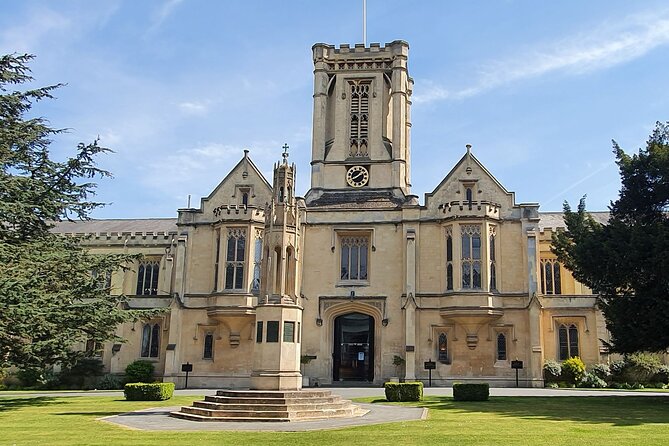
Next is Cheltenham Town Hall. The audio explains how it was once used for entertainment, including concerts, banquets, dances, and balls. That changes how you read a public building. Instead of thinking only of civic function, you start imagining events, crowds, and seasonal social life.
If you’re the type who likes to connect buildings to daily living, this segment clicks. It makes the town feel like it has a pulse, not just a skyline.
Imperial Gardens and the Sherborne, later the Imperial Spa
The tour moves through Imperial Gardens. This is tied to an earlier exclusivity story, where the gardens were once reserved for visitors of the Sherborne, later known as the Imperial Spa.
As you walk, the key is to listen for the change in status. You’re not just seeing trees and paths. You’re tracing how Cheltenham marketed itself and who it catered to. That’s why this stop works, even if you’re not a garden person. The narration gives the greenery a social role.
Gustav Holst Statue and the music thread
You’ll then pass a Gustav Holst Statue, and the audio connects Holst with music. Even if you only know his name in passing, the narration helps you place him within Cheltenham’s story.
This is one of the stops that makes the tour feel like it goes beyond architecture. It adds art and sound to the walking loop.
Queens Hotel: early purpose-built hospitality design
Another standout building is Queens Hotel Cheltenham, described as one of the first purpose-built hotels in Europe. The audio points out interesting architectural features and tells you about the hotel as you pass it.
Hotels are often seen as modern boxes. This segment nudges you to look at the design logic. Purpose-built hospitality implies a new kind of travel and a new kind of visitor economy. It’s a small shift in thinking, and it makes the streets feel more intentional.
Montpellier Walk, designed by William Hill Knight
The route then goes through Montpellier Walk, designed by Cheltenham architect William Hill Knight. This stop is a good one if you like town planning and retail streets that feel shaped rather than random.
Pay attention to the “why this looks this way” angle. The narration helps you see how the town’s commercial edge fits into the wider Regency and Georgian story.
Cheltenham College Chapel and Henry Prothero
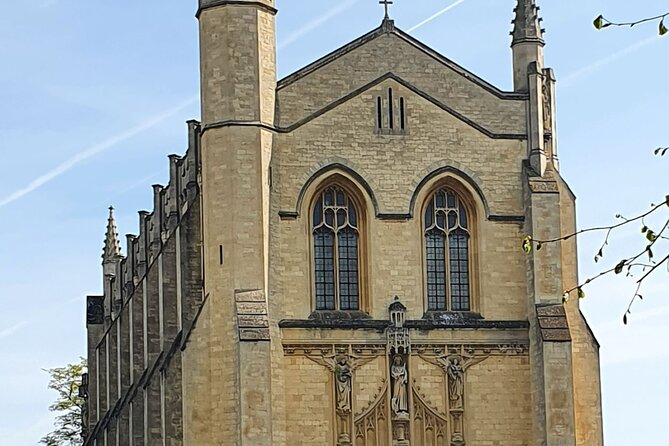
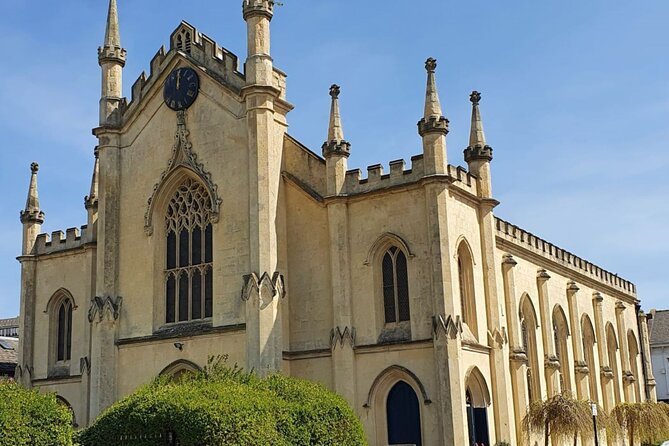
You’ll also pass Cheltenham College Chapel, designed by Henry Prothero. The audio shares about the chapel and mentions a famous day pupil of the college.
You might not expect a chapel to hold attention on a quick audio loop, but this works because it connects a specific building to a specific educational institution and its public identity. If you’re into architecture, watch the proportions and how the building sits within its surroundings. If you’re into people, listen for the reference to the day pupil and why that detail matters.
End at Montpellier Gardens: a Regency-era closing note
The tour finishes in Montpellier Gardens. This ending section brings in concluding remarks about regency-era Cheltenham. It’s a satisfying way to cap the walk because the earlier stops feed into the final interpretation of the town’s character.
Take a minute at the end. If you don’t stop, audio tours can feel like you’re being hurried by your own phone. Give yourself a short moment, even if it’s just enough to look back toward the direction you came from.
How to keep the app from becoming the main character
Most of the experience is good, but the practical reality is that audio tours live or die based on phone behavior. The strongest tip from real-world use is to start with a clean setup.
Here’s how I’d protect your time:
- Download or prepare your tour while you have a stable connection, then rely on offline access while you walk.
- If the app needs your location, set location permission in a way that keeps tracking consistent. One common fix is allowing location access permanently instead of only while using the app.
- At the start, double-check that you can enter the code tied to your purchase inside the app. If the menu feels unclear, pause and sort it before you press forward.
Also, bring headphones. They’re not included, and playing audio from your phone speaker can make it harder to hear clearly when you’re near traffic.
If you’re walking with a group, consider that each device may need its own setup and code steps. The tour is private only to your group, but every phone still has to be ready.
Timing and walking comfort: make it fit your day

The route is built for about 1 hour 30 minutes to 2 hours. That’s long enough to feel like you covered something meaningful, but short enough to slot into a busy itinerary.
A good way to plan: treat this as your “orientation loop” through central Cheltenham. Even if you already walked around earlier, you’ll still pick up new context because the audio is tied to why each place matters. If you plan lunch, the middle of the loop is a logical spot to break, and the walk ends in a garden area where you can naturally decompress.
If it helps, choose your pace based on your listening style:
- If you like architecture, slow down at the church, crescent terrace, and key civic buildings.
- If you like stories, stick with the audio and use your photo stops for quick snapshots.
And if you find a spot where the narration doesn’t match what you see, don’t panic. Pause, check you’re at the landmark, then restart from the current position.
Who this tour suits best, and who should skip it
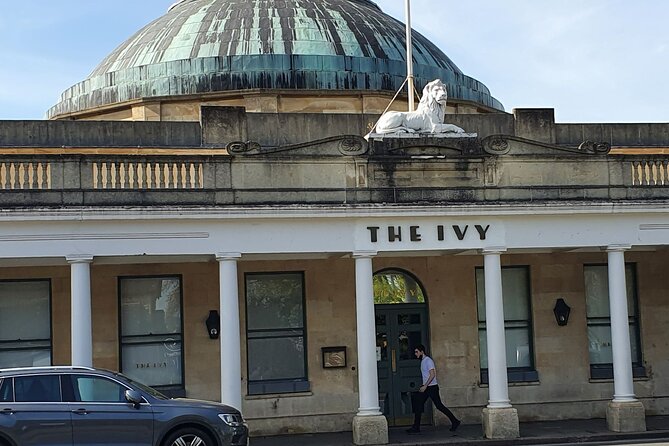
This tour is a strong fit if you want a structured walking route without guided tour crowds. It also makes sense if you enjoy small, specific facts, like design and makers for the Neptune Fountain, or how a town hall functioned as an entertainment venue.
It’s also great for people who like self-paced travel, because you can pause for lunch or linger at buildings. The offline model is ideal if you don’t want to hunt for WiFi mid-walk.
You might want to think twice if:
- You hate app setup and prefer paper maps.
- Your phone is low on battery and you don’t carry a charger.
- You plan to start with multiple devices that are not already logged in and prepared.
Should you book Discovering Cheltenham with VoiceMap?
I’d book it if you want a practical way to see Cheltenham’s core sights in a short window and learn what you’re looking at as you go. The standout value is the mix of offline access and lifetime access at a low, fixed price.
I’d hesitate only if you know you struggle with mobile settings or you’re likely to show up without headphones and without a phone ready to run the app. If you give yourself 10 minutes to get the download and location permission sorted, this becomes a very smooth, very doable way to enjoy central Cheltenham.
If you’re aiming for value, clarity, and an easy walking plan from The Wilson to Montpellier Gardens, this one is a smart bet.
FAQ
How long is the self-guided audio tour of Cheltenham?
The tour takes about 1 hour 30 minutes to 2 hours.
Where does the tour start and where does it end?
It starts in front of The Wilson Art Gallery and Museum at 51 Clarence St, Cheltenham GL50 3JT, UK. It ends in Montpellier Gardens at 24 Montpellier Spa Rd, Cheltenham GL50 1UL, UK.
Is the tour available offline?
Yes. The tour includes offline access to audio, maps, and geodata through the VoiceMap app.
What language is the tour offered in?
The tour is offered in English.
What do I need to bring?
You’ll need your own smartphone and headphones. Tickets or entrance fees to attractions are not included.
Is it only for my group?
Yes. It is listed as a private tour/activity, so only your group participates.
What is the cancellation policy?
You can cancel for free up to 24 hours in advance for a full refund. If you cancel less than 24 hours before the experience starts, the amount paid is not refunded.
Latest to join the queue for Oxford






Self-Guided Tours, compared.


Golden Tours York Hop-on Hop-off Open Top Bus Tour with Audio Guide
Read our review →
Windsor Castle Tour from London with Transportation & Audio Guide
Read our review →
London Panoramic Open Top Bus Tour with Audio Guide
Read our review →
Romans, Vikings and Medieval York: An Audio Tour
Read our review →
Emirates Stadium and Arsenal Museum Entrance Ticket Including Audio Guide
Read our review →
Private Self-Guided Dinky Door Hunt in Cambridge
Read our review →
Natural History Museum Express Guided Tour & Audio Guide
Read our review →Browse the lists this tour appears in