
Reviewed · HISTORICAL TOURS
City of London History Tour: The Square Mile that Rose to Empire
London’s Square Mile has layers of power. This walk strings them together from Roman to Norman sites to major City institutions, without losing the thread. I like the way off-the-beaten-path spots sit right next to famous landmarks, so you feel the real City instead of just a postcard tour.
Two things I especially enjoy are the focus on trade and governance through livery company culture, and the guide’s knack for turning small details into story clues, like the golden grasshopper and the dragon lamps. One thing to consider is the pace: it’s a long walk with many short stops, typically 5 to 25 minutes each, so if you want long photo breaks, plan a little extra time.
In This Review
- Key highlights worth your attention
- Getting Started at Barbican Green: why this route feels easy to follow
- St. Alphage London Wall and the Roman wall: the Square Mile’s first defenses
- St. Giles Cripplegate and St. Mary Aldermanbury: churches as City memory
- Salter’s Hall Garden and the livery company focus: power, trade, and sacrifice
- Guildhall and Guildhall Art Gallery: civic myth in the middle of real buildings
- St. Lawrence Jewry and St. Margaret Lothbury: sacrifice, wards, and the meaning of Worshipful
- The Royal Exchange, Mansion House, and Minotaur storytelling: where legend meets finance
- Dragon lamp circle to the Bank of England: finishing with authority and symbolism
- Price and value for a 2.5-hour guided Square Mile walk
- Accessibility, pace, and what to expect while you walk
- Who should book this tour, and who might want something else
- Should you book City of London History Tour: The Square Mile that Rose to Empire?
- FAQ
- How long is the City of London History Tour?
- How much does it cost?
- Is the tour available in English?
- Do I need to print a ticket?
- Where does the tour start and end?
- How many people are in the group?
- Is the tour wheelchair and stroller accessible?
- Are there entry fees for the stops?
- When will I receive confirmation?
- What is the cancellation window?
Key highlights worth your attention
- Roman wall to Norman-era churches, so the story runs in physical layers, not just dates on a screen
- Salter’s Hall, Brewers’ Hall, and livery company references tied directly to City power
- Guildhall and Guildhall Art Gallery, with mythology and a Roman amphitheatre site built into the route
- The Royal Exchange with the golden grasshopper detail and City legends in plain sight
- A strong ending at the Bank of England, including the statue story on top
- Small groups (max 8) make it easier to ask questions as you walk
Getting Started at Barbican Green: why this route feels easy to follow
You begin at Barbie Green, London Wall Pl, Barbican (EC2Y 5AU), and you end at London Troops War Memorial, Cornhill (EC3V 3LN). That finish matters. Cornhill puts you right where the City’s offices and major sights start to cluster, so you can keep moving after the tour without a complicated commute.
This is also a smart length for first-timers. At about 2 hours 30 minutes, you get a coherent overview of how the Square Mile grew from early fortifications into a global finance center. All of it is guided, and the group is limited to 8 people max, which usually means you do not get lost in a crowd or left behind at quiet corners.
Logistics are straightforward. You get a mobile ticket, the tour is offered in English, and it’s listed as wheelchair and stroller accessible. Plus, it’s near public transportation, so you can reach the Barbican area without fighting your way across the City.
More kings, plagues and great fires:
St. Alphage London Wall and the Roman wall: the Square Mile’s first defenses
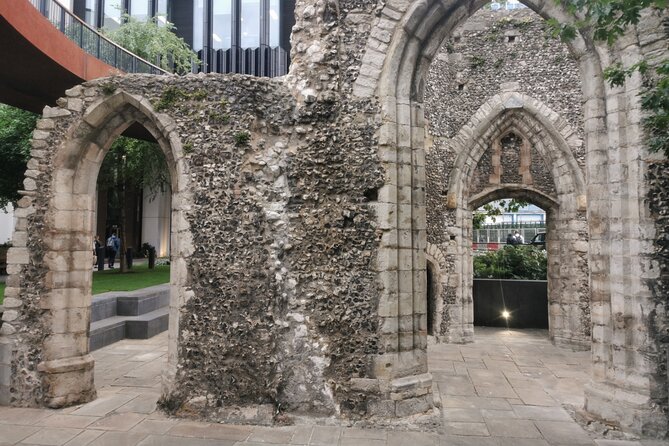
The tour kicks off at St. Alphage London Wall, starting in the Salters garden where the story of “many peoples” comes together, from Roman to Norman. Even if you only know London from the big names, this stop is a quick mindset shift. Instead of jumping straight to the grand City buildings, you start with the reason the City could survive outside pressure in the first place.
From there, you move to the Roman city wall, with a focus on the oldest part as a fort. This is the kind of place where the structure itself helps you understand what people were solving. The wall is not a background detail. It is the literal reason London’s early center could hold its ground.
Timing is relaxed here. Each of these early stops is short, around 10 to 15 minutes, so you do not get stuck in one spot. The payoff is that you leave with a clean timeline in your head: wall first, then institutions and communities, then power structures.
St. Giles Cripplegate and St. Mary Aldermanbury: churches as City memory
Next up is St. Giles Cripplegate, described as one of the oldest medieval churches in the City since Norman time, with roots in an older Saxon church site. Even if you are not the type who reads every plaque, this stop works because it keeps repeating one big theme: the City kept rebuilding over earlier layers.
Then comes St. Mary Aldermanbury Garden. This is a more open, reflective stop, where you see ruins tied to the name of the aldermen’s court, now associated with the Guildhall. The tour also notes Shakespeare and legends connected to different livery companies. That mix is why this walking route feels different from the usual “church, then photo, then bus.”
If you are thinking about what to wear, this section is where sensible shoes pay off. Gardens, churchyards, and old stone routes can be uneven. The tour is stroller-friendly, but your feet still do the work.
Salter’s Hall Garden and the livery company focus: power, trade, and sacrifice
A major thread of this tour is the role of the livery companies. You see it start at Salter’s Hall Garden, where the tour connects the Roman wall’s fortification role to the way London faced outside influence after the Romans built Londinium.
This stop also brings in Celtic people as part of the story, framed as the indigenous inhabitants and the reason Romans fortified Londinium with a wall. It is a reminder that London’s early history is not only about Rome and then jumping to English royalty. It is about earlier peoples and the friction that shaped the City.
Then you move from the physical fortifications into social and political ones. At Salter’s Hall, you learn the hall’s place among the 12 most important livery companies, ranked 9th. That ranking detail may sound small, but it’s the kind of fact that helps you understand why certain names keep showing up around the City.
Right after that, you hit Brewers’ Hall, called out as a livery company that set a standard for booze. This is where I like the humor and the realism. The City was never only about sermons and grand laws. Trade and everyday industries made people powerful too.
Guildhall and Guildhall Art Gallery: civic myth in the middle of real buildings
The route pivots to the heart of City governance at City of London, briefly as the municipal governing body and historic center. From there, it’s a deeper hit at Guildhall. The tour frames it as a town hall that’s been on the current site since at least the 13th century, then moves into mythology and influences, from Greek through Roman, Saxon, and Norman.
You should expect this stop to feel like a mashup of civic pride and story-building. It is not dry. It’s the City teaching itself to you through buildings and legends, and you can feel how the Square Mile talks about its own origin.
Then comes Guildhall Art Gallery, noted as a location of the Roman Amphitheatre. This is the kind of detail that makes you look twice. You are not just walking past art rooms, you are passing a physical reminder that Roman London had public space and spectacle too. The stop is timed at 25 minutes, which is long enough to actually absorb the idea, not just point and move.
Also on in London, no fuss
- Stonehenge, Windsor Castle, and Bath from London★ 4.5 · 18,662 reviews
- London Big Bus Hop-On Hop-Off Tour with Optional River Cruise★ 3.5 · 10,803 reviews
- Stonehenge, Windsor Castle and Bath with Pub Lunch in Lacock★ 4.5 · 7,402 reviews
- Tower of London and Crown Jewels Exhibition Ticket★ 4.5 · 6,677 reviews
St. Lawrence Jewry and St. Margaret Lothbury: sacrifice, wards, and the meaning of Worshipful
You next visit St. Lawrence Jewry, described as remembering a saint who helped Christianity flourish with a sacrifice framed as unforgettably cruel. That wording is a hint that this stop has a darker tone than the “great deeds” version of history. You get a quick but memorable human side to the City’s religious backdrop.
Then it’s St. Margaret Lothbury Church, where the tour explains it represents two wards of the City and connects ward history to how livery companies gained the naming “Worshipful.” This matters because it turns titles into something practical. The names are not only honorifics. They hint at status, authority, and civic role.
Overall, this stretch reinforces the tour’s big message: the Square Mile is a dense system. Religion, governance, trade, and community names all overlap, and the walking route keeps you seeing those overlaps.
The Royal Exchange, Mansion House, and Minotaur storytelling: where legend meets finance
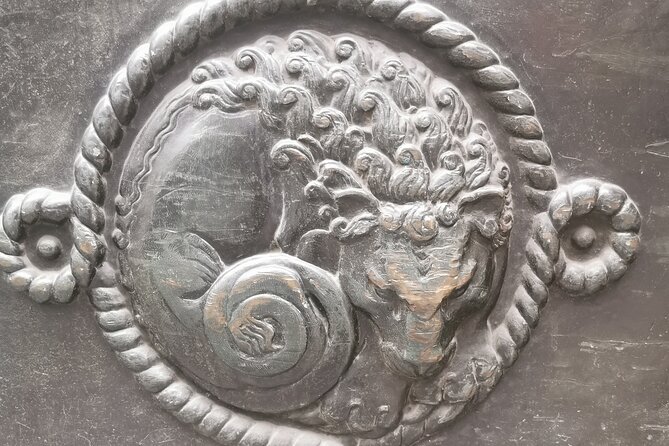
Now you get the payoff for a lot of people’s expectations: big City icons. At The Royal Exchange, the tour points out it was built “by a legend for adventurers to meet,” and also includes the detail of the golden grasshopper on top. Even if you only catch it from the outside, that’s the kind of recurring symbol that makes the whole City feel connected.
Next is Mansion House of the City of London, described as the head-of-governance home of the Lord Mayor of the City of London, who is also an international ambassador for the UK’s financial and professional services sector. If you’ve ever wondered how the City presents finance as something almost ceremonial, this stop explains the bridge between official authority and global reputation.
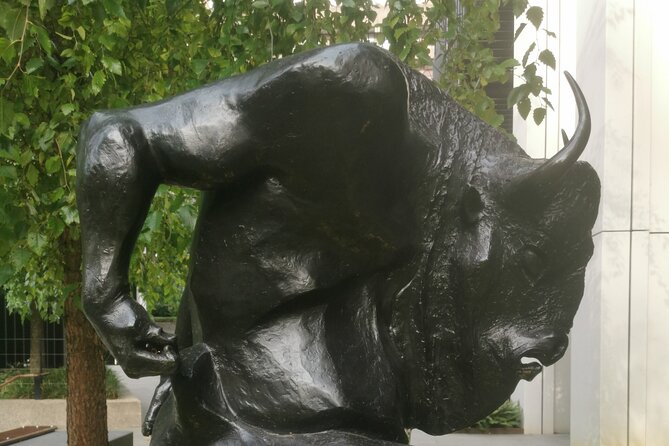
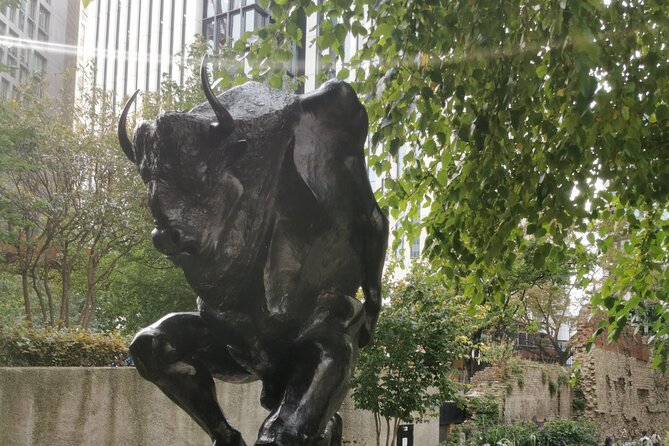
The tour also keeps a running thread about a Minotaur story. You hear it again near the end, and the earlier stops help you understand why a myth would matter in a business district. The City uses symbolism to keep continuity across centuries.
Dragon lamp circle to the Bank of England: finishing with authority and symbolism
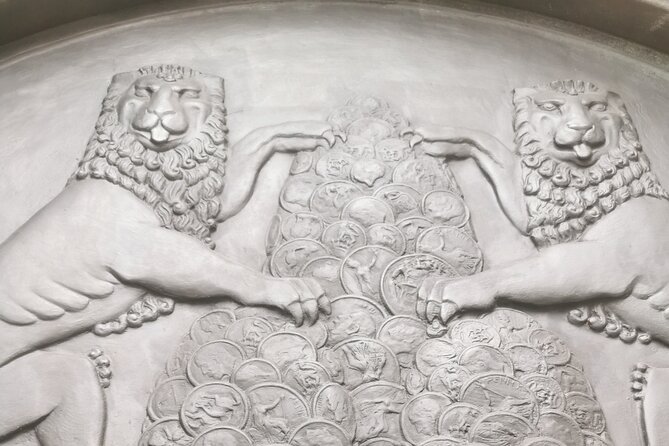
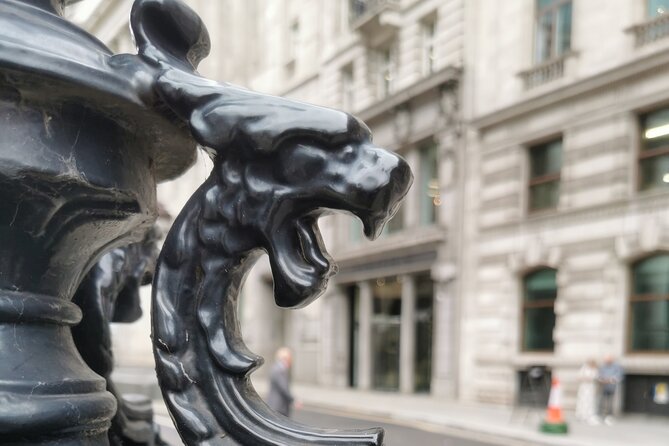
The last part is one of the most interesting. You visit London Troops War Memorial, described as a circle of 12 dragon lamposts representing the 12 great livery companies. Here the tour highlights notable figures remembered around the area, then concludes by returning to the Minotaur story. It’s a neat way to end: you start with fortifications, you end with a City map made of symbols.
Then you finish at the Bank of England. This stop is short, about 5 minutes, but it’s packed with meaning. The tour describes it as an influential, traditional yet forward-looking institution, and points you to the golden statue on top and the story behind it.
You do not need to be a finance fan to appreciate why this ending works. You get the feeling that the Square Mile keeps its identity through symbols, buildings, and ritual authority, even when the industry behind the scenes changes.
Price and value for a 2.5-hour guided Square Mile walk
At $30.69 per person for about 2 hours 30 minutes, this tour sits in a reasonable range for a guided, highly structured walking experience. The value comes from three things.
First, the itinerary is packed with major City anchors, like Guildhall and the Bank of England, but it spends meaningful time in smaller, less obvious places too, like church sites and gardens connected to ward history.
Second, the tour is listed with admission ticket free for the stops included. That matters because City attractions can nickel-and-dime you when a walk becomes a ticket hunt.
Third, the group size is limited to 8 travelers max, which makes the experience feel more like a guided lesson than a mass shuffle. If you learn best by asking questions as you go, this setup helps.
Accessibility, pace, and what to expect while you walk
The route is listed as wheelchair and stroller accessible, which is a real plus in a city where some “tours” are just steep streets and hope. Still, it’s a walking tour. You should expect frequent transitions and time spent on outdoor ground around gardens and old church areas.
Also note the stop lengths. You’ll have a mix of short hits (around 5 minutes) and a couple longer pauses (up to 25 minutes). That’s great for coverage, but not ideal if you need lots of time to linger inside or take extended detours on your own.
If you want maximum comfort, wear supportive shoes and keep a water plan. London can be walkable and still tiring, especially when you’re thinking as much as walking.
Who should book this tour, and who might want something else
This experience is a good match if you want:
- A history-focused walk that explains the City through buildings and civic culture
- An intro to the Square Mile for London newcomers
- A route that mixes well-known landmarks with less obvious spots
It may not be the best fit if you prefer:
- Lots of long museum-style stops
- A slow, sit-down pace
- An itinerary that leans heavily on indoor exhibits only
Should you book City of London History Tour: The Square Mile that Rose to Empire?
Yes, you should book it if you want a single, organized way to understand why this part of London matters, and how Roman walls, medieval churches, City governance, livery companies, and finance authority all connect. The price-to-time ratio is fair, the small group size helps you follow the story, and the tour’s ending at the Bank of England gives you a satisfying sense of where the power landed.
If you like your history with some human tone and a few playful symbols, this route also makes it easier to remember what you saw, from the golden grasshopper to the dragon lamp circle.
FAQ
How long is the City of London History Tour?
The tour lasts about 2 hours 30 minutes.
How much does it cost?
The price is $30.69 per person.
Is the tour available in English?
Yes, it is offered in English.
Do I need to print a ticket?
No, you get a mobile ticket.
Where does the tour start and end?
It starts at Barbie Green, London Wall Pl, Barbican, London EC2Y 5AU, UK, and ends at London Troops War Memorial, Cornhill, London EC3V 3LN, UK.
How many people are in the group?
The maximum group size is 8 travelers.
Is the tour wheelchair and stroller accessible?
Yes, it is listed as wheelchair and stroller accessible.
Are there entry fees for the stops?
The stops are listed with admission tickets as free.
When will I receive confirmation?
Confirmation is received at the time of booking.
What is the cancellation window?
Free cancellation is available up to 24 hours in advance of the experience start time for a full refund.
Latest to join the queue for London



Historical Tours, compared.
London Small Group Tour of Historical Pubs
Read our review →

Shadows of York: Ghost Walk and Horrible History.
Read our review →
A Walk Through Time: History of Liverpool Walking Tour
Read our review →
Royal Historic Pubs Walking Guided Tour in London
Read our review →
Private Group: Historical Pub Walking Tour of London
Read our review →
Best Of Liverpool Heritage, History & Culture Guided Walking Tour
Read our review →Browse the lists this tour appears in