
Reviewed · WALKING TOURS IN CAMBRIDGE
Cambridge Self Guided Walking Tour
Cambridge, one app at a time. This self-guided walking tour strings together the city’s parks, university landmarks, and museums into a smooth 2 to 3 hour loop, priced at $12.22. I like that you get a map, GPS route, and stop alerts, plus an audio guide led by Helen, not a robot voice.
I also love the way the route moves from big-name icons to the slightly quieter corners, like Bene’t Street, so your walk feels like Cambridge rather than just a photo checklist. One thing to keep in mind is that several major stops require tickets you pay for separately, including King’s College Chapel, St Mary the Great, the Round Church, and Cambridge University Library.
In This Review
- Key highlights you will actually feel on the walk
- Setting Off From Cambridge Bus Station to Christ’s Pieces
- Christ’s Pieces, Emmanuel College, and Parker’s Piece
- University Museums: 4.5 Billion Years to Zoology Galleries
- Museum of Archaeology and Anthropology, plus the Whipple Museum
- Pitt Building and Fitzwilliam Museum: Cambridge’s Grand Facades
- Scudamore’s Punting Station to the Mathematical Bridge
- Corpus Christi College and Bene’t Street: Where the Walk Turns Quieter
- Ticketed Sights: King’s College Chapel, St Mary the Great, and the Round Church
- Market Square, Trinity College, Senate House, and River Cam science
- Ending at Cambridge University Library: Early 20th Century Architecture
- How to use the app so you do not feel rushed
- Price and value: what $12.22 really buys you
- Who this walking tour is best for
- Should you book this Cambridge Self-Guided Walking Tour?
- FAQ
- How long is the Cambridge Self Guided Walking Tour?
- How much does it cost?
- Is the tour self-guided, and what language is it offered in?
- What is included with the tour?
- Are the main sights free, or do I need separate tickets?
- Where do I start and where does the tour end?
- Is this tour private for my group?
Key highlights you will actually feel on the walk
- Stop alerts in the app help you keep your pace and not miss what to read at each point
- Helen’s audio guide is human-led, and you can pair it with the in-app materials like videos and pictures
- Big museums, big time periods at a walkable university cluster, from 4.5 billion years to animal evolution
- Many free admission stops keep the day affordable, even with a couple of optional ticketed sites
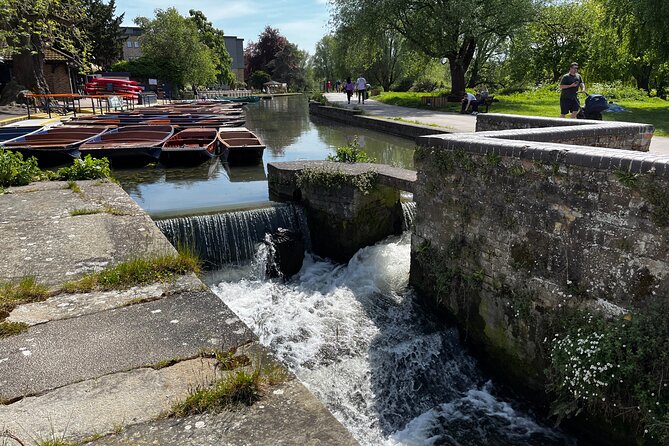
- Classic Cam river views on foot, including the Mathematical Bridge and a punting history stop
Setting Off From Cambridge Bus Station to Christ’s Pieces
Your tour begins near Cambridge Bus Station on Drummer St (CB1 1NE), and the ending point is Cambridge University Library on West Rd (CB3 9DR). That matters because it gives you a natural flow, start with orientation, finish with a handy place to wander more on your own.
Christ’s Pieces is where the app first gets you thinking about Cambridge’s setting. You start near the park and use that open space to frame the city, before your route gets crowded with buildings, college gates, and museum doors.
More Walking Tours in Cambridge
Christ’s Pieces, Emmanuel College, and Parker’s Piece
From the park start, the tour quickly nods toward Emmanuel College and its reputation for academic excellence. John Harvard is connected to Emmanuel College, since he was baptised at the college chapel and later became a benefactor of Harvard University in the USA. It’s a tidy reminder of how Cambridge’s influence stretches across the Atlantic.
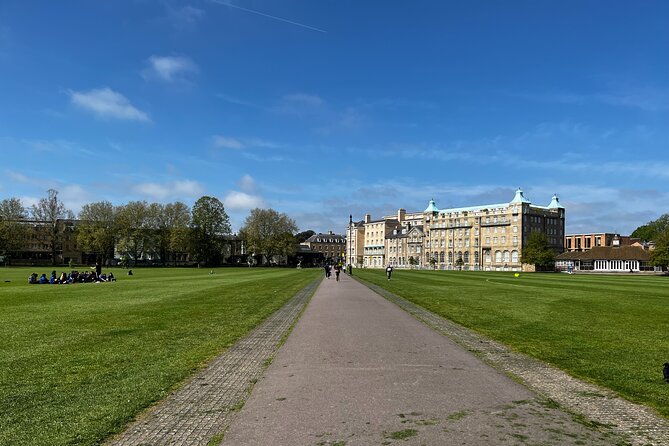
Next comes Parker’s Piece, a large public park in the center of Cambridge. The tour’s focus on Edward Parker donating a portion of the land in 1613 gives you a sense that these green spaces are not just pretty scenery, they have paperwork history behind them.
Practical tip: take a breather here. Even if you are eager for museums, parks like this help you reset your pace so the rest of the day feels fun, not rushed.
University Museums: 4.5 Billion Years to Zoology Galleries
This is the heart of the walk for science lovers. The route sends you through the University’s oldest museum, described as a 4.5 billion year journey, moving from meteoritic building blocks of planets to fossils showing how life evolved in oceans, on land, and in the air. The best part is that the tour gives you a narrative pathway, so you are not wandering room to room hoping something makes sense.
Right after that comes the University Museum of Zoology’s new(er) gallery experience, focused on animal diversity and evolution. The highlight list is the kind you want to see in person: a 21m fin whale, a giant ground sloth, one of the most complete dodo skeletons in the UK, and Captain Cook’s conch. These are not subtle objects. They are the sort of specimens that make you stop and stare, then read the labels like a detective.
What I like about this segment is that it is not just about naming animals. The route points you toward stories of extinction, survival, evolution, and exploration, which turns a museum visit into a clearer understanding of how scientists think.
Museum of Archaeology and Anthropology, plus the Whipple Museum
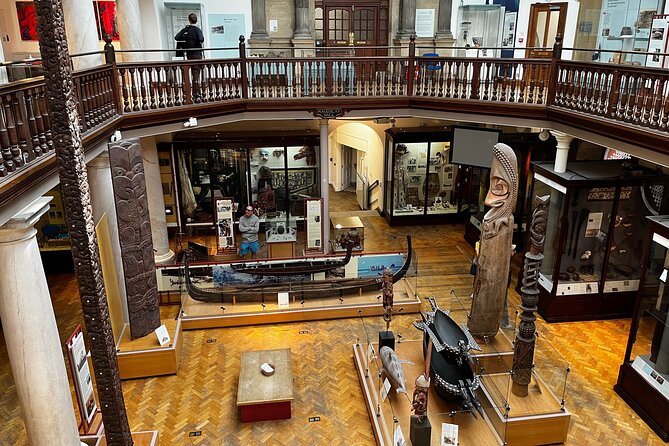
The itinerary then shifts from natural history into human history and science culture. At the Museum of Archaeology and Anthropology, the tour notes that the collections number more than 800,000 objects of outstanding research and historical value. It also points out the scale of the Photographic Archive, with over 100,000 field photographs and negatives, plus more than 30,000 fonds in historical documentary archives.
You will likely feel the size of that information load, and that’s where the self-guided format helps. You can spend more time if something catches your eye, or speed up if you want to keep the walk moving.
Then comes the Whipple Museum, with scientific instruments, apparatus, models, pictures, prints, photographs, books, and other material tied to the history of science. This stop works well if you like the idea that science has a past, and that tools and diagrams are part of the story, not just the results.
Pitt Building and Fitzwilliam Museum: Cambridge’s Grand Facades
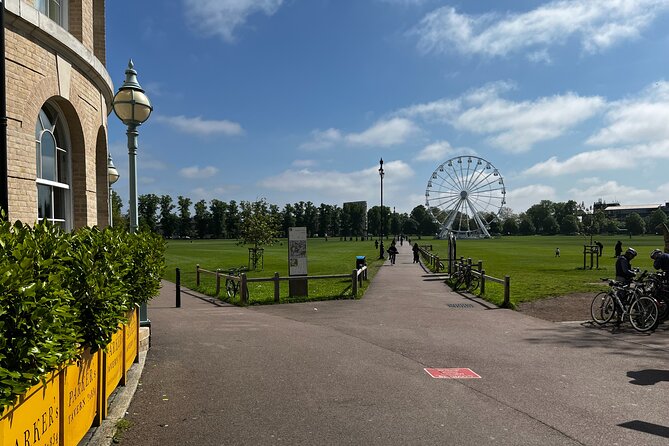
After the museum cluster, the walk returns to architectural landmarks. The Pitt Building was constructed in 1833 and named after William Pitt the Younger, who served as Prime Minister in the late 18th and early 19th centuries. The tour gives you a political timeline hook, which helps the building feel anchored in real people and real eras.
Next is the Fitzwilliam Museum, housed in a neoclassical building completed in 1848. Look for the imposing facade with grand columns, a majestic dome, and grand statues of lions either side of the entrance. Even if you skip extra galleries inside, this is a stop that gives your camera and your brain something solid.
More England on foot, brolly optional:
- Cambridge University Walking Tour★ 5.0 · 316 reviews
- Walking Tour of Cambridge★ 5.0 · 305 reviews
- Private 2-Hour Cambridge Walking Tour With University Alumni Guide★ 5.0 · 95 reviews
- Tangential Cambridge: Group Walking Tour of Sights and Highlights★ 5.0 · 79 reviews
Scudamore’s Punting Station to the Mathematical Bridge
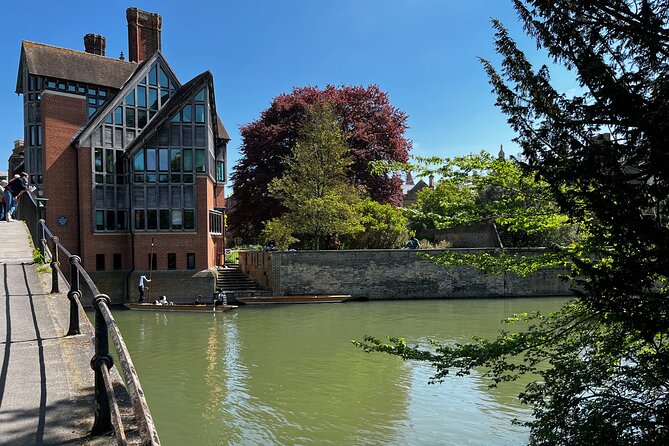
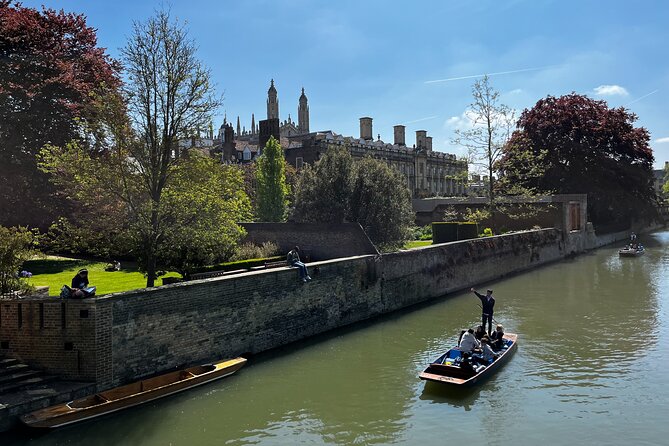
This portion is perfect for a pause that still feels like you are moving. At Scudamore’s Mill Lane Punting Station, the tour tells the history of punting and anchors it in a founder story: Scudamore’s Punting Company was founded in 1910 by Jack Scudamore, a boat builder who noticed punting’s popularity at Henley upon Thames royal regatta among the upper and middle classes.
Even if you are not buying a punt ticket, it helps you understand why punting became the Cambridge experience it is today.
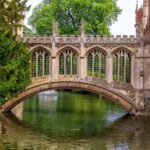
Then you reach the Mathematical Bridge, a famous wooden footbridge across the River Cam that connects two parts of Queen’s College. It’s the kind of Cambridge detail that makes you grin, because it feels both clever and quaint at the same time, and the bridge is easy to appreciate from the walkway.
Corpus Christi College and Bene’t Street: Where the Walk Turns Quieter
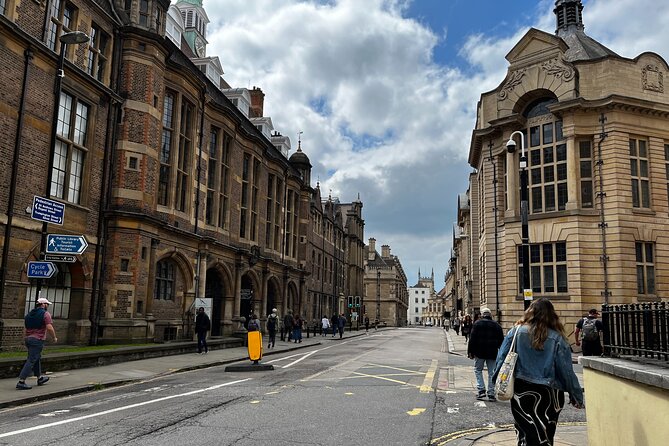
Corpus Christi College appears next, founded in 1352 by the Guild of Corpus Christi and the Guild of the Blessed Virgin Mary. A college founded this far back turns your route into something deeper than modern sightseeing, especially when you stop and look at the gates like they were made to last.
Then the tour heads to Bene’t Street, described as an older street not commonly on the typical tourist trail. The street name comes from St Bene’t’s Church, and this is one of those stops where you get a feel for everyday Cambridge, not just the headline attractions.
My advice: if you like photography, this is where you can slow down. Wide shots of college buildings are fun, but the best angles often come from smaller streets like this.
Ticketed Sights: King’s College Chapel, St Mary the Great, and the Round Church
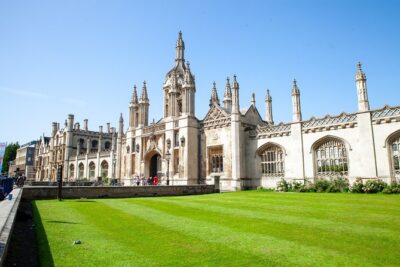
Some of Cambridge’s most iconic sites require separate admission, and the app flags that clearly. King’s College Chapel is one of the most recognisable landmarks in the city, and the tour notes the site was originally the floodplain of the River Cam before medieval buildings arrived. That detail gives you a better mental image of how the landscape shaped the architecture.
St Mary the Great, also called St Mary’s, dates back to the 12th century, but the current building mostly dates from the late 15th and early 16th centuries. Again, the point is not the date alone, it is that you can see layers of time.
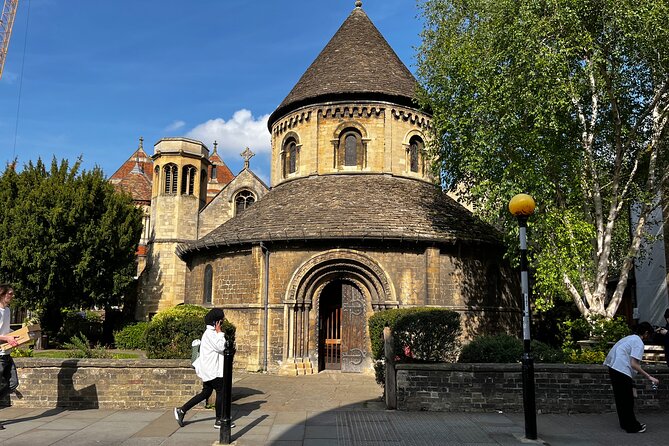
Then comes the Round Church, officially the Church of the Holy Sepulchre, founded in 1130 by crusaders who had returned from the Holy Land. It is a strange and fascinating concept for English Christianity, and the geometry makes it memorable even if you only glance from outside before deciding to buy a ticket.
Practical budgeting tip: if you want to include these stops, think of that as part of your day’s cost. The walking tour itself is priced low, but Cambridge’s big religious landmarks are not free.
Market Square, Trinity College, Senate House, and River Cam science
Cambridge Market Square sits right in the city center next to the historic Guildhall. The app describes it as home to one of the oldest and largest open-air markets in the country, and even if you do not plan on shopping, it is a good reset moment.
Near here, the tour references Trinity College, founded in 1546 by King Henry the VIII. Trinity is described as the largest college in Cambridge by both land area and student population, which gives you a useful scale for how university life dominates the city.
Senate House comes next, an example of neoclassical architecture designed by James Gibbs and completed in 1730. Neoclassical buildings are often best appreciated by noticing the symmetry and proportions, and Senate House is the sort of stop where you can get value from a quick look plus a bit of reading time.
Finally, you get a very Cambridge moment of science and setting at Garret Hostel Bridge. The tour notes the surface of the River Cam floodplain is only 4m above sea level, and the riverbed is only about 2m above sea level. It also mentions the coastline lies almost 50 miles away at King’s Lynn. This is one of those details that makes Cambridge feel physical and measurable, not just scenic.
Ending at Cambridge University Library: Early 20th Century Architecture
You finish at Cambridge University Library on West Rd. The tour describes it as a relatively new building from the early 20th century, with lovely internal architecture features, and notes that admission is not included.
Even if you do not go in, this is a strong ending point because it puts you near more wandering routes and food options. Plus, ending at a major university building feels like the tour’s final thought, not a random last stop.
How to use the app so you do not feel rushed
This tour is designed to work at your pace. You get 3 weeks of unlimited access to the self-guided tour on the app, so you are not stuck planning everything down to the minute.
In practical terms, you will get a map, directions, and a GPS route with the stops laid out. The app also pings when it is time to pause and read, which helps you stay oriented without constantly checking your phone.
You also have an audio guide option with Helen guiding you through the audio experience and the audio being human-led, not computer-generated. If you prefer reading, the in-app materials include audio, videos, pictures, and recommendations, so you can mix and match depending on your mood.
Timing-wise, the walk is listed at about 2 to 3 hours. If you pause for museum looking rather than quick glances, plan toward the upper end of that range, especially since some stops involve optional ticket buying.
Price and value: what $12.22 really buys you
At $12.22 per person, the pricing is hard to beat for an organized walking route with GPS and stop alerts. Many stops are listed as free admission, including major sections of the park and several university landmarks and museum stops.
Where the value gets especially real is in the flexibility. You get unlimited access for 3 weeks, so you can replay it later for a second pass, or use it in stages if you want to come back after lunch. For a day where you still want to spend money on a few ticketed sites, this structure keeps most of your spending controllable.
The optional tickets for places like King’s College Chapel, St Mary the Great, the Round Church, and Cambridge University Library are the main financial swing. If you were hoping for a totally budget-free day, you should plan for a few additional admissions.
Who this walking tour is best for
I think this tour is especially good for you if you like structure without hand-holding. The self-guided format lets you linger with the specimens in the zoology galleries, then move on quickly if you feel the urge to keep walking.
It also suits you if you want a mix of Cambridge essentials and less obvious streets. Bene’t Street is the kind of addition that makes the day feel more lived-in.
If you want an in-person guide answering your questions on the spot, this may not be your best match. It is listed as having no in-person guide, so you are relying on the app content for context.
Should you book this Cambridge Self-Guided Walking Tour?
If you want a well-paced Cambridge walk you can start and follow without stressful planning, I would book it. The strongest selling points are the app-guided stop alerts, the human-led audio by Helen, and the sense that the route balances famous landmarks with science and museum storytelling.
You should also book it if you care about value. Many stops are free, and the $12.22 price buys you a smart plan plus 3 weeks of replay time, which is exactly what you want in a city where you may want a second look.
If you know you want all the ticketed interiors, budget a bit extra for those admissions and give yourself enough time to slow down.
FAQ
How long is the Cambridge Self Guided Walking Tour?
The tour is estimated at about 2 to 3 hours.
How much does it cost?
The price is $12.22 per person.
Is the tour self-guided, and what language is it offered in?
Yes, it is self-guided. The tour is offered in English.
What is included with the tour?
You get 3 weeks unlimited access to the self-guided tour on the app, a map and GPS route with stop directions, and an audio guide led by Helen, plus audio materials like videos and pictures and recommendations. You can also check the Before You Go section of your e-ticket.
Are the main sights free, or do I need separate tickets?
Many stops are listed as free, but some are marked as admission ticket not included, including King’s College Chapel, Great St Mary’s Church, the Round Church, and Cambridge University Library.
Where do I start and where does the tour end?
The start point is Cambridge Bus Station on Drummer St, Cambridge CB1 1NE. The end point is Cambridge University Library on West Rd, Cambridge CB3 9DR.
Is this tour private for my group?
Yes. It is described as a private tour or activity, meaning only your group will participate. Service animals are allowed, and it is near public transportation.
More Self-Guided Tours in Cambridge
- Private Self-Guided Dinky Door Hunt in Cambridge
★ 4.5 · 103 reviews - Former Student’s Cambridge Colleges: An Outdoor Audio Tour
★ 4.0 · 54 reviews - Scholars & Secrets of Cambridge: Self-Guided Puzzle Adventure
★ 3.5 · 19 reviews - Cambridge’s History & Secrets with Self-Guided Walking Tours
★ 4.5 · 9 reviews
Latest to join the queue for Cambridge



Walking Tours in Cambridge, compared.
Cambridge University Walking Tour by Alumni™ Kings College Option
Read our review →
Cambridge Walking & Punting Tour by Alumni™ King’s College Option
Read our review →
Creepy Cambridge – Cambridge’s Most Entertaining Ghost Walk
Read our review →
Private 2-Hour Cambridge Walking Tour With University Alumni Guide
Read our review →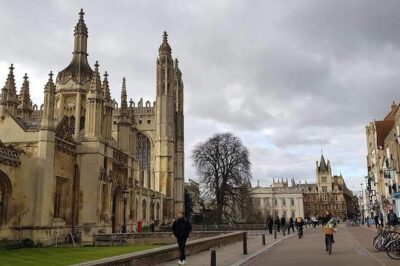
Tangential Cambridge: Group Walking Tour of Sights and Highlights
Read our review →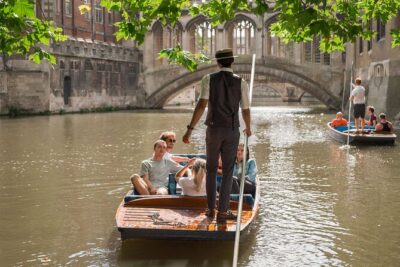
Private | Cambridge Walk & Punt Tour by Alumni™ & King’s Chapel
Read our review →Browse the lists this tour appears in