
Reviewed · SELF-GUIDED TOURS
Brighton Private Self-Guided Tour
Brighton has a way of pulling you along the coast. This private self-guided walk turns big landmarks into an easy route you can do at your speed. You get an audio guide by Spencer, so you are not just looking, you are also learning what you are seeing.
I especially like the freedom factor. You can pause at Regency terraces, duck into side lanes, or simply linger by the sea without waiting on anyone. Second, I like that the tour is built as a logical stroll, with stop-by-stop context and directions, so you always know what to do next.
The main thing to watch is tech timing. You will need to activate the tour from the email you get after booking, and some attractions may require separate paid entry. If you miss the app instructions, you could feel stuck fast, so check your spam folder and the Before You Go section.
In This Review
- Key highlights to notice on this route
- Starting at Brighton Palace Pier, where the sea sets the tone
- Seafront landmarks: Sealife Centre, Madeira Lift, and Concorde II
- Kemp Town Estate and Kemptown lanes, where architecture has a point
- St James’s Street Mews to the Pride connection
- Royal Pavilion and North Laine, two ways to enjoy the city
- St Nicholas of Myra Church, a Regency maze vibe, and the West Pier story
- Boyce’s Street to the South Lanes, finishing with Prince Albert Street
- Price and value: what you get for $12.49
- How to use a self-guided tour without getting lost in your phone
- Who this tour is best for (and who might want something else)
- Should you book this Brighton Private Self-Guided Tour?
- FAQ
- How long is the Brighton Private Self-Guided Tour?
- What does it cost?
- Is this tour private?
- What language is the audio guide available in?
- What is included with the tour?
- Do I need to pay for attractions separately?
- Where do I start the tour?
- How do I activate the tour in the app?
- Is there an in-person guide?
- Are service animals allowed?
Key highlights to notice on this route
- Spencer audio guide that is human-led, not computer-generated
- GPS route and step-by-step stops designed for a smooth walk
- Palace Pier to West Pier in one flow, with real historical context
- Kemp Town Estate and North Laine stops that explain why these neighborhoods feel the way they do
- Seasonal detail for Madeira Lift (Good Friday to the last Sunday in September)
- A “Lanes” style detour vibe with narrow walkways like Boyce’s Street
Starting at Brighton Palace Pier, where the sea sets the tone
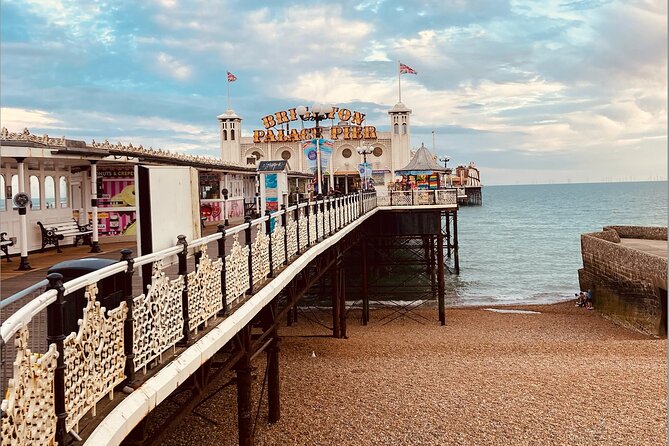
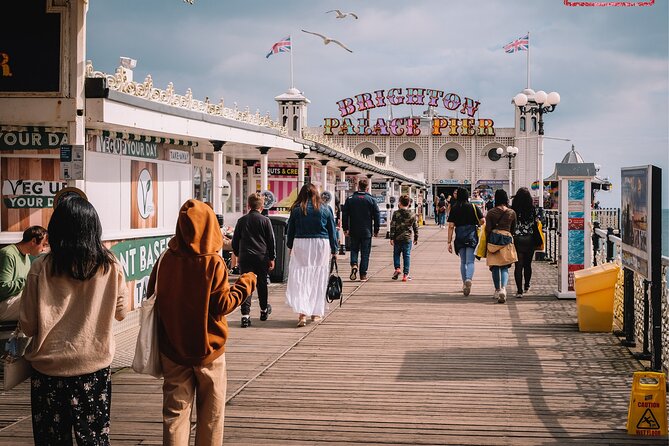
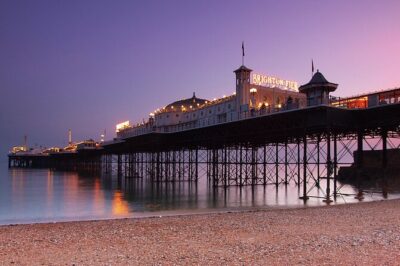
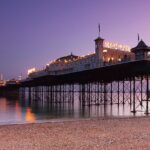
The tour begins at Brighton Palace Pier, at the meeting point by the pier itself. Palace Pier is a classic Brighton anchor, and starting here makes the rest of the route feel like a gentle unfolding, not a random checklist.
Right away, the pier gives you something practical. It is easy to orient yourself visually, and the seafront route is built to keep you moving along the waterline. You will spend about 10 minutes at this stop, which is just enough time to get oriented and spot what you want to circle back to later.
If you are planning photos, plan them early. Once you start drifting into lifts, lanes, and terraces, you will be walking more than standing still, so you want your first “wow shot” while you have open views.
Also on in Brighton, no fuss
Seafront landmarks: Sealife Centre, Madeira Lift, and Concorde II
After Palace Pier, the route heads to the Sea Life Centre, formerly known as The Brighton Aquarium. This is the oldest operating aquarium in the world, opened in 1872, designed by English architect Eugenius Birch. Even if you do not go inside, it is worth looking at the building context, because you are standing in a very early wave of seaside entertainment.
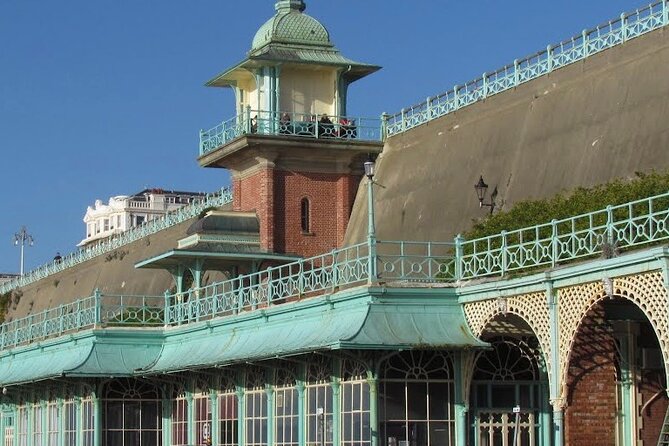
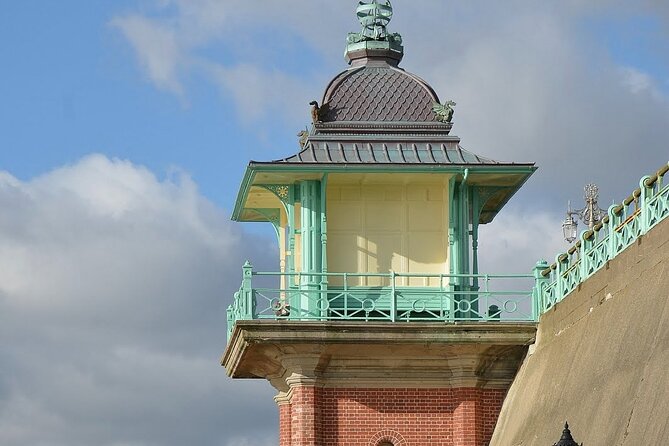
Next comes the Madeira Lift, and the detail here is useful for your planning. The lift has a striking green gingerbread roof tiling, and it is open from Good Friday to the last Sunday in September. If you are traveling outside that window, you can still follow the route, but do not expect the lift to run.
A short step along from that lift area, the tour points you toward Concorde II, a 16-foot ceilinged, black-painted 600-capacity indie entertainment venue. The tour notes performances over the years by artists including Melanie C, Sophie Ellis Bextor, and Jarvis Cocker. This is one of those spots where the sound and the story connect, even if you only glance in.
The value of this section is simple: it keeps you close to the seafront, while giving you anchors that explain how Brighton’s entertainment industry shaped the place. It is a good start if you want your first hour to feel like you are “getting” Brighton.
Kemp Town Estate and Kemptown lanes, where architecture has a point
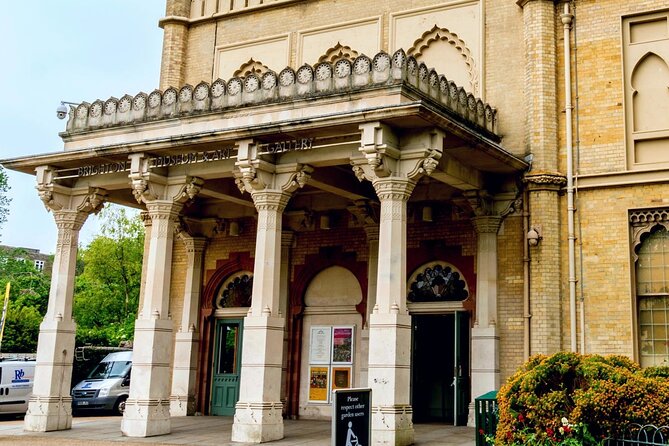
This part of the route is for people who like streets that look like they were designed on purpose. You move toward an imposing crescent of white Regency townhouses connecting Lewes Crescent to Sussex Square. The tour frames this as part of the 19th-century Kemp Town Estate, designed by Charles Busby and Amon Henry Wilds, financed by Thomas Read Kemp.
That funding detail matters. It is not just pretty buildings, it is a reminder that seaside towns grew because someone saw money, movement, and status in the coastline. When the audio ties the street layout to the people who paid for it, you will notice the street shape more.
Then you reach Kemptown, and the walking rhythm shifts. The tour calls this an artisan quarter with two vibes: east of Lower Rock Gardens you get independent pubs, restaurants, boutiques, and markets, then later the route leads you toward the more lively St. James Street area. You will spend about 15 minutes here, which is enough time to pick a direction and feel the neighborhood.
The best way to use this stop is to choose one micro-mission. Either find a snack, browse one street, or just stop and watch how the lanes curve. That is when the “private self-guided” format becomes a plus, because you control the pace.
St James’s Street Mews to the Pride connection
From Kemptown, the route goes to St James’s Street Mews for about 10 minutes. This is a big Brighton identity point, and the tour specifically links it to the city’s LGBTQ+ community and an annual Pride street party away from the main event at Preston Park.
The audio also adds a reality check: this street began as a quiet fishing village in the early 1800s. That contrast helps you read the neighborhood. You are not just passing through modern life, you are moving through a place that changed with the city.
Because this is a mews, the practical tip is to slow down and look sideways. Mews streets can feel narrow and easy to rush through, but they are where you get the most sense of Brighton’s small-scale street texture.
Royal Pavilion and North Laine, two ways to enjoy the city
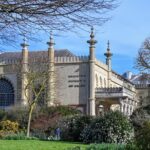
Next up is the Royal Pavilion. The tour notes it as a Grade I listed former royal residence, dating back to 1787, originally built as a seaside residence for the Prince of Wales, who became Prince Regent in 1811. Even if you do not pay for anything, you will get a much sharper sense of why it looks the way it does.
This stop is a good “reset” for your eyes. After the seafront entertainment area, the Pavilion feels like the city saying, we can also do spectacle with royalty. It is the sort of place where your brain starts connecting dates and names, not just architecture.
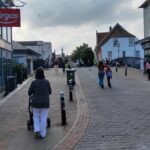
Then the route shifts to North Laine, which is one of the most practical shopping-and-strolling areas in Brighton. The tour explains that despite the singular name, North Laine covers a succession of lanes and streets. It also gives you deep-time context: it was established as a fishing village around the time of the Doomsday Book, and archaeological finds suggest dates back to the Bronze Age.
You will spend about 10 minutes here. That is not long, so I suggest you use it like a spark. Walk one lane, then stop, look up, and pick one direction to return to on your own later if you want.
While the kettle’s on in Brighton:
- Seven Sisters and South Downs Tour★ 5.0 · 491 reviews
- SEA LIFE Brighton Admission Ticket★ 4.0 · 468 reviews
- Brighton Bar Crawl★ 5.0 · 377 reviews
- The Brighton story – walking tour★ 5.0 · 251 reviews
St Nicholas of Myra Church, a Regency maze vibe, and the West Pier story
The next stop is St Nicholas of Myra Church, on a quiet corner at Church Street and Dyke Road. The tour highlights it as the third oldest surviving building in Brighton and Hove, and it only takes about 5 minutes. Small time investment, big payoff, because this is one of those “wait, why is this here?” pauses that keeps the tour from feeling like only tourist sightseeing.
From there, the route goes into a more whimsical style of place. The tour describes an Aladdin’s Cave vibe inside a Regency public house, with a maze of nooks and secret enclosed terraces, plus bric-a-brac, pictures, and artefacts around every corner. I like this kind of stop because it rewards curiosity and gives you a break from straight-line walking.
Then the audio points to the site’s older use. It mentions the area was originally known as Belle Vue Field, used at different times including military encampment. It also notes that this seaside architecture viewpoint helped shape what became known as The West Pier.
That sets up the big West Pier moment. The tour explains the West Pier was designed by Eugenius Birch and opened in 1866, and now it is iconic in skeletal disrepair. The audio gives you the kind of history detail that changes how you view ruins. You are not just looking at damage, you are looking at the shape of a whole Victorian seaside world.
Right around this zone, the route also calls out the British Airways i360, formerly known as the Brighton i360. It is an observation tower standing 162m high on the central section of Brighton’s seafront. If you are curious about views, this is the kind of nearby landmark where you can decide on the spot whether paying for an attraction makes sense for your day.
The tour also includes the Grand Hotel, described as a stunning Victorian seafront hotel designed by John Whichcord Jr. and built in 1864 for upper classes visiting the city. This stop works well because it anchors you in Brighton’s “who came here?” story, not just “what is here now?”
Boyce’s Street to the South Lanes, finishing with Prince Albert Street
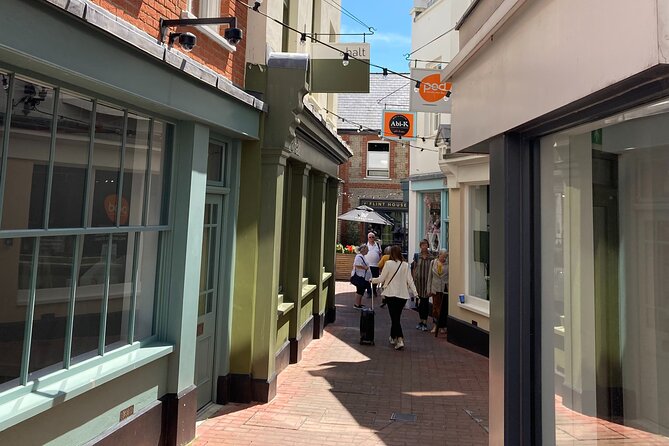
After the West Pier and i360 area, the route heads inland-ish for Boyce’s Street. The tour explains this section is really an enchanting journey through ancient, narrow walkways that are among Brighton’s best-kept secrets. You will spend about 10 minutes here.
This is the perfect place to reset your expectations. Brighton is famous for big attractions, but Boyce’s Street is where you feel the older street pattern survive. If you like walking without a schedule, this stop is doing real work.
Next, the route mentions The Hippodrome. It says architect Lewis Karslake designed what is now the Hippodrome in 1897, and the site was originally intended as an ice rink. Then the audio places you near the seafront intersection at Ship Street.
As Ship Street meets the seafront, on the right-hand side you will see the splendid Gothic building that now houses the exclusive Hotel du Vin. The tour uses this as a landmark for navigation, which is helpful, because Brighton’s streets can feel like they all curve into each other if you are not paying attention.
The final neighborhood stop is Prince Albert Street, about 10 minutes. The tour points out this is not North Laine, and explains that Brighton’s South Lanes sit south of North Street stretching to the seafront from West Street and The Old Steine. The route calls it one of the most famous attractions for tourists, visitors, and locals.
It ends at the Royal Albion Hotel, noted as a 3-star hotel on Brighton’s seafront facing Old Steine Gardens to the north, which hosts a major part of the Fringe Festival each year. The tour also says the hotel was built on the site of a house belonging to Richard Russell, a famous Brighton character the audio says it will describe.
Price and value: what you get for $12.49
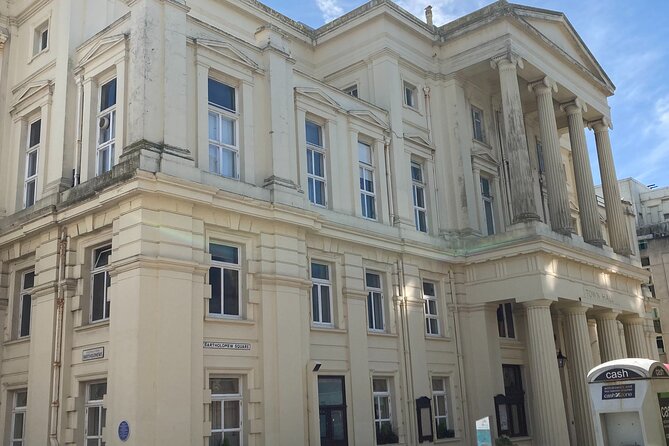
At $12.49 per person, the big value is not a museum ticket. It is a route with a voice guiding you through a lot of different Brighton moods, from pier energy to lanes, Regency terraces, and landmark architecture.
You also get 3 weeks unlimited access to the self-guided tour in the app. That matters because Brighton weather can change fast. If your first attempt is a damp flop, you can come back and do it again without buying another ticket.
Included items help you stay oriented: a map, directions, GPS route, and stops. You also get audio guidance by Spencer, plus videos, pictures, recommendations, and all the information you need. And it is offered in English, which keeps things straightforward.
The main value tradeoff is simple: the tour includes the guide and route, but entrance fees are not included. The tour specifically says any entrance fee for attractions mentioned during the tour must be paid separately. So if you plan to go into the Sea Life Centre, use i360, or enter Royal Pavilion spaces, budget extra and treat that as an optional add-on.
How to use a self-guided tour without getting lost in your phone
A self-guided tour works best when you treat your phone like a compass, not like a full-time babysitter. Before you start, activate your tour from the email you get after booking. The tour data also says you will get instructions by email, and your booking reference is not the code, so follow what the email says.
Here is the practical tip I would not skip: check your email carefully, including spam folders. One negative experience reported a failure to find the app download or instructions at Brighton Pier time, which is usually a sign that the activation email was missed or filtered. If you get your access sorted ahead of time, you will feel in control once you reach the pier.
Once you are walking, keep a light rhythm. Look up for the architecture details the audio calls out, but also leave space to do your own thing in Kemptown and North Laine. The route is paced as a 2 to 3 hour experience, so you want quick, meaningful pauses, not long stops that blow up your day.
If you are traveling in the Madeira Lift seasonal window, double-check timing in your own plans. The audio notes it is open from Good Friday to the last Sunday in September. If you are outside that range, the route still makes sense, but your “lift moment” might be just a look from the ground.
Who this tour is best for (and who might want something else)
I think this works best for you if you want a structured route, but you still like freedom. Couples, solo travelers, and small groups will like that it is private, meaning only your group participates.
It is also good if you like city walking that mixes well-known landmarks with “why is that there” context. The Royal Pavilion, Regency terrace story in Kemp Town, and the West Pier background are the kind of details that make a self-guided tour feel worth the money.
If you hate apps, or if you know you lose phone battery and get flustered at checkpoints, then a guided walking tour might be easier. This one asks you to manage your device, at least for activation and audio playback.
Should you book this Brighton Private Self-Guided Tour?
Yes, I would book it if you want a 2 to 3 hour route that covers a lot of Brighton without forcing you into a fixed group pace. Spencer’s audio and the stop-by-stop GPS guidance are the core reason it feels smooth, and the mix of seafront landmarks plus lanes and churches gives you a well-rounded walk.
Book it with one clear expectation: some stops are likely to require separate paid admission. If you treat those as optional, you will keep control of your budget and your time.
And do one homework step first, activate from your email before you arrive, then double-check spam if anything feels missing. That one move turns this from a frustrating tech hunt into an easy, enjoyable Brighton stroll.
FAQ
How long is the Brighton Private Self-Guided Tour?
The tour is listed as about 2 to 3 hours.
What does it cost?
The price is $12.49 per person.
Is this tour private?
Yes. It is a private tour/activity, and only your group participates.
What language is the audio guide available in?
The tour is offered in English.
What is included with the tour?
You get 3 weeks unlimited access to the self-guided tour in the app, plus a map, directions, GPS route and stops, and an audio guide by Spencer, along with videos, pictures, recommendations, and the information you need.
Do I need to pay for attractions separately?
Yes. Any entrance fee for attractions mentioned during the tour must be paid separately.
Where do I start the tour?
The meeting point is Palace Pier (Stop CS), Brighton and Hove, Brighton BN2 1TW, UK.
How do I activate the tour in the app?
You will get an email with instructions to activate your tour. The tour data also notes that the booking reference is not the code, so follow the email instructions in the Before You Go section.
Is there an in-person guide?
No. This is self-guided, with Spencer providing the audio guide through the app.
Are service animals allowed?
Yes, service animals are allowed.
Latest to join the queue for Brighton

Self-Guided Tours, compared.

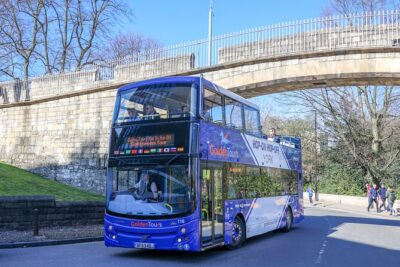
Golden Tours York Hop-on Hop-off Open Top Bus Tour with Audio Guide
Read our review →
Windsor Castle Tour from London with Transportation & Audio Guide
Read our review →
London Panoramic Open Top Bus Tour with Audio Guide
Read our review →
Romans, Vikings and Medieval York: An Audio Tour
Read our review →
Emirates Stadium and Arsenal Museum Entrance Ticket Including Audio Guide
Read our review →
Private Self-Guided Dinky Door Hunt in Cambridge
Read our review →
Natural History Museum Express Guided Tour & Audio Guide
Read our review →Browse the lists this tour appears in