
Reviewed · HISTORICAL TOURS
Angel Meadow Manchester History Tour with Author Dean Kirby
Slums have stories, if you know where to look. This is a focused Manchester walk that uses Dean Kirby to explain why Angel Meadow mattered, from cotton mills to overcrowded streets. You also get practical photo stops as you go, plus time to ask questions in a small group of up to 15.
I especially like the way the route stays human-sized, so you feel connected to the people who lived here, not just the buildings that replaced them. The other big win: you end up exploring an area many visitors skip, even though it sits right in the city fabric. One possible drawback is that redevelopment has changed what survives, so you will be piecing history together as you walk.
In This Review
- Key highlights you will actually feel on the ground
- Angel Meadow by River Irk, why this part of Manchester matters
- Dean Kirby and the small group setup that keeps it personal
- Price and timing: what you get for $27.62
- Where you meet at Sadler’s Cat, and how to get there without stress
- Stop at St Michael’s Flags: cotton mills, poverty, and survival
- Walking the River Irk and into Angel Meadow Park for story-driven views
- What you can still see today: redevelopment changes the picture
- Socializing with history lovers, and why that matters
- What to bring, and how to make it comfortable
- Who this Manchester history tour suits best
- Should you book Angel Meadow with Dean Kirby?
- FAQ
- How long is the Angel Meadow Manchester History Tour with Author Dean Kirby?
- What is the meeting point for the tour?
- Where does the tour end?
- What time does the tour start?
- What language is the tour offered in?
- What is the maximum group size?
- Is the tour accessible if I cannot negotiate steps?
- Is admission included?
- What is the cancellation policy and what if weather is poor?
Key highlights you will actually feel on the ground
- Small-group Q&A with author-historian Dean Kirby, so your questions do not get lost.
- Photo-aware route where your guide points out the best angles as you move through the district.
- Angel Meadow Park and River Irk focus to connect the geography to the social story.
- Often-overlooked Manchester that helps you see the city beyond the usual centre sights.
- A book-author guide brings a clear, vivid sense of what life was like in the Victorian slum.
Angel Meadow by River Irk, why this part of Manchester matters
Manchester has plenty of grand landmarks. What you rarely see, unless you go looking, is how the city worked at street level for ordinary people. This tour takes you to Angel Meadow, a Victorian district tied to the Industrial Revolution, and it does it with a walking route you can actually follow without needing a map hobby degree.
The story gets uncomfortable on purpose. Angel Meadow is described as a place where poverty and overcrowding shaped daily life, with tens of thousands of people squeezed into limited space. The guide links that pressure to the bigger Manchester machine, especially the nearby cotton mill world that drove employment and profit while leaving many families trapped in harsh conditions.
You also learn the value of geography here. River Irk is not just a pretty line on a map. It becomes part of the explanation for why the district developed how it did, and how daily survival played out around the water. If you like history that has a cause-and-effect feel, this is the kind of walk that sticks with you.
More kings, plagues and great fires:

Dean Kirby and the small group setup that keeps it personal
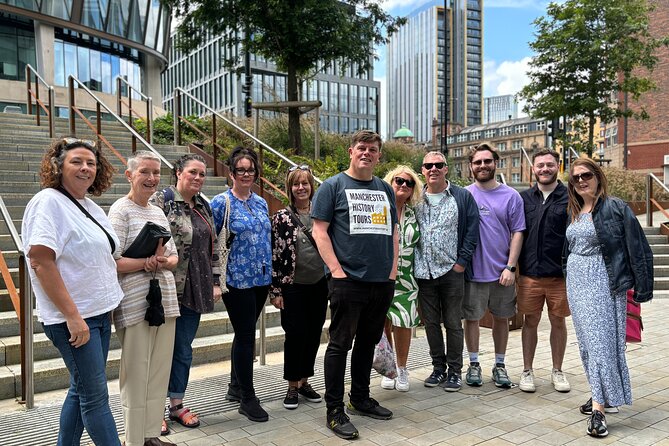
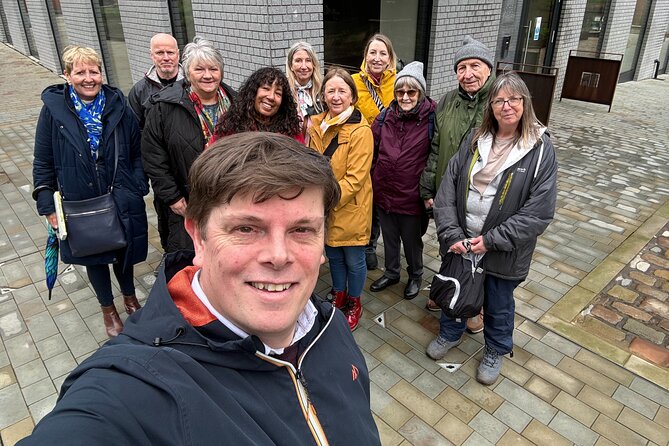
One of my favourite parts of this experience is the format. With a maximum of 15 people, you get a real back-and-forth, not a one-way lecture. The tour is led by Dean Kirby, historian and writer, best known for his work on Angel Meadow. That matters because the explanations feel anchored in research, not guesswork.
I also like the vibe. You will be walking with other history lovers who genuinely want to talk, which makes the Q&A feel natural. If you have ever been on tours where you finally build up a question and then time disappears, you will appreciate that this one gives you room to ask.
And yes, you will get photo guidance. Your guide shows you good spots while you are still in motion. That is practical, because it avoids the awkward pause where everyone stands around, checks their camera settings, and loses the thread of the story.
Price and timing: what you get for $27.62
At $27.62 per person for about 1 hour 30 minutes, this is priced like a city walking tour, not a big-ticket production. For your money, you are paying for two things that are hard to fake: a tight route with a coherent narrative, and a guide who can explain the social reality behind the streets.
The schedule is also friendly. It starts at 2:00 pm and runs roughly 90 minutes, so it can fit between a morning museum visit and an evening meal without stealing your whole day.
The tour is offered in English, and you get a mobile ticket. That means less fumbling and more time outside, which I always prefer when I am already in motion around Manchester.
If you want to be safe on planning, book ahead. The average booking window is about 46 days, which usually signals that slots fill during peak travel periods.
Where you meet at Sadler’s Cat, and how to get there without stress
The meeting point is Sadler’s Cat, Hanover St, Manchester M60 0AB. It is an easy area to reach because the tour is described as near public transportation. That matters in Manchester, where you often have multiple options, and last-minute detours are normal.
A practical move: arrive a few minutes early and take a quick look at the area around the meeting point so you are ready when the story begins. Walking tours work best when you are not still stuck figuring out where you need to stand.
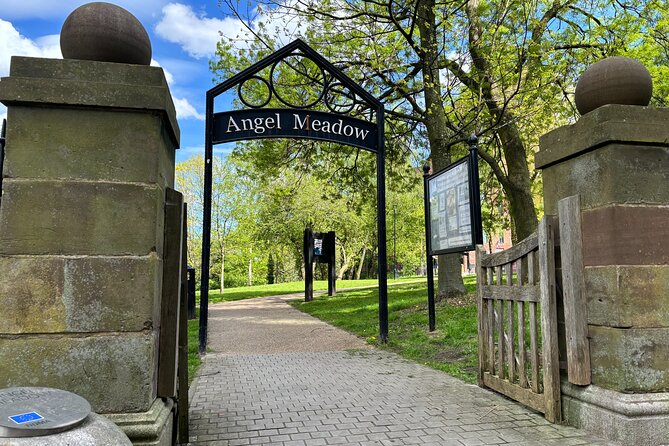
The tour finishes near St Michael’s Flags and Angel Meadow Park on Old Mount St, Manchester M4 4TF. If you want to continue exploring, you can do that right after. The finish point is next to the entrance to Angel Meadow Park, and it is about a six-minute walk from Shudehill bus station. If you are planning onward travel, that proximity helps you avoid the end-of-tour scramble.
Stop at St Michael’s Flags: cotton mills, poverty, and survival
The main focus begins in the St Michael’s Flags area. This is where the tour frames what Angel Meadow was: a Victorian Manchester slum so harsh that Friedrich Engels is said to have referred to it as Hell upon Earth. That sounds dramatic, but your guide uses it as a prompt to discuss how industrial growth and human hardship can exist side by side.
You learn about the scale of the district’s population, described as around 30,000 people trapped by poverty. The guide ties that to the nearby cotton mills and the larger Industrial Revolution storyline. Instead of treating those mills as distant background, you see them as the engine that powered jobs and pulled in families, while also creating conditions where many could not climb out.
As you walk, you hear about overcrowded lodging houses and deep cellars near the River Irk. The key point for me is that the tour does not just list grim facts. It explains what those conditions meant for daily life, from space and sanitation to safety and social control.
There is also mention of gangs, including scuttlers. You might not need the full glossary to feel the meaning, but your guide uses these details to show that fear and opportunism were part of the street environment for many residents.
If you like history that shows how people adapted, you will appreciate how the tour frames survival as active work, not just a helpless condition. That angle makes the district feel real, even though many buildings are no longer the same.
Also on in Manchester, no fuss
- Alcotraz Prison Cocktail Experience in Manchester★ 5.0 · 1,216 reviews
- LEGOLAND Discovery Centre Manchester★ 4.0 · 1,049 reviews
- Manchester Afternoon Walking Tour★ 5.0 · 1,033 reviews
- SEA LIFE Manchester Admission Ticket★ 4.0 · 1,007 reviews
Walking the River Irk and into Angel Meadow Park for story-driven views
After the opening framing, the walk shifts into the part that connects the social story to the land. You follow the River Irk along streets that mix the old with the new.
This is where the tour becomes especially satisfying for photo lovers and people who like “you are here” clarity. As you move, your guide points out places that make visual sense of the narrative. You are not just snapping pictures. You are learning what to notice: river edges, street layouts, and the way open areas like the park fit into the bigger district.
Angel Meadow Park adds breathing room, and it is not there just for scenery. Your guide uses it as a transition point, helping you understand how a district with a reputation for misery could still include patches of public space and greenery.
If the weather is damp, it can actually help the mood. Manchester streets can feel exactly like a rain-soaked Victorian city in your mind’s eye when you are standing where the story happened.
For practical comfort, wear shoes that handle uneven pavements and possible steps. The tour is described as requiring moderate physical fitness, and it is not recommended for people unable to negotiate steps. You do not need to be an athlete, but you should be comfortable walking for about 90 minutes and moving through typical street corners and transitions.
What you can still see today: redevelopment changes the picture
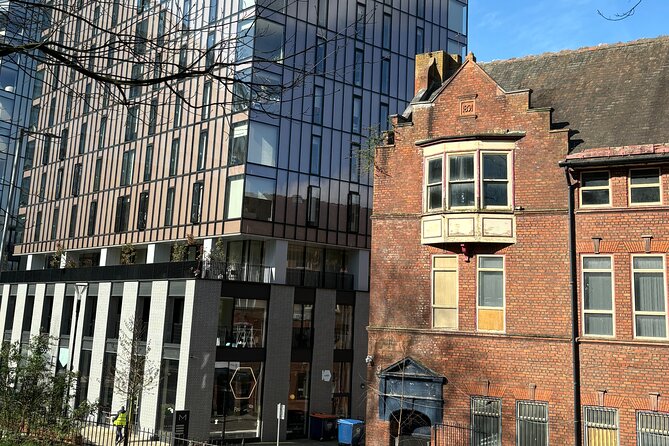
Here is the reality check that makes this kind of tour honest. Not much of the original Angel Meadow survives. Redevelopment has replaced many former streets and structures, and that can change what you can physically point to.
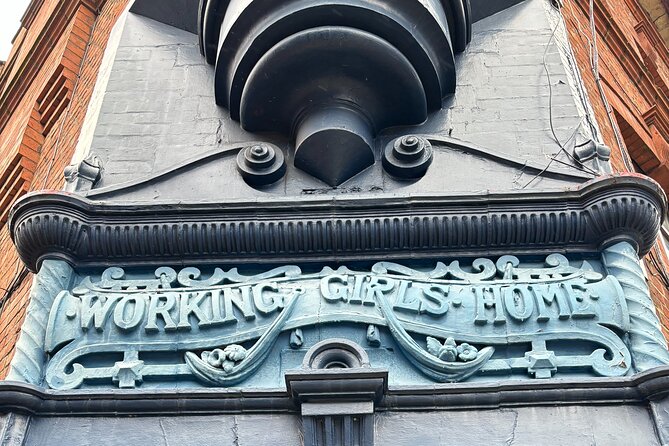
But the lack of perfect preservation is not a deal-breaker. It is part of the value. Your guide helps you reconstruct what is missing, including how new apartments can sit near older landmarks like ragged schools. Those schools matter in the story because education, or the lack of it, links directly to poverty and social mobility.
In other words, you will be doing historical interpretation while you walk. That can feel frustrating if you expect a museum-style time machine. It can feel deeply rewarding if you enjoy piecing together how cities evolve, and why certain districts get erased while their influence remains.
One more thing I like: you leave with a stronger mental map of Manchester’s industrial-era logic. Even if the buildings have changed, the bones of the area still help explain the city’s development.
Socializing with history lovers, and why that matters
This is not a solitary audio-walk. It is a guided experience designed for small groups, so the conversation often flows between people and the guide. You will likely meet others who care about Manchester beyond match day and shopping streets.
That matters because it turns the tour into something slightly interactive, not just a lecture. If you are the kind of person who asks questions in everyday life, you will probably enjoy this more than you expect. And if you are quieter, it still works, because the route and timing keep things from turning into awkward waiting.
What to bring, and how to make it comfortable
Since the tour is weather dependent and requires good weather, I plan for the option of a changeable Manchester afternoon. Bring a light rain layer or umbrella, and expect that cobbled corners and damp pavement can change how surfaces feel underfoot.
You also want to be ready to stop and look when your guide calls out photo angles. That does not mean you will spend the entire time standing still, but it does help to have your phone charged and your camera settings ready.
Because it is about 1 hour 30 minutes, you do not need a picnic, but you should think about basic comfort. If you get cold easily, bring something extra. If you hate walking, this might not be your best fit.
Who this Manchester history tour suits best
I think this is ideal if you want:
- A small-group walking tour with room for questions.
- A guide who can translate serious history into something you understand on a city block level.
- A Manchester experience that focuses on working-class Victorian life, not only the high points.
It is also a good choice if you like tours where photo opportunities feel intentional rather than accidental.
This is not the best match if you are expecting mostly intact buildings from the Industrial Revolution era. The story includes loss and redevelopment, and the tour asks you to imagine what used to be there.
And if you cannot handle steps or uneven pavement, skip it. The tour is not recommended for people unable to negotiate steps, and it is designed for a moderate walking level.
Should you book Angel Meadow with Dean Kirby?
I recommend booking this if you want a smarter, more grounded Manchester walk. For the money, you get a strong narrative, a guide-led Q&A with Dean Kirby, and a route that uses River Irk and Angel Meadow Park to turn geography into story. The small group size makes the whole thing feel more human than big-bus history.
I would hesitate if you need a fully preserved site where everything looks the way it did in Victorian times. The district has changed, and you have to accept that you are learning through context and interpretation.
If you like history you can see and question in real time, this one is worth your afternoon.
FAQ
How long is the Angel Meadow Manchester History Tour with Author Dean Kirby?
The tour runs for about 1 hour 30 minutes.
What is the meeting point for the tour?
The start point is Sadler’s Cat, Hanover St, Manchester M60 0AB, UK.
Where does the tour end?
It ends at St Michael’s Flags & Angel Meadow Park, Old Mount St, Manchester M4 4TF, UK, next to the entrance to Angel Meadow Park.
What time does the tour start?
The start time listed is 2:00 pm.
What language is the tour offered in?
The tour is offered in English.
What is the maximum group size?
The tour has a maximum of 15 travelers.
Is the tour accessible if I cannot negotiate steps?
It is not recommended for travelers unable to negotiate steps.
Is admission included?
The experience notes Admission Ticket Free.
What is the cancellation policy and what if weather is poor?
You can cancel for free up to 24 hours in advance for a full refund. The tour requires good weather, and if it is canceled due to poor weather, you will be offered a different date or a full refund. If the minimum number of travelers is not met, it may also be canceled with an alternate date or full refund.
Latest to join the queue for Manchester






Historical Tours, compared.
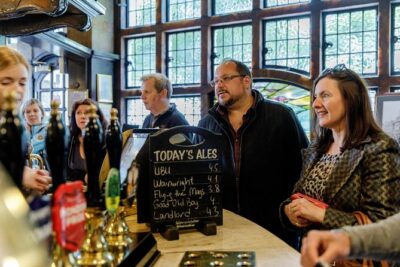
London Small Group Tour of Historical Pubs
Read our review →

Shadows of York: Ghost Walk and Horrible History.
Read our review →
A Walk Through Time: History of Liverpool Walking Tour
Read our review →
Royal Historic Pubs Walking Guided Tour in London
Read our review →
Private Group: Historical Pub Walking Tour of London
Read our review →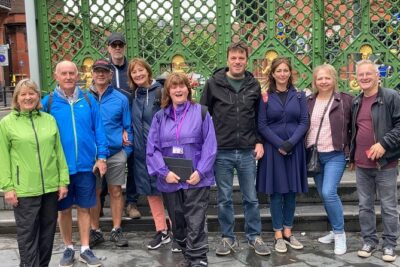
Best Of Liverpool Heritage, History & Culture Guided Walking Tour
Read our review →Browse the lists this tour appears in