
Reviewed · CITY TOURS
Slave Trade Money Trail Tour in the City of London
London’s financial district has a hidden bill.
This Slave Trade Money Trail tour turns major landmarks into a clear walking story about how banks, shipping, and insurance shaped the transatlantic slave trade, with an added tour booklet to keep you on track.
I also love that the route gives you a less common angle on famous buildings you may already pass by, especially in the City of London. Then, you end at Borough Market where the food behind the profits, like sugar and tobacco, connects the past to what’s still traded today.
One thing to consider: this is a serious, heavy topic in a walking format, so if you need a lighter history day, plan carefully. You’ll want good weather too, since the experience needs it.
In This Review
- Key things to know before you go
- Money map of the City of London, not a standard sightseeing loop
- Meeting at the Royal Exchange, then walking toward Borough Market
- Stop 1: Bank area and the finance institutions tied to slavery
- Stop 2: The Royal Exchange and commerce at the center
- Stop 3: 20 Fenchurch Street, shipping profits, and the city’s engine room
- Stop 4: Lloyds of London and underwriting the trade
- Stop 5: Borough Market and sugar and tobacco with real-world connections
- Darrel Blake’s guiding style, and why it sticks
- Price and value: what $48.01 buys you in real terms
- Who should take this tour, and who might not
- Should you book the Slave Trade Money Trail Tour?
- FAQ
- FAQ
- How long is the Slave Trade Money Trail tour?
- How much does the tour cost?
- What’s included in the price?
- Are any stop entrances included or free?
- Where does the tour start and end?
- What time does the tour begin?
- Is the tour in English?
- What if the weather is bad?
- Is free cancellation available?
Key things to know before you go
- A focused 3-hour route through the City of London’s power centers, paced with short stop times
- Included tour guide plus a tour booklet to help you remember what you’re seeing
- Darrel Blake’s approach is clear and direct, with room for questions and a strong emotional connection
- Most stop entrances are free, with one ticketed moment at Borough Market (not included)
- Small group size up to 30 people, so the walk stays personal rather than chaotic
Money map of the City of London, not a standard sightseeing loop
This tour works because it treats London like a system. Not just stone buildings and big plaques, but the financial decisions behind them. You start in the Bank area, then move through places tied to commerce, shipping, and underwriting. By the time you reach the market, the story isn’t abstract. It’s connected to everyday goods, including products linked to enslaved labor.
The tone matters here. This is not “history as entertainment.” It’s history as accountability. From what you’re told at each stop, you can see how London’s growth and wealth accumulation were tied to the slave trade, then to the long shadow it left behind.
I like that you’re not asked to memorize dates for 3 hours. The focus is the chain of connections. Follow the chain, and you’ll leave with a stronger understanding of how the modern city grew.
Also on in London, no fuss
Meeting at the Royal Exchange, then walking toward Borough Market
The tour starts at The Royal Exchange in the City of London, with the walk ending at Borough Market in Southwark. It runs about 3 hours, starting at 12:00 pm.
That timing is practical. It slots nicely between a morning museum and an evening meal, and it also keeps the route concentrated, so you are not zigzagging across London all day. Because it’s a walking tour in a tight central area, you can also pair it with other nearby stops afterward.
A few real-world notes that help your day go smoothly:
- You’ll want comfortable shoes, since City-of-London sidewalks can feel busy and a bit unforgiving on tired feet.
- The experience runs best in good weather, and the operator notes they may reschedule or refund if weather shuts it down.
- The tour is in English, and it includes a mobile ticket, so you should be able to handle check-in with your phone.
Stop 1: Bank area and the finance institutions tied to slavery
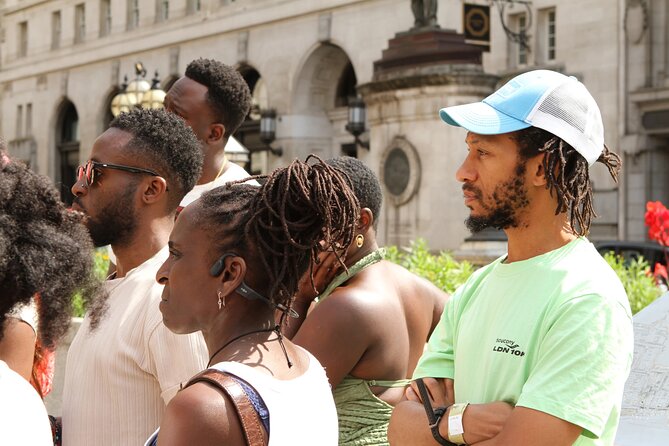
Your first stop puts you in the historic Bank area of the City of London, where financial institutions were deeply entangled in the transatlantic slave trade. The time here is about 15 minutes, which is short, but it’s enough to set the theme.
This is a smart starting point. You’re not jumping straight into shipping or markets. You begin with the money architecture: the places that helped make trade happen, then helped scale it. Even if you already know London is “a finance city,” this stop reframes the story. It shows how finance did not sit on the sidelines. It was part of the engine.
What you might like most about this segment is that it’s not just facts. It’s framing. You get a lens for everything that follows, so later stops make more sense.
Stop 2: The Royal Exchange and commerce at the center

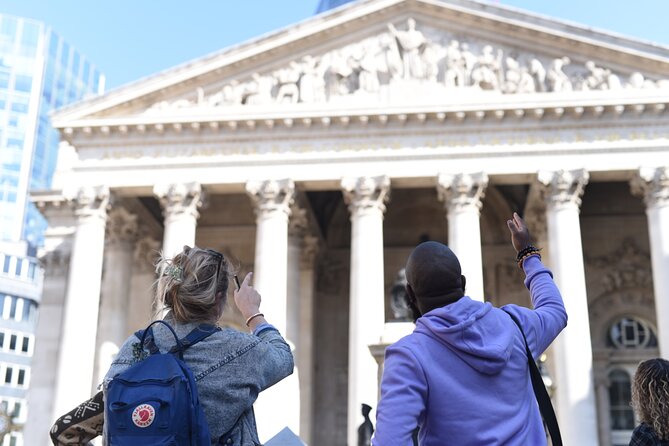
Next you move to The Royal Exchange Building, with about 20 minutes here. The Royal Exchange is famous for its role in London’s commercial life, so it’s a powerful location for this subject.
What makes this stop valuable is the contrast. The building looks like a symbol of trade and order. But in this tour, you’re shown how that same commercial center played a significant role in facilitating the transatlantic slave trade.
This stop is also a reminder that systems can be dressed up as progress. The structure of commerce, contracts, and confidence in trade routes can hide moral failure if nobody asks hard questions. You’re guided to ask those questions.
Entry here is noted as free, so it’s one less “gotcha” cost on your walk.
Stop 3: 20 Fenchurch Street, shipping profits, and the city’s engine room
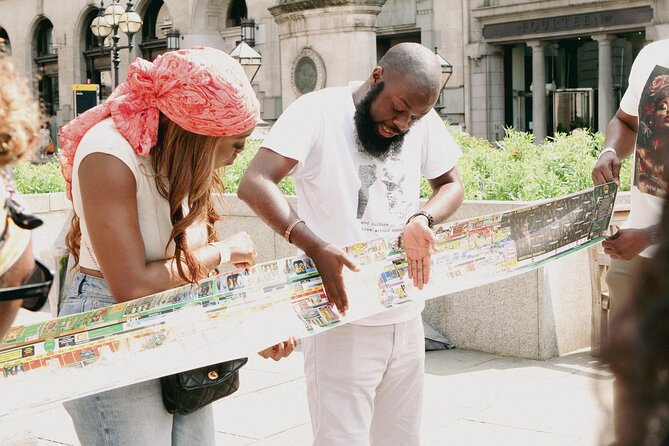
Your longest stretch is around 20 Fenchurch Street, with about 50 minutes. This is a key part of the walk because it connects shipping to where major companies profited and were headquartered.
In practical terms, this is where the story becomes more detailed and more grounded. You’re in a part of London tied to movement, logistics, and trade routes. And the tour explains how the transatlantic slave trade depended on those routes, then depended on the corporate structures that made them profitable.
If you like history that feels concrete, this is your moment. It’s easier to track the “how” when you’re standing in the district built to handle commerce at speed. You’ll likely find yourself looking around differently after this stop, even just at the feel of the streets and the business rhythm.
Most importantly, the tour doesn’t treat shipping as an incidental backdrop. It treats it as infrastructure.
While the kettle’s on in London:
- Stonehenge, Windsor Castle and Bath with Pub Lunch in Lacock★ 4.5 · 7,402 reviews
- Tower of London and Crown Jewels Exhibition Ticket★ 4.5 · 6,677 reviews
- Thorpe Park Admission Ticket★ 4.0 · 5,915 reviews
- Stonehenge, Windsor Castle and Bath Full Day Guided Tour★ 4.5 · 5,346 reviews
Stop 4: Lloyds of London and underwriting the trade
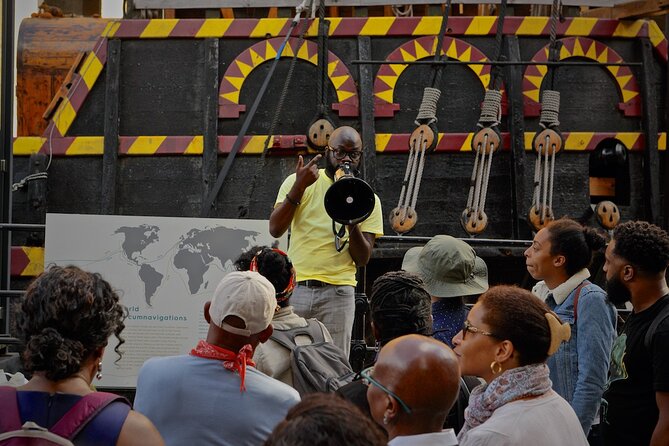
From shipping you go to Lloyd’s of London, with about 20 minutes. Here the focus is on the institution’s role in underwriting the transatlantic slave trade.
This stop is sobering because it moves from trade routes to risk management. Underwriting is one of those behind-the-scenes parts of finance that many people forget exists. The tour helps you connect the dots between insurance, risk, and enabling harmful enterprise.
Even if you are not a finance person, you can follow the logic. The message is that underwriting helped make the trade more workable and more attractive to investors who wanted controlled risk.
Entry is listed as free for this part, so again, you can keep your spending focused where you choose.
Stop 5: Borough Market and sugar and tobacco with real-world connections
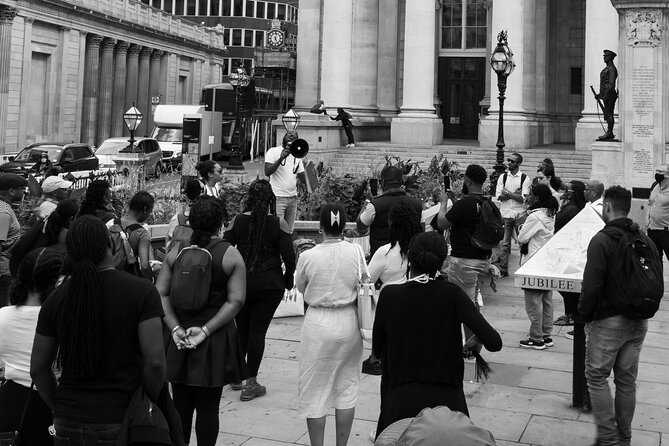
The walk finishes at Borough Market after about 20 minutes there. This is where the tour’s theme lands in a place tourists already associate with food.
The point is direct: Borough Market is connected to goods produced by enslaved labor, including sugar and tobacco. The tour positions the market as a historic trading hub inside a busy commercial network with a dark history tied to African exploitation.
Admission for this stop is not included, so it may cost you extra depending on what you want to do once you arrive. The market area is also active, so build a little buffer into your arrival mindset. This final segment is about meaning, not rushing.
If you love the idea of seeing how history lives in the present, this is the best place to finish. It gives you a chance to pause and reflect as you step out of the formal walking narrative.
Darrel Blake’s guiding style, and why it sticks

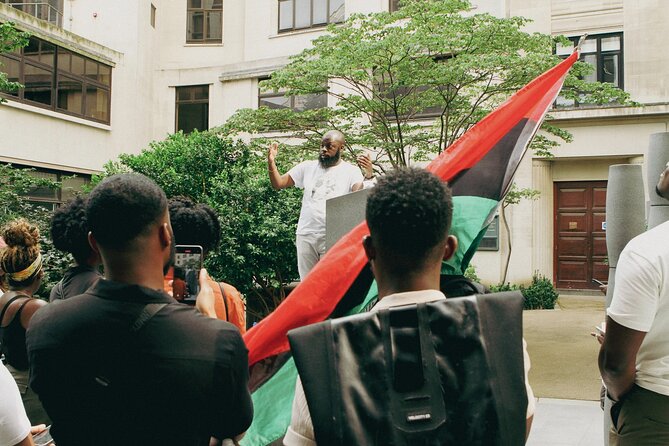
The tour guide is Darrel Blake, and the reviews consistently describe his delivery as clear, personal, and carefully researched. You can also expect a respectful tone given the subject matter.
A few traits you’ll likely notice on the walk:
- He encourages involvement through questions, so it’s not a lecture where you tune out halfway.
- He uses memory checks, which sounds simple but actually helps the info stick.
- He brings in artifacts and personal touches that make the history feel more tangible.
One review notes he was exceptional and passionate, and another mentions he shared mind-blowing artifacts. Whether you’re a longtime history fan or someone who has never traced London’s role in slavery before, that kind of presentation style tends to turn the route from “interesting” into “I will remember this.”
Also, the group size cap of 30 travelers matters. It keeps the tone from turning into a stampede, and it gives the guide room to connect with the crowd.
Price and value: what $48.01 buys you in real terms
At $48.01 per person, you’re paying for a 3-hour guided walk through multiple key locations, with an included tour guide and an included tour booklet.
Here’s why the price can feel like good value:
- You’re getting a structured narrative across multiple sites in central London rather than piecing it together yourself.
- Many stops are listed as free admission, which keeps the overall cost predictable.
- The booklet helps you keep the story straight afterward, especially if the subject matter makes your brain work overtime.
What might affect your budget: Borough Market entrance is not included. So if you plan to do a lot of market shopping or extra entry, you’ll spend more. But if you treat Borough Market as the final reflective endpoint, you can keep it light.
Another value point is the tour’s advance booking pace. It’s commonly booked around 42 days in advance, which suggests popular days can fill up. If you have specific dates in mind, booking sooner is a smart move.
Who should take this tour, and who might not
This tour is a great fit if you care about:
- Social justice and human rights history, especially the connection between past systems and present-day realities
- London history with a sharper, less familiar lens
- You enjoy walking tours that link buildings to what happened behind closed doors
It’s also well-suited to history buffs who want more than a headline. The route takes you to finance-related sites that many people walk past without realizing what they were used for.
Who should be cautious:
- If you are looking for a light, carefree afternoon, this may feel emotionally intense. The topic is inherently heavy.
- If you prefer a stop-by-stop format with long time at each location, you might find some segments brief. The pacing is structured, and you’re moving through five locations.
Should you book the Slave Trade Money Trail Tour?
Yes, if you want London history with teeth. This tour doesn’t just show you impressive buildings. It explains the money pathways that helped enable the transatlantic slave trade, from finance and commerce to shipping and underwriting, then connects it to goods associated with enslaved labor.
Book it if you like guided clarity, and if you appreciate a guide like Darrel Blake who brings research, artifacts, and active storytelling to the walk. It also helps that the group is capped at 30, so the experience stays focused.
I’d skip it or approach it cautiously if you need a purely upbeat day, because the subject matter is difficult and the walk is concentrated in a single 3-hour block. Otherwise, if you’re the type who wants to understand the city beyond postcard details, this is a strong choice.
FAQ
FAQ
How long is the Slave Trade Money Trail tour?
The tour lasts about 3 hours.
How much does the tour cost?
It costs $48.01 per person.
What’s included in the price?
You get a tour guide, and you also receive a tour booklet.
Are any stop entrances included or free?
Most stop locations list admission ticket free. Borough Market is marked as admission ticket not included.
Where does the tour start and end?
It starts at The Royal Exchange, London EC3V 3LL, and ends at Borough Market, London SE1 9AL.
What time does the tour begin?
The start time listed is 12:00 pm.
Is the tour in English?
Yes, it is offered in English.
What if the weather is bad?
The experience requires good weather. If it is canceled due to poor weather, you will be offered a different date or a full refund.
Is free cancellation available?
Yes. You can cancel up to 24 hours in advance for a full refund.
Latest to join the queue for London





City Tours, compared.

Liverpool City Sights Hop On Hop Off City Tour – 24hr Ticket
Read our review →
1.5-hour Oxford City and University Walking Tour
Read our review →
City Sightseeing London Hop-On Hop-Off Bus Tour & Bookable Extras
Read our review →
City Sightseeing Oxford Hop-On Hop-Off Bus Tour
Read our review →
Browse the lists this tour appears in