
Reviewed · SEVEN SISTERS & SOUTH DOWNS TRIPS
Seven Sisters Tour
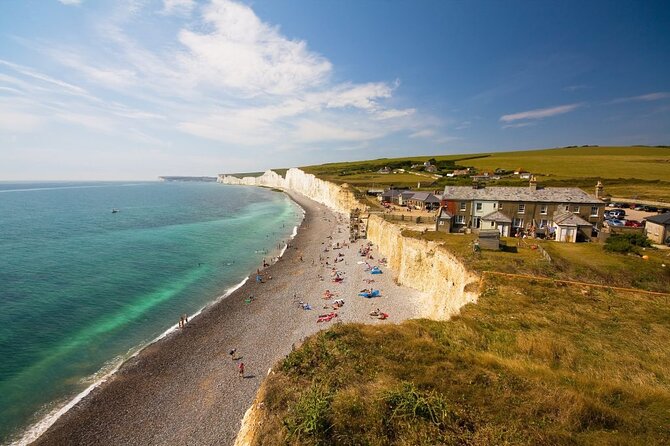
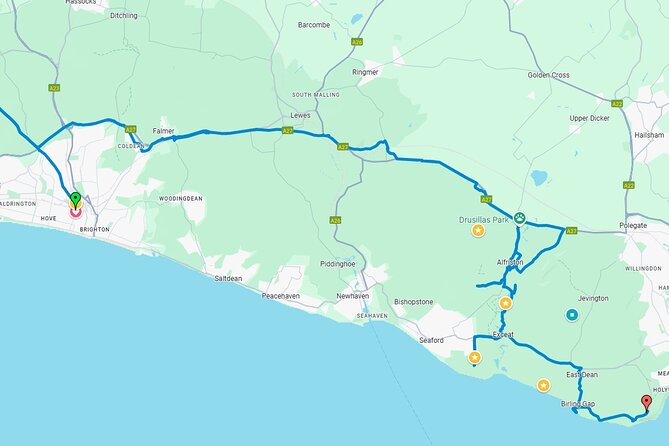
Seven Sisters views, no tricky logistics. This private South Coast tour runs 4 to 6 hours and strings together cliff lookouts, pretty villages, and coastal history, all with an English guide named Colin. I love the door-to-door Brighton pickup, and I also love the mix of dramatic viewpoints plus optional short walks so you can pace it.
What you should consider: the whole experience leans on weather. It’s planned for good conditions, so if fog or strong wind rolls in, you’ll likely spend more time inside the vehicle between stops and make do with the best angles you can get.
The payoff is real variety in one trip. You’ll swap chalk cliffs for nature reserve paths, pop into historic villages, and learn why these places matter, not just where to stand for photos.
In This Review
- Key highlights you should plan around
- Why this Seven Sisters tour feels easier than DIY
- Price and what you actually get for $205.67
- Devil’s Dyke: chalk cliffs, Victorian vibes, and a real science story
- Seaford Beach: why people keep moving shingle
- Seaford Head Nature Reserve: conservation views with an optional walk
- Cable House 14: undersea telegraph to wartime defense
- Belle Tout Lighthouse and Birling Gap cliff walks
- East Dean and the Tiger Inn: optional lunch in a smugglers village vibe
- Long Man Brewery and the cellar door tasting option
- Wilmington: the ancient yew tree with a safety reminder
- The Long Man of Wilmington: one of England’s puzzling giants
- St Andrew’s Church near the Cuckmere River: the cathedral of the South Downs
- Alfriston wandering: books, history, and the George Inn
- What Colin’s guiding style adds to the day
- Who this tour is best for
- Should you book the Seven Sisters Tour from Brighton?
- FAQ
- FAQ
- What time does the tour start?
- How long is the Seven Sisters tour?
- Is pickup available from Brighton hotels or Airbnb?
- Can the guide pick you up if you are arriving from London by train?
- Is the tour private?
- What language is the tour guide speaking?
- What’s included in the price?
- Is lunch included?
- Are alcoholic drinks included?
- What happens if the weather is poor?
- What is the cancellation cutoff for a full refund?
Key highlights you should plan around
- Door-to-door pickup in Brighton (and London train-station pickup if needed)
- Seven Sisters viewpoints with optional walks so you can choose easy vs. active
- Devil’s Dyke geology and Victorian storytelling in a single stop
- Cuckmere Estuary Nature Reserve area for conservation-focused coastal views
- Cable House 14 history from undersea telegraph days to WWII use
- Wilmington’s Long Man and 1600-year-old yew tree for odd, fascinating history
Why this Seven Sisters tour feels easier than DIY
A trip like this can turn into a transportation puzzle fast. Between coastal roads, photo pull-offs, and village hopping, you either need a car or a driver. Here, you get an air-conditioned vehicle, a guide, and the practical benefit of being moved from place to place without thinking too hard.
I like that the timing works like a sampler platter. You’re not stuck on one long beach walk, and you’re not stuck inside a single museum either. The day flows from cliff edges to village greens, then back to more coastal angles, with short stops that keep you refreshed.
And yes, the views are the obvious reason to book. The Seven Sisters area is the star, but you’re also seeing related highlights that explain how this coast shaped lives, jobs, and even defenses. That context makes the photos feel earned, not just taken.
More chalk cliffs marching to the sea:
Price and what you actually get for $205.67
At $205.67 per person for about 4 to 6 hours, this isn’t a budget-only option. But it is built around value items that add up:
- Private transportation with pickup and drop-off within Brighton
- An on-board guide who covers history and practical context
- Bottled water, light refreshments, and WiFi on the vehicle
- A planned string of major stops along the South Coast
If you were doing it yourself, you’d spend time arranging transport, and you’d still need to figure out what’s worth getting out for. Here, you can focus on walking when you feel like it, and letting the guide handle the route and explanations.
This tour is also private, meaning it’s just your group. That matters if you want questions answered without feeling rushed or shuffled around.
Devil’s Dyke: chalk cliffs, Victorian vibes, and a real science story
Your day starts with Devil’s Dyke, a deep V-shaped dry valley that sits at the top of the South Downs. The stop is designed for a walk around the top, not for a long hike. You’re meant to get the view and then understand what you’re looking at.
Here’s the cool part: it’s not a “made by one event” story. The valley’s shape is tied to long-term forces like solifluction and river erosion, linked to very cold conditions many thousands of years ago. The idea is that chalk was frozen under permafrost conditions, then during warmer seasons meltwater saturated the layer above it. That waterlogged material could slide downhill, while rivers later helped finish shaping the valley after Ice Age conditions changed.
In plain terms, you’re seeing a place where weather and water over time wrote the scenery. That makes the Devil’s Dyke stop more interesting than just a look-out, because you can translate the terrain into process.
A practical note: viewpoints on the Downs can get windy. If the weather is blustery, you’ll want a light layer even in warmer months.
Seaford Beach: why people keep moving shingle
Next up is Seaford Beach, and this is the part of the coast that shows human problem-solving. Coastal shorelines here face challenges because shingle moves along the shore through longshore drift. That constant shifting means the beach can’t simply be left alone if a town wants to protect itself from erosion and flooding.
You’ll hear about ongoing interventions using heavy machinery like bulldozers and dumper trucks to redistribute pebbles, especially around structures such as the Terminal Groyne. The goal is fairly simple: counteract the drift effects so the beach stays usable and protective.
I like this stop because it grounds the whole trip. The Seven Sisters cliffs get the glory, but Seaford shows how living communities manage the coast day to day. It’s also a reminder that your photo spot is not separate from real-world maintenance.
Seaford Head Nature Reserve: conservation views with an optional walk
The Seven Sisters are famous, but the angle and timing near Seaford Head Nature Reserve can make the experience feel calmer. After parking, you have a short walk about 10 minutes away. It’s optional, which is great if you want the scenery without turning the day into a workout.
This area is tied to the Cuckmere Estuary, one of the last remaining undeveloped river mouths on the South Coast. It’s a conservation setting, with nationally rare and significant species of plants, birds, and insects.
What I find valuable here is the tone. You get peaceful coastal walking paired with an explanation of why this place is protected. That context makes the nature part feel earned, not random.
Keep your expectations realistic: this is a reserve and a viewpoint area, not a theme park. You’re going for quiet, wind-swept observation and birds-eye perspectives.
Also on in Brighton, no fuss
- SEA LIFE Brighton Admission Ticket★ 4.0 · 468 reviews
- Brighton Bar Crawl★ 5.0 · 377 reviews
- The Brighton story – walking tour★ 5.0 · 251 reviews
- Fun, Flexible Treasure Hunt Around Brighton with Cryptic Clues & Hidden Gems★ 5.0 · 154 reviews
Cable House 14: undersea telegraph to wartime defense
One of the more surprising stops is Cable House 14. It sits near the route called the King Charles III England Coastal Path, and the story is both quirky and serious.
The hut was built in 1900 as a relay station for telegraph messages under the sea to France. Later, during WWII, it was converted into a gun emplacement to help fend off an invasion at Cuckmere Haven.
Even if you’re not a history buff, I love how this stop connects modern tourism to past infrastructure. It explains how technology and conflict shaped coastal England, using a small, specific location instead of broad generalities.
Belle Tout Lighthouse and Birling Gap cliff walks

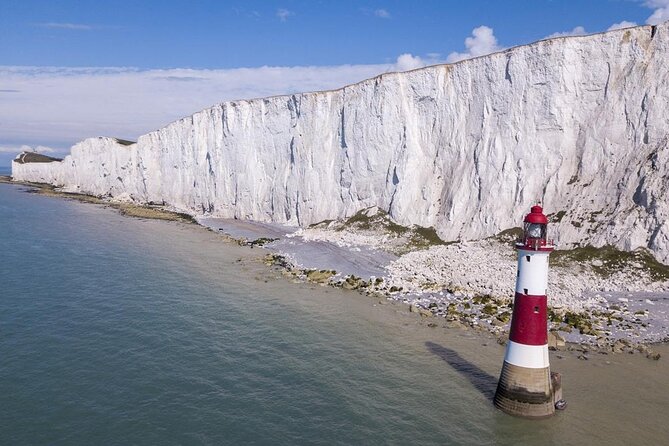
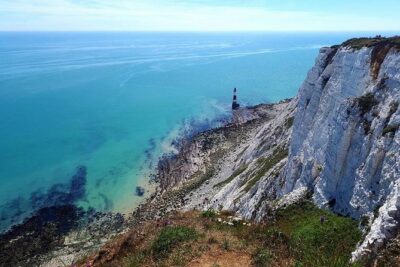
You’ll drive down the coast road toward Birling Gap, with a stop at Belle Tout Lighthouse lookout. Belle Tout came into operation on 11 October 1834 and was manned around the clock by two lighthouse keepers.
The design idea is classic lighthouse logic: the light was meant to be visible about 20 miles out to sea, and it would be obscured by the cliff edge if ships came too close. That’s a built-in safety mechanism.
Then comes the twist. Being on top of the cliffs meant it could be too prone to cloud, and the lighthouse ceased operation in 1900, when Beachy Head lighthouse took over.
For Birling Gap, there’s an optional walk that you can do from the lighthouse down along the cliffs, roughly 20 minutes. If you want photos from closer to sea level, this is one of the best places to do it. If you’d rather save energy, you can still enjoy Birling Gap from the scheduled stop without committing to the full walk.
When you get to Birling Gap itself, you’ll also have time for sea-level pictures, plus the chance to walk the beach and grab a snack or drink at the visitors centre.
East Dean and the Tiger Inn: optional lunch in a smugglers village vibe
East Dean is a proper village stop centered around the Village Green, with a war memorial and a medieval church nearby, plus the long-established inn called the Tiger Inn.
This is where you can choose your pace. There’s an optional lunch window of about 50 minutes. The Tiger Inn is described as a place smugglers used to meet, and it’s known as a long-running pub serving local regulars, walkers, and others who came through for centuries.
I like this stop because it gives your body a reset. After cliff angles and nature reserve air, a pub lunch is a natural rhythm break.
Just remember: lunch and alcohol are not included in the tour price. You can order food or drinks there if you want, but plan to pay separately.
Long Man Brewery and the cellar door tasting option
You’ll also have time at Long Man Brewery, which is a local brewery and cafe. It’s optional, which is useful because not everyone wants a drink break built into a sightseeing circuit.
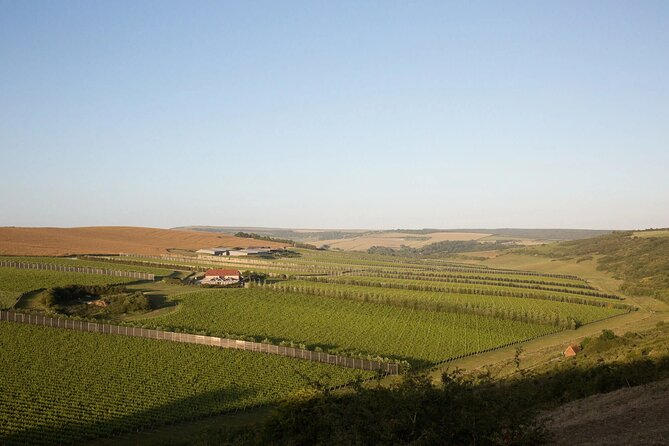
There’s also an optional complimentary tasting in a cellar door shop dedicated to producing Sussex sparkling wine. The tasting is described as single-site Sussex vineyard based, on a south-facing slope with chalk soil and aspect suited to sparkling wine production.
Even if you don’t do the tasting, the point is that the day includes one or two “try it if you want” moments. That keeps the day from feeling like only viewpoints.
Wilmington: the ancient yew tree with a safety reminder
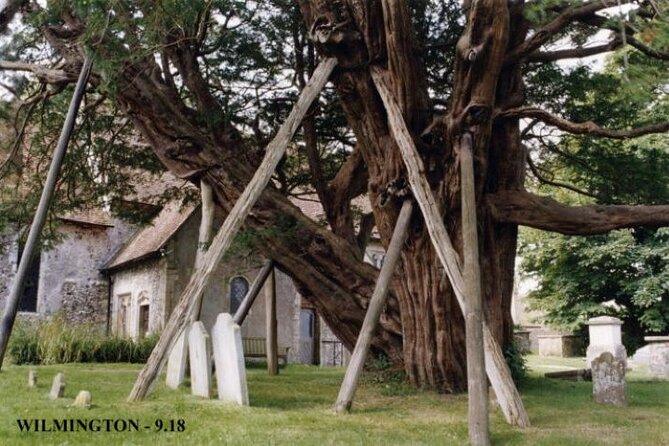
Wilmington is a downland village of Saxon origin, and the churchyard includes a yew tree estimated to be around 1600 years old, with a trunk girth of about 23 feet.
There’s a specific caution here that’s worth repeating: don’t eat the red berries because they are poison. You might hear more detail like eating the berry but not the pip, but either way, treat it like a learning moment, not a snack opportunity.
This stop adds something different from cliffs: it’s slower, more grounded, and tied to a specific object in a specific churchyard. The age is the hook, but the setting makes it stick. It’s one of those things you remember long after the day ends.
The Long Man of Wilmington: one of England’s puzzling giants
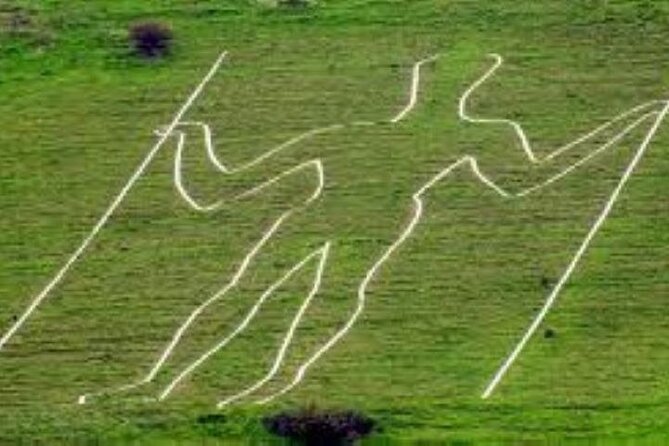
Next comes the Long Man of Wilmington, sometimes called the Wilmington Giant. He sits on steep slopes above the village.
The origins are a mystery with multiple theories. People debate whether the figure is prehistoric, Roman-influenced, Anglo-Saxon in origin, or even an artistic monk’s work from somewhere between the 11th and 15th centuries near Wilmington Priory.
What I like is that the stop doesn’t force one answer. It gives you the range of possibilities so you can look at the figure and think, rather than recite a single fact.
Also, the stop itself is short, about five minutes. That’s intentional. You’re getting the moment, the theories, and the view around it, not a long detour into speculation-heavy museum time.
St Andrew’s Church near the Cuckmere River: the cathedral of the South Downs
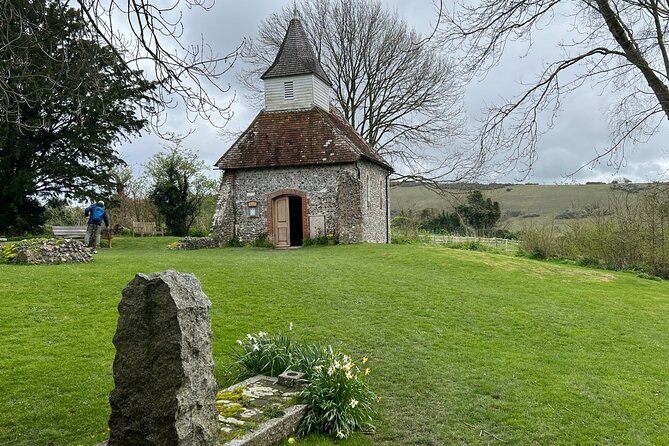
St Andrew’s Church is a standout parish church founded in the 1360s. It’s described as a fine 14th century example, built near the winding Cuckmere River and beside the Old Clergy House, which is the first National Trust property.
One of the key details is that it was built all at one time with no major later additions. The building’s size and soaring arches, along with few memorials in the interior, create an open, spacious feel. This is why it has been nicknamed the Cathedral of the South Downs.
There are also six bells below the spire, and it’s noted as one of fewer than twenty churches in the country where bell ringers regularly ring dramatically from the centre.
This is a good stop if you enjoy architecture and atmosphere more than crowds. It’s also a nice change after the wind and cliffs, because the church interior gives you a sheltered break and a chance to slow down.
Alfriston wandering: books, history, and the George Inn
Alfriston is where your tour turns into a gentle village stroll. You’ll have time for sightseeing around the village for about 30 minutes.
Two specific places make this leg memorable. Much Ado Books is a two-floor shop in the medieval village with new books, plus vintage, antiquarian, and secondhand volumes. It’s in a former builders’ yard, and the space includes a book-filled shepherd’s hut and a bower with bargain paperbacks. It’s the kind of stop where you browse without worrying about time.
Then there’s the George Inn. It was first licensed in 1397, and the foundations of the flint stone and half-timbered building date back to 1250. The inn also connects to stories of smugglers’ tunnels that run from its cellars.
Inside, the oldest part is the bar with an inglenook fireplace, a huge copper hood, and oak floors. Sussex hop bines decorate the walls. There’s a garden out back and a heated terrace for cooler evenings.
If you want a place to sit and decompress at the end of a scenic day, this is where it makes sense. Even if you don’t eat, you’ll feel like you’ve landed in old England.
What Colin’s guiding style adds to the day
You don’t just get places. You get explanations and problem-solving. In the feedback I used while planning my expectations, Colin shows up as the kind of guide who parks well for the day, keeps the group comfortable, and finds strong photo and viewing angles even when it’s blustery.
That matters in this area because the coast can be windy and change quickly. A guide who can steer you to the best side of a viewpoint, and who can keep the schedule smooth without rushing people, can turn a potentially frustrating weather day into a great one.
So when you book, you’re not paying only for transport. You’re paying for a guide to make sense of the geology, the coastal management, and the oddball histories that you’d otherwise miss.
Who this tour is best for
This works well if you want:
- Seven Sisters views without arranging your own car or train transfers
- A balanced day of cliffs, conservation areas, and classic villages
- Optional walking, so you can choose how active you feel
- A private group experience with an English-speaking guide
It may not be the best match if you want long stays at a single site, or if you dislike short stops and frequent get-out-and-get-in moments.
Should you book the Seven Sisters Tour from Brighton?
I’d book this if you want the South Coast highlights in one smooth, guided half-day with pickup built in. The price looks fair when you factor in private transport, a guide, light refreshments, bottled water, and WiFi, plus the fact that you’re hitting multiple “main character” locations like Devil’s Dyke, Seaford Head/Cuckmere Estuary, Belle Tout, Birling Gap, Wilmington, St Andrew’s, and Alfriston.
You should think twice if you’re planning around uncertain weather or if you need slow travel with lots of free time at fewer stops. This trip is designed for movement, and it performs best when conditions are decent.
FAQ
FAQ
What time does the tour start?
The tour starts at 9:30 am.
How long is the Seven Sisters tour?
It runs about 4 to 6 hours.
Is pickup available from Brighton hotels or Airbnb?
Yes. Drop-off and pick-up are offered to your hotel or Airbnb within Brighton.
Can the guide pick you up if you are arriving from London by train?
Yes. The guide notes that if you are traveling from London by train, pickup can be arranged from the train station.
Is the tour private?
Yes. It is a private tour/activity, so only your group participates.
What language is the tour guide speaking?
The tour is offered in English.
What’s included in the price?
Included features are drop-off and pick-up to your hotel or Airbnb within Brighton, light refreshments while travelling, tour guide, air-conditioned vehicle, bottled water, private transportation, and WiFi on board.
Is lunch included?
No. Lunch is not included.
Are alcoholic drinks included?
No. Alcoholic beverages are not included.
What happens if the weather is poor?
The tour requires good weather. If it’s canceled due to poor weather, you’ll be offered a different date or a full refund.
What is the cancellation cutoff for a full refund?
You can cancel up to 24 hours in advance for a full refund.
Latest to join the queue for Brighton

Seven Sisters & South Downs Trips, compared.
Seven Sisters & South Downs Tour with Train Tickets Included
Read our review →
The Seven Sisters & Beachy Head Lighthouse Boat Trip Adventure
Read our review →
Seven Sisters Private Walking Tour (5+ ppl) Cuckmere/Beachy Head
Read our review →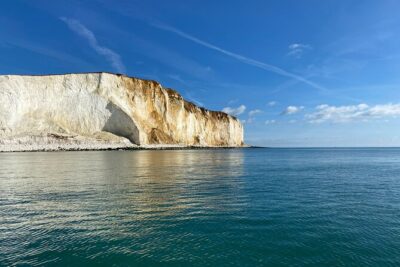

Seven Sisters and Brighton Tour with Train Tickets included
Read our review →
Seven Sisters and Sussex Villages Private Driving Tour
Read our review →Browse the lists this tour appears in