
Reviewed · CITY TOURS
Money and Power in the City Sightseeing Tour
Money has a walking route. This City of London tour links power and money from ancient foundations to today’s financial spotlight, with tight stop-and-explain storytelling. I like that it is run as a small-group experience, and I also like the way the guide uses alleys, civic buildings, and trade history to make the theme click fast.
If you want pure royal landmarks and big views only, you may find the finance focus a bit more specific than you expected. The route is about 2 hours on foot, and it is designed around history that still shapes how London works today. Reviews also point to the guide, Terry, as the main reason the tour feels fun and easy to follow.
In This Review
- Key Things to Know Before You Go
- Why This City Walk Turns Money Into a Story
- Route and Timing: A 2:00 PM Walk With Real Focus
- Stop One: Roman and Medieval Foundations of the Financial District
- East India Company: How Trade Became Power
- Royal Exchange, Bank of England, and Mansion House in One Line
- Exchange Alley (Change Alley): The Shortcut Where Deals Happened
- Guildhall and Medieval Guild Buildings: Civic Power Before Modern Markets
- St Paul’s Cathedral Over the Stock Market: The Modern Finale
- The Guide Makes It: Terry’s Storytelling and How He Keeps It Accessible
- Price and Value: Is $41.14 Worth It?
- Who Should Book This City of London Power Walk
- Should You Book Money and Power in the City?
- FAQ
- How long is the Money and Power in the City Sightseeing Tour?
- What is the group size limit?
- What language is the tour offered in?
- Where does the tour start and end?
- Are service animals allowed?
- What happens if weather is poor?
Key Things to Know Before You Go
- Small-group size (max 8) keeps it conversational, not lecture-style.
- Roman to modern finance storyline ties together sites you would otherwise walk past.
- Exchange Alley (Change Alley) shows how quick shortcuts and coffeehouse chatter fed decision-making.
- Guildhall and medieval guild buildings explain how civic power worked before banks and stock tickers.
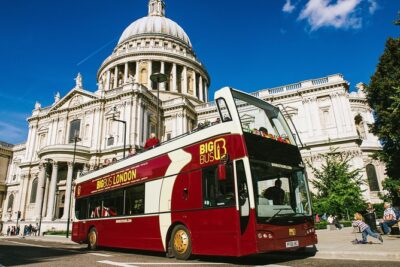
- St Paul’s Cathedral and the Stock Exchange area gives you a strong visual finish, where old and new meet.
- English tour, mobile ticket means less fuss and quicker day-of planning.
Why This City Walk Turns Money Into a Story
The City of London can feel like a place you either rush through or admire from a distance. This tour does the opposite. It turns a compact area into a cause-and-effect map: money influences people, people build institutions, and those institutions leave footprints you can still see.
I like that the theme is not vague. You are not just seeing landmarks, you are learning the connections between them, from the Roman and medieval beginnings of the financial district to trade empires and today’s market power. Expect the guide to bring in insider stories, gossip, and scandal tied to how money and influence moved around here.
You also get the kind of guidance that matters on day one in London. One review called out how Terry met the group where they were, whether you knew the basics or needed a foundation. That is a big deal because the City can be intimidating. You come away with names, locations, and a clear sense of why they matter, without feeling like you needed an economics degree.
Also on in London, no fuss
Route and Timing: A 2:00 PM Walk With Real Focus
This is a 2-hour tour that starts at 2:00 pm and ends at the London Stock Exchange area near Paternoster Square. It begins at Emperor Trajan A100, London EC3N 4DR, and ends at 10 Paternoster Sq., London EC4M 7LS, by the main column at Paternoster Square.
That start and end matter because the route is built to make sense as you go. You do not just circle the City randomly. The stops connect in a way that reinforces the money and power storyline. You begin in the older layers of the district and move toward the more modern institutions, so the final stretch near the stock market area feels like a pay-off rather than another photo stop.
Group size is also a practical advantage. The tour caps out at 8 travelers, which usually means you can ask questions without shouting. The tour is offered in English, and you receive a mobile ticket, which helps when you are juggling other plans in London.
Plan around timing too. Since it is only about two hours, you are meant to learn a lot in a short window, not wander freely. If your schedule is tight, that is good. If you prefer slow museum-style pacing, you might want to add extra time after the tour for lingering photos.
Stop One: Roman and Medieval Foundations of the Financial District
The first part of the experience sets up the big idea: today’s financial power did not appear from nowhere. You start with Roman and medieval beginnings of the City’s financial district, which helps you understand why the area developed as it did.
What makes this opening work is that it gives you a mental framework. When you later see major institutions, you are not just recognizing buildings. You are seeing why this exact geography was useful for trade, administration, and early forms of financial decision-making. The City has always been about managing flows, whether those flows were goods, permissions, or money.
In a place like London, it is easy to get lost in dates and names. The guide’s role here is to anchor you. You will get the sense of what changed over time, and what stayed important. That is why reviews highlight Terry’s storytelling style, and why several people mention the tour as a strong foundation for understanding early, mid, and current London.
If you are a first-time visitor to the City, this first stop is the difference between a tour that feels like sightseeing and one that feels like a map.
East India Company: How Trade Became Power
From there, the tour moves into a key theme of the area: the way commerce turned into political influence. You visit an important historic location tied to the East India Company, after seeing other connected sites.
You might think of the East India Company as a textbook name. Here, it is placed in the City’s physical reality. You start to see how trade routes and wealth accumulation fed into governance and status. The company did not just move goods. It helped shape the rules and reach of British power.
This stop also adds a human layer. It is not only about commerce in theory. It is about people making deals, negotiating advantage, and building institutions that would outlast them. The highlights promise gossip and scandal, and the East India Company era is exactly where that kind of story naturally fits, because the era is full of ambition, rivalry, and consequences.
Even if you do not know the details going in, this portion can still land because it focuses on the connection between economic muscle and political outcomes. For you, that means you leave with a clearer sense of why the City’s wealth mattered beyond London’s streets.
Royal Exchange, Bank of England, and Mansion House in One Line
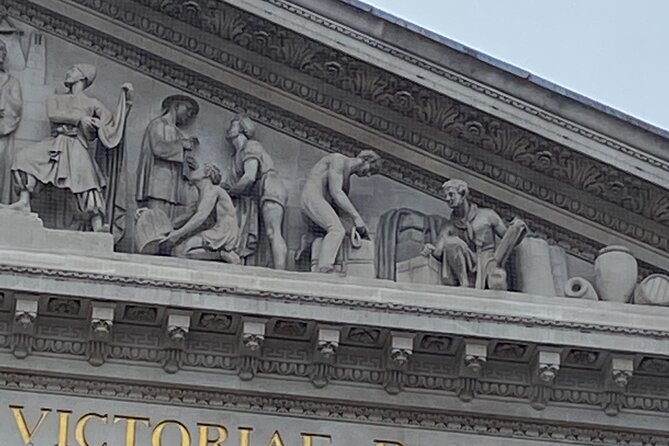
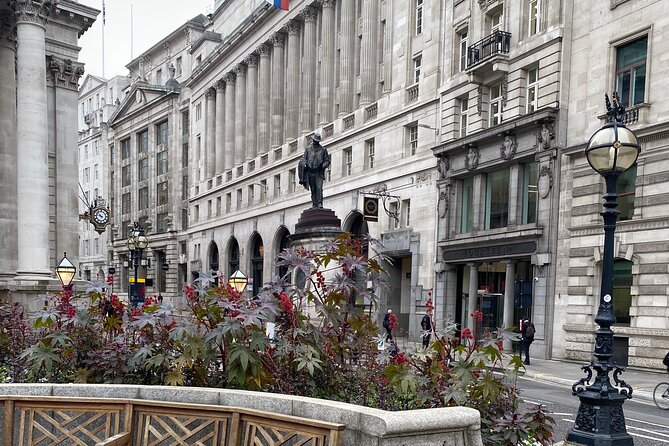
Next comes a “look up and feel the weight of it” stretch. You see the neo-classical splendour of major City landmarks, including the Royal Exchange, the Bank of England, and Mansion House.
On a normal walk, you might treat these buildings as impressive backdrops. This tour treats them as the physical language of power. Their style and placement are not random. They reflect the City’s role as a place where decisions were meant to feel official, serious, and permanent.
This is also where the tour’s theme becomes very practical. When you learn the stories behind these sites, you start to connect them to earlier themes you already heard: trade, administration, and the evolution of financial authority. In other words, you see the present built on the past, not as trivia but as structure.
Possible drawback here: if you prefer modern skyline views more than classic architecture, you may want to balance this with time somewhere like the South Bank later. But if you like understanding how institutions got their authority, you are in the right place.
While the kettle’s on in London:
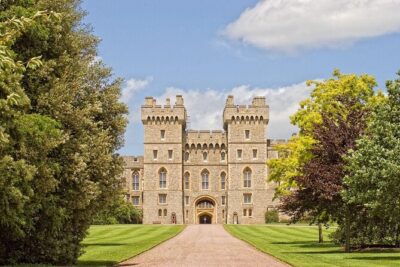
- Stonehenge, Windsor Castle and Bath with Pub Lunch in Lacock★ 4.5 · 7,402 reviews
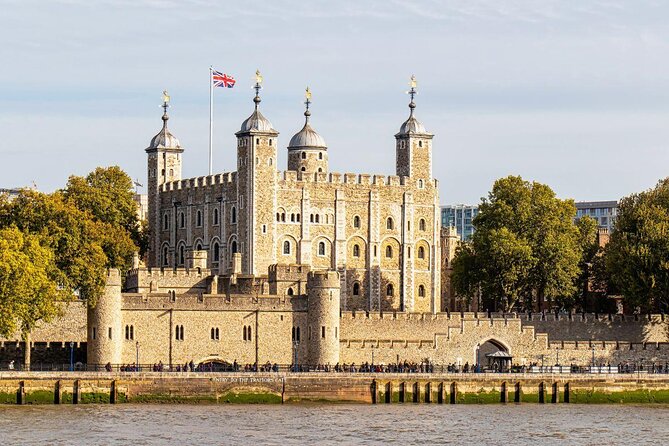
- Tower of London and Crown Jewels Exhibition Ticket★ 4.5 · 6,677 reviews
- Thorpe Park Admission Ticket★ 4.0 · 5,915 reviews
- Stonehenge, Windsor Castle and Bath Full Day Guided Tour★ 4.5 · 5,346 reviews
Exchange Alley (Change Alley): The Shortcut Where Deals Happened
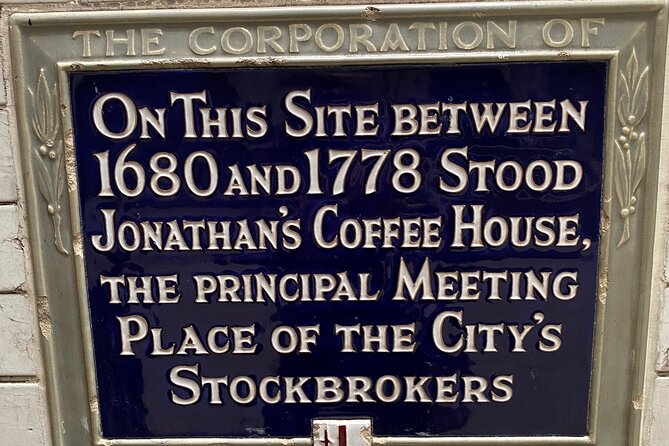
One of the most memorable parts of the route is Exchange Alley, sometimes called Change Alley. This narrow alley connects shops and coffeehouses in an older City neighborhood. It served as a shortcut from the Royal Exchange on Cornhill to the Post Office on Lombard Street.
You get the charm of a real London alley, but you also get something more useful: context for how people communicated and acted. In this kind of environment, proximity matters. Short distances, repeated visits, and casual conversation can turn into real financial advantage. This is where you start to see how the City ran on networks, not just on buildings.
The tour also references the location of a coffee shop where the stock market was first based. That detail helps you understand why coffeehouses mattered. They were not just for sipping. They were for sharing information quickly, forming opinions, and reacting to news.
If you like places where the “in-between” spaces tell a story, this is a high-value stop. It is also a good chance for photos that feel more lived-in than the main roads. And since the alley is part of the narrative, you are not just seeing a lane, you are getting a reason it mattered.
Guildhall and Medieval Guild Buildings: Civic Power Before Modern Markets
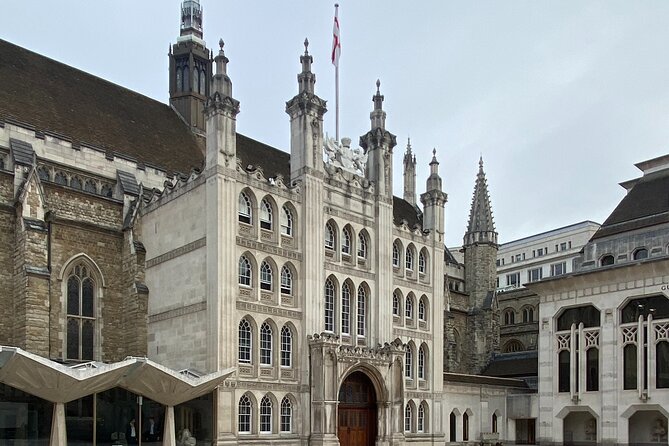
After the financial focus, the tour shifts into medieval civic structure. You see the medieval Guildhall and nearby Guild buildings.
Here is what you learn that you might otherwise miss: medieval guild halls were not only ceremonial. They were used to store goods and host events. When guild members were not using the hall for their own activities, the space could become a venue for entertainments like Passion plays.
That matters for understanding “power.” In today’s City, power looks like institutions, regulation, and big finance. Back then, power also looked like who controlled storage, who organized labor, and who had access to public-facing civic venues. The guilds helped knit the city together, economically and socially.
You also get a sense of continuity. The City’s identity as a place where commerce and civic life overlap is not new. This stop helps you see how that overlap formed long before the modern financial district matured.
If you are traveling as a family, this is often the part that feels most approachable. It turns medieval buildings into everyday function, and it is easier to picture real life here instead of thinking only in corporate terms.
St Paul’s Cathedral Over the Stock Market: The Modern Finale
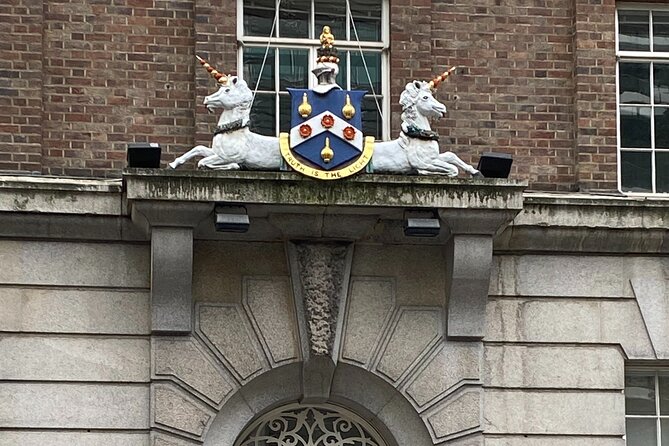
The tour ends with a strong visual and symbolic contrast. You see the modern stock market area and then look toward St Paul’s Cathedral, which sits on Ludgate Hill. The cathedral is the seat of the Bishop of London, serving as the mother church of the Diocese of London, and it is a Grade I listed building.
The key point for you is the perspective. You are moving from the narrow, human-scaled spaces of alleys and medieval civic buildings to a modern financial landscape. The cathedral acts like a gravitational anchor for the story, towering over the modern market scene you are learning about.
This finale also makes the tour’s theme feel complete. Money and power are not only about what happens inside institutions. They are about how a place organizes space and signals authority. St Paul’s adds that long-view dimension. It reminds you that some forms of power last by being built to last, and others by being adopted into the city’s identity.
If you love photo moments, this ending is a nice one. If you prefer a quieter ending, you may want to take your time after the tour on your own, because the Stock Exchange area and Paternoster Square give you places to pause and plan the rest of your afternoon.
The Guide Makes It: Terry’s Storytelling and How He Keeps It Accessible
The guide is where this tour often converts curiosity into real understanding. Across the reviews, Terry is consistently praised for his storytelling skill and for making complex topics feel clear. People mention that he can connect centuries of financial and political history in a way that stays understandable, even for those without a background in the subject.
One review notes that Terry’s energy makes it fun, not stiff. Another says he answered questions and gave context in a way that made the whole area click. There is also a review that explicitly says Terry met the group where they were in terms of knowledge, which is exactly what you want from a guide on a topic as big as money and power.
There is also a name variation you might spot in reviews, where the guide is referred to as Mr. Silvers in one account. Either way, the consistent message is the same: you will not just get facts, you will get explanations that connect the dots.
Practical benefit for you: if you ask a question during the walk, you are more likely to get a real answer tied to the sites in front of you. That is the kind of tour that sticks in your memory, because it connects what you see to why it exists.
Price and Value: Is $41.14 Worth It?
At $41.14 per person for about 2 hours, this tour sits in the mid-range for London guiding. The value case is not only the price. It is the tight focus and the small group format.
For your money, you get:
- A maximum of 8 travelers, which helps interaction and questions.
- A route that covers multiple eras, Roman and medieval to modern stock market context.
- A guide who is repeatedly credited for clarity and humor, based on a strong 5-star score and 100% recommendation in the review set.
- A storyline built around the specific theme of money and power, not a generic highlights loop.
If you are the type of traveler who hates paying for “see and move on” tours, this is the kind that makes sense. It is also a great fit if you like guided walking experiences where the guide explains what you are looking at, instead of leaving you to guess.
If you prefer broad, scenic sightseeing, you may feel this is more targeted than you need. But if your goal is to understand how London’s financial district got its authority and how that power echoes today, the cost feels fair for what you learn.
Also note the weather requirement. The tour requires good weather. If bad weather cancels it, you are offered another date or a full refund. That is worth planning for, especially in London.
Who Should Book This City of London Power Walk
This is a strong choice if:
- You want a guided context tour of the City of London’s financial and civic power.
- You enjoy history that connects to modern life, not just old buildings.
- You like the idea of hearing stories that include scandals and behind-the-scenes angles.
- You want a small group experience where you can ask questions.
You might skip it if:
- You mainly want grand sights and sweeping panoramas, with less focus on finance and institutions.
- You do not enjoy walking tours and prefer destinations where you stay put.
It is also family-friendly in the sense that the guide is described as adjusting the pace to the group and keeping learning fun. That said, it is still centered on the City’s money and power theme, so the interest has to be there.
Should You Book Money and Power in the City?
Yes, if you want to understand London’s City as more than a backdrop. I think this tour is especially worth it on a first or second day, when you most need a framework to connect the sights. The small-group size, the clearly guided storyline, and Terry’s ability to explain the topic without making it feel technical all line up well.
If your travel style is very relaxed and you like wandering with no plan, you might not get enough out of a structured 2-hour route. But if you like walking and learning, this one offers strong value for the time.
FAQ
How long is the Money and Power in the City Sightseeing Tour?
It runs for about 2 hours.
What is the group size limit?
The tour has a maximum of 8 travelers.
What language is the tour offered in?
The tour is offered in English.
Where does the tour start and end?
It starts at Emperor Trajan A100, London EC3N 4DR, UK, and ends at London Stock Exchange, 10 Paternoster Sq., London EC4M 7LS, UK, near Paternoster Square by the main column.
Are service animals allowed?
Yes, service animals are allowed.
What happens if weather is poor?
This experience requires good weather. If it is canceled due to poor weather, you will be offered a different date or a full refund.
Latest to join the queue for London





City Tours, compared.

Liverpool City Sights Hop On Hop Off City Tour – 24hr Ticket
Read our review →
1.5-hour Oxford City and University Walking Tour
Read our review →
City Sightseeing London Hop-On Hop-Off Bus Tour & Bookable Extras
Read our review →
City Sightseeing Oxford Hop-On Hop-Off Bus Tour
Read our review →
Browse the lists this tour appears in