
Reviewed · CITY TOURS
Guided Walking Tour Suspension Bridge Clifton Splendour & City.
Bristol clicks into focus when you walk it. This guided route strings together Clifton Suspension Bridge, Bristol Cathedral, and street art, with audio headsets so you can actually catch the details as you move. I also like that it is built for an on-foot pace that reaches places most bus tours skip. One possible drawback is the steady walking, plus limited nature breaks, so plan for a solid morning on your feet.
I especially like that the guide, Mike, brings a lived-in perspective from more than 40 years in Bristol. That matters because the stops are not just famous. They are connected, from shipbuilding and trading to modern pop culture, street art, and the stories locals repeat.
The whole experience runs about 2 hours 30 minutes to 3 hours and caps at 8 people, which keeps questions easy and the atmosphere relaxed. It also depends on good weather, so if Bristol is doing its usual showery routine, have a rain layer ready.
In This Review
- Key highlights you will care about
- Clifton Suspension Bridge: walk it, then understand why it matters
- Royal York Crescent: the stop that teaches you how Bristol looks
- Victoria Square: WG Grace and the Battle of Boyces Avenue
- Goldney Hall: Woodes Rogers and Quakers in one intriguing stop
- Brunel’s SS Great Britain: the Clifton Wood viewing point and Floating Harbour
- Bristol Cathedral, Frogmore Street, and the mix of sacred and street
- Edward Colston statue: sugar trade, old walls, and the difficult parts
- Price and timing: is $34.72 good value for this route?
- Who this tour is best for, and who should skip it
- Should you book Clifton Splendour and City?
- FAQ
- What is the duration of the Clifton Splendour and City walking tour?
- Where does the tour start and where does it end?
- What time does the tour begin?
- How much does the tour cost?
- Is admission included for the stops?
- Do you provide audio so I can hear the guide?
- Is the group size small?
- Is it suitable for people with moderate physical fitness?
- Is the tour offered in English?
- What should I know about cancellations, weather, and service animals?
Key highlights you will care about
- Clifton Suspension Bridge first, up close: walk over it and learn what makes it so iconic.
- Audio headsets that work: you hear the guide clearly as you move between stops.
- Mike’s Bristol stories: the talk leans personal, shaped by 40+ years around the city.
- A route that mixes big sights and back streets: Royal York Crescent, Quakers at Goldney Hall, Banksy in Frogmore Street.
- All the main stops are admission free: listed sights do not require paid entry for this tour.
Clifton Suspension Bridge: walk it, then understand why it matters
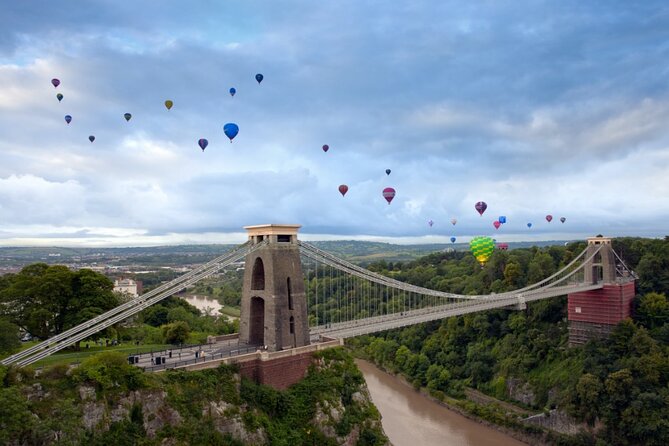
You start at Clifton Observatory on Litfield Place at 10:30 am, and the first big reward is Clifton Suspension Bridge. The time is about 40 minutes, and the goal is simple: get you on the bridge and talking distance from the views, not just snapping photos from far away.
What makes this part special is that you do not treat the bridge like a postcard. You walk it, then the guide gives you context that turns a dramatic structure into something you can picture in your mind as a working piece of engineering. That is the whole theme of the day, famous places first, explanation second, then you notice more than you would on your own.
Even if you have seen pictures of Clifton Suspension Bridge, being up there changes the feel. The walking keeps you moving through angles, so the story lands in layers, not in one quick look. The experience is also practical. You are near the top end of the day’s route, which helps set the rhythm if the rest of the walk trends downhill, as it tends to do.
Comfort tip: bring shoes with grip. Bristol can be slick near rivers and stone paths, and you are spending time right on and around the bridge walkway. Also, if you want photos, aim to grab them during the easiest walking sections while the guide pauses for attention.
More England on foot, brolly optional:
Royal York Crescent: the stop that teaches you how Bristol looks
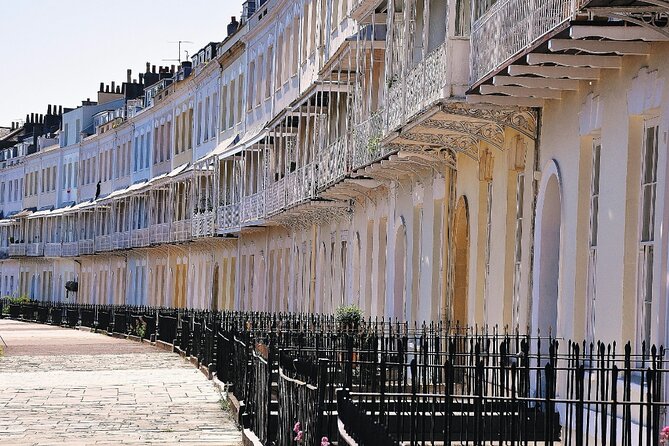
After Clifton, you shift to Royal York Crescent. This is a short stop, about 10 minutes, but it is a useful palate cleanser. The Crescent gives you a sense of Bristol’s architectural pride, the kind of graceful, planned elegance you do not always connect to a city that is also known for industry.
What I like about building a tour this way is the contrast. You go from a bold piece of engineering to a carefully composed streetscape, then you start realizing that Bristol is not one story. It is several stories that rhyme.
This stop is also a chance to train your eye for details. When you are only passing by on your own, you might look once and move on. With a guided pace, you learn what to focus on, so you notice why a street or frontage feels iconic.
This part is quick, so if you are the kind of person who likes lingering, keep your expectations set. You are using these minutes to understand the design before the tour moves on.
Victoria Square: WG Grace and the Battle of Boyces Avenue
Next comes Victoria Square, around 15 minutes. Two things anchor the stop: the Battle of Boyces Avenue, and a connection to where WG Grace lived.
This is where a walking tour earns its keep. The square is easy to treat as a pass-through. But when the guide ties the space to named events and named people, you start seeing the city as a stage where history happened in ordinary streets, not just in museums.
You also learn how local history can show up in unexpected ways. A public square and a road reference can carry the weight of a story, and you can only catch that by stopping long enough to listen.
Also, this section helps you understand pacing. The tour keeps moving, but it gives each stop enough time to feel meaningful. That balance is great when you want a morning that is active, not exhausting.
Goldney Hall: Woodes Rogers and Quakers in one intriguing stop
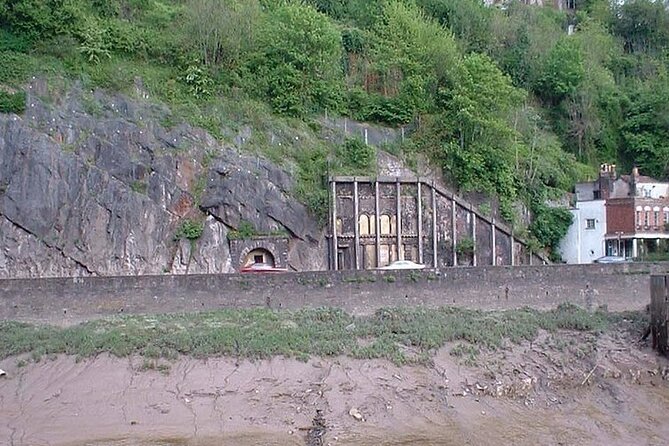
At Goldney Hall, you get about 15 minutes. The focus here is Woodes Rogers and the Quakers.
This is one of those stops that makes Bristol feel wider and more complicated. If your mental map is mostly bridges, churches, and shopping streets, Goldney Hall expands it. It hints at how Bristol connected people, ideas, and faith communities, and how those networks left physical traces behind.
The practical upside is that Goldney Hall is not just a “look and go” moment. The guide uses the names to build a narrative, so you understand why you are standing where you are standing. You might not remember every date or phrase, but you will remember the feeling of realizing the city had more than one influence at a time.
If you like architecture but also like social history, this is the kind of stop you will enjoy most. It is also a good reminder to keep your mind open as the tour moves into the more modern city layers later.
Brunel’s SS Great Britain: the Clifton Wood viewing point and Floating Harbour
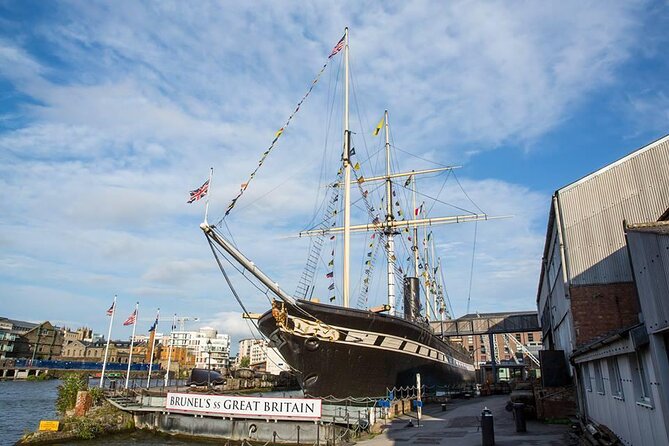
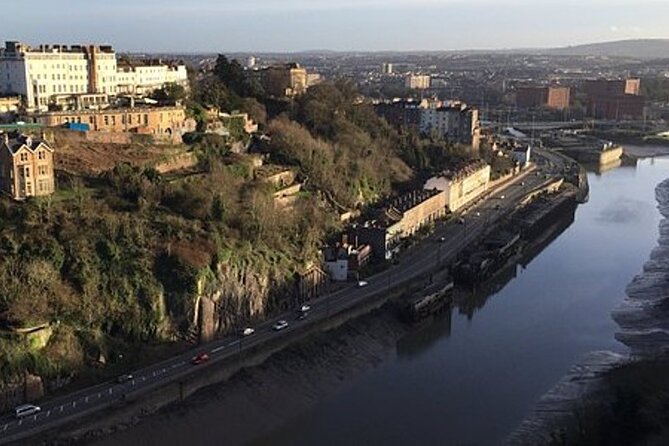
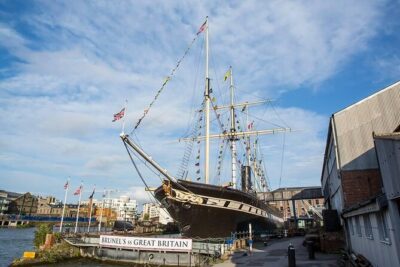
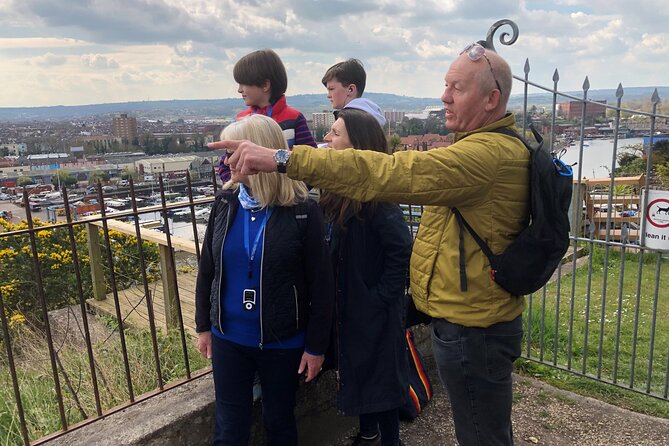
The mid-point highlight is Brunel’s SS Great Britain. You spend about 20 minutes here, and the route includes a viewing setup from a lesser-known angle in Clifton Wood, toward the Floating Harbour.
This is one of the most satisfying parts of the tour because it blends “wow view” with “how do I even find that?” energy. Instead of only telling you about Brunel’s ship, you see it from a perspective that explains why the ship matters to Bristol’s identity.
Then there is the movement that follows. The tour drops you toward College Green as part of this stop, which helps the day feel like a journey rather than a set of disconnected photo stops. Reviews about this tour also point out how the route feels designed, starting at a higher point and flowing downhill, which is easier on the legs.
A tip for getting the most out of this stop: if you care about photography, pause your walking for a moment and watch where the guide points. The viewing point is not obvious, so the angle you are aimed at is part of the experience.
And if you are a ship enthusiast, you are going to leave with a better sense of how Brunel’s work fits into the larger Bristol story, the one about trade, engineering, and industry.
Also on in Bristol, no fuss
- West Country Games – the most popular group activity in the South West!★ 5.0 · 315 reviews
- The House Magicians Comedy Magic Shows★ 5.0 · 263 reviews
- Only Fools and Horses Tour of Bristol★ 5.0 · 253 reviews
- Guided Walking Tour of Bristol Old City and Harbour★ 5.0 · 166 reviews
Bristol Cathedral, Frogmore Street, and the mix of sacred and street
Next is Bristol Cathedral, around 15 minutes. This stop is described as a 13th-century cathedral experience, including St Marks Chapel and the Council House area. Even if you are not a cathedral person, this part helps you understand how the city’s religious life and civic life sit side by side in the same visual frame.
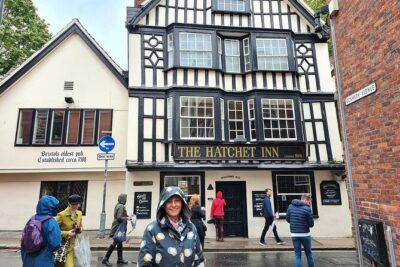
From there, the tour moves to Frogmore Street for about 15 minutes, and this is where Bristol turns modern fast. You will see references connected to Banksy’s well hung lover, the Council House, the reputed oldest pub called the Hatchet, Harveys Famous Warehouse, and the Hippodrome.
What I like here is the way the tour refuses to treat street art as a separate theme. Instead, it presents Bristol’s modern creativity alongside older structures and older institutions. When the guide explains what you are looking at, the street stops feel like living, changing layers of the same city.
If you are traveling with teens or kids, this is often the section that keeps attention. The guide can turn a quick photo stop into a story moment, and the audio makes sure you do not miss the punchline.
One caution: Frogmore Street can feel busy, even in a guided group. Keep your eyes on the guide and your footing while you look up at artwork and building details.
Edward Colston statue: sugar trade, old walls, and the difficult parts
The final major stop is the Statue of Edward Colston, with about 20 minutes. The tour route around this stop includes references to one of the last sugar factories in Bristol, street art, and the Old City Wall. You also hear about ancient trade guilds and the story wrapped around the statue.
This is the part where a walking tour can either be superficial or genuinely useful, and this one works because it connects the statue to the broader economic story of the city. You walk away with a clearer sense of what the statue represents in the context of Bristol’s trading past.
It is also a good closing technique. The morning begins with engineering and grand architecture, then it moves through social history, faith and civic spaces, modern views of Brunel’s ship, then street art, and finally trade, walls, and one of the city’s most debated monuments. By the end, you do not just know what is where. You understand how the themes connect.
If you prefer tours that stay neutral and factual, you are still going to get a lot here. But the value is that you are not stuck with slogans. You see the physical city layout and the named connections, and you leave with more context to form your own views.
Price and timing: is $34.72 good value for this route?
At $34.72 per person for roughly 2.5 to 3 hours, this tour is fairly priced for the kind of ground it covers. You also get audio devices, and the listed stops are marked as admission ticket free for this experience, which keeps the cost from ballooning.
The biggest value factor is what you are buying beyond access. You are buying interpretation. Clifton Suspension Bridge and Brunel’s ship are both headline sights, but the difference here is the guided framework that helps you see the city as a connected place, not a checklist.
Group size matters too. With a maximum of 8 people, the guide can keep the story flowing and still answer questions without turning your morning into a waiting game. That small-group setup also pairs well with the audio headset approach, since you are not constantly craning your neck or losing the guide.
About timing: the start at 10:30 am is a good middle-of-morning option. It avoids the earliest rush, but you still get daylight for views from Clifton down to the city center.
What to bring:
- Comfortable, grippy shoes
- Water
- Weather-ready layers, because the tour needs good weather to run smoothly
Who this tour is best for, and who should skip it
This is a great fit if you want a first-timer introduction to Bristol that goes beyond the most obvious highlights. You will cover Clifton, cathedral space, street art, and the more complicated trade story, all in one connected walk.
It is also a good choice if you like stories that sound like they come from a real local, not a script. With Mike guiding, the tone is friendly and the pace keeps you engaged, even when the topics get a bit serious.
Families can work well, especially if kids are comfortable with a steady walk. The tour is designed for moderate physical fitness, not stroller time, and the stops do not promise lots of long breaks.
Skip it if:
- You struggle with walking for stretches without frequent rest
- You dislike outdoor weather dependence
- You want a strictly indoor experience
If you are unsure, treat it like an active sightseeing morning. Bring the basics, wear good shoes, and you will get far more out of it.
Should you book Clifton Splendour and City?
If your priority is getting a real sense of Bristol in one morning, this tour is an easy yes. The route is efficient, the headsets make the guide’s explanations easy to follow, and the combination of Clifton icon views with cathedral and Frogmore Street street art gives you variety without chaos.
Book it if you:
- Want Clifton and the harbor area plus city-center sights in one go
- Appreciate a guide who can connect places through stories
- Like asking questions and moving at a group-friendly pace
Hold off if you:
- Need frequent breaks or have limited mobility
- Are traveling at a time when weather is likely to ruin outdoor plans
If the forecast looks decent and you can handle a steady walk, this is a strong value way to see Bristol with context, not just photos.
FAQ
What is the duration of the Clifton Splendour and City walking tour?
The tour lasts about 2 hours 30 minutes to 3 hours.
Where does the tour start and where does it end?
It starts at Clifton Observatory, Litfield Place, Clifton, Bristol BS8 3LT, UK, and it ends at College Green, Bristol BS1 5TJ, UK, near the Marriott Hotel at the bottom of Park Street.
What time does the tour begin?
The start time is 10:30 am.
How much does the tour cost?
The price is $34.72 per person.
Is admission included for the stops?
The listed stops are marked as admission ticket free for this experience.
Do you provide audio so I can hear the guide?
Yes. Audio devices are provided, so you can hear the guide clearly as you explore.
Is the group size small?
Yes. The tour has a maximum group size of 8 people.
Is it suitable for people with moderate physical fitness?
The tour is recommended for people with moderate physical fitness, and you should wear comfortable shoes and bring water. Nature breaks are limited, so plan ahead.
Is the tour offered in English?
Yes. The tour is offered in English.
What should I know about cancellations, weather, and service animals?
You can cancel for free up to 24 hours in advance for a full refund, and the tour requires good weather. If it is canceled due to poor weather, you are offered a different date or a full refund. Service animals are allowed.
Latest to join the queue for Bristol



City Tours, compared.
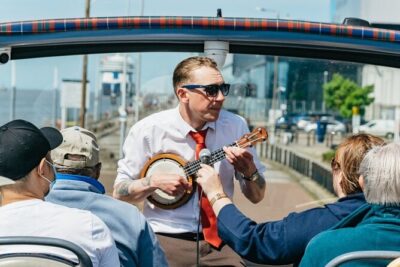
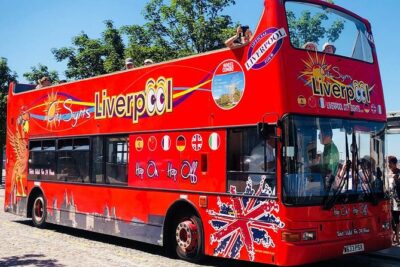
Liverpool City Sights Hop On Hop Off City Tour – 24hr Ticket
Read our review →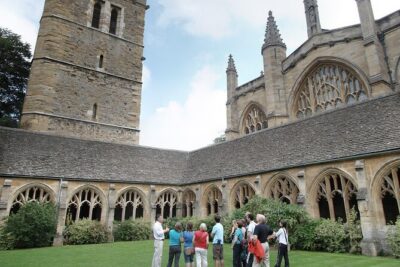
1.5-hour Oxford City and University Walking Tour
Read our review →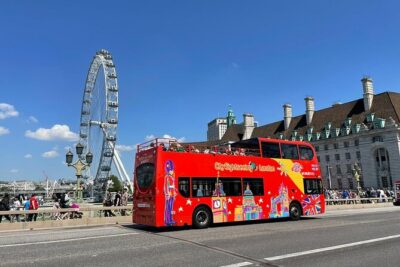
City Sightseeing London Hop-On Hop-Off Bus Tour & Bookable Extras
Read our review →
City Sightseeing Oxford Hop-On Hop-Off Bus Tour
Read our review →
Browse the lists this tour appears in