
Reviewed · CITY TOURS
Ghosts, Gore & Other Ghasty Stories in the City of London
The City of London hides ghosts in plain sight. This private walking tour strings together the capital’s financial heart with ghasty stories tied to real streets, churches, and old institutions, from Bank Station down through Cheapside, Paternoster Square, and on toward Smithfield. You’re walking through the same compact lanes that built London’s money power, but you’ll experience them as if the past still breathes.
I love that it’s private, so your guide is working for just your group. You can ask as many questions as you want, and the pace is yours, not the crowd’s. I also love the storytelling tone, especially the way guides like Ross mix history with humour, keeping even the darker moments entertaining instead of just grim.
One drawback to think about: two key stops involve admission that is not included, and the content leans into skulls, hangings, and body-snatcher lore. If you prefer light sightseeing, this may feel too intense.
In This Review
- Key points before you go
- Entering London’s ghost layer at Bank Station
- Cheapside skulls and the lost-river mystery
- Paternoster Square, printing industry drama, and the last City Gate
- Holy Sepulchre Church, Black Dog lore, and jail history
- Smithfield Market, body snatchers, and the City’s execution-era mood
- Ross’s storytelling style, humour, and how the pace really works
- Price and value: $342.79 for a private group up to 15
- Timing, tickets, and what to expect on the ground
- Who should book this ghost-and-gore route
- Should you book this tour or choose something else?
- FAQ
- How long is the Ghosts, Gore & Other Ghasty Stories in the City of London tour?
- What is the price for the tour?
- Is the tour private?
- What language is the tour offered in?
- Where does the tour start and end?
- Are admission tickets included for all stops?
- Do I need a printed ticket?
- Is free cancellation available?
Key points before you go
- Private guide for up to 15 means you can steer the stories toward what you care about
- Bank Station to Smithfield is a tight route that packs in a lot of spooky, real-world context
- Funny-but-dark tone keeps the tour moving even when the tales get gruesome
- Mobile ticket makes it easy to show up and start on time
- Two stops have extra admission so you may want to budget a little beyond the tour price
Entering London’s ghost layer at Bank Station
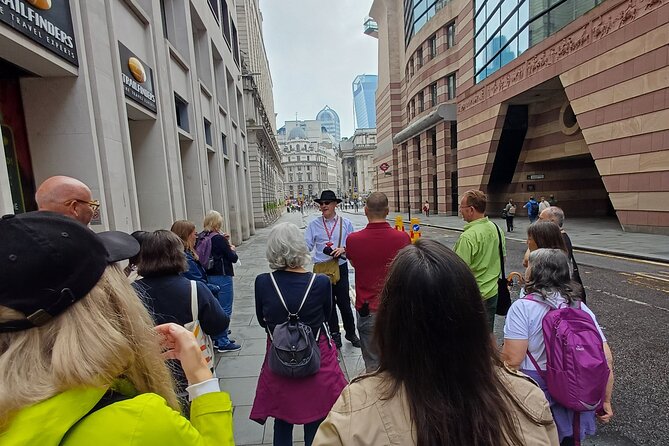
This experience starts at Bank Station, in London’s core business district. That location matters, because Bank is where modern London’s finance machinery sits directly on top of older, denser life. In a tour like this, you’re not just hearing legends, you’re hearing how people used to explain scary events when science and records were thinner.
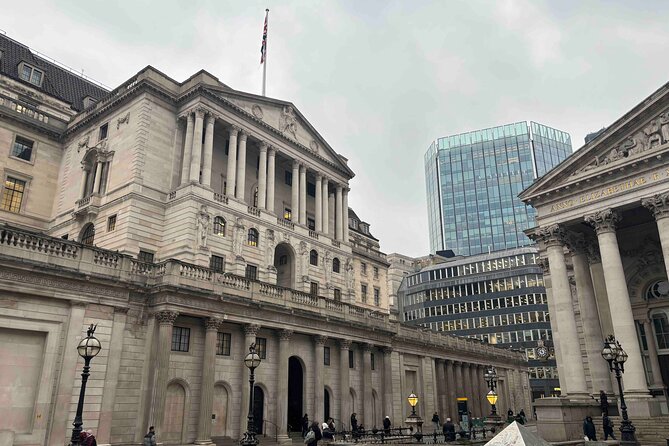
At Stop 1, you’re guided through why Bank Station may be one of the most haunted spots on the Underground network. The themes here are classic London haunting ingredients: old institutions, folklore, and the feeling that the ground beneath you has memories. The tour also ties the story of the Bank of England into the bigger legend web, including an alleged robbery that’s part of the local lore. It’s the kind of stop that makes you look at a place you’ve walked past a hundred times and suddenly see it as a stage built on older stages.
Practical note: this is about 20 minutes. So you’ll get the main story beats without the tour dragging. It’s a strong opener because it sets expectations for the whole walk: London is going to be explained through ghosts and questions, not through dry facts.
Also on in London, no fuss


Cheapside skulls and the lost-river mystery
Next you head to Cheapside, another City-area street with a long memory. Here the ghost stories get more vivid. You’ll hear about the location of one of London’s two lost rivers, which immediately gives the area a “how did this change so much?” feeling. Rivers disappear under streets, and in London that kind of physical hiddenness often becomes emotional hiddenness in the legends.
This stop also leans into gruesome detail: a discovery of a pile of human skulls. That’s not a random horror prop. It’s used to connect you to how fear, punishment, and public spectacle used to mix in everyday urban space. The tour then adds two more hooks: why a priest was hanged here, and an explanation of what it took to do the job tied to the nickname Human Lavatory.
You should know what this means for your tour experience. The stories are meant to feel like short scenes you can picture. Even if you’re not a hardcore horror fan, Cheapside is designed to help you see how London used fear to teach lessons, and how that idea stuck in local storytelling.
This segment runs about 20 minutes, and it’s a good length for photos. There’s time to get your camera out, but you’re not expected to stand around for long.
Paternoster Square, printing industry drama, and the last City Gate
From Cheapside you move to Paternoster Square, where the mood shifts from brutal discoveries to daily life and punishment. This area is tied to the home of the City’s printing industry, which adds a different flavor to the haunting. Printing matters in ghost stories because it connects legends to what people actually read, repeated, and passed along.
You’ll hear what it was like to live in Medieval London from the angle of how laws and punishments were handled. The tour frames this through what happened to those who broke the rules, so the grim scenes make more sense as social control rather than just shock value.
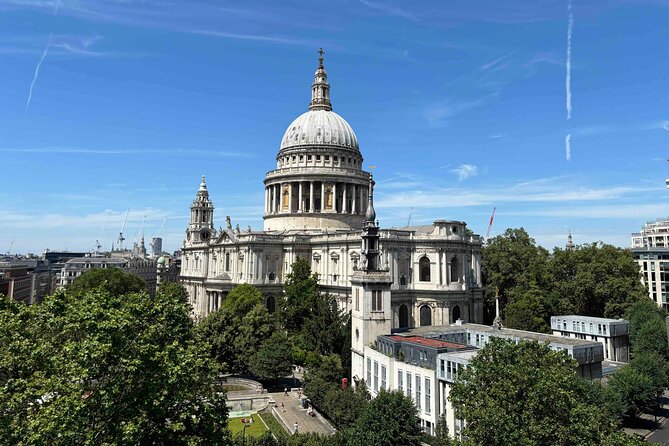
Then the walk does something smart: it points out the last City Gate. Gates are natural story magnets because they are the edges of the old city, the place where people entered and were judged. You’ll also get the idea of a horrible display that visitors could see when they came into London. Without needing extra gore, the concept works. It turns an ordinary urban structure into an emotional threshold.
Stop time here is about 15 minutes. That short window is actually helpful. It gives you a punchy “one more layer of London” moment before you go into the church stop where the legends get more personal.
Holy Sepulchre Church, Black Dog lore, and jail history
At Holy Sepulchre Church, the tour leans into two kinds of spooky: institutional fear and animal legend. The church is linked to one of England’s most notorious jails, and that connection shapes the stories you’ll hear next. Jails and churches sitting side by side create the perfect conditions for folklore, because people live next to what they fear.
You’ll also hear about the legend of the Black Dog that haunted the church’s walls. This is a different style of haunting than the skulls and hanging talk. Black dog stories in the wider UK tradition often show up as warnings or omens. Here, it’s used to add atmosphere, so the tour doesn’t stay stuck in the most graphic themes.
One of the most striking parts of this stop is how the tour frames public punishment alongside daily routines. You’ll get the kind of story where someone could have been watching a hanging and still be doing something as ordinary as enjoying breakfast. The point isn’t to make you shocked for sport. It’s to show how normalized cruelty and spectacle used to be in city life.
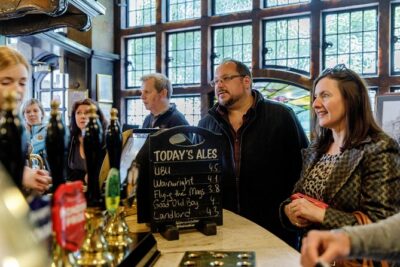
The tour then adds one more twist tied to the next-door pub. You’ll hear about which ghosts haunt that pub area, which helps you understand that the spooky stories were never limited to churches. They spilled into taverns, gathering places, and the spaces where people tried to forget what they had seen.
This stop runs about 20 minutes, and admission is not included. If you want this part most, it’s worth budgeting for the entry separately.
Smithfield Market, body snatchers, and the City’s execution-era mood
The walk finishes its main arc at Smithfield Market, a place with a reputation that fits this tour’s subject perfectly. This is where the stories shift again, adding body-snatcher lore and execution-era context. The tour connects stories of body snatchers and gruesome executions to the area’s broader reputation, so you understand why people turned a marketplace into a source of long-term fear.
You’ll also hear about a Scottish national hero tied to the stories here. That kind of inclusion matters, because it pulls the tour slightly away from only London-specific gore and shows how London’s legends can absorb national threads.
The stop also includes another church element, described as one of the most haunted churches within the City of London. Churches keep showing up throughout this route, and that pattern makes sense if you think about how London preserved records and ritual spaces. Even when the legends are supernatural, the settings are anchored in real buildings people still visit.
Stop time here is about 30 minutes, and admission is not included. This longer window compared to earlier stops helps because it gives the guide time for the more layered stories, like the connections between crime, punishment, and the darker side of “science” rumors that often fueled body-snatcher fears.
If you like a tour that doesn’t just deliver a few spooky stops but ties themes together, Smithfield is the payoff.
While the kettle’s on in London:
- Stonehenge, Windsor Castle and Bath with Pub Lunch in Lacock★ 4.5 · 7,402 reviews
- Tower of London and Crown Jewels Exhibition Ticket★ 4.5 · 6,677 reviews
- Thorpe Park Admission Ticket★ 4.0 · 5,915 reviews
- Stonehenge, Windsor Castle and Bath Full Day Guided Tour★ 4.5 · 5,346 reviews
Ross’s storytelling style, humour, and how the pace really works
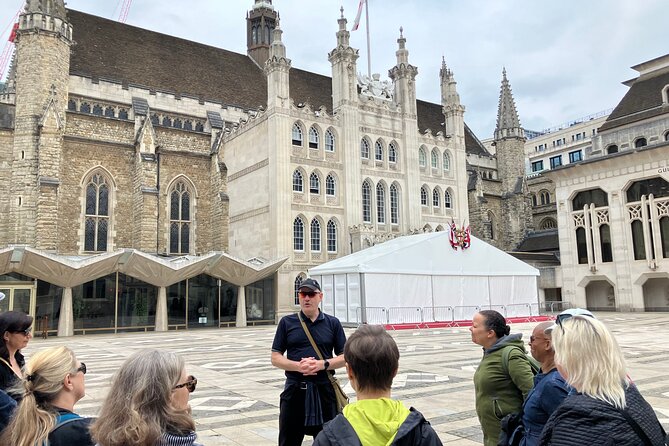
One reason this tour gets strong feedback is the storytelling delivery. In particular, the guide Ross shows a talent for mixing local legend with history and using humour as a pacing tool. It keeps you attentive, and it makes the darker moments easier to handle without turning the walk into a lecture.
A private group also changes how the tour feels. With only your group involved, the guide can adjust. If your group is curious about Underground legends, the first stop theme gets more time. If your group cares about punishments and public spectacles, the church and gate stories get more emphasis. That flexibility is one of the biggest practical advantages of a private walking tour.
You’ll also notice the guide’s ability to keep people engaged while moving through tight city blocks. Some walking tours lose energy mid-way because the group gets restless. Here, the structure is built to avoid that: short stops, clear story themes, and a route that stays compact.
One more plus from the guide’s style: in at least one related experience, Ross extended a walk to include a Roman amphitheater in the Guildhall Gallery. That points to a broader pattern of a guide who doesn’t just recite the script, he finds ways to fit interesting stops around the group’s interests. For you, that usually means your questions get treated seriously, not brushed off.
Price and value: $342.79 for a private group up to 15
Let’s talk value in a real way. The price is $342.79 per group for up to 15 people, with a duration of about 2 to 3 hours. That pricing structure can be a bargain if you’re coming with friends or family. Even at the low end of the group size, you’re paying for a guided walk plus storytelling that is location-based and timed to multiple stops.
If you’re traveling solo, the value math changes because you’re effectively buying a private guide’s time. Still, there’s a practical upside: you’re not waiting for a big group to assemble, and you can ask questions without feeling like you’re hijacking the schedule.
In plain terms: this tour is best when you can spread the group cost and want a guided experience that feels personal. It’s also a smart pick if you want something more memorable than a standard hop-on walk, because the content is built around specific sites and local legends rather than general London history.
Timing, tickets, and what to expect on the ground
The tour is a mobile ticket experience in English, and it’s offered as a private tour/activity where only your group participates. That matters because London walks can get crowded fast. Here, your group’s movement depends on your pace, not strangers.
You’ll be meeting at Bank Station (Bank/Monument Complex, Princes St, London EC3V 3LA) and finishing at Old Red Cow, 71 Long Ln, Barbican, London EC1A 9EJ. The pub is noted as opposite the Long Lane entrance to Farringdon Street Station, which is useful if you want to transition directly into dinner or onward transit.
About admissions: some parts are listed as free, while the Holy Sepulchre Church and Smithfield Market entries note that admission is not included. So if you want the full experience at those stops, plan a little extra money for any entry fees there.
Also keep it in mind that the tour is rated as suitable for most people and that service animals are allowed. It’s still a walking experience, so build in normal London considerations like weather and street crossings, but the tour is designed as an easy city walk rather than a long hike.
Who should book this ghost-and-gore route
You’ll likely enjoy this if you like:
- London city walks with specific story sites
- Ghost legends that connect to real institutions and public punishment
- A guide who can handle questions and adjust to your group
- Humour paired with darker themes, so it stays entertaining
You might skip it if your idea of a good London day is mostly art museums, leisurely parks, and quiet streets, because this tour is intentionally focused on skulls, hangings, haunted church legends, and body-snatcher lore.
It also works well if you want a group activity that doesn’t require everyone to agree on a single museum. Everyone can enjoy the same walk, then go their separate ways after.
Should you book this tour or choose something else?
Book this if you want a private London experience that feels like a story you can walk through, not just read about. The combination of compact stops, a guide with a humour-forward tone like Ross, and the City-of-London setting makes it a strong fit for a Halloween-season mood, or honestly any time you want London to feel a bit more alive and less museum-like.
Choose something lighter if you do not want stories that include hangings and skull discoveries, or if you dislike tours where some entries require extra payment at church and market stops.
If you’re deciding between a standard city walk and this one, I’d pick this. London already has enough history to overwhelm you. This one gives you a guided thread, and it keeps the pace tight so the stories stick.
FAQ
How long is the Ghosts, Gore & Other Ghasty Stories in the City of London tour?
The tour lasts about 2 to 3 hours.
What is the price for the tour?
The price is $342.79 per group, up to 15 people.
Is the tour private?
Yes. It is a private tour/activity, and only your group participates.
What language is the tour offered in?
The tour is offered in English.
Where does the tour start and end?
It starts at Bank Station in the Bank/Monument Complex area. It ends at Old Red Cow at 71 Long Ln, opposite the Long Lane entrance to Farringdon Street Station.
Are admission tickets included for all stops?
Admission ticket costs are free for some stops, but admission is not included for Holy Sepulchre Church and Smithfield Market.
Do I need a printed ticket?
No. You get a mobile ticket.
Is free cancellation available?
Yes, free cancellation is available. You can cancel up to 24 hours in advance for a full refund.
Latest to join the queue for London





City Tours, compared.


Liverpool City Sights Hop On Hop Off City Tour – 24hr Ticket
Read our review →
1.5-hour Oxford City and University Walking Tour
Read our review →
City Sightseeing London Hop-On Hop-Off Bus Tour & Bookable Extras
Read our review →

City Sightseeing Oxford Hop-On Hop-Off Bus Tour
Read our review →

Browse the lists this tour appears in