
Reviewed · CITY TOURS
Extended: Oxford University & City Tour With Christ Church
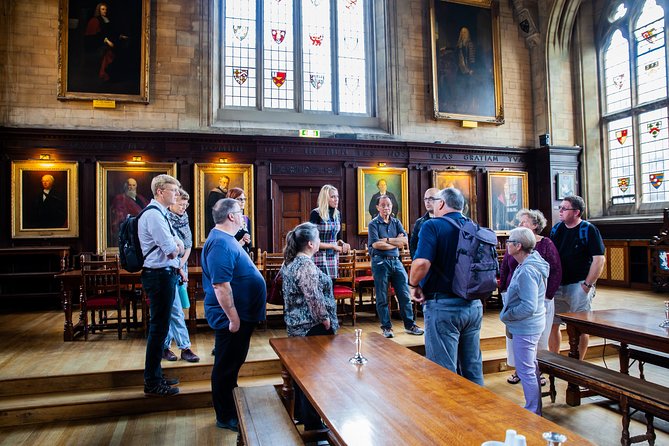
Oxford feels like a living museum. This 3-hour small-group walk with an Oxford student guide strings together the city’s oldest colleges, standout libraries, and a Christ Church finale.
I love how the tour gives you fast, smart entry points into Oxford’s college world, including time at Magdalen College and its famous deer park. I also love that Christ Church can include an in-depth, self-paced audio visit after a guided orientation.
One consideration: the pace is tight, so if your main goal is lingering for photos, you may feel time pressure, especially around Christ Church and during Divinity School access limits in peak months.
In This Review
- Key highlights worth planning for
- Why This Oxford Walk Makes Sense in 3 Hours
- College Hop With an Oxford Student Guide (Balliol to Hertford)
- Magdalen College and the Deer Park You Actually Want to See
- Einstein at the History of Science Museum, Then Weston Library’s Brutal Contrast
- Quiet Sacred Spots and a Theatre Built for Oxford Ceremonies
- Bodleian Library, Bridge of Sighs, and Radcliffe Camera for the Big Moments
- All Souls, St Mary the Virgin, Merton College, and Christ Church Meadow
- Christ Church Upgrade, Multimedia Audio, and the Divinity School Timing Trap
- How Much Should You Expect to Pay, and What You Actually Get
- Who This Tour Fits Best (and Who Might Want Something Different)
- Should You Book This Oxford University and Christ Church Tour?
- FAQ
- How long is the Oxford University and City Tour with Christ Church?
- Is this tour in English?
- What is the maximum group size?
- Is pickup available?
- Do I need to print tickets?
- Is Christ Church access included, or is it an upgrade?
- Which major entrances are included?
- Will the Divinity School always be included?
- What if sites are closed on the day?
- Where do I meet, and where does the tour end?
Key highlights worth planning for
- Oxford student guide stories that make traditions and architecture feel personal, not like trivia
- Magdalen College deer park within the grounds of Oxford’s largest college
- Bodleian Library ticketed entry plus the Bridge of Sighs and Radcliffe Camera for big postcard moments
- Weston Library Brutalist contrast against Oxford’s more typical stone-and-spires look
- Christ Church multimedia audio for a quieter, paced explore at your own rhythm
Why This Oxford Walk Makes Sense in 3 Hours

Oxford is one of those places where you can easily burn a whole day just trying to figure out what to see first. This tour is built to solve that problem. You get a structured route through major sights without the hassle of juggling multiple entry tickets on your own.
It also helps that the group is kept small, with a maximum of 19 travelers. That size matters in Oxford because you are threading between gates, quads, and courtyards where space can feel tight. And because this is a walking experience, Oxford’s layout becomes a feature, not a flaw.
Two practical things I appreciate: you get a mobile ticket and you’re told in plain terms that Oxford is a working institution. Some buildings and even parts of the schedule can change on the day, so you are not paying under false promises.
Also on in Oxford, no fuss

College Hop With an Oxford Student Guide (Balliol to Hertford)
The tour starts with quick college introductions that work like a map. Balliol College gives you one of the oldest-feeling Oxford snapshots early on, with a free admission ticket. It is a good way to reset your brain for how old the place is and why the details matter, even when you only have a few minutes.
Trinity College follows, one of Oxford’s most beautiful college settings dating back to the mid-1500s, and it’s structured so you do not just stare at buildings. You learn what you are looking at, then you move on before the walk gets stale.
Next, Exeter College adds a literary thread. It’s founded in the early 1300s, and the association with Tolkien as a student gives you something to hold onto as you spot the college’s character from the inside-looking-out perspective.
Then Hertford College brings a different vibe. The tour notes highlight it as one of the more progressive Oxford colleges. In practice, that kind of framing helps you notice more than stonework. You start looking for the signals of how a place thinks about its role in society.
A key reality here: these early college stops are short. That means you get a sweep of Oxford’s variety, but you should not expect long photo sessions. If you come prepared with good walking shoes and a willingness to look, absorb, then move, this portion feels efficient in the best way.
Magdalen College and the Deer Park You Actually Want to See
Magdalen College is where the tour slows slightly, because it is the biggest draw in the college cluster: founded in the late 1400s and described as the largest college at Oxford. What really makes it memorable is the deer park, an unusual Oxford feature that you do not get to see from the street.
You also get cultural connections that add weight to the architecture. The tour ties the college to C.S. Lewis and Oscar Wilde. That does not mean you need to be a literature expert to enjoy it. It just means your walk has human anchors, not just dates.
Possible drawback: because this is one of the most talked-about stops, it can be a moment where you want more time than you get. You will still leave with strong “I get Oxford now” momentum, but if you are the type who wants to linger for 30 minutes in one spot, plan to do your extra wandering after the tour.
Einstein at the History of Science Museum, Then Weston Library’s Brutal Contrast
Oxford is not only about gothic towers and old rituals. It also holds the history of ideas, and this section leans into that.
At the History of Science Museum, the big hook is Albert Einstein’s chalkboard with markings preserved from his Oxford lectures. Even if you are not deep into science history, this is one of those objects that makes the past feel tangible. It is not just architecture. It is thinking.
Then comes Weston Library, and it is a sharp visual turn. The tour highlights its Brutalist architecture as a deliberate counterpoint to the Victorian and Neo-Gothic look Oxford is famous for. That contrast is useful for a first visit. You stop thinking that Oxford is only one aesthetic, and you start seeing it as a city that keeps building new chapters.
The library’s story is also practical for your imagination: the tour notes point to more than 5 million books, and after renovation, you get a modern interior that helps explain why libraries can feel both historic and alive.
Short stops can feel like a tradeoff, but this pairing works because you get variety quickly. You finish this stretch with both the intellectual story and the architecture story.
Quiet Sacred Spots and a Theatre Built for Oxford Ceremonies
Oxford has a strong religious core, but it can be easy to miss the spiritual sites if you only chase famous buildings. Here, the tour includes the Martyrs’ Memorial, described as often overlooked yet deeply important religious ground. The point of visiting is not shock for shock’s sake. It is understanding the bitter Protestant and Catholic conflicts that led to grim deaths, and how the city remembers that history in stone.
Sheldonian Theatre follows, finished in 1669 by Sir Christopher Wren. If you like places built for ceremony, this is your moment. The theatre hosts major Oxford ceremonies, which gives you a reason to look at the space beyond beauty.
Then you reach the University Church of St Mary the Virgin, presented as the epicentre of Oxford University. What I like about including this stop is that it reframes Oxford’s religious foundations. It is not quaint. It is central.
And if you notice the grotesques on the church, even briefly, that detail helps Oxford feel human. Serious buildings can still have playful craftsmanship.
While the kettle’s on in Oxford:
- Oxford Official University & City Tour★ 5.0 · 1,134 reviews
- City Sightseeing Oxford Hop-On Hop-Off Bus Tour★ 4.5 · 1,042 reviews
- Harry Potter Walking Tour of Oxford Including New College★ 4.5 · 930 reviews
- Oxford Sightseeing River Cruise Along The University Regatta Course★ 4.5 · 652 reviews
Bodleian Library, Bridge of Sighs, and Radcliffe Camera for the Big Moments
Now you get the “yes, I came to Oxford” classics.
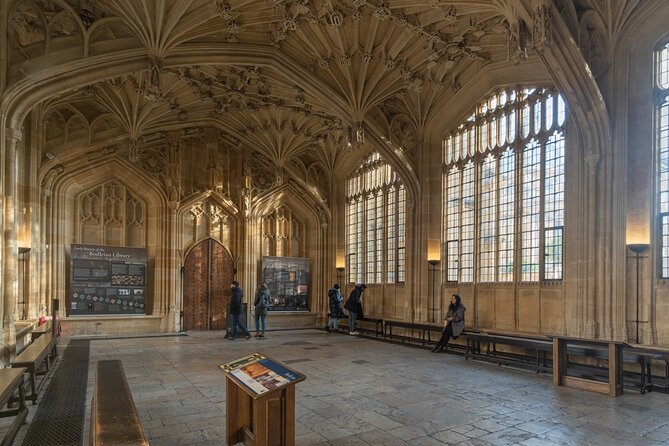
The Bodleian Library is included with admission, and the tour emphasizes its scale: over 12 million books, plus documents said to date back to the Pharaohs. Even if you take that as a tour highlight rather than a fact you will verify on the spot, the point lands. This library is a heavyweight.
One practical note from the tour’s general guidance: Oxford can change access because it is a working institution. If you care a lot about library entry, arrive with flexible expectations. On certain days, access can be restricted, and the tour may substitute alternatives or adjust what you can enter.
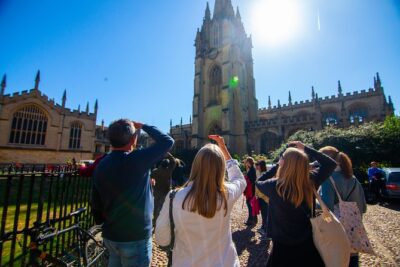
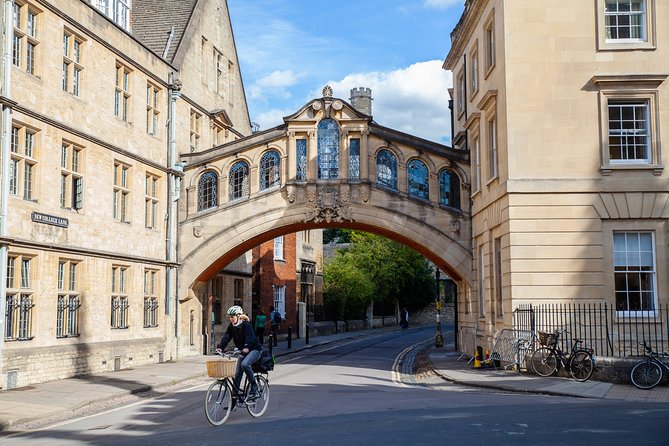
After that, the Bridge of Sighs arrives as the most photographed site in the tour route. You will see why quickly. It is dramatic, compact, and built for that postcard angle.
Then Radcliffe Camera, Oxford’s iconic viewing spot, is framed with an important detail: it looks like something public people might use day to day, but it functions differently from what many first-time visitors imagine. I like tours that do this, because it stops you from building the wrong mental picture.
Possible drawback: these are quick exterior looks. If you want perfect photos, you’ll need to treat these as moments to set up your shot fast, then move along.
All Souls, St Mary the Virgin, Merton College, and Christ Church Meadow
All Souls College enters the route as one of the most exclusive academic institutions. The tour’s framing links it to major names and to Oxford traditions. Even from outside, it has a “this is elite space” aura, and the guide helps you understand why it matters.
Merton College is described as the most academically inclined among colleges, starting in 1264. The tour also notes exceptional student food. That sounds small, but it’s the kind of detail that makes you think about student life instead of only institutional prestige.
Then you move through Christ Church Meadow, a central open space tied to Alice’s Adventures in Wonderland. The value here is that it gives you an easy transition from academic Oxford to the Oxford that shows up in popular imagination. It also gives you a breather between tighter college enclosures.
This entire portion works best if you let your brain relax for a moment and look at how the city flows. Oxford can feel like a walled puzzle. Meadow and open spaces help you see the seams.
Christ Church Upgrade, Multimedia Audio, and the Divinity School Timing Trap
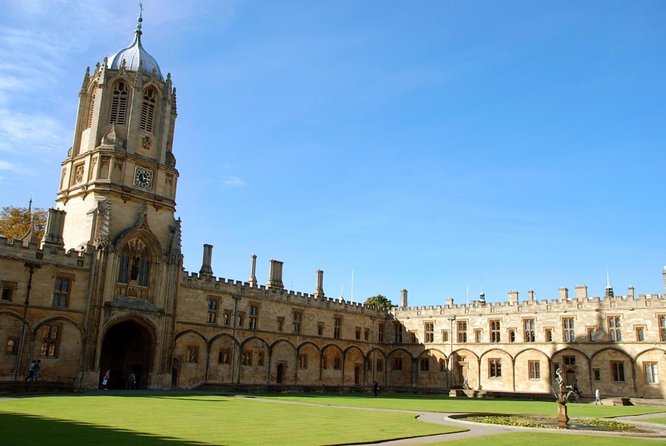
Christ Church is the emotional payoff of the tour. If you pick the Christ Church upgrade option, the tour is designed around a two-step experience.
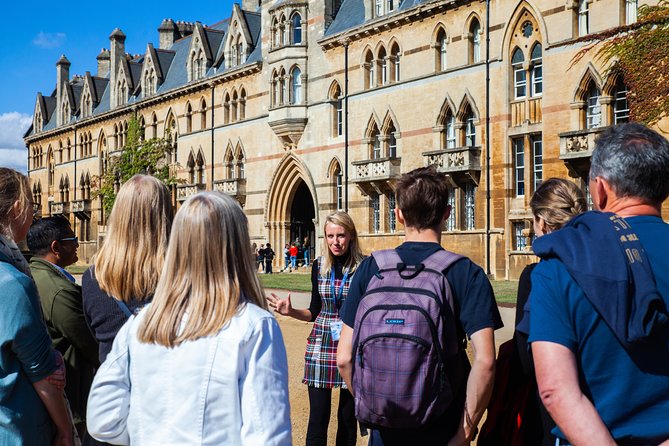
First, the guide gives a comprehensive external overview of the buildings and grounds. That orientation matters because Christ Church is large and visually complex. If you come in without that context, you can end up wandering in the wrong direction.
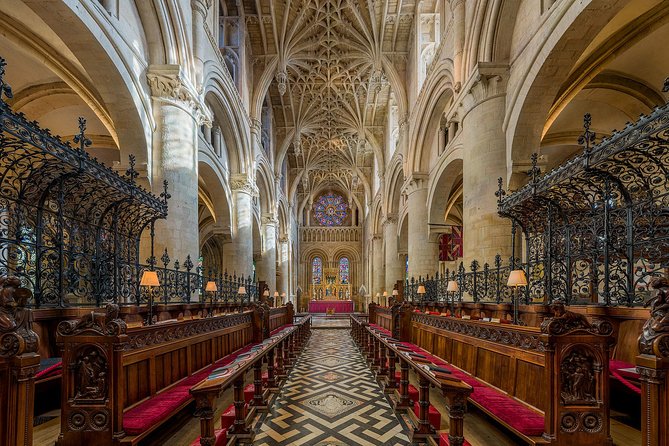
Then you enter with a multimedia headset created by the Christ Church team. After that, you explore at your own pace. The tour recommends about an hour for this portion, and I agree with that as a practical time block. It gives you room to circle the must-see areas without sprinting, and it lets you adjust if you stop for photos or want a slower look at a specific hall.
Here is the main timing consideration. The tour notes explain that access to the Divinity School can be extremely limited during peak months from June to August. Closures and high demand can mean it is not included on some days. If it is closed, the tour says it will substitute it with another University College entrance.
I also want to flag a realistic “tight schedule” risk. Because Christ Church is a highlight and often runs close to other entrances and close times, you should show up ready to move when the tour gets you into the self-guided phase. If you arrive late to the Christ Church segment or drift too slowly through the first areas, you can lose access to sections that close earlier than you expect.
If you are a Harry Potter fan, this is still worth it. The tour notes connect the Divinity School to Harry Potter and Hollywood filming. But even if you are not, the medieval architecture focus gives you a reason to care about how the room works for ceremonies and lectures.
How Much Should You Expect to Pay, and What You Actually Get
The price is $110.90 per person, for about 3 hours. That may sound steep until you look at what is included.
You do not just get a walk and a chat. The tour includes admissions at several major stops, such as Trinity College, the Bodleian Library, and the Christ Church segment when you select the upgrade. Many other stops are free for you to enter, which keeps costs from ballooning while still giving you broad access.
The value is also in the structure. You avoid decision fatigue, and you get an Oxford student guide telling you what you are seeing and why it matters. Names from guides you might encounter include Luke, Antonia, Rose, Ben, Sam Day, Ruth, Fred and Niko, Nick, Mahir, Martin, Olli, and Oliver. Different personalities, same core idea: you learn fast and move through Oxford without getting lost in it.
One more value point: the tour is capped at 19 travelers. That makes hearing instructions and staying together more manageable than on large coach-style tours.
Who This Tour Fits Best (and Who Might Want Something Different)
This tour is a strong fit if:
- You are visiting Oxford for the first time and want a fast, credible overview of major colleges and landmarks
- You like walking tours where the route does the planning for you
- You want a student perspective on traditions and day-to-day academic life
- You want ticketed access to big-name spaces like the Bodleian and a Christ Church experience that includes multimedia audio
You might want a different plan if:
- You need lots of slow, independent roaming for photos and long stops
- You are the type who will feel stressed by quick transitions, even if you can enter sights
- You only care about one building, like the Bodleian or Divinity School, and you cannot handle access changes on working-institution days
Also, keep your expectations realistic about closures. Oxford is active and schedules can shift. The tour guidance is honest that sites can close without notice, and alternatives may be provided if needed.
Should You Book This Oxford University and Christ Church Tour?
I think you should book it if your goal is to get your bearings fast and leave Oxford feeling like you understand what you just saw. The mix of oldest colleges, a deer-park moment at Magdalen, a real science-history stop with Einstein’s chalkboard, and the library and postcard classics hits a satisfying balance.
Choose the Christ Church upgrade if you want that extra payoff at the end. The guided orientation plus the multimedia audio self-explore is exactly the kind of experience that makes a structured tour feel personal.
Skip or consider something else if your top priority is maximum freedom for photography or if you cannot handle the possibility of restricted access to the Divinity School or certain library entry days. Oxford can be unpredictable in a good way, but only if you stay flexible.
If you want, tell me what month you plan to go and whether you are choosing the Christ Church upgrade. I can help you time it so you get the most out of the busiest parts of Oxford.
FAQ
How long is the Oxford University and City Tour with Christ Church?
It runs for about 3 hours.
Is this tour in English?
Yes, the tour is offered in English.
What is the maximum group size?
The tour has a maximum of 19 travelers.
Is pickup available?
Pickup is offered. If you select the pickup option, the meeting point is the London address at Gloucester Road Tube Station. Otherwise, the meeting point is in Oxford at 15 Broad Street, Oxford.
Do I need to print tickets?
No, you’ll use a mobile ticket.
Is Christ Church access included, or is it an upgrade?
Christ Church access is described as an optional upgrade.
Which major entrances are included?
The tour notes include admissions for Trinity College, the Bodleian Library, and Christ Church (for the Christ Church portion). Divinity School admission is also indicated as included when access is possible.
Will the Divinity School always be included?
Access to the Divinity School is extremely limited during June to August due to frequent closures and high demand, and it may not be included on the day. If it is not available, the tour will substitute another University College entrance.
What if sites are closed on the day?
Because Oxford is a working institution, some sites may close without notice. In rare cases, the tour will show the best available alternatives, inform you of major changes in advance, and offer a refund if needed.
Where do I meet, and where does the tour end?
You start at Gloucester Road Underground Ltd, Gloucester Rd, South Kensington, London SW7 4SF, and the tour ends back at the meeting point.
Latest to join the queue for Oxford







City Tours, compared.


Liverpool City Sights Hop On Hop Off City Tour – 24hr Ticket
Read our review →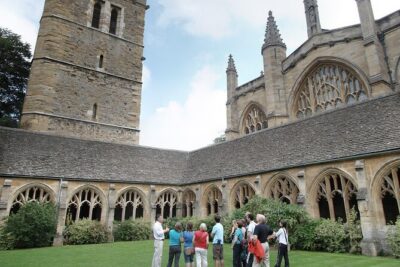
1.5-hour Oxford City and University Walking Tour
Read our review →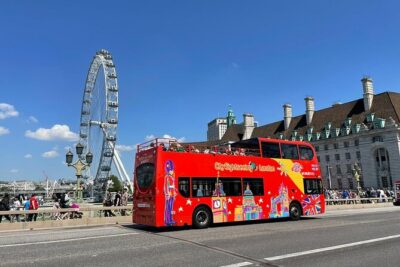
City Sightseeing London Hop-On Hop-Off Bus Tour & Bookable Extras
Read our review →

City Sightseeing Oxford Hop-On Hop-Off Bus Tour
Read our review →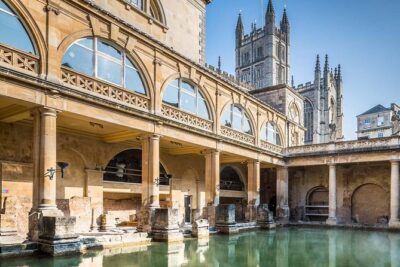

Browse the lists this tour appears in