
Reviewed · CITY TOURS
City & Secrets: Explore London’s Hidden Gems
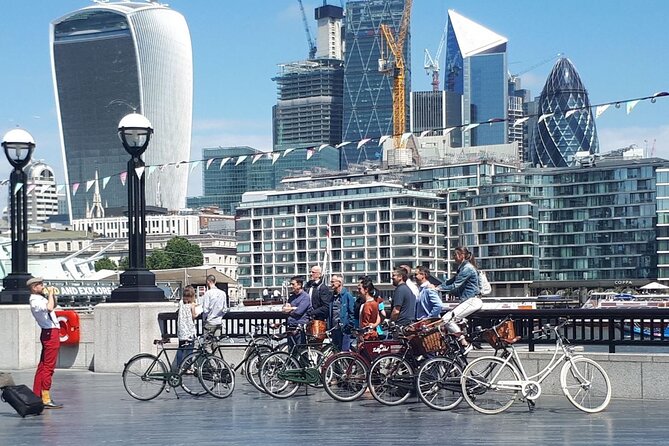
Four hours on a bike, and London opens up fast. This ride mixes local guide storytelling with practical cycling, so you get both the big sights and the offbeat corners in one afternoon without feeling like you’re sprinting alone. I also love how the hand built British bicycle format lets you move through crowded areas smoothly.
One heads up: this is a stop heavy tour. You’ll be photo stopping a lot, and some major landmarks are view only, not a sit down visit, so plan tickets for the places you truly want to go inside.
In This Review
- Key highlights worth knowing
- Waterloo to the Thames, and how the ride keeps you moving
- The working class side of London: Roupell Street and The King’s Arms
- Blackfriars Bridge to St Mary le Bow: bridges, Shakespeare corners, and the Bow Bells rule
- The City of London in miniature: Guildhall, Mansion House, Leadenhall, and Lloyds
- East End street stories: Cable Street, Shadwell Basin, Tobacco Dock, and St Katharine Docks
- Tower Bridge and the Tower of London: postcard views and the prison past
- Finishing with Wren, fire, theater, and modern art at Tate Modern
- Is this tour worth $103.35 for most visitors?
- Should you book City & Secrets: Explore London’s Hidden Gems?
- FAQ
- How long is the tour?
- How much does it cost per person?
- What time does the tour start?
- Where is the meeting point, and where does it end?
- What is included in the price?
- Are snacks and drinks included?
- Is there a minimum age?
- Does the tour run in bad weather?
- What is the group size limit?
Key highlights worth knowing
- Small group feel (max 12) plus clear guidance for riding through busy London streets
- Watley to City to East End route that connects the Thames, the docks, and the historic core
- Working class London at Roupell Street, with fire insurance plaques and a Victorian pub twist
- Photo friendly stops at St Paul’s, Tower Bridge, and the Tower area, with context you can’t get from a guidebook
- East End street stories like the Cable Street mural and dockyard history near Shadwell Basin
Waterloo to the Thames, and how the ride keeps you moving
The tour starts at 189 Hercules Rd, London SE1 7LD, and it runs for about 4 hours. The start time is listed as 2:00 pm, and the day includes cycling plus short stops, so you should show up ready to ride, not wandering around looking for your group.
You get a hand built British bicycle, and you’ll have a local guide leading you the whole way. Helmet use is optional, and you may get a tweed cap as a fun extra, plus a rain poncho if required. This is a solid fit if you have moderate physical fitness and want to cover more than you could on foot in a single half day.
Because tickets are mobile, you’ll want your phone charged. And since snacks and drinks are not included, I strongly recommend you plan for water and some food either before you meet or during any breaks that work for your route.
Also on in London, no fuss
The working class side of London: Roupell Street and The King’s Arms
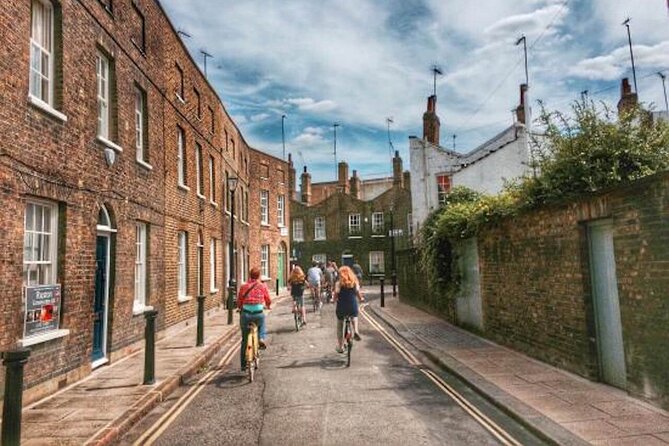
The morning’s big landmarks are tempting, but the first stop at Roupell Street is what makes the tour feel personal. You’re walking into an 1820s pocket of London with Georgian houses built for working class life. The story is specific, and that’s the point. You learn that John Roupel reclaimed marshy land and named streets after his family, and that even something as ordinary as postmen confusion helped trigger name changes.
There’s also a wonderfully practical detail here: the area nearly burned down in 1829, and that led to fire insurance reminders. The guide points out plaques on houses, and the basic idea is that without the right marker, firefighters might not treat your home as a priority. After that kind of story, it’s hard to look at a street as just a street.
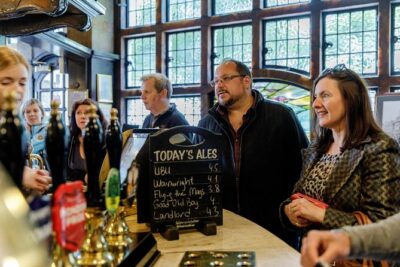
You then stop near The King’s Arms, a Grade II Victorian pub. It’s a place with a real ales focus, and the stop also notes an interesting twist in its current identity, including Thai cuisine. Even if you do not go in, the contrast helps you understand how London layers old and new in the same block.
This is a relatively quick stop, about 10 minutes, and it’s listed as free.
Blackfriars Bridge to St Mary le Bow: bridges, Shakespeare corners, and the Bow Bells rule
After Roupell Street, the tour shifts from neighborhoods to landmarks, but it still stays human paced. At Blackfriars Bridge, you get a short architectural and historical lesson in a few minutes. The bridge opened in 1869 under Queen Victoria, and the name ties to the Dominican friars who had a monastery to the north. Even the top shapes of the support columns are part of that memory, designed like little pulpits.
Next comes The Cockpit, a pub stop tied to a much older religious presence. The area connects to monastic houses and the Dominican monastery, and it also points to a Shakespeare link, since the guide notes that Shakespeare bought the gatehouse and lived there. This is the kind of stop that works well on a bike tour, because it’s a quick marker that helps you map what you’re seeing.
Then it’s on to St Paul’s Cathedral. You’re not going to spend long inside here, but you do get clear context for why this building matters. It’s associated with major events like Prince Charles and Lady Diana’s wedding and Winston Churchill’s funeral, and it’s also linked to figures like Wellington and Nelson being laid here. The guide also connects the cathedral’s survival story to the Great Fire of London in 1666 and the rebuilding by Christopher Wren. WWII bombings also play a role in the story, and that theme makes the quick stop feel deeper than you expect.
From there, St Mary le Bow Church gives you a very London cultural test: the famous Bow bells. If you are born within the sound of Bow bells, you are a true Cockney Londoner. It’s a short stop, about 5 minutes, but it lands because it turns a phrase you’ve heard into something place based.
The main drawback to these stops is time. Expect mostly look and listen, not a full cathedral experience. If you want the interior, treat this tour as the best way to decide what you should do next on your own.
The City of London in miniature: Guildhall, Mansion House, Leadenhall, and Lloyds
The next chunk of the ride is all about the City of London as a place with rules, traditions, and power centers. At Guildhall, you get a snapshot of medieval London. The tour highlights that Guildhall is the town hall for the City of London and points out weird, archaic traditions that have been unchanged for centuries. Even in a quick stop, it gives you a sense of how London governance differs from the rest of the city.
Then you hit The Mansion House, the home of the Lord Mayor of London. The tour ties it to importance since Roman times, and it also references its relationship to key institutions, including the Bank of England. If you’re the type who likes to understand what you’re looking at, this is the part that makes sense of the formal architecture.
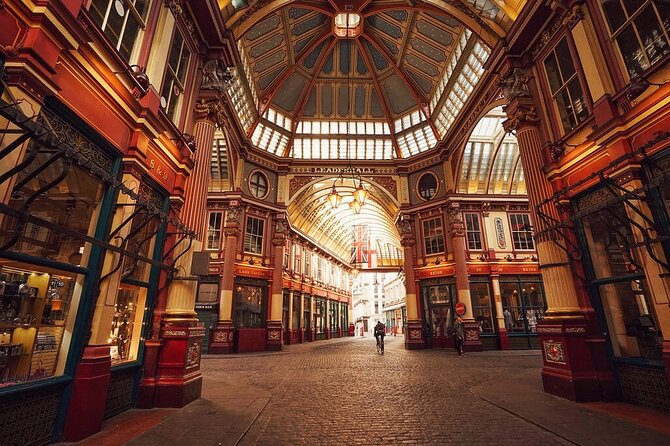
The route keeps rolling into shopping and history at Leadenhall Market. This is where the tour brings pop culture in without turning into a gimmick. The stop notes it’s a Victorian market designed by Sir Horace Jones, and it connects the site to Roman era Forum and Basilica locations. Then it points out the Harry Potter visual associations with Diagon Alley and the Leaky Cauldron. You’ll likely spot why the connection caught on instantly, even with a short visit window.
After that, you get a contrast lesson at Lloyds of London. You see the Richard Rogers design and a quick visual comparison with nearby buildings like the Cheesegrater and the Gherkin. The stop also references St Andrew Undershaft, a pre 1666 church built when Henry VIII was king (1517). This mix of modern and older London is one of the tour’s best strengths, because you do not just learn names, you learn how to look at the city as a timeline.
Finally, you get a tangible ancient marker with London Wall, featuring part of the Roman wall built around 200 AD. It’s a brief stop, but it’s the kind of detail that makes London feel older the moment you step back into street life.
East End street stories: Cable Street, Shadwell Basin, Tobacco Dock, and St Katharine Docks
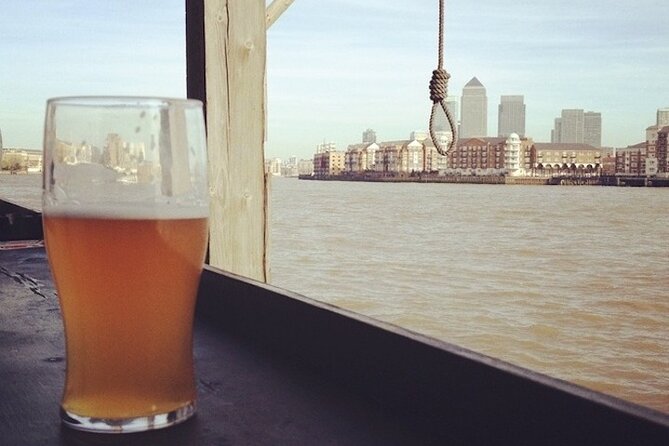
This is where the tone shifts. The overall tour overview warns about stories with a darker edge, including a sordid past, and that warning is not just legal fluff. In the East End, you’re learning about smuggling, pirates, and dockyard life, and you should expect that some of it may feel heavy.
At Cable Street, the guide stops at the mural completed in 1983, showing the confrontation between fascists and protesters in 1936. The area is described as having been predominantly Jewish at the time. Even in a quick look, the point is clear: this is not history in a museum frame, it’s history tied to streets you can walk past every day.
Then you cycle toward Shadwell Basin, one of London’s original docks. The tour notes that it’s been regenerated since the 1980s and frames its heyday as the busiest docks in the world roughly a century ago. This stop works especially well after Cable Street, because it connects human conflict with how ports shape lives, trade, and survival.
Next is Tobacco Dock, centered on ornamental canals and old tobacco warehouses, redeveloped since the 1980s. And then the ride finishes this dockyard sequence at St Katharine Docks, described as the last docks built in 1825 and the first to close down in the 1960s. You also get the medieval anchor point: the hospital St Katherine’s by the Tower, founded in 1147 by Queen Matilda.
These stops are mostly look and story, not long museum time. If you want deeper reading, take photos of the key signboards and do your own research later. The payoff is that you’ll know what to search for.
While the kettle’s on in London:
- Stonehenge, Windsor Castle and Bath with Pub Lunch in Lacock★ 4.5 · 7,402 reviews
- Tower of London and Crown Jewels Exhibition Ticket★ 4.5 · 6,677 reviews
- Thorpe Park Admission Ticket★ 4.0 · 5,915 reviews
- Stonehenge, Windsor Castle and Bath Full Day Guided Tour★ 4.5 · 5,346 reviews
Tower Bridge and the Tower of London: postcard views and the prison past
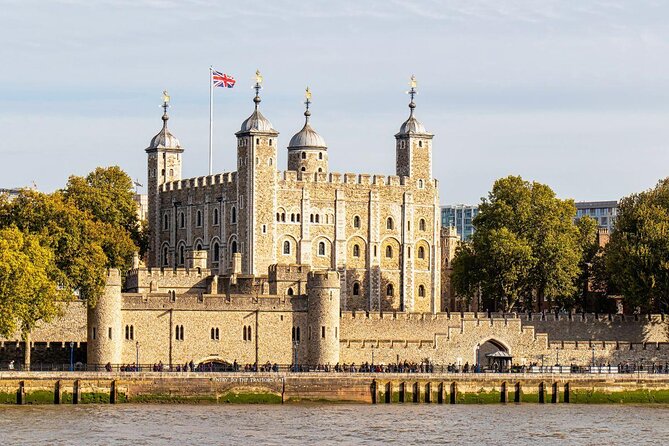
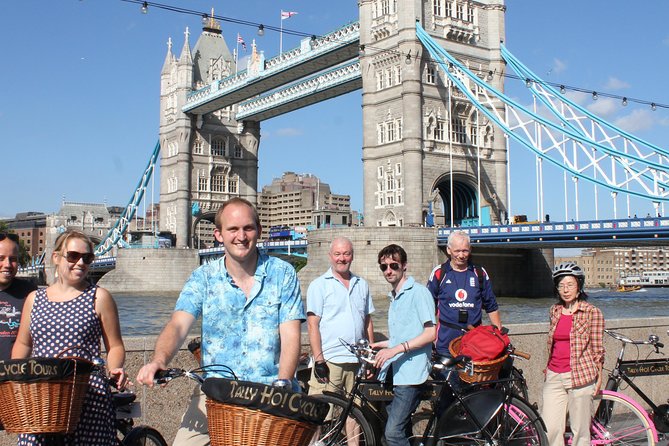
When the ride reaches Tower Bridge, you get the full landmark moment. The tour describes the bridge as a combined bascule and suspension design, completed in 1894 with neo-Gothic towers and a central walkway. The practical detail that helps you picture the bridge in motion is that the bascules are raised around 800 times a year so ships can pass. Even if you just look, that fact makes Tower Bridge feel like it’s still working.
Then you’re right at the Tower of London area. The guide’s framing here is straightforward. Built shortly after the Norman Conquest in 1066 by William the Conqueror, it served as a royal palace, menagerie, observatory, and armoury before becoming most known as a state prison and execution site. Traitors Gate is mentioned as a grim entry point, which matters because it turns the space from scenery into context.
The tour also points to famous names connected to executions, including William Wallace, Thomas More, Henry VI, Edward V, and Henry VIII’s wives Anne Boleyn and Catherine Howard. And it flags the Crown Jewels as a must-see if you want to step beyond the exterior views. Your stop here is listed as about 5 minutes, and the admission is marked as not included. So think of this as the moment you decide, yes, I want to come back and go in.
After that, you get a final big shift to a ship at HMS Belfast. It’s a WWII Cruiser Class Destroyer built in the same shipyard as the Titanic in Belfast. The tour connects it to convoys in WWII and the Korean War, plus the D-Day Landings on June 6, 1944. It’s also described as a floating museum, and there’s a pop culture note that Netflix’s The Crown used its interiors as the Royal Yacht Britannia. This stop can surprise you, because it feels grounded and real, not just grand stone and royal ceremony.
Finishing with Wren, fire, theater, and modern art at Tate Modern
The last stretch keeps the balance between quiet and spectacle. At City Hall, you see the former City Hall of London designed by Norman Foster. It’s a quick view stop, but it helps you connect modern London governance to the city’s changing skyline.
Then you get a breather at St Dunstan In The East, described as a quiet space in the middle of the City’s traffic. The church was destroyed in the Great Fire of London in 1666 and rebuilt by Wren, so even this calm stop still feeds the big theme of rebuilding.
A few minutes later, you reach The Monument to the Great Fire of London. It stands 202 ft high, and the tour gives you a vivid way to imagine the start of the fire at Pudding Lane on 2 Sep 1666. The golden urn concept is tied to where it would land if tipped, using that memory to point you back to the origin.
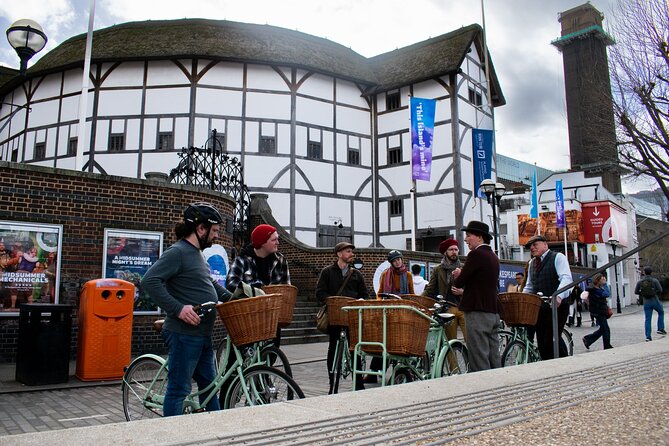
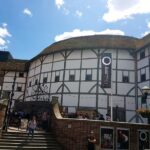
Next is Southwark Bridge, where you can spot Shakespeare’s Globe. The tour notes the Globe is a 1997 reconstruction of the original 1599 venue, and it highlights that it was home to the Lord Chamberlain’s Men, with the debut of many Shakespeare classics. This stop is mostly visual, but it’s a great payoff for theater lovers who want to connect the name to a real place.
You end at Tate Modern, described as the world’s most-visited modern art gallery, opened in 2000 after transforming the 1950s Bankside Power Station. The tour points out the twisted brick pyramid, the 2016 extension, and the 10th-floor viewing gallery. It also references the turbine hall and changing major commissions. Since this is only a short stop, don’t treat it as a full gallery visit. Treat it as a reason to plan a separate art afternoon if you want more.
Is this tour worth $103.35 for most visitors?
At $103.35 per person for about four hours, you’re paying mainly for two things: a bike and a guide who can stitch together a lot of places without losing you in traffic and crowd chaos.
Here’s the value math I’d use:
- You get a hand built bike plus gear support like an optional helmet and possible poncho.
- You see major anchor points you’d otherwise struggle to chain efficiently: St Paul’s area, Tower Bridge, Tower of London area, and HMS Belfast.
- You also get context at smaller stops like Roupell Street fire insurance plaques and Cable Street’s mural, which is where solo wandering often falls flat.
The catch is that some of the biggest places are not included for entry. Several stops are listed as tickets not included. So if you want to go inside St Paul’s, the Tower, or do a deep museum session, budget time and extra tickets after the tour.
Where this tour really shines is as a first pass through London, especially if you are short on time and want a coherent map in your head afterward. One strong review detail also matters for your decision: guides such as Katie and Stewart are praised for being engaging and organized, with small-group navigation that helps you move through crowded zones without stress. One write-up even noted a small group of four, which is exactly the kind of setup that makes the “hidden London” stories feel personal rather than rushed.
Should you book City & Secrets: Explore London’s Hidden Gems?
Book it if you want a smart mix of major landmarks plus lesser known streets, and you like the idea of getting your bearings fast by bike. This is especially good for first-time visitors who want to understand the City and then jump into dockyard East End stories without spending your whole day in transit.
Skip it if you need long indoor time at big sites. This tour is built for movement and quick context. Think of it as the springboard, not the finish line. If you want to return for deeper visits, you’ll come back with better questions, and you’ll know where to focus.
FAQ
How long is the tour?
It runs for about 4 hours.
How much does it cost per person?
The price is listed as $103.35 per person.
What time does the tour start?
The start time is 2:00 pm.
Where is the meeting point, and where does it end?
It starts at 189 Hercules Rd, London SE1 7LD, UK, and it ends back at the same meeting point.
What is included in the price?
The tour includes a hand built British bicycle, a local guide, and optionally a helmet and tweed cap, plus a rain poncho if required.
Are snacks and drinks included?
No. Snacks and drinks are not included.
Is there a minimum age?
Riders must be aged 13 years and over.
Does the tour run in bad weather?
The tour operates in all weather conditions, but it can be canceled due to poor weather. If it is canceled for weather reasons, you will be offered a different date or a full refund.
What is the group size limit?
The maximum group size is 12 travelers.
Latest to join the queue for London



City Tours, compared.
Liverpool City Sights Hop On Hop Off City Tour – 24hr Ticket
Read our review →
1.5-hour Oxford City and University Walking Tour
Read our review →
City Sightseeing London Hop-On Hop-Off Bus Tour & Bookable Extras
Read our review →
City Sightseeing Oxford Hop-On Hop-Off Bus Tour
Read our review →
Browse the lists this tour appears in