
Reviewed · GUIDED WALKS IN LONDON
Women of Whitechapel 2 hour Walking Tour
London has a habit of hiding its best stories in plain sight.
This tour puts women at the center of Whitechapel, tracing how they organized, resisted, and pushed for change across different eras. I like that it’s not just name-dropping, it links ideas to specific streets, houses, markets, and corners you can actually point to while you walk. It also keeps things practical, with an easy-to-find meeting point near public transport and a tidy route that finishes at Liverpool Street Station.
Two things I especially like: the range of themes (WWI-era courage, late 1800s philanthropy, and the 1890s anarchistic movement) and the way the guide makes the details feel like they belong to the neighborhood, not a textbook. A single consideration to keep in mind is simple, it is still a walking tour, and it asks for moderate physical fitness and good shoes, especially if weather turns soggy.
In This Review
- Key highlights you will feel on the walk
- Women of Whitechapel, why this walk is more than a quick history loop
- Price and time, what you’re really getting for $27.53
- Meeting at 277 Whitechapel Road and ending near Liverpool Street
- Stop 1, Whitechapel Road and the WWI resistance thread
- Stop 2, Brick Lane and the idea of quiet revolutionaries
- Stop 3, Princelet Street and women living alone in the 1700s
- Stop 4, Spitalfields Market, Queen Victoria, and the reformers around you
- Stop 5, Stepney Green, anarchist headquarters, and a Call the Midwife connection
- What to wear, what to bring, and how to make it feel effortless
- Who should book this Women of Whitechapel walk
- Should you book Women of Whitechapel?
- FAQ
- How long is the Women of Whitechapel walking tour?
- How much does the tour cost?
- Where does the tour start and end?
- What is included in the price?
- Is coffee or tea included?
- What language is the tour offered in?
- Is there a limit on group size?
- Do I need good weather for this tour?
- Are service animals allowed?
Key highlights you will feel on the walk
- Women-centered storytelling across WWI resistance, philanthropic efforts, and late 1800s activism
- Small group size with a maximum of 30, so questions and conversation actually happen
- Street-by-street context, from grade II listed houses to markets and side streets you might otherwise miss
- Monica Ali and immigrant London at Brick Lane, tied back to women as quiet revolutionaries
- Spitalfields Market and major reformers, including Mary Wollstonecraft and Sylvia Pankhurst
- Stepney Green surprises, from an East India widow’s home to a prostitute who made a name for herself
Women of Whitechapel, why this walk is more than a quick history loop
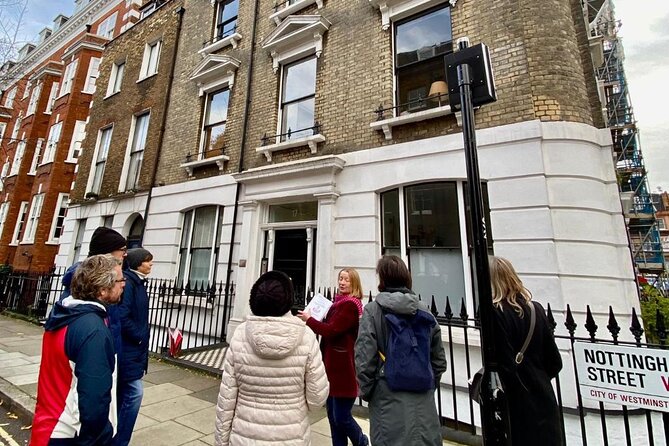
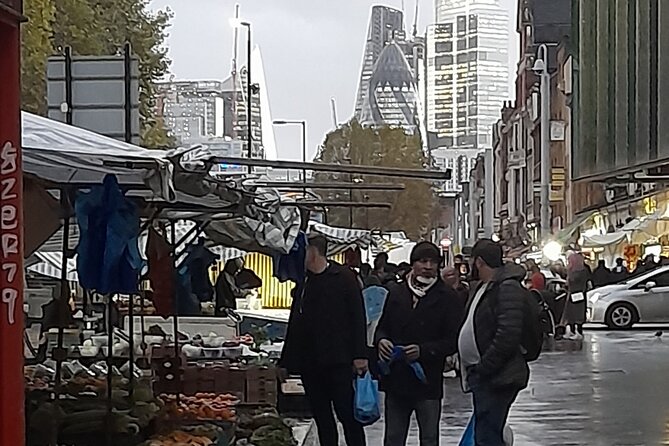
Whitechapel is one of those London areas where you can stand on a street today and still sense earlier waves of migration, argument, work, and survival. This tour leans into that reality by focusing on women, not as an afterthought, but as the engine of change. You’ll move through the high street feel of Whitechapel Road, then cut into the characterful streets around Brick Lane and Spitalfields, where the city’s layers overlap.
What makes this tour work is the balance between big themes and specific places. You’re not only hearing about activism and resistance, you’re also seeing what those movements used as their backdrop. That matters because neighborhoods shape people, and people shape neighborhoods.
The vibe also stays friendly and human. In particular, the guide named Mandy comes through in the way she explains and connects the dots. On a tour like this, that tone matters because the subject matter can get heavy, and you want a guide who keeps it clear, grounded, and moving.
More Guided Walks in London
Price and time, what you’re really getting for $27.53
At about 2 to 3 hours, this is a focused outing rather than a half-day commitment. For $27.53 per person, the value is mainly in the guided format: you get a route that connects multiple key locations without spending your energy figuring out where to go next.
It also helps that the tour is set up as a walking experience, meaning you are not dealing with separate paid admissions at each stop. The stops are designed to be accessible from street level, so your money stays on the story, not on entry fees.
One practical note for your planning: tours like this book ahead. This one is commonly reserved around two months in advance on average, so if you’re traveling in a busy stretch, earlier booking is smart.
Meeting at 277 Whitechapel Road and ending near Liverpool Street
You start at 277 Whitechapel Road, London E1 1BY, and you finish at Liverpool Street Station, London EC2M 7QA. That ending point is useful because it gives you an easy way to hop on the tube or overground afterward without needing a second plan.
The meeting area is described as easy to reach using public transport, which is exactly what you want in London. You do not want your first five minutes fighting bus routes and walking detours.
You’ll also use a mobile ticket, so have your phone ready at the start. The maximum group size is 30, which keeps it from becoming a slow moving crowd. If you like a tour where you can hear and see what’s happening, this group cap is a plus.
Stop 1, Whitechapel Road and the WWI resistance thread
Whitechapel Road is the opening act, and it sets the emotional tone. You get a feel for the neighborhood as a working, living street, with landmarks that include grade II listed houses and religious buildings like mosques and churches. That mix of faiths and communities matters because it helps explain why ideas traveled so quickly here.
Then the story starts swinging into action. You’ll hear about brave women connected to WWI resistance, along with the kindness and impact of female philanthropists from the late 1800s. The tour doesn’t treat these as separate categories. Instead, it frames them as part of a wider pattern of women stepping into roles that were often ignored or minimized.
From there, the guide brings in the 1890s anarchistic movement. Even if anarchism is not your everyday topic, the tour approach makes it more understandable because it ties the movement to the street setting. You begin to see how organizing could happen in places where people already shared concerns about work, safety, fairness, and survival.
If you have only one hour with this part, it’s the one to pay attention to most. The first stop gives you the tour’s lens, so later streets make more sense.
Stop 2, Brick Lane and the idea of quiet revolutionaries
Brick Lane is one of London’s best-known street names, and it earns its fame. Here, you’ll hear about connections to Monica Ali’s work, but the focus stays on place and people, not on book trivia.
The walk through this area points out how immigration waves shaped the street over time, moving from Huguenot weavers and Jewish tailors to later Bangladeshi restauranteurs. That’s a lot of change, and the tour keeps it coherent by returning to women as the quiet drivers of revolution.
The key phrase you’ll feel as you listen is quiet revolutionaries. It’s not just about loud speeches or obvious headlines. It’s about the practical ways women influence community life, support networks, and local decision-making.
A small drawback at this stop is timing. This segment is shorter, around 20 minutes, so if Brick Lane is your favorite neighborhood in London, you might find yourself wanting more time after the tour ends. That’s not a reason to skip it, but it is a heads-up for your expectations.
More England on foot, brolly optional:
- Westminster Guided Walking Tour with Abbey Entry★ 5.0 · 1,282 reviews
- Walking Tour of London Westminster Abbey, Big Ben, Buckingham★ 4.5 · 1,213 reviews
- London West End Musical Silent Disco Walking Tour Top 1% Rated★ 5.0 · 1,057 reviews
- Westminster 3 Hour Walking Tour and Visit of Churchill War Rooms★ 5.0 · 967 reviews
Stop 3, Princelet Street and women living alone in the 1700s
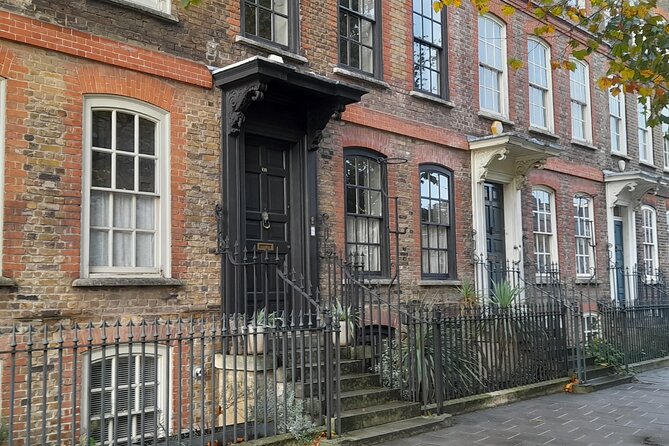
Princelet Street is a contrast stop. Where Brick Lane can feel like a spotlight street, Princelet Street is more about atmosphere. You’ll see houses with wooden shutters and a feel that suggests earlier days.
It also has a film connection. The area has appeared in famous films, but this tour uses that as a starting point rather than a gimmick. The real focus is on what the streets looked like when they were homes, not sets.
One of the most striking pieces here is the mention of women who lived alone in the 1700s. That detail does something powerful for your understanding. It shifts the story from broad movements to individual lives, and it makes you rethink what independence meant in a time when it was rarely easy.
This stop runs about 10 minutes, so it’s a quick emotional jolt. If you’re the type who likes stopping to read plaques or linger for photos, allow yourself a minute after the tour moves on, so the street doesn’t pass too fast.
Stop 4, Spitalfields Market, Queen Victoria, and the reformers around you
Spitalfields Market is one of those places where commerce and ideas are close neighbors. The tour notes that it was opened by Queen Victoria, and that sets up the broader theme of reform and public life.
From the market, you get street context around major figures tied to revolution and rights. You’ll hear names including Mary Wollstonecraft, Sylvia Pankhurst, and Sara Wesker. The effect is that you stop treating women’s history as separate from London’s central story. It becomes part of how you understand the city.
This stop is about 30 minutes, which is a healthier chunk of time to let the themes land. It’s long enough to absorb the big names, but short enough that you do not lose the tour momentum.
One small consideration: markets can be busy and noisy. Even if the tour stays on schedule, your best listening will happen when you stand where the guide can keep the group together. If you like photos, take them, but keep one ear free.
Stop 5, Stepney Green, anarchist headquarters, and a Call the Midwife connection
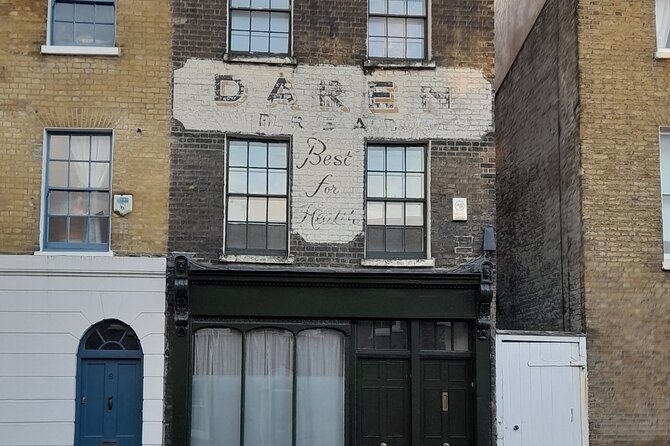
Stepney Green shifts the story to the lived-in edge of the East End. Here, you hear about a range of women’s experiences that feel specific and surprising.
The tour mentions a house lived in by the widow of an East India employee, and that personal detail helps you picture class, work, and household life in a way that broad history often misses. Then the story turns to a lowly prostitute who made a name for herself. That contrast is part of why the walk feels honest. It does not compress everything into one kind of heroine.
You also hear about anarchist headquarters, bringing the late 1800s thread back around to this area. By now, you’ll already have the tour’s lens. You’ll start noticing how activism can be both organized and informal, happening through networks and local spaces.
Finally, there’s a pop culture tie: the area has played host to Call the Midwife. The tour uses that as a recognizable entry point, not as the main event. The main event is the human story around the neighborhood.
This final stop is about 10 minutes, so it acts like a quick finale. It’s enough time to close with meaning, but it leaves room for you to keep exploring on your own if you want.
What to wear, what to bring, and how to make it feel effortless
This tour asks for good walking shoes and clothes matched to the weather. In London, that is not a throwaway suggestion. You can plan for sunshine, then get hit with wind or rain and suddenly every street feels longer.
Bring a small water bottle and something for your phone. You’ll use your mobile ticket, and you’ll want your battery for photos and directions afterward.
There’s also a tea and coffee element, but it’s not included. You may stop at a Huguenot tea or coffee shop, and any drink is at your cost. That’s a reasonable setup because it lets you choose if you want a break, and it keeps the tour price from inflating.
If you’re traveling with a service animal, the tour notes that service animals are allowed.
Who should book this Women of Whitechapel walk
Book this if you want London history through people, not just buildings. You’ll like it if you care about women’s roles in resistance movements, philanthropy, and politics, and if you enjoy walking between neighborhoods long enough to feel how the city changes block by block.
It also fits well for first-time visitors to East London who want a story-led route. Starting in Whitechapel and ending at Liverpool Street makes it easy to continue your day without bouncing between far-off areas.
Skip or reconsider if you dislike walking tours or if you struggle with moderate walking distances. The tour is only 2 to 3 hours, but it still follows a street route and you’ll want to be comfortable standing and moving.
Should you book Women of Whitechapel?
If you like tours where the guide connects street scenes to real human stories, this one is a strong choice. The women-focused themes, the thoughtful pacing across Whitechapel Road, Brick Lane, Princelet Street, Spitalfields Market, and Stepney Green, and the small group size all point to an experience that’s meant to be heard clearly and remembered.
If you want a self-guided wander, you can always read about these neighborhoods on your own. But if you’d rather have someone like Mandy walk you through the meaning behind the landmarks, this is an efficient, good value way to do it.
I’d book it, especially if women’s history and the gritty politics of London neighborhoods are your kind of travel.
FAQ
How long is the Women of Whitechapel walking tour?
The tour lasts about 2 to 3 hours.
How much does the tour cost?
The price is $27.53 per person.
Where does the tour start and end?
The tour starts at 277 Whitechapel Rd, London E1 1BY and ends at Liverpool Street Station, London EC2M 7QA.
What is included in the price?
You get a 2 to 3 hour guided tour focused on the history of women in Whitechapel.
Is coffee or tea included?
No. There may be a stop at a Huguenot tea/coffee shop, and anything you buy is at your cost.
What language is the tour offered in?
The tour is offered in English.
Is there a limit on group size?
Yes, the tour has a maximum of 30 travelers.
Do I need good weather for this tour?
Yes. The experience requires good weather, and if it’s canceled due to poor weather, you’ll be offered a different date or a full refund.
Are service animals allowed?
Yes, service animals are allowed.
Latest to join the queue for London







Guided Walks in London, compared.
Tour for Muggles The Ultimate Harry Potter Walking Tour in London
Read our review →
Changing of the Guard Guided Walking Tour in London
Read our review →
The Great British Rock and Roll Walking Tour
Read our review →
Westminster Guided Walking Tour with Abbey Entry
Read our review →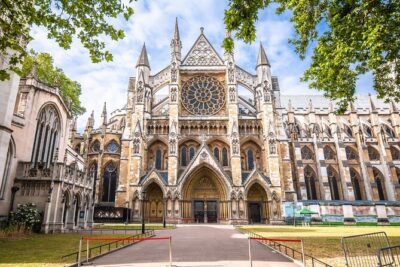
Walking Tour of London Westminster Abbey, Big Ben, Buckingham
Read our review →
London West End Musical Silent Disco Walking Tour Top 1% Rated
Read our review →
Westminster 3 Hour Walking Tour and Visit of Churchill War Rooms
Read our review →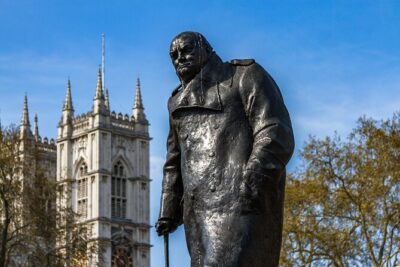
WW2 London Walking Tour & Churchill War Rooms Entrance Ticket
Read our review →Browse the lists this tour appears in