
Reviewed · GUIDED WALKS IN LONDON
Walking Tour around Spitalfields in the East End of London
Spitalfields history feels close when you walk it. This 2-hour East End tour mixes English Baroque, immigrant stories, and a proper old-market mystery in a tight route. I also really like the small group size, max 5 people, because you get time for the details, not just a rush past them. The only real drawback is that it is not recommended if you cannot stand and walk for about two hours.
The best part is how the guide ties architecture to real people: from Hawksmoor’s baroque masterpiece to a building that changed roles over time from chapel to synagogue to mosque. I like that the ending is not just a photo stop, you actually sit down for tea and cakes baked to a 1720 recipe. The consideration to keep in mind is weather, because the tour requires good conditions and can be rescheduled if it is not.
In This Review
- Key things I think you will care about
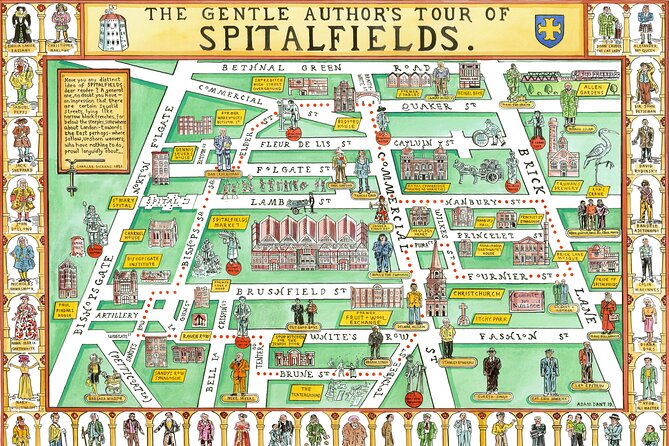
- Starting at Christ Church Spitalfields, and why the East End matters
- A 2-hour tour that stays human, not rushed
- Nicholas Hawksmoor and the English Baroque moment
- Jewish immigrants, East Europe, and the needs that shaped Spitalfields
- The ancient market, and what a medieval survival is actually for
- Priory of St Mary Spital, and how layers of belief overlap
- Brewery stories through two women, not just an abstract industry
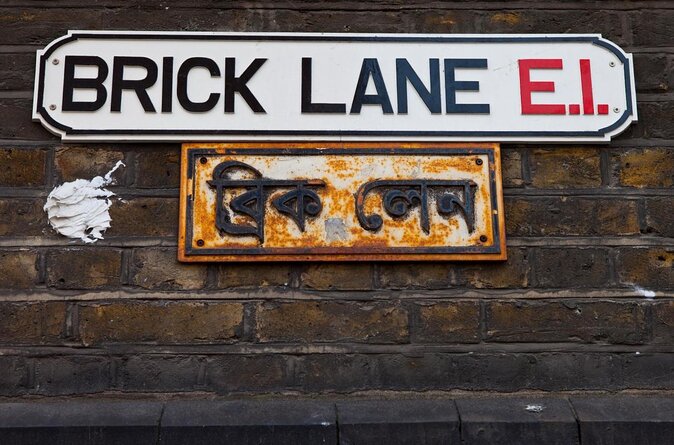
- A famous thoroughfare and the controversy over its future
- From Huguenot Chapel to Synagogue to Mosque, one building with three roles
- Fine eighteenth-century houses and how to read streets
- Nicholas Culpeper’s herb garden and the health-minded side of the East End
- The 18th-century drawing room tea and cakes based on 1720
- Price, small-group value, and what you are really paying for
- Who should book this Spitalfields walk?
- Should you book this tour?
- FAQ
- How long is the walking tour around Spitalfields?
- How much does the tour cost?
- What is the group size?
- Where does the tour start and end?
- What language is the tour offered in?
- Do I get a mobile ticket?
- Is service animals allowed?
- Is the tour suitable for everyone?
- What is included at the end of the tour?
- What happens if I need to cancel or if the weather is bad?
Key things I think you will care about
- Max group of 5 keeps the pace personal and the questions actually get answered
- English Baroque plus community history gives you more than facts, you get connections
- Spitalfields Market and medieval survival explains why parts of the area still work the way they do
- One building, three identities (Huguenot Chapel, Synagogue, Mosque) shows how London layers cultures
- Tea and cakes from a 1720 recipe makes the end feel like a reward, not an afterthought
Starting at Christ Church Spitalfields, and why the East End matters

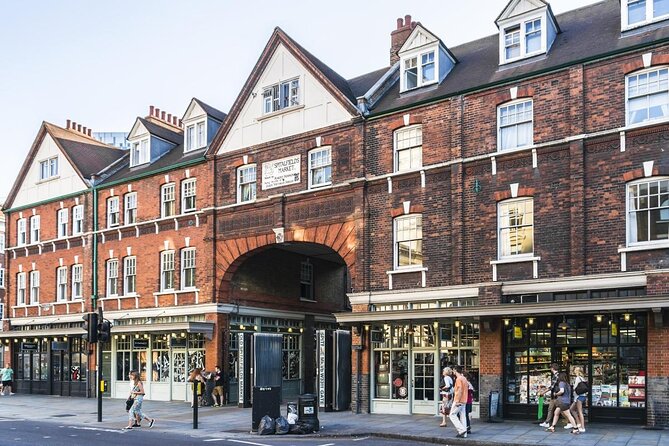
Most London trips start in the center, then leave. This one starts in Spitalfields, right by Christ Church Spitalfields on Commercial Street, and that single choice changes everything. You get a part of London where history is not staged at every corner, it is more like it has been living under your feet for centuries.
The pace is made for walking, with stops that focus on meaning, not just dates. In about two hours you cover baroque architecture, market history, religious shifts, and the story of people who made Spitalfields their home. For me, that is the point: when you walk, you notice how neighborhoods grew, what got preserved, and what changed.
If you want London where the stories feel grounded and specific, this is a great format. You will come away with a mental map of Spitalfields that you can actually use on your next day in the city.
More Guided Walks in London
A 2-hour tour that stays human, not rushed
This is a small-group tour, capped at five people. That matters more than you might think. With a bigger group, guides speed up to keep everyone together. Here, you can hear the explanation fully, and you can ask the follow-up that pops into your head when you are looking at something old and strange.
It also helps that the tour stays tight and focused. You are not dealing with long transfer breaks or waiting around. You meet at Christ Church Spitalfields at 2:00 pm, and you finish back at the same place.
You do need to plan around the basic requirement: you should be comfortable standing and walking for about two hours. If your legs need lots of breaks, this may be stressful rather than enjoyable. For everyone else, the time window is just right for a first look at Spitalfields.
Nicholas Hawksmoor and the English Baroque moment
One of the first big stops is Nicholas Hawksmoor’s masterpiece of English Baroque. Hawksmoor is the kind of architect people bring up when they want London to feel theatrical, but this is not about admiring a building from a distance.
You get the why behind the style. The guide’s approach is built around interpreting what you see, and it keeps you from turning it into a quick sightseeing checkbox. You stand in the right spot, you get the story behind the design, and the building starts to make emotional sense instead of feeling like random ornate stone.
This is also a useful anchor for the rest of the tour. Once you understand the baroque mindset, it becomes easier to notice how Spitalfields blended very different communities and building types over time.
Jewish immigrants, East Europe, and the needs that shaped Spitalfields
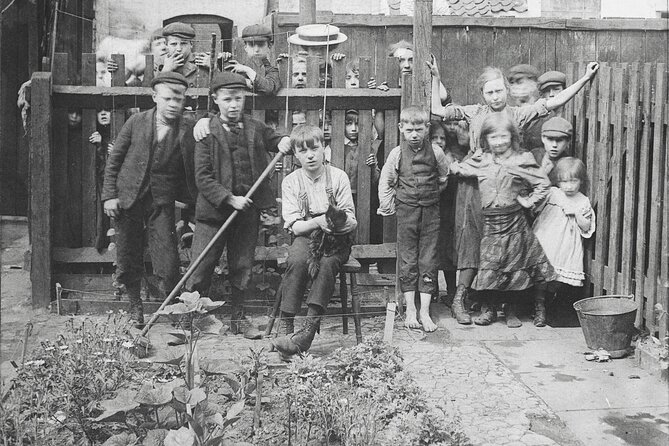
Next you step into the human side of the neighborhood. You meet the story of people whose lives were bound up with an institution that served Jewish immigrants arriving from East Europe, tied to the area now associated with the Ukraine.
This part of the tour is about more than migration as a headline. You get the idea that places like this exist because people needed help, community, and space. The guide connects those needs to what you can still see today.
I love this kind of storytelling because it makes the neighborhood feel less like a museum and more like a working community. You start to understand why the architecture and institutions mattered, and why they kept evolving instead of staying frozen in time.
The ancient market, and what a medieval survival is actually for
Spitalfields is famous for markets, and the tour does something smart with that theme. You get the story of the ancient market, then you learn about the purpose of an astonishing medieval survival.
You are not just told that something is old. You are shown why it was built, what it did in daily life, and why it could survive when so much around it changed. That is the difference between a list of facts and a real sense of place.
Also, you get a practical benefit: the market history helps you read Spitalfields like a map. After this stop, you will look at nearby streets and think, Oh, that layout makes sense. It is one of those small mental upgrades that makes a neighborhood more enjoyable even after the tour ends.
More England on foot, brolly optional:
- Westminster Guided Walking Tour with Abbey Entry★ 5.0 · 1,282 reviews
- Walking Tour of London Westminster Abbey, Big Ben, Buckingham★ 4.5 · 1,213 reviews
- London West End Musical Silent Disco Walking Tour Top 1% Rated★ 5.0 · 1,057 reviews
- Westminster 3 Hour Walking Tour and Visit of Churchill War Rooms★ 5.0 · 967 reviews
Priory of St Mary Spital, and how layers of belief overlap

Then you visit the site of the Priory of St Mary Spital. Even if you are not a religious-history specialist, this stop tends to click because it explains how long the site has been carrying meaning.
What the guide does well here is connect past religious life to the later transformations around it. London has lots of ruins and lots of churches, but Spitalfields gives you a specifically layered story. It helps you see the area as a timeline, not as separate eras.
If you like history that has physical footprints, this is one of the most satisfying moments on the route. You are standing where something older used to be central, and the tour helps you picture the function of the place, not just the remaining stones.
Brewery stories through two women, not just an abstract industry
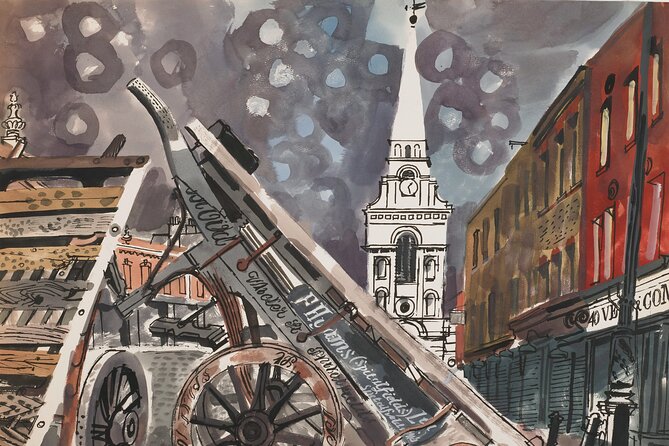
Spitalfields also has an industrial thread, and the tour handles it with a strong human angle. You hear the story of the brewery through the lives of two women who worked there.
That choice changes everything. Instead of treating brewing like a vague economic fact, the guide ties it to specific lives and everyday work. It is the kind of storytelling that makes you slow down and pay attention to what a neighborhood might have meant to workers, not only to wealthy patrons or famous builders.
This is one of the stops people remember. It is moving, and it feels personal, because you get to think about work, responsibility, and survival in a very literal way.
A famous thoroughfare and the controversy over its future

Next up, you hear the story of a famous thoroughfare and the ongoing controversy over its future. I like this part because it keeps the tour honest.
Not everything is preserved. Not everyone agrees on what should happen next. When you walk Spitalfields with that in mind, you start noticing tensions in architecture, planning, and community life. It turns the area from an old-world picture into a living debate.
Even if you are not sure how the controversy will resolve, the guide gives you enough context to understand why it matters. You leave thinking about heritage as something people fight for, not something that automatically gets protected.
From Huguenot Chapel to Synagogue to Mosque, one building with three roles
One of the most memorable stops is a building emblematic of Spitalfields history: a Huguenot Chapel that became a Synagogue that became a Mosque.
This is where the tour really earns its name as a walk with meaning. You are not just told that cultures arrived and left. You see evidence of how communities used space, how buildings were repurposed, and how faith and identity can transform a structure without erasing it.
I find these multi-faith stories especially grounding. They show how London grew through adaptation, not through one culture replacing another cleanly. Spitalfields becomes a case study in continuity and change at the same time.
If you like architecture that comes with social context, you will enjoy this stop a lot.
Fine eighteenth-century houses and how to read streets
After that, you learn the story behind fine eighteenth-century houses. This is not heavy-handed lecturing. The guide points out what to pay attention to as you walk, so you start noticing details you would otherwise miss.
The value here is practical. Residential architecture can feel like background noise when you travel. This stop gives you a way to look at doorways, facades, and street scale, then connect them back to the neighborhood’s changing population.
It also acts like a breather between bigger emotional stops. You get to focus on design and place, not just on the heaviest topics.
Nicholas Culpeper’s herb garden and the health-minded side of the East End
Finally, you visit the herb garden of the 17th-century herbalist Nicholas Culpeper. This is a quieter stop, but it has a strong “street-level science” feel.
Culpeper’s work is tied to how people thought about remedies and daily health. When you connect that to Spitalfields, it stops being just another tourist garden. It becomes part of the neighborhood’s tradition of practical knowledge, shaped by who lived there and what they needed.
It is also a nice change in mood before the tour’s end. By the time you reach the townhouse, you are ready to slow down.
The 18th-century drawing room tea and cakes based on 1720
You finish in an 18th-century drawing room overlooking Christ Church Spitalfields. This end stop is not just a wander-in-and-out moment. The tour includes a 30-minute sit-down with tea and cakes baked to a recipe of 1720, and an admission ticket is included.
That detail matters for value and for pacing. Walking tours often end with, Thanks, good luck. Here, you get a proper decompression break. It is the kind of inclusion that makes the tour feel complete.
I also like that the tea part is remembered as a highlight, including mentions of a muffin along with the tea. Either way, the point is the same: you leave fed, rested, and with your brain still willing to absorb one more story.
Price, small-group value, and what you are really paying for
At $90.28 per person for about two hours, this is not a budget stroll. But I do think it is reasonable when you look at what is included and how it is delivered.
You pay for a guide who can tie together architecture, community history, and daily life. You also pay for the small group size, limited to five people, which keeps the experience personal. And you get more than walking. The end includes an included admission ticket and a sit-down tea with cakes baked using an old recipe from 1720.
In London, that mix of guided interpretation plus a structured end stop adds real value. If you want just a casual walk, you could DIY the neighborhood for free. If you want Spitalfields to click into place in your head, this format earns its cost.
Also, the tour is commonly booked about 36 days in advance on average, which is a quiet sign it is popular when people plan ahead.
Who should book this Spitalfields walk?
This tour is a great match if you like neighborhood history that has real people in it, not only famous buildings. It is also ideal if you want a tour that uses walking as a tool for understanding, with stops that make you pause and focus on the details.
You should probably skip it if you cannot stand and walk for about two hours. And if you are the type who wants long museum-style interiors, this may feel shorter than you want, though the route is packed with meaningful stops.
It also suits solo travelers and couples who like small groups, since you can still enjoy conversation without it turning into a crowded shuffle. If you are visiting the East End and want something more thoughtful than a quick highlight circuit, this is a strong pick.
Should you book this tour?
Yes, if your ideal London day includes small-group guides, strong storytelling, and a mix of places that changed roles over time. I especially recommend it if you care about how communities shaped the built environment, because the tour does a good job showing those connections.
Book it if you want Spitalfields to feel understandable fast. You get a concentrated route that covers baroque architecture, market survival, religious shifts, and a herbalist’s garden, then finishes with tea and cakes that actually belong in the story.
The only “no” I would give is for anyone who needs more mobility flexibility than two hours of walking and standing allows, or anyone who hates weather-dependent plans.
FAQ
How long is the walking tour around Spitalfields?
The tour is approximately 2 hours.
How much does the tour cost?
The price is $90.28 per person.
What is the group size?
The tour has a maximum of 5 travelers.
Where does the tour start and end?
It starts at Christ Church Spitalfields, Commercial St, London E1 6LY, UK, and ends back at the same meeting point.
What language is the tour offered in?
The tour is offered in English.
Do I get a mobile ticket?
Yes, it includes a mobile ticket.
Is service animals allowed?
Yes, service animals are allowed.
Is the tour suitable for everyone?
Most travelers can participate, but it is not recommended for travelers who cannot stand and walk for two hours.
What is included at the end of the tour?
At the end, you spend about 30 minutes in an 18th-century drawing room for tea and cakes baked to a recipe of 1720, and an admission ticket is included.
What happens if I need to cancel or if the weather is bad?
You can cancel for free up to 24 hours in advance for a full refund. The tour requires good weather, and if it is canceled due to poor weather, you will be offered a different date or a full refund.
Latest to join the queue for London







Guided Walks in London, compared.

Tour for Muggles The Ultimate Harry Potter Walking Tour in London
Read our review →
Changing of the Guard Guided Walking Tour in London
Read our review →
The Great British Rock and Roll Walking Tour
Read our review →
Westminster Guided Walking Tour with Abbey Entry
Read our review →
Walking Tour of London Westminster Abbey, Big Ben, Buckingham
Read our review →
London West End Musical Silent Disco Walking Tour Top 1% Rated
Read our review →
Westminster 3 Hour Walking Tour and Visit of Churchill War Rooms
Read our review →
WW2 London Walking Tour & Churchill War Rooms Entrance Ticket
Read our review →Browse the lists this tour appears in