Reviewed · LONDON TOURS & ACTIVITIES
Turmoil, Templars & Oliver Twist London’s Squalor and Splendour
London’s justice story starts with a twist.
This two-hour Holborn walking tour connects Charles Dickens’ Oliver Twist to real street-level places tied to crime and law, while also pulling you through the medieval threads that shaped the city. I like how the route feels like a narrative you can follow, not a random list of sights centered on Oliver Twist.
The best part for me is the small group size, capped at 15, so you can ask questions instead of shouting them into the fog. The guide, usually Tom, is especially strong at explaining what these buildings were for, and the law courts and Temple areas are where his stories really click.
One drawback to plan for: this is not a sit-and-stare tour. It’s not recommended if you can’t comfortably walk about two miles at a reasonable pace, since the stops move along briskly.
In This Review
- Key things to know before you go
- Holborn’s Justice Trail: Dickens Meets the Medieval City
- Price and timing: what you’re really paying for
- Start at Covent Garden, finish near Blackfriars
- Stop 1: Bow Street Museum and the Bow Street Runners
- Stop 2: Freemasons’ Hall and the power of institutions
- Stop 3: Royal Courts of Justice, where legal London looks official
- Stop 4: Temple Church and the Knights Templar
- Stop 5: The London Silver Vaults and a surprising change of pace
- Stop 6: Staple Inn, the last remaining Inns of Chancery building
- Stop 7: Old Bailey and Newgate’s shadow
- What makes this tour work so well in practice
- Pace and who should choose this (or skip it)
- Should you book? My take
- FAQ
- How long is the tour?
- Is the tour in English?
- Where do I meet and where does it end?
- Are there free admissions at the stops?
- What walking ability do I need?
- How big is the group?
Key things to know before you go
- Oliver Twist in real locations: You’ll connect Dickens’ world to London places tied to courts and policing.
- Small-group questions: With a maximum of 15 people, your guide can actually respond.
- Templars and the Temple Church area: You’ll see how one medieval order left long shadows in the cityscape.
- Legal London, up close: Bow Street, the Royal Courts of Justice, and the Old Bailey bring the justice system into focus.
- Freemasons, Inns of Chancery, and more: This route mixes institutions people forget to look for.
- Free entry for every listed stop: Each stop is shown as free, so you’re mostly paying for the guidance and walking time.
Holborn’s Justice Trail: Dickens Meets the Medieval City
This tour plays a smart trick. Instead of treating Dickens as a museum exhibit, it treats him like a reporter who used London itself as his reference. You’ll be walking through Holborn, and you’ll keep seeing how the city’s legal and religious institutions influenced everyday life, from policing and punishment to the places where people studied, negotiated, and built reputations.
The route also gives you a sense of time. You’ll move between medieval institutions and later legal power, then you’ll end up back in the land of criminal justice, where the geography helps the stories make sense. I like that it’s not trying to cram everything into one hour. At two hours, it aims for clarity over chaos.
Also on in London, no fuss
Price and timing: what you’re really paying for
The cost is $27.42 per person, and it’s set up as a guided walking tour rather than a ticket-heavy day. The big value here is that the listed stops are marked as free, so your money goes toward the guide’s route planning, explanation, and the chance to ask questions.
It’s also a tour that tends to sell ahead. On average, it gets booked about 31 days in advance, which tells me it’s the kind of experience people line up because they want something more focused than a general sightseeing bus. If you’re deciding at the last minute, you might still find space, but planning ahead makes life easier.
Start at Covent Garden, finish near Blackfriars
You start near Covent Garden at Covent Garden Underground Ltd on Long Acre (WC2E 9JT). The walk finishes at a Superdrug Health Clinic on New Bridge Street, close to Blackfriars Station on the northern bank of the River Thames.
That end point matters. If you’re continuing your day, you’re in a practical location to branch out to central London without backtracking all the way to Covent Garden. Also, if you’re using public transport, both ends are set up to be straightforward.
Stop 1: Bow Street Museum and the Bow Street Runners
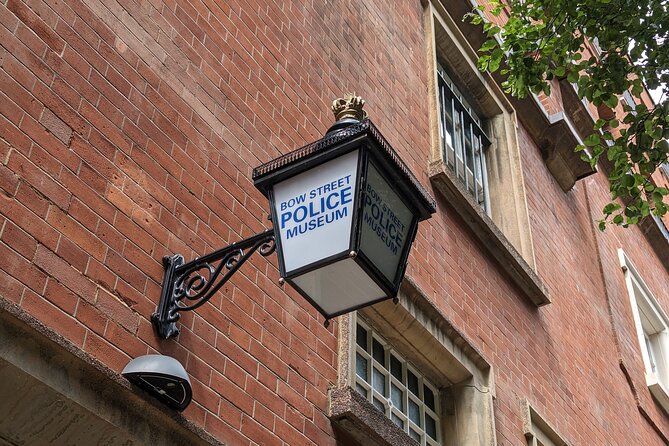
You begin at the Bow Street Museum of Crime and Justice, where the focus is the Bow Street Runners. This is where the tour’s “justice story” theme becomes real fast.
Why this stop works: Bow Street is tied to the idea of early policing and organized law enforcement in London, and it helps you understand why later justice buildings in the area felt so central. It’s also a good entry point for Oliver Twist connections. Dickens’ London wasn’t just gloomy, it was procedural, and Bow Street is the kind of place where you can start seeing how policing and punishment formed a system.
One practical note: the stop is timed at about five minutes. That’s long enough to get oriented and hear the key points, but short if you were hoping for full museum reading. If museums are your thing, think of this as the “map and meaning” start, not the full on-site visit.
Stop 2: Freemasons’ Hall and the power of institutions
Next is Freemasons’ Hall, with a quick look at the history of the hall. You’re not just seeing a building, you’re seeing a clue about how institutions shaped London’s networks.
This stop can feel different from the crime theme, and that’s a good thing. Justice and secrecy often get mixed together in people’s minds, but here the point is more grounded: organizations, meeting spaces, and established societies helped define who had access, influence, and legitimacy. Even in five minutes, it nudges you to think about London as an ecosystem, not a single story.
Since the stop is short, go in with one mindset: listen for how the guide links it to the broader theme. If you ask questions, this is a good moment to do it, because the guide can usually explain how social institutions interacted with legal and civic life.
While the kettle’s on in London:
- Stonehenge, Windsor Castle and Bath with Pub Lunch in Lacock★ 4.5 · 7,402 reviews
- Tower of London and Crown Jewels Exhibition Ticket★ 4.5 · 6,677 reviews
- Thorpe Park Admission Ticket★ 4.0 · 5,915 reviews
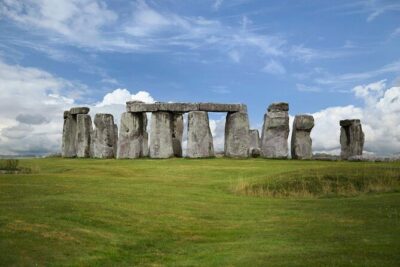
- Stonehenge, Windsor Castle and Bath Full Day Guided Tour★ 4.5 · 5,346 reviews
Stop 3: Royal Courts of Justice, where legal London looks official
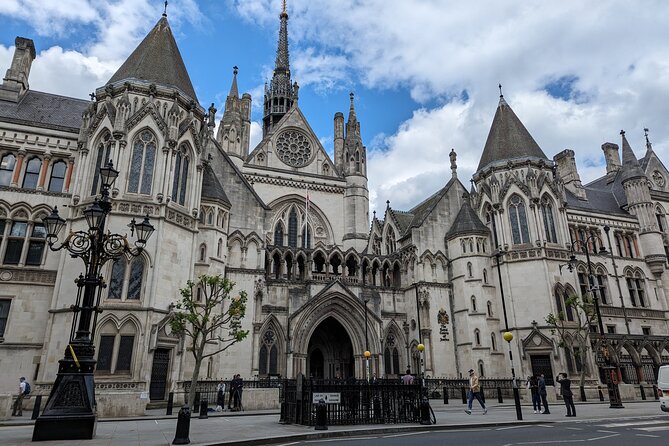
Then you head to the Royal Courts of Justice for the history of the building and the role it played in legal London.
This is one of the stops that tends to land well because it’s easy to see why people would treat courts as more than just places to settle disputes. The architecture and the formality signal authority. Even without deep legal knowledge, you can feel the “this matters” vibe that courts communicate.
It also connects cleanly to Oliver Twist. Dickens wrote about a London where ordinary people often had little power, while institutions carried the weight. Seeing the courts on the ground helps that theme click.
Again, it’s about five minutes. If you want slow photography or you’re the type who reads every plaque, you’ll likely want to plan a separate return visit to spend more time at this stop.
Stop 4: Temple Church and the Knights Templar
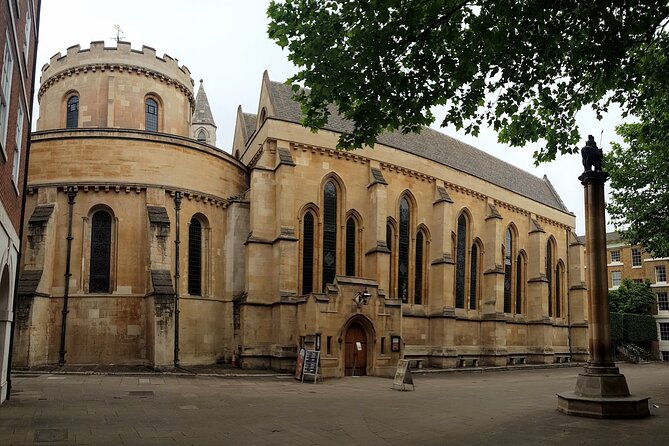
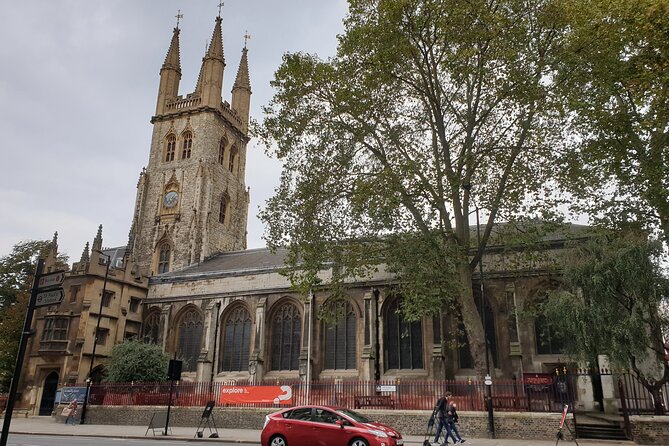
Now the tour shifts into Templars territory with Temple Church, focusing on the Knights Templar and the church itself.
This part is a highlight for a reason. It’s not abstract medieval talk. Temple Church and the Temple area offer visuals that help you grasp how medieval orders left long traces in London’s layout and identity. The stories are usually half historical and half symbolic, and that mix is what keeps it interesting even if you’ve heard Templar myths before.
The best way to enjoy this stop is to watch for the guide’s connections between religion, power, and physical space. The Templars weren’t just a faraway legend, they were connected to real property, real influence, and real consequences. Temple Church gives the tour a sense of place in medieval Britain that a strictly crime-only route wouldn’t.
As a timed stop, it’s brief, but the guide’s explanations tend to make the church feel bigger than its immediate size.
Stop 5: The London Silver Vaults and a surprising change of pace
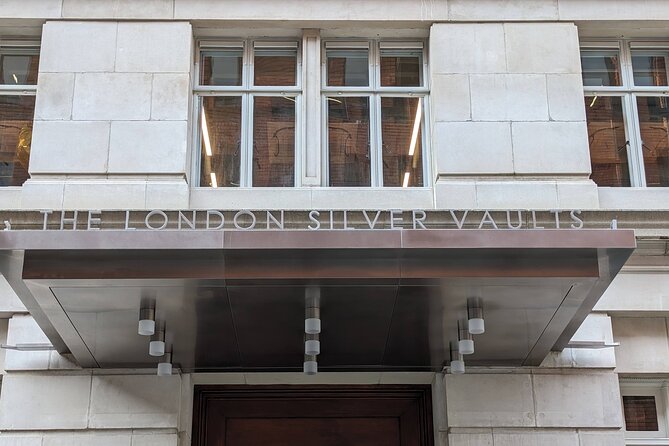
After courts and medieval institutions, you’ll get a break from “serious” London with the London Silver Vaults, described as the world’s largest collection of retail silver.
This is the tour’s palate cleanser. It’s still connected to London life because it reminds you that the city’s money, taste, and commerce had to go somewhere. And if your brain has been marinating in justice and Templars, a stop like this gives you a chance to reset.
I like that it’s included because it helps the walk feel like real London, not a one-note history lecture. You might not plan to buy silver that day, but you can still enjoy the scale and the visual variety. It’s also a great photo stop if you enjoy craftsmanship and shop-window lighting.
Stop 6: Staple Inn, the last remaining Inns of Chancery building
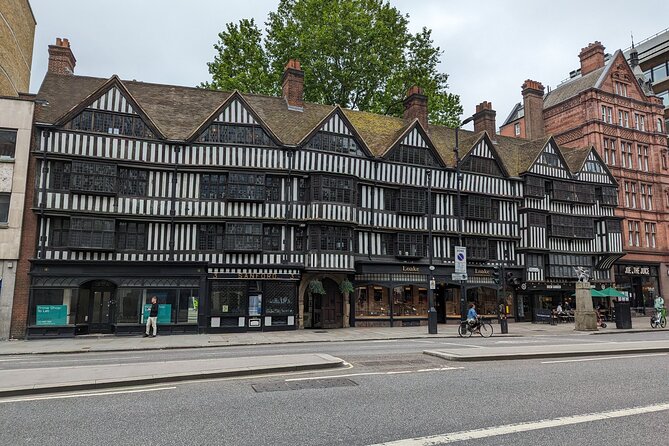
Then it’s Staple Inn, marked as the last remaining of the Inns of Chancery buildings.
This stop is small, but it’s meaningful. Inns of Chancery are part of the background of how legal professionals were trained and how the legal world operated. If you want context for the world you just saw at the courts, Staple Inn is a tidy piece of the puzzle.
Why it matters for you: it turns “the law” from something that just happens in dramatic court scenes into something rooted in schooling, communities, and the everyday organization of legal life. You can look at it and think, this is where people formed habits and networks that later showed up in serious courtrooms.
Because the stop is short, you’ll likely want to rely on the guide for the key takeaways. If your interest is legal history, this is the kind of stop where asking one good question can get you a longer answer.
Stop 7: Old Bailey and Newgate’s shadow
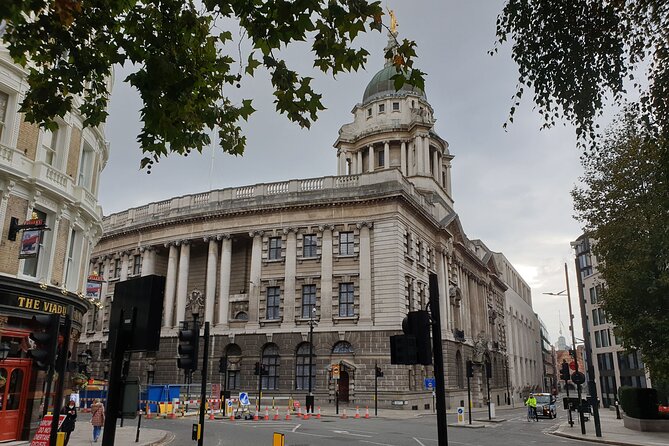
You finish at the Old Bailey, the site of the Central Criminal Court, also known as the Old Bailey, where Newgate Prison once stood.
This is the tour’s payoff. You end where London’s criminal justice story turns into a place you can stand in and picture. Even if you don’t know every historical detail, the setting gives your earlier stops context.
It’s also a natural Oliver Twist connection. Dickens’ characters existed near the machinery of punishment and procedure. Ending at Old Bailey helps the route feel like a loop that started with policing and ends with the center of criminal trials.
The guide can help you visualize the transition from Newgate’s prison presence to the later court system, and the effect is that you don’t just remember buildings, you remember how the system moved through space.
What makes this tour work so well in practice
A lot of history walks fail because they rush or they talk at you. This one is structured to keep you moving, but not frantic. The stops are about five minutes each, so you get multiple “anchor points” instead of one long lecture that fries your attention span.
The other winning factor is the ability to ask questions. With a cap of 15 people, the guide can respond in a way that actually adjusts the tour for you. In the guidance I saw echoed, Tom stands out for being clear and for taking questions seriously. If you like follow-ups, bring them. If you don’t know what to ask, watch for moments where a stop feels like it should connect to something you already know, then ask the guide to make the link.
Also, this is offered in English, and the tour uses a mobile ticket. That’s small, but it makes the day smoother.
Pace and who should choose this (or skip it)
This walk is for people who can handle about two miles at a reasonable pace. If you’re managing mobility limits, knee issues, or you simply prefer slower sightseeing, you might want to look for a different style of tour.
On the plus side, most people can participate if you’re comfortable walking city sidewalks and stopping briefly for explanations. It’s ideal if you want an organized route that helps you see London in layers: crime, law, medieval institutions, and even commerce.
This is also a good pick for you if you like themed tours that connect literature to geography. You’ll get more than surface facts if you enjoy the idea of reading a city like a text.
Should you book? My take
If you want a focused two-hour walk that links Oliver Twist to real places tied to law, crime, and medieval power, this is a strong choice. The value is especially good because you’re paying for guided storytelling, and the stops are listed as free entries. The small-group size, with lots of time for questions, is the part that can turn a normal walking tour into the one you remember later.
I’d skip it if you can’t comfortably manage the walking distance. Also, if you’re expecting long stays inside each building, the five-minute stop timing means you’ll likely want to add follow-up visits on your own.
If you want a smart, question-friendly way to see Holborn beyond the usual tourist stops, book it and go with the mindset of connecting the dots. You’ll leave with a clearer picture of how London’s institutions shaped the stories that Dickens wrote.
FAQ
How long is the tour?
The tour lasts about 2 hours.
Is the tour in English?
Yes, the tour is offered in English.
Where do I meet and where does it end?
You meet at Covent Garden Underground Ltd on Long Acre (WC2E 9JT). You end at Superdrug Health Clinic on New Bridge St, near Blackfriars Station.
Are there free admissions at the stops?
The listed stops are marked as free admission ticket stops, so you are not paying additional entrance fees for them on this tour.
What walking ability do I need?
It is not recommended if you’re unable to walk two miles at a reasonable pace.
How big is the group?
The tour has a maximum of 15 travelers.
Latest to join the queue for London







London Tours & Activities, compared.
Stonehenge, Windsor Castle, and Bath from London
Read our review →
London Big Bus Hop-On Hop-Off Tour with Optional River Cruise
Read our review →
London Small Group Tour of Historical Pubs
Read our review →
Stonehenge, Windsor Castle and Bath with Pub Lunch in Lacock
Read our review →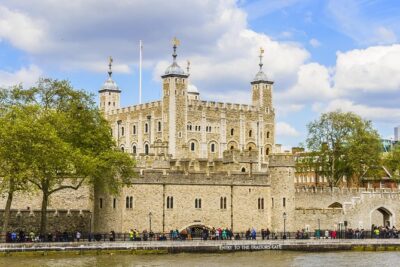
Tower of London and Crown Jewels Exhibition Ticket
Read our review →
Stonehenge, Windsor Castle and Bath Full Day Guided Tour
Read our review →