
Reviewed · GUIDED WALKS IN LONDON
Thomas Cromwell’s Wolf Hall Tudor London Walking Tour
Thomas Cromwell’s London feels close up and street-level. You’ll move through the legal quarters and the City of London to see famous monuments like St. Paul’s Cathedral, plus lesser-known stops such as the Maughan Library and Staple Inn. I especially like the hotel pickup option for convenience, and the way the route pulls you off the usual tourist path. One thing to plan for, some sights charge for entry, so not every stop is automatically included.
What makes this tour click is the theme. You’ll connect Tudor politics, the dissolution of monasteries, and Henry VIII’s era to real locations you can actually stand in. I also like how the guide uses a practical walking pace, with plenty of short, well-chosen moments to look, listen, and reset your bearings. The main drawback is you should expect real walking and several outdoor passes, so comfy shoes matter.
In This Review
- Key Highlights You Will Actually Feel On the Walk
- Why Cromwell’s Wolf Hall London Walk Works Better Than Usual Sightseeing
- The Route Opens With Staple Inn and the Tudor Trade World
- Gray’s Inn Chapel and the Legal Quarter That Shaped Cromwell
- Lincoln’s Inn, the Temple District, and Why These Streets Feel Like a Storybook
- Maughan Library and the Hidden Cromwell Working Life
- Underground Silver Vaults and Other Stops You Might Miss Alone
- St. Paul’s Cathedral, the Great Fire Thread, and Fire That Shaped the City
- William Wallace, the 1381 Memorial, and How the Tour Expands Beyond Tudor Court Politics
- Smithfield and the Dissolution-Era Atmosphere Around Church Grounds
- Milk Street and Austin Friars, Where Tudor Reform Meets City Real Estate
- Drapers’ Hall and the Dutch Church: Quiet Corners With Big Institutional Meaning
- Bishopsgate Through Fenchurch Street, Plus the Wolf Hall Maypole Detail
- St Olave’s, Traitors’ Gate, and the Tower Hill Scaffold Site Closure
- Price and Value: What You Get for $271.76 Per Person
- What to Wear and How to Make the Most of the Walking Pace
- Should You Book This Thomas Cromwell and Wolf Hall Walking Tour?
Key Highlights You Will Actually Feel On the Walk
Hotel pickup and an easy start near Chancery Lane or directly from your hotel, so you are not hunting for the meeting point.
Gray’s Inn and Lincoln’s Inn legal London with time for the buildings and the stories behind them, not just a photo stop.
Off the tourist trail Tudor stops like Staple Inn’s Tudor facade and the Maughan Library connection to Cromwell’s working life.
City of London fire and justice landmarks including Golden Boy of Pye Corner, Smithfield Martyrs’ Memorial, and the scaffold site at Tower Hill.
A memorable ending at Traitors’ Gate where Cromwell’s story closes, with Tower Hill right there if you want more time.
Why Cromwell’s Wolf Hall London Walk Works Better Than Usual Sightseeing
Most London walks try to hit the biggest names. This one is built around one person, Thomas Cromwell, and the institutions that shaped him. That focus changes what you notice. Instead of treating London like a list of monuments, you start to see how power, law, trade, and religious upheaval all share the same streets.
You also get a nice mix of “big skyline London” and “you almost walked past it” London. St. Paul’s Cathedral is there, and it’s a strong anchor for the route. But you spend equal energy on places like gray stone courtyards, old legal halls, and City lanes that rarely make it into a standard itinerary. If you enjoy the kind of history where the details matter, this tour is a good match.
More Guided Walks in London
The Route Opens With Staple Inn and the Tudor Trade World
You start at Traitors’ Gate and then work through the legal and City districts, with the day framed by Tudor power. Early on, Staple Inn sets the tone. This Tudor facade is one of London’s most prominent survivors, with roots in 1585 when it served as a wool staple, where wool was weighed and taxed. The building surviving the Great Fire of London adds weight to the story, and it also endured later refacing in the 17th century, restorations in the 19th and 20th centuries, and bombing damage in 1944.
Why I think Staple Inn is a great first stop for your brain: it grounds Cromwell’s era in everyday systems. Tudor politics was not only about palaces. It was also about who controlled trade, money, and paperwork. If you have ever wondered how legal and economic power feed each other, you will feel it here.
Gray’s Inn Chapel and the Legal Quarter That Shaped Cromwell
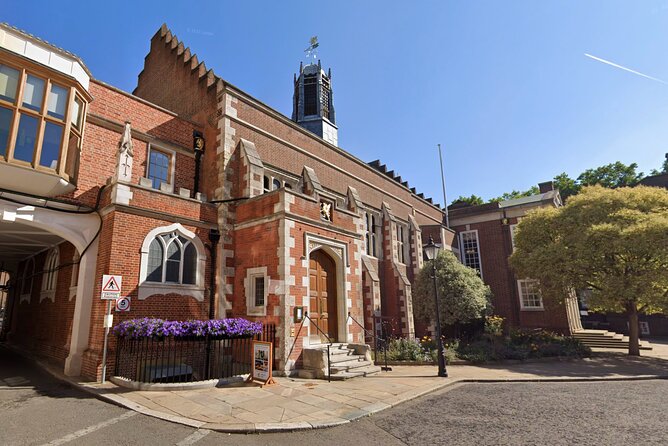
Gray’s Inn is next, and it matters because it connects directly to Cromwell’s life. He was elected as a member there. Even if you never studied English law, you can still read the place like a map: paths, gardens, and buildings tied to a lawyers guild. One practical note, parts of Gray’s Inn can be closed on weekends, so if you tour on a Saturday or Sunday, keep expectations flexible.
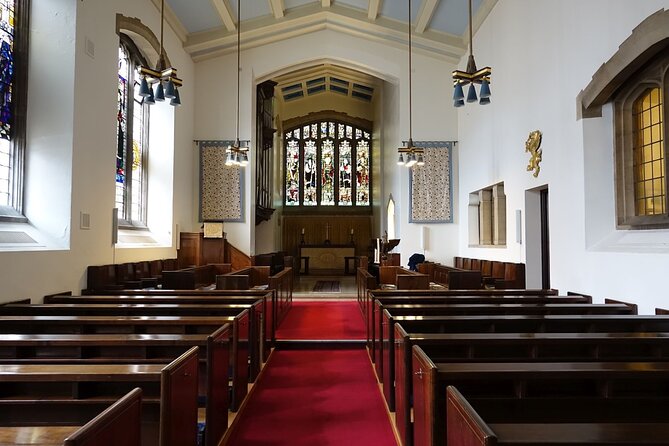
Then you get Gray’s Inn Chapel, and this is one of those moments where London slows down. Even though it was built for the Inn’s members, the chapel is open to worship and respectful visitors. It is a calm pause in a tour that otherwise ranges across public monuments and tense Tudor events.
Lincoln’s Inn, the Temple District, and Why These Streets Feel Like a Storybook
Lincoln’s Inn keeps the legal theme going. It’s another prestigious establishment, and on weekdays you may be able to peek inside. Like Gray’s Inn, it can be closed on weekends, so timing really affects how much you can see.
From there, the Temple district brings a different flavor. This legal area shows up in film and in literature, and the streets have that layered “old London working life” feel. Passing through, you also see the Temple Church from the outside, a site with history reaching back around 800 years. It’s also known in pop culture because it appears in Da Vinci Code, but the real value here is that your guide treats the building as a landmark in its own right, not just a reference for fans.
Maughan Library and the Hidden Cromwell Working Life
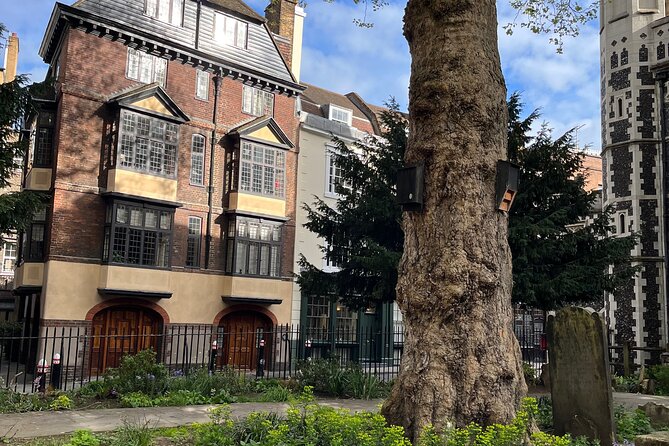
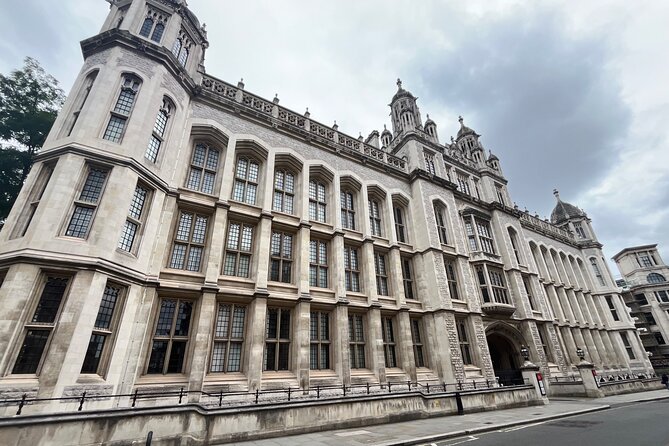
The Maughan Library is a quick stop, but it lands because it connects a major modern institution to Cromwell’s world. The building was once a place where Cromwell had an office. Even if you do not step inside, you get the thrill of placing his daily work into a specific London location you can point at on the map.
If you want Tudor history that feels lived-in rather than postcard-like, this is the kind of stop you remember.
More England on foot, brolly optional:
- Westminster Guided Walking Tour with Abbey Entry★ 5.0 · 1,282 reviews
- Walking Tour of London Westminster Abbey, Big Ben, Buckingham★ 4.5 · 1,213 reviews
- London West End Musical Silent Disco Walking Tour Top 1% Rated★ 5.0 · 1,057 reviews
- Westminster 3 Hour Walking Tour and Visit of Churchill War Rooms★ 5.0 · 967 reviews
Underground Silver Vaults and Other Stops You Might Miss Alone
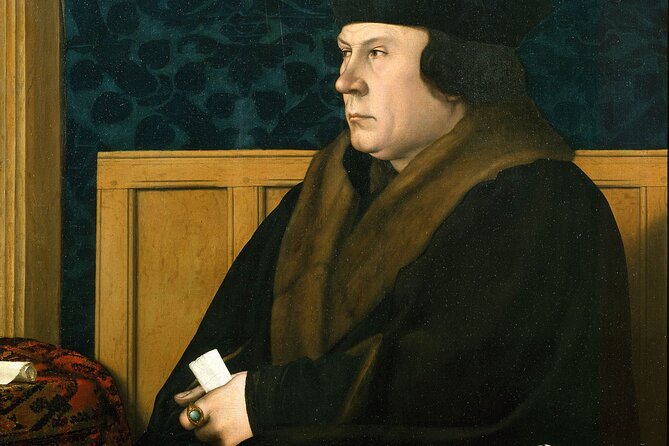
You will also pass the London Silver Vaults, a set of underground vaults that house specialist dealers in fine English silver, antiques, and objets d’art. Some stops like this are easy to ignore on your own because they look like a doorway, a sign, and a street corner. On a guided walk, you learn what that space is and why it exists.
At a few points, admission tickets are not included. So treat these as optional add-ons where you can decide on the spot if you want to spend more time and money.
St. Paul’s Cathedral, the Great Fire Thread, and Fire That Shaped the City
St. Paul’s Cathedral comes into the route from a short distance, so you get the view without turning it into a long museum visit. It’s an important Tudor link because the cathedral rose from the ashes of the Great Fire of London, and it narrowly escaped destruction during the Blitz. That combination makes St. Paul’s feel like a living symbol of London’s recovery cycles, from 1666 to the 20th century.
Right after, the Golden Boy of Pye Corner ties you directly back to the Great Fire story. You learn the legend around the memorial, and it adds a human, almost eerie detail to what could otherwise be only dates and timelines.
William Wallace, the 1381 Memorial, and How the Tour Expands Beyond Tudor Court Politics
The tour does not lock you inside one strict time window. You will also see the William Wallace Memorial and learn where he met his end. Then there is the Great Rising of 1381 Memorial, remembering the Peasants Revolt.
Why I like this expansion: it shows London as a place where different eras of conflict, rebellion, and power play out in the same street network. Cromwell’s Tudor chapter makes more sense when you view it as part of a longer chain of unrest and reform across England.
Smithfield and the Dissolution-Era Atmosphere Around Church Grounds
Smithfield Martyrs’ Memorial is one of the tour’s heavier moments. You stand on the spot where Protestant bishops were burned at the stake by Queen Mary in Tudor times. It’s not the kind of stop that feels like a quick photo. Your guide connects the location to the religious turmoil that also shaped the political choices around Cromwell.
Nearby, Christchurch Greyfriars Church Garden is another emotionally textured place. The building was bombed out in World War II, and what you see now is a memorial garden. Cromwell had more personal involvement with the dissolution of this once great building than some other sites. Even if you are not a specialist, you will feel the point: religious change was not abstract. It was tied to physical buildings that later became ruins, gardens, and reminders.
Milk Street and Austin Friars, Where Tudor Reform Meets City Real Estate
Milk Street is a brief stop, but it gives you a strong anchor point. It’s where Sir Thomas More was born, and your route ties his story to the same later landscape where execution and power converge at Tower Hill.
Then you reach Austin Friars. This area is huge for Cromwell fans because the entire sprawling estate became part of Cromwell’s personal domain, and it was his main residence in the City of London. That single fact turns Austin Friars from a general “old area” into a specific Cromwell address you can visualize.
Drapers’ Hall and the Dutch Church: Quiet Corners With Big Institutional Meaning
Drapers’ Hall is now home to the Drapers Livery Company, and it is one of the few reminders of Cromwell’s home in this part of London. If an interior peek is possible for your day, that can be valuable, but admission may not be included.
The Dutch Church is another calm moment. It was once the church for the friars, a place Cromwell would have known intimately, and it still functions today as a quiet refuge from the busy financial center. If you like history that gives you a breather, you will appreciate this stop.
Bishopsgate Through Fenchurch Street, Plus the Wolf Hall Maypole Detail
St. Helen’s Church at Bishopsgate is the largest parish church in the City of London. Before the Reformation, it was a nunnery, and it sits atop suspected Roman or Saxon foundations. Some buildings carry multiple layers, and this is one of those stops where London’s long timeline becomes visible without needing a lecture.
Fenchurch Street is mostly a pass-through, but it gives you a sense of how the City kept changing. Near the Walkie-Talkie building, the south side was once another home tied to Cromwell.
Then you reach the Maypole of Shaft’s Court. This is the kind of detail that makes a Wolf Hall connection feel real. In the novel world, Henry VIII mentions how, when meeting Anne of Cleves, he felt he might be marrying the Cornhill Maypole. Seeing the physical maypole next to the modern Cheesegrater building creates a clear before-and-after contrast you will remember.
St Olave’s, Traitors’ Gate, and the Tower Hill Scaffold Site Closure
St Olave’s Church is another quick pass, but it adds a later cultural layer. It is described as a favorite of Charles Dickens, and it is also tied to Samuel Pepys, who is buried there. The fact that Pepys lived across the road during the Great Plague and Great Fire era adds punch to the idea that London’s crisis stories repeat, even when centuries change.
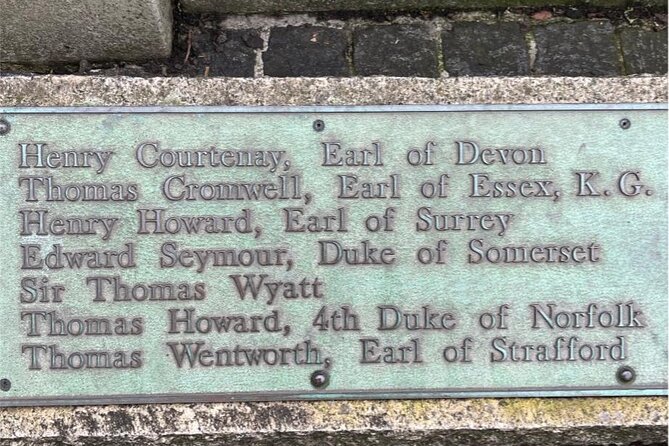
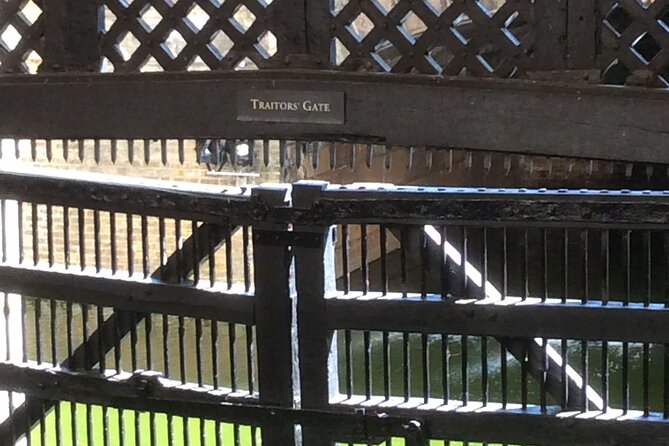
Finally, the tour ends at Traitors’ Gate, the infamous entry point to the Tower of London for those likely never to leave again. It is a strong closing image for Cromwell’s story. Right at the end of the route, you can also see the Tower Hill Scaffold Site memorial. This is where Cromwell, Thomas More, and countless others were put to death in Tudor times and beyond.
If you want more time, the Tower of London is close enough that you can connect the memorial ending to additional on-site context.
Price and Value: What You Get for $271.76 Per Person
At $271.76 per person, this is not a budget stroll, but it can be good value if you care about accuracy and depth. The biggest reason is that it is a private tour with your own guide, not a big group shuffle. You also get hotel pickup options, plus a route designed around lesser-known Tudor and City-of-London sites. Those add up fast when a guide is choosing where you spend your attention.
The main value trade-off is that some stops require admission tickets that are not included, so your total cost may rise depending on which places you choose to enter. If you are the type who loves to step inside when something is significant, plan for extra entry costs.
Also, your guide and pacing matter. In past experiences with this guide style, Stephen is praised for being both friendly and highly focused on correct details, and for making it fun without losing the facts.
What to Wear and How to Make the Most of the Walking Pace
This tour is listed for moderate physical fitness, and you should treat it as a proper walking day. Wear shoes you trust for pavement and stair-free navigation, bring a light layer for London weather, and do not plan anything demanding immediately afterward.
A helpful strategy: treat each stop as a short scene. If you take 30 seconds at each location to look at surroundings and not just read plaques, the whole theme clicks. This is especially true around the legal quarter streets and the memorial stops.
Should You Book This Thomas Cromwell and Wolf Hall Walking Tour?
Book it if you want Tudor London with a clear thread through real addresses. You will love it if you enjoy the legal quarters, the City of London, and the kind of history that ties politics to buildings you can see right now. It is also a strong pick if St. Paul’s and the Great Fire story pull you in, but you want more than the obvious landmarks.
Skip it or adjust expectations if you are looking for a mostly indoor, museum-heavy day, because parts of the route include outdoor views and pass-throughs. Also keep in mind that some stops may be closed on weekends and some admissions are not included.
If you are the kind of traveler who likes to feel London as a working network of streets, courtyards, and institutions, this is one of the better ways to do it.
Latest to join the queue for London





Guided Walks in London, compared.

Tour for Muggles The Ultimate Harry Potter Walking Tour in London
Read our review →
Changing of the Guard Guided Walking Tour in London
Read our review →
The Great British Rock and Roll Walking Tour
Read our review →
Westminster Guided Walking Tour with Abbey Entry
Read our review →
Walking Tour of London Westminster Abbey, Big Ben, Buckingham
Read our review →
London West End Musical Silent Disco Walking Tour Top 1% Rated
Read our review →
Westminster 3 Hour Walking Tour and Visit of Churchill War Rooms
Read our review →
WW2 London Walking Tour & Churchill War Rooms Entrance Ticket
Read our review →Browse the lists this tour appears in