
Reviewed · YORK TOURS & ACTIVITIES
The Original Uncomfortable York™ Tour
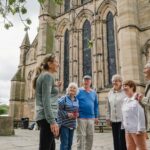
York has an uncomfortable second side. The Original Uncomfortable York tour uses York landmarks as prompts for thoughtful street talk, with a focus on who gets written into history. You will walk from York Minster to Tower Gardens while the guide keeps the conversation moving.
I love the way the tour is built around discussion, not just a one-way lecture. I also like that it aims at unheard stories and wider perspectives, including women, queer people, and people of colour.
One thing to consider: this is a walking tour with no building entry, so if you want indoor sights and quiet museum time, you may feel short-changed.
In This Review
- Key things to know before you go
- Why this Uncomfortable York walk feels different
- Price and value for 90 minutes of guided story-work
- Where you start, where you finish, and how to plan your timing
- Stop 1: York Minster, heritage spaces, and what gets staged
- Stop 2: Barley Hall and the puzzle of medieval York
- Stop 3: Kings Square, chocolate history, and commercialization
- Stop 4: Pavement, Rowntree Grocers, and global trade networks
- Stop 5: Friargate Quaker Meeting House and first female confectionaries
- Stop 6: Tower Gardens, Jewish history from early times to modern York
- The guide style: friendly, opinionated, and built for questions
- Who should book this tour, and who might prefer something else
- Practical tips for making the most of your visit
- Should you book the Original Uncomfortable York Tour?
- FAQ
- How long is the Original Uncomfortable York Tour?
- Where does the tour start and end?
- Does the tour include entry into buildings or attractions?
- Is the tour offered in English?
- How large is the group?
- Are service animals allowed?
- What is the cancellation policy for a full refund?
Key things to know before you go
- 90 minutes, approx. Walking pace and timing that fits a morning or afternoon plan
- Max 20 people A group size that keeps the talk from getting lost
- No indoor stops Everything happens outside, including York Minster and Barley Hall areas
- Social history focus Women, queer people, and migrant and minority histories come up
- Ends at Tower Gardens A nice finish point by the riverside
Why this Uncomfortable York walk feels different
Most York tours give you facts first, then scenery. This one flips the order. You still see major landmarks, but the guide uses them like discussion starters: heritage spaces, medieval life, trade, religion, and food stories. The result is a tour where you leave with sharper questions, not just a checklist.
The tour is also refreshingly honest about how we experience history. Instead of treating the past like a single neat story, it nudges you to look at what is missing, who benefited, and how modern ideas fill in gaps. That approach shows up early and stays with you through the route.
And yes, it is still fun. Reviews highlight that the guide keeps energy up, answers questions in detail, and actively pulls the group into the conversation. If you like tours where you can talk back, this fits.
Also on in York, no fuss
Price and value for 90 minutes of guided story-work
At $24.55 per person for about 1 hour 30 minutes, the value is strongest if you care about context. You are paying for a guide who connects York’s sites to bigger themes, plus the time to talk through them. Since the route stays outside, you are not budgeting for paid admissions during the walk.
Here is the practical value angle. York Minster is a big draw, but you are not paying to enter as part of this tour. Barley Hall and other stops are treated as places you interpret from the street and nearby spaces. You get the guided meaning without the ticket queues and without adding extra cost mid-tour.
The cost also feels sensible if you are traveling with people who do not always enjoy strictly “stand and listen” tours. The small group size and discussion structure give more people a chance to participate. One review even calls it a good fit for international visitors and students, which makes sense when the approach is about perspectives and ideas, not just local insider trivia.
Where you start, where you finish, and how to plan your timing
The tour meets at Bennett’s Cafe and Bistro, 30-32 High Petergate, York YO1 7EH. From there, you move through central York on foot and finish at the riverside of Tower Gardens.
That finish matters. A riverside ending is convenient for continuing your day without the awkward “backtrack to the starting point” feeling. It also helps you plan dinner nearby because Tower Gardens sits in a pleasant pocket of York.
In terms of day planning, think of this as a 90-minute anchor activity. Reviews say the length is a good match for an introduction to the city, especially if you have limited time and want something more thought-provoking than a basic sightseeing loop.
Stop 1: York Minster, heritage spaces, and what gets staged
You begin outside York Minster Cathedral, where the guide frames the tour and talks about the staging of heritage spaces. This is a strong opener because it sets the tone fast. You are not just being pointed at an impressive building, you are being asked to notice how the past is presented.
A practical takeaway for you: look at York Minster as more than a landmark. During this start, the guide nudges you to think about how religious architecture, public storytelling, and preservation efforts shape what visitors and locals assume they are seeing. It is a different kind of “first impression,” and it makes the rest of the walk feel connected.
One detail to keep in mind: the tour does not go inside. The Minster moment is about interpretation from outside, so if indoor views are your main goal, pair this with a separate ticketed visit later.
Stop 2: Barley Hall and the puzzle of medieval York
Next you head to Barley Hall, where you learn about medieval York and the holes in modern understanding. This stop is where the tour’s critical approach becomes most obvious. Instead of claiming perfect knowledge, the guide treats history like something partly reconstructed, and partly guessed.
That matters because York is so visually “old.” Easy mistake is assuming the modern story you hear is complete. The Barley Hall stop helps you notice the difference between evidence and storytelling. It gives you permission to wonder how we know what we know.
Also, admission is not part of the guided experience at this stop. Again, it stays street-side, so you get the context without building-entry requirements.
While the kettle’s on in York:
- Shadows of York: Ghost Walk and Horrible History.★ 5.0 · 1,403 reviews
- Private Historical Walking Tour of York★ 5.0 · 1,324 reviews
- Daytime Sightseeing Boat Cruise in York★ 4.5 · 1,256 reviews
- York Dungeon Entry Ticket★ 4.5 · 1,108 reviews
Stop 3: Kings Square, chocolate history, and commercialization
At Kings Square, the theme shifts from medieval framing to something you can taste in your imagination: the chocolate history of the city and the city’s path through commercialisation.
This is a smart move. Food and trade are easier for many people to relate to than abstract dates. It also helps ground big ideas in daily life. If you have ever wondered how a place’s reputation gets sold and repeated, this stop gives you a way to think about it through a specific product story.
You also get a break in the walking rhythm here because the stop is kept short. If you are the kind of traveler who gets tired of rapid-fire monologues, this is the kind of pacing that keeps attention from slipping.
Stop 4: Pavement, Rowntree Grocers, and global trade networks
Then you walk down a historic street called Pavement, and the tour turns to the Rowntree Grocer story and the beginnings of international trade networks linked to the city.
This is where the tour starts connecting York outward. Instead of treating York as an isolated medieval setting, you are encouraged to see it as a node in wider networks. That is one of the tour’s best values for travelers who want more than “York is old.” You come away thinking about routes, commerce, and how goods moved, not just how stones were laid.
Like the other stops, the guided portion stays outside. So you can keep moving without stopping for ticket checks.
Stop 5: Friargate Quaker Meeting House and first female confectionaries
At Friargate, you get the stop at the Quaker Meeting House, and the focus shifts again to medieval area stories, plus food history tied to the idea of the first female confectionaries in the city.
This stop is a clear match for what the reviews praise most: bringing in voices and roles that often get overlooked in standard city stories. You are not only hearing about major institutions. You are hearing about the people whose names are less commonly centered.
This also makes the tour feel emotionally grounded. It is not just about what happened, it is about who had access to work and recognition, and how communities shaped food and trade.
Stop 6: Tower Gardens, Jewish history from early times to modern York
The tour finishes at Tower Gardens, with an overview of Jewish history in York, from the early medieval period to the modern day.
Finishing here makes sense geographically and emotionally. Jewish history in the city is part of York’s longer narrative, not a side note. And because the tour ends at the riverside area, the final moments feel like a release: you get the historical framing, then you step back into ordinary York life.
If you like tours that leave you with a sense of continuity, this ending works well. It also ties back to the initial theme about heritage: the tour keeps asking who gets remembered, and how.
The guide style: friendly, opinionated, and built for questions
The guide is the heart of this experience. Reviews consistently describe the guide as friendly and passionate, with a habit of sparking discussions and answering questions with care and detail. One review specifically notes the guide has studied history at university, which you can feel in the way topics are handled.
You should expect a back-and-forth dynamic. This is not a tour where you just follow a person silently around corners. The structure is built to encourage you to respond, not just observe.
That is also why it works so well for people who like to challenge traditional histories and connect them to modern social issues. The guide’s approach is not just “tell you what to think.” It pushes you to think critically about sources, labels, and missing voices.
Who should book this tour, and who might prefer something else
You will likely enjoy this tour if you:
- want a walking tour that talks about social history, not just monuments
- like open questions and discussion over silent site seeing
- enjoy learning about women, queer people, and people of colour in historical narratives
- value an affordable intro to central York that fits in about 90 minutes
You might skip it if you:
- prefer tours that include lots of indoor time and classic museum sightseeing
- get uncomfortable when a guide turns the spotlight toward debate and interpretation
- need quiet, low-stimulation experiences
Also, group size helps here. With a maximum of 20 travelers, it stays small enough to feel like an actual conversation, not a lecture.
Practical tips for making the most of your visit
Since the tour does not go into buildings, your main prep is comfort and attention.
Wear shoes that handle York sidewalks and turns. It is still a walking route with multiple stops, and the guide expects you to keep moving at a discussion-friendly pace.
Arrive a few minutes early at Bennett’s Cafe and Bistro so you can settle in. And if you like asking questions, this is a good format to use that energy, since the guide actively invites discussion.
Language is English, so if you are traveling with non-English speakers, plan accordingly. The tour runs in an easy-to-follow format, and it is offered for people who are generally able to participate.
One small bonus: the tour uses a mobile ticket, which usually makes things easier day-of.
Should you book the Original Uncomfortable York Tour?
Book this if you want a York walking tour that treats the city like a living argument: who gets remembered, how stories get packaged, and how trade and food connect past to present. The combination of a tight 1 hour 30 minutes route, a small group (max 20), and a guide who drives discussion makes it a strong value at $24.55.
Skip it if your priority is indoor entry, quiet sightseeing, or a strictly factual approach with zero interpretation. Since it stays outside and is discussion-led, it is not trying to be a standard highlights tour.
If your goal is to get your bearings fast and leave with a more nuanced York, this tour is one of the best kinds of “different” experiences you can choose.
FAQ
How long is the Original Uncomfortable York Tour?
It runs for about 1 hour 30 minutes.
Where does the tour start and end?
The tour starts at Bennett’s Cafe and Bistro, 30-32 High Petergate, York YO1 7EH, UK. It ends at the riverside of Tower Gardens.
Does the tour include entry into buildings or attractions?
No. The tour does not go into any buildings or attractions.
Is the tour offered in English?
Yes, it is offered in English.
How large is the group?
The experience has a maximum of 20 travelers.
Are service animals allowed?
Yes. Service animals are allowed.
What is the cancellation policy for a full refund?
You can cancel for a full refund if you cancel at least 24 hours before the experience’s start time. If you cancel less than 24 hours before, the amount you paid will not be refunded.
Latest to join the queue for York



York Tours & Activities, compared.
The Deathly Dark Tour of York: Experience of the Year 2024
Read our review →
Mad Alice’s The Bloody Tour of York -Best Tour Award Europe
Read our review →
Shadows of York: Ghost Walk and Horrible History.
Read our review →


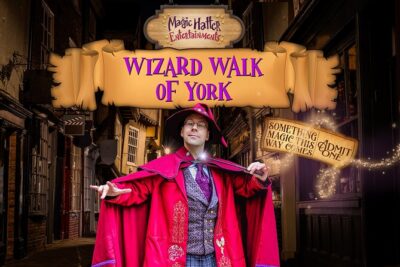
Wizard Walk of York – WINNER Best Tour & Best of York Award
Read our review →Browse the lists this tour appears in