Reviewed · LONDON TOURS & ACTIVITIES
The Freemasons Tour of London
If London had a secret hallway, this tour could be it. You will trace the City of London through religious orders, civic power, and military lore, ending at the heart of modern Freemasonry.
I especially love the private-group feel and the way your guide can shape the pace around your questions. I also like the blend of big landmarks and off-the-radar stops, from church gardens to old gatehouses, all strung together so you see a lot in one morning.
The main drawback to consider is that some indoor moments depend on opening days. The Museum of the Order of St John is closed on Mondays and Tuesdays, and the Charterhouse is closed on Mondays, so your day-of-week matters.
In This Review
- Key things to know
- First Steps at Farringdon, then a fast walk through the City of London
- Clerkenwell morning stops: Clerk’s Well to the Marx Memorial Library
- Knights of St John stops: Priory garden, St John’s Gate, and the Order museum
- Plague pits and old churches: Charterhouse Square to Bartholomew the Great
- William Wallace and the quiet church gardens near St Paul’s
- Templars and Inns of Court: Temple Church, Inner Temple, and Middle Temple Lane
- Fleet Street history, a Dickens nod, and the Seven Stars pub
- Ending at Freemasons Hall, plus what to check about museum hours
- Price and logistics: $253.66 per person, hotel pickup, and short stops that add up
- Should you book the Freemasons Tour of London?
- FAQ
- How long is the Freemasons Tour of London?
- Where does the tour start and end?
- Is hotel pickup included?
- Is this tour private?
- Are museum or attraction tickets included?
- Is there free cancellation?
Key things to know
- Hotel pickup is included, so you spend less time figuring out transit and more time walking and learning.
- It is a private tour for your group, starting at Farringdon and finishing at Freemasons Hall.
- Several stops have free outside viewing, but some buildings list admission as not included.
- Museum hours can affect what you see, including the Order of St John museum and the Charterhouse on certain weekdays.
- The guide Kevin gets repeated praise, especially for answering questions and connecting the sites into one story.
First Steps at Farringdon, then a fast walk through the City of London
This tour is built like a short morning sprint, not a slow museum day. It runs about 3 hours, starting at Farringdon Station (Cowcross St, London EC1M 6BY) at 9:30 am, then ending at Freemasons Hall (60 Great Queen St, London WC2B 5AZ). The finish is handy, since it is near Holborn and Covent Garden Underground and the wider Covent Garden area.
You will likely feel the “private tour” difference right away. Your guide can respond to what you are curious about, and you are not stuck behind a wall of people. In the guide praise I saw, Kevin (a long-time London guide named in multiple writeups) is singled out for crisp explanations and patience with lots of questions.
One practical note: Tube tickets before and after the tour are not included. The tour provides hotel pickup, but you still need a plan for getting to and from the London end points if you are arriving under your own steam.
Also on in London, no fuss
Clerkenwell morning stops: Clerk’s Well to the Marx Memorial Library
You start in an area that helped shape London neighborhoods for centuries, then you move through layers of belief, trade, and politics without it turning into a lecture. The early rhythm is light and efficient, with brief stops that keep you moving.
Clerk’s Well is the first surprise. It is described as a hidden well that even many Londoners do not know about. The key payoff is the naming, because this old well is said to have given its name to an entire district. This is one of those moments where you start noticing how London’s geography records old stories.
Next comes Marx Memorial Library, a working institute tied to communist heritage in Clerkenwell. Even if you do not focus on political history, it adds a useful contrast: not every “order” in London is medieval. Some are modern institutions with old ideas behind them.
This early segment also sets up the tour’s theme. You are not only looking at religious buildings. You are seeing how groups with rules and networks leave physical marks on streets, gates, and institutions.
Knights of St John stops: Priory garden, St John’s Gate, and the Order museum
When the tour turns toward the Knights of St John, it gets very visual. You are walking in an area where you can still spot the old boundaries of power and protection.
At St John Priory Church, you get a look at the old church garden with traditional medicinal plants. That is a nice change from stone-and-steeple sightseeing. The stop also includes a mention of a surprising ancient military weapon, which helps connect the religious setting to the “defense world” that existed around these orders.
Then you reach St John’s Gate, described as an impressive gatehouse and tower that once marked entry to the Knights of St John compound. A gate is more than a photo spot. It is a statement of who controlled the passage and who did not.
The Museum of the Order of St John is one of the places where the tour gives you a more formal interior look, with admission included. There is a reminder built in that you should plan your day carefully: this museum is closed on Mondays and Tuesdays. If you are traveling at one of those times, check whether the tour day could shift what you are able to see.
Even when you only have a short window inside, a focused museum visit can save you from wandering. You get weapons and armor as context, which makes the nearby gates and churches more understandable, not just scenic.
Plague pits and old churches: Charterhouse Square to Bartholomew the Great
The tour’s City-of-London pace keeps changing the mood. One minute you are on a quiet religious path, the next you are dealing with London’s darker survival stories.
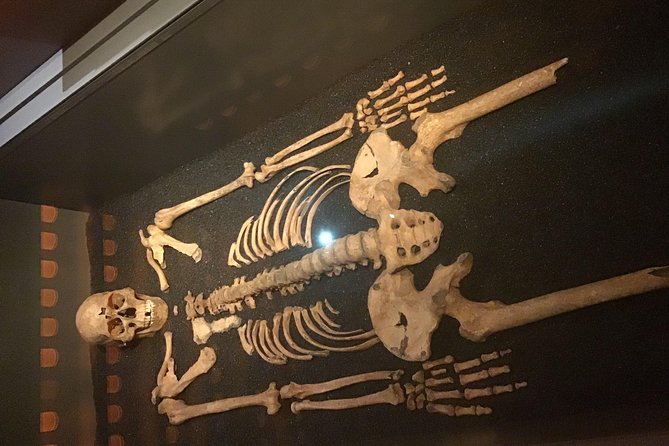
At The Charterhouse, you are directed to Charterhouse Square, noted as one of the largest plague pits before entering the chapel area. You also have a mention of a recently discovered Black Death victim skeleton. This is heavy material, but because it is delivered in a short, site-based way, it feels grounded rather than abstract.
The Charterhouse has another weekday factor: it is closed on Mondays. If your calendar lands on Monday, you may have less to see at this particular stop, so mentally plan for substitutions or shorter time outdoors.
Next, Church of St Bartholomew the Great is positioned as an older site built by a Crusader. That theme again matters here. It links the medieval religious mindset to the later layers of London church culture.
From there, you pass the St Bartholomew’s Gatehouse, described as dating back almost 800 years old. Stops like this are why this tour works for people who like architecture but get bored with only big names. Gatehouses are often missed, and yet they explain how the City fenced itself in.
William Wallace and the quiet church gardens near St Paul’s
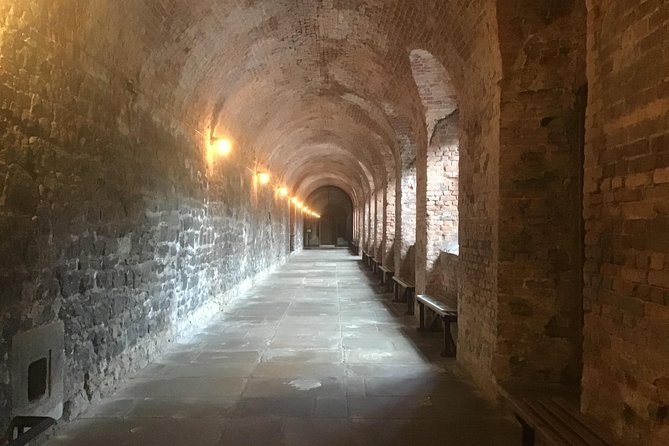
Not every historical stop in this walk is tied to medieval orders. William Wallace Memorial brings in military legend, with a focus on the spot where he died and other notable events tied to that location. Even if your background is Scotland-only, Wallace is easy to place in the broader idea of resistance and conflict that runs alongside the religious theme.
Then you move toward Christchurch Greyfriars Church Garden, with ruins forming a garden under the shadow of St Paul’s Cathedral. The trick here is that you are not just looking at the garden. You are standing between layers of London, where the modern skyline still hovers over older stone and religious foundations.
After that, Crypt on the Green gets you off the most common tourist route. It is described as being well off the beaten track for many Londoners. The payoff is location: it is right on the route toward one of London’s best-known churches, so you get a quieter moment without derailing your morning.
While the kettle’s on in London:
- Stonehenge, Windsor Castle and Bath with Pub Lunch in Lacock★ 4.5 · 7,402 reviews
- Tower of London and Crown Jewels Exhibition Ticket★ 4.5 · 6,677 reviews
- Thorpe Park Admission Ticket★ 4.0 · 5,915 reviews
- Stonehenge, Windsor Castle and Bath Full Day Guided Tour★ 4.5 · 5,346 reviews
Templars and Inns of Court: Temple Church, Inner Temple, and Middle Temple Lane
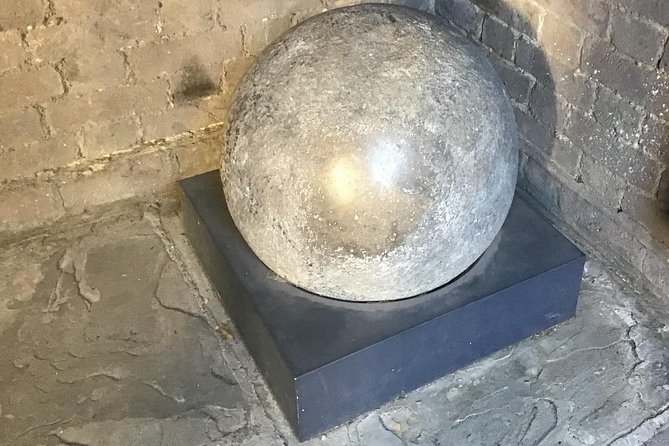
This portion is where the tour’s “religion plus military” angle tightens. You are walking through places linked to the Templars, then transitioning into the legal and civic world around the Inns of Court.
Christopher Wren’s Temple Bar is a gate linked to the City of London, with a sometimes gory past mentioned. It functions like a punctuation mark between major sites, giving you a sense of how the City handled boundaries and punishment.
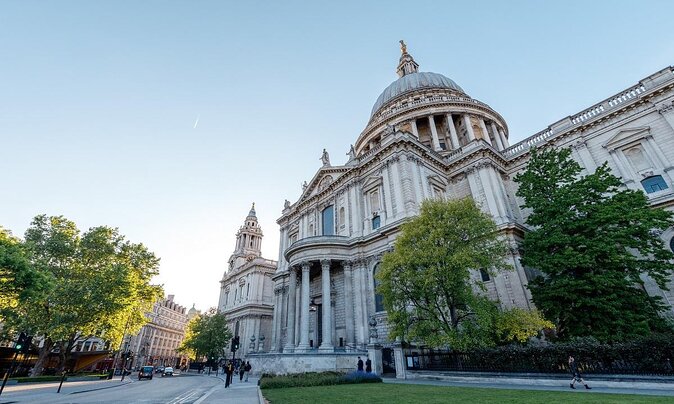
Then you arrive at St Paul’s Cathedral, described as a symbol of the City of London. You might not get long inside, but even a short look works, because later stops will make you notice how many institutions orbit around this kind of landmark.
The walk continues through Blackfriars, described as what remains of an institution that gave this part of London its name. Nearby, you can see how “place names” are often just the leftover shadow of institutions that once dominated the area.
You then reach Middle Temple Lane, a spot often used in TV and films like Downton Abbey or Charles Dickens. That media reference is useful only because it tells you why the lane looks the way it does. It is cinematic, but you should also expect a quieter, more atmospheric stroll.
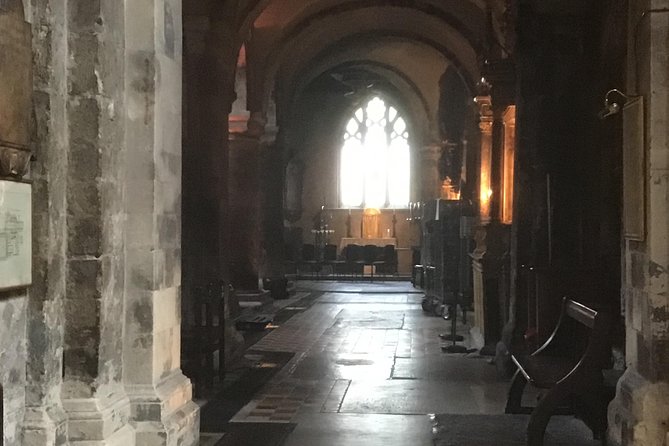
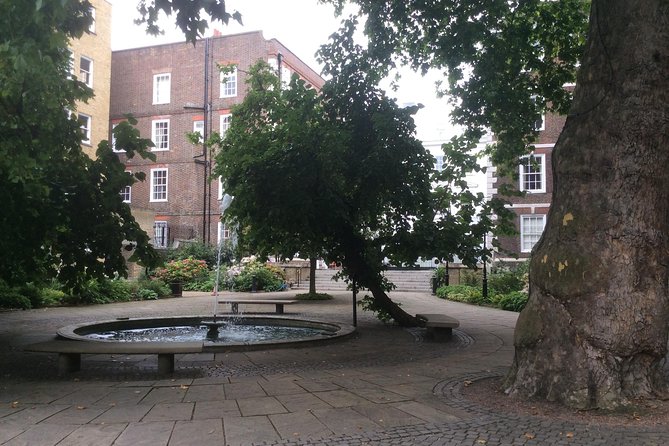
The highlight duo here is Temple Church and Inner Temple, both with admission included. Temple Church is presented as inspired by what the Templars saw in the Holy Land, and it is described as a peaceful sanctuary. Inner Temple is framed as a tranquil refuge, and that matches how this area feels once you are inside the logic of the Inns.
One caution to file away: one criticism I saw was a correction about Temple Church symbolism, with a claim that it was modeled after the Holy Sepulcher rather than King Solomon’s Temple. If you care about exact religious framing, ask questions and listen closely to how your guide explains the linkages.
Fleet Street history, a Dickens nod, and the Seven Stars pub
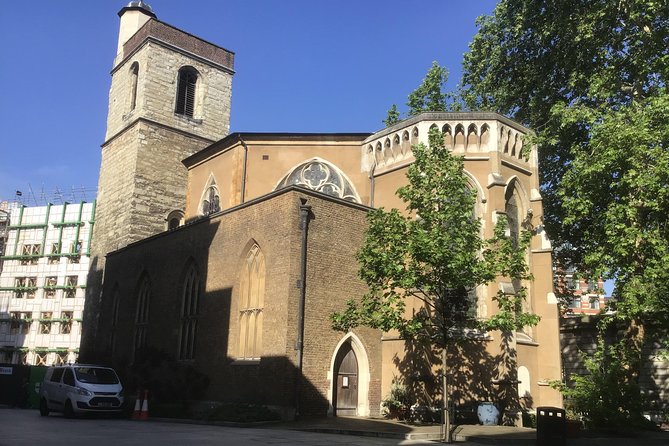
After the temple-focused sites, the tour shifts into London’s “work and stories” layer.
You walk along Fleet Street, once home to the British newspaper trade. Along the way, you also visit a long lost ruin from a monastic order. Fleet Street is useful because it shows how old institutions do not disappear. They change function, name, and audience.
Then there is a pass by The Old Curiosity Shop, framed as the oldest shop in London and immortalized in Charles Dickens writing. Even if you do not plan to buy anything, it is an easy cultural anchor for understanding why London attracts story-driven visitors.
One of the most fun stops is The Seven Stars, a tiny old pub described as an early meeting place of the Freemasons. Pub stops can go two ways on tours: either the guide rushes you through or you get a real sense of why that place mattered. Here, the purpose is context, linking the modern lodge world back to a London social meeting point.
The route also includes Lincoln’s Inn, described as the largest square in London, though one rarely visited by tourists. The Great Fire of London story is tied to this stop, making it feel like a bridge between institutional London and survival London.
Ending at Freemasons Hall, plus what to check about museum hours
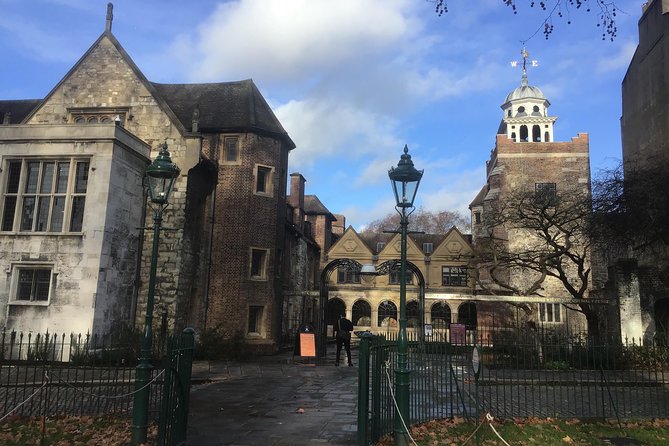
You finish at Freemasons Hall, the headquarters of the United Grand Lodge of England and the Supreme Grand Chapter of Royal Arch Masons of England. It also functions as a meeting place for many masonic lodges in the London area. In other words, the tour does not just point at Freemasonry as a symbol, it ends at the operational center.
The tour mentions the Freemasons Museum with an important weekday detail: it is closed on Mondays. Since the rest of the walk includes other Monday closures, it is smart to check your travel day early. If your trip lands on Monday, your morning may include more outdoor viewing and fewer interior museum moments.
The ending spot is practical too. Because you finish near Covent Garden and Holborn, you can smoothly turn this into a full half-day plan with food and shopping afterward, instead of spending your last energy re-navigating the Underground.
Price and logistics: $253.66 per person, hotel pickup, and short stops that add up
At $253.66 per person, this is not a budget tour. But the value question is not just the dollar amount. It is what you get for that time and convenience.
You are paying for:
- Hotel pickup included, which can save you real hassle, especially in the morning
- A route that fits a lot into about 3 hours, with multiple landmark and institution stops
- Admission included at a few key places, including the Museum of the Order of St John, Temple Church, and Inner Temple
- A private tour format, which can matter if your group wants questions answered without cutting in line
Also, the tour appears built around quick but meaningful viewing windows. Many stops are free to view outside, and several have admission listed as not included, which means you can still enjoy the architecture and setting even if you choose not to enter every building. That flexibility helps you avoid turning your morning into a pay-to-enter maze.
If you have strict indoor priorities, plan carefully. Some museum stops can be closed depending on the day, including the Order of St John museum (closed on Mondays and Tuesdays) and the Freemasons Museum (closed on Mondays). This tour is strong for walking-and-learning on good days, and it can still work on closed-day schedules, but you should know what might shrink.
Should you book the Freemasons Tour of London?
Book it if you want a morning-focused London walk that connects religion, military themes, and Freemasonry through real locations, not just general facts. I think it is a strong fit for couples, history-minded solo travelers, and small groups who like churches, gates, and institutions, and who appreciate guides like Kevin who answer questions and tie the places together.
Skip it or pick a different format if your top priority is long, uninterrupted museum time, or if you are traveling on a weekday that hits multiple closures like Monday. Also, if your personal interest is extremely detail-specific about Templar symbolism, go in ready to ask follow-up questions and get clarification on framing.
If you do book, wear comfortable shoes and keep your expectations aligned with the format: short stops, clear explanations, and a satisfying ending at Freemasons Hall. It is the kind of tour where you walk away seeing the City as a connected system, one gate, church, and institution at a time.
FAQ
How long is the Freemasons Tour of London?
It runs for about 3 hours.
Where does the tour start and end?
It starts at Farringdon Station (Cowcross St, London EC1M 6BY) and ends at Freemasons Hall (60 Great Queen St, London WC2B 5AZ).
Is hotel pickup included?
Yes. Hotel pickup is included, and you should inform the provider of your Central London hotel.
Is this tour private?
Yes. It is listed as a private tour/activity, with only your group participating.
Are museum or attraction tickets included?
Some admissions are included, while others are not. For example, the Museum of the Order of St John, Temple Church, and Inner Temple list admission as included, while several other stops list admission as not included.
Is there free cancellation?
Yes. You can cancel up to 24 hours in advance for a full refund.
Latest to join the queue for London


London Tours & Activities, compared.
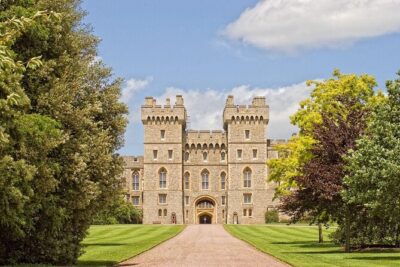
Stonehenge, Windsor Castle, and Bath from London
Read our review →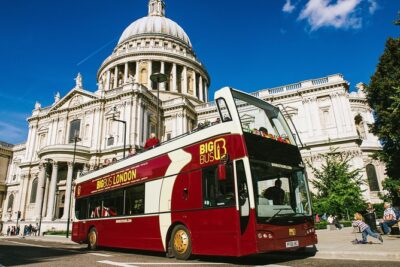
London Big Bus Hop-On Hop-Off Tour with Optional River Cruise
Read our review →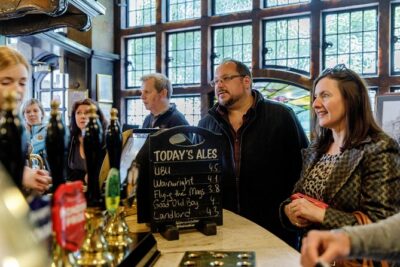
London Small Group Tour of Historical Pubs
Read our review →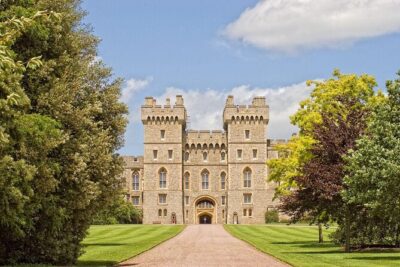
Stonehenge, Windsor Castle and Bath with Pub Lunch in Lacock
Read our review →
Tower of London and Crown Jewels Exhibition Ticket
Read our review →
Stonehenge, Windsor Castle and Bath Full Day Guided Tour
Read our review →