
Reviewed · TREASURE HUNTS & CITY GAMES
Stratford Treasure Hunt The Mystery of Shakespeare’s Lucky Quill
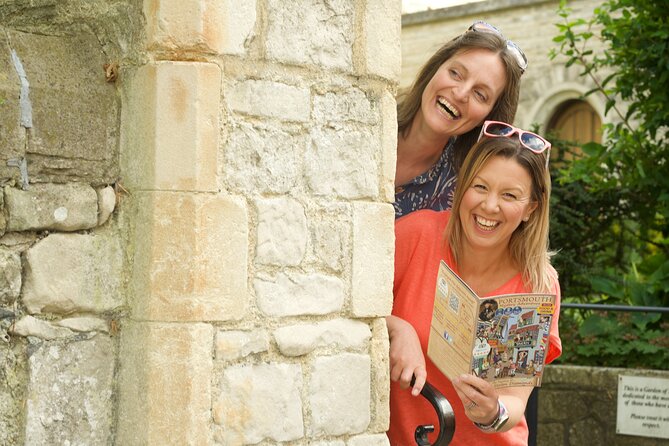
Stratford turns into a game board. This 3-hour, self-paced mystery hunt in Shakespeare’s hometown has you solving clues across historic streets and locations, with a story that slowly unfolds until the final reveal.
What I like most is the right-level challenge of the puzzles, plus the way the route mixes major landmarks with lesser-noticed corners of town. You also get a 40-page activity booklet with maps and local history, so it is not just a scavenger hunt.
One thing to keep in mind: you are on your own with the guide booklet, so if you want a live narrator or fully hands-on help, this may feel too independent. Also, expect a fair bit of walking at a moderate pace over about 3.25km.
In This Review
- Quick hits before you start
- What Shakespeare’s Lucky Quill really is, and why it works
- Starting at Lily’s Cafe, and the easiest way to avoid getting lost
- Stop 1: Shakespeare’s Schoolroom & Guildhall, the clue kickoff
- Stop 2: Royal Shakespeare Theatre, turning streets into part of the plot
- Stop 3: Shakespeare’s Birthplace, where the hunt feels more personal
- Stop 4: Holy Trinity Church, adding atmosphere to the mystery
- Stop 5: Stratford-upon-Avon Canal, finishing with a calmer stretch
- The Mystery Guide booklet: 18 clues, local stories, and maps
- Solving clues in busy places, tavern mood, and pub-photo problems
- Time it right: a 3-hour plan that fits before or after RSC plans
- Who should book this Stratford mystery hunt?
- Value and what you get for your time
- Small logistics that make a big difference
- Should you book Shakespeare’s Lucky Quill in Stratford?
- FAQ
- How long does the Stratford Treasure Hunt take?
- How far do you walk?
- Where does the hunt start?
- Is the activity fully guided by a person?
- What is included with the activity?
- Do I need an alcohol plan for the hunt?
- Is this a private activity?
- Is it suitable for people with moderate mobility?
- Can I bring a service animal?
- Is free cancellation available?
Quick hits before you start

- Self-paced timing lets you start when you want, not on a fixed tour schedule.
- 18 cryptic clues plus suspect elimination create a real mystery flow.
- A 40-page Mystery Guide booklet includes story, maps, and local history.
- Stratford’s big sights plus atmospheric stops keep it from feeling repetitive.
- Family-friendly teamwork works well for couples, parents and kids, and groups.
- You end where you started, so your planning stays simple.
What Shakespeare’s Lucky Quill really is, and why it works
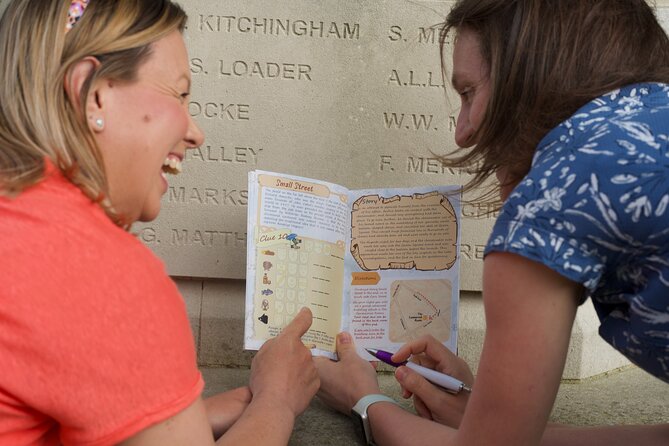
This is a Stratford-upon-Avon walk designed like a story you control. You begin with a mobile ticket and pick up your Mystery Guide at Lily’s Cafe on Rother Street, then set off at your own start time. Each booklet guides you through a sequence of stops, with 18 cryptic clues that build toward the case’s solution.
The payoff is not just ticking off famous places. The format makes you slow down and look. You are reading clues, comparing what you find, and making choices like you are part detective squad. It is a fun way to see Stratford if you like puzzles, or if you simply want something more engaging than wandering.
It also has a built-in structure. The route is about 3.25km and takes around 3 hours, which means you can fit it into a short visit without turning the day into a marathon. You can even use it like a light itinerary, with time to grab coffee or food along the way.
More clues cracked between landmarks:
Starting at Lily’s Cafe, and the easiest way to avoid getting lost
Your start point is Lily’s Cafe, 19 Rother St, Stratford-upon-Avon CV37 6LU, UK. The tour ends back at the meeting point, so you do not need end-of-walk logistics.
Here is how I recommend you begin for a smooth start:
- Grab your Mystery Guide and confirm you have everything in your kit, including the booklet with maps.
- Bring a pen. One of the best practical tips from experience is that you will want to write as you solve.
- Follow the booklet in order, one step at a time. A simple habit that helps is only moving to the next page when you are ready, not skipping ahead.
Because this is self-paced, you set the rhythm. If you are traveling with kids or you want a calmer pace, you can linger at the clue spots. If you are competitive and want the full mystery rush, you can keep moving.
Stop 1: Shakespeare’s Schoolroom & Guildhall, the clue kickoff
Your first major stop is Shakespeare’s Schoolroom & Guildhall. This is where the hunt kicks into gear, and it is a smart opening choice because it puts Shakespeare’s name and legacy right into your first clue-solving moment.
What makes the first stop useful is that you get acclimated to the hunt style early. The clues here set expectations for how the booklet phrases things, how strictly you should interpret clue wording, and how you will navigate Stratford’s centre on foot.
Possible drawback: because it is an early stop, it can feel like you are still finding your stride. If you are traveling with a group and everyone is anxious to race ahead, it helps to have one person do the reading and another do the location scan, then swap roles.
Stop 2: Royal Shakespeare Theatre, turning streets into part of the plot

Next up is the Royal Shakespeare Theatre. Even if you are not catching a show the same day, this stop adds a noticeable sense of place. It is a landmark that anchors the hunt in the Stratford that people travel for.
This is also a natural point in the route to check your pace. By now, you have solved a few clues and should be starting to see patterns in the mystery story, including the theme of suspects and a villain behind a daring robbery.
Practical consideration: theatre areas can be busy depending on the time of day. If you are solving a clue in a crowded spot, take it slow and give yourself room to read the environment carefully.
Stop 3: Shakespeare’s Birthplace, where the hunt feels more personal
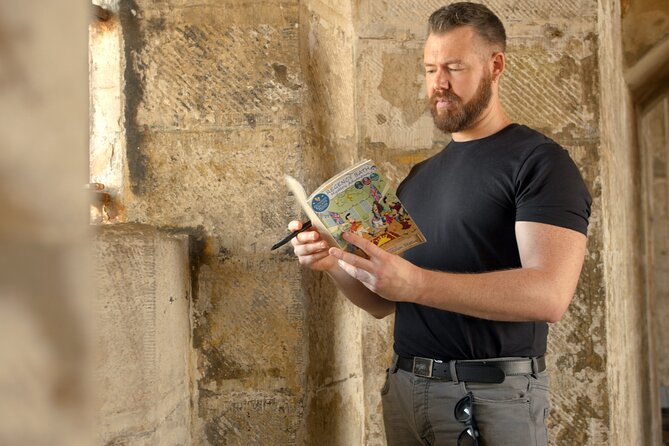
Your third stop is Shakespeare’s Birthplace. This is the part of the walk that tends to land emotionally, because Shakespeare is not only a name here, it is the lived connection to the town.
I like what this stop does for the overall experience: it makes the hunt feel less like a generic scavenger game and more like a story set in real streets. When clues tie into landmark places, you remember what you saw, not just what you solved.
Drawback to consider: if you are only in Stratford for a quick look and you expect to move fast, this stop might slow you down naturally. That is usually a good thing, but it can matter if you have tight plans after the walk.
Also on in Stratford upon Avon, no fuss
- Cotswolds in a Day Tour from Moreton-in-Marsh / Stratford-on-Avon★ 5.0 · 1,216 reviews
- Shakespeare Distillery Tour – 1pm Ticket★ 5.0 · 598 reviews
- The Sinister Side of Shakespeare’s Stratford Walking Tour★ 5.0 · 279 reviews
- City Sightseeing Stratford-upon-Avon Hop-On Hop-Off Bus Tour★ 4.0 · 254 reviews
Stop 4: Holy Trinity Church, adding atmosphere to the mystery
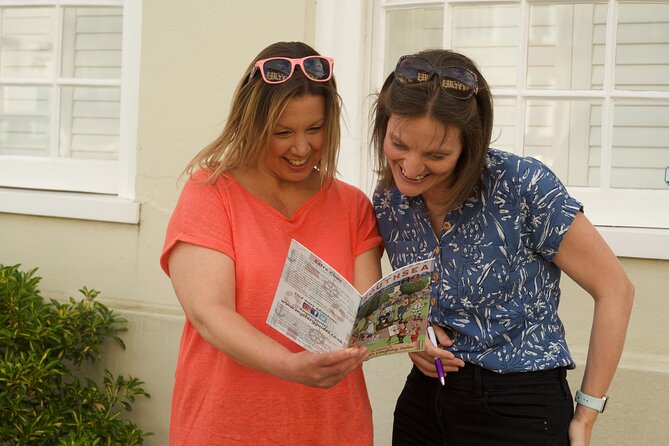
Then the route turns to Holy Trinity Church. This stop gives the hunt a different mood, shifting from theatre and birthplace vibes into something more grounded and quietly historic.
In puzzle terms, it also helps because churches and their surrounds often give clear visual markers. That matters because clue-solving in Stratford often comes down to identifying the right spot in the right area.
Practical tip: if you are traveling with someone who gets impatient with puzzles, this is a good place to reset. Quiet stops give you a moment to catch breath, re-read clue text, and get back on track.
Stop 5: Stratford-upon-Avon Canal, finishing with a calmer stretch
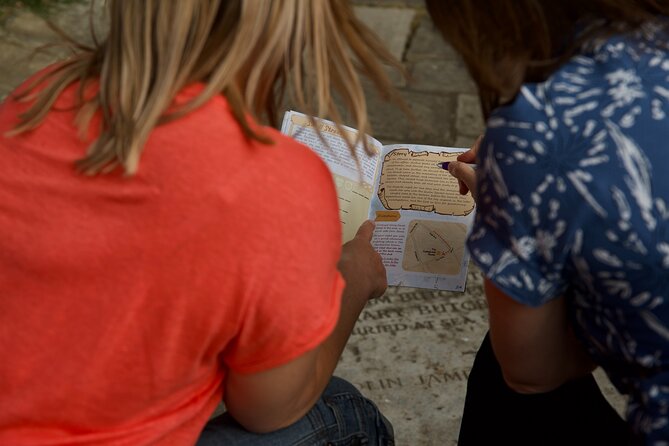
Your final listed stop is Stratford-upon-Avon Canal. Finishing near water can be a nice change of pace after city streets, and it is a good location for a “final steps” feeling, where the mystery tightens and you get closer to the reveal.
This is also the part of the walk where you will likely feel the rhythm shift. Earlier, you are learning how clue wording works. Near the end, you are trying to connect the dots quickly and decide which suspect logic makes the most sense based on what you found.
The hunt promises a final wow moment when the case is solved and the villain is revealed before your eyes. So yes, plan to keep your attention up to the last clues, even if you feel done early.
The Mystery Guide booklet: 18 clues, local stories, and maps
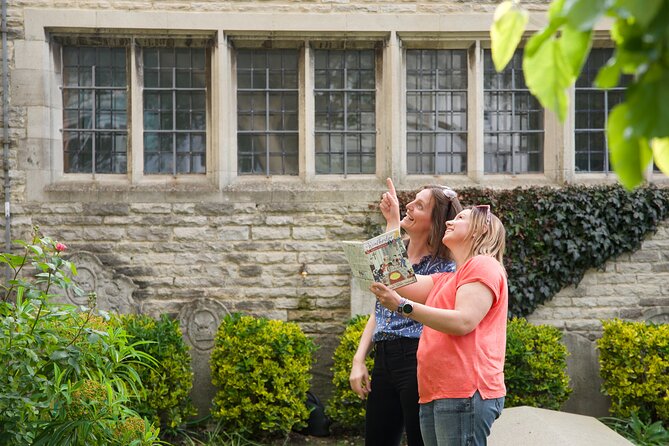
The experience centers on a 40-page activity booklet in English. It contains:
- 18 cryptic clues to find and solve in Stratford’s historic centre
- Local history stories meant to add flavor and context
- A unique story that unfolds during your walk
- Maps to help you navigate
This is where the value shows up. A lot of self-guided activities give you one layer, but this booklet adds multiple layers: puzzle, narrative, and place-based background.
If you like learning while you play, you will probably enjoy how the history is used. You are not reading a textbook while walking. The booklet’s history stories are meant to connect to what you are seeing, which makes the information easier to remember.
One practical hint that came up in experience is that clue wording may not always be super literal. For example, there was a clue that referred to Tudor gate, but the actual item location turned up elsewhere. The lesson: if the first place you check does not match, keep scanning the immediate area and trust that the clue may be pointing you to a broader location.
Solving clues in busy places, tavern mood, and pub-photo problems
The route is described as passing atmospheric taverns, and that is a big part of why this hunt feels like Stratford. It adds character, and it also gives clue spots a more “real town” feel.
That said, taverns can be busy, especially around mealtimes. One issue that popped up for a group was feeling self-conscious when a clue poster appeared to be tucked behind a table in a crowded pub. That kind of moment matters because a clue can be harder to find if you are trying not to interrupt someone.
If you want to avoid stress, you can do two things:
- Go with patience and assume clue placement might be slightly off-center.
- If you are traveling as a family or with friends, assign roles so one person focuses on spotting clues while another handles timekeeping and questions.
Also, alcoholic beverages are not included. You can still plan coffee or a drink breaks, but keep in mind you are the one paying for anything you order.
Time it right: a 3-hour plan that fits before or after RSC plans
The walk is about 3 hours and 3.25km. That timing is a sweet spot. It feels like enough time to feel like you did something meaningful, not so long that you need a vacation day to recover.
It also pairs well with theatre plans. There was an example of using this as the daytime activity before an evening at the Royal Shakespeare Theatre. Even if you are not seeing a show, the same logic works: you can treat the hunt as your structured sightseeing block, then switch to dinner and a relaxed evening afterward.
Moderate fitness is required, so if you have mobility limits, plan for steady pacing. One experience highlighted that a couple in their late 60s to early 70s with arthritic knees found it manageable. That is encouraging, but listen to your own body and take breaks if needed.
Who should book this Stratford mystery hunt?
This works best if you like one or more of these:
- You want to explore Stratford’s centre without a big group tour
- You enjoy puzzle-solving and competing with friends or your team
- You want a trip that mixes Shakespeare landmarks with stories about the town’s characters
- You are traveling with kids, teens, or a multi-age group and want everyone engaged
It also sounds like a strong first-visit activity. Many people use it to orient themselves quickly, since it routes you to major Stratford highlights while still giving you plenty of stops to make the town feel bigger than the postcard version.
If you prefer a guided lecture with constant narration, or you dislike reading clues, you might prefer a traditional tour. Here, the fun is doing the detective work yourself.
Value and what you get for your time
Even without seeing a price here, I can tell you where the value comes from.
You are getting:
- A self-paced 3-hour walking route with a clear footprint of 3.25km
- A 40-page booklet that includes story, clues, local history, and maps
- The chance to solve a mystery with a payoff moment and a final reveal
- A private format, meaning only your group participates
This kind of activity can feel like a better bargain than it looks because it is doing multiple jobs at once. It is sightseeing, it is entertainment, and it gives structure that helps you remember what you did that day.
Small logistics that make a big difference
A few practical notes can help you enjoy it more:
- Bring a pen. It really matters for clue solving.
- Wear comfortable shoes. You will be walking around the historic centre and finishing near the canal.
- Plan for weather. The hunt is described as flexible and self-paced, but it is still an outdoor walk.
- Stay with one clue at a time. A review tip was to only turn one page at a time, and that habit prevents mix-ups.
If you get stuck on a clue, do not panic. One experience included missing clue 9 and needing to use an online picture reference. Another clue problem was solved by re-checking in the area rather than assuming the clue would match one single literal location. Your best tool is persistence plus careful scanning.
Should you book Shakespeare’s Lucky Quill in Stratford?
Book it if you want a fun way to see Stratford that feels active, not passive. I especially like it for first-time visitors who want a guided-feeling route without committing to a strict group tour time, and for families and couples who enjoy solving problems together.
Skip it if you want a fully guided narration with a person explaining everything, or if you dislike walking and prefer quick, seated sightseeing. Since there is no guide included, the experience depends on you and your group stepping into the mystery role.
If you do book, go in with the mindset of detective work, not checklist tourism. You will likely leave Stratford not just having seen the highlights, but having noticed the details that make the town feel like a place with stories baked into the streets.
FAQ
How long does the Stratford Treasure Hunt take?
It takes about 3 hours.
How far do you walk?
The walking distance is 3.25km.
Where does the hunt start?
It starts at Lily’s Cafe, 19 Rother St, Stratford-upon-Avon CV37 6LU, UK.
Is the activity fully guided by a person?
No. You receive a Mystery Guide booklet, but the experience does not include a guide.
What is included with the activity?
You get a 40-page activity booklet in English with the story, clues, historical information, and maps.
Do I need an alcohol plan for the hunt?
Alcoholic beverages are not included.
Is this a private activity?
Yes. Only your group participates.
Is it suitable for people with moderate mobility?
It’s listed for travelers with a moderate physical fitness level.
Can I bring a service animal?
Service animals are allowed.
Is free cancellation available?
Yes, you can cancel for free up to 24 hours in advance for a full refund. If you cancel within 24 hours of the experience start time, the amount paid is not refunded.
Latest to join the queue for Stratford upon Avon







Treasure Hunts & City Games, compared.

Fun, Flexible Treasure Hunt Around Manchester with Cryptic Clues & Hidden Gems
Read our review →
Fun, Flexible Treasure Hunt Around York with Cryptic Clues & Hidden Gems
Read our review →
Fun, Flexible Treasure Hunt Around Bath with Cryptic Clues & Hidden Gems
Read our review →
Fun, Flexible Treasure Hunt Around Oxford with Cryptic Clues & Hidden Gems
Read our review →
Shepton Mallet Prison Escape Room – The Cell
Read our review →
Interactive Jack the Ripper Night Walk: London’s Murder Mystery
Read our review →
Fun, Flexible Treasure Hunt Around Birmingham with Cryptic Clues & Hidden Gems
Read our review →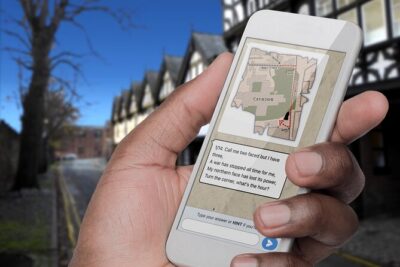
Fun, Flexible Treasure Hunt Around Chester with Cryptic Clues & Hidden Gems
Read our review →Browse the lists this tour appears in