

Reviewed · GUIDED WALKS IN LONDON
Slavery and City of London Walking Tour
London tells a hidden slave-trade story, and this walk explains how it shaped the City. You start and finish near major Underground lines, but the real draw is the City’s overlooked connections to Britain’s colonial slavery and abolition era, right beside landmarks you probably already plan to see, like St Paul’s Cathedral.
I love the way the guide, Sam, ties big names and institutions to specific street corners, from Granville Sharp to the Bank of England’s slave trade links. I also love the small-group feel (35 max), because questions and back-and-forth stay part of the walk, not an afterthought. One possible drawback: the topic is morally heavy, so if you prefer lighter sightseeing, you may want to mentally pace yourself.
In This Review
- Key highlights worth your time
- Starting at Tower Hill, ending near Aldgate, and why the route helps
- The bigger idea: how slavery shaped the City you already recognize
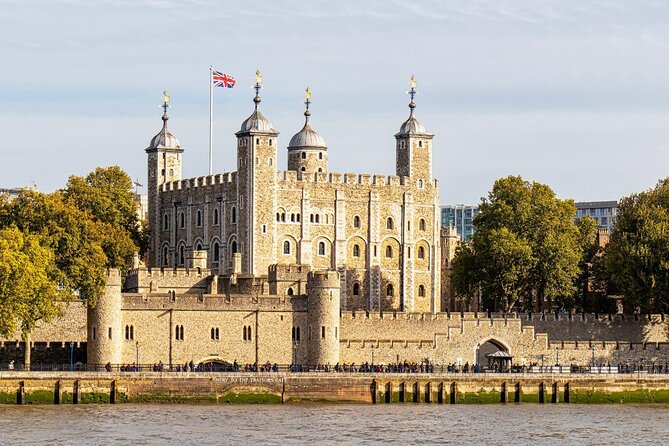
- Ordnance Office at the Tower of London and Granville Sharp’s role
- The Roman wall of Londinium: an unexpected opening underfoot
- East India Company links near the East India House site
- Fenchurch Street and the Gilt of Cain sculpture
- Jamaica Wine House and London’s first coffee house
- St Mary Woolnoth Church and John Newton’s anti-slavery work
- Bank of England Museum: apology, removal plans, and the Royal Africa Company
- St Paul’s Cathedral, then the finish by St Paul’s Underground
- What I’d bring, and how I’d mentally prepare
- Is this tour worth the $27.43 price?
- Who should book Sam’s Walks for this topic
- Should you book this Slavery and City of London Walking Tour?
- FAQ
- How long is the Slavery and City of London walking tour?
- What does the tour cost?
- Where does the tour start and where does it end?
- What time does the tour begin?
- What is the maximum group size?
- Do I get a mobile ticket?
- Are there admission fees at the stops?
- Is the tour dependent on weather?
- What is the cancellation policy?
- What happens if the minimum number of travelers is not met?
Key highlights worth your time
- Story-led stops that connect slavery, abolition, and the City’s power centers
- Granville Sharp to John Newton, two major anti-slavery figures woven into the route
- Roman wall remains under the modern streets, including Londinium connections
- Visible memorials like the Gilt of Cain sculpture tied to transatlantic abolition
- Bank of England context, including an apology and plans to remove slave-trade-era imagery
- A walk that moves fast, with a length that feels “just right” for 90 minutes
Starting at Tower Hill, ending near Aldgate, and why the route helps

This is a straight-line style walking tour in London’s historic core. It begins at Tower Hill Tram, Trinity Square (Tower Hill area, EC3N), and it ends at Aldgate Underground station (Aldgate High St, EC3N). The scheduled start time is 12:00 pm, and the duration runs about 1 hour 30 minutes.
Two things make the logistics work in your favor. First, you start and end in areas with easy Underground options, so you can plug it into a day of sightseeing without losing half your afternoon to transit. Second, the walk ends near St Paul’s area, with a close connection to the Central line, so it’s simple to continue on to other stops later in the day.
If you’re the type who likes a plan, this tour gives you one. If you’re the type who just wants to wander, the theme gives your wandering direction. Either way, I’d wear comfortable shoes. You’re on your feet for most of the 90 minutes.
More Guided Walks in London
The bigger idea: how slavery shaped the City you already recognize
The City of London is famous for its institutions. On this walk, you see how those institutions connected to the slave economy, not just in distant history books, but in the real layout of streets, offices, and ceremonial meeting places.
What I like most is that the tour does not treat slavery as a vague background detail. It connects names, companies, and physical locations. You move from early imperial Britain and trade networks to abolition figures and later public acknowledgment, including what the Bank of England has said it would change.
The guide also keeps the tone human. Some portions could easily spiral into pure gloom, but the walk holds a more practical line: here is what happened, here is who fought back, and here is how the evidence sits in the urban fabric today. That balance matters, because it keeps your attention from shutting down.
Ordnance Office at the Tower of London and Granville Sharp’s role
Before you even get into the Roman and commercial stops, you get a grounding point in 18th-century anti-slavery leadership. The walk starts with the Ordnance Office at the Tower of London, connected to Granville Sharp, one of Britain’s most prominent anti-slavery figures in that period.
This stop matters because it sets the theme of the tour from both sides. Yes, there’s exploitation and profit. But you also get the reform and resistance that pushed Britain toward abolition. Starting with Sharp helps you understand the story as something contested, not pre-written.
Also, the Tower of London area is the right kind of dramatic backdrop for this topic. It keeps you from treating the history like a lecture. You’re standing in one of Britain’s most symbol-heavy spaces, learning how anti-slavery advocacy sat alongside the structures of state power.
The Roman wall of Londinium: an unexpected opening underfoot
One of the most striking early moments is the Roman wall of Londinium. The wall is tied to the founding of London about 2,000 years ago. The tour frames it in a way that’s easy to remember: the Romans took Britons as slaves, and the locals were portrayed as complaining that the Britons were lazy.
You might not expect a slavery conversation to start with Rome, but that is exactly the point. London’s story goes way back, and the built environment keeps layers of human movement and coercion in it.
A unique bonus that comes through in the guide’s storytelling is the attention to an African Roman emperor connected to the wall. The tour also uses this as a way to shift your mental lens, so you stop picturing Roman London as purely European and remote. You begin to see it as a network that involved people from across the empire.
East India Company links near the East India House site
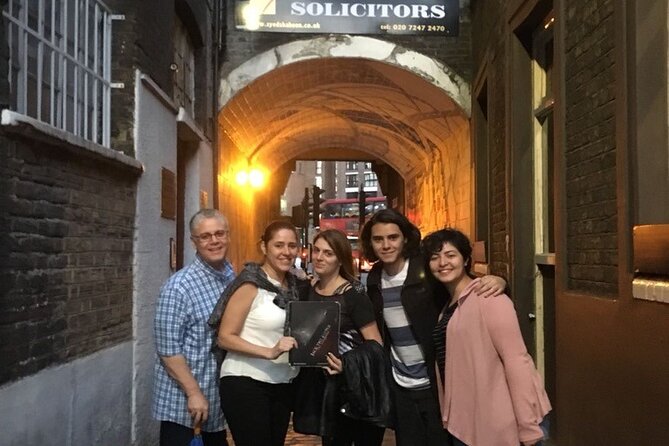
Next you reach the site where East India House once stood. This is the headquarters of the East India Company, and the connection to slavery is direct. The tour explains that the East India Company relied on slave labor and trafficked enslaved people from East and West Africa.
This stop is valuable because it turns the East India Company from a distant textbook name into a real physical location in London. You can look around and picture offices and decision-makers, not just ships and plantations far away.
A practical note for you: this is the kind of stop where the guide’s phrasing helps you follow the timeline. If you get lost, it’s usually because you’re expecting only one era. Instead, the walk encourages you to see trade systems and labor systems evolving across centuries.
More England on foot, brolly optional:
- Westminster Guided Walking Tour with Abbey Entry★ 5.0 · 1,282 reviews
- Walking Tour of London Westminster Abbey, Big Ben, Buckingham★ 4.5 · 1,213 reviews
- London West End Musical Silent Disco Walking Tour Top 1% Rated★ 5.0 · 1,057 reviews
- Westminster 3 Hour Walking Tour and Visit of Churchill War Rooms★ 5.0 · 967 reviews
Fenchurch Street and the Gilt of Cain sculpture

After the East India House connection, you shift to Fenchurch Street, with a visit to Fen Gardens. There you’ll see the Gilt of Cain sculpture. The tour connects it to the abolition of the transatlantic slave trade.
Memorial art can feel like a quick photo moment. Here, it becomes something more useful. The guide ties the sculpture to a specific historical shift, which helps you avoid treating it as decoration.
If you like learning through details you can point at, this is a great stop. You leave with a named place and a named symbol, so it sticks in your mind long after the walk ends.
Jamaica Wine House and London’s first coffee house
One of my favorite “wait, what?” stops is the Jamaica Wine House area. The walk explains that it was once the site of London’s first coffee house, the Jamaica Coffee House.
Coffee shops are usually framed as social culture. This tour reframes it as business culture. It links the Jamaica Coffee House to the sugar trade and to slave plantations across the West Indies, which gives you a sharper view of how everyday consumption ties into brutal supply chains.
This is the kind of stop that stays practical. You can look at a familiar kind of building in London and realize it once stood at the center of commerce tied to slavery. It’s not just history for history’s sake. It’s a reminder that economic systems hide in plain sight.
St Mary Woolnoth Church and John Newton’s anti-slavery work
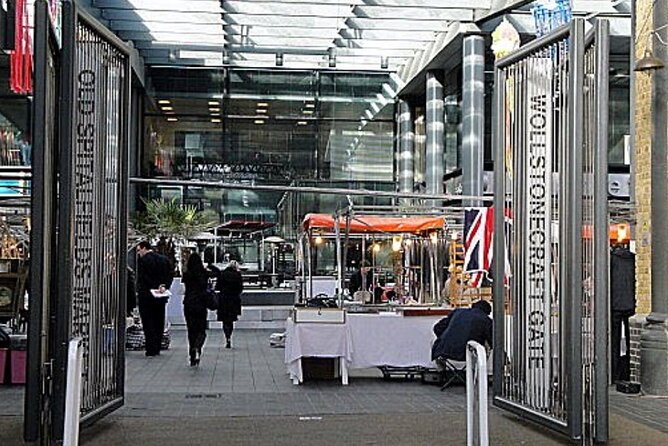
At St Mary Woolnoth Church, the walk connects you to John Newton, described here as a slavery abolitionist and the church’s rector.
This part of the route works because it anchors abolition to a personal role in community and leadership. You’re not only learning about policies or companies. You’re learning about an individual tied to a place of worship and public life.
The lesson you can carry with you is simple: abolition work happened in many spaces, including ones that could easily be overlooked by people chasing only monuments. A church like this also helps set an emotional tone. It’s a more reflective moment in the walk, and it can help you process the harder material without shutting down.
Bank of England Museum: apology, removal plans, and the Royal Africa Company
The Bank of England Museum is one of the most important stops for understanding how power acknowledges its own past. The tour explains that the Bank of England has apologized for involvement of some past former directors and governors in the slave trade. It also promises to remove statues and paintings of them from public display in the Bank’s Threadneedle Street building.
That matters for you because it moves the story from “then” to “now.” Public institutions do not usually volunteer accountability in a casual way. The apology and removal plan are the kind of real-world steps that tell you this topic is not sealed in the past.
The stop also links the City’s leadership to the Royal Africa Company. The tour describes how sheriffs, mayors, and aldermen of the City of London met in this area as shareholders of the Royal Africa Company.
When you put that together, it’s harder to say slavery was an outside force that only touched London briefly. It was integrated. You start to see London’s governance and finance as part of the system, which is exactly why this stop earns your attention.
St Paul’s Cathedral, then the finish by St Paul’s Underground
The walk ends near St Paul’s Cathedral and finishes at St Paul’s underground station, on the Central line. You get a classic landmark moment, which is good because it gives your brain a familiar visual landing after the dense institutional stops.
Even if you already planned to see St Paul’s later, this timing helps. You have context before you arrive. The building stops being just a grand photo. You see how it sits in the same city that once supported trade networks and forced labor.
If you’re continuing your day, this end point is practical. You can take the Central line onward without needing to backtrack.
What I’d bring, and how I’d mentally prepare
You don’t need a notebook full of dates to enjoy this tour. But you do need the right mindset.
- Expect a walking experience with a 90-minute pace, not a museum marathon.
- Bring water and plan for the weather, because the tour requires good weather.
- Wear shoes you can handle for city sidewalks. Even a “short” walk is still a long stretch when you’re focused for the whole time.
Most important: give yourself permission to feel uncomfortable. This is not sugarcoated history. The reason it works is that it also points toward abolition leadership and real change, so it doesn’t leave you stuck in despair.
Is this tour worth the $27.43 price?
At about $27.43 per person for 1 hour 30 minutes, the value comes from three things you can’t fake.
First, you get a guided route that links major sites (Tower of London area, St Paul’s Cathedral zone, Bank of England context) with smaller, easily missed corners. That kind of “what am I looking at” guidance is exactly what you pay for on a walking tour.
Second, many stops are described as free admission ticket stops. So you are paying mainly for interpretation and storytelling, not entry fees.
Third, the group limit of 35 keeps the experience from turning into a crowded shuffle. In a city like London, that makes a difference. You can actually track what the guide is pointing out.
If you like straight sightseeing, you might think $27.43 is high for a walk. But if you want the City of London to make sense as an interconnected story, this price is reasonable.
Who should book Sam’s Walks for this topic
This tour is a strong fit if you want history tied to streets and buildings, not just facts read from a page. It’s also a good option if you like discussions as you walk, not a one-way lecture.
It may be less ideal if you want purely light sightseeing, or if you have a hard time with emotionally heavy subjects. The walk is thoughtful, and it includes anti-slavery voices. Still, it centers slavery and the slave trade, so you should choose it intentionally.
Should you book this Slavery and City of London Walking Tour?
I think you should book it if your idea of a great London day includes two things: learning what’s behind famous landmarks, and getting a route that makes the City feel like a real place with real decisions and consequences.
I would skip it only if you strongly prefer upbeat sightseeing with little moral weight, because the subject is central and unavoidable. If you can handle that, you’ll likely enjoy how Sam connects Roman London, trade-era London, abolition figures like Granville Sharp and John Newton, and modern institutional acknowledgment at the Bank of England Museum.
If you want a walking tour that turns familiar streets into something you understand on a deeper level, this one is a smart use of 90 minutes.
FAQ
How long is the Slavery and City of London walking tour?
It runs about 1 hour 30 minutes.
What does the tour cost?
The price is $27.43 per person.
Where does the tour start and where does it end?
It starts at Tower Hill Tram, Trinity Square, London EC3N 4TH, and ends at Aldgate Underground station, Aldgate High St, London EC3N 1AH.
What time does the tour begin?
The start time listed is 12:00 pm.
What is the maximum group size?
The group is limited to a maximum of 35 travelers.
Do I get a mobile ticket?
Yes, the tour uses a mobile ticket.
Are there admission fees at the stops?
The tour information marks multiple stops as admission ticket free.
Is the tour dependent on weather?
Yes, it requires good weather.
What is the cancellation policy?
You can cancel up to 24 hours in advance for a full refund. If you cancel less than 24 hours before the start time, the amount paid is not refunded.
What happens if the minimum number of travelers is not met?
If the minimum is not met, you will be offered a different date or a full refund.
Latest to join the queue for London





Guided Walks in London, compared.
Tour for Muggles The Ultimate Harry Potter Walking Tour in London
Read our review →
Changing of the Guard Guided Walking Tour in London
Read our review →
The Great British Rock and Roll Walking Tour
Read our review →
Westminster Guided Walking Tour with Abbey Entry
Read our review →
Walking Tour of London Westminster Abbey, Big Ben, Buckingham
Read our review →
London West End Musical Silent Disco Walking Tour Top 1% Rated
Read our review →
Westminster 3 Hour Walking Tour and Visit of Churchill War Rooms
Read our review →
WW2 London Walking Tour & Churchill War Rooms Entrance Ticket
Read our review →Browse the lists this tour appears in